
Filecoin TL;DR aims to simplify Filecoin ecosystem news. Get updates on project development, leasing, and the FIL token.
Joined October 2022
- Tweets 5,253
- Following 123
- Followers 15,364
- Likes 1,319
2,551 Photos and videos





Jun 12
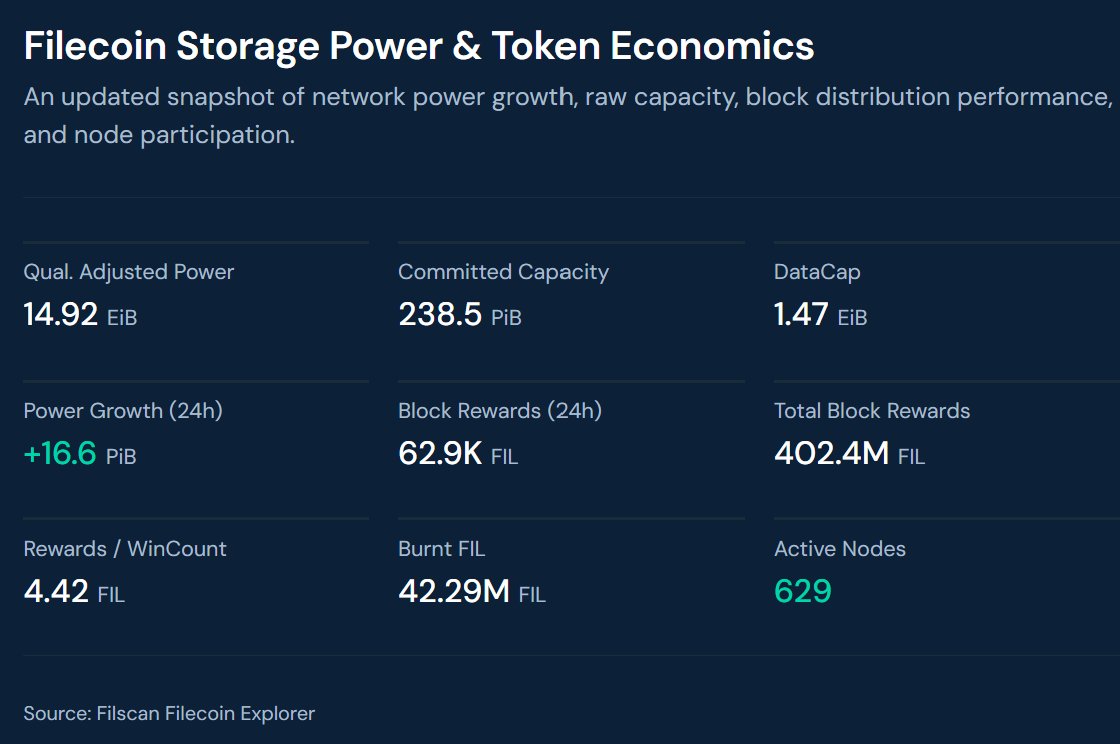
Filecoin Stats:
24h Power Growth: 16.6 PiB
Quality Adj. Power: 14.92 EiB
Committed Capacity: 238.5 PiB
DataCap: 1.47 EiB
Block Rewards (24h): 62.9K FIL
Total Block Rewards: 402.4M FIL
Rewards / WinCount: 4.42 FIL
Burnt: 42.29M FIL
Active Nodes: 629
3
8
261
Jun 12
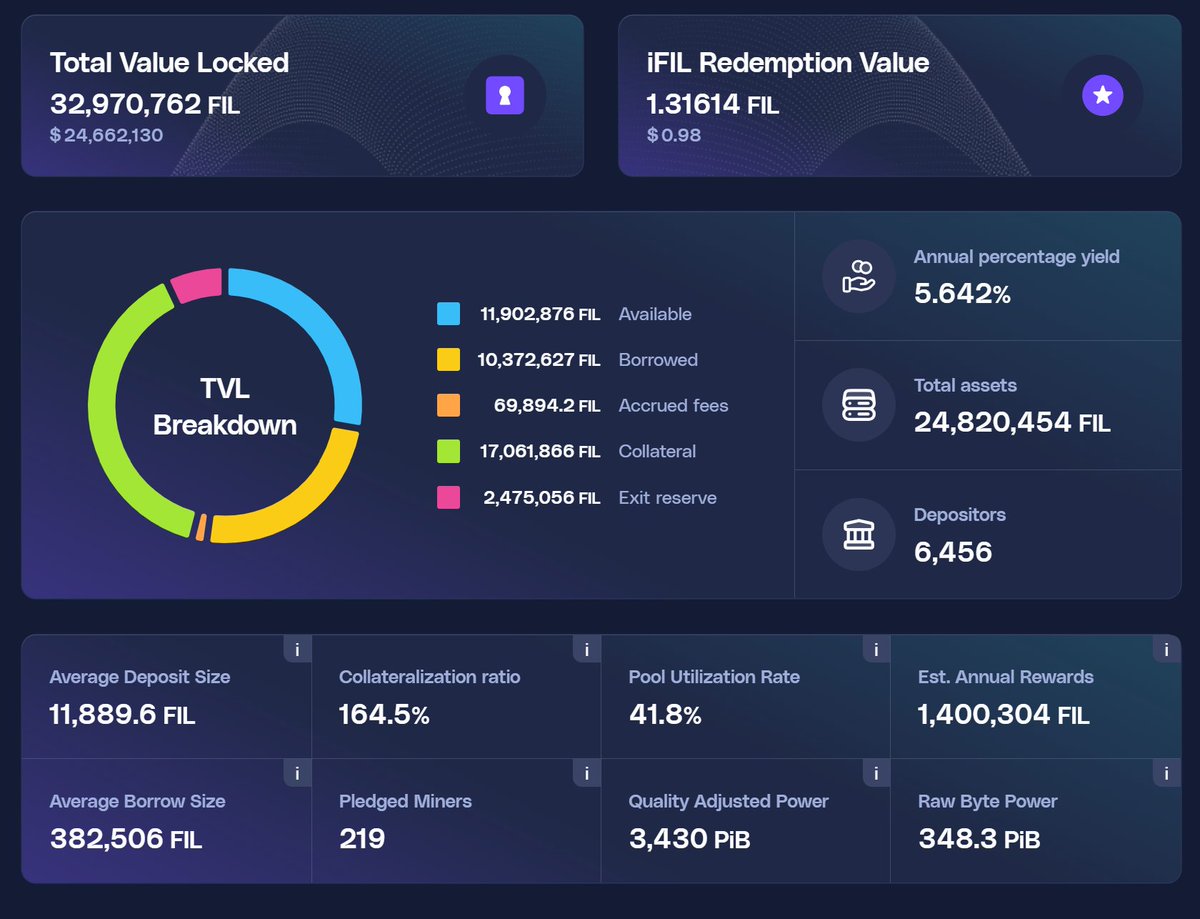
Key @glifio stats:
Available: 11.9M FIL
Borrowed: 10.4M FIL
Collateral: 17.1M FIL
Exit Reserve: 2.48M FIL
Accrued Fees: 69.9K FIL
APY: 5.64%
Total Assets: 24.8M FIL
Depositors: 6,456
Utilization Rate: 41.8%
Collateralization Ratio: 164.5%
2
2
9
264
Jun 11
7/ The close
The scientific record disappears at 17% per year because it was built on billing cycles, not permanence.
Filecoin is the network built for data that needs to outlast the organizations that created it.
3
3
81
Jun 11
2/ The mechanism
Researcher gets a grant, runs the experiment, stores the data on a university server.
Grant ends, institution stops paying the bill, server gets wiped.
The experiment can never be reproduced. The public investment is nullified.
3
1
6
142
Jun 11
6/ What Filecoin does
Every file is addressed by a content hash derived from the data itself.
If content changes, the identifier changes.
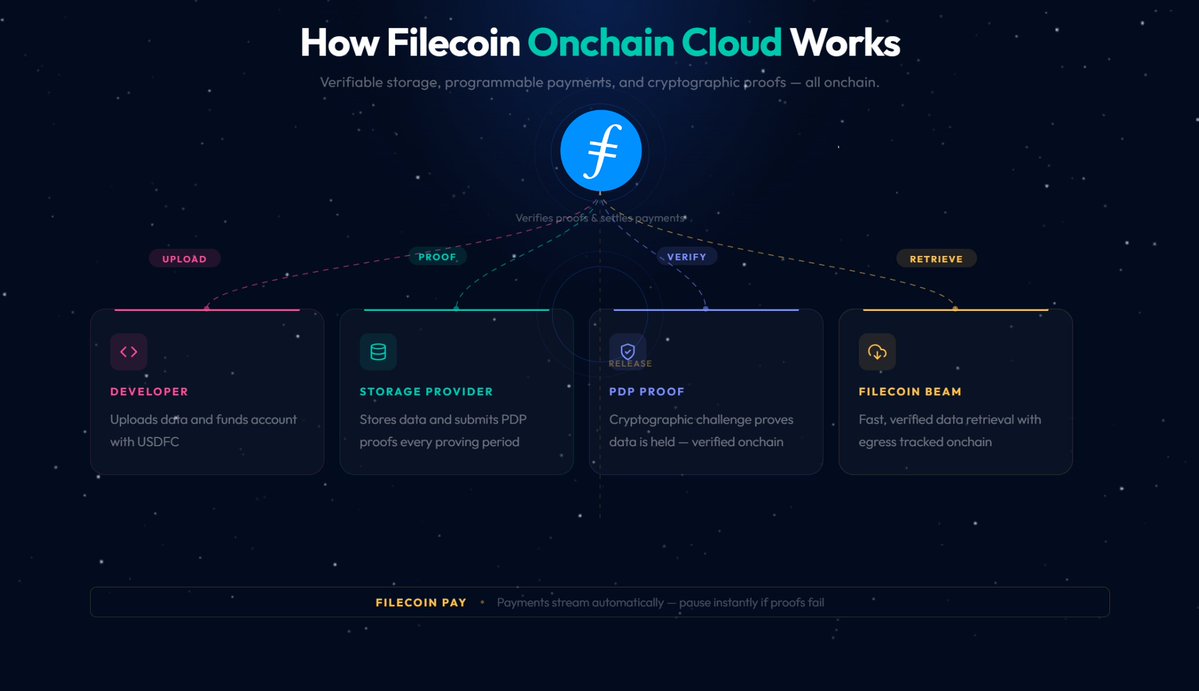
Storage providers verify data via cryptographic proof. What a researcher retrieves in 2040 is identical to what was stored today.
1
2
64
Jun 11
5/ The institutions
@SETIInstitute stored its Mars signal on Filecoin, accessible globally via a permanent content hash.
@Cornell: 5PB of astrophysics simulations, @internetarchive.
Not pilots. Institutions that decided their data needs to outlast their infrastructure.
1
4
83
Jun 11
4/ The egress trap
Sharing large datasets on traditional clouds is expensive on purpose.
Moving 5 petabytes of open-source research data off AWS triggers roughly $450,000 in egress fees.
The pricing model punishes open science.
1
1
42
Jun 11
3/ The economic stake
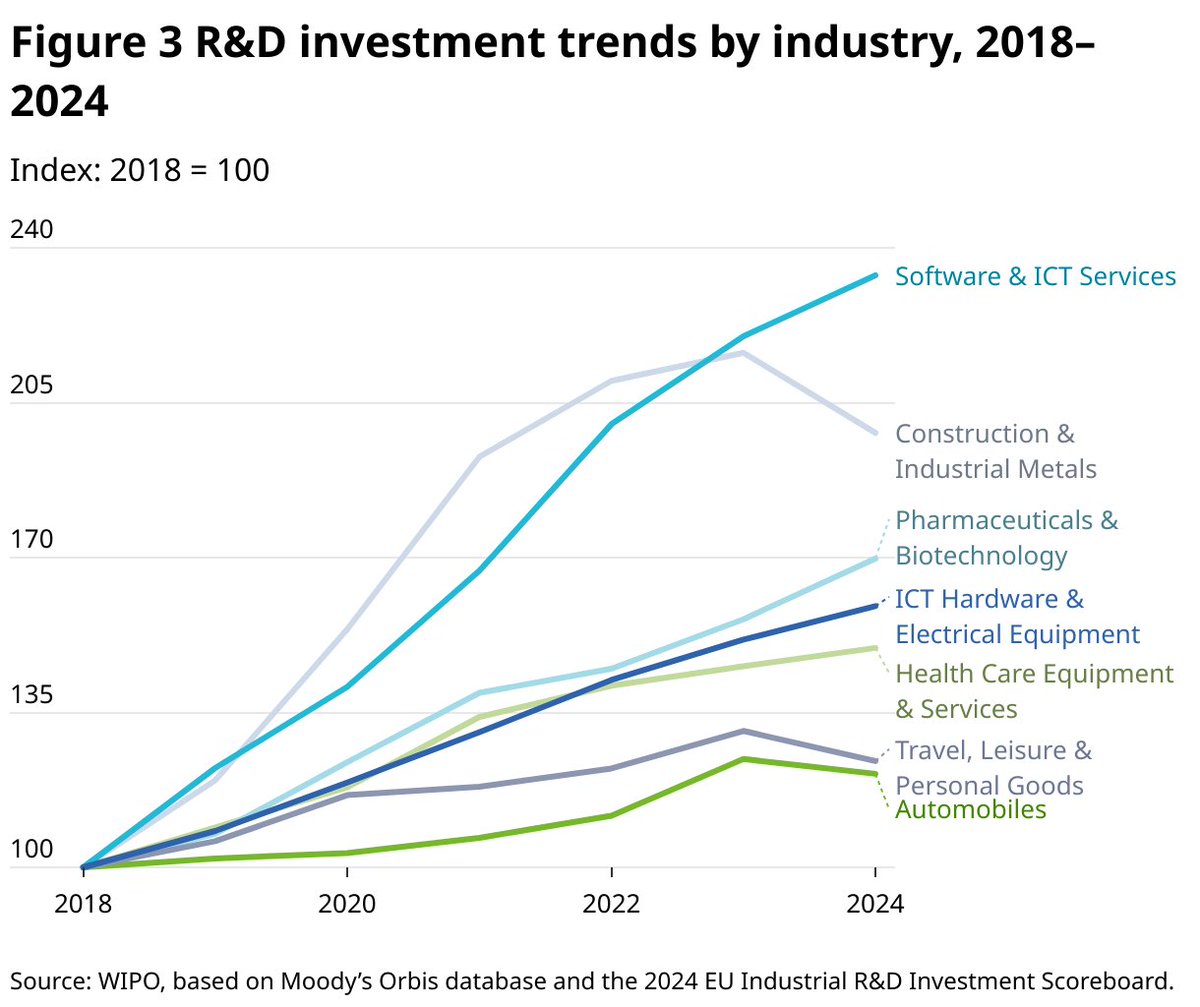
Global R&D expenditure runs $1.5 trillion annually.
When the underlying data disappears, findings can't be verified or built on. That's not a storage problem.
It's a compounding tax on every dollar spent on science before it.
1
1
51
Jun 11
🧵80% of publicly funded scientific data is gone within 20 years
TL;DR: Odds of finding a dataset fall 17% per year.
Moving 5PB off AWS costs $450K in egress.
SETI, Cornell, Internet Archive store on Filecoin. The scientific record needs verifiable infrastructure.
5
4
32
54,742
Jun 11
1/ The number
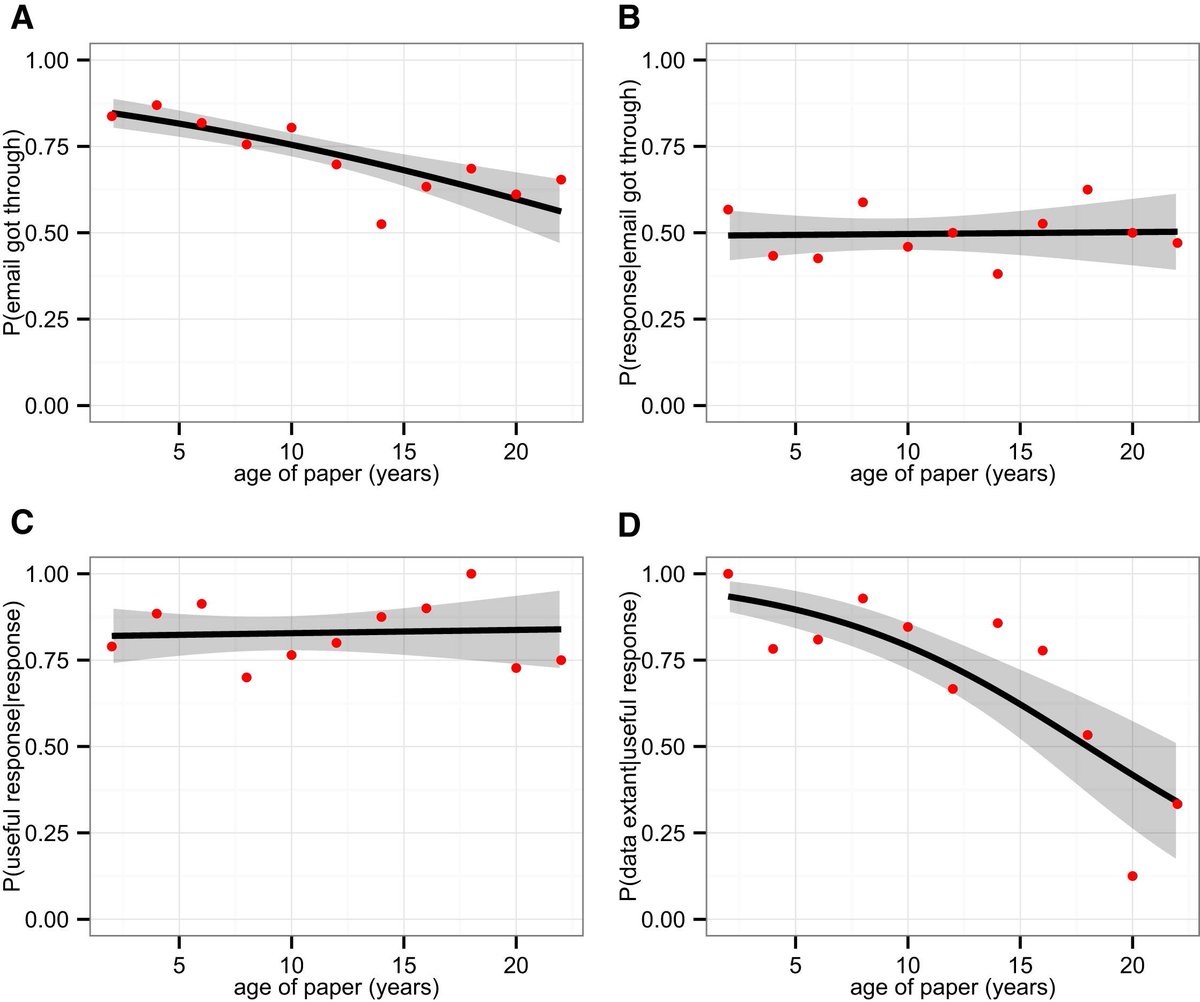
80% of publicly funded research data is inaccessible within 20 years of publication.
Not deleted. Not classified. Just gone.
Old email addresses, decommissioned servers, expired grants.
The odds of finding a dataset fall 17% every year after publication.
1
1
8
230
Jun 11
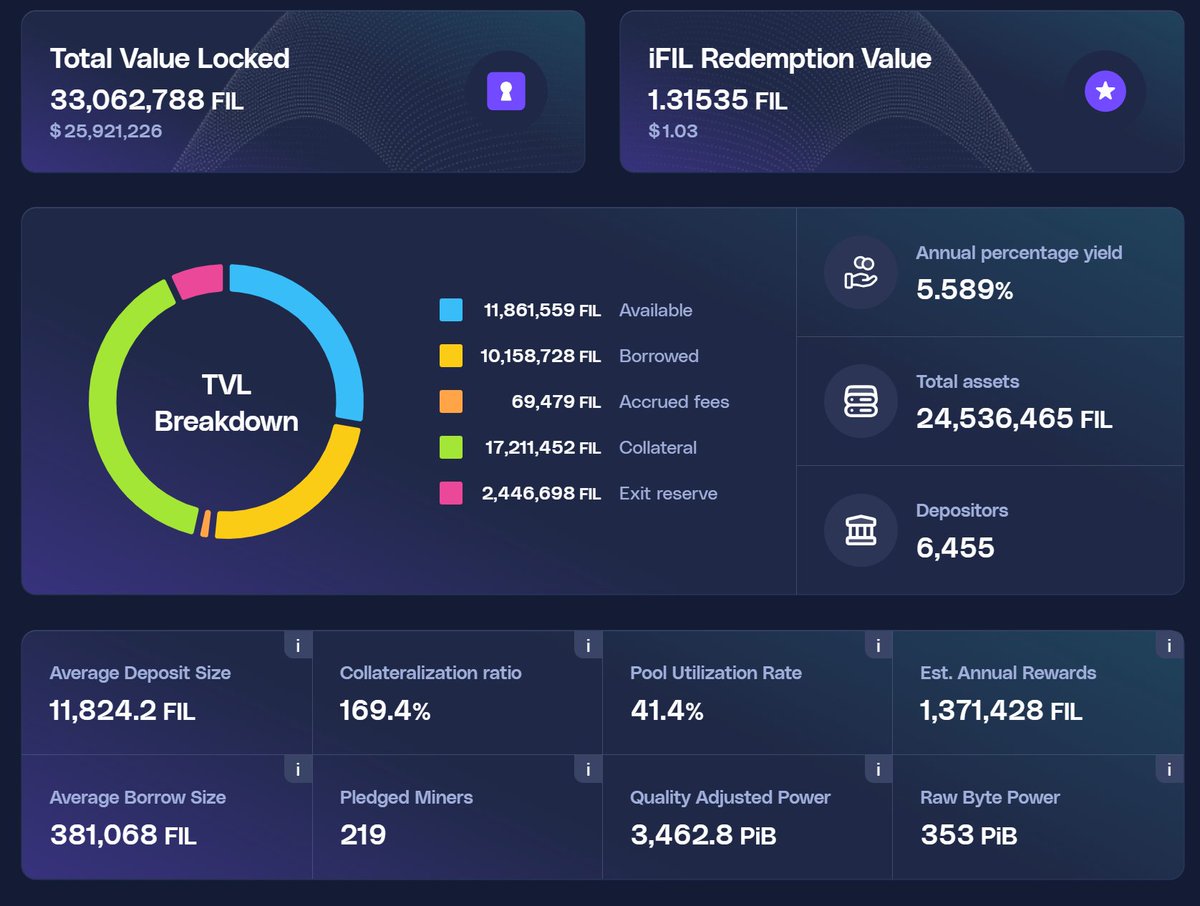
Key @glifio stats:
Collateral: 17.21M FIL
Exit Reserve: 2.45M FIL
Accrued Fees: 69.5K FIL
Average Deposit: 11.82K FIL
Average Borrow: 381.07K FIL
Collateral Ratio: 169.4%
Utilization Rate: 41.4%
Pledged Miners: 219
Estimated Annual Rewards: 1.37M FIL
3
2
13
59,793
Jun 10
🧵Akave April engineering cycle
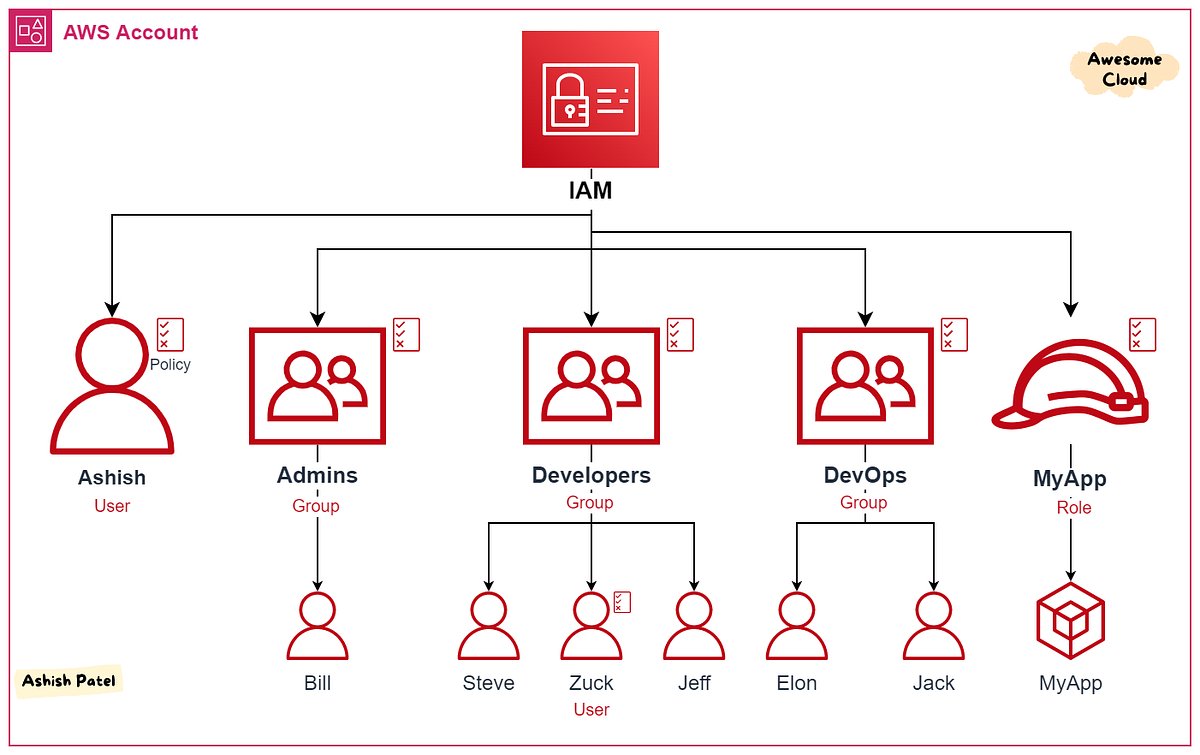
TL;DR: Akave rebuilt multipart uploads, tightened AWS IAM compatibility, and introduced streaming transfer pipelines for AI workloads.
$14.99/TB, zero egress.
Production-grade infrastructure is catching up to the price.
4
2
26
87,046
Jun 10
7/ The roadmap
Full Upload2/Download2 productionization, adaptive erasure coding, expanded IAM management, PDP dataset visibility, and repair workflows.
The April cycle is evidence that the team ships against what enterprise AI infrastructure genuinely requires.
1
2
87