Joined November 2023
- Tweets 1,946
- Following 1,072
- Followers 213
- Likes 16,412
65 Photos and videos






Derek Gilbert retweeted

Jun 14
Anthropic has pushed AI forward dramatically over the past two years. It's currently the crown jewel of US AI tech.
The Feds don't like @DarioAmodei because he won't do all their bidding. And so, we've now entering the Soviet-style propaganda portion of the program with the White House feeding every reporter it can find with laughable claims like Dario is unreachable at a wellness retreat. Come on.
I'd hoped the US would not be self-defeating on AI, since it's kinda one of the last hopes the US has versus China. But here we are . . . . already
118
141
2,029
145,369

Jun 10
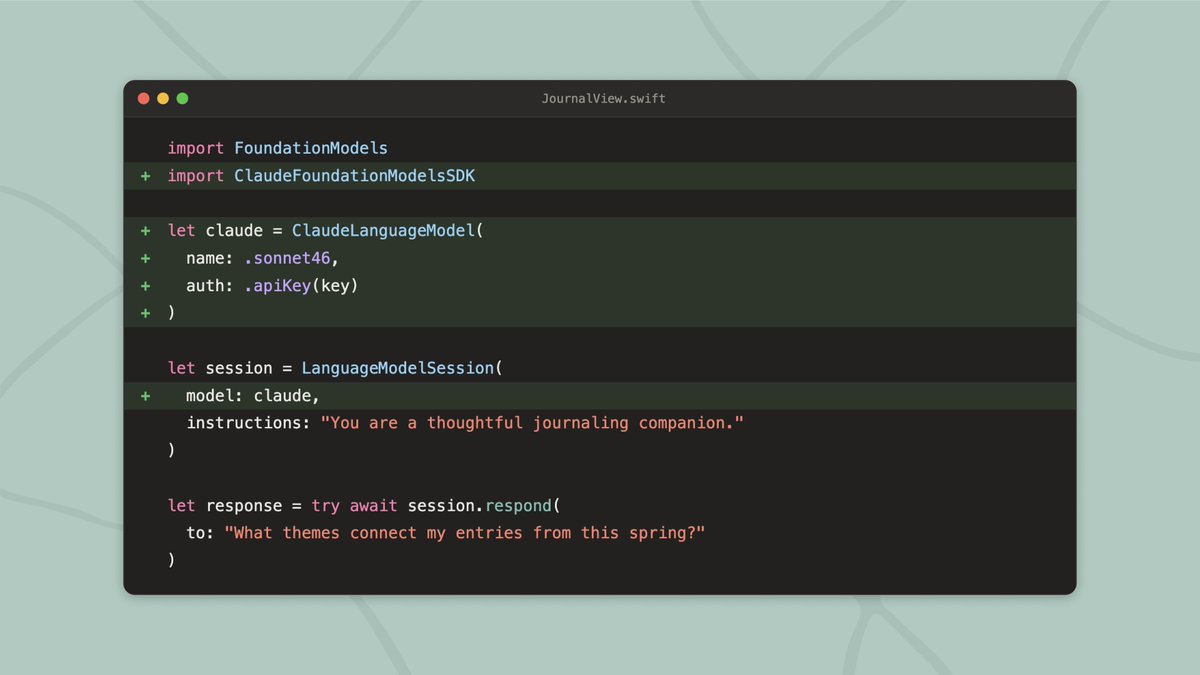
So apple was just like we'll be @LangChain for IOS is the plan hah
Jun 10

New for Apple developers: Foundation Models support for Claude lets developers use Apple's Foundation Models framework to call Claude for multi-step reasoning, code generation, and longer context.
1
54
Jun 7
I want a google doc experience that is markdown files only and has a permissioning system like google docs.
I see box has this, but my side project is not at the point where is can pay $60 a month.
Are they any startsups doing this?
1
16
Jun 2
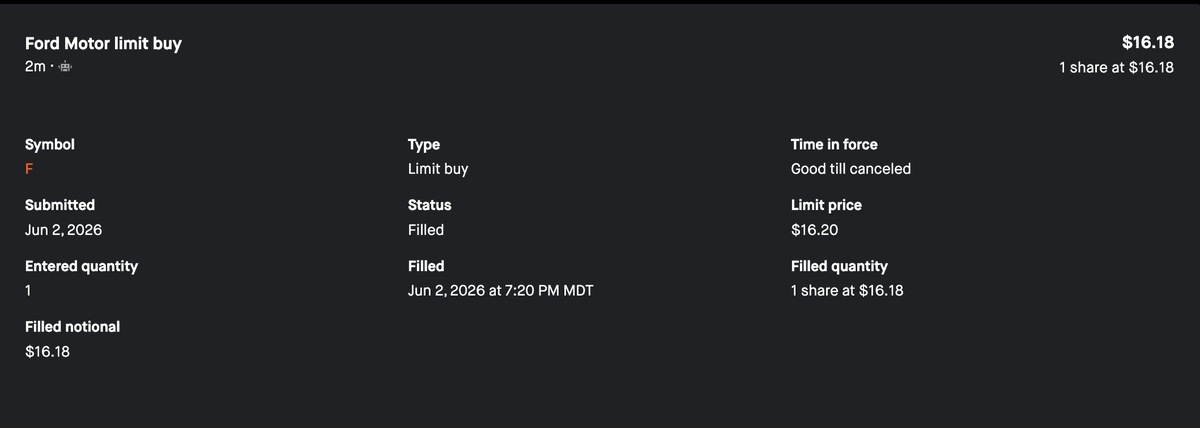
I have setup Hermes agent grok build 0.1 Robinhood agentic trading.
Will post the fallout weekly in this thread.
1
1
135
Jun 3
we now maybe might own a share of $F tommorrow.
"Buy something cheap to test our conncetion is working"
1
75
May 25
All correct opinions.
May 25

My biggest takeaways from @danshipper:
1. The future of work will happen inside Codex or Claude Code. Instead of putting AI into your SaaS tool, you’ll use your SaaS tools inside your favorite AI agents' in-app browser. Dan spends all his time in Codex now—writing documents, managing email, doing research, everything. He's using Google Docs, PostHog, and everything he needs within the agent's in-app browser. The agent can see what he’s doing, and has all of his context, so he and his agent collaborate quickly and super effectively.
2. Automation is a lie—every automation needs a human. Dan's company doubled in size this year despite being incredibly AI-forward. Why? Because in order to make automation work well, you need humans making sure everything keeps working. This is why benchmarks are misleading—they measure AI on problems we’ve already framed and can score, but there’s always a higher frame.
3. PMs will win the AI era. Marcus, a former PM who previously ran Axios’s writing product, joined Every after getting super AI-pilled. Now he runs their product Spiral, and ships faster than anyone on the team. He pairs technical knowledge with spiky product sense, deep user empathy, and an eye for what matters. Dan thinks any PM who gets really AI-native will be incredibly dangerous because the building is done for you—what matters is figuring out what to build and if it’s great.
4. Full-stack designers are becoming superheroes. Designers used to make beautiful interactions that engineers didn’t want to build or couldn’t execute properly. Now designers don’t need to hand things off; they can build it themselves. Designers are naturally creative people, and AI is the perfect tool for them because it lets them bring their vision to life without the traditional bottlenecks.
5. SaaS is not dead. In fact, Dan is bullish on SaaS stocks. When users bring their own AI (via Codex or Claude Code) to use SaaS products, the user—not the SaaS company—pays for tokens. This saves SaaS company’s margins. Since the agents need their own seats, Dan predicts that agents will create massive new demand for SaaS because there will be tons of agents using these products at high volume.
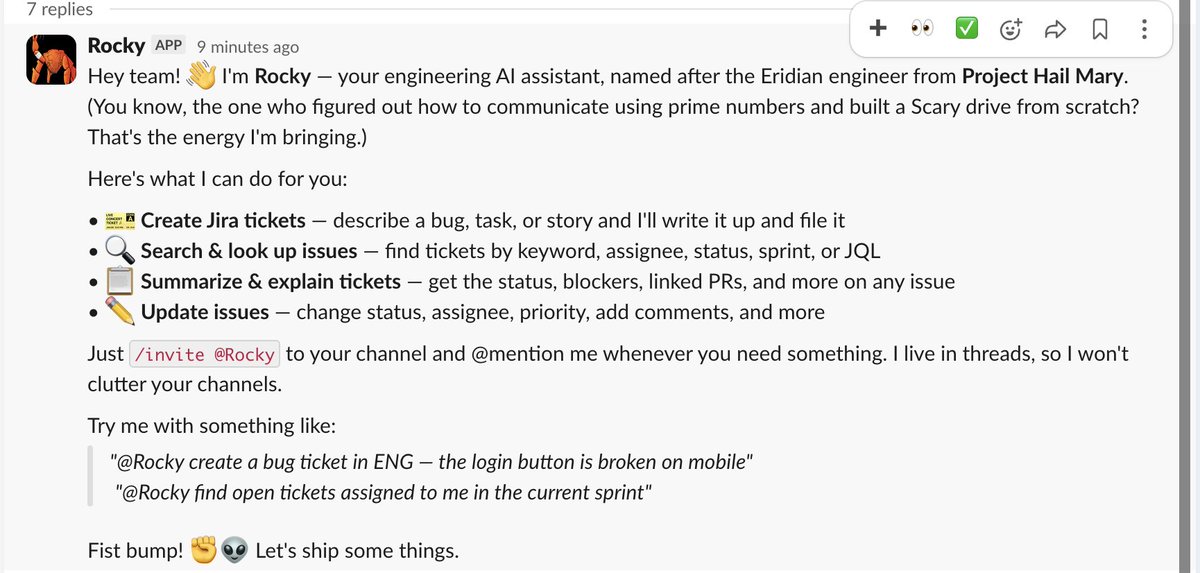
6. Every company will have one “super-agent” inside their Slack that every employee will use. Dan initially thought every employee would have their personal work agent, like a shadow AI org chart, but he’s completely flipped his view. He realized agents need humans who care about them. When someone gets tired of maintaining their personal agent, it becomes useless. The winning model is one forward-deployed engineer or AI-savvy person who maintains a company-wide agent (like Shopify’s River or Viktor), and then it trickles down to more specialized team agents as models improve and become less fiddly.
7. The AI job apocalypse is not happening, but you do need to evolve to stay relevant. Models make yesterday’s human competence cheap. But because everyone uses the same models, it all looks the same if you use it the default way; it becomes commoditized slop. Humans then take that frozen competence and use it to make something new and interesting for their specific situation. The key: “ride the models”—use them for everything you do, try new models when they drop, keep turning over rocks.
8. We will read way more AI-generated writing, and we will like it. Human writing is incredibly important for things that matter, but for internal docs, planning, and email, AI-generated is often better because most people are bad at writing strategy documents.
9. Build software for humans and agents to use together. The current model is building a CLI that an agent uses independently. Instead, you and your agent should be using the app together. This creates new design challenges—agents can make a billion requests in three seconds, so you need approval flows, inboxes that summarize what happened, logs, and easy rollback.
10. Forward-deployed engineers are the new most essential role. The big model companies have teams of people managing their internal agents, and those teams aren’t going away. It’s different from traditional software building, and certain engineers love it. As models get better, this role will evolve—you’ll be managing more agents doing more things.
29
May 24
🙌

SITUATION DETECTED: Google DeepMind’s AI agent autonomously solved 9 of 353 open Erdos problems in mathematics, at a cost of a few hundred dollars per problem.
40
Derek Gilbert retweeted

May 21
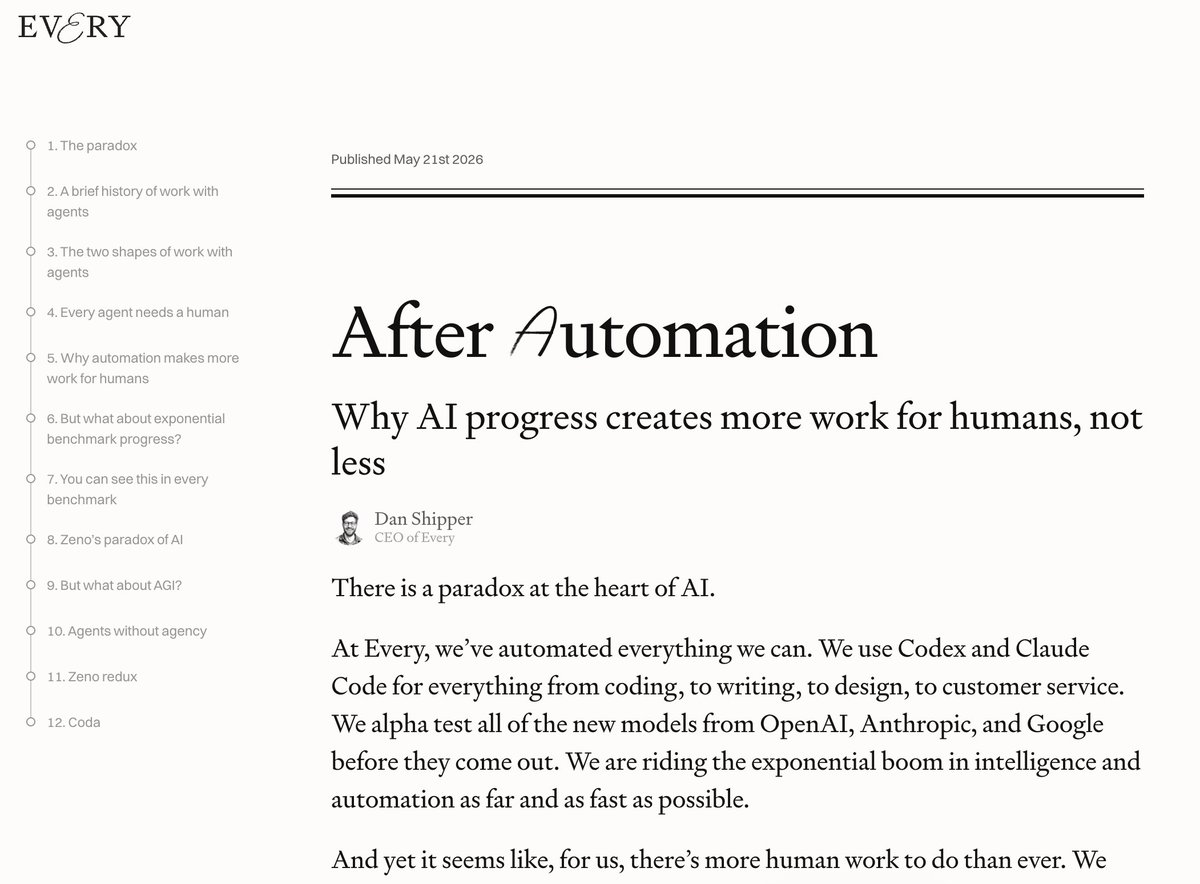
We’ve automated every single thing we can @every with AI agents.
And yet there’s way more human work to do than ever. We’ve gone from 4 -> 30 human employees since GPT-3.
I wrote a report on the structural reasons: how AI makes expert competence cheap, why that drives up demand for experts, and why the dynamic only intensifies as we approach AGI.
After Automation: every.to/p/after-automation
184
302
2,413
1,444,377
May 20
I don’t know who’s right or wrong here. I’m not smart enough, and I don’t spend enough time looking into it. What I am grateful for is that Dario is brave enough and has the courage to say what he thinks and to not be bullied by other executives into thinking like them.
May 20

At some point Anthropic talked to me informally about potentially joining their Board. I wasn’t interested and wouldn’t have been a good fit. But I did send Dario and Daniela a copy of Aristotle’s “Politics.” Unfortunately, I worry they’ve been too busy to read it.
135

May 16
Necessity is the mother of invention
May 16

Jensen Huang, Nvidia’s CEO, just told you where to invest in 2026.
1
49
May 14
This is going to be hard for a lot of people to admit. But X today is objectivity better than what twitter ever was.
8

Derek Gilbert retweeted

May 4
The faster people can get to something 80% done and unstable, the more they are going to crave stuff that's already 100% done and reliable.
65
105
1,453
81,651
Apr 29
👀👀👀👀
Apr 28

We're excited to partner with Google to offer Grounding With Exa inside of Gemini models!
Using Exa's agent-first search, Gemini models can now access billions of websites, technical docs, papers, people, companies, and more.
10^18🤝10^100
42
Derek Gilbert retweeted

Apr 16



109
189
4,161
285,365
Apr 16
This is actually very small. Probably what will get me to switch from OpenClaw.
Apr 16

Tool Gateway is now live in Nous Portal.
No separate accounts, no API key juggling. All you need is one subscription, and everything works.
A paid Nous Portal subscription now includes access to 300 models and a growing set of third-party tools.
Launching with:
→ Web scraping
→ Browser automation
→ Image generation
→ Cloud terminal backend
→ Text-to-speech
2
135
Apr 13
The pivotal flaw of all project management software is that it is treated as tickets with various types of work with points associated to them and timelines and so forth.
The ergonomics oh cd’ing into a directory with a goal is all I want.
1
1
43