
Your friend with health benefits | Write 5HT weekly | Run Healthyish Content | Founded Greatist
Joined December 2009
- Tweets 24,120
- Following 1,085
- Followers 8,871
- Likes 7,566
448 Photos and videos









Derek Flanzraich retweeted

The best part of being an adult is realizing nobody can stop you from spending $1,000 on a lazy river for your backyard.
As kids we dreamed about this stuff.
As adults we call it “financial planning.”

Community note
This image shows an AI-generated fake product; no such Coleman lazy river pool is sold by Costco or Coleman. costco.com coleman.com youtube.com/watch?v=fnDjqt…
336
596
9,525
1,361,224
Derek Flanzraich retweeted

Jun 6
🤯 JUST IN: INCREDIBLE PHASE 3 DATA ON RETATRUTIDE PRESENTED AT ADA
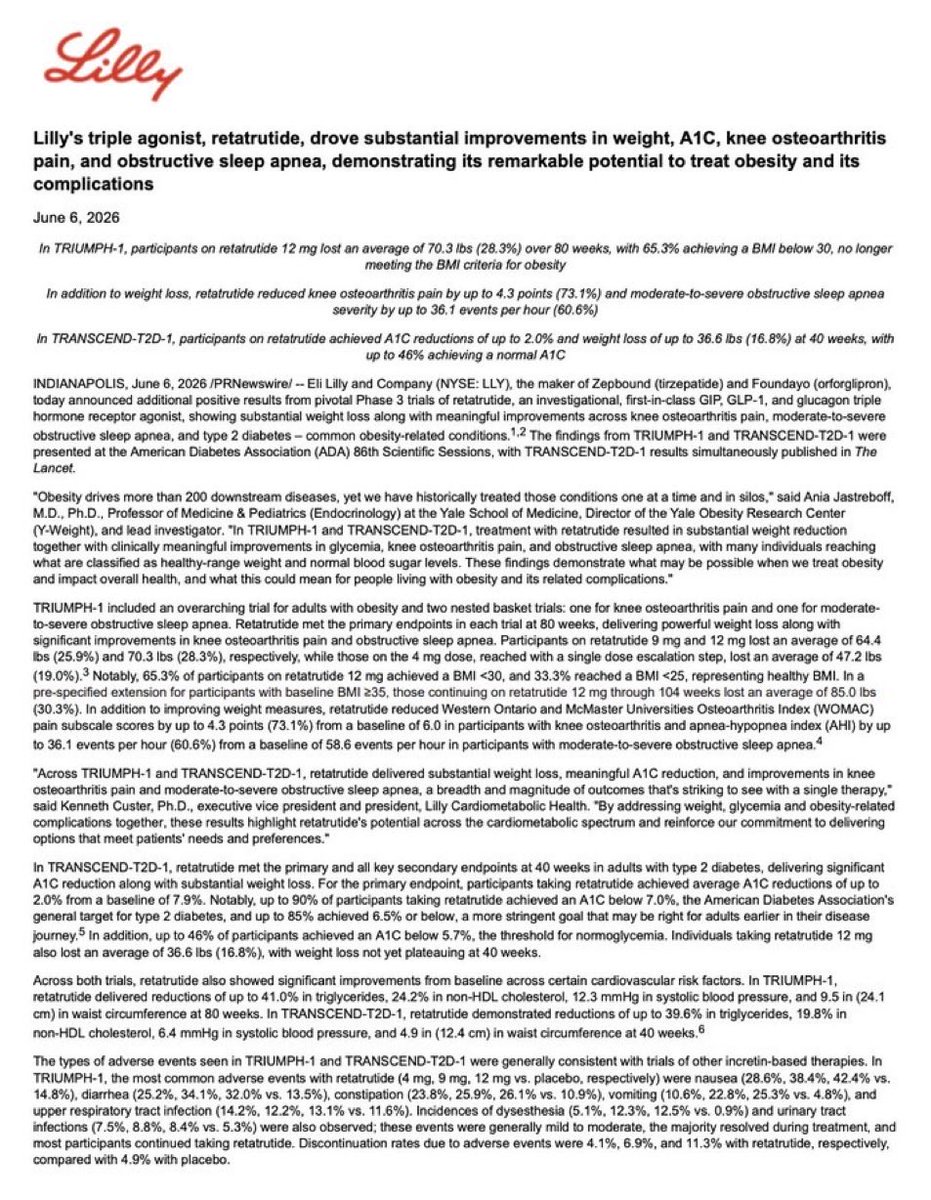
At ADA this weekend, Eli Lilly ($LLY ) presented new Phase 3 data from TRIUMPH-1 and TRANSCEND-T2D-1. BLUF: 28% (70 pounds) weight loss. Unreal.
In TRIUMPH-1, participants receiving 12 mg of retatrutide lost an average of 70.3 pounds (28.3%) over 80 weeks. Nearly half achieved at least 30% weight loss, and 65.3% were no longer classified as obese (BMI <30) by the end of the study. Among participants who started with BMI ≥35 and continued treatment to 104 weeks, average weight loss reached 85 pounds (30.3%), with no evidence that weight loss had fully plateaued.
What stood out more was the breadth of effect across obesity-related conditions:
Knee osteoarthritis pain improved by 73.1%
Obstructive sleep apnea severity improved by 60.6%
Triglycerides fell by as much as 41.0%
Non-HDL cholesterol declined by 24.2%
Systolic blood pressure dropped by 12.3 mmHg
Waist circumference decreased by 9.5 inches
Meanwhile, in TRANSCEND-T2D-1, retatrutide produced A1C reductions of up to 2.0% from a baseline of 7.9%.
90% of patients achieved A1C <7%
85% achieved A1C ≤6.5%
46% reached A1C <5.7%, which is below the threshold used to define prediabetes
Patients lost 36.6 pounds (16.8%) at 40 weeks, and weight loss was still ongoing at study end.
Obesity medicine is increasingly becoming outcomes medicine.
Historically, we have evaluated obesity drugs primarily on percent weight loss... but payers ultimately care about sleep apnea, osteoarthritis, diabetes, cardiovascular risk, and healthcare costs.
The significance of TRIUMPH-1 and TRANSCEND-T2D-1 is that Lilly is beginning to show a coherent story across those endpoints, not just body weight. I expect this to expand coverage dramatically.
Eli Lilly is the Nvidia of healthcare.
34
97
805
514,530
Derek Flanzraich retweeted

Jun 2
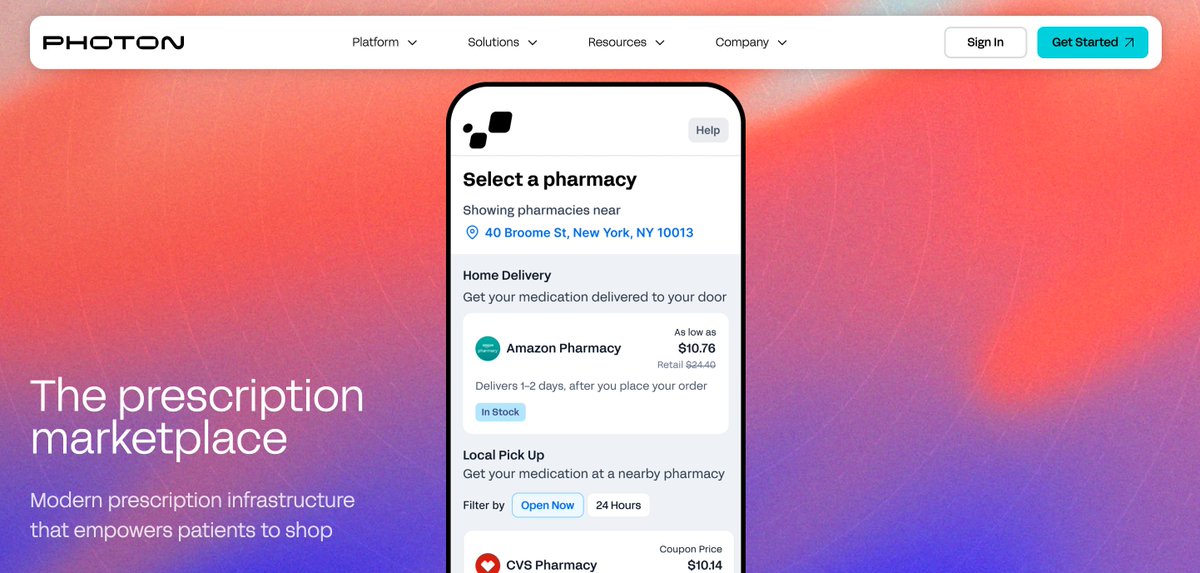
To me, Photon is such an obvious thing that should exist in healthcare
Instead of doctors calling a bunch of pharmacies individually and coordinating your prescription, they send the prescription to a wallet the patient controls.
Then the patient can choose which pharmacy to send it to, and can shop around with that prescription.
I usually don't shill portcos like this, but I don't think they get enough shine tbh
22
9
206
18,398
Derek Flanzraich retweeted

May 24
Thanks to the @oasishealthapp I’ve switched from poisonous FairLife Protein Milk to Bourbon and I can’t even begin to explain how much healthier I feel.
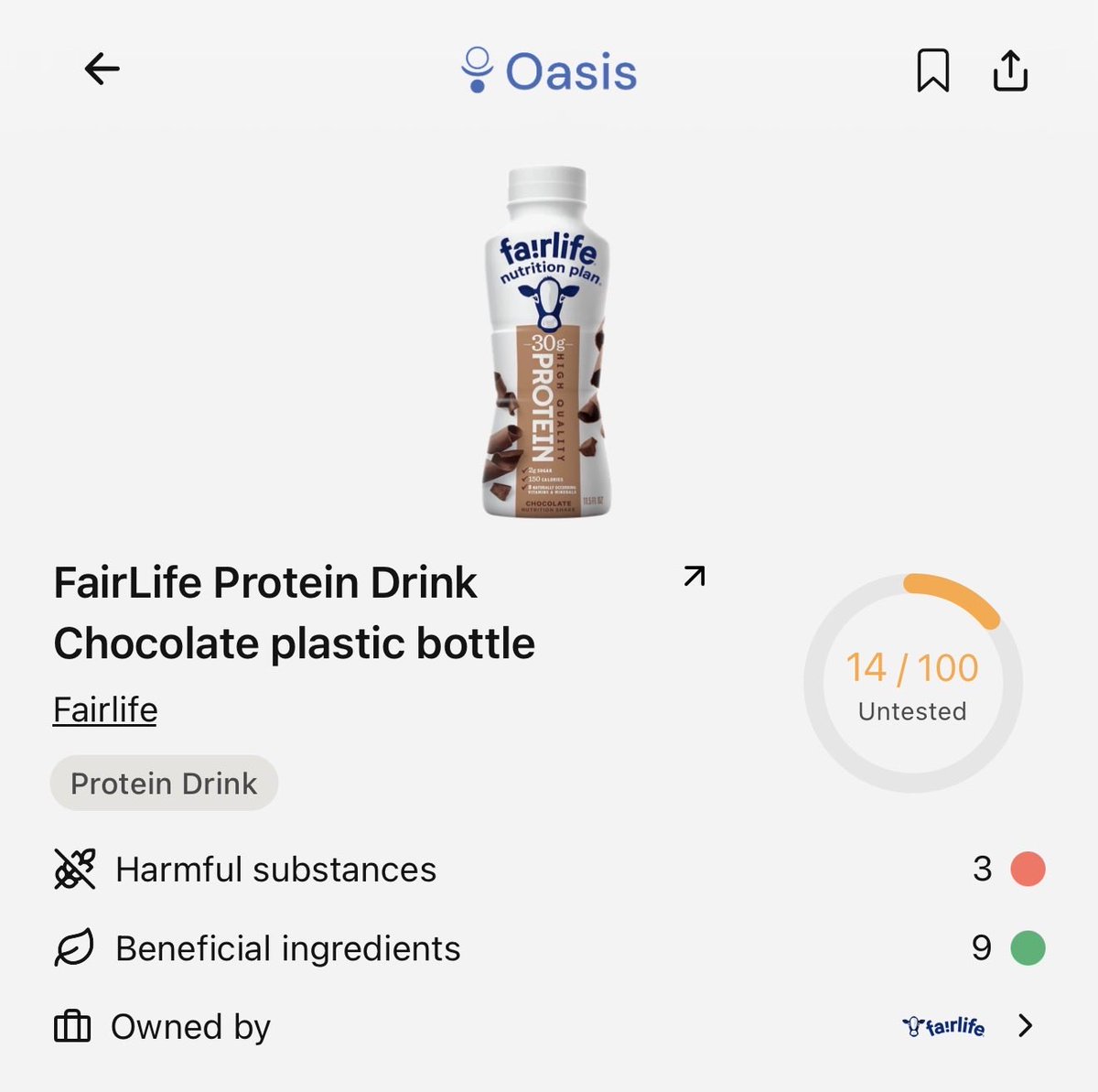
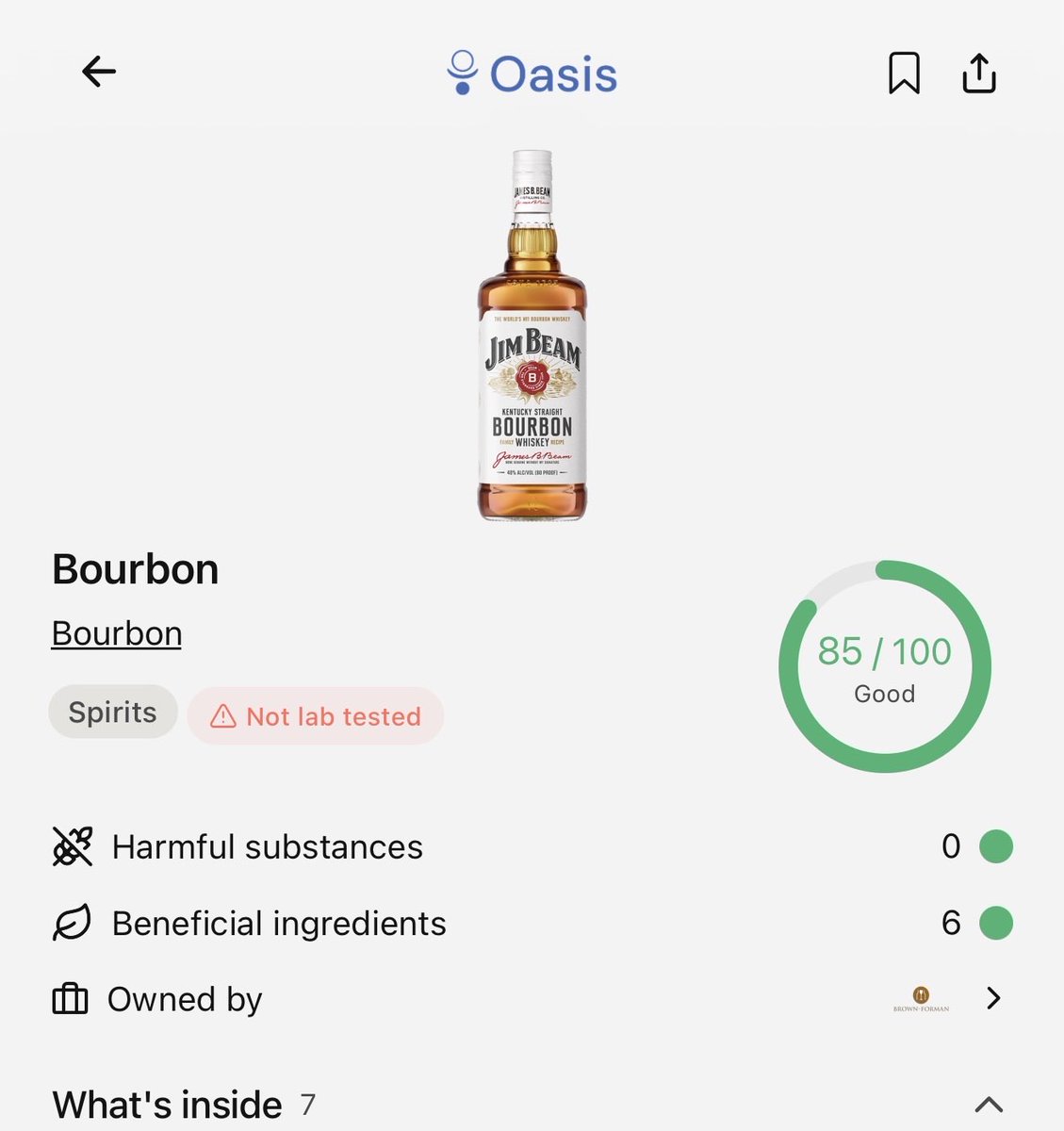
255
3,906
79,832
3,501,078
Derek Flanzraich retweeted

May 18
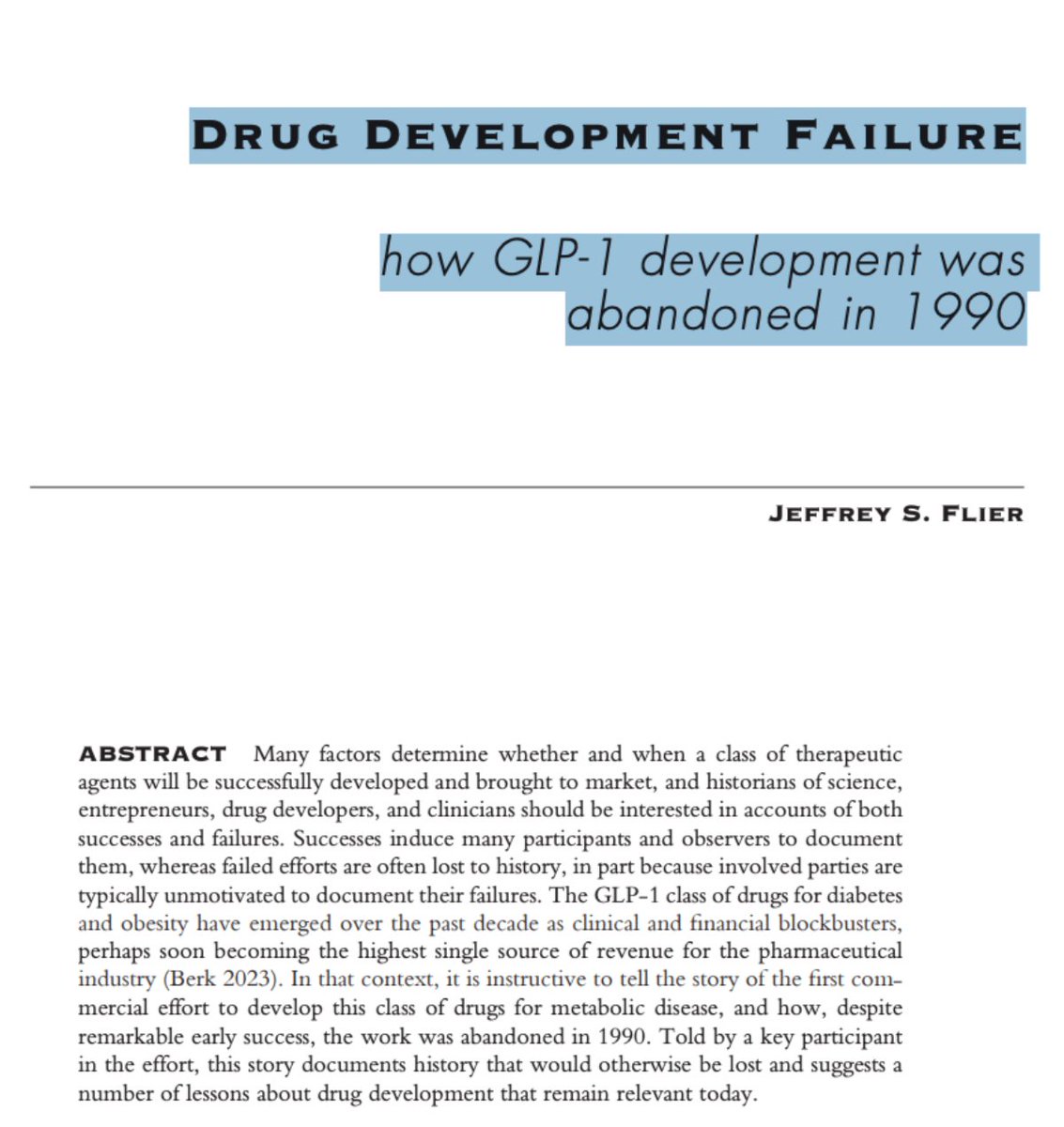
In some very real sense, Ozempic was invented in 1990. Pfizer ran the human trials and just never published them.
They showed it lowered blood glucose in diabetics, slowed gastric emptying, and killed hunger; the same 3 things that make Ozempic work today.
The joint venture agreement said internal data stayed internal, and that was that. Pfizer killed the program in 1991. The reasoning, as far as I can tell, was that nobody would ever want an injectable diabetes drug besides insulin.
So, the license went back to the hospital in Boston that held the patents.
Novo picked it up in 1992 and spent the next two decades building liraglutide, then semaglutide.
It's insane that data sat in a filing cabinet for 30 years.
I only know this because Jeffrey Flier, one of the Harvard scientists in the room, finally wrote it up. He's in his late 70s and didn't want the history to die with him.
This makes you wonder what else is in those filing cabinets.
Ozempic could've existed 27 years ago.
132
1,160
7,474
845,180
Derek Flanzraich retweeted

May 13
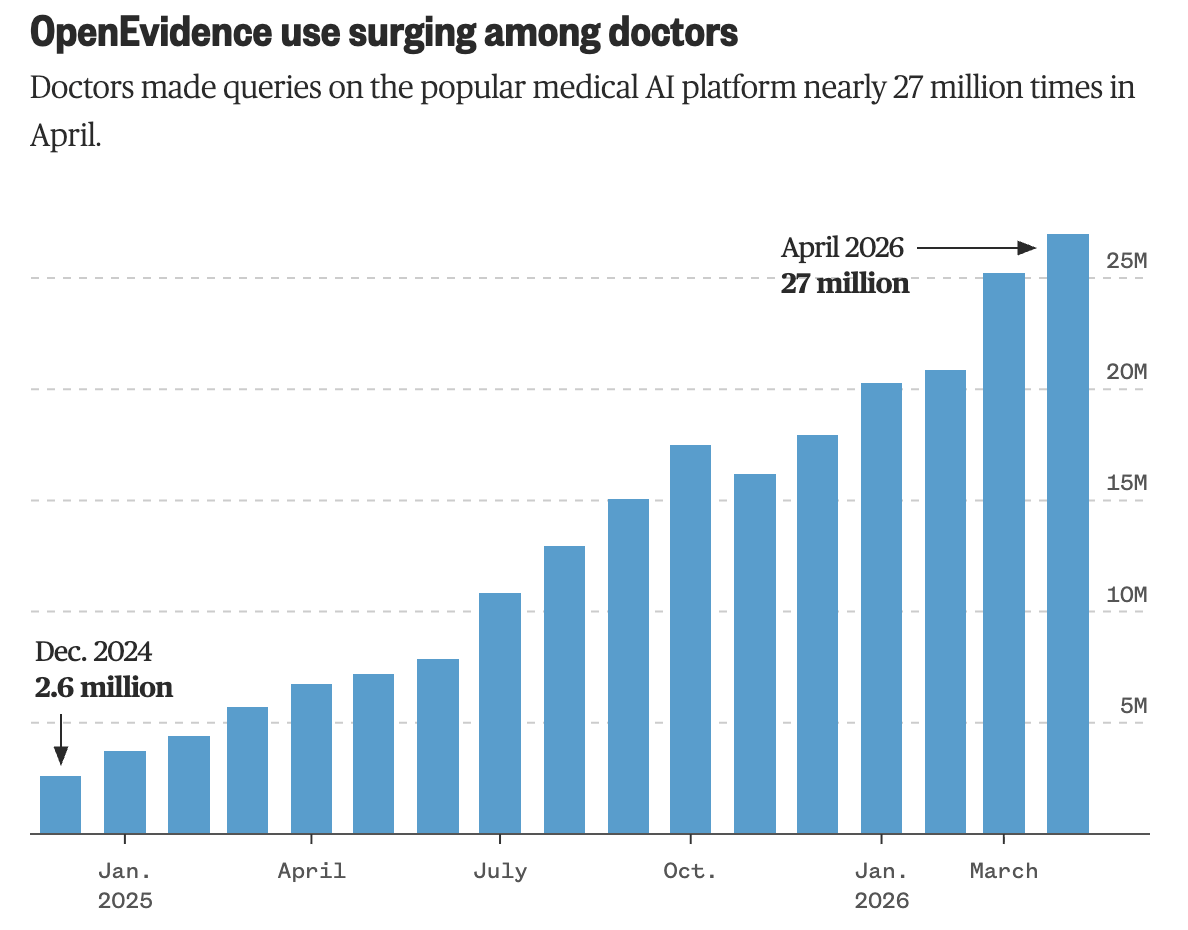
“We did the hardest thing in the history of American health care. We got the majority of American doctors to all voluntarily adopt a single technology platform.”
NBC News on how that happened, what U.S. physicians actually do with OpenEvidence, and how partnerships with NEJM, JAMA, NCCN, and Wiley make it possible.
22
52
222
148,270

May 14
New study shows how impactful at-home remote monitoring can be as healthcare (finally) moves to more of a continuous care model sciencedirect.com/science/ar…
56
May 14
Forus announces a $160M fundraise to accelerate getting the most innovative, best treatments to the right patients (by embedding itself into provider workflows) forus.com/blog/forus-announc…
100
May 14
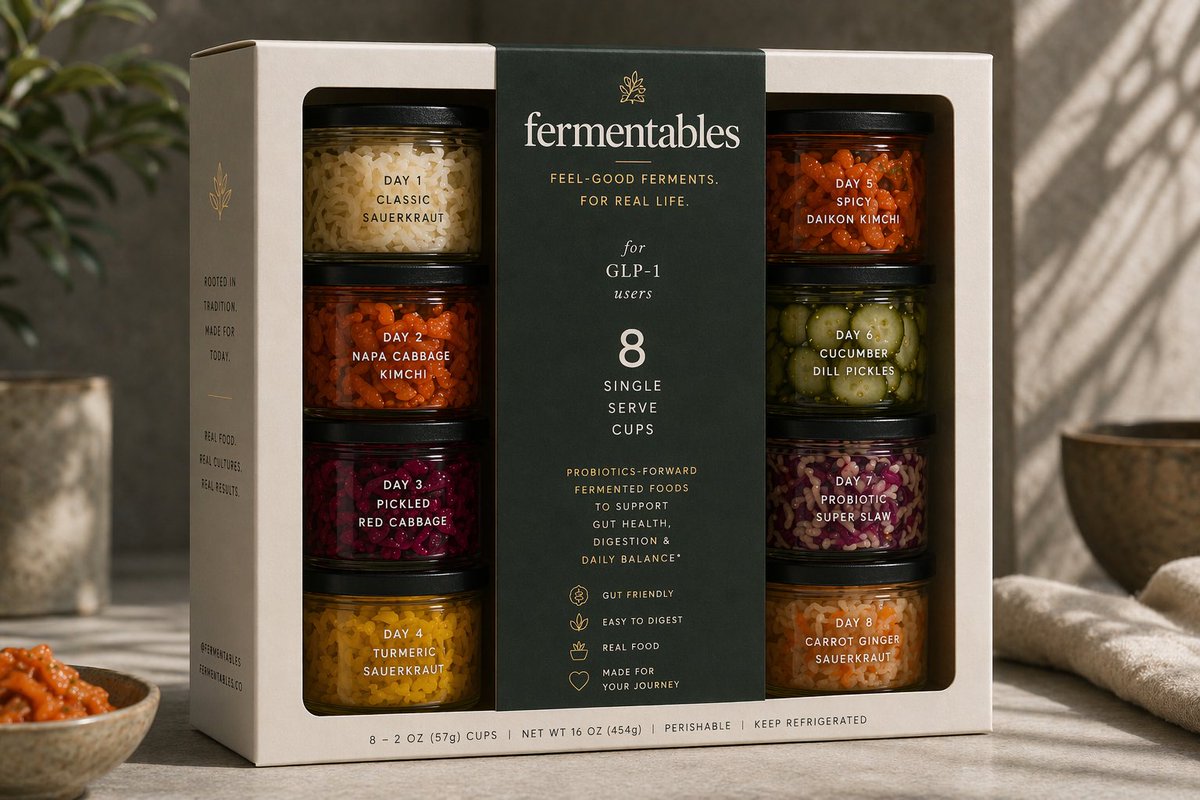
Lifeway announces a killer Q1 driven mostly by kefir and other high-protein products, explicitly citing GLP-1 users as a key demo prnewswire.com/news-releases…
144
May 14
Obesity continues to grow in most countries... minus a few wealthy ones statnews.com/2026/05/13/obes…
47
May 14
There's a "dairy relief" fast-acting lactase digestion patch mybarriere.com/products/dear…
52
Derek Flanzraich retweeted

May 12
This is it.
Everything learned spending millions on longevity.
From: Your Immortal Unc and Auntie.
To: Our Immortal nieces and nephews.
0. Sleep is the world's most powerful drug.
1. Be in your bed for 8 hours
2. Same bedtime every night, any time before midnight
3. Don’t eat right before bed
4. Calm foods for dinner
5. No screens 1 hour before bed
6. Avoid added sugar (be aware it’s in everything)
7. Avoid all things in an American convenience store
8. Avoid fried foods
9. Shoes off at the door
10. Eat whole foods, particularly veggies fruits nuts legumes berries
11. Walk a little after meals or air squats
12. Get your heart rate high routinely
13. Lift heavy things
14. Stretch daily
15. Water pik, floss, brush, tongue scrape, morning and night
16. Make an effort to drink water
17. Get sunlight when you wake up (UV is low)
18. Protect skin in midday sun
19. Stand up straight
20. See at least one friend once a week
21. Avoid plastic where you can (in all things)
22. Circulate air in rooms
23. When stressed, breathe, learn to calm your body
24. Go to the dentist
25. Avoid sitting for long times
26. Protect your hearing, the world is too loud
27. Alcohol is bad for you
28. Finish coffee before noon
29. Avoid bright lights after sunset
30. If obese, look into a GLP
31. Sleep in a cold room
32. Texting while driving is dangerous
33. Turn off all notifications
34. Limit social media use
35. Don’t smoke anything
36. If you struggle to sleep, read a physical book before bed
37. 1 hour before bed have a calm wind down routine: bath, read, light walk, listen to music
38. The body is a clock and loves routine. Have a daily morning and evening schedule.
39. Avoid long distance travel where you can
40. Baby steps first: incorporate new things slowly
41. Do less… most things don’t work.
Bonus points if you get your blood checked.
Start here, it will change your life.
1,038
4,864
43,309
5,714,147
May 12
Super interesting data on increasing LLM use for health stuff rockhealth.com/insights/the-…
70