
Zionist. Political commentator. Security expert and a Middle East Researcher.
Joined May 2023
- Tweets 26,680
- Following 989
- Followers 9,062
- Likes 52,013
1,715 Photos and videos



Pinned Tweet

7 Oct 2025
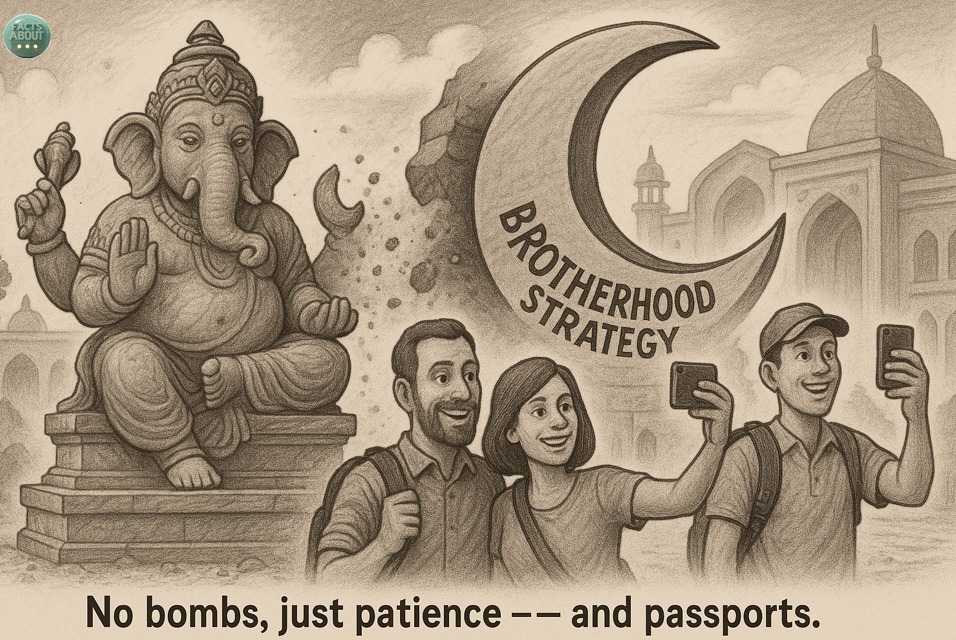
For years, people mocked anyone who warned about Islamist long-term strategies. Now it’s unfolding in plain sight. The Muslim Brotherhood and its allies don’t rely on one tactic - they use immigration jihad, money jihad, political jihad, birth jihad, and of course violent jihad. Each one chips away at Western resilience in different ways, all serving the same ideological goal: the spread of Islamist rule. To them there is "Dar Al-Islam" ("the house of Islam"), and "Dar Al-Harb" (the house of war) - the latter to be made house of Islam through war.
Dismissing “jihad” as merely “spiritual struggle” is like pretending Mein Kampf ("My struggle" in German) was just a self-help book. Imagine falling for that twice. The ideology is openly stated - you just have to take it seriously.
Israel is living the front line of what Europe is sleepwalking into. Islamists can’t tolerate non-Muslim sovereignty, especially on lands they once colonized. That’s why Israel (like Spain) is a particular obsession: Judaism and Christianity re-emerged there, defying Islamist supremacy. A strong Israel is literally blasphemy, and Spain is so confused it's joining it's own enemy against those who fight it.
Qatar bankrolls and platforms this machine - funding the Muslim Brotherhood, buying influence in universities and media, weaponizing Al-Jazeera as a propaganda arm. Meanwhile, waves of unvetted, military-aged men enter Europe; mosques become hubs for radical preaching; birthrates shift demographics; and short-sighted leaders keep feeding the crocodile, hoping to be eaten last, and emboldening the same terrorists - that start riots and "intifada" in the west - driving away the Jews - and showing their weakness to the predators, awaiting to feast.
Europe is approaching a breaking point. Islamist movements are patient, organized, and ideological. Western elites are distracted, divided, and afraid of being called names, and woke demoralization campaigns make sure it's stays that way. If Europe wants to survive as a free civilization, it has to wake up - before it's too late, stand with Israel, and stop mistaking appeasement for virtue.
x.com/destinationXIX/status/…
7 Aug 2025

The Muslim Brotherhood’s War on the West Is Real - and It's Working
This isn’t paranoia. It’s a documented strategy - already underway.
The Muslim Brotherhood, the ideological engine behind Hamas and most Sunni Islamist movements, has a 100-year plan to conquer the West - not through bombs, but through institutions, infiltration, and subversion.
Their model? Indonesia.
Once a Hindu-Buddhist society, it gradually fell to Islam without war, through mass migration, slow cultural domination, and the systematic erosion of native identity.
That’s the Brotherhood’s blueprint for Europe and North America.
We know this because they told us.
In the 2008 Holy Land Foundation Trial - the largest terror-financing case in U.S. history - prosecutors exposed a secret Muslim Brotherhood document called "An Explanatory Memorandum".
It stated, in plain Arabic, their goal:
“To destroy Western civilization from within... and sabotage its miserable house... so that it is eliminated and God's religion is made victorious.”
They weren’t vague. They listed their tools:
CAIR (Council on American-Islamic Relations)
ISNA (Islamic Society of North America)
ICNA (Islamic Circle of North America)
Muslim Students Association (MSA)
All still active. All still funded.
And they infiltrated the U.S. government too.
Obama’s administration welcomed figures with deep Brotherhood ties - like Dalia Mogahed and Rashad Hussain - as advisers on Muslim outreach.
They shaped narratives, softened the West’s stance on Islamism, and helped redefine criticism of political Islam as “Islamophobia.”
In France, Macron suddenly recognized a Palestinian state - days later, Qatar wired billions in investment into the French economy.
Coincidence? Or a deal?
Meanwhile, Qatar owns more of London than King Charles does.
Luxury properties, financial firms, even iconic buildings - all controlled by a regime that funds the Brotherhood and shelters Hamas leaders in five-star hotels.
Their mission:
Import large numbers of Muslims into the West, even illegally
Use identity politics to silence dissent
Ban criticism of Islam under “hate speech” laws
Demoralize the population through crime, riots, and cultural guilt
Destroy national unity using Soviet-style psychological operations (exactly what the KGB did during the Cold War)
This isn’t immigration. It’s infiltration.
And yet, the Brotherhood is still legal in the U.S., UK, and EU.
Why?
Because the elites they bought are too compromised, too cowardly, or too blind to act.
This is not about Islam.
It’s about radical Islamism - a political ideology cloaked in religion.
Even Muslim-majority countries like Egypt, Saudi Arabia, and the UAE have banned the Muslim Brotherhood and declared it a terror group.
They know how dangerous it is - so why doesn’t the West?
The Muslim Brotherhood must be banned.
Its institutions dismantled. Its networks exposed.
Not tomorrow. Now.
Because if we wait — our children will be strangers in their own homelands.
219
882
1,915
681,843
facts about retweeted
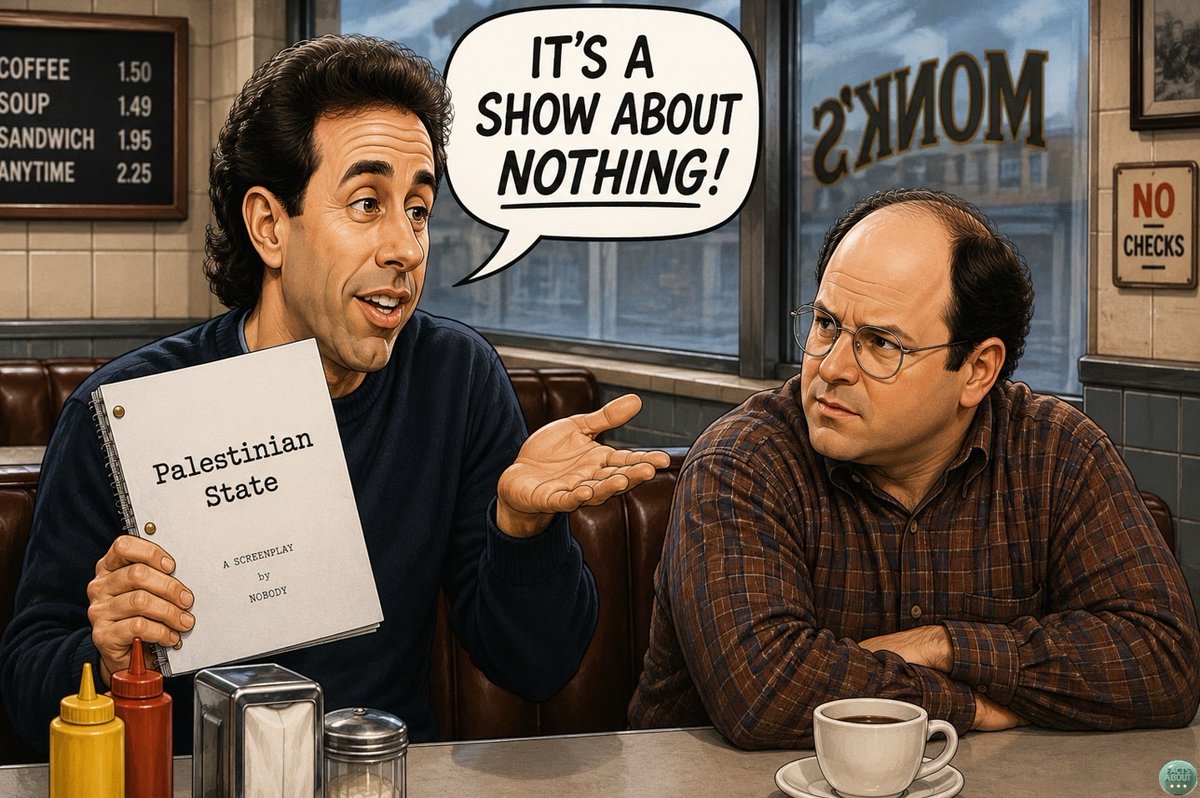
Seinfeld saw it coming ;)
x.com/destinationXIX/status/…
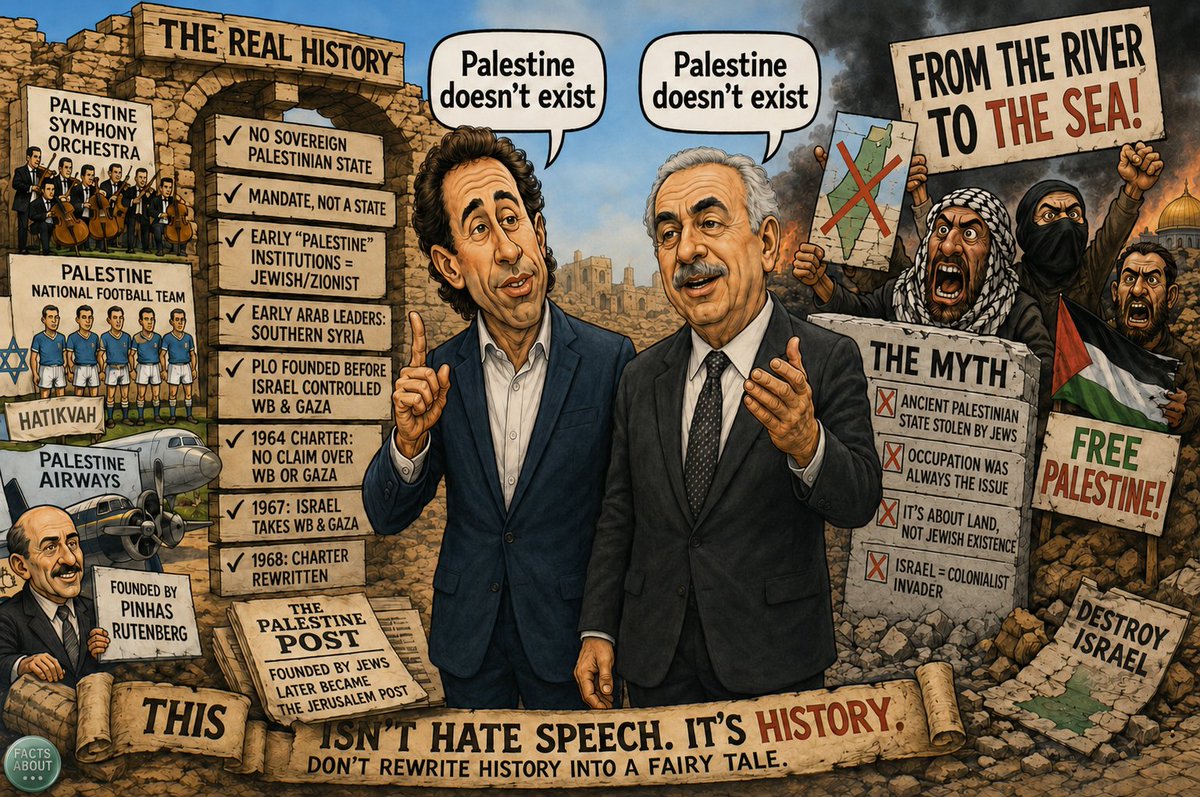
When Jerry Seinfeld said “Palestine doesn’t exist”, the predictable outrage machine did what it always does: it screamed, but Jerry is hardly the first person to notice reality.
Of course, the millions of Arabs who call themselves ״Palestinians״ today are not imaginary. They are real people, with real lives, real suffering, real political aspirations, and real agency.
But those people are not the indigenous people of “Palestine”, because there has never been a sovereign Arab state called Palestine. There was no Palestinian king, no Palestinian parliament, no Palestinian currency, no Palestinian army, no Palestinian passport, no ancient Palestinian republic, no internationally recognized Palestinian state that Israel came along and “stole.”
And awkwardly, some prominent Palestinians used to say this openly.
Zuheir Mohsen, a senior PLO figure, was quoted in 1977 saying: “The Palestinian people does not exist”. He explained that there was “no difference between Jordanians, Palestinians, Syrians and Lebanese”, and that Palestinian identity was emphasized for “political and tactical reasons” in the struggle against Zionism.
So let’s not pretend this argument was invented yesterday by a Jewish comedian.
Before 1948, “Palestine” was not an Arab state. It was a geographic and administrative term. Under the British, it meant the British Mandate for Palestine - a mandate created after the collapse of the Ottoman Empire, with the explicit purpose of facilitating a Jewish national home while protecting the civil and religious rights of all inhabitants.
The Mandate was not “the State of Palestine”. It was not created to establish an Arab Palestinian state. It was the legal framework through which the international community recognized the Jewish people’s historical connection to the land and assigned Britain the task of helping build the Jewish national home.
And before 1964, the word “Palestinian” was very often associated with Jews.
The Palestine Symphony Orchestra? Founded by Jewish musicians and later became the Israel Philharmonic.
The Palestine national football team? Dominated by Jews, played Hatikvah, and became the forerunner of Israel’s national team.
Palestine Airways? Founded by Zionist Pinhas Rutenberg with Jewish/Zionist institutions.
The Palestine Post? Founded by Jews; later became The Jerusalem Post.
So when people show old “Palestine” coins, stamps, teams, newspapers, or institutions as proof of an ancient Arab Palestinian state, they often do not realize they are showing artifacts of the British Mandate - and in many cases, institutions built by the Jewish Yishuv.
That is why the claim “Palestine existed before Israel” is misleading. Yes, the administrative region existed. No, a sovereign Arab Palestinian state did not.
Even most local Arab leaders did not originally describe themselves as members of a separate Palestinian nation. In 1919, Arab congresses in the region argued that Palestine was part of “Southern Syria”. The early political demand was not “Free Palestine” as a separate Palestinian nation-state. It was incorporation into a broader Arab Syrian or pan-Arab framework.
This is not a minor detail. It goes to the heart of the issue.
For decades, the dominant Arab claim was not “we are a separate Palestinian people entitled to a Palestinian state next to a Jewish state”. It was “this is Arab land, Jews have no right to sovereignty here, and Palestine is part of the Arab nation.”
Then came 1948.
Jordan occupied and annexed the West Bank. Egypt occupied Gaza. From 1948 to 1967, there was no Palestinian state in either territory. No global campus movement demanded “end the Jordanian occupation.” No UN machinery obsessed over Egyptian rule in Gaza. No Arab armies invaded Jordan to liberate Ramallah. No one demanded that Egypt create an independent Palestine in Gaza.
Then in 1964, the PLO was created - three years before Israel controlled the West Bank or Gaza.
And here is the part people do not like discussing: the original 1964 PLO Charter explicitly said the organization did not exercise territorial sovereignty over the West Bank, then under Jordan, or Gaza, then under Egypt.
In other words, the PLO was not founded to “end the occupation” of the West Bank and Gaza. Israel did not control them.
The target was Israel itself.
Then came 1967. Israel ended the occupation of the West Bank from Jordan and Gaza from Egypt in the Six-Day War. Suddenly, the same territories that had not been the focus of “liberation” under Arab rule became the center of the world’s most famous "territorial" grievance.
In 1968, the PLO revised its charter. The inconvenient Article 24 disappeared.
So was the problem really “occupation”? Or was the problem Jewish sovereignty?
This is why “ending the occupation” was never the original goal. The original goal was not a Palestinian state beside Israel. It was no Israel.
That position did not disappear. It was simply repackaged.
When “Palestine” means Ramallah and Gaza, it sounds like a territorial compromise. When “Palestine” means “from the river to the sea,” it means the replacement of Israel. That is not anti-occupation. That is anti-Jewish existence. It’s not anti-genocide - it’s flat out genocidal.
And the demographic story is more complicated than the slogans too.
The common narrative presents Jews as foreign arrivals entering a settled, coherent Palestinian Arab nation-state. But much of the land in the 19th century was poor, neglected, sparsely populated, disease-ridden in places, and under Ottoman rule. Jewish agricultural development, drainage, employment, capital, and infrastructure attracted not only Jewish immigrants but also Arab migration from surrounding areas. The Peel Commission itself noted Arab economic gains connected to Jewish development, and other British observations described illegal migration into Palestine from neighboring Arab regions.
None of this means every Arab family arrived recently. Many did not. Many had deep roots. And many of them remained after the establishment of Israel and became citizens. But it does destroy the cartoon version: ancient unified Palestinian nation peacefully minding its own state until Jews appeared from nowhere.
There was no such state.
There were Ottoman subjects. Then British Mandate residents. Jews. Muslims. Christians. Druze. Bedouin. Arabs who often saw themselves as part of Greater Syria or the broader Arab nation. Jews who called the land Eretz Israel while the British called the administrative territory Palestine, of which only 20% of land was owned by anyone.
Only then, after Israel was born, “Palestinian” identity hardened into a separate national identity - especially after Arab armies failed to destroy Israel and after Israel took the West Bank and Gaza in 1967, an identity that was all about resisting the Jewish state..
This means the moral accusation against Israel is built on a false premise.
Israel did not conquer a sovereign state called Palestine.
Israel did not erase a Palestinian government that had ruled for centuries.
Israel did not invade an Arab Palestinian country in 1948.
Israel accepted partition. The Arab side rejected it and launched a war.
Then the Arab states that seized the remaining territories did not create Palestine either.
So when someone says “Palestine doesn’t exist”, they are right.
And if the only “Palestine” being demanded is one that replaces Israel from the river to the sea, then Seinfeld’s answer is not just right now, but it will be right forever.
2
6
120
When Jerry Seinfeld said “Palestine doesn’t exist”, the predictable outrage machine did what it always does: it screamed, but Jerry is hardly the first person to notice reality.
Of course, the millions of Arabs who call themselves ״Palestinians״ today are not imaginary. They are real people, with real lives, real suffering, real political aspirations, and real agency.
But those people are not the indigenous people of “Palestine”, because there has never been a sovereign Arab state called Palestine. There was no Palestinian king, no Palestinian parliament, no Palestinian currency, no Palestinian army, no Palestinian passport, no ancient Palestinian republic, no internationally recognized Palestinian state that Israel came along and “stole.”
And awkwardly, some prominent Palestinians used to say this openly.
Zuheir Mohsen, a senior PLO figure, was quoted in 1977 saying: “The Palestinian people does not exist”. He explained that there was “no difference between Jordanians, Palestinians, Syrians and Lebanese”, and that Palestinian identity was emphasized for “political and tactical reasons” in the struggle against Zionism.
So let’s not pretend this argument was invented yesterday by a Jewish comedian.
Before 1948, “Palestine” was not an Arab state. It was a geographic and administrative term. Under the British, it meant the British Mandate for Palestine - a mandate created after the collapse of the Ottoman Empire, with the explicit purpose of facilitating a Jewish national home while protecting the civil and religious rights of all inhabitants.
The Mandate was not “the State of Palestine”. It was not created to establish an Arab Palestinian state. It was the legal framework through which the international community recognized the Jewish people’s historical connection to the land and assigned Britain the task of helping build the Jewish national home.
And before 1964, the word “Palestinian” was very often associated with Jews.
The Palestine Symphony Orchestra? Founded by Jewish musicians and later became the Israel Philharmonic.
The Palestine national football team? Dominated by Jews, played Hatikvah, and became the forerunner of Israel’s national team.
Palestine Airways? Founded by Zionist Pinhas Rutenberg with Jewish/Zionist institutions.
The Palestine Post? Founded by Jews; later became The Jerusalem Post.
So when people show old “Palestine” coins, stamps, teams, newspapers, or institutions as proof of an ancient Arab Palestinian state, they often do not realize they are showing artifacts of the British Mandate - and in many cases, institutions built by the Jewish Yishuv.
That is why the claim “Palestine existed before Israel” is misleading. Yes, the administrative region existed. No, a sovereign Arab Palestinian state did not.
Even most local Arab leaders did not originally describe themselves as members of a separate Palestinian nation. In 1919, Arab congresses in the region argued that Palestine was part of “Southern Syria”. The early political demand was not “Free Palestine” as a separate Palestinian nation-state. It was incorporation into a broader Arab Syrian or pan-Arab framework.
This is not a minor detail. It goes to the heart of the issue.
For decades, the dominant Arab claim was not “we are a separate Palestinian people entitled to a Palestinian state next to a Jewish state”. It was “this is Arab land, Jews have no right to sovereignty here, and Palestine is part of the Arab nation.”
Then came 1948.
Jordan occupied and annexed the West Bank. Egypt occupied Gaza. From 1948 to 1967, there was no Palestinian state in either territory. No global campus movement demanded “end the Jordanian occupation.” No UN machinery obsessed over Egyptian rule in Gaza. No Arab armies invaded Jordan to liberate Ramallah. No one demanded that Egypt create an independent Palestine in Gaza.
Then in 1964, the PLO was created - three years before Israel controlled the West Bank or Gaza.
And here is the part people do not like discussing: the original 1964 PLO Charter explicitly said the organization did not exercise territorial sovereignty over the West Bank, then under Jordan, or Gaza, then under Egypt.
In other words, the PLO was not founded to “end the occupation” of the West Bank and Gaza. Israel did not control them.
The target was Israel itself.
Then came 1967. Israel ended the occupation of the West Bank from Jordan and Gaza from Egypt in the Six-Day War. Suddenly, the same territories that had not been the focus of “liberation” under Arab rule became the center of the world’s most famous "territorial" grievance.
In 1968, the PLO revised its charter. The inconvenient Article 24 disappeared.
So was the problem really “occupation”? Or was the problem Jewish sovereignty?
This is why “ending the occupation” was never the original goal. The original goal was not a Palestinian state beside Israel. It was no Israel.
That position did not disappear. It was simply repackaged.
When “Palestine” means Ramallah and Gaza, it sounds like a territorial compromise. When “Palestine” means “from the river to the sea,” it means the replacement of Israel. That is not anti-occupation. That is anti-Jewish existence. It’s not anti-genocide - it’s flat out genocidal.
And the demographic story is more complicated than the slogans too.
The common narrative presents Jews as foreign arrivals entering a settled, coherent Palestinian Arab nation-state. But much of the land in the 19th century was poor, neglected, sparsely populated, disease-ridden in places, and under Ottoman rule. Jewish agricultural development, drainage, employment, capital, and infrastructure attracted not only Jewish immigrants but also Arab migration from surrounding areas. The Peel Commission itself noted Arab economic gains connected to Jewish development, and other British observations described illegal migration into Palestine from neighboring Arab regions.
None of this means every Arab family arrived recently. Many did not. Many had deep roots. And many of them remained after the establishment of Israel and became citizens. But it does destroy the cartoon version: ancient unified Palestinian nation peacefully minding its own state until Jews appeared from nowhere.
There was no such state.
There were Ottoman subjects. Then British Mandate residents. Jews. Muslims. Christians. Druze. Bedouin. Arabs who often saw themselves as part of Greater Syria or the broader Arab nation. Jews who called the land Eretz Israel while the British called the administrative territory Palestine, of which only 20% of land was owned by anyone.
Only then, after Israel was born, “Palestinian” identity hardened into a separate national identity - especially after Arab armies failed to destroy Israel and after Israel took the West Bank and Gaza in 1967, an identity that was all about resisting the Jewish state..
This means the moral accusation against Israel is built on a false premise.
Israel did not conquer a sovereign state called Palestine.
Israel did not erase a Palestinian government that had ruled for centuries.
Israel did not invade an Arab Palestinian country in 1948.
Israel accepted partition. The Arab side rejected it and launched a war.
Then the Arab states that seized the remaining territories did not create Palestine either.
So when someone says “Palestine doesn’t exist”, they are right.
And if the only “Palestine” being demanded is one that replaces Israel from the river to the sea, then Seinfeld’s answer is not just right now, but it will be right forever.
Jun 10
The "shrinking Palestine" myth can be debunked with one fact:
In Mandatory Palestine, only about *20% of the land was privately owned by anyone*.
Not by Jews.
Not by Arabs.
By anyone.
The rest was mostly state land - first Ottoman state land, then British Mandate/Crown land.
Hence, the famous "shrinking Palestine" map is fundamentally misleading.
You've seen it:
Four panels.
Green shrinking.
White expanding.
The message is obvious:
"The Jews stole Palestinian land".
But the first map does not show Palestinian-owned land.
It shows land that was not Jewish-owned - and then pretends that all of it was Palestinian-owned.
State land becomes "Palestinian land."
Crown land becomes "Palestinian land."
The Negev desert becomes "Palestinian land."
Public land becomes "Palestinian land."
But it wasn't.
Only about 20% was privately owned by anyone at all.
And just under half of that privately owned land was owned by Jews by the end of the Mandate period.
The land Jews did own was purchased legally.
Often at premium prices - sometimes double or triple market prices.
Often from wealthy absentee landlords living in Beirut, Damascus, Cairo, and elsewhere, that were happy to get rid of the barren, neglected land they owned.
Money changed hands.
Contracts were signed.
Deeds were registered.
Land was bought, cultivated, drained, built, and defended.
That is not "stolen land".
That is purchased land.
And the other panels are just as misleading.
The second map presents the 1947 UN Partition Plan as if it were an accomplished fact. It wasn't. It was a proposal - one accepted by the Jewish leadership and rejected by the Arab Higher Committee and the surrounding Arab states, and hence never implemented. No Palestinian Arab state was ever established under that plan because the plan was never implemented.
The third and fourth maps then show the results of successive wars. The 1949 armistice lines emerged after the Arab-Israeli war that followed the rejection of partition, while the post-1967 map reflects territory captured by Israel during the Six-Day War. In other words, the maps present the outcomes of wars and failed diplomatic proposals as if they were simple transfers of privately owned "Palestinian" land. They were not.
There was a theft of land though.
Most people don't know that Jewish organizations also purchased large tracts of land in the Hauran and Golan regions under Ottoman rule, in what is today Syria.
The purchases were legal.
The deeds existed.
The transactions were recognized by Ottoman authorities.
Money changed hands.
Yet those lands were never given to the Jews or became part of the Jewish homeland when later borders were drawn.
The "stolen land" narrative survives because people don't know history, and some will believe just about anything about the Jews.
But the "stolen land" exists and is still owed to the Jews who purchased it, and never received it and never were compensated for it.
6
20
752
facts about retweeted

Both excellent summaries.
However, your essay on John Henry Patterson understated his influence on modern Jewish history.
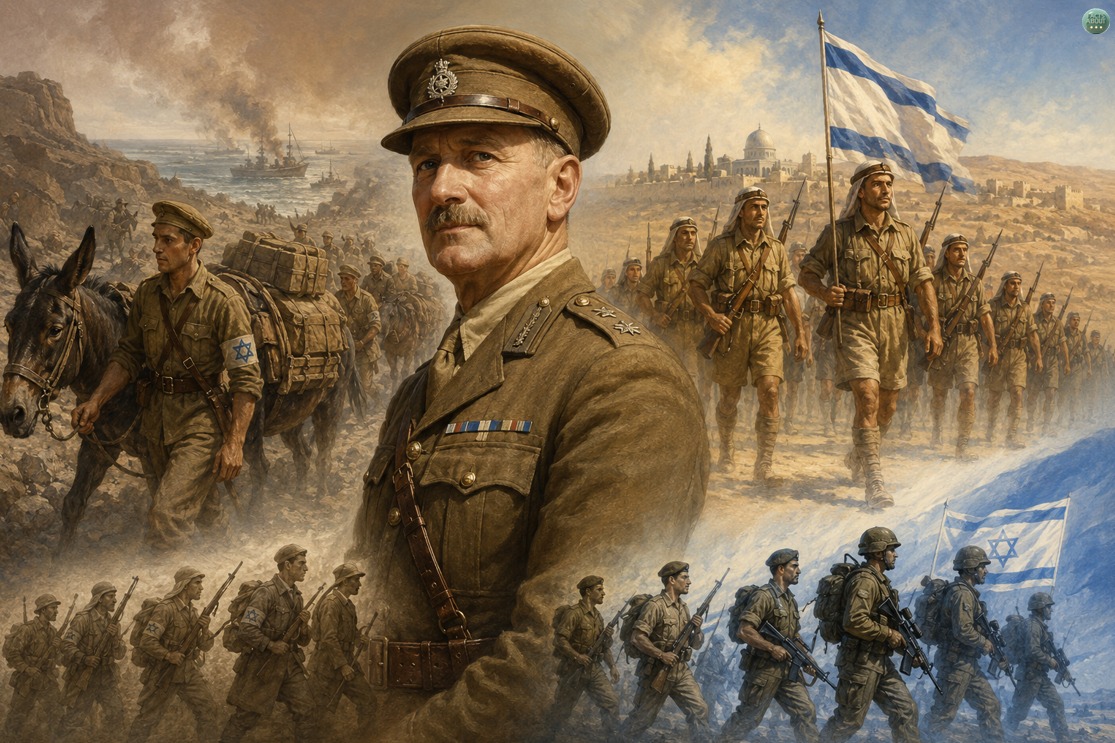
In 1915, Joseph Trumpledor, the one-armed former Russian military captain, alongside Vladimir Jabotinsky, campaigned in London for creating a Jewish fighting force within the British Army, eventually founding the Jewish Legion.
(David Ben-Gurion and Yitzhak Ben-Zvi, whom you mentioned as Jewish Legion recruits, at first stridently fought against the concept of a British-Jewish fighting force, instead initially choosing to side with the Ottomans. )
At first, the British considered and rejected (ridiculed, actually) the concept of a Jewish fighting force. They instead proposed a Jewish logistical unit, eventually called the Zion Mule Corps, to support the Gallipoli campaign. John Henry Patterson (an ardent Christian Zionist) was assigned to command this unit, with Captain Trumpledor as his second-in-command.
The Zion Mule Corps troops were issued (captured) German Mauser rifles and ammunition, for self-defense. Yet, the Muleteers participated in many fighting engagements, and members of the unit were awarded the Distinguished Conduct Medal (DCM) "for gallantry in action."
This unit's success, borne from a catastrophic battle, helped advanced the concept of the Jewish Legion promoted by Patterson, Jabotinsky and Trumpeldor.
When the Legion was founded, Jabotinsky and Trumpledor both volunteered, however Trumpeldor was rejected by the British, due to being one-armed (an injury suffered fighting for the Russian Army against the Japanese at Port Arthur), and an additional, more recent bullet wound suffered in Gallipoli. Trumpeldor then returned to Russia, trying and failing to create a massive Jewish fighting force there aimed towards Palestine, and eventually returning to Kibbutz Degania.
Once committed to battle, the Jewish Legion helped to drive the Germans and Ottomans from the Sinai, Negev and Jordan Valley (where 80% contracted malaria from the mosquito-infested swamps present throughout Palestine). Jabotinsky, commissioned as a lieutenant, led the Legion in crossing the Jordan River and taking it's East Bank.
After the war, the Legion was garrisoned in Palestine, but was forbidden any role in defending the country from Arab riots and pogroms. It was ultimately decommissioned.
As the Arab violence spread, Trumpeldor was killed defending the northern settlement of Tel Hai, and inspired by Trumpeldor's final words ("never mind, it is good to die for our country", Jabotinsky founded the Hagana (underground defense) organization.
Jabotinsky anticipated the commencement of Arab violence against the Jewish community, and founded a 600-strong underground militia, prepared with clubs and light weapons.
The "Nebi Musa" riots of April 4–7, 1920, in Jerusalem was the first successful engagement by what would soon be called the "Hagana" underground self-defense organization, which for the first time, effectively protected Jewish neighborgoods and property from Arab violence.
(In contrast, the British Army and Police utterly failed to protect Jewish residents, and their only success was preventing Jewish police officers and militia defenders from entering the Old City of Jerusalem.)
After the end of the riots, the British arrested both maurading Arabs and defending Jews as equal violators of public order.
Jabotinsky was sentenced to 15 years imprisonment and hard labor for his leadership in founding the Hagana. This judgement infuriated the Jewish community and drove Hagana membership skywards, with Jewish youth vowing to never to be defenseless again.
Jabotinsky went on to found the Betar youth organization, which became the wellspring of many Jewish underground movements; to become the core Jewish fighting forces against the Nazis in European ghettos and forests; and to drive the many ships filled with Jewish escapees from Europe to challenge the British naval blockade to this path of escape from Hitler.
Jabotinsky went on to found the Irgun ("National Military Organization" undergrouns and personally appointed its commanded, David Raziel, who fell during a mission for the British Army in Iraq in 1941. Raziel was eventually succeeded by Menachem Begin.
Patterson indeed was one of the founders of the future Israel Defense Forces, yet his support and leadership also set in train the professional and disciplined Jewish military resistance to Nazism; defeat of Arab-sponsored genocide; and the rescue of hundreds of thousands of Jews from Germany and occupied Europe.
2
9
236
Jun 13
John Henry Patterson - The Lion Hunter Who Built the Jewish Army
The forgotten father of the Israeli military was an Irish Protestant who killed man-eating lions with his bare hands.
His name was Lieutenant Colonel John Henry Patterson. Most people have never heard of him. Without him, Israel's army might never have existed.
In 1898, Patterson was sent to build a railway bridge in Tsavo, Kenya. Two massive lions began hunting his workers - dragging men from their tents at night, devouring 135 people over nine months. The workers called them "The Ghost" and "The Darkness."
Patterson hunted them alone. He killed them both. His book became a bestseller. Hollywood made it into a film. The lions' skulls still sit in the Field Museum in Chicago.
But Africa wasn't his greatest chapter.
In 1915, the British Empire gave Patterson an "impossible" command: take 650 Jewish refugees expelled from Palestine by the Ottomans - men with no military training, no common language, some barefoot - and turn them into a fighting unit for Gallipoli.
This was the Zion Mule Corps. The first Jewish military force in nearly 2,000 years.
The British officer class mocked it. Antisemitic generals tried to sabotage it. Patterson defended his men at every turn - filing complaints, going over commanders' heads, risking his career for soldiers the Empire considered expendable.
At Gallipoli, under devastating fire, the Jewish volunteers didn't break. They carried ammunition to the front lines while men around them fell. They proved that Jews could fight - and that changed history.
After Gallipoli, Patterson commanded the 38th Royal Fusiliers - the Jewish Legion - in the 1918 campaign to liberate Palestine from the Ottomans. Among his soldiers: David Ben-Gurion, Israel's future first Prime Minister. And Yitzhak Ben-Zvi, its future second President.
The men Patterson trained went on to build the Haganah. The tactics he taught became the foundation of the IDF.
After the war, Patterson became one of the most outspoken Christian Zionists in the world. He warned publicly - in the 1930s, when almost no one would listen - that European Jewry faced annihilation. He begged the British to open Palestine's gates. He fought the White Paper that sealed them shut.
The British establishment destroyed his career for it.
Patterson died in August 1947 - three months before the UN voted to create Israel. Nine months before Ben-Gurion declared independence.
He never saw the state he helped make possible.
In 2014, sixty-seven years later, his ashes were brought from Los Angeles to Israel and buried at Moshav Avihayil - the village his Jewish Legion veterans founded in 1922. Prime Minister Netanyahu attended personally and said: "He was the godfather of the Israeli army".
An Irish lion hunter. A British officer who chose the Jews over his own empire. A man the world forgot.
Israel didn't forget.
Feb 26
For decades, Israel believed in the elegance of intelligence over mass. A small, razor-sharp army. Elite units clustered like birds in a dovecote - the “shovach yonim” model - compact, precise, deadly when unleashed. Air supremacy. Deep SIGINT. Early warning. Short wars fought on enemy soil. The assumption was simple: we would know before they moved, we would strike before they gathered, and we would end wars before they spread.
That doctrine worked - until it didn’t.
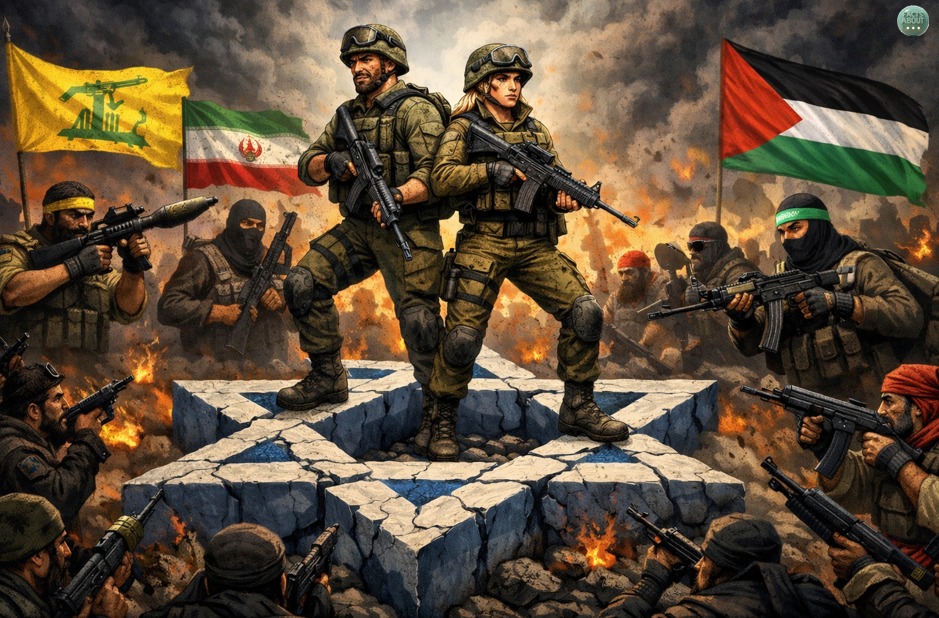
In 1973, Soviet-style maskirovka shattered the illusion of perfect foresight. In October 7, a modern hybrid adaptation - something closer to Gerasimov’s vision of nonlinear war - exposed the same vulnerability. Mass over precision. Saturation over sophistication. Thousands of low-tech attackers overwhelming high-tech systems. Drones blinding sensors. Rocket salvos exhausting interceptors. Psychological shock layered over kinetic breach. A wide front against a country with no depth.
Israel is not Russia. It is not Ukraine. It has no space to absorb surprise. When the attack comes on multiple axes - Gaza, Lebanon, Syria, internal unrest, cyber, and the global propaganda sphere - the brilliance of a small army collides with the arithmetic of geography.
Today Israel faces eight fronts, some kinetic, some strategic. Iran and qatar coordinate and fund. Hamas entrenches. Hezbollah waits with precision-guided munitions. Iranian proxies stretch through Syria and Iraq. Elements within the Palestinian Authority have demonstrated that in a moment of ignition they can join the violence - October 7 showed participation from areas long assumed “contained”. Egypt concentrates armor in Sinai beyond what strategic comfort should allow. The long Jordanian border remains a corridor vulnerable to proxy flow. And above all of it, a global front fueled by Qatari money shapes narratives in universities, NGOs, and media ecosystems across the West.
The old model - deterrence, intelligence dominance, and rapid maneuver - falters when faced with coordinated saturation. Israel perfected the art of preventing force buildup, yet on October 7 force accumulation occurred beneath the threshold of strategic response. Removing enemy forces once they are embedded on your soil is far harder than preventing their assembly beyond it.
Israel has already begun to adapt. Demilitarized buffer zones in Gaza and southern Syria reflect a recognition that narrow borders require layered depth. The tolerance for enemy order-of-battle growth has diminished. Preemption is once again understood not as escalation, but as survival. The era of allowing militias to accumulate rockets in exchange for temporary quiet is ending.
But adaptation must go further.
A state surrounded by volatility cannot rely indefinitely on a compact standing force. It needs mass - not Soviet mass, but sufficient maneuver brigades and a permanently ready reserve division capable of immediate redeployment between fronts. Surprise must be assumed, not debated. Land forces require reinforcement after years of air-centric prioritization. Urban warfare demands durable HUMINT networks embedded deeply in hostile territory; Gaza cannot be managed by reactive security logic alone. Intelligence must become more professionalized and structurally resilient to deception. Mossad intead of Shin-bet.
Air superiority must expand, not merely to strike but to sustain continuous operations without pause. Missile and drone capabilities should not be auxiliary to the Air Force but institutionalized as an independent operational arm. Tactical missile forces and autonomous drone swarms can provide sustained precision without risking pilots and without depending on single-domain dominance. Strategic deterrent assets such as Jericho exist, but operational continuity requires layered systems beneath them.
Borders must once again be physical realities, not conceptual lines. Obstacles, ditches, redundant sensors, and permanent denial zones are not relics of the past; they are acknowledgments of geography. Egypt’s armored posture in Sinai must be diplomatically reversed or strategically constrained. Syrian militarization under new actors cannot be allowed to mature unchecked. The Palestinian Authority’s security forces cannot grow into a structured threat while political illusions obscure military arithmetic.
Above this sits the nuclear shadow. Iran’s true enrichment capacity remains uncertain; monitoring gaps create ambiguity. Regional nuclear hedging, including Saudi trajectories, raises the specter of cascade proliferation. Strategic planning must assume worst-case scenarios, including technological transfers and alternative fissile pathways. Deterrence must remain credible, survivable, and layered.
Israel is a "one-bomb country". Its geography offers no strategic depth, no continental buffer, no room for miscalculation. A single nuclear detonation over Tel Aviv would not be a tragedy measured in percentages of GDP; it would be an existential event.
Yet the battlefield is not only physical. The global front may be the most corrosive. Financial networks channel influence into Western discourse. Legal warfare, narrative warfare, reputational warfare operate continuously. Israel requires an institutionalized global response - multilingual, rapid, professional - not ad hoc reactions. It must disrupt hostile funding pipelines, support legal defense organizations, and compete in media ecosystems with the same seriousness it applies to missile defense.
Meanwhile, Iran’s internal strain weakens its conventional reach, but vacuums invite new actors. Turkey’s expanding military industry and regional posture signal a shifting balance. Strategic threats evolve; they do not disappear.
The foundational truth remains this: Israel built a military optimized for decisive short wars and intelligence dominance. It now confronts hybrid saturation, multi-front attrition, and shrinking margins for error. In a country without strategic depth, surprise is existential. Survival demands not nostalgia for past doctrines but relentless adaptation - more mass where needed, more permanence along borders, greater industrial independence, deeper strategic buffers, and an assumption that the next attack will not resemble the last.
Because the luxury of being wrong, even once, is a luxury Israel does not possess.
6
23
69
2,118
facts about retweeted
Jun 12
Doesn’t sound like a good agreement.
Trump is right to fear the collapse of the regime if pressure continues.
Trump is right that no central government has enough widespread support to replace the regime.
Trump is right that once the regime falls Iran will destabilize and go into a civil war and there will be a lot of bloodshed.
Trump is wrong for not doing it anyway.
x.com/destinationxix/status/…
Jun 7
The strategic mistake Iran appears to be making is that it is trying to merge two separate wars into one.
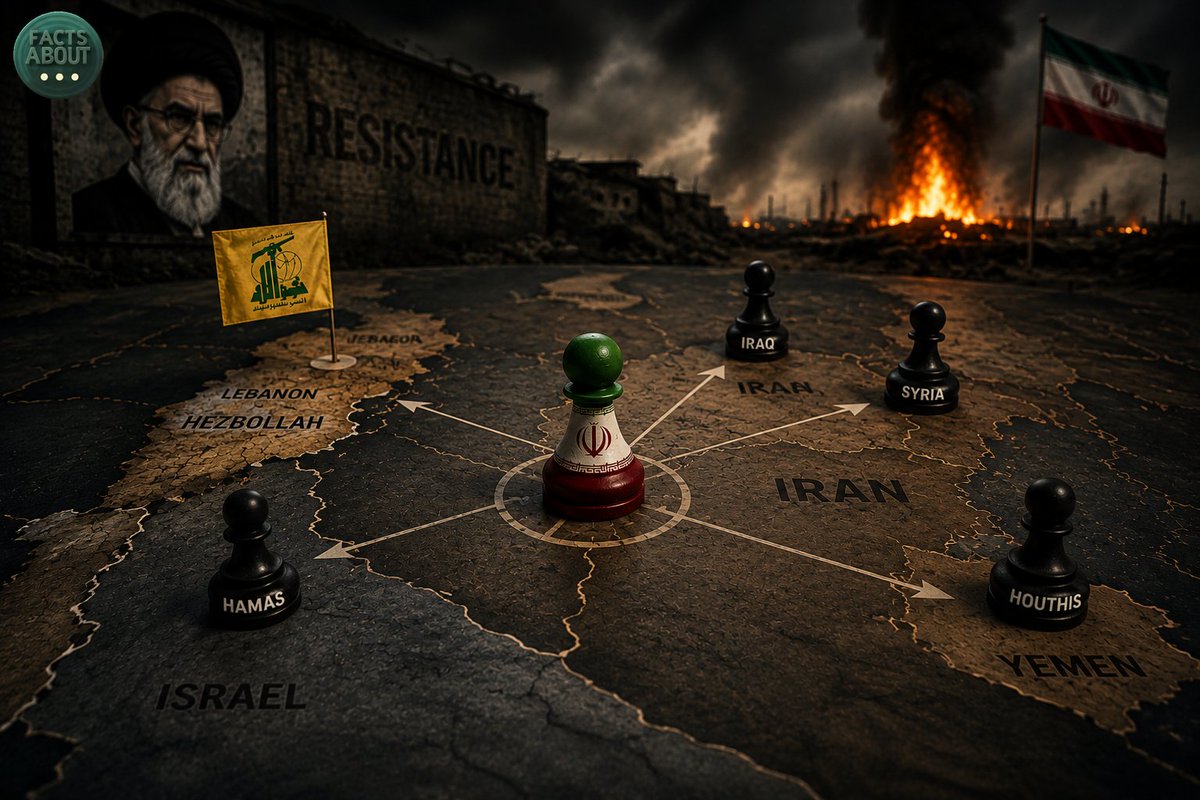
For months, Tehran has insisted that Hezbollah is merely a Lebanese actor. Yet the moment Israel struck Hezbollah assets in Beirut after attacks on northern Israel, Iran responded directly with missile fire and threats against both Israel and the United States. Iran has effectively declared that an attack on Hezbollah is an attack on Iran.
Israel did not have the luxury of ignoring missiles fired from Lebanon. No sovereign state would. Once Hezbollah attacks, Israel responds. When Iran then chooses to directly intervene on Hezbollah's behalf, Israel's conflict is no longer only with Hezbollah - it becomes a conflict with the regime directing, funding, arming, and protecting Hezbollah. Iran itself has now tied the two fronts together.
The deeper problem is that Iran seems to have started believing its own propaganda.
For years, the regime projected an image of strategic inevitability: Hezbollah in Lebanon, militias in Iraq, the Houthis in Yemen, Hamas in Gaza, influence in Syria. The assumption appears to have been that Israel, the United States, and the Sunni Arab states would ultimately accept this regional architecture as a permanent fact.
Instead, the opposite happened.
Iran's proxy network increasingly became a liability. Every militia attack created pressure for retaliation. Every escalation narrowed Tehran's options. And now, by openly linking Hezbollah's fate to its own, Iran has raised the stakes dramatically.
Ironically, neither Israel nor the United States has historically been eager to own the consequences of regime collapse in Iran. The nightmare scenario is not necessarily a democratic transition. It is a fractured state: Persians, Azeris, Kurds, Baluchis, Arabs and competing armed factions struggling for power, producing years of instability and civil conflict in one of the most strategically important countries on earth.
That is why, for years, most Western policy focused on containment rather than regime change.
But strategy is ultimately about choices. If Tehran insists that Hezbollah and Iran are one fight, if every Hezbollah escalation triggers Iranian intervention, and if every Iranian intervention triggers an Israeli response, then the regime is creating a ladder of escalation that becomes increasingly difficult to climb down from.
The moral of the story may be simple: Iran spent decades building proxies so that it would never have to fight directly. By stepping in to shield Hezbollah, it risks turning the very system designed to protect the regime into the mechanism that endangers it.
1
1
8
482
Jun 11
The Al-Aqsa injustice.
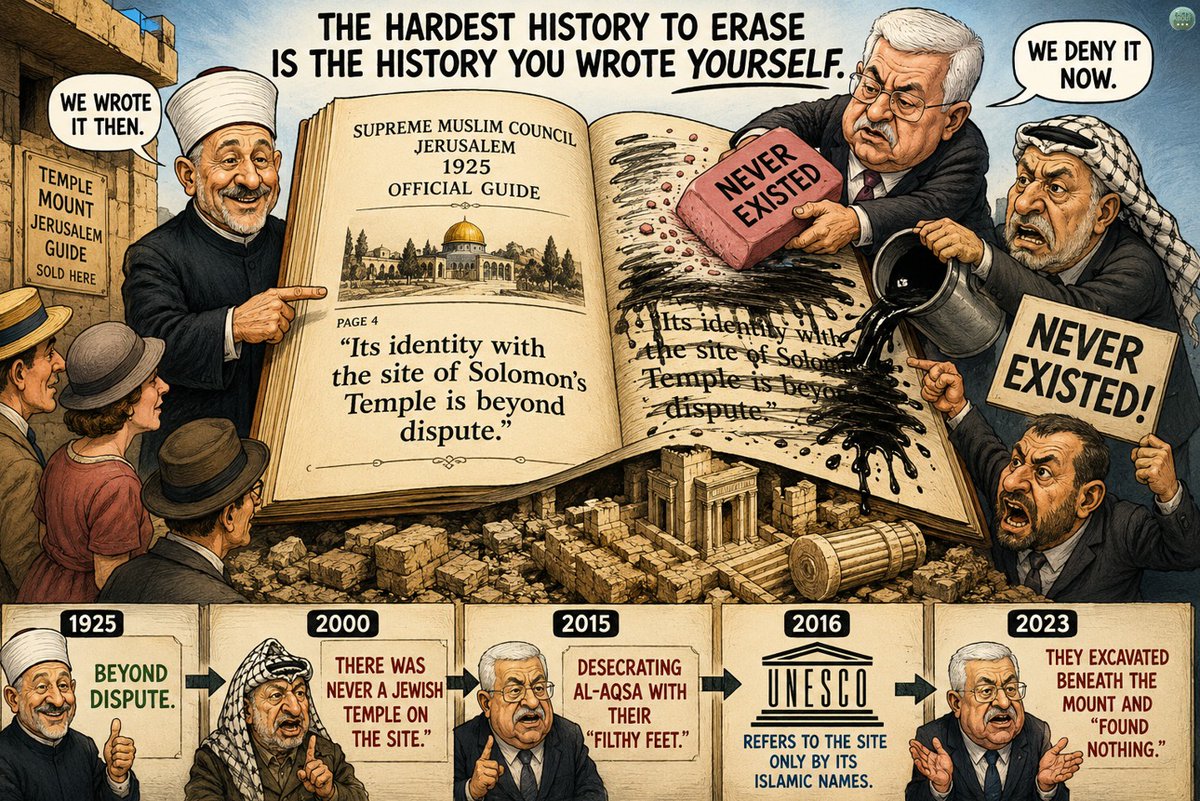
In 1925, the highest Islamic authority in Jerusalem published a tourist guide.
Page 4 contains a sentence that modern Palestinian leaders desperately wish nobody would read:
"Its identity with the site of Solomon's Temple is beyond dispute".
In other words, the very Islamic authorities responsible for the site openly acknowledged that the Temple Mount was the location of Solomon's Temple- the same site on which the Al-Aqsa Mosque and Dome of the Rock were later built following the Muslim conquest of Jerusalem in the 7th century.
Not written by Zionists.
Not written by archaeologists.
Not written by Christians.
Written by the Supreme Muslim Council itself - the official Islamic authority that controlled the Temple Mount, headed by Grand Mufti Haj Amin al-Husseini.
The same Haj Amin al-Husseini who later became one of Hitler's closest allies in the Arab world.
The guide was sold to visitors at the entrance to the Temple Mount.
In 1925, nobody felt the need to deny Jewish history.
Because the facts were obvious.
The archaeological evidence was overwhelming even then.
The denial came later.
Why?
Because the conflict was never really about archaeology or facts, or even about territory.
The conflict is about religion. Specifically, Islamists couldn't stand that Judaism - a religion they believe was superseded by Islam - not only survived, but returned to its ancestral homeland, rebuilt its sovereignty, revived its language, and flourished.
In the early decades of the conflict, this struggle was explicit. False accusations that Jews were threatening Al-Aqsa fueled riots and massacres against ancient Jewish communities, from Jerusalem to Hebron. The message was clear: Jewish sovereignty, and even Jewish presence, was unacceptable.
But over time, the narrative evolved.
With the rise of the PLO and the influence of Soviet-style propaganda, the conflict was increasingly reframed in secular, anti-colonial language. The objective remained the same, but the marketing changed.
Instead of a struggle against Jewish self-determination, it became a struggle for "liberation".
Instead of denying Jews political rights, it became fashionable to deny their history.
Instead of openly opposing Jewish presence, the battle shifted toward eroding the historical, archaeological, and moral foundations of that presence.
It is therefore unsurprising that Temple denial emerged under Yasser Arafat and the PLO. Once the struggle shifted from defeating Jewish sovereignty to delegitimizing it, denying Jewish history became a strategic necessity.
Watch the timeline:
• 1925: Supreme Muslim Council - Solomon's Temple is "beyond dispute."
• 2000: At Camp David, Yasser Arafat tells President Clinton there was never a Jewish Temple on the site. Clinton was reportedly stunned.
• 2015: Mahmoud Abbas declares Jews are "desecrating" Al-Aqsa with their "filthy feet."
• 2016: UNESCO passes a resolution referring to the site only by its Islamic names.
• 2023: Abbas claims Jews excavated beneath the mount and "found nothing."
The historical position did not change.
The political usefulness of denying it did.
The irony is extraordinary.
Jews are today forbidden from freely praying at the holiest site in Judaism.
The Temple Mount is the location of both the First Temple built by Solomon and the Second Temple rebuilt after the Babylonian exile.
For nearly 2,000 years Jews prayed facing this exact location.
Three times a day.
Every day.
The Western Wall itself is not the holiest site in Judaism.
It is simply the retaining wall beneath the Temple Mount.
The actual holy site is above it.
And yet Jews are not allowed to freely pray at the holiest site in Judaism.
Think about how extraordinary that is.
A Muslim can pray freely on the Temple Mount.
A Jew often cannot.
The world's only Jewish state controls Jerusalem, yet Jews are still expected to worship at the foot of their holiest site rather than on it.
Imagine telling Muslims they may visit Mecca, but not pray there.
Imagine telling Christians they may enter the Church of the Holy Sepulchre, but must remain silent.
The outrage would be immediate.
Yet when it comes to Jews, this arrangement is treated as normal, and it further demonstrates how this conflict was never about land.
And the justification is usually that the site is home to Al-Aqsa, Islam's third-holiest site - the Al-Aqsa injustice.
But that claim deserves scrutiny.
The Quran mentions Al-Masjid Al-Aqsa - "the Furthest Mosque" - in Surah Al-Isra. Yet the mosque structure standing in Jerusalem today did not exist during Muhammad's lifetime. It was built decades later under the Umayyad Caliphate after the Muslim conquest of Jerusalem.
Early Islamic texts, including the Hadith and historical records, suggest the original “farthest mosque” mentioned in the Quran was not in Jerusalem but closer to Mecca, specifically in a place called Al-Ju‘ranah, to where Muhammad had his nightly journey. Some Shiite scholars have suggested that the Al-Aqsa referred to in the Quran is in a different location altogether, supporting the idea that the identification with Jerusalem is not universally accepted within Islam.
So the world's only Jewish state is expected to prevent Jews from praying at their holiest site because a disputed mosque now occupies the location?
Which brings us to the real issue.
Notice what repeatedly triggers violence.
Not housing projects.
Not borders.
Not settlements.
Not checkpoints.
Those claims are just ear candy for westerner "human rights" activists.
The Second Intifada itself was largely ignited by Ariel Sharon visit to the temple mount.
Again and again, Islamist movements mobilize masses not around territory, but around the fear that Jews might pray on Judaism's holiest site.
That tells us something important.
This conflict cannot be understood as a territorial dispute. It's a religious war.
A struggle over whether Jewish sovereignty, Jewish history, and Jewish prayer can be tolerated in a place that is holy for Jews, and many Muslims don't consider holy for muslims.
And it's the same struggle we see in Europe when churches are vandalized and torched.
The smoking gun remains the 1925 guide.
When acknowledging the Temple carried no political cost, they openly admitted its existence.
The Temple did not disappear.
The archaeology did not disappear.
The historical record did not disappear.
Only the strategy changed, to erasure, denial and rewriting of history.
14 Jul 2025
Did you know that the mosque in Jerusalem is not Al-Aqsa in the Quran?
Early Islamic texts, including the Hadith and historical records, suggest the original “farthest mosque” mentioned in the Quran was not in Jerusalem but closer to Mecca, specifically in a place called Al-Ju‘ranah, to where Muhammad had his nightly journey. Some Shiite scholars have suggested that the Al-Aqsa referred to in the Quran is in a different location altogether, supporting the idea that the identification with Jerusalem is not universally accepted within Islam.
Also, the Al-Aqsa Mosque in Jerusalem was indeed constructed after the death of the Prophet Muhammad. The original structure of the mosque was built by the Umayyad caliph Abd al-Malik between 705 and 715 CE, which is several decades after Muhammad’s death in 632 CE, further supporting the claim that the original “farthest mosque” mentioned in the Quran may not have been the structure in Jerusalem, as it was not yet built during Muhammad’s lifetime.
Have you noticed that every Jewish holy place, mysteriously is also holy for Islam and Jews are not allowed to visit it, even if it’s not really holy..?

17
135
254
7,685
Jun 10
Antisemitism is not just immoral.
It is expensive.
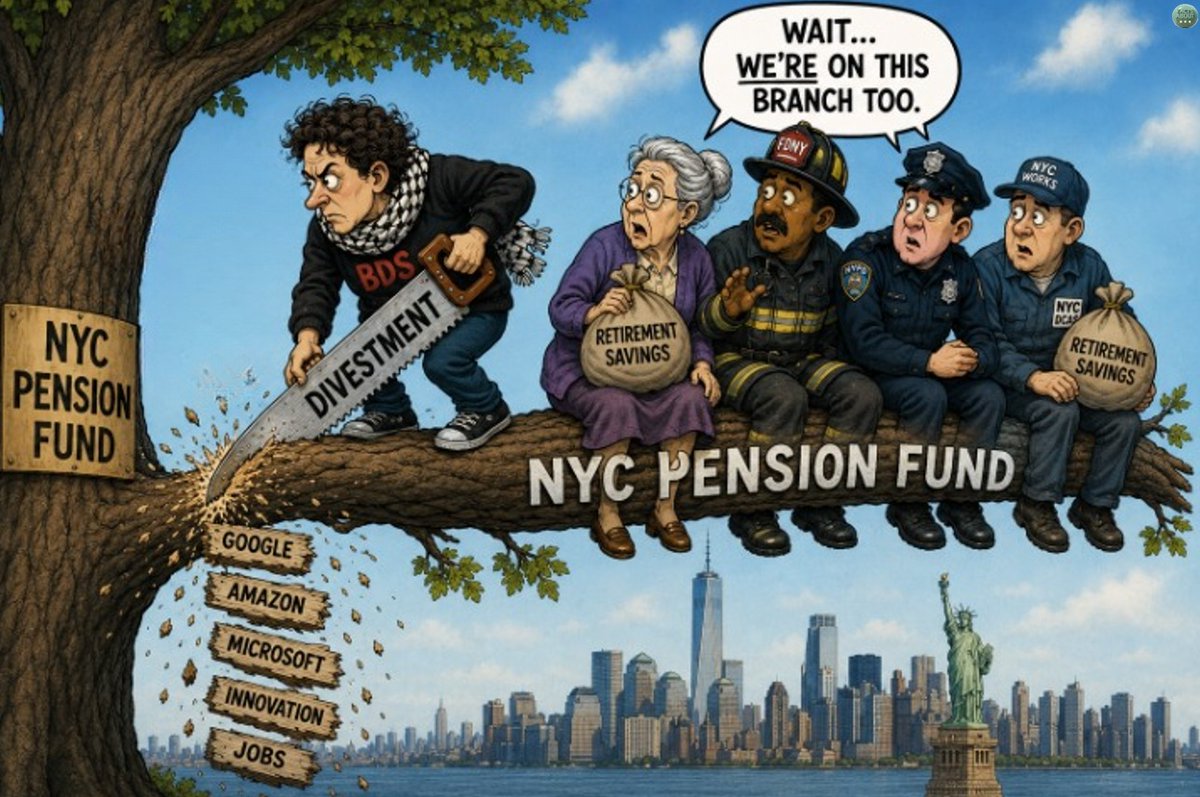
A new ADL/JLens report warns that if New York City pension funds adopt BDS-style divestment from companies doing business with Israel, taxpayers and retirees could face more than $37 billion in losses. The companies targeted are not just Israeli companies. They include major American firms such as Alphabet/Google, Amazon, Microsoft, and others.
So who pays?
Not Israel.
New York teachers.
Police officers.
Firefighters.
City workers.
Retirees.
This is the pattern with BDS: it starts by claiming to punish Israel, then ends up hurting ordinary Americans.
Antisemitism doesn't just hurt Jews.
It hurts the people who embrace it.
And New York is already paying for choosing Mamdani who run on anti-Israel platform.
Yes, as promised, his policies hurt the Jewish community, with revoking the use of the IHRA antisemitism definition, Mamdani's boycott of the Israel parade, and the steep rise in antisemitic attacks in NYC since Mamdani was elected (71% more attacks in May 2026, compared to 2025).
But what about everyone else?
No free buses, no rent freeze, no affordable 200K house units, no 30$ minimum wage.
Once in office, those promises collided with a stubborn obstacle called reality: there isn't enough money.
Or is there?
Because somehow the city still found funding for critical spending like:
~$5.6 million for the Office of Racial Equity
~$5.5 million for racial and gender equity commissions
More than $25 million for environmental justice and climate offices
A new Mayor's Office of Mass Engagement that could ultimately cost taxpayers tens of millions of dollars, with some estimates reaching as high as $150 million
At first, antisemitism promises to punish Jews.
Then it starts damaging the host.
History is full of examples.
Countries expelled Jews and lost merchants, financiers, scientists, and entrepreneurs.
Universities excluded Jews and weakened themselves.
Governments embraced anti-Jewish policies and undermined their own economies.
The pattern repeats because antisemitism is rarely rational.
It begins with the belief that hurting Jews will somehow help everyone else.
Reality usually delivers the opposite result.
In 2024, U.S.–Israel trade in goods and services totaled roughly $55 billion, while annual U.S. military aid was about $3.8 billion.
The relationship was never really about aid.
It's about trade, technology, defense cooperation, intelligence sharing, investment, and American jobs.
The upcoming Section 224 recognizes that reality, and will cancel the aid given to Israel.
Yet anti-Israel activists keep pushing policies that would damage American institutions in order to isolate the world’s only Jewish state.
Classic ideological self-harm.
A pattern where Jewish concerns are downgraded, Israel is singled out, and policies opposed by many mainstream Jewish organizations are treated as moral progress.
Antisemitism always promises to hurt Jews.
But again and again, it ends up hurting the host society too.
New York should not sacrifice pensioners, taxpayers, public workers, trade, innovation, and public safety on the altar of anti-Israel and anti-Jewish ideology.
If a policy targets Jews, isolates Israel, weakens protections against antisemitism, and costs ordinary citizens billions, people are allowed to call it what it is.
A very expensive form of antisemitic politics.
Jun 1
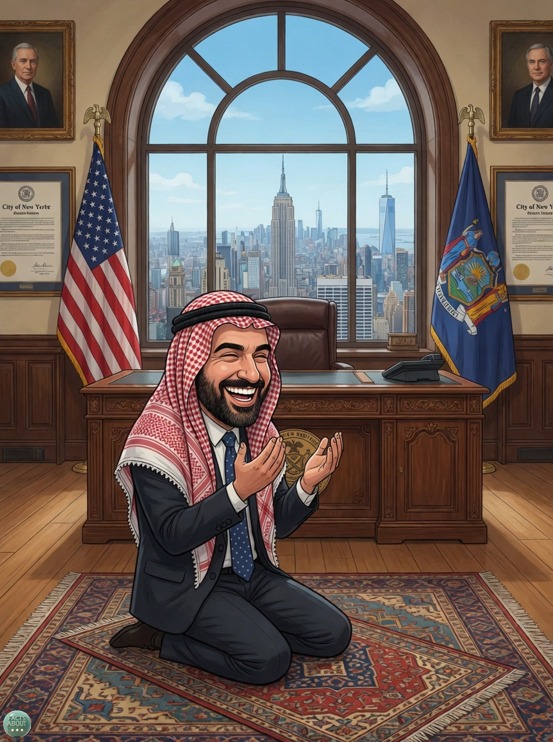
I'm honestly not sure why anyone is surprised that Zohran Mamdani did not attending the Israel Day Parade.
This is exactly what he campaigned on.
He built a political brand around hostility to Israel, refused to clearly condemn slogans like "Globalize the Intifada", defended inciting rhetoric against Jews, and made opposition to Israel a central part of his public identity. One of his first major acts as mayor was revoking New York City's adoption of the IHRA definition of antisemitism, a framework used by dozens of democratic governments and institutions to identify modern forms of anti-Jewish hatred.
So no, it should not shock anyone that he is absent from a celebration of the world's only Jewish state.
What should concern New Yorkers is something much bigger.
Mamdani's vision for the city combines aggressive economic intervention, hostility toward policing, and alliances with activist movements that often excuse or minimize extremism when it comes wrapped in the language of "resistance". Government-run grocery stores. Rent freezes. Higher taxes. Free transit. Endless ideological slogans. It sounds utopian in campaign speeches. In practice, these policies have a long history of driving away investment, shrinking opportunity, and making cities less safe.
Great cities rarely collapse overnight.
They erode.
The investors leave first.
Then the employers.
Then the middle class.
Then the sense of safety that made the city attractive in the first place.
And history teaches an even darker lesson.
When ideological projects fail, the people who warned about them are rarely thanked. They become the scapegoats.
Bookmark this post.
Because when New York starts paying the price for bad policies, rising crime, economic decline, or social fragmentation, the blame will not fall on the politicians, activists, or media figures who promoted them.
It will once again be redirected toward the Jews.
That is how it has happened throughout history.
The irony is that despite the effort to place a handful of highly visible anti-Zionist Jewish activists at the front of the movement, most Jewish voters did not support Mamdani. Yet if things go wrong, many will still try to portray his victory as somehow "the Jews' choice".
It wasn't.
And it won't be the Jewish community that bears responsibility for the consequences of his policies.
New York is standing closer to the edge than many people realize.
The question is not whether Mamdani will attend the Israel Day Parade.
The question is whether New Yorkers understand what he actually stands for - and where that vision leads.
14
25
4,342
facts about retweeted
Jun 10
Don't listen to the useful idiots who advance the takeover.
x.com/destinationXIX/status/…
6 Nov 2025
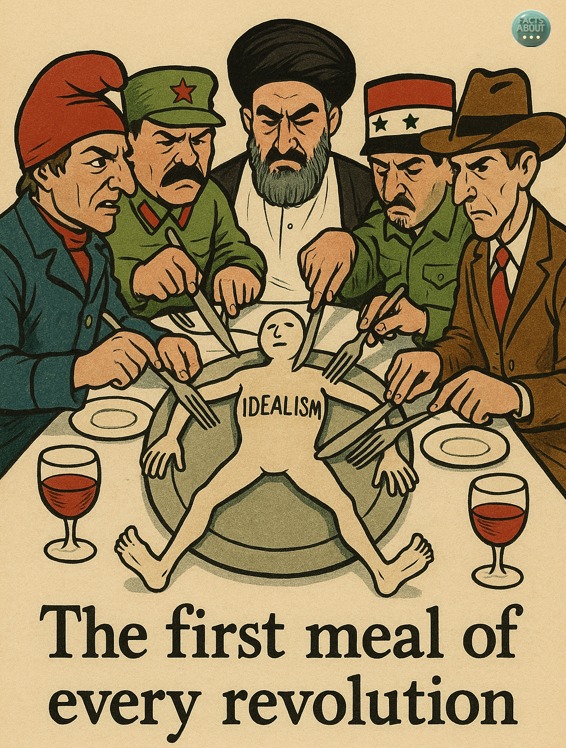
The Age of Useful Idiots
Every revolution promises justice; almost none deliver it. And when religious or ideological fundamentalists take over, the outcome is always worse than the problem they claimed to solve.
Iran in 1979 was the textbook case. The Shah’s regime was corrupt and repressive - but within a year of his fall, the new Islamist rulers had executed thousands, banned dissent, and erased women’s rights. The liberals, feminists, and leftists who had joined the revolution were the first to hang.
Afghanistan followed the same path. In the 1980s, the mujahideen were romanticized as freedom fighters against Soviet occupation. Two decades later, those same networks birthed the Taliban - turning schools into indoctrination centers, destroying cultural heritage, and enslaving half the population under “piety", and turned that revolution into a medieval nightmare.
The Soviet Union claimed to liberate workers from inequality. It delivered censorship, secret police, and breadlines stretching for blocks - a country that could send rockets into space but couldn’t keep grocery shelves stocked. Communist China’s Cultural Revolution killed millions in the name of equality. Cambodia’s Khmer Rouge “re-educated” an entire population into starvation.
Syria’s civil war began with calls for democracy; it descended into a proxy war dominated by jihadist factions. Secular activists were silenced or killed by both sides. Minorities are now being massacred by Islamists. The pattern repeats because it’s structural: the most ruthless, disciplined faction always wins - and it’s never the one that believes in freedom.
That’s why Western flirtation with extremist movements under the banner of “resistance” is more than naïve - it’s suicidal. The useful idealists who believe they’re fighting oppression, imperialism, or capitalism end up empowering Islamist imperialism - regimes that would silence their voices, censor their art, collapse their economies, threaten their food security, and their very existence, and ultimately oppress them far more brutally than anything they claimed to resist. The only equality such systems ever achieve is shared poverty and fear.
History’s verdict is cruelly consistent: when fundamentalists take power, they don’t fix the old order - they erase it and everything that made opposition possible.
Freedom isn’t destroyed by evil alone; it dies when good intentions start making excuses for it.
1
7
29
1,256
Jun 10
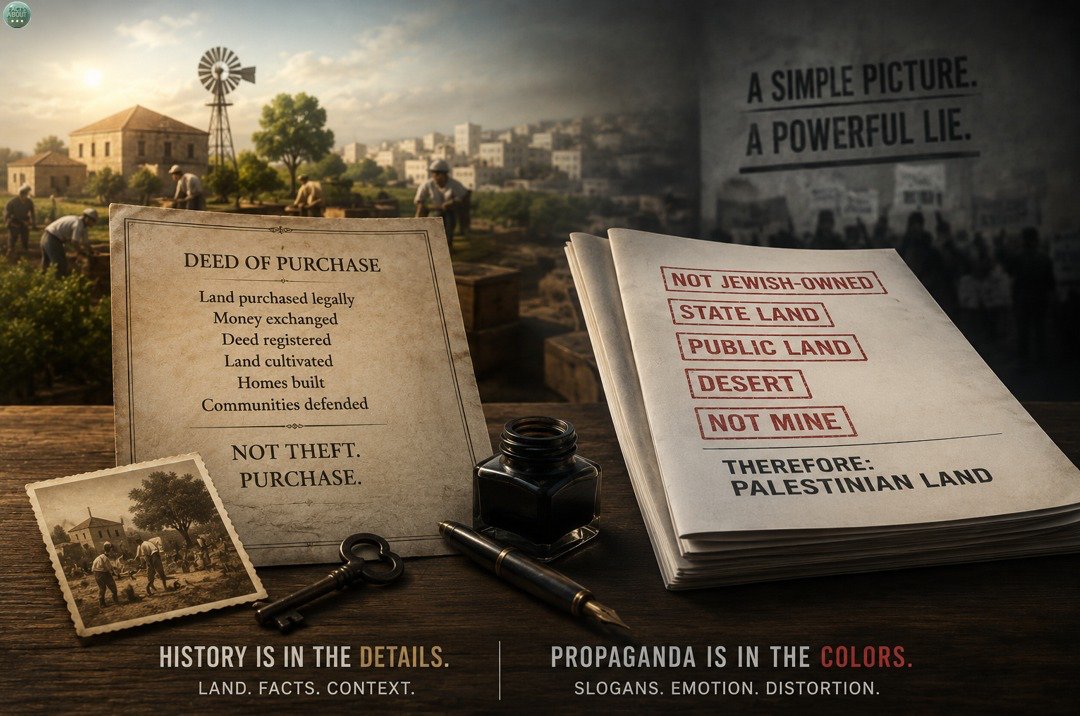
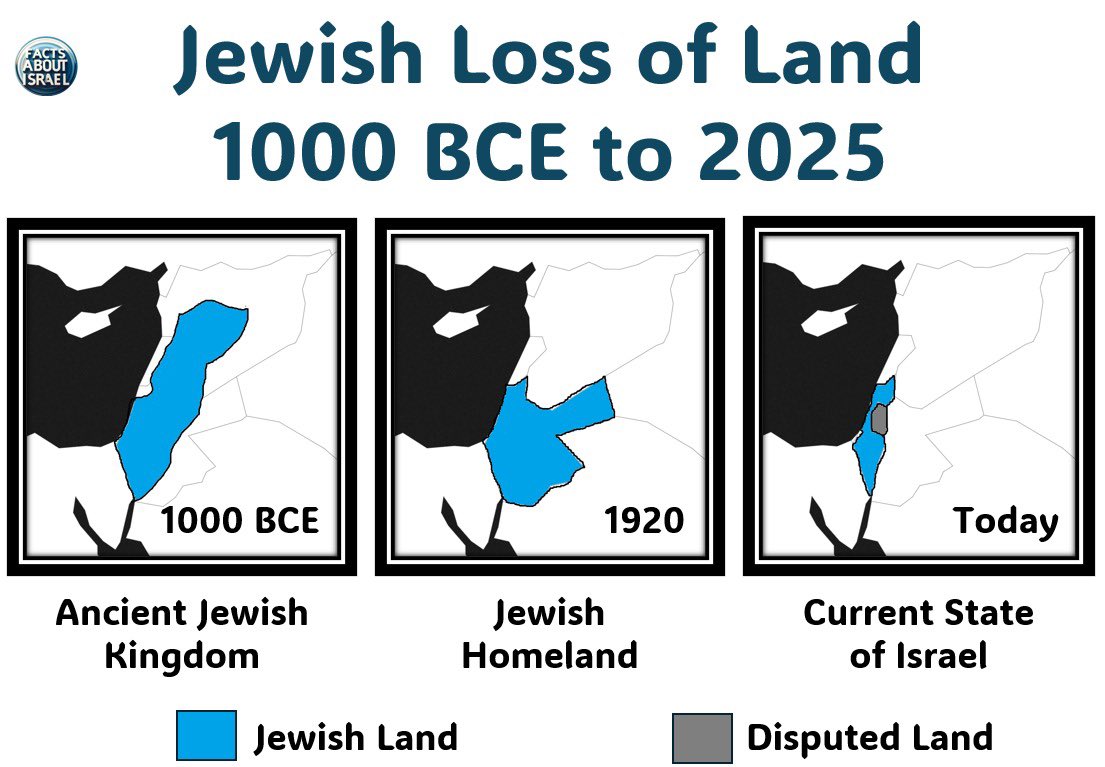
The "shrinking Palestine" myth can be debunked with one fact:
In Mandatory Palestine, only about *20% of the land was privately owned by anyone*.
Not by Jews.
Not by Arabs.
By anyone.
The rest was mostly state land - first Ottoman state land, then British Mandate/Crown land.
Hence, the famous "shrinking Palestine" map is fundamentally misleading.
You've seen it:
Four panels.
Green shrinking.
White expanding.
The message is obvious:
"The Jews stole Palestinian land".
But the first map does not show Palestinian-owned land.
It shows land that was not Jewish-owned - and then pretends that all of it was Palestinian-owned.
State land becomes "Palestinian land."
Crown land becomes "Palestinian land."
The Negev desert becomes "Palestinian land."
Public land becomes "Palestinian land."
But it wasn't.
Only about 20% was privately owned by anyone at all.
And just under half of that privately owned land was owned by Jews by the end of the Mandate period.
The land Jews did own was purchased legally.
Often at premium prices - sometimes double or triple market prices.
Often from wealthy absentee landlords living in Beirut, Damascus, Cairo, and elsewhere, that were happy to get rid of the barren, neglected land they owned.
Money changed hands.
Contracts were signed.
Deeds were registered.
Land was bought, cultivated, drained, built, and defended.
That is not "stolen land".
That is purchased land.
And the other panels are just as misleading.
The second map presents the 1947 UN Partition Plan as if it were an accomplished fact. It wasn't. It was a proposal - one accepted by the Jewish leadership and rejected by the Arab Higher Committee and the surrounding Arab states, and hence never implemented. No Palestinian Arab state was ever established under that plan because the plan was never implemented.
The third and fourth maps then show the results of successive wars. The 1949 armistice lines emerged after the Arab-Israeli war that followed the rejection of partition, while the post-1967 map reflects territory captured by Israel during the Six-Day War. In other words, the maps present the outcomes of wars and failed diplomatic proposals as if they were simple transfers of privately owned "Palestinian" land. They were not.
There was a theft of land though.
Most people don't know that Jewish organizations also purchased large tracts of land in the Hauran and Golan regions under Ottoman rule, in what is today Syria.
The purchases were legal.
The deeds existed.
The transactions were recognized by Ottoman authorities.
Money changed hands.
Yet those lands were never given to the Jews or became part of the Jewish homeland when later borders were drawn.
The "stolen land" narrative survives because people don't know history, and some will believe just about anything about the Jews.
But the "stolen land" exists and is still owed to the Jews who purchased it, and never received it and never were compensated for it.
1
22
39
1,631
facts about retweeted
Jun 9
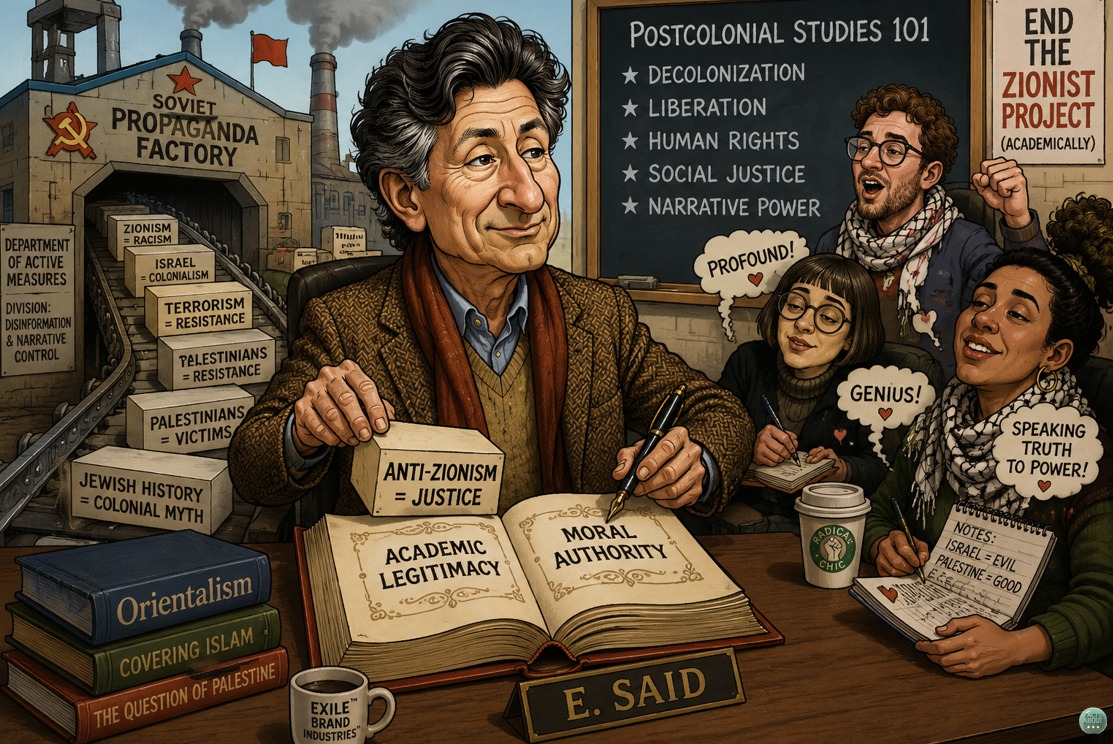
Edward Said’s greatest achievement was not creating a theory.
It was creating a brand.
Two brands, actually:
The Palestinian cause brand.
and the Edward Said brand.
Said became the most influential Palestinian intellectual in the Western world: Columbia professor, author of "Orientalism", patron saint of postcolonial theory.
But he was not simply an academic observing Palestinian politics from the outside, nor he was the refugee camp "Palestinian" he portrayed.
He was elected to the Palestine National Council in 1977 - the PLO’s parliament-in-exile.
The PLO was never just a “liberation movement”. Founded in 1964 - 3 years before Israel captured Gaza and the west bank in a defensive war, before Bibi and even before the checkpoint. It was a nationalist movement aimed to resist "By all means" the existence of Jewish sovereignty anywhere in the land, with the help of Moscow.
For decades, it was deeply embedded in the Soviet-backed anti-Zionist ecosystem that turned worked tirelessly to turn Jews de-colonialism into colonialism, Zionism into racism, terrorism into resistance, and Jewish self-determination into Western aggression.
The Soviets built the grammar.
The PLO spread the politics.
Said translated it into elite academic English.
He gave anti-Zionism footnotes, tenure, and moral perfume.
Justice.
Liberation.
Decolonization.
Human rights.
Anti-imperialism.
It sounded sophisticated.
But underneath the academic vocabulary was the same old demand:
No Jewish sovereignty.
No Jewish state.
No Jewish people with the same national rights everyone else claims for themselves.
But the most revealing part of the story is Said himself.
Said presented himself as the authentic voice of Palestinian exile: the dispossessed intellectual carrying Jerusalem into Western lecture halls.
That identity was not incidental.
It was the source of his authority.
He was not just making an argument.
He was performing a wound.
But the biography was far cleaner than the reality.
Said was born in Jerusalem, yes.
But he was largely raised in affluent Cairo, educated in elite British-style schools, and built his career in America. Critics such as Justus Weiner challenged key elements of his self-presentation, arguing that the famous exile story was far more curated than his admirers admitted.
Less refugee-camp dispossession.
More Cairo privilege.
Less simple uprooting.
More cosmopolitan elite.
Less “voice of the voiceless.”
More Ivy League brand management.
And that is where Said becomes a pattern.
Yasser Arafat, a billionaire, the father of modern Palestinian nationalism, was born in Cairo.
Mousa Abu Marzouk, a billionaire, spent years outside Gaza and became a senior Hamas political figure living comfortably abroad.
Khaled Mashal, a billionaire, lived for years in exile luxury while Gaza was turned into a terror bunker.
Ismail Haniyeh, a billionaire, born in Egypt, and spent much of his later political life abroad, including in Qatar, while ordinary Gazans lived under the regime Hamas built.
Again and again, the Palestinian cause is represented in the West by elites who do not live the consequences of the destructive politics they sell.
The people suffer.
The leaders brand the suffering, and collect their paychecks.
The activists romanticize it.
The academics explain it.
The donors fund it.
The terrorists weaponize it.
And the West applauds itself for calling this justice.
This is the pattern Said helped perfect.
And he did it with the exact moral vocabulary the Western academy wanted to hear.
That is why his influence was so enormous.
Said helped re-invent genocidal anti-jewish ideology as just cause.
A Soviet grammar.
A postcolonial accent.
An Ivy League certificate.
And a curated biography to sell the whole thing.
Edward Said claimed to expose how the West manufactured “the East.”
But his legacy was helping manufacture the modern Western myth of Palestine:
A myth where Jewish nationhood is colonialism.
A myth where terrorism becomes resistance.
A myth where elite exiles become symbols of the oppressed.
And a myth where the oldest hatred in the world gets translated into academic English.
4 Nov 2025
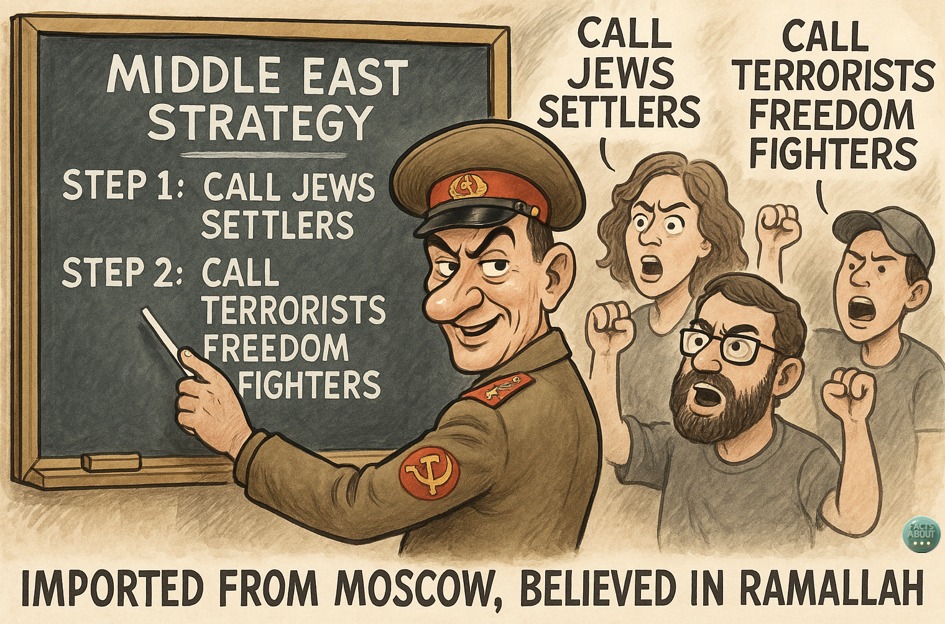
The “settler-colonial” lie is destroying the Palestinians - not Israel. It’s the single most self-defeating idea they ever embraced.
Israel isn’t a colonial project. Jews didn’t sail from a distant empire to extract resources - they returned to their ancestral home after 2,000 years of exile and persecution, to join their brothers who never left. There was no “mother country” sending settlers, no imperial army behind them. The only empire that mattered - the British - actually restricted Jewish immigration, even as millions were being murdered in Europe.
The “settler” label was never academic. It was Soviet propaganda - a Cold War invention designed to turn postcolonial movements against Israel, as a USA ally. Moscow needed Arab allies and Middle Eastern oil. So it flipped the story: survivors of genocide became “imperialists,” while those who rejected partition and started wars and massacres became “freedom fighters.”
And Palestinians bought it. They believed that if they fought like Algerians or Vietnamese - through terror, bombs, and intifadas - the Jews would eventually leave. But the opposite happened. Every rocket and every suicide bombing only strengthened Israel’s resolve. Instead of producing liberation, violence made the dream of statehood more remote than ever.
For generations, Palestinian leaders built a political culture not around freedom but around rejection - the refusal to accept any Jewish sovereignty in any borders. From Haj Amin al-Husseini to Yasser Arafat to Hamas today, their central promise was not independence but eradication. They rejected every offer of partition, every peace plan, every diplomatic opening with no dissenting voices, and instead manufactured rage without strategy, martyrdom without progress, and leadership without accountability.
The results were catastrophic. Billions in aid that could have created a modern economy were diverted into tunnels, rockets, and militias. Instead of building cities, they dug underground arsenals; instead of cultivating civil institutions, they cultivated a cult of victimhood. Schools became tools of indoctrination rather than education, and the media turned suffering into a performance for Western audiences. For Hamas and the factions aligned with it, human misery became a resource - an asset to be leveraged, not a condition to be solved.
If even a fraction of that energy had gone into governance, entrepreneurship, and coexistence, Palestinians could have built one of the most advanced societies in the Arab world. But they chose annihilation over nationhood. The tragedy is that in pursuing the destruction of the Jewish state, they destroyed their own future instead.
And in that choice, they revealed the fundamental miscalculation that has defined their struggle from the beginning: every act meant to weaken Israel has only made it stronger. While Palestinian leaders invested in tunnels, propaganda, and perpetual war, Israel invested in resilience - in a society that values life, innovation, and national solidarity.
Decades of terror and delegitimization campaigns have not broken Israel; they’ve clarified its purpose. Every boycott, bombing, and false accusation has reminded Jews worldwide that they have no other home - that safety and survival cannot depend on the goodwill of others, only on their own strength and unity. The wars, the antisemitism, and the global hostility did not isolate Israel; they bound it together. Out of every wave of violence emerged a deeper certainty that Jewish self-defense is not optional but existential - that no army, institution, or international promise will ever protect Jews the way Jews can protect themselves.
When Hamas massacred Israelis in 2023, the world saw a miracle of resilience.
•Hundreds of thousands of Israelis returned from abroad to fight and rebuild.
•Reservist enlistment surged beyond 100%.
•Instead of fleeing, Israelis flew back.
•The country grew more united, not less.
Today there are more Jews living in Israel than anywhere else in the world - over 7.2 million, compared to 5.8 million in the U.S. For the first time in modern history, a majority of Jews live in their homeland. That’s not colonization - that’s homecoming.
What’s truly keeping Palestinians trapped isn’t “occupation.”
It’s the fanatical religious belief - shared by Hamas, Islamic Jihad, UNRWA, and the Palestinian Authority - that any Jewish sovereignty in the Middle East is heresy. It’s a theology of denial. And as long as it rules their politics, they will fight wars they can never win, sacrificing generation after generation to preserve a lie.
If Palestinians truly studied history instead of soviet propaganda, they’d see the truth:
Terrorism never made Jews leave. It only made them stronger and more determined.
The Jews aren’t settlers - they’re natives who came home to join their brothers who never left.
And the only path to Palestinian dignity begins with facing that truth.
10
76
191
7,248
Jun 9
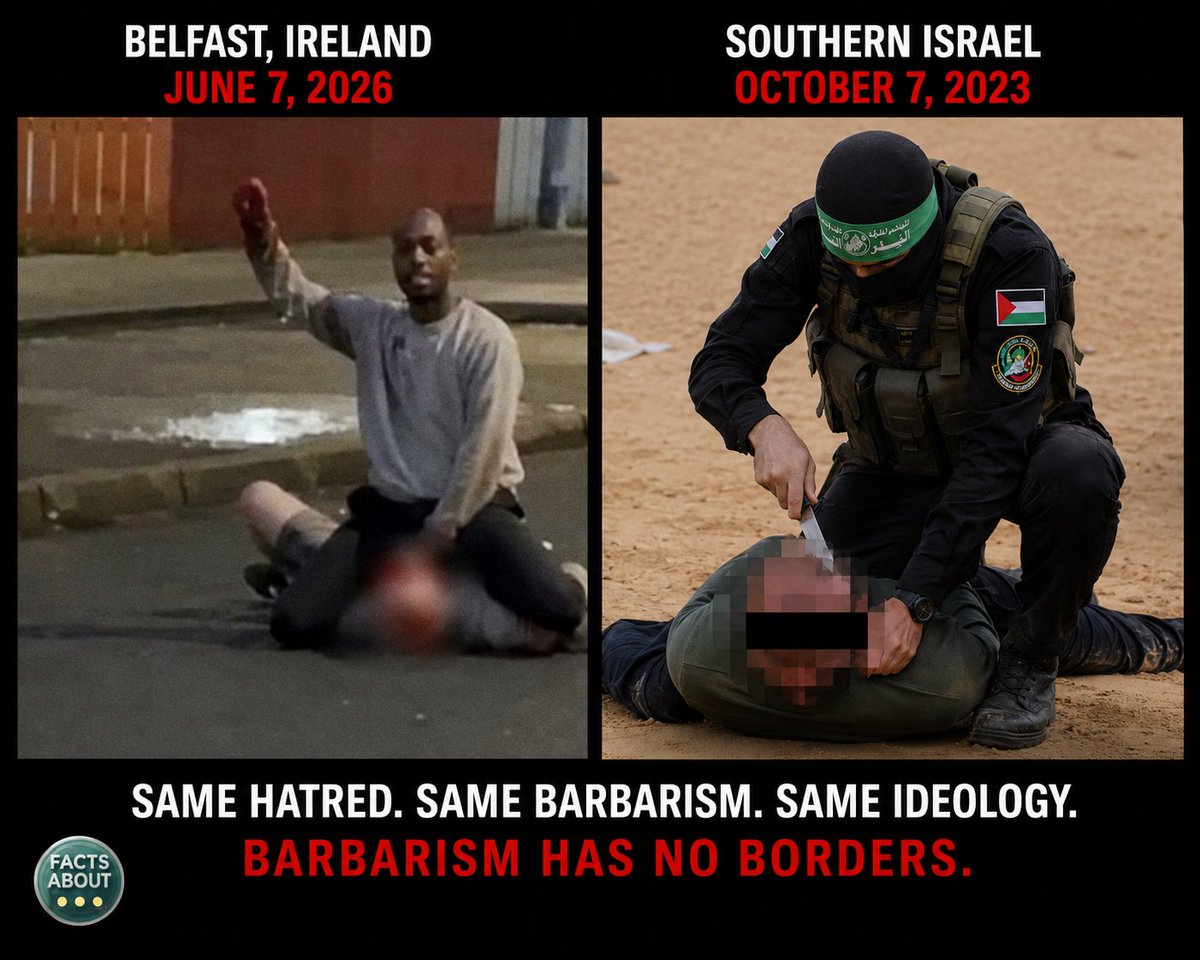
Barbarism doesn't have borders.
If you see a man nearly beheaded in the street, your first instinct is not:
"Let's hear the historical context."
You do not call the attacker a freedom fighter.
You do not describe the act as "resistance by any means necessary."
You do not propose rewarding the ideology behind it with a new state, with undefined borders inside Ireland.
You call it what it is:
Barbarism.
For years, many people have insisted that every act of Islamist violence is merely the work of a lone disturbed individual.
A one-off.
An isolated case.
A mental illness.
But this quickly falls under scale and ideology.
When an attacker shouts "Allahu Akbar" during an act of extreme violence, people notice for a reason.
It is the same phrase shouted by countless jihadists over the last several decades.
It was shouted by ISIS terrorists.
It was shouted by Al-Qaeda terrorists.
It was shouted by Hamas terrorists on October 7, and in any other terror attacks against Jews and Israelis.
Violent Islamist movements have repeatedly wrapped their violence in the same ideological language.
That reality cannot simply be ignored whenever it becomes inconvenient.
The standard should be simple.
When white supremacists invoke white-supremacist ideology, we discuss the ideology.
When jihadists invoke jihadist ideology, we should be allowed to discuss that ideology too.
Honestly.
Without pretending the ideology does not exist.
And without immediately searching for excuses.
He was not "mentally ill".
He was not a "freedom fighter"
He was not "resisting against colonialism"
Not in Belfast, not in Paris, not in London and not in Jerusalem.
A movement that glorifies such attacks is not a peace movement.
And an ideology that repeatedly inspires such violence deserves scrutiny, not excuses.
Governments that allow this must be held accountable for their complicity.
Barbarism has no borders.
Neither should our opposition to it.
Apr 20
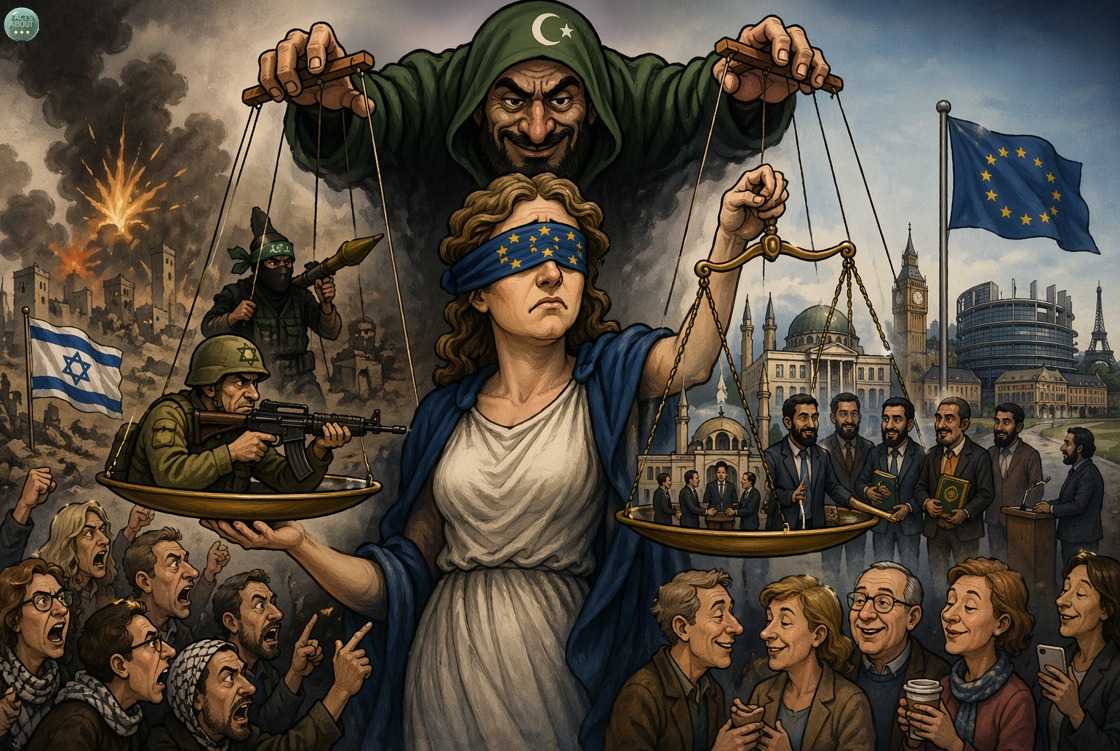
There’s a persistent tendency in Western discourse to treat what’s happening in Israel and what’s unfolding across parts of Europe as fundamentally separate phenomena. One is framed as a distant, “complex conflict” or even an imagined (inverted) "occupation". The other as a domestic policy challenge around immigration, integration, and social cohesion. But when you strip away the framing, the underlying dynamics begin to look uncomfortably similar.
The influence of organized Islamist movements with clear political objectives and long-term strategies. Groups like Hamas, Hezbollah, and the Muslim Brotherhood operate differently in tactics, but not in end goals, or different phases of the same process. The distinction is not between moderation and extremism - it’s between methods - at least at first.
Hamas and Hezbollah represent the violent edge, or the islamists' end game: explicit, militant, unapologetic Jihad. The Muslim Brotherhood, by contrast, has refined a model of gradualism - building influence through institutions, community networks, education, and political engagement. Call it “soft power” if you like, but it’s power with direction. The stated aim, historically and ideologically, has never been simple coexistence within liberal democratic frameworks, but transformation of those frameworks over time, until the boiling point in which violence inevitably erupts.
This is where the Israeli and European contexts begin to converge.
In Israel, the overt threat is visible, named, and largely understood. Hamas governs Gaza. Hezbollah dominates southern Lebanon. Their capabilities are military, their rhetoric is explicit, and their intentions are not disguised. The debate in Israel is not about whether these groups exist or what they want - it’s about how to respond.
In Europe, the landscape is less overt, earlier in the eventual process, but the ecosystem is not unrelated. Organizations and networks linked - ideologically or structurally - to the Muslim Brotherhood have spent decades embedding themselves in civil society: charities, advocacy groups, student organizations, local politics. None of this is illegal per se. In fact, it often operates under the protection of liberal norms: freedom of association, freedom of speech, minority rights.
But that’s precisely the point. The strategy does not require confrontation. It requires patience.
Now consider the political overlay. Across much of Europe, left-leaning governments and institutions have approached these dynamics through a lens of inclusion, anti-discrimination, and post-colonial sensitivity. Again, these are not inherently flawed principles. But in practice, they’ve often led to a reluctance to distinguish between legitimate religious expression and organized ideological movements with political ambitions.
At the same time, many of the same political actors have taken increasingly critical positions toward Israel’s right to defend itself - particularly when that defense involves force against groups like Hamas.
This creates a paradox.
If Israel is delegitimized for confronting an organization like Hamas - an entity that is openly committed to its destruction - what precedent does that set for European states dealing with more diffuse, but ideologically aligned movements within their own borders?
You cannot simultaneously argue that:
Groups like Hamas are political actors whose violence must be contextualized, and
That similar ideological frameworks, when operating through non-violent means in Europe, pose no long-term challenge.
The logic doesn’t hold.
More interestingly, the coalitions forming around these issues are increasingly overlapping. The same activist networks that mobilize against Israeli military actions often advocate for expansive immigration policies into Europe. The same rhetoric - centered on victimhood, resistance, and anti-colonial framing - is applied in both contexts, despite radically different realities on the ground.
An ideological alignment.
Support for (legal and controlled) immigration, in itself, is not problematic. Nor is criticism of Israeli policy. But when both positions are consistently framed through the same lens - one that downplays or ignores the role of organized Islamist movements - it starts to shape policy in ways that may be internally devastating.
Because the core question is not about compassion or openness. It’s about whether liberal democratic systems are willing - and able - to recognize and respond to actors that operate within them, but do not necessarily share their foundational assumptions.
Israel, for all its flaws, has been forced to confront that question directly. Europe, in many cases, has not (yet).
Undermining Israel’s right to defend itself doesn’t just affect Israel. It reshapes the normative boundaries of self-defense in liberal democracies more broadly. And those boundaries don’t stay confined to one region.
1
35
81
23,036
Jun 8
Europe keeps giving Israel advice.
History suggests Israel will be foolish to accept it.
The Holocaust was not ancient history.
It happened in Europe.
Six million Jews were murdered not in some distant age, but in living memory.
And while the Nazis carried out the extermination, they did not operate in a vacuum. Across Europe there were collaborators, informers, confiscators, opportunists, and governments that either participated, accommodated, or looked away.
After the war, Europe promised: Never Again.
But what did "Never Again" actually mean?
It increasingly appears to mean:
Never Again - until it becomes politically inconvenient.
For 78 years, Europe has repeatedly advised Israel to take risks that Europeans would never accept for themselves.
In 1967, Israel was told not to strike first while hostile armies massed on its borders.
In 1981, Israel was condemned for destroying Saddam Hussein's nuclear reactor.
In 2007, Israel was condemned for destroying Syria's nuclear reactor.
During the Second Intifada, Israel was condemned for building a security barrier that dramatically reduced suicide bombings.
Time after time, Israel acted to survive.
Time after time, Europe condemned it.
And time after time, history vindicated Israel.
But perhaps the strongest evidence comes not from how Europe treats Israel.
It comes from how Europe treats its own Jews.
Since October 7, antisemitism has exploded across much of the West.
The pattern is impossible to miss. In Canada, Jews are about 1% of the population, but they were targeted in roughly 70% of religion-based hate crimes in 2024. In France, Jews are about 0.6% of the population, yet antisemitic acts hit 1,570 in 2024 - after 1,676 in 2023, compared with only 436 in 2022 - and still made up 53% of all anti-religious incidents in 2025. In Germany, antisemitic incidents surged to 8,627 in 2024, up from 4,886 the year before. Tiny communities. Massive target shares. That is not “criticism of Israel.” That is antisemitism by the numbers.
"Globalize the Intifada."
"From the River to the Sea."
Calls that advocates for violence, expulsion, or the destruction of the world's only Jewish state.
Weekly hate marches filled city centers.
Protected.
Escorted.
Facilitated.
Meanwhile Jewish schools increased security.
Synagogues hired guards.
Jewish students hid symbols of their identity.
And governments largely chose accommodation over confrontation.
How many organizers were prosecuted?
How many marches were banned?
How many universities lost funding for tolerating intimidation of Jewish students?
How many politicians demanded the same zero-tolerance standards that would apply if any other minority were being targeted?
Why are governments more concerned with protecting the sensitivities of the crowds than protecting the people those crowds are targeting?
Again and again, the pattern looked familiar.
A Jewish institution is attacked.
A synagogue is vandalized.
A "Visibly Jewish" student is assaulted.
And the official statement arrives:
"We condemn antisemitism *and Islamophobia*".
When Jews are attacked, political leaders often seem unable to discuss Jewish victimization without immediately changing the subject.
The conversation becomes about community tensions.
About balance.
About not stigmatizing anyone.
About protecting everyone *except the people who were just attacked*.
The result is that the outcomes keep getting worse.
The marches continue.
The threats continue.
The attacks continue.
The numbers continue to rise.
And while all of this is happening, many of those same governments lecture Israel about how to defend itself against the very Islamist movements that inspire many of the slogans heard on Western streets.
They oppose Israeli military operations.
They restrict arms sales.
They threaten sanctions.
They recognize a Palestinian state before terrorism is defeated, before hostages are returned, before borders are agreed, and before peace exists.
The message is difficult to miss.
When Jews are attacked at home, governments struggle to protect them.
When Jews defend themselves abroad, governments rush to restrain them.
This is why so many Israelis no longer place much faith in European advice.
The Holocaust taught Jews what happens when they depend on others for their survival.
The decades since have taught many Israelis a related lesson:
Countries that cannot protect their own Jewish citizens are in no position to lecture the Jewish state about security.

Apr 30
There is a trend here that people pretend not to see because naming it would demand action.
The attack on Jews in London today didn’t begin with a knife. It began years ago with words that were excused, reframed, intellectualised. It began when chants that openly call for the erasure of a people were waved through as “context,” when slogans like “from the river to the sea” and “globalise the intifada” were treated as ambient noise rather than what they are: the normalization of violence as a political language.
History is uncomfortably clear on this. The timeline from dehumanisation to bloodshed is not measured in generations. It can be brutally short. In Rwandan Genocide, radio stations spent a few years calling Tutsis “cockroaches” before machetes followed. In Nazi Germany, it took roughly 3–4 years from the saturation of dehumanising propaganda to the eruption of organised mass violence in Kristallnacht, and then to industrial extermination. In the former Yugoslavia, years of nationalist incitement paved the road to Bosnian Genocide and the massacre at Srebrenica massacre. In each case, the sequence is the same: words that strip humanity, institutions that hesitate, violence that escalates.
Britain is now playing with that sequence as if it were theoretical.
For months on end, major cities have hosted weekly hate marches where genocidal language is not fringe but central. The police have not stopped them. They have managed them. Contained them. Escorted them. And when violence spills out - arson, assaults, intimidation - the response is deliberately narrow: treat it as isolated criminality, strip away the ideological and racial component, and file it down to something administratively convenient. The message this sends is permission.
Add to that a broader political environment that rewards maximalism - talk of unilateral recognition of a Palestinian state while terror groups still operate and even hold hostages, equivocation around proscribed organisations, a refusal to draw hard lines between protest and incitement - and you don’t get “balance.” You get acceleration. You create a pre-pogrom atmosphere where those inclined to act begin to feel not just justified, but backed by momentum.
And as always, it doesn’t stay contained.
The same ecosystem of grievance and dehumanisation that targets Jews spills outward. Churches are vandalised. Christians are attacked. Businesses like McDonald’s become proxies for global rage and are burned or smashed. Once a society accepts that certain groups can be collectively demonised, the list never shrinks. It grows.
There is also a harsher truth that Europe already lived through in quieter form. Wherever anti-Zionism becomes the dominant social currency, Jewish life becomes conditional. Then precarious. Then absent. Across large parts of the Middle East and North Africa, ancient Jewish communities did not disappear by accident. They were pushed out in environments where hostility became normalised and then codified. The language changed; the outcome did not.
“What starts with the Jews never ends with the Jews” is not a slogan. It is a pattern. And patterns, unlike intentions, don’t care what people meant. They only care what people allowed.
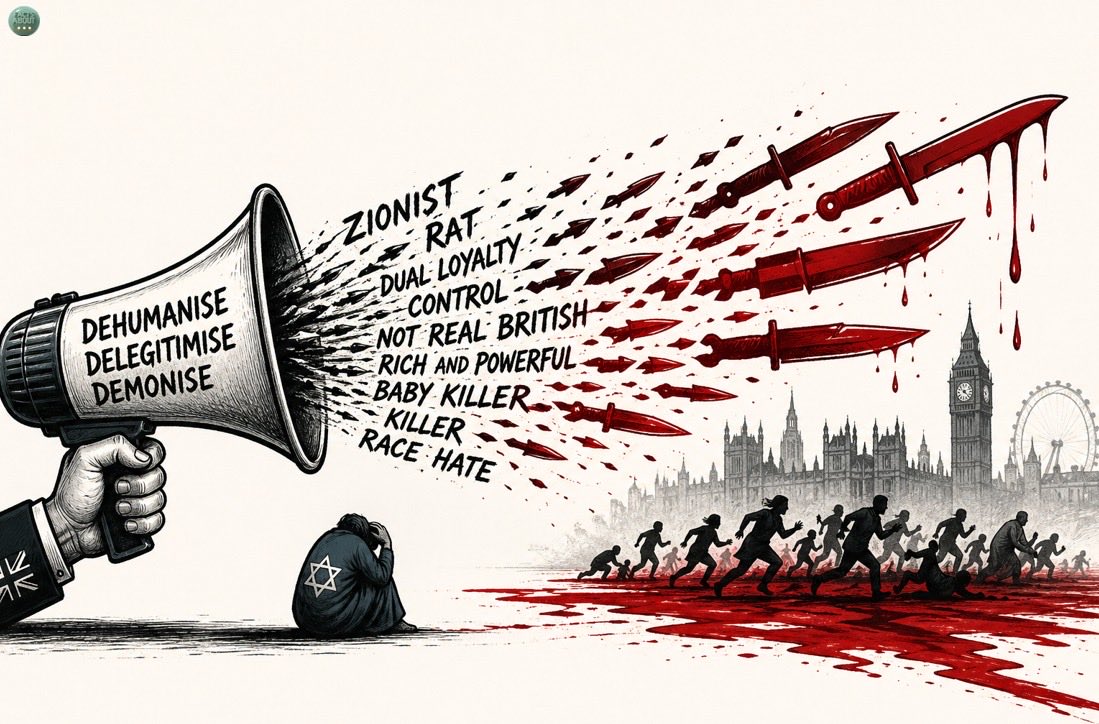
3
17
44
2,587
Jun 8
There is a strange pattern with failed leftist ideologies.
When socialism wrecks an economy, the answer is never: “Maybe we need more capitalism, more productivity, more private-sector growth, less bureaucracy, and fewer fantasies”.
No.
The answer is always: “We didn’t go left enough”.
You can see it in Britain. High taxes, low growth, collapsing services, debt, bureaucracy, and a state that keeps promising more while delivering less - and somehow the proposed cure is always more state control, more taxation, more redistribution, more regulation, more central planning.
This is the same disease that made communism catastrophic everywhere it was tried: the ideology can never fail. Only the people can fail the ideology.
And now you see the same instinct inside the Democratic Party.
After losing voters, trust, working-class credibility, and basic political common sense, the lesson some Democrats seem to have learned is not: “Maybe aligning with the DSA was poison.”
It is: “Maybe we weren’t anti-Israel enough”.
That is political self-harm.
To be clear: opposing U.S. aid to Israel is not automatically antisemitism. Someone can be wrong on policy without hating Jews.
But the current anti-Israel turn is not just “foreign policy restraint”. It is increasingly wrapped in the language of the DSA, campus radicals, Hamas apologia, “globalize the intifada,” and the fantasy that America’s natural ally in the Middle East is somehow the problem - while Iran, Qatar, the Muslim Brotherhood ecosystem, and Marxist street politics are treated as moral authorities.
And electorally, this is not some magic ticket.
Jamaal Bowman lost. Cori Bush lost. Both were incumbents. Both became symbols of the anti-Israel wing of the party. Voters looked at that brand and said: no thanks.
Yet instead of learning the obvious lesson, the activist class doubles down.
The U.S.-Israel alliance is not charity. It is strategy.
Yes, America gives Israel military aid - about $3.8 billion a year under the current agreement. But much of that money flows back into the American defense industry. It supports American jobs, American manufacturing, American weapons development, and American readiness.
Meanwhile, U.S.-Israel trade is not $3.8 billion. It is tens of billions - more than ten times the aid number. Israel is not some helpless dependency. It is a high-tech, intelligence, cyber, defense, AI, medical, and military innovation partner.
The alliance gives America battlefield-tested technology, intelligence from the most dangerous region on earth, missile-defense cooperation, cyber cooperation, and a democratic ally that can actually fight - without American troops doing the fighting.
Israel won its early wars without the United States. It survived when it was embargoed, isolated, outnumbered, and surrounded.
So the question is not whether Israel can survive without America.
The question is whether America is foolish enough to push one of the world’s most advanced technology and intelligence partners away - and leave China waiting with open arms.
Because in the AI race, cyber race, drone race, missile-defense race, and intelligence race, losing Israel would not punish Israel.
It would weaken America.
This is what ideological rot does. It makes a party confuse enemies for allies, allies for enemies, and failure for virtue.
The left keeps walking toward the cliff and calling every warning “far right”.
If the Democratic Party keeps moving toward the DSA, anti-Israel radicalism, and economic fantasy, the result will be simple:
There won’t be much Democratic Party left to save.
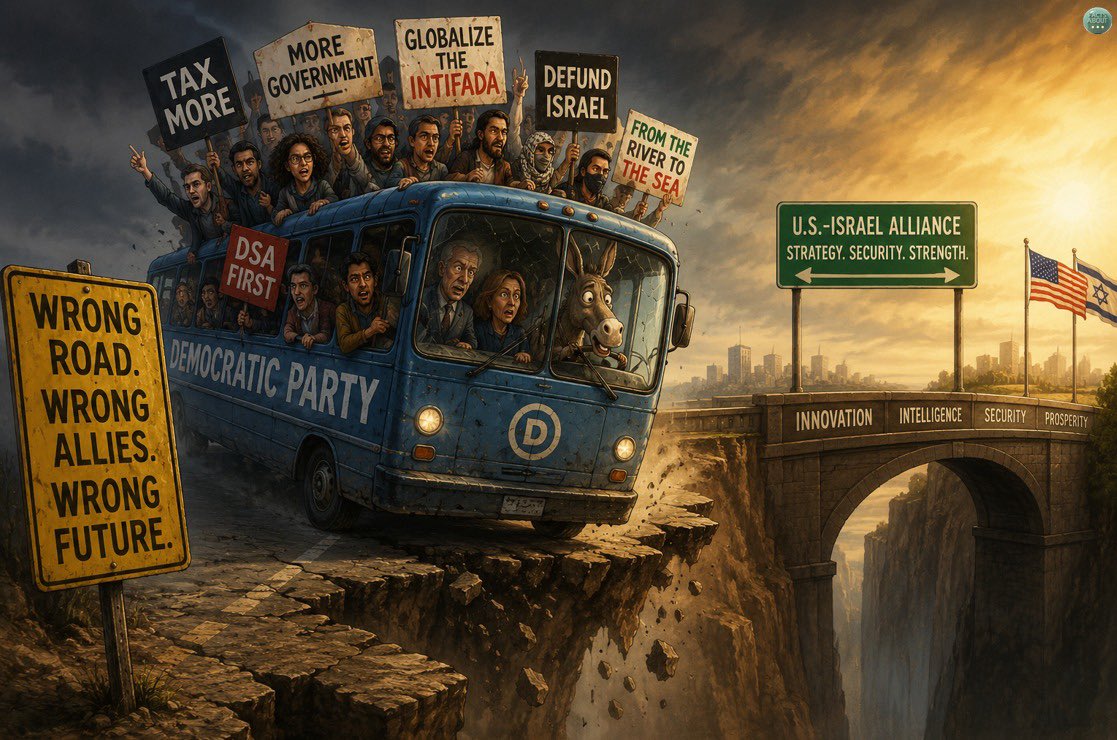
8 Nov 2025
The warning lights are flashing: the Democratic Socialists of America (DSA) isn’t politely lobbying the Democratic Party for incremental fixes - they’re systematically overtaking it. With voices like AOC, Mamdani, and Khanna lining up, the ideological steamroller is revving. And Democrats haven’t hit rock bottom yet - they’re heading even deeper.
Mamdani’s win in New York is just the opener. The message to rank-and-file Democrats: accept our agenda or get crushed. AOC has already declared the “old guard” obsolete; Khanna recently lambasted the party establishment at the Voters of Tomorrow summit, declaring a rebirth needed, and denouncing big donors, calling for radical transparency and a purge of “the donor class.”
The playbook is clear:
Defund/abolish policing, same-day rent freezes, radical housing policy, and a “we’ll rebuild society from scratch” economic vision.
Foreign-policy realignment, especially on Israel, where DSA-aligned figures push BDS and radical critiques of U.S. alliances.
Movement capture of institutions - think DSA-linked groups staffing city boards, nonprofits, and municipal agencies, layering their network across public service delivery.
Let’s be crystal clear: this isn’t harmless liberalism. It’s an ideological project that has real consequences:
Cities that flirted with “defund” or radical anti-business policy have seen crime surge, capital leave, middle-class flight - the DSA agenda has a governance track record and it’s often grim.
The Democratic Party in swing suburbs already pays the price when “Democrat = socialist” becomes the sound-bite voters hear. House losses follow.
On foreign policy, soft-on-enemies and harsh-on-allies messaging erodes trust among moderates, centrists and key minority groups.
Worse - the funding and international alignment. While direct foreign campaign money is illegal, the ecosystem of pro-DSA narratives is buoyed by overseas outlets and extremist-aligned media that amplify DSA frames on Israel, policing, capitalism, and U.S. alliances. These aren’t coincidences; they’re symmetries of ideology and influence.
Democrats - this is your warning: the takeover is not future-tense, it’s present-tense. After Mamdani, DSA-aligned candidates will be emboldened to primary incumbents, insist on litmus tests, and split any coalition that doesn’t conform to their maximalist agenda. You think the party’s in trouble now? Just wait until suburbs start writing off “Democrat” because of one primary meltdown, one radical candidate, one headline.
Ask yourself: Do you want a party that wins general elections, governs effectively, builds broad coalitions? Or do you want a faction-driven, purity-test-obsessed movement that seals the party off for a niche base and hands advantage to the other side? Because the DSA doesn’t just threaten Democrats - they threaten the Democratic Party’s ability to govern America.
Wake up. Watch out. Or the party you knew will’ve been hijacked - and the cost will be much bigger than a few lost primaries.
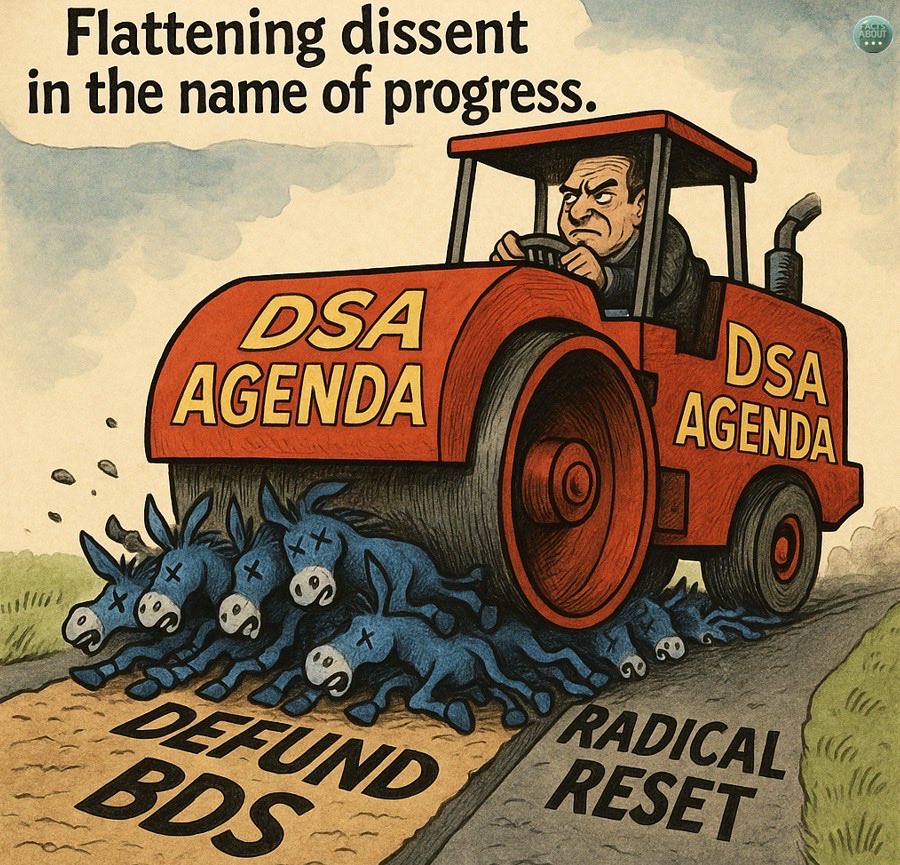
5
9
17
5,316
Jun 7
The strategic mistake Iran appears to be making is that it is trying to merge two separate wars into one.
For months, Tehran has insisted that Hezbollah is merely a Lebanese actor. Yet the moment Israel struck Hezbollah assets in Beirut after attacks on northern Israel, Iran responded directly with missile fire and threats against both Israel and the United States. Iran has effectively declared that an attack on Hezbollah is an attack on Iran.
Israel did not have the luxury of ignoring missiles fired from Lebanon. No sovereign state would. Once Hezbollah attacks, Israel responds. When Iran then chooses to directly intervene on Hezbollah's behalf, Israel's conflict is no longer only with Hezbollah - it becomes a conflict with the regime directing, funding, arming, and protecting Hezbollah. Iran itself has now tied the two fronts together.
The deeper problem is that Iran seems to have started believing its own propaganda.
For years, the regime projected an image of strategic inevitability: Hezbollah in Lebanon, militias in Iraq, the Houthis in Yemen, Hamas in Gaza, influence in Syria. The assumption appears to have been that Israel, the United States, and the Sunni Arab states would ultimately accept this regional architecture as a permanent fact.
Instead, the opposite happened.
Iran's proxy network increasingly became a liability. Every militia attack created pressure for retaliation. Every escalation narrowed Tehran's options. And now, by openly linking Hezbollah's fate to its own, Iran has raised the stakes dramatically.
Ironically, neither Israel nor the United States has historically been eager to own the consequences of regime collapse in Iran. The nightmare scenario is not necessarily a democratic transition. It is a fractured state: Persians, Azeris, Kurds, Baluchis, Arabs and competing armed factions struggling for power, producing years of instability and civil conflict in one of the most strategically important countries on earth.
That is why, for years, most Western policy focused on containment rather than regime change.
But strategy is ultimately about choices. If Tehran insists that Hezbollah and Iran are one fight, if every Hezbollah escalation triggers Iranian intervention, and if every Iranian intervention triggers an Israeli response, then the regime is creating a ladder of escalation that becomes increasingly difficult to climb down from.
The moral of the story may be simple: Iran spent decades building proxies so that it would never have to fight directly. By stepping in to shield Hezbollah, it risks turning the very system designed to protect the regime into the mechanism that endangers it.
May 25
I hope they do something like that. Iran's agreement to "disarm" will not be worth the paper it would be signed on.
x.com/destinationXIX/status/…
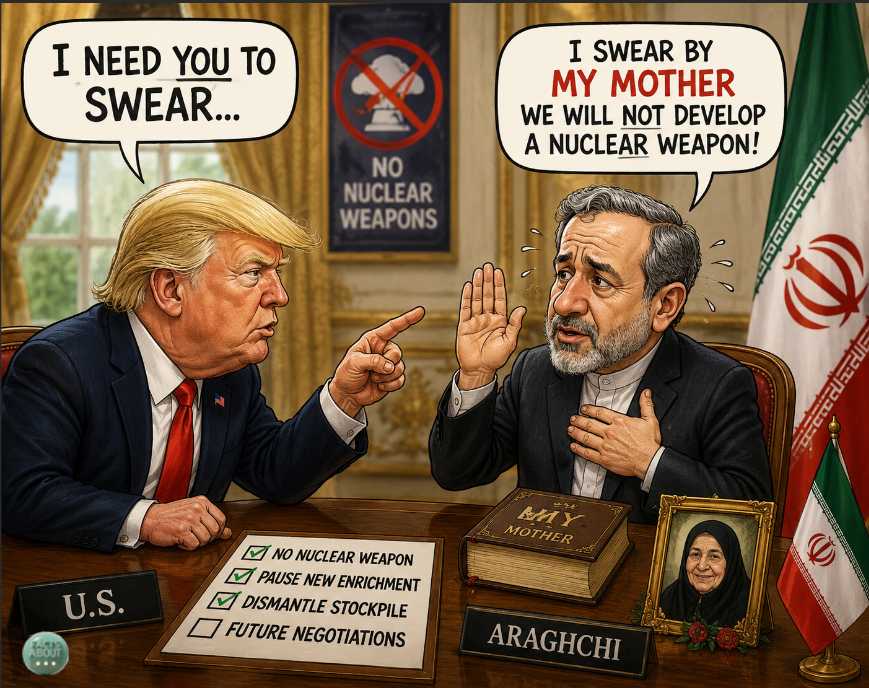
10
27
5,908
Jun 7
"From the River to the Sea" - The Most Successful Soviet Export You've Never Heard Of.
You have to admire Soviet propaganda.
The Soviet Union collapsed more than thirty years ago.
Yet millions of people still chant its slogans.
"From the River to the Sea" may be the most successful example.
Most activists believe it emerged organically from a grassroots liberation movement.
The reality is far more interesting.
During the Cold War, the Soviet Union invested enormous resources into transforming the Arab-Israeli conflict into a global revolutionary cause. According to Ion Mihai Pacepa, the highest-ranking intelligence official ever to defect from the Soviet bloc, Moscow viewed the Palestinian movement not merely as a local conflict but as a strategic weapon against Israel, the United States, and pro-Western governments throughout the Middle East.
Pacepa described extensive Soviet involvement with Yasser Arafat, the PLO, and the construction of a revolutionary narrative designed to appeal to Western audiences. The objective was simple: recast the conflict in the language of anti-colonial struggle, liberation movements, and revolutionary justice.
The Palestinian cause became the perfect Soviet project.
Not because Moscow cared about Palestinians.
Because it was useful.
It could be used simultaneously against Israel, against moderate Arab governments, and against the West itself.
Jordan nearly collapsed under the challenge posed by Palestinian militant organizations during Black September.
Lebanon was eventually torn apart as Palestinian armed factions built what amounted to a state within a state, helping transform one of the most prosperous countries in the Middle East into a battlefield.
This was never just about Israel.
It was about destabilization.
The genius of slogans such as "From the River to the Sea" is their ambiguity.
To Western audiences, they sound like a call for freedom.
To the organizations that originally used them, they described a territory stretching from the Jordan River to the Mediterranean Sea - a territory in which Israel would cease to exist.
And that was not even the original slogan.
Earlier Arab nationalist versions were far less subtle:
"Min al-ma' ila al-ma', Filastin Arabiyya".
"From the water to the water, Palestine is Arab".
The objective was explicit. The entire territory would be Arab. There would be no Jewish state.
The later formulation was simply better marketing.
The geography remained identical.
The goal remained identical.
Only the packaging changed.
Instead of Arab nationalism, the language became liberation.
Instead of conquest, it became justice.
Instead of elimination, it became freedom.
That is precisely how successful propaganda works.
You do not change the objective.
You change the branding.
Former Soviet defector Yuri Bezmenov described what he called "ideological subversion". He argued that the most powerful Soviet weapon was not military force but the gradual reshaping of how societies understand themselves.
His framework consisted of four stages:
1. Demoralization
2. Destabilization
3. Crisis
4. Normalization
The goal was to convince a society to lose confidence in its own institutions, history, culture, and legitimacy.
Only then would political destabilization become possible.
The parallels are difficult to ignore.
The language surrounding Israel today sounds remarkably similar to Cold War revolutionary rhetoric:
"Settler colonialism".
"Decolonization".
"Liberation struggle".
"Resistance".
"Globalize the Intifada".
The framing is almost always the same.
The West is the oppressor.
Its allies are illegitimate.
Violence becomes resistance.
Terrorists become revolutionaries.
History becomes a morality play.
The Soviet Union spent decades promoting exactly these narratives throughout Africa, Asia, Latin America, Europe, and the Middle East. Anti-Zionism became one of Moscow's most successful ideological exports, culminating in campaigns such as the infamous "Zionism is Racism" resolution at the United Nations.
And unlike most Soviet projects, this one survived.
The USSR disappeared.
The slogans remained.
That is what makes them so remarkable.
Most people chanting them have never heard of Ion Mihai Pacepa.
They have never heard of Yuri Bezmenov.
They have never heard of Soviet active measures.
They have never heard of the KGB's information warfare campaigns.
Yet they repeat the language, the narratives, and the ideological framework almost word for word.
Half a century later, one of history's most successful propaganda operations is still running.
The Soviet Union is gone.
Its "Palestine" virus is still installed.

Mar 9
The intellectual script behind much of the Western “Free Palestine” street politics is not new. It is essentially Frantz Fanon filtered through a red–green alliance - the marriage of radical left revolutionary theory with Islamist “resistance” ideology.
Fanon argued that the colonized regain dignity through violence against the colonizer. In his view, violence is not just tactical - it is purifying. It creates the “new man״. That idea became enormously influential in Third-Worldist revolutionary movements in the 1960s and 70s.
What we see today is a modern remix.
The “red” (communist) side supplies the framework:
everything becomes a binary between oppressor and oppressed. Israel is cast as a “settler-colonial project״, Jews become “white colonizers״, and revolutionary violence is reframed as morally cleansing “resistance״.
The “green” (Islamism) side supplies the theology of struggle:
the language of "muqawama" - armed resistance - where violence is not tragic but sacred and compromise is betrayal.
Fuse the two together and you get the slogans now echoing across Western campuses and streets:
“Globalize the Intifada.”
“From the river to the sea.”
“Resistance by any means necessary.”
These are not peace slogans. They are Fanonian revolutionary slogans. Violence is rebranded as liberation.
That is also why the movement romanticizes groups like Hamas - a jihadist organization whose charter openly calls for the destruction of Israel - while presenting itself in the language of social justice.
The contradictions do not matter. Marxists marching alongside Islamists would once have been absurd. Under the Fanon framework they become natural allies: both see violence against the “colonizer” as historically justified.
But the analogy they rely on - Algeria - collapses the moment you examine it.
French Algeria really was a colonial structure: a European power ruling a distant land. The war that followed was brutally violent. It involved torture, terrorism, massacres, and the deaths of hundreds of thousands of Algerians. The scale of the atrocities - and the moral crisis they created inside France itself - ultimately helped bring down the French Fourth Republic and accelerate the collapse of the French colonial empire.
But Israel is not France in Algeria.
Jews are not a foreign imperial population with a homeland across the sea. Jewish civilization emerged in that land thousands of years ago, and Israel today is also home to millions of Jews expelled from the Middle East and North Africa.
There is no France to go back to.
And the conduct of the war is fundamentally different as well.
Urban warfare inevitably produces civilian casualties, especially when one side embeds its forces among civilians. But Israel has taken unusual steps - advance warnings, evacuation corridors, and extensive scrutiny over civilian harm.
Military analysts have noted that the civilian-to-combatant casualty ratio in Gaza - roughly around one civilian per fighter - is by far lower than any other modern urban conflict, including Western campaigns against ISIS in Mosul or Raqqa, and definitely lower than France in Algeria.
Hence, Hamas has every incentive to shape the information battlefield. Casualty reporting frequently blurs the distinction between civilians and fighters, militants are often counted as “journalists” or “medical staff“, and propaganda scenes are staged or amplified to reinforce the narrative of indiscriminate killing. Hamas also embeds its forces in civilian infrastructure and, in documented cases, has executed Palestinians or prevented them from leaving to sustain the narrative.
The result is a propaganda ecosystem designed to preserve the colonial analogy - even when the facts do not support it.
And that is where the Fanonian script runs into reality.
In Algeria, the colonial power could ultimately withdraw and remain France.
Israel cannot withdraw to some external metropole. For Israeli Jews, Israel is not a colony. It is the only state they have.
Which means the revolutionary script borrowed from Algeria cannot produce the same outcome. If the premise that Israel is a temporary colonial implant collapses, the ideology has nowhere to go.
So instead of questioning the premise, the rhetoric escalates.
The demand quietly shifts from “liberation” to elimination - because if Jews are defined as settlers and settlers must leave, then the only way to resolve the contradiction is to make Jewish life in Israel no more.
And that reveals the deeper danger.
Israel is in fact the only case in modern history where an indigenous people returned to their ancestral homeland after centuries of exile - a genuine decolonization story - and yet is now being reframed as a colonial project that must be dismantled.
If that inversion can succeed here, it can succeed everywhere.
Because the same ideological framework does not stop with Israel. It can be applied to any Western country by redefining its population as “settlers” and declaring that historical presence no longer confers legitimacy.
That is what Israelis mean when they say “the West is next.”
The struggle over Israel is not only about one small country.
It is the test case for whether history, identity, and sovereignty can simply be rewritten - until any society can be labeled colonial and placed on the chopping block.
2
15
49
2,009
Jun 6
One of the first major figures to call Israel an “apartheid state” was not a civil-rights hero.
It was Hendrik Verwoerd.
The architect of South African apartheid.
In 1961, after Israel voted against South Africa at the UN, Verwoerd lashed out. Israel, he argued, had no right to criticize apartheid because, in his words, “Israel, like South Africa, is an apartheid state”.
Projection at it's finest.
The man running an actual racial dictatorship tried to smear the Jewish state because the Jewish state opposed his racial dictatorship.
And the smear survived.
That is how inversion works.
The guilty party takes the language of its own crime and throws it at the people standing against it.
South Africa denied the black majority the vote.
Israel’s Arab citizens voted in Israel’s first elections.
South Africa built a racial caste system.
Israel built a country where Arabs, Druze, Bedouins, Christians, Muslims, Jews, women, minorities, and LGBT citizens have legal rights unimaginable in most of the Middle East.
South Africa treated black people as subjects.
Israel airlifted black Ethiopian Jews out of danger in Operation Moses and Operation Solomon, gave them citizenship, and absorbed them as part of the Jewish people.
Is Israel perfect? No.
No country is.
But apartheid South Africa did not send planes to rescue black people and bring them home as citizens.
Israel did.
That is why the modern alignment of many black activists with anti-Israel movements is so tragic.
For much of American history, Jews were not enemies of black liberation. They were allies.
American Jews helped fund, build, and staff major civil-rights organizations. Jews marched with Dr. King. Rabbi Abraham Joshua Heschel marched in Selma. Jewish activists were disproportionately represented among white civil-rights volunteers. Two of the three civil-rights workers murdered in Mississippi in 1964 - Andrew Goodman and Michael Schwerner - were Jews.
But much of that history was coded politically as “liberal” or “Democrat”, not as Jewish.
So the alliance was forgotten.
And into that vacuum came a new story: Jews are white oppressors, Israel is apartheid, Palestinians are the new black South Africans.
It is one of the most successful moral inversions of our time.
Because if we are going to talk honestly about anti-black history in the Middle East, we need to talk about the Arab-Muslim slave trade.
It began earlier than the transatlantic slave trade.
It lasted longer.
It reached across Africa, the Middle East, and the Indian Ocean.
It included mass castration, concubinage, sexual slavery, and hereditary servitude.
And in parts of the Arab and Muslim world, slavery was abolished only in the modern era - in some places, barely at all.
Even today, anti-black racism exists openly in Palestinian and Arab societies. Black Palestinians are often descendants of enslaved Africans. In Arabic, the slur “abeed” means slaves. Yet the same activist spaces that obsess over “white supremacy” often go silent when anti-black racism comes from the side they have chosen to romanticize.
That, too, is inversion.
The people whose societies inherited the language and structures of slavery accuse the Jews of being the slave masters.
The people whose allies built real apartheid accuse Israel of apartheid.
The movements that glorify terrorism accuse Israel of genocide.
The regimes that persecute women, gays, minorities, dissidents, Christians, Jews, and black Africans call the Middle East’s most pluralistic democracy the “racist” one.
This is why the “Jews ran the slave trade” lie and the “Israel is apartheid” lie belong to the same family.
They are not historical arguments.
They are accusation laundering.
Take the crime.
Move the guilt.
Attach it to the Jew.
And repeat until people forget who actually stood with them.
There are black Israelis in parliament, diplomacy, medicine, entertainment, the army, and government. Pnina Tamano-Shata, born in Ethiopia and brought to Israel as a child, became Israel’s first Ethiopian-born cabinet minister. Yityish Aynaw became Miss Israel. Ethiopian Israelis serve, vote, protest, criticize, succeed, and belong.
Meanwhile, the Palestinian movement has repeatedly treated black solidarity as something it is owed, not something it has earned. In recent years, black activists have noticed the demand: your suffering must be folded into our cause, your history must be recruited for our slogans, and your moral authority must be loaned to our war against Israel.
But solidarity without knowledge becomes manipulation.
The tragedy is that many black Americans are taught to hate the one Middle Eastern country that actually shares their democratic vocabulary, while romanticizing movements and societies with far darker records on race, slavery, women, minorities, and freedom.
That is the power of inversion.
It makes enemies look like allies.
It makes allies look like oppressors.
And it turns historical memory into a weapon against the people who helped build it.
Feb 18
When António Guterres warns that Israeli policy changes in the West Bank are “undermining the two-state solution“, it sounds dramatic. But what are these changes? Stronger enforcement to protect ancient archaeological sites - many from biblical and Second Temple periods - that have suffered looting and deliberate destruction; normalization of long-frozen zoning and land registration; and abolishing discriminatory rules that effectively barred Jews from purchasing land in parts of Judea and Samaria solely because they are Jews. In 2026, democratic governments accuse Israel of colonialism while objecting to the removal of ethnic land restrictions. If that is not apartheid, what is?
The “two-state solution” is repeated as dogma, rarely examined. The legal foundation does not begin with modern UN resolutions, nor is it confined to the 1949 armistice lines. Under the doctrine of uti possidetis juris, newly emerging states inherit the administrative borders of the prior sovereign framework governing the territory. When Israel declared independence in 1948, the relevant framework was the territory west of the Jordan River, including the West Bank that had been unlawfully annexed by Jordan.
Earlier binding decisions 1 most notably the San Remo framework and subsequent international instruments recognizing the Jewish national home - reinforced that legal structure. But even independently of those, uti possidetis juris means Israel’s default territorial inheritance was not limited to ceasefire lines drawn after a war of annihilation, but to the pre-armistice administrative boundaries west of the Jordan River.
From 1948 to 1967, the West Bank was occupied and annexed by Jordan in a move recognized by almost no one. Jews were ethnically cleansed from Hebron, the Jewish Quarter of Jerusalem, and Gush Etzion; synagogues were destroyed, cemeteries desecrated, property confiscated. In 1967, Israel did not conquer a sovereign Palestinian state; it took control of territory that had never lawfully belonged to Jordan.
Claims that settlements are “illegal” rely on non-binding resolutions and selective readings of international law that ignore the Mandate, uti possidetis juris, and Jewish historical continuity. Jews have maintained a presence in Judea and Samaria for roughly three millennia - long before Arab-Muslim conquests reshaped the region. Calling Jews in Hebron or Shiloh “colonizers” requires historical amnesia.
Nor was the “two-state solution” ever truly two states for two peoples in mainstream Palestinian doctrine. The consistent demand has been a Palestinian state in Gaza and the West Bank - and *another* Palestinian state inside Israel via the “right of return“.
The Palestinian Authority has not prepared its population for permanent Jewish sovereignty: it maintains “pay-for-slay” stipends; members of its security forces have been implicated in terror attacks; official rhetoric and textbooks frame the entire land as exclusively Arab. Its education system operates alongside UNRWA, long criticized for incitement and glorification of violence. Despite funding pressure, structural reform has been minimal. The culture that culminated in October 7 did not arise in a vacuum.
Oslo has been eroded not only by the Palestinians unilateral diplomatic campaigns but by unauthorized construction, strategic land grabs in Area C, and systematic damage to Jewish archaeological sites - erasure as narrative warfare. Even violence statistics are politicized: incidents labeled “settler violence” often aggregate clashes initiated by Palestinian actors, or tourist visits to holy sites.
So the paradox remains: how do democratic nations end up defending a framework in which Jews are forbidden from buying land because they are Jews - and calling the removal of that discrimination a threat to peace? If peace depends on ethnic land laws and historical erasure, perhaps the problem is not the reforms, but the mythology surrounding the “two-state solution“.
6
49
95
3,782
Jun 5
For two years, we were told that the “Free Palestine” movement was about compassion.
About helping children.
About humanitarian relief.
About saving lives.
But a recent report paints a much darker picture.
Researchers identified more than 45 major Gaza fundraising campaigns across Europe. Of those, more than half were linked directly or indirectly to Hamas or other terrorist organizations. Together, those campaigns raised at least $9.5 million. 
Let that sink in.
Not fringe extremists.
Not secret dark-web networks.
Not anonymous terrorist financiers.
Ordinary Europeans.
Students.
Activists.
Celebrities.
Social media influencers.
People who clicked “donate” after being bombarded with emotional videos, propaganda, guilt campaigns, and carefully crafted narratives designed to separate them from their money.
Of course, none of these campaigns said:
“Donate to Hamas.”
That would be illegal.
Instead, they used the language of humanitarian aid, relief, medical support, food distribution, children’s welfare, and emergency assistance.
And that raises a simple question:
Did the organizers know where the money was going?
Or did they simply not care?
Because when more than half of the major campaigns examined are connected to organizations with Hamas or terrorist ties, there are only two possibilities.
Either they were useful idiots who failed to perform even the most basic due diligence before moving millions of dollars into one of the most heavily terror-infiltrated environments on Earth.
Or they knew exactly what they were doing.
Neither explanation is flattering.
The tragedy is that the people most exploited in this scheme were often the donors themselves.
Many genuinely believed they were helping innocent civilians.
Instead, they may have helped strengthen the very networks that keep Palestinians trapped under extremist rule, prolong war, siphon aid, and turn human suffering into a profitable industry.
And this doesn’t exist in a vacuum.
For years, billions have flowed into institutions that repeatedly escaped meaningful scrutiny. UNRWA has faced allegations involving employees who participated in or celebrated the October 7 massacre, held hostages and even sexually abuse Palestinian widows. And its structure has helped perpetuate the conflict rather than resolve it.
An entire ecosystem has emerged around the Palestinian cause:
Emotional manipulation.
Victimhood marketing.
Selective outrage.
Endless fundraising.
Very little accountability.
The result?
Europeans and Americans open their wallets believing they are funding peace.
The money enters a black box.
And somehow Hamas remains powerful, the war continues, Palestinians remain trapped, and new generations are taught the same hatred.
If you donated without asking questions, you may not be guilty.
But you were used.
Used by people who understood that a picture of a crying child is often worth more money than a financial audit.
Used by activists who demanded blind trust while refusing transparency.
Used by organizations that built entire fundraising empires on a conflict they have no incentive to see end.
The first victims of terrorism are the people it murders.
The second victims are the people it deceives into funding it.
And that deception may be one of the most successful fundraising fraud operations of the 21st century.
May 26
The biggest lie in the entire “Free Palestine” movement is that it was ever about Palestinians.
If it were, the movement would have started with Hamas.
Hamas has spent years torturing Palestinians, executing political opponents, stealing aid, suppressing dissent, imprisoning critics, and using civilians as human shields in a fight it instigated against Israel. Any movement genuinely concerned with Palestinian wellbeing would have made the liberation of Palestinians from Hamas its first demand.
Instead, many activists openly support Hamas, excuse Hamas, or simply pretend Hamas does not exist. That alone tells you this was never really about Palestinian rights.
In fact, some of the most revealing moments came when Palestinians themselves spoke out against Hamas. Western activists who claim to amplify Palestinian voices often ignored them, attacked them, or dismissed them. Apparently Palestinian voices matter only when they support the approved narrative.
The flotilla is another giveaway. It carried no aid. It was a publicity operation designed to generate headlines, provoke a confrontation, and reinforce a narrative about Israel. If the goal had been helping Palestinians, there were countless more effective ways to deliver assistance. The objective was never aid. The objective was optics.
But the clearest evidence comes from something even more revealing: boycotts targeting businesses in Judea and Samaria.
These factories employ thousands of Palestinians who work alongside Israeli Jews. They provide wages, skills, and opportunities that many workers cannot find elsewhere. Entire Palestinian families depend on these jobs.
Yet activists celebrate measures designed to shut these businesses down.
Why?
If your goal is helping Palestinians, destroying Palestinian jobs makes no sense. If your goal is hurting Israel, even at Palestinian expense, it makes perfect sense.
That is why proposals such as Ireland's Occupied Territories Bill are so revealing. Supporters present them as acts of solidarity with Palestinians, yet the immediate victims are often the very Palestinians whose livelihoods depend on economic cooperation between Arabs and Jews.
The same contradiction appeared throughout the Gaza war.
Activists demanded that Israel defeat Hamas while simultaneously opposing nearly every measure required to defeat Hamas. They condemned civilian casualties, yet showed remarkably little interest in the fact that Egypt kept its border largely closed and reinforced its security barriers rather than creating a large-scale humanitarian refuge in Sinai, as it is required by 3(!) refugee treaties Egypt signed.
Had Egypt temporarily allowed civilians - especially women, children, and the elderly - to shelter in Sinai while the fighting was underway, the number of civilian casualties could have been dramatically reduced. Yet there were no global flotillas to Egypt. No campus occupations demanding Cairo open the border. No international campaign treating Egypt as the key obstacle.
Because once again, the target was never saving Palestinians.
The reality is simple: when forced to choose between helping Palestinians and hurting Israel, much of the movement chooses hurting Israel every single time.
Because for many of its leaders, Palestine is not the cause. Palestine is the excuse.
The useful idiots follow along because they believe they are supporting human rights. The antisemites support it because they want a Jewish state to disappear. The Islamists support it because they reject the idea that non-Muslims should exercise sovereignty over land they consider Islamic.
In the process, these "activists" are damaging something far larger than Israel.
They are eroding the very principles that allow democratic societies to defend themselves against jihadist movements and other terrorist organizations. They are redefining self-defence as aggression, turning counterterrorism into a crime, and creating legal and political standards that no democracy could survive if consistently applied.
And like antisemitism throughout history, the damage rarely stops with the Jews.
Antisemitism is a political virus. It begins by targeting Jews, but it eventually infects and weakens the societies that embrace it. The same people cheering the destruction of the world's only Jewish state imagine they are building a more just world.
History suggests otherwise.
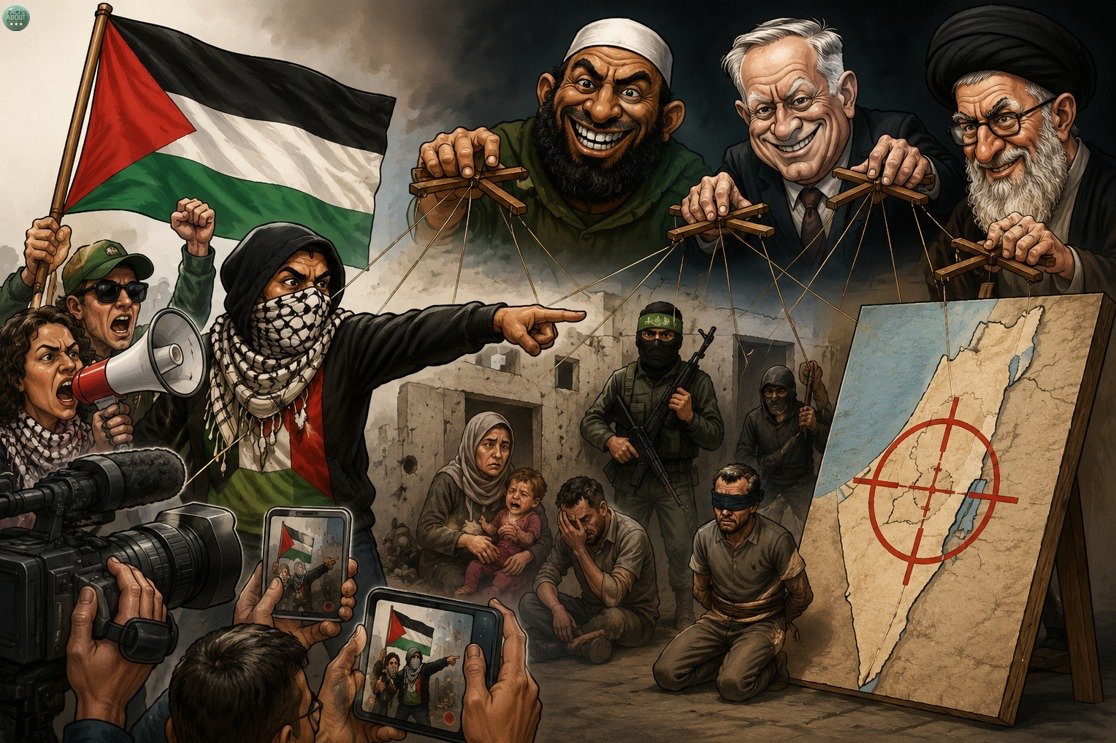
6
67
130
11,559
Jun 5
The word "Nakba" is now the emotional centerpiece of Palestinian identity.
But that is not what it originally meant.
The term was popularized in 1948 by Constantine Zurayk, a Syrian Arab historian and intellectual, in his book "The Meaning of the Disaster". He was not writing a Palestinian manifesto against Israel.
He was writing an indictment of the Arab world.
For Zurayk, the "disaster" was not merely that Israel had survived. It was that Arab societies had failed. Arab leaders had rejected compromise, promised victory, sent unprepared armies, misled their people, launched a war against the newly declared Jewish state, and then lost.
The original Nakba was not a theology of eternal victimhood.
It was a rebuke of Arab incompetence, corruption, fantasy, and failure.
Only later was it transformed into a narrative of permanent Palestinian victimhood.
That transformation required rewriting what happened in 1948.
In 1947, the Jews accepted partition. The Arab side rejected it. Five Arab armies invaded the newborn Jewish state with the openly declared aim of destroying it.
If Israel's goal had been to expel all Arabs, it would not have granted citizenship to the Arabs who stayed. Israel's Declaration of Independence explicitly called on Arab residents to remain and participate in the new state as equal citizens. Ben-Gurion himself appealed to Arab inhabitants to stay and help build it.
Today, the descendants of those Arabs who stayed number more than two million Israeli citizens. They vote, serve in parliament, sit on the Supreme Court, and enjoy the same legal rights as every other citizen.
That is not the behavior of a state pursuing systematic expulsion. Nor was that the narrative being advanced by Arab intellectuals like Zurayk in 1948.
There is further evidence.
One of the least discussed facts is the role of Arab propaganda surrounding Deir Yassin. In a famous BBC interview, Palestinian journalist Hazem Nusseibeh described how Arab leaders spread atrocity stories to rally the Arab world. Instead, panic spread among local Arabs, contributing to a mass flight from combat zones.
At the same time, Arab leaders and broadcasters repeatedly encouraged civilians to leave areas where invading Arab armies would fight. The expectation was simple: the Jews would be defeated, and the population could return after victory.
Victory never came.
The Arab armies lost.
What happened next is even more revealing.
The modern Nakba narrative eventually evolved into a new political demand: the so-called "right of return."
But this was never how refugee crises were resolved anywhere else.
Germans expelled after World War II did not return. Hindus and Muslims displaced during Partition did not return. The millions displaced by the Korean War did not return. The hundreds of thousands of Jews expelled from ancient communities across the Arab world did not return.
They were resettled.
The Jewish refugees rebuilt their lives in Israel and elsewhere.
The Palestinian case took a different path.
In Israel's early years, thousands of Arabs were permitted to return through family reunification and other arrangements. The issue was never an absolute refusal to allow any return. The dispute was over demands for a mass return of hostile population that would fundamentally alter the demographic character of the newly established Jewish state.
Over time, the refugee issue was transformed into a political weapon.
Rather than ending refugee status through resettlement, citizenship, and integration - as happened everywhere else - UNRWA institutionalized its continuation. A refugee became children, grandchildren, and great-grandchildren who themselves became refugees, even though they never even visited Israel, and had other citizenships (Like the USA born millionaires Bella and Gigi Hadid, the "Palestinian refugees")
As a result, a refugee population of roughly 700,000 became millions.
While every other refugee agency seeks to reduce refugee populations through permanent solutions, UNRWA became the only refugee system in the world whose numbers only grow.
Even more remarkably, people living under Palestinian government in the West Bank and Gaza can still be classified as "Palestine refugees" despite already living in Palestinian-controlled territory in "Palestine".
This is not a normal refugee framework.
It is a political one.
Because the goal was never merely a Palestinian state alongside Israel.
The "right of return" demands that millions of descendants settle inside Israel itself, transforming the world's only Jewish state into another Arab-majority state.
In practice, the so-called two-state solution becomes one Arab state in Gaza and the West Bank - and a second Arab-majority state created inside Israel through demographics.
The objective is not to end the conflict, or create a "Palestinian state".
It is to reverse the outcome of 1948.
Which brings us back to Constantine Zurayk.
The original Nakba was an Arab intellectual asking why the Arab world failed.
The modern Nakba is a political movement arguing that Israel should not have survived that failure.
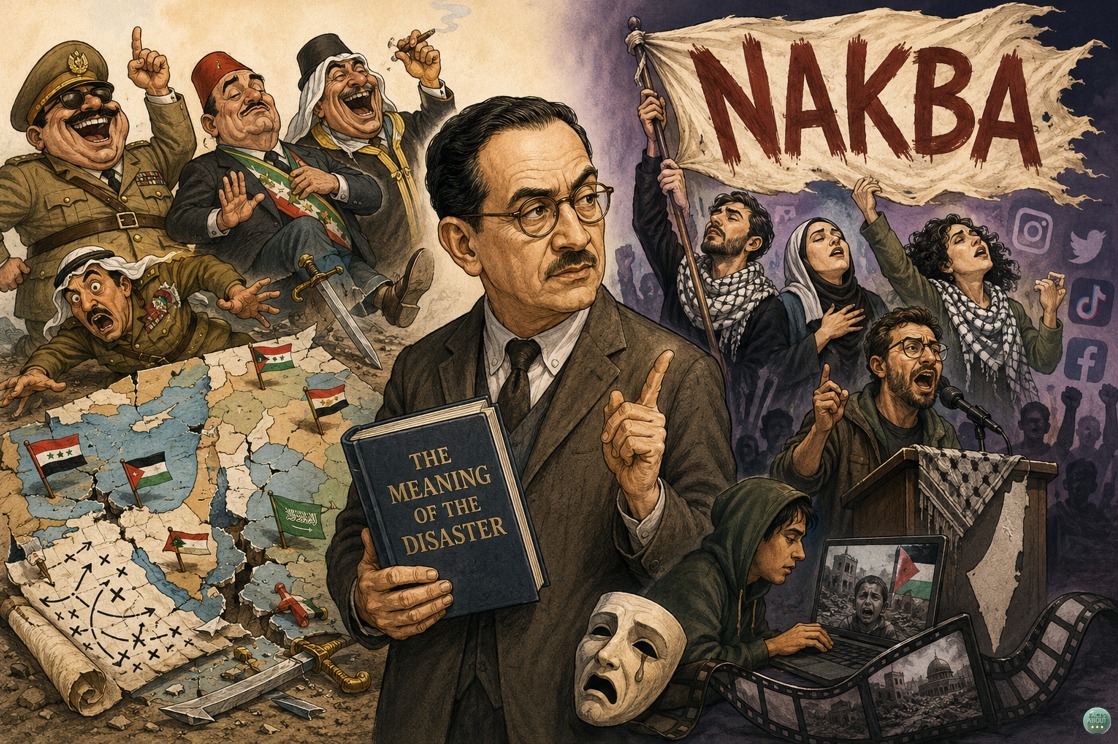
May 13
There may actually be a silver lining to the latest deranged anti-Israel blood libel.
Not because sane people believe it. Most normal people hear the claim that Israel “trains dogs to rape Palestinians” and immediately recognize it for what it is: grotesque propaganda bordering on medieval insanity. Even by modern disinformation standards, it sounds absurd. The truly embarrassing part is that some supposedly serious people helped spread it anyway - including a The New York Times reporter amplifying one of the most fringe and hysterical accusations imaginable.
But history shows something interesting: these lies are often not really aimed at educated Western audiences. Most intelligent people will dismiss them instantly. The people most likely to internalize them are extremists, militants, and highly radicalized populations already primed to believe almost anything about Jews or Israel.
And ironically, that can still affect behavior positively, when movements end up drinking their own Kool-Aid.
One of the most revealing historical examples is Deir Yassin. For decades, it was framed internationally as proof of a deliberate Zionist campaign of mass slaughter designed to terrorize Arabs into fleeing. But in an old BBC interview, Hazem Nuseibeh - an Arab broadcaster connected to the events of 1948 - admitted that exaggerated atrocity stories were intentionally circulated to shock the Arab world and pressure Arab armies into invading the newly declared Jewish state.
The plan was to inflame the region into war.
Instead, many Palestinian Arabs heard the stories and panicked. Rumors spread uncontrollably. Fear spread faster than facts. Entire communities fled because they became convinced Jewish forces were terrifying and unstoppable. The propaganda campaign meant to mobilize resistance ended up contributing to mass flight.
That is the uncomfortable reality of psychological warfare: fabricated horror stories can still influence behavior if enough people believe them.
Which brings us back to today’s ridiculous blood libels. No serious military analyst believes Israel has some dystopian canine rape program. Most normal people laugh at how insane the accusation sounds. But among radicalized circles, fear and myth-making can still shape decisions.
And considering that Palestinians sitting in Israeli prisons are there because of terror attacks, shootings, stabbings, or attempted murders, there is a dark irony here: if enough potential attackers become terrified of ending up captured by Israelis because they believe these grotesque fantasies, some may think twice before carrying out attacks in the first place.
The people spreading these fantasies are not just “misinformed journalists”. They are laundering the propaganda of a terror organization into mainstream discourse, spreading hatred and medieval-style demonization to millions of people. Any reporter pushing such deranged blood libels should be fired in disgrace, and any newspaper reckless enough to publish and amplify this garbage should face massive legal and reputational consequences for knowingly spreading incitement, hysteria, and ethnic demonization while failing to stop either an evil propagandist or an unbelievably incompetent reporter.
Still, looking for the silver lining while rolling with the punches is usually the smarter strategy. If the same lies they spread to inflame hatred end up frightening potential terrorists away from carrying out attacks that would land them in Israeli prisons, then the propagandists may accidentally undermine the very violence they are trying to encourage.
4
19
66
2,056
Jun 4
The Khazar Myth: Arthur Koestler's Accidental Gift to Antisemites
Most people who claim that Ashkenazi Jews are not "real Jews" have no idea where the argument comes from.
They are repeating a theory popularized by a 1976 book, "The Thirteenth Tribe", written by Arthur Koestler, a Hungarian-Jewish intellectual. Ironically, Koestler's intention was not to attack Jews, but to defend them. He believed that if Ashkenazi Jews descended primarily from the Khazars rather than the ancient Israelites, then antisemitism would lose its racial foundation.
The opposite happened.
The Khazar theory became one of the most useful propaganda tools ever created for those seeking to delegitimize Jewish identity. Soviet propagandists embraced it. Arab nationalists embraced it. Modern anti-Zionists embraced it. The theory offered something they desperately needed: a way to argue that Jews were outsiders to their own history.
The problem is that modern genetics, archaeology, history, and linguistics have thoroughly dismantled it.
DNA studies consistently show that Jewish populations across the world - including Ashkenazi, Sephardi, Mizrahi, Kurdish, Yemenite, Iraqi, Moroccan and other Jewish communities - share substantial common ancestry rooted in the Levant. Ashkenazi Jews are not genetically close to Germans, Poles or Russians. They cluster overwhelmingly with other Jewish populations and with peoples of the Eastern Mediterranean.
One of the most famous examples is the Cohen lineage. Genetic studies of Jewish priestly families found shared paternal markers across geographically separated Jewish communities, consistent with descent from a common ancient Near Eastern population. More recently, large-scale genomic studies have shown that Jewish communities separated for centuries remained remarkably related to one another, preserving a common ancestral origin despite dispersion across continents.
History tells the same story.
The Romans did not invent the Jewish connection to Judea; they documented their own conquest of it. The Arch of Titus still stands in Rome today, depicting the Roman triumph after the destruction of Jerusalem, with Temple spoils - including the menorah - carried through Rome, after the destruction of the Second Temple in 70 CE. The jewish exile was carved into Roman victory monuments nearly two thousand years ago.
And even exile did not mean disappearance.
There has never been a period in recorded history when Jews completely vanished from the Land of Israel. Jewish communities remained in Jerusalem, Tiberias, Safed, Hebron and elsewhere under Byzantine, Arab, Crusader, Mamluk and Ottoman rule.
The "European colonist" narrative collapses even further when one looks at modern Israel itself.
Most Israeli Jews are not Ashkenazi.
The majority descend from communities expelled or driven from Iraq, Yemen, Morocco, Egypt, Syria, Libya, Iran and other parts of the Middle East and North Africa. These communities spoke Arabic, Persian, Kurdish and other regional languages long before the modern State of Israel existed.
Yet anti-Zionist activists often focus obsessively on Ashkenazi Jews because the Khazar myth serves a political purpose. If Jews can be portrayed as foreigners, then their historical connection to Israel can be dismissed.
The same pattern appears in the use of Neturei Karta as supposed proof that anti-Zionism cannot be antisemitic because "some Jews are anti-Zionist."
This argument collapses under its own logic.
Neturei Karta are Jews. They believe Jews are the descendants of ancient Israel. They pray toward Jerusalem. They believe the Land of Israel belongs to the Jewish people. Their disagreement is theological: they argue that a Jewish state should not exist before the coming of the Messiah. Their existence does not disprove Jewish nationhood. It confirms it.
Which brings us to an uncomfortable fact that many modern anti-Zionists, especially in the Muslim world, prefer not to discuss.
The Qur'an itself repeatedly refers to the Children of Israel and their connection to the land.
"O my people, enter the Holy Land which Allah has written for you."
(Qur'an 5:21)
Not written for an empire.
Not written for a future conquest.
Written for the Children of Israel.
And again:
"Dwell in the land."
(Qur'an 17:104)
For centuries, mainstream Islamic commentators understood these verses exactly as they were written. The attempt to reinterpret them is largely modern and political.
That is why the debate over Jewish ancestry matters so much.
If Ashkenazi Jews are descendants of ancient Israel - and the evidence overwhelmingly shows that they are - then the central anti-Zionist claim that Jews are merely European colonists collapses. The historical, archaeological, genetic and even scriptural record all point in the same direction.
The Jewish people have the receipts: history, archaeology, scripture, continuous presence, and even acknowledgment in Islamic tradition.
And that is precisely why a debunked theory from 1976 refuses to die.
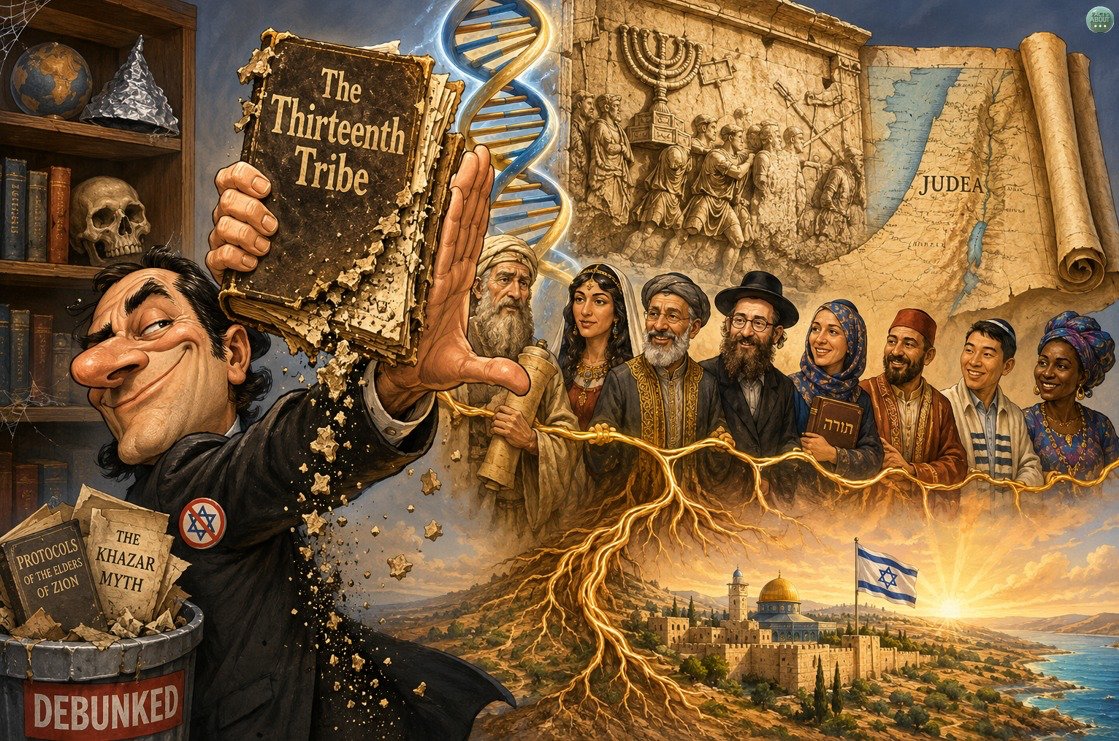
Mar 2
There is a line in the Qur’an that almost no one in the modern Middle East wants to talk about. Not Islamists, not Arab nationalists, and certainly not Western pundits who recently discovered “anti-Zionism”. Yet it is there in plain text.
Qur’an 5:21 - “O my people, enter the Holy Land which Allah has written for you.”
(Surah Al-Ma’idah, spoken by Musa to the Children of Israel)
Not “written for the Arabs”.
Not “written for future empires”.
Written for the children of Israel.
And again:
Qur’an 17:104 - “Dwell in the land…”
For fourteen centuries, classical Islamic commentators understood these verses exactly as they read: the land was given to the Children of Israel. The modern attempt to erase that fact is political, not theological.
Because the real problem is not history.
The real problem is what history proves.
For years, Arab nationalist propaganda - now oddly echoed by people like Tucker Carlson and others in the West - has pushed the claim that today’s Jews are not the ancient Jews, that they are “Europeans”, “Khazars”, or colonial impostors. That theory collapsed under modern genetics, archaeology, and basic scholarship.
DNA studies consistently show that Jewish populations - including Ashkenazi Jews - share clear Middle Eastern ancestry. The “Cohen Modal Haplotype”, found among Jewish priestly families across the diaspora, points to a common origin going back thousands of years. Archaeology, inscriptions, coins, Roman records, Byzantine records, and Islamic sources all confirm continuous Jewish presence in the land. There was never a moment in the last three millennia when Jews disappeared from it.
And the demographic reality of Israel today destroys the “European colonist” myth even further:
most Israeli Jews are not Ashkenazi at all. They came from Iraq, Yemen, Morocco, Iran, Syria, Egypt, and other parts of the Middle East and North Africa - communities older in the region than most modern Arab identities.
The counter-claim - that Palestinians are the ancient Philistines or Canaanites - has even less basis. The Philistines were a long-extinct Aegean people who disappeared more than 2,500 years ago. The Canaanites vanished as a distinct population in antiquity. The Arabic language, culture, and identity in “Palestine” arrived with the Arab conquests in the 7th century, and the population grew later under the Ottoman Empire and especially during the British Mandate, when economic development funded largely by Jewish immigration drew large numbers of Arab workers from surrounding regions.
Even British records show this clearly. The 1864 survey associated with the British consul James Finn describes a sparsely populated land, with Jerusalem numbering only around fifteen thousand inhabitants in total, with Jews forming the largest single community - more than Muslim and Christians combined. Travel accounts from the 18th and 19th centuries repeatedly describe swamps, malaria, abandoned fields, and empty stretches of land long before modern Zionism began draining the marshes and building cities.
The British Mandate itself restricted Jewish immigration at the very moment European Jews were fleeing persecution, while Arab migration into the area continued with far fewer limits. The demographic story is a de-colonialization one. It is return followed by conflict.
Which brings us back to the real issue - the one no one wants to say out loud.
For much of traditional Islamic law, Jews and Christians were dhimmis: protected, but subordinate. Judaism was often described as din batil - a superseded religion. In that framework, Jews could exist, but not rule. They could live, but not be sovereign. A successful, powerful Jewish state in the heart of the Middle East is not just a political problem. It is a theological one.
That is why the conflict persists even when borders change, governments change, and offers are made. Because the existence of a Jewish state contradicts a worldview that assumed Jews would never again stand on their own land as a nation.
Some in the region, like leaders in the UAE and other Gulf states, have begun to move past that. They accept reality. They accept history. And, whether they say it openly or not, they accept what their own scripture says.
Others are still fighting it.
They will keep fighting it.
They will keep losing.
Because the irony at the centre of this conflict is impossible to escape:
The Qur’an says the land was given to the Children of Israel.
In that sense - whether people like it or not - Allah is a Zionist.
15
56
154
9,486