
Backend Developer | Python (FastAPI/Django) | Software Engineer
Joined September 2022
- Tweets 246
- Following 78
- Followers 3
- Likes 29
7 Photos and videos
Ogbegbe Destiny Kelachi retweeted

Apr 5
2 developers working on the same branch
16
144
1,652
285,387
Ogbegbe Destiny Kelachi retweeted

Apr 5
14 sorting algorithms
5
34
317
21,285
LangGraph Explained for Beginners youtu.be/cUfLrn3TM3M?si=8QJy… via @YouTube

23
Ogbegbe Destiny Kelachi retweeted
21 Dec 2025
Python Django Full Course for Beginners | Complete All-in-One Tutorial
This Python Django Full Course for Beginners is an all-in-one beginner tutorial and complete course full of over 3 hours of Django code and instruction to level up your programming skills. This course teaches all of the Django fundamentals. View this Django full course tutorial as a Django video textbook with 12 clearly defined chapters.
youtube.com/watch?v=Rp5vd34d…
3
48
268
38,481
Ogbegbe Destiny Kelachi retweeted
20 Dec 2025
LangChain Explained In 15 Minutes - A MUST Learn For Python Programmers
youtube.com/watch?v=mrjq3lFz…
1
42
243
48,652
Ogbegbe Destiny Kelachi retweeted
29 Oct 2025
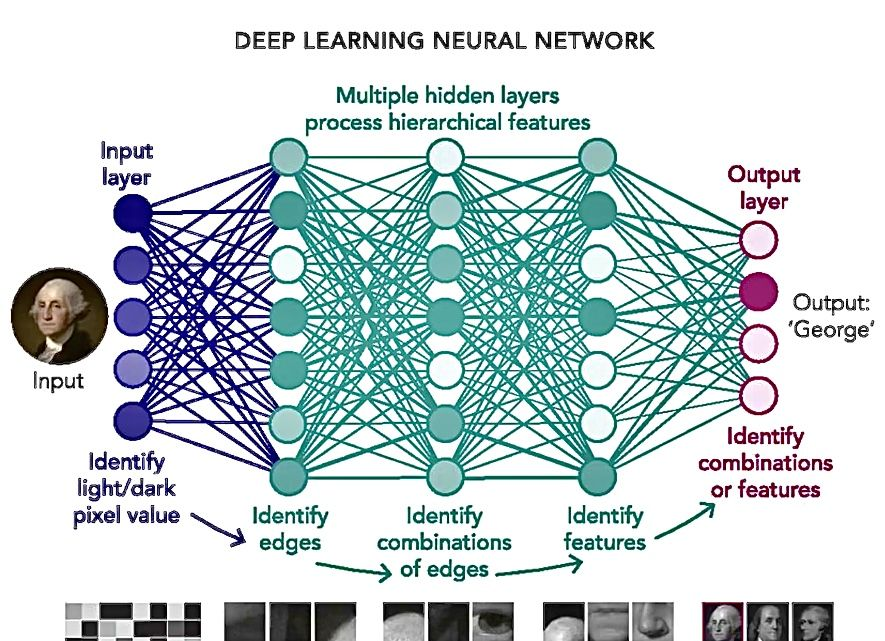
Summary chart of deep learning neural networks
5
87
505
20,696
Ogbegbe Destiny Kelachi retweeted
30 Nov 2025
Build a Local AI Agent With Python (Ollama, LangChain & RAG)
Learn how to build local AI agents using Python. We'll be using Ollama, LangChain, and something called ChromaDB; to act as our vector search database. All of this will be local and free to run.
youtube.com/watch?v=E4l91XKQ…
6
86
459
39,681
Ogbegbe Destiny Kelachi retweeted
4 Dec 2025
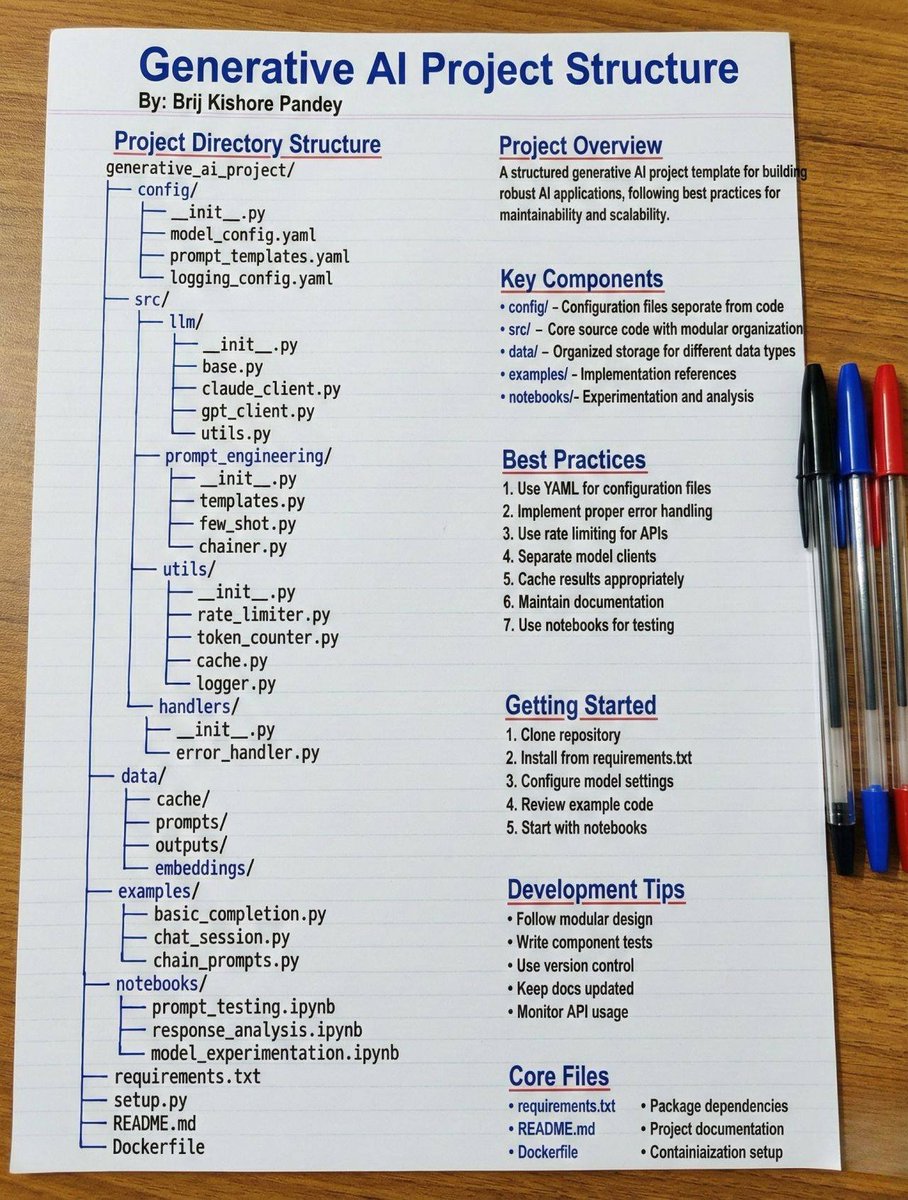
Generative AI Project Structure
Image Credit: Brij Kishore Pandey
10
143
867
29,496
Ogbegbe Destiny Kelachi retweeted
9 Nov 2025
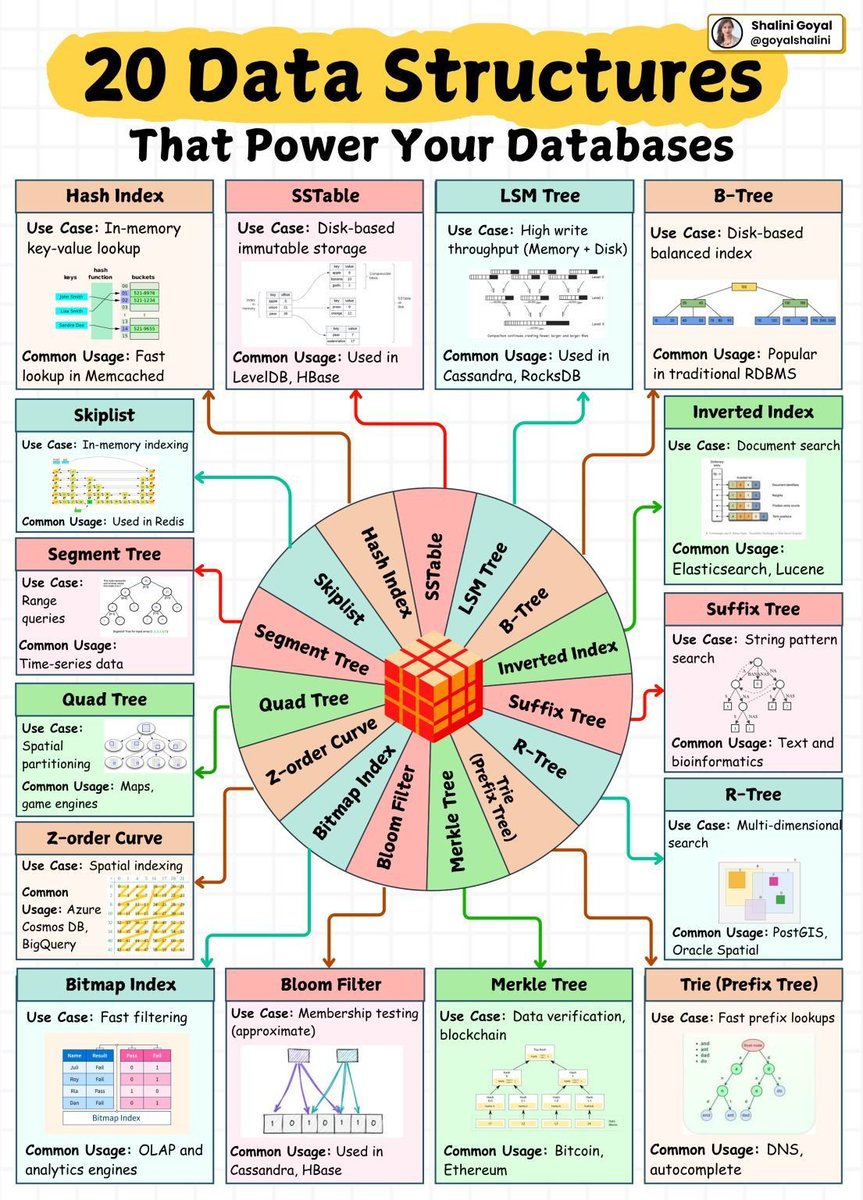
20 Data Structures
Image Credit: Shalini Goyal
2
92
405
26,229
Ogbegbe Destiny Kelachi retweeted
30 Dec 2025
ML Foundations for AI Engineers
Modern AI is built on ML. Although builders can go far without understanding its details, they inevitably hit a technical wall. In this guide, we cover the ML essentials that engineers need to know.
youtube.com/watch?v=BUTjcAjf…
1
30
207
19,147
Ogbegbe Destiny Kelachi retweeted
30 Dec 2025
Python Virtual Environments - Full Tutorial for Beginners
In this tutorial, we will show you step by step how to create a virtual environment in Python. A virtual environment is a self-contained location that enables you to maintain separate and isolated environments for your python projects. This isolation allows you to manage dependencies, versions, and packages without conflicts across different projects.
youtube.com/watch?v=Y21OR1OP…
1
38
212
16,730
Ogbegbe Destiny Kelachi retweeted
31 Dec 2025
RAG Langchain Python Project: Easy AI/Chat For Your Docs
youtube.com/watch?v=tcqEUSNC…
1
26
183
20,136
Ogbegbe Destiny Kelachi retweeted
30 Dec 2025
How To Build And Run A Python App In Docker
In this tutorial, we'll show you how to "Dockerize" your Python applications by building and running a Python app in a container...
youtube.com/watch?v=KUECJHlV…
5
57
278
36,772

29 Dec 2025
29 Dec 2025

Analytics Website Dashboard using Python and Streamlit Library with MYSQL database
Descriptive analytics is a type of data analytics that looks at past data to give an account of what has happened. Results are typically presented in reports, dashboards, bar charts and other visualizations that are easily understood.
youtube.com/watch?v=pWxDxhWX…
19
29 Dec 2025
27 Dec 2025
BeautifulSoup Requests | Web Scraping in Python
In this Web Scraping tutorial we are going to be looking at BeautifulSoup and Requests!
youtube.com/watch?v=bargNl2W…
19
26 Dec 2025
24 Dec 2025

Everyone is building AI agents.
Very few understand the agentic frameworks that actually power them.
In 2025, two frameworks dominate agent development —
not as competitors, but as complementary layers:
n8n — Visual Workflow Automation
What it does
• Visually connects AI agents with business tools and APIs
• Flow: Trigger → AI Agent → Tools → Action
• Removes integration complexity and speeds up deployment
Think of it as:
The orchestrator that plugs AI into your entire tech stack
—
LangGraph — Graph-based Agent Orchestration (LangChain)
What it does
• Enables stateful, cyclical, multi-step agent workflows
• Flow: State → Agents → Conditional Logic → State (loops)
• Designed for complex reasoning and coordination
Think of it as:
The brain managing advanced agent decision-making
—
When to use n8n
• AI business tool integrations
• Customer support and ops automation
• No-code or low-code workflows for teams
• Fast shipping with 700 integrations
When to use LangGraph
• Multi-agent reasoning systems
• Enterprise-grade AI applications
• Cyclical or long-running workflows
• Fine-grained state control and memory
—
Ecosystem strengths
n8n
• Visual builder for non-developers
• Self-hosted, open-source option
• Strong business automation community
LangGraph
• Deep LangChain integration
• LangSmith for observability and debugging
• Advanced state persistence and control
—
The real insight 👇
The best AI systems use both.
n8n → Visual orchestration and tool integration
LangGraph → Agent logic, reasoning, and state
Think in layers: business automation and intelligent decision-making
—
Your turn 👋
What would you build first?
A visually simple, tool-connected agent (n8n)?
Or a deeply orchestrated, reasoning-heavy agent (LangGraph)?
24
21 Dec 2025
20 Dec 2025
LangChain Explained In 15 Minutes - A MUST Learn For Python Programmers
youtube.com/watch?v=mrjq3lFz…
35
21 Dec 2025
In a world of noise, the signal belongs to those who know where to look.
33