
Human | Husband | Tech bro | Aspiring Finance bro
Joined August 2010
- Tweets 19,206
- Following 700
- Followers 5,477
- Likes 3,087
765 Photos and videos






Pinned Tweet

16 Jun 2018
I’ve been thinking to myself a lot and I will like to know people’s opinion.
Which of these has a better chance in Nigeria?
40%
Blockchain
8%
Robotics
43%
AI
8%
AR & VR
278 votes • Final results
8
28
64

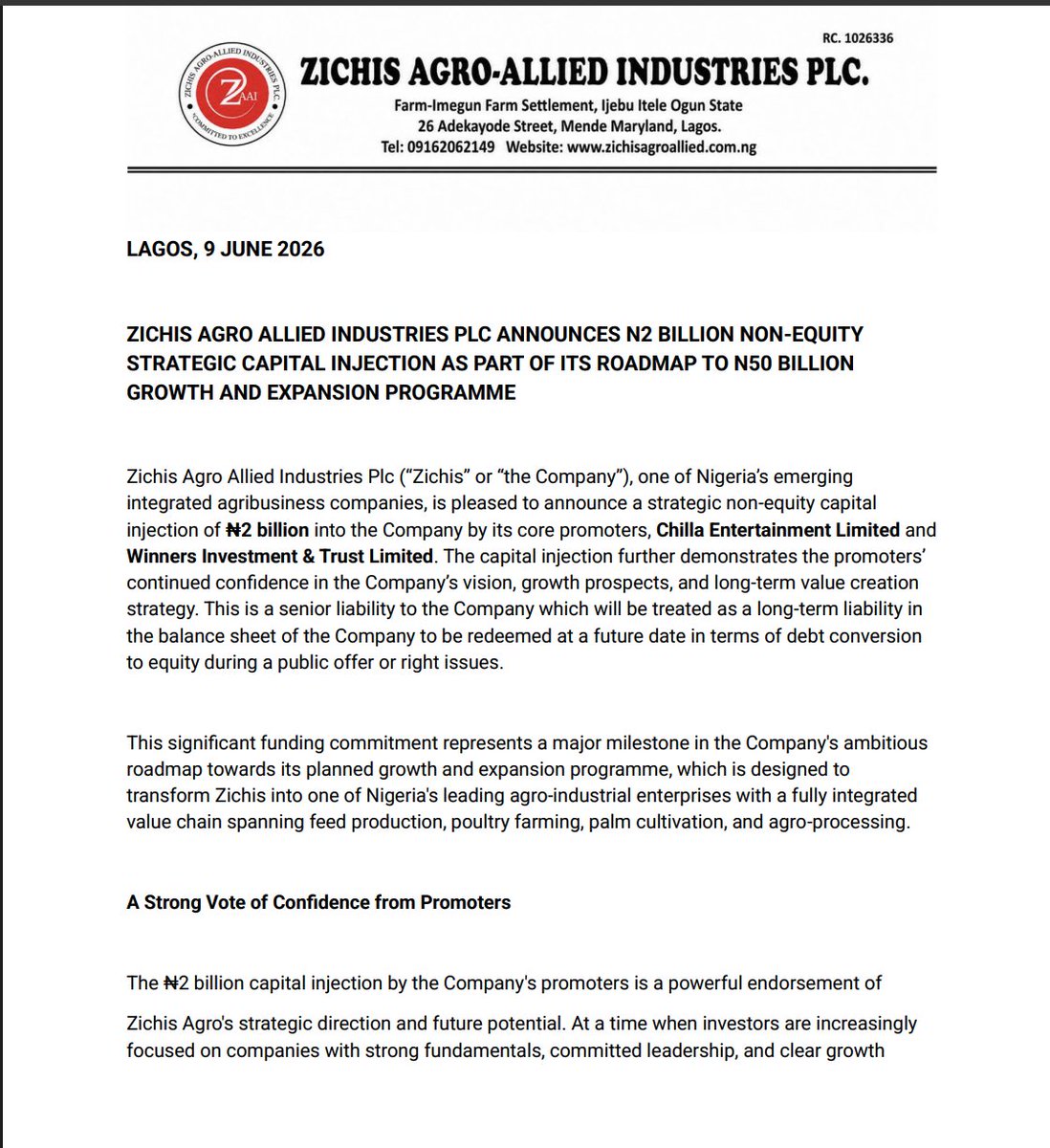
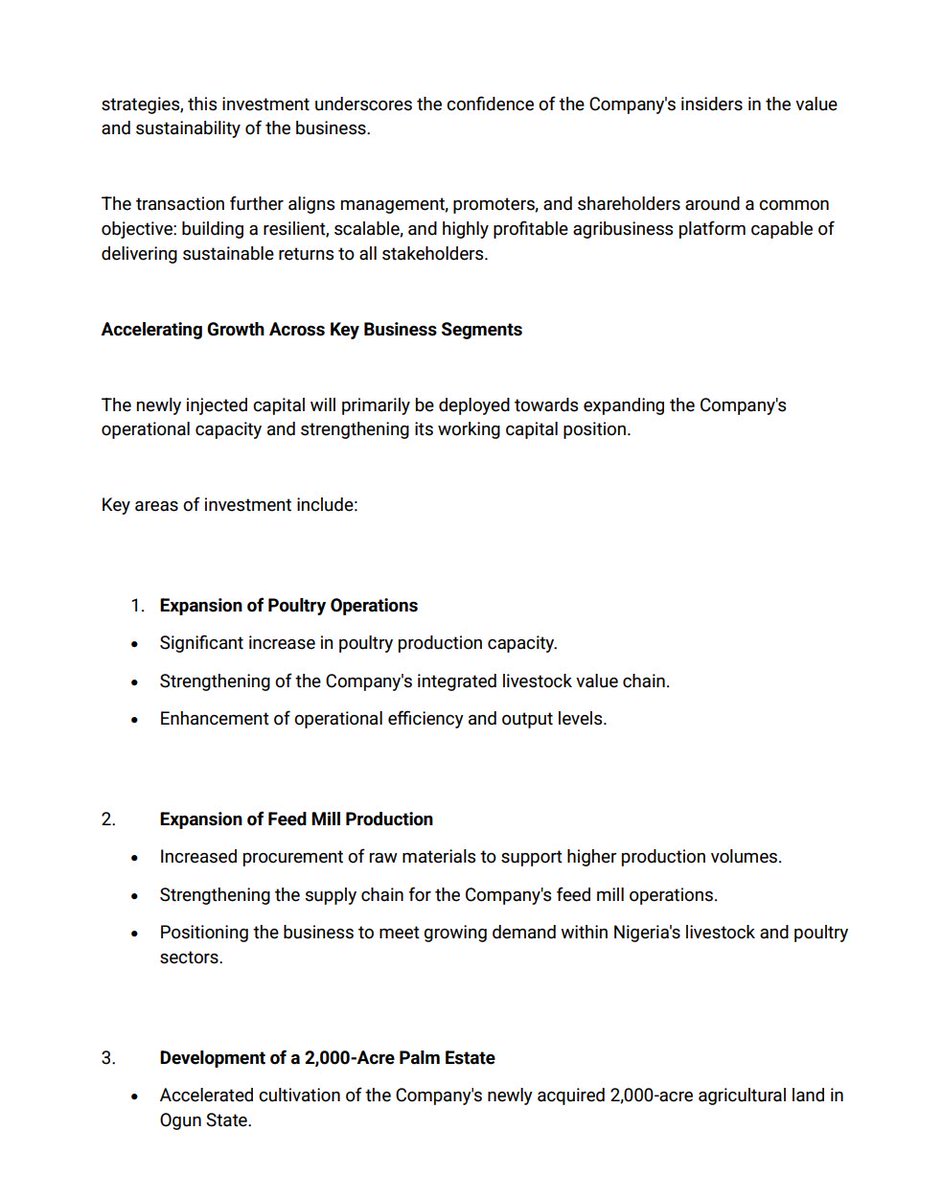
Zichis promoters are injecting ₦2bn capital to fund growth initiatives.
The amount is roughly 5% of the market cap, and 2x total assets
----------------------------------------
They called it "non-equity", which means that they are not getting new shares.
There are just two broad sources of capital - debt and equity. And then investment banks and finance folks structure other variants that are sometimes in between, such as "preferred shares", "convertible debt", etc.
Because no new shares are being issued, there is no dilution - at least for now. But this might change over time.
This will most likely sit on the balance sheet as debt (or some payables).
2
8
53
6,594
Jun 3
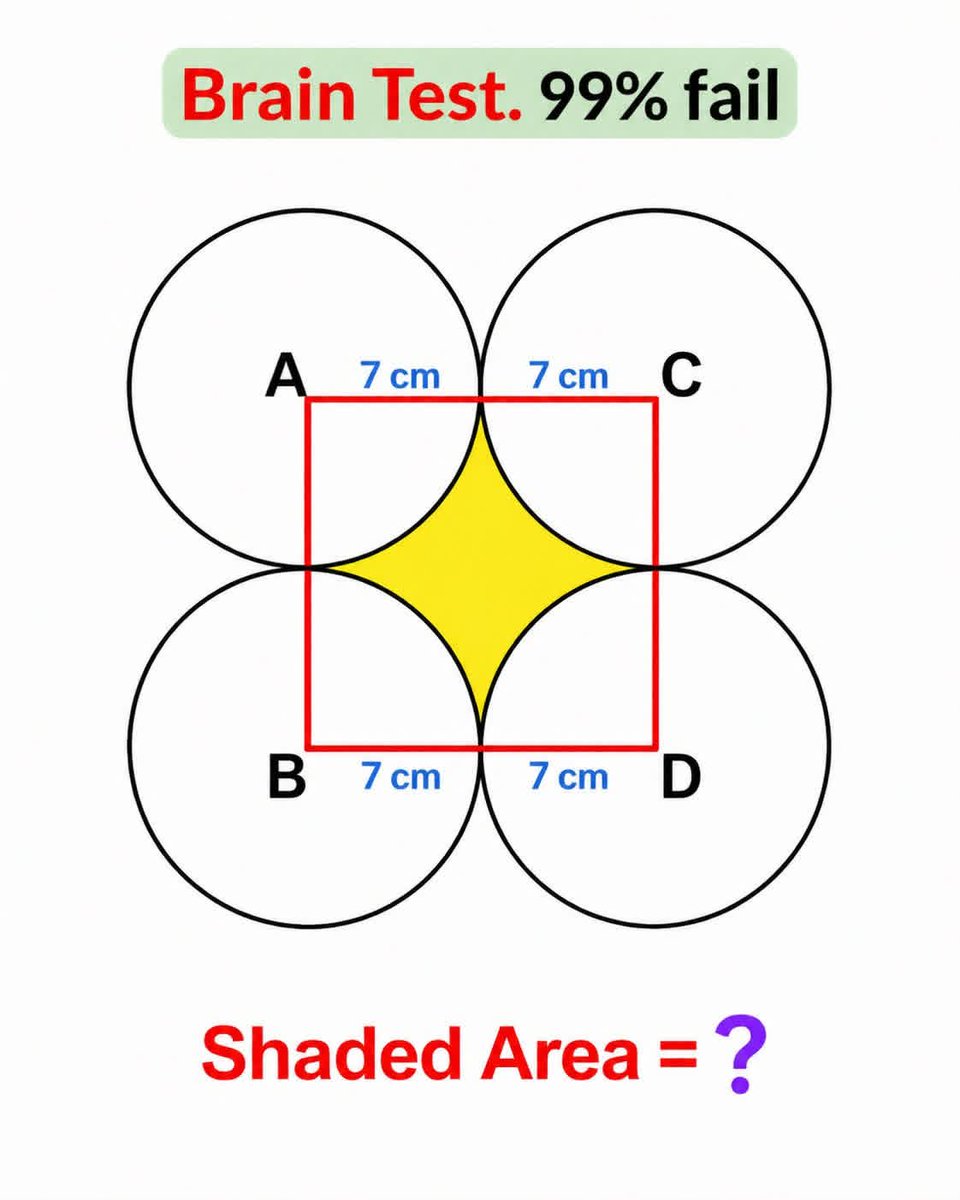
Since one of the circle will fit into the square, and leave same area as shown here, we only need to subtract the area of one circle from the area of the square, to get the area of the shaded region.
196 - (49π)

1
103
Funsho retweeted

May 28
Pep's Taxi: 10 years later! 🚖
Pep finally gets the chance to show Braydon where he kept all of those trophies... 🏆
2,961
21,322
136,747
6,338,289
May 24
If you are going into the equity market, never conclude that a low stock price equates to being cheap.
A N1 stock can be more expensive than a N500 stock
1
137
Funsho retweeted

May 18
Space X trailing PE ratio is 1000x which essentially means earnings need to compound 30% for around 20 years before it grows into its valuation. How does Elon always get away with this? Lmao.
17
39
297
36,943
Funsho retweeted

May 17
NGX vs Ecobank: A ₦627 Billion Market Cap Discrepancy Investors Cannot Ignore
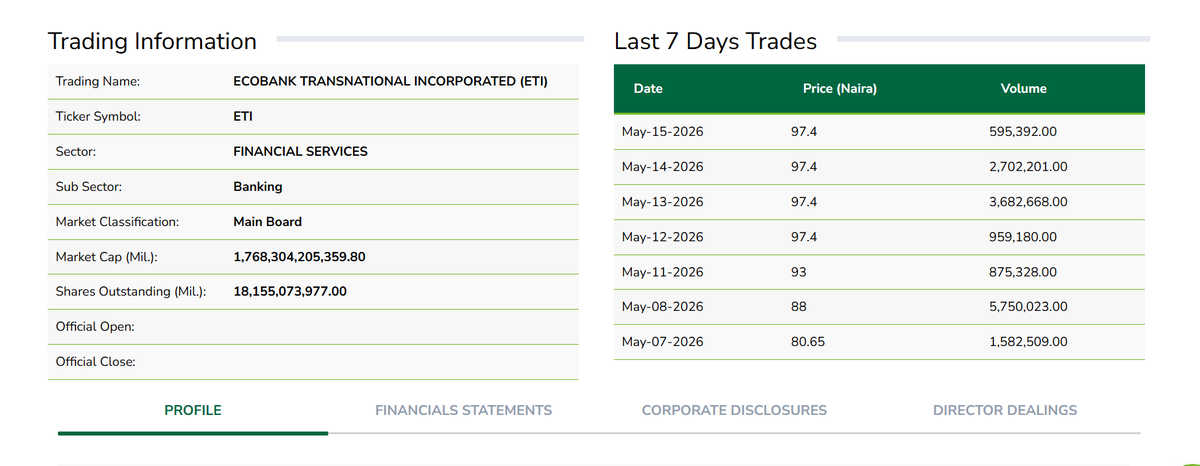
So, I was discussing with the TG members during our usual Sunday session, something we have consistently hosted every Sunday since 2021, free of charge. One of the topics we discussed was why continuous dilution should never be ignored when building long-term positions in companies. As we started breaking down the banking sector, we got to @GroupEcobank. We noticed major discrepancies in the reporting of its outstanding shares compared to what @ngxgrp currently displays on its platform, which, ideally, should be the go-to and most reliable source for investors.
So, I decided to do a deeper dive.
The first screenshot is from the @ngxgrp platform, which currently shows Ecobank’s total outstanding shares at 18,155,073,977. Multiplying that by Friday’s closing price of ₦97.4/share gives a market capitalization of ₦1,768,304,205,359.80.
The second screenshot is from S&P Capital IQ, which reports Ecobank’s outstanding shares at 23,731,207,437 shares. Interestingly, the last update there was dated 1 December 2025. Using the same closing price of ₦97.4/share gives a market capitalization of ₦2,311,419,604,363.80.
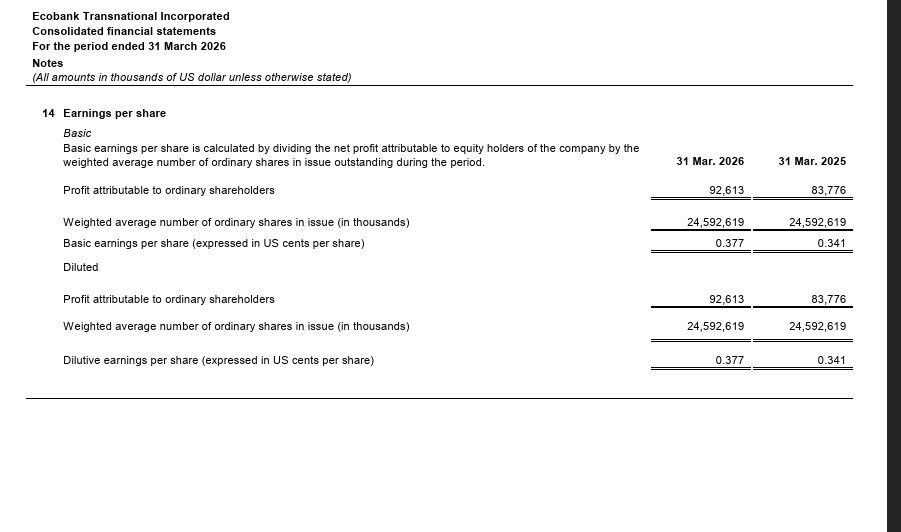
The final screenshot is extracted directly from Ecobank’s Q1 2026 financial statement under Note 14, page 29. The company itself reported outstanding shares of 24,592,619,000 shares. Multiplying this by ₦97.4/share gives a market capitalization of ₦2,395,321,090,600. What shocked me even more was that the same outstanding shares figure was also reported in Q1 2025.
Now, today is a weekend, so I do not currently have access to the Bloomberg Terminal to cross-check further, but working with these three data points raises serious questions.
So, who exactly should investors believe here?
Personally, I would naturally rely on the company’s own financial statements because they are the primary source, and I should know their actual outstanding shares.
NGXGROUP Market Cap for ETI = ₦1,768,304,205,359.80
Ecobank Q1 2026 Financial Statement Market Cap = ₦2,395,321,090,600
Difference = ₦627,016,885,240.20
That difference is highly material and honestly quite alarming.
Even if we compare S&P Capital IQ with Ecobank’s reported figures, we still get a discrepancy of about ₦83.9 billion, which remains very material. Meaning even S&P Capital IQ appears to be underreporting Ecobank’s market capitalization.
Now, this becomes a serious issue if @ngxgrp is not accurately reporting something as fundamental as outstanding shares. Market capitalization is one of the most basic valuation metrics investors rely on daily. If discrepancies of this magnitude exist, then it raises broader questions around data integrity and market transparency.
What does this mean for the future of our market if basic company information is either underreported or overstated? This is 2026; these are issues we should have moved past long ago. It honestly breaks my heart because these were part of the same structural issues that contributed to market inefficiencies during the 2007/2008 era.
And Ecobank is not even the only example. Even @ngxgrp previously had issues with the reporting of its own outstanding shares at some point (although I do not know if that has now been rectified).
This is why I always encourage investors to scrutinize everything. It is not just about making money. It is also about ensuring our market institutions uphold accuracy, transparency, and investor confidence.
I drop my pen here.

32
87
175
15,897
An acquaintance and I met recently, and we discussed stock investing. He was trying it for the first time, and I was very intentional about making his experience a successful one. One of my purposes is to, in my own way, increase participation in the Nigerian financial markets, particularly in the equities market.
A few months in, my guy was already in the money. Portfolio return was already at 70%, including specific names that had done 2x (e.g., CAP PLC).
We recently did a catch-up, and he was so excited. I was excited too. He said he wished he had invested more money, and I was like "na so e dey be when the sight green, lol".
He then chipped in "omo, na to close my farming business and do stocks o". I knew he was joking with that line, but I still thought I'd make a point about it... Just for informational purposes.
The stock market truly is described as the "greatest wealth-creating machine ever invented".
Also, the stock market will make you rich and it won't also make you rich. The deeper point is about not confusing the source vs the vehicle.
The farming business provided the capital, and the stock market has multiplied it.
When your portfolio is up significantly, it's easy to feel like you've "figured it out" and that the market can now replace your salary. But what people forget is that the portfolio only exists because the job provided the consistent capital to fund it in the first place. The income was the seed, the market was just the soil.
So if you want more returns, you have to double your efforts at your job to make money (via salary increases, bonuses, or other sources of income).
Additionally, in this person's case, his farming business is a form of private equity. The stock market is a public equity - both are still equities, and he might need to even diversify into other asset classes (say fixed-income, except there is a specific investing constraint. Another option is real estate.
18
97
397
18,366
Funsho retweeted

May 8
I got engaged to the most beautiful woman on the planet ❤️ I can’t wait to spend the rest of my life with you.



447
397
5,927
304,766
Funsho retweeted
The @WHO org is currently having a live session about the Hantavirus updates.
Are we all going to be in lockdown by next weekend?
This research report done via @ValyuOfficial says a lot about Hantavirus origins & what's likely to happen next!
platform.valyu.ai/playground…
3
7
15
1,294
Funsho retweeted

May 5
Introducing Valyu DeepResearch.
The most accurate AI-native research API on the market - ahead of Perplexity, Parallel, Claude, Tavily, and Exa.
15
18
78
245,877

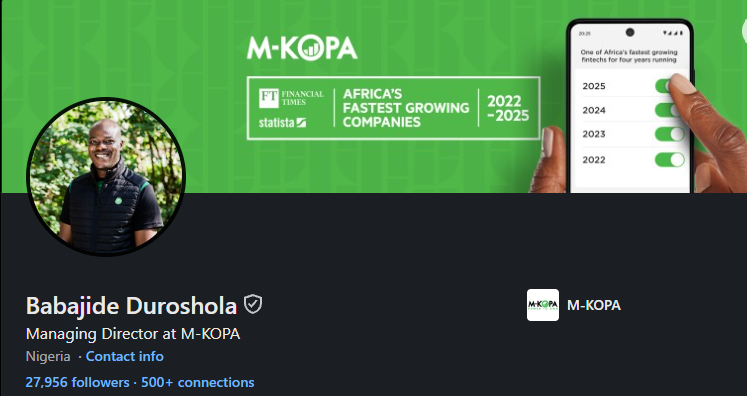
Revisiting this: x.com/Rufyb/status/199163227…
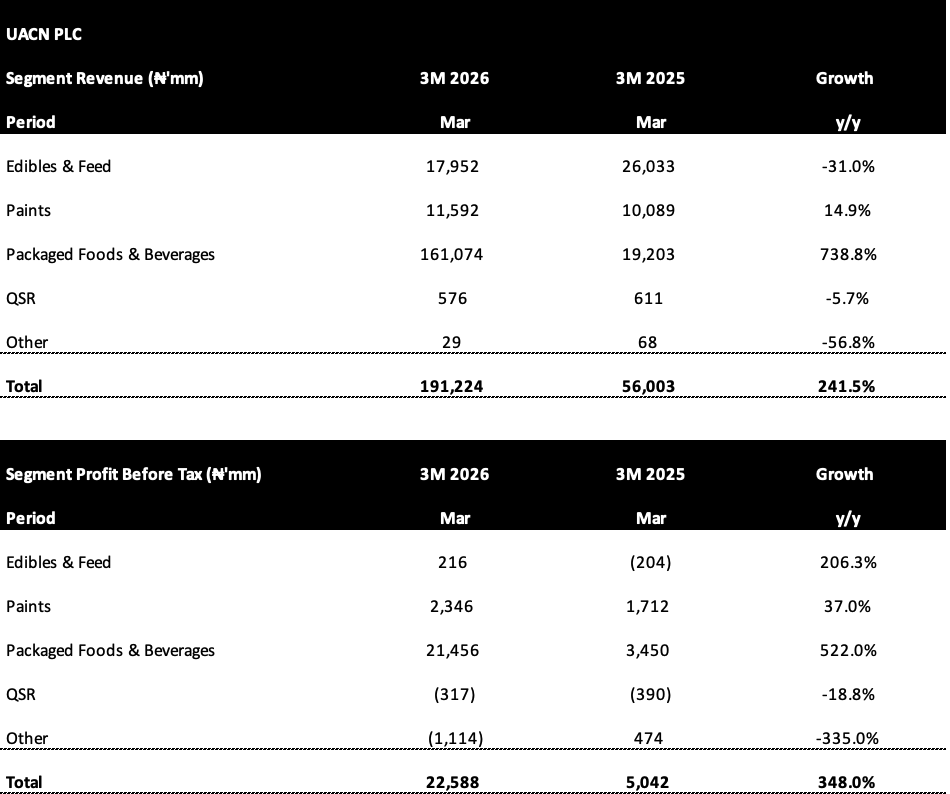
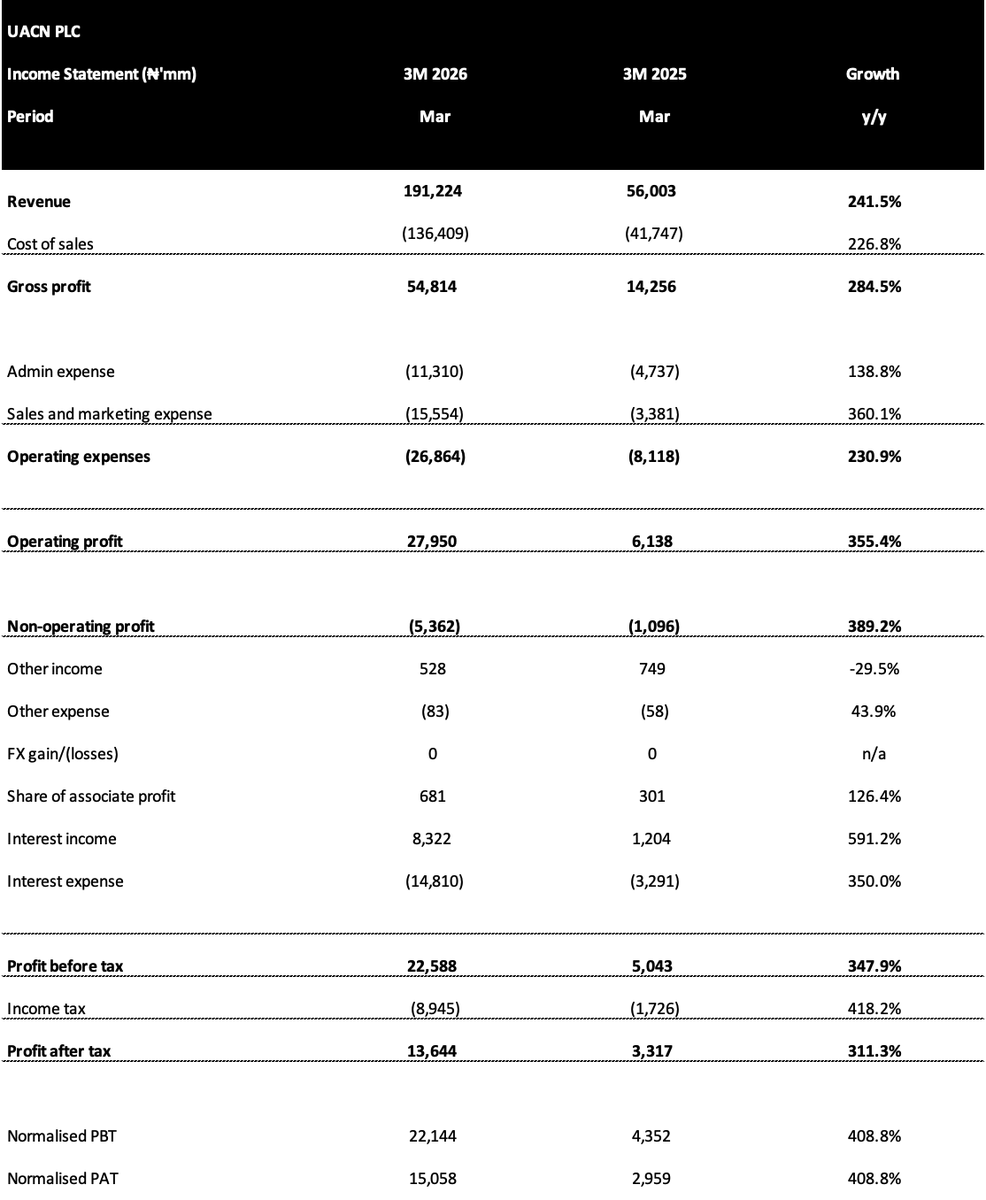
UACN released its Q1 2026 results, and we can now see the numbers of the enlarged entity. The numbers are really looking more than I had anticipated (before I made this move (x.com/i/status/2038936654476…).
Current valuation looks like a 7x P/E and a 5x EV/EBITDA. A crazy steal.
Now, I can have some peace; the Edibles & Feed business is no longer the biggest segment, and I trust Mr Oloyede to work wonders in the Packaged Foods business.
I estimated a 23% return on invested capital, which is still low but much stronger than recent historical trends.
I saw the cash flows too, and I nodded my head to say "okay, okay, we're starting so well".

I just bought U A C N Plc on the Nigerian Stock Market using @Cowrywise. The journey to ownership starts here. #StocksbyCowrywise. Check cowrywise.com/stocks to join me.
2
8
77
8,583
Funsho retweeted

Apr 22
I just published 9 AI Search API Features Every Agent Should Be Using in 2026 (With Examples)
medium.com/p/9-ai-search-api…
1
7
17
5,451
Funsho retweeted
Apr 20
New day, new project. @claudeai hope you have the compute. Don’t let me down!
15
24
179
14,976
Funsho retweeted

Apr 17
We've seen this one play out a few times now.
The team is under pressure to ship, and the deadline was yesterday. The DevOps engineer, with three days of bad sleep and back-to-back standups, is moving fast through YAML configs just to get it over the line.
Two weeks later, there's an incident. The database was publicly exposed. The customer’s data was accessible.
Not because anyone was careless. Not because they didn't know what a secure config looks like. They knew. They were just moving too fast, in a moment where one missed setting was all it took.
Around 80% of cloud security exposures trace back to misconfiguration. Not sophisticated attacks. Not zero-days. Just configuration drift, skipped steps, and good engineers in bad conditions.
The pattern is always the same: the pressure comes from the business, lands on the delivery team, and the thing that gives first is the thing nobody can see until it's too late.
Shipping slower isn't the answer. But building a process that only holds together when your team is well-rested and unrushed — that's the actual problem.
The teams that stop having these incidents aren't more careful. They've just removed the steps that depend on someone remembering.
The teams that stop having these incidents aren't more careful. They've just automated the parts of the process where human error under pressure is almost guaranteed.
3
4
195
Funsho retweeted

Apr 14
A Nigerian fintech founder raised $2M, built a slick app, onboarded 40,000 users.
Then CBN, NDPC, and FCCPC came knocking at the same time.
He had no licence. no DPO. no KYC tier structure. no breach policy.
The company didn’t survive 2024.
Here’s every rule you must know before you build:
185
671
2,504
380,041
Funsho retweeted

Apr 8
I’m deeply concerned by the continued silence of @SECNigeria and @ngxgrp regarding the serious infraction committed by @Afrinvest over the glitch that resulted in unauthorized trades on multiple clients’ accounts.
Despite assurances that “the issue has been resolved,” it clearly has not — and this lack of transparency only heightens investor anxiety. I urge @SECNigeria, @ngxgrp, and @fccpcnigeria to act swiftly to safeguard investors, uphold market integrity, and restore confidence in the system.
If @Afrinvest cannot resolve this situation promptly, I will be advocating for the revocation of their license. This matter has lingered for far too long, and the continued execution of trades without clients’ authorization is unacceptable and demands immediate regulatory intervention.
37
116
214
15,977
Funsho retweeted
Mar 27
Introducing the Valyu CLI
Built for AI (or human) knowledge workers.
Search → Contents → Answer → DeepResearch
Fully open-source & instantly available.
5
9
16
3,414
Funsho retweeted

Mar 27
@Afrinvest response to this situation is deeply concerning.
A system glitch on their platform executed multiple unsolicited trades on investors’ accounts… and now they’re asking those same investors to bear the financial consequences?
Let’s be clear:
These were not user-initiated transactions.
No investor placed those orders.
This was a broker-side failure.
Yet the resolution being offered is:
“Fund your wallet or sell the shares.”
So investors are now forced to:
• Inject fresh cash to fix a problem they didn’t create, or
• Sell positions they never intended to hold
And here’s an even bigger question nobody is answering:
Who pays for the transaction costs?
Because every trade comes with:
• CSCS charges
• Broker commissions
• SEC/NGX fees
• VAT and other taxes
If these trades were triggered by a system glitch, why should investors also bear:
the cost of execution… and the cost of reversing it?
That means investors could lose money even if they immediately sell, simply because of fees tied to trades they never authorized.
How is that acceptable?
Ownership of the shares is being used as justification, but let’s not ignore the core issue:
Consent.
These trades were executed without investor authorization.
In any fair and properly regulated market:
• Unauthorized trades should be reversed, or
• The institution at fault should absorb all associated costs
Not pass everything onto the customer.
This is bigger than Afrinvest.
It’s about market integrity, investor protection, and accountability.
Because if this becomes the standard, then every retail investor is exposed to system risks they cannot control…
…and still forced to pay for.
That should worry all of us
28
48
113
19,205