
Inventing @Temple | ex - Software Engineer at @zomato @AppSecure @Amazon @TartanHQ
Joined April 2017
- Tweets 503
- Following 1,064
- Followers 2,186
- Likes 957
43 Photos and videos









Pinned Tweet

8 Aug 2025
Last week, I faced an interesting problem at work. I received a critical warning from AWS regarding our PostgreSQL RDS cluster, it was approaching transaction ID wraparound, something that can cause a full database outage if not handled in time.
This was a good reminder of how important it is to understand the internals of the systems we rely on every day.
For those unfamiliar, PostgreSQL uses a 32-bit transaction counter (XID) that wraps around after ~2.1 billion transactions. If old rows aren’t vacuumed and frozen in time, PostgreSQL can no longer determine which rows are visible, forcing it to stop accepting new writes to prevent data corruption.
In our case, it turned out that autovacuum wasn’t keeping up due to high write throughput and a few misconfigured thresholds.
What helped:
👉🏻 Identifying large tables with unvacuumed rows.
👉🏻 Manually running 𝖵𝖠𝖢𝖴𝖴𝖬.
👉🏻 Tuning autovacuum workers settings and vacuum cost limits.
It’s one of those things that often goes unnoticed until it becomes urgent. If you're running PostgreSQL on RDS (or self-managed), keep an eye on 𝖺𝗀𝖾(𝖽𝖺𝗍𝖿𝗋𝗈𝗓𝖾𝗇𝗑𝗂𝖽) and ensure autovacuum is running efficiently.
Invisible debt in infrastructure has a way of surfacing at the worst possible time. This one got our attention early, worth sharing in case it helps others avoid a painful surprise.
4
36
6,482
Dev Tyagi retweeted

May 13
Just crossed 100k applications for the 100 introductory Temple devices.
To the 100 who get one: you're the founding cohort. We'll be grateful for what you teach us.
To the rest: we're building as fast as we can without compromising what @temple needs to be.
Follow @temple for updates.
61
27
246
24,890
Dev Tyagi retweeted
May 5
Hello world. The first 100 Temples are ready to ship. We're now inviting athletes, scientists, founders, doctors, creators, and individuals who care deeply about their physical and cognitive health to be the founding users of Temple.
Apply for early access at temple.com

255
140
1,706
275,989
Dev Tyagi retweeted
Apr 13
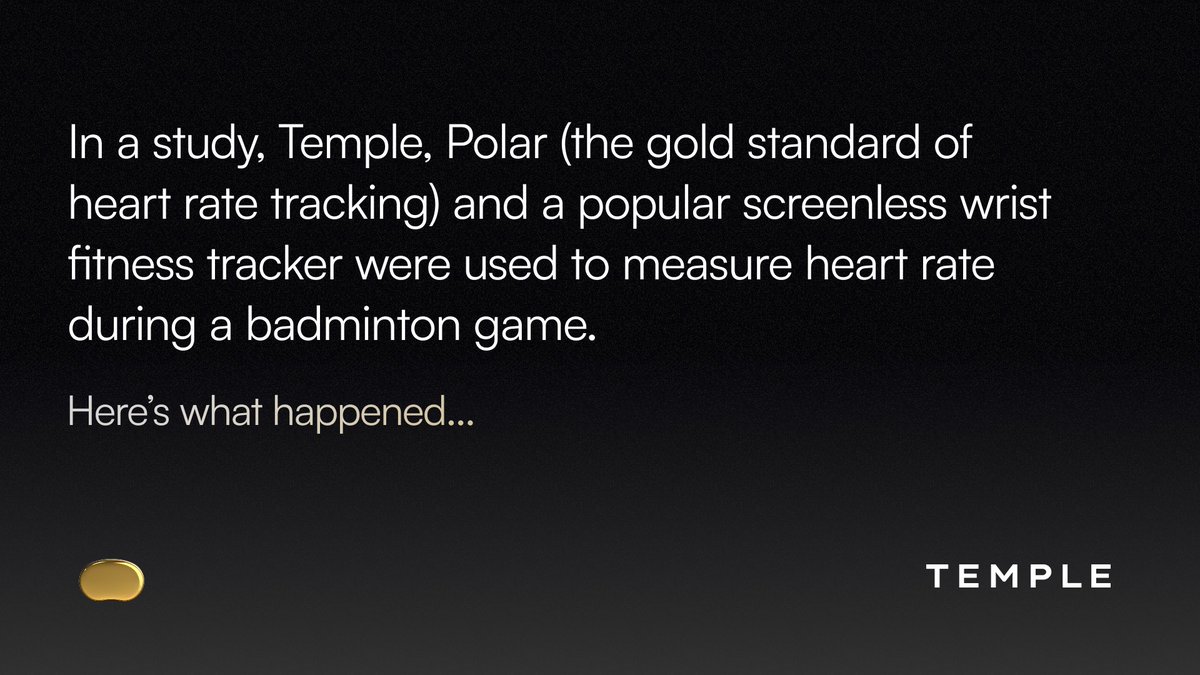
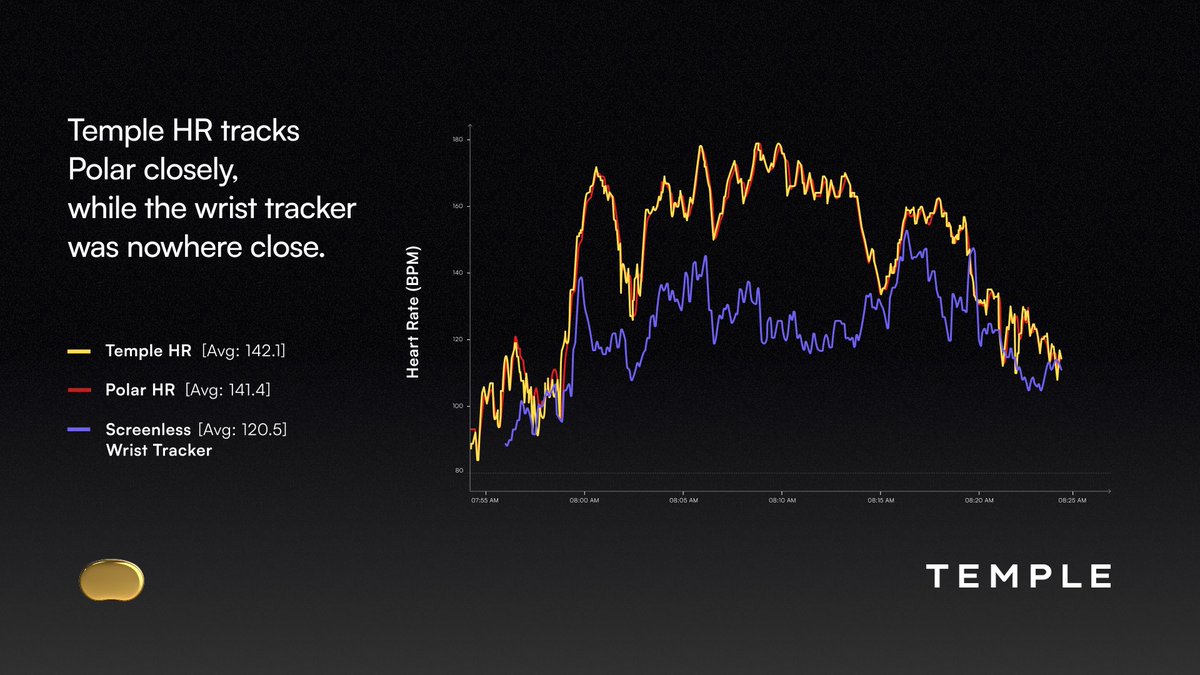
Heart Rate is just one of the simpler things. Temple sees more.
Follow @temple for more updates.

86
72
894
106,625
Feb 27
We're hiring 🚀
Feb 27

We're recruiting at @temple.
At Temple, we are building the ultimate wearable for elite performance athletes. A device that measures what no other wearable in the world measures, with a level of precision that doesn't exist yet.
To build it, we need people who are obsessive about both the craft and the category. Engineers who are also athletes. People who will wear what they build, and hate it until it's perfect.
Roles we're hiring for:
🟠 Analog Systems Engineers, Electronics Design Engineers
🟠 Embedded Systems Engineers — low-level HW bring-up, embedded signal and image processing, embedded AI
🟠 Design and Validation Engineers — sensors, actuators, battery, antenna, optics
🟠 CMF Engineers, Adhesive Materials Engineers
🟠 Sensor Algorithms Engineers — estimation theory, sensor fusion
🟠 Deep Learning Engineers — ML model development for physiological metrics
🟠 Computational Neuroscientists
🟠 BCI Engineers — real-time EEG/EMG acquisition and processing
🟠 Neural Decoding Researchers — brain activity to semantic mapping
🟠 Computer Vision Engineers — facial microexpression, subvocal muscle detection
🟠 Neuroimaging ML Engineers — multimodal sensor fusion
🟠 Last but not the least, product managers who work through Figma without needing a designer to hold their hand
Important – we are building for people who push their bodies to the edge. We want to be those people, not just serve them. So only people who take fitness seriously, and have body fat <16% (men) and 26% (women) should apply. If you're not there yet but will commit to getting there in three months, you can apply too; but you'll be on probation until you are.
Write to build@temple.com with your core skill as the subject line.
Come find your tribe.
2
1
13
1,383
13 Dec 2025
Another #Hiring post 🚨
We're also looking for Backend Engineering Interns at @temple.
Skillset preferred (again, not limited to): Go, Python, Kafka.
Please note that we're only looking for people who're okay with working on-site. Location: Gurgaon, India.
Do reach out with your Resumes / Portfolios / GitHub profiles, or tag someone you might know who can be a good fit.
97
14
356
28,708
13 Dec 2025
Update: Have received a lot of applications, going through all of them. Will take time.
10 Dec 2025

#Hiring Post 🚨
We at @temple are looking for Frontend Engineering Interns. Someone with high agency - who enjoys complete ownership, and finds a fit in early-stage companies developing at a high pace.
Skills preferred (but not limited to) - Typescript, React, Vue.
Please reach out to me or tag someone you might know who would like to be a part of a new age health startup.
1
8
1,300
10 Dec 2025
#Hiring Post 🚨
We at @temple are looking for Frontend Engineering Interns. Someone with high agency - who enjoys complete ownership, and finds a fit in early-stage companies developing at a high pace.
Skills preferred (but not limited to) - Typescript, React, Vue.
Please reach out to me or tag someone you might know who would like to be a part of a new age health startup.
158
19
608
55,867
11 Dec 2025
I’ve received a lot of applications, Will review all later tonight.
2
6
2,269
Dev Tyagi retweeted
7 Dec 2025
Coming soon.
Follow @temple for more updates.

661
207
5,070
1,854,495
18 Nov 2025
The worst part about today's @Cloudflare outage was that the dashboard was inaccessible. There was no way we could go ahead and change the DNS records.
And to make things worse, even our domain registrar’s site depended on Cloudflare… so changing nameservers wasn’t an option either.
1
1
17
1,729
Dev Tyagi retweeted
15 Nov 2025
I’m not sharing this as the CEO of Eternal, but as a fellow human, curious enough to follow a strange thread. A thread I can’t keep with myself any longer.
It’s open-source, backed by science, and shared with you as part of our common quest for scientific progress on human longevity.
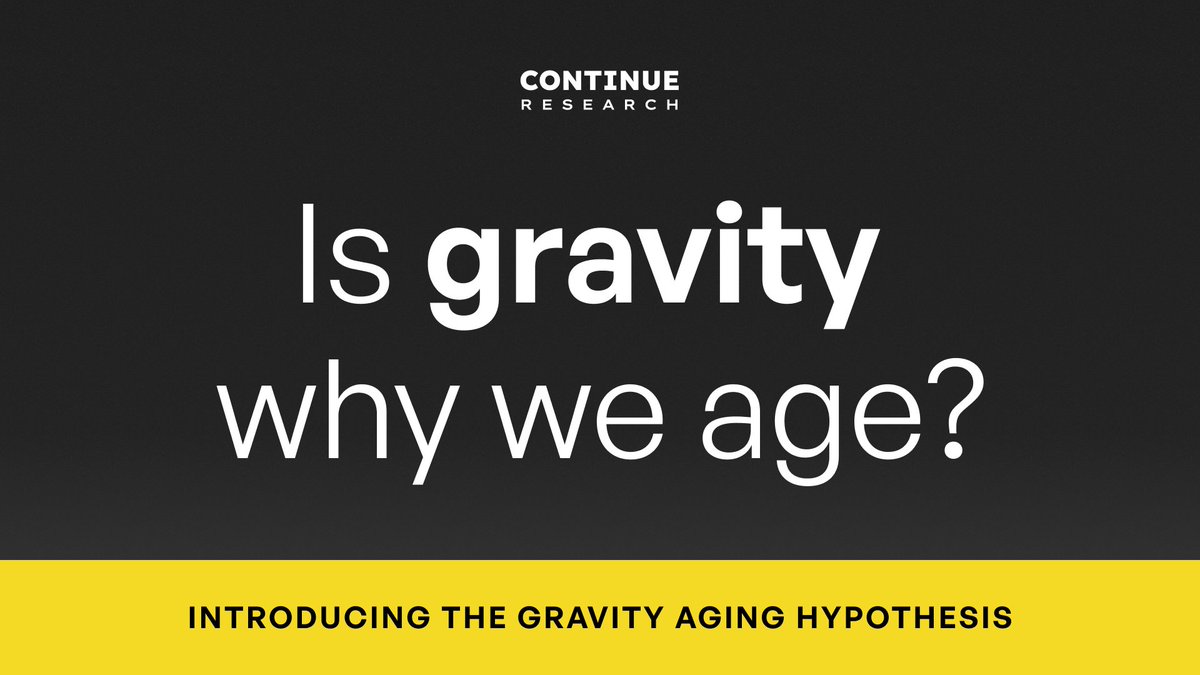
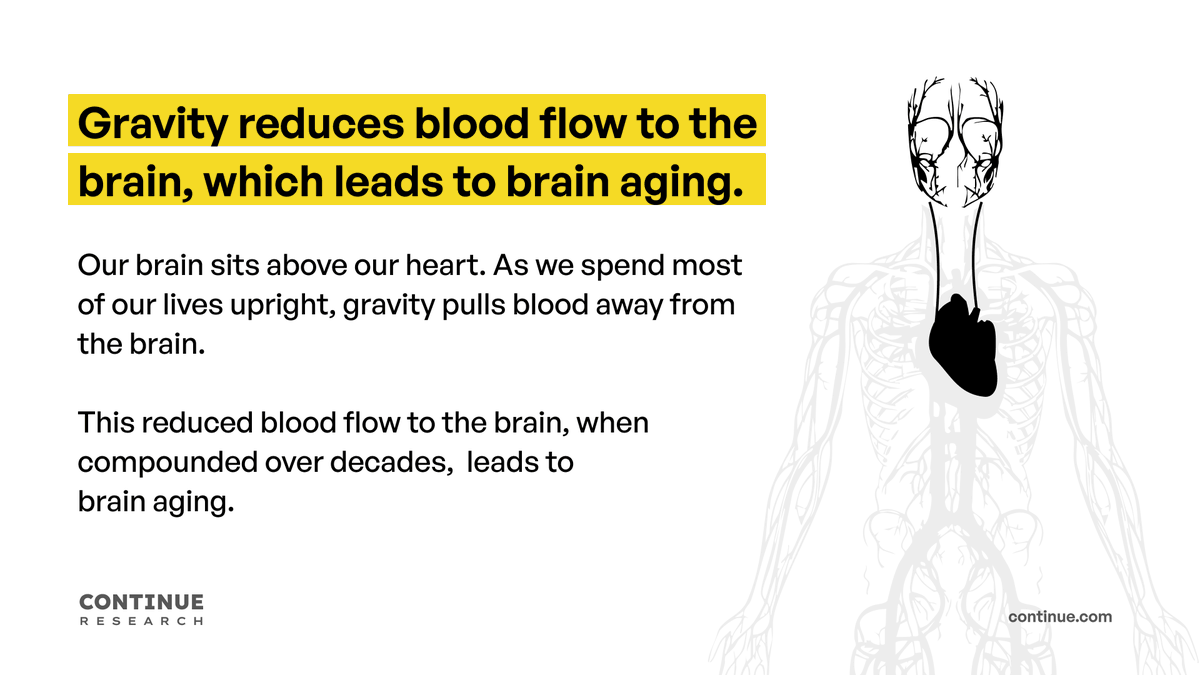
Newton gave us a word for it. Einstein said it bends spacetime. I am saying gravity shortens lifespan.
Read on, and tell me what you think.
927
910
7,420
10,321,518
13 Nov 2025
Stay tuned folks ✨
13 Nov 2025
Once upon a time, people believed the Earth was flat. And then they didn’t. Then they believed the sun revolved around the Earth. Until they didn’t.
Humanity has built rockets, sequenced genomes, and cloned cells. Yet, in all our brilliance, we may have missed something glaringly simple.
At Continue, we’ve been chasing a crazy insight into why we age; a pattern that’s been hiding in plain sight for eternity. We’ve tried desperately to disprove it. We couldn’t.
Two years later, clues from biology, physics, evolution, and medicine are all pointing in the same direction.
In 48 hours, I’ll share what we’ve found and how one element of our environment may hold the key to slowing human aging.
Stay tuned.

2
613
Dev Tyagi retweeted
24 Oct 2025
So many people keep asking me about Continue. What is it? What are you up to? Here you go...
Continue started as a research effort two years ago, with the belief that if the human body is a system, it should also have its leverage points. The simple levers that, when adjusted, could fundamentally alter how we age and live.
Along with a team of initially skeptical researchers, we've been investigating a penny-drop insight about human aging. Something that's been hiding in plain sight for eternity. But more on that in a few weeks. We are at the tail-end of the research on this hypothesis, which if true, could fundamentally change our understanding of biology and aging.
But today isn't about that. It's bigger than that.
Today, we are expanding Continue Research to include a $25 million fund (entirely personally backed) to support researchers across the world who dare to ask simpler questions than anyone else. Who believe biology might be far simpler than we've made it.
For over a decade, I have believed that most of the world’s problems stem from our short human lifespans. Continue Research’s goal is to extend healthy human function long enough that humans stop making short-term decisions.
Read more about Continue’s purpose at – continue.com
This will be a multi-decadal journey. Our goal here is to become a small catalyst in humanity's journey of conscious evolution. To lead us into the Post-Darwin era.
Researchers, please look us up and apply for funding/grants at – continue.com/researchers
———
PS: Continue is not a part of Eternal
254
345
3,224
652,623
7 Sep 2025
Another day of digging interesting facts from open-source codebases!
💡 I just discovered how ClickHouse stores Arrays efficiently using values offsets
ClickHouse has a reputation for being ridiculously fast at analytical queries. Part of that speed comes from its columnar storage design, but one detail that surprised me is how it stores arrays and nested data structures.
Instead of keeping each row’s array as is, ClickHouse explodes arrays into two separate columns:
👉🏻 Values column: a flat sequence of all elements from all arrays.
👉🏻 Offsets column: an array of integers marking where each row’s array ends.
📋 A Naive Approach (Why Not Just Store JSON?)
Imagine you have a table with arrays:
CREATE TABLE example (
id UInt32,
tags Array(String)
) ENGINE = MergeTree();
And you insert some rows:
id tags
1 [ "db", "metrics" ]
2 [ "ai", "ml", "genai" ]
3 [ "infra" ]
A naive database might:
👉🏻 Store each row’s array as a blob (["db", "metrics"]), bad for compression.
👉🏻 Store each row in a separate subtable, bad for query speed.
✅ The ClickHouse Way: Exploding Arrays
ClickHouse stores the same data in this format:
tags.values = [ "db", "metrics", "ai", "ml", "genai", "infra" ]
tags.offsets = [ 2, 5, 6 ]
👉🏻 tags.values holds all elements in sequence, concatenated across rows.
👉🏻 tags.offsets tells you how many elements belong to each row, by marking the ending index.
So how do you reconstruct the original row arrays?
✓ Row 1: take values from index 0 to 1 (offset 2) → [ "db", "metrics" ]
✓ Row 2: take values from index 2 to 4 (offset 5) → [ "ai", "ml", "genai" ]
✓ Row 3: take values from index 5 to 5 (offset 6) → [ "infra" ]
That’s it! Two flat columns, but the ability to map back to nested arrays.
✅ Why This Is Brilliant
1. Append-friendly
Adding a new row is just appending more values and a new offset. No reshuffling required.
2. Cache-friendly scans
Columnar queries (like arrayJoin(tags)) only need to scan the flat tags.values, which is contiguous in memory.
3. Compression wins
Flat columns compress better than row-level blobs because similar data (like repeated tags) sit close together.
4. Vectorized execution
Queries operate on contiguous memory regions, enabling SIMD acceleration and fast parallel scans.
📋 Attaching the exact source code for reference:
github.com/ClickHouse/ClickH…
#DatabaseInternals #Clickhouse
1
9
564
6 Sep 2025
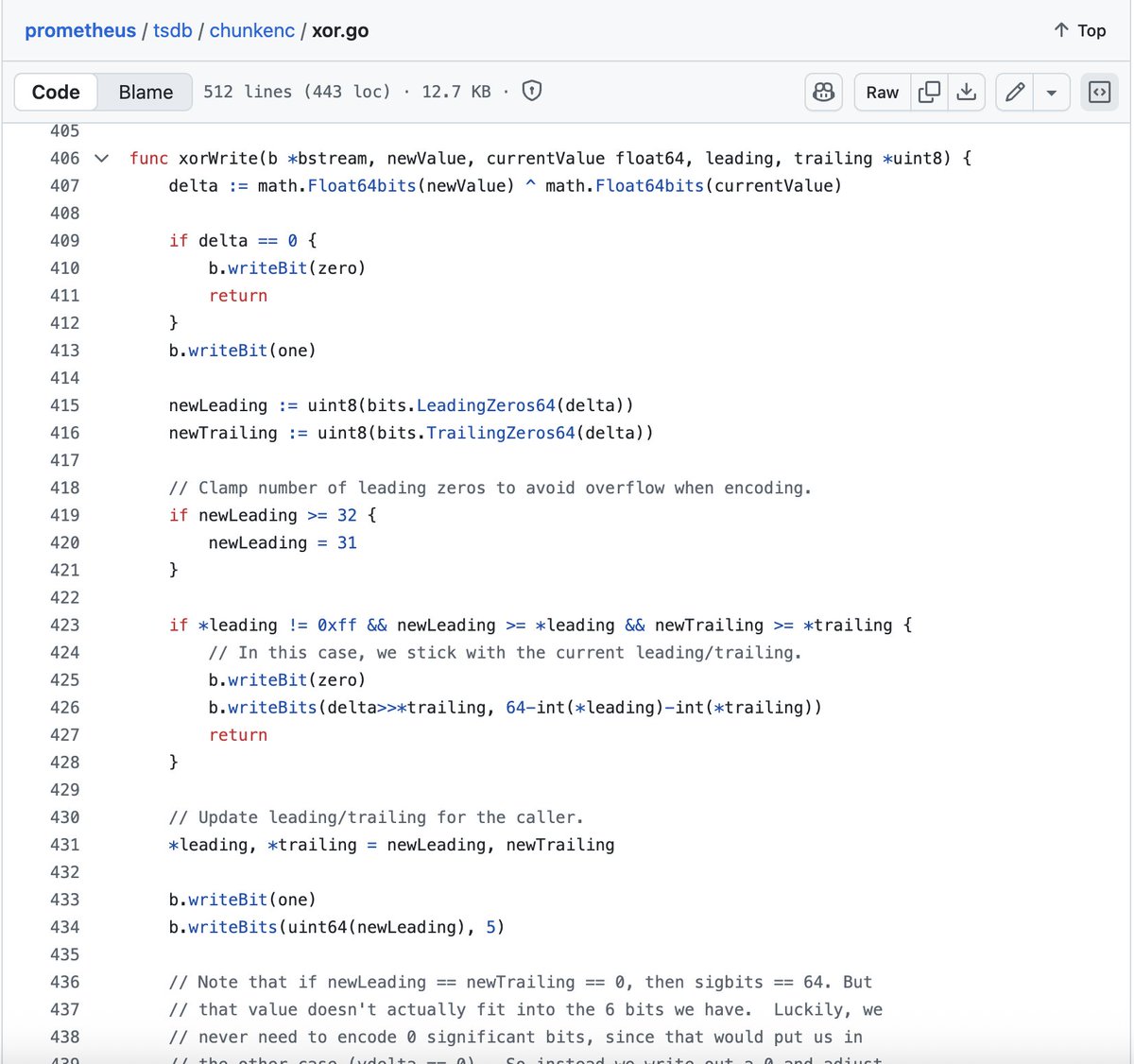
So I was going through Prometheus Internals and learned something interesting.💡
When we think about Prometheus, we often imagine it as "the metrics database" scraping, storing, and querying endless time series from our apps. But under the hood, it’s doing something surprisingly clever that makes it much more efficient than you'd expect.
✅ Prometheus assumes that most metric data looks boring and predictable, then exploits that fact ruthlessly.
It is inspired by a 2015 paper published by Facebook titled "Gorilla: A Fast, Scalable, In-Memory Time Series Database" (vldb.org/pvldb/vol8/p1816-te…).
Here’s the trick: Prometheus doesn’t actually store full timestamps or raw values for every single metric sample. Instead, it uses a smart compression technique based on deltas and XOR encoding.
➡️ The Problem with Naive Storage
Let’s say Prometheus scrapes a metric every 15 seconds. A naive approach would store each sample like this:
[timestamp: 64 bits] [value: 64 bits]
That’s 16 bytes per sample. For millions of time series scraped every few seconds, the storage cost explodes.
➡️ The Delta XOR Magic
Prometheus takes advantage of two simple observations about metrics:
👉🏻 Timestamps are Predictable:
Scrapes usually happen at fixed intervals (e.g., every 15s). Instead of storing the full timestamp, Prometheus stores the difference (delta) between consecutive timestamps.
Example, for timestamps like
1694000000, 1694000015, 1694000030
→ Store: 1694000000 (first one raw), 15, 15
👉🏻 Values don’t change drastically
Prometheus stores the first value as is, but every subsequent value is XOR’d with the previous one. If values are close (like CPU usage moving from 0.51 to 0.52), the XOR result has lots of leading zeros. Those zeros compress very well.
✅ The Payoff
Because of this scheme, Prometheus can often store 2-3 bytes per sample instead of 16.
That’s why we can comfortably run Prometheus on a single node with millions of metrics without needing a giant cluster behind it.
📋 References
- Prometheus TSDB Format Docs: github.com/prometheus/promet…
- Prometheus Source Code (XOR Compression: github.com/prometheus/promet…
- Facebook Gorilla Paper: vldb.org/pvldb/vol8/p1816-te…
2
3
24
1,382
31 Aug 2025
If I could give one piece of advice to my college self:
Don’t ignore Math.
Computer Science and Math go hand in hand.
Master Probability & Statistics! They’ll open more doors than you can imagine.
3
322