
Family Man | Christian | Engineer | ITpreneur | My Tweets my thoughts, and retweets...the owner's |Non-conformist 🇳🇬. U hate 🇳🇬 avoid my space.
Joined September 2009
- Tweets 43,658
- Following 3,723
- Followers 4,207
- Likes 23,903
1,531 Photos and videos

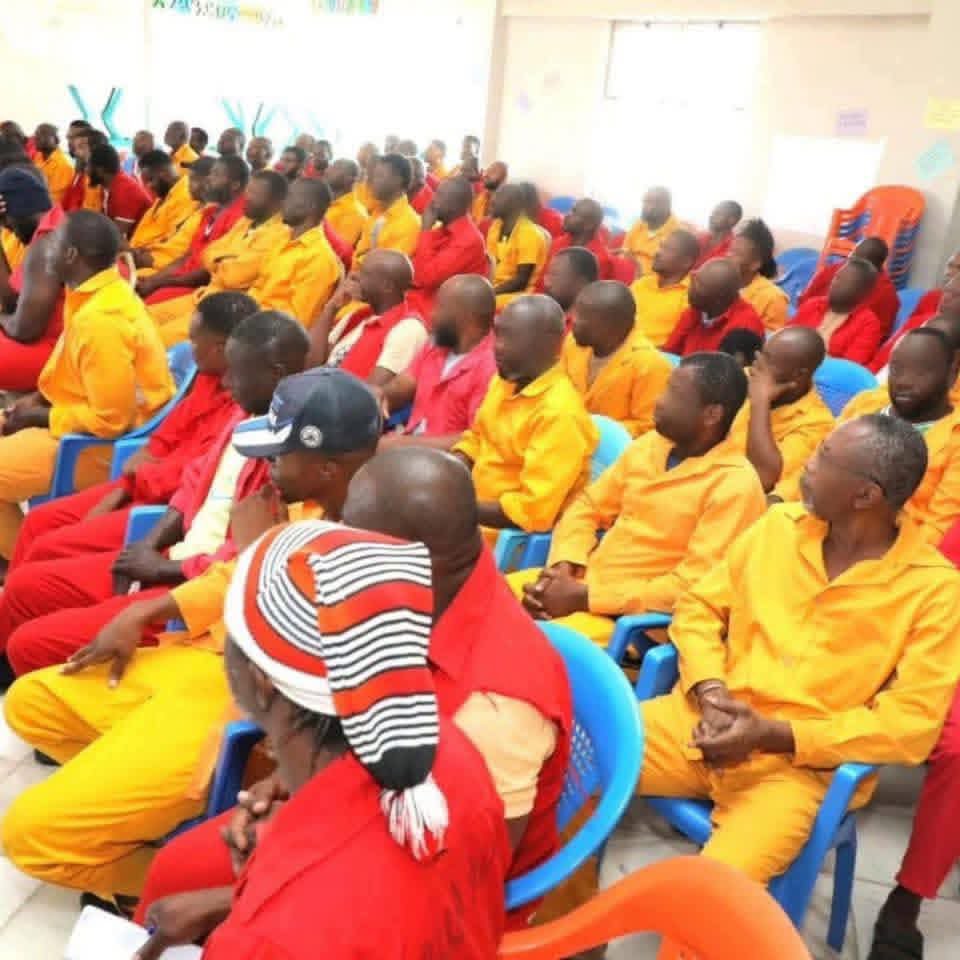









This is the same mindset that made them go to another country, install a king there and start claiming they own it.
You go to another man's land, inflicted it with drug trafficking, them claim you're the developer.
26
Now that they are back in Nigeria, what next?
Which of the elders in the region has seen anything wrong or right in the numbers of men related from their loins invoked drugs.
Ruining the image and the relationship between Nigeria and Ethiopia.

1
2
17


𝒜𝓎𝑜 𝓕𝒶𝓀𝓊𝒶𝒹𝑒 🐘 retweeted

Jun 13
For months, they go without seeing their families while defending us against our enemies.
They deserve our prayers, not insults.
God bless you, gentlemen. 🇳🇬🪖🫡
🎥: Sunday Olowodasa
12
69
263
8,339

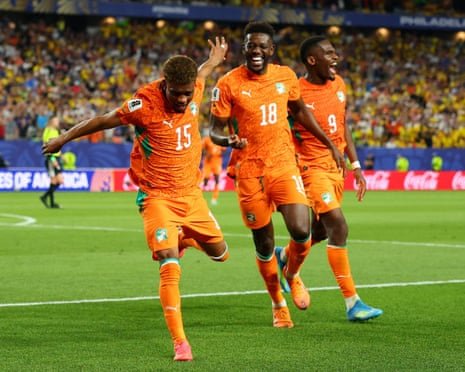
The whole ECOWAS was glad you performed well with a 2-0 win over Ecuador.
Thank you CIV world cup team.
1
20

𝒜𝓎𝑜 𝓕𝒶𝓀𝓊𝒶𝒹𝑒 🐘 retweeted

How did bandit handed over the body of somebody being tortured to kpai to his family and same bandit were not arrested.
Government is part of b@ndit indeed.
No controversy..

45
17
49
8,939

14h
No amount of deleting will erase your ill-mind. @illBlissGoretti
We will correct this error as soon as possible.
1
1
6

NDLEA has arrested a 41-year-old Brazil-based businessman, Ikechukwu Abugu Oliver, for importing shirts and towels soaked with 6.10kg of liquid cocaine from the South American country into Nigeria.
Abugu was arrested at the Murtala Muhammed International Airport (MMIA) in Lagos upon arrival from Brazil via Addis Ababa, Ethiopia.
8
15
25
1,781
𝒜𝓎𝑜 𝓕𝒶𝓀𝓊𝒶𝒹𝑒 🐘 retweeted

15h
How your aura gets robbed this fast.
45
74
1,220
75,433
16h
Curacao has broken a new record at the world cup 2026.
Well done Germany.
#Fifa_worldcup2026
1
75
𝒜𝓎𝑜 𝓕𝒶𝓀𝓊𝒶𝒹𝑒 🐘 retweeted

“I connected you a 42 year old lady that have never been married to a man for marriage and your family started telling him to bring 12 million as bride price”
- an owner of a match making platform laments as the family of a 42 year old lady he connected with a man is requesting for 12 million as bride price
711
602
2,985
423,325
𝒜𝓎𝑜 𝓕𝒶𝓀𝓊𝒶𝒹𝑒 🐘 retweeted

Jun 13
German tour guide is using a German flag in Germany to guide his group.
5 police officers stop him. The flag is offensive to those who are not identifying with Germany.
What the f&ck?
4,497
22,563
95,652
2,246,123
𝒜𝓎𝑜 𝓕𝒶𝓀𝓊𝒶𝒹𝑒 🐘 retweeted

Jun 12
🏴 En Inglaterra, una periodista fue a un barrio de musulmanes a decir que ellos son PACIFICOS
y al rato apareció una banda de musulmanes a decirles que se vayan porque los iban a matar☠️
País destruido por la agenda 2030.
2,784
47,626
206,445
6,727,711
𝒜𝓎𝑜 𝓕𝒶𝓀𝓊𝒶𝒹𝑒 🐘 retweeted

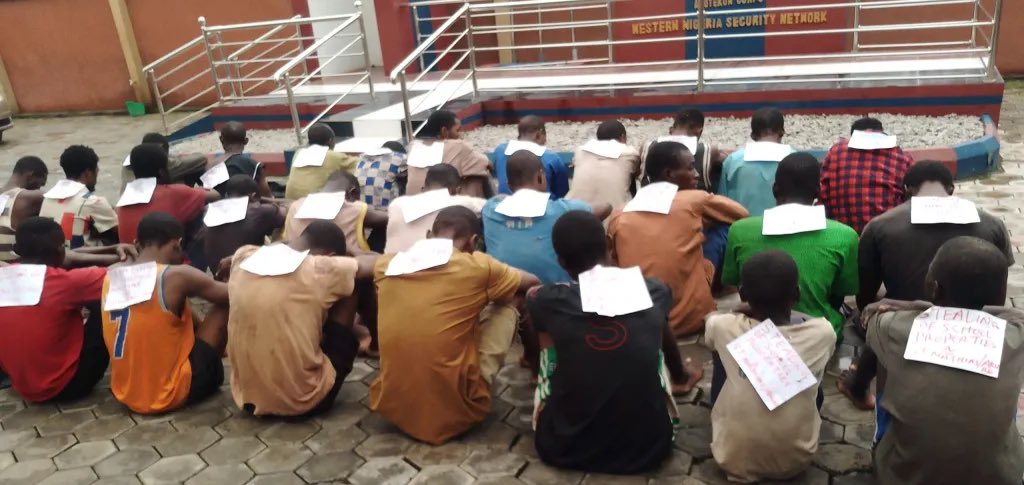
BREAKING: Amotekun Arrests 97 Suspects, Intercepts Groups Moving into Ondo Forests with Household Items
The Ondo State Security Network, Amotekun, has arrested 97 suspects across the state in a major security operation targeting kidnapping, armed robbery, vehicle theft, and violations of the anti-open grazing law .
Speaking during the parade of suspects at the agency’s headquarters in Alagbaka, Akure, Amotekun Commander Akogun Adetunji Adeleye raised alarm over a fresh movement of people from northern parts of the country into forest communities in the state . Security operatives intercepted several groups of people, including women of different ages, travelling into forests with household items such as bedding, cooking utensils, mortars, and pestles .
Among those paraded were individuals arrested in communities including Ikare, Kajola, Akure, Ilu-Abo, Akure North, Murewo, and Ojoma Camp for alleged involvement in kidnapping and armed robbery activities .
Adeleye also revealed that two suspects arrested in Akure allegedly posed as mentally ill persons to gather intelligence for criminal groups. The suspects reportedly confessed to receiving payments for supplying information to kidnappers and even obtained hospital cards to support their disguise .
The commander disclosed that operatives dismantled a robbery syndicate known for disguising themselves as visitors before attacking residents, forcing victims to transfer money electronically and stealing their vehicles .
He cited a case where a man who reportedly requested only two labourers later received 51 additional persons who moved into a forest area with their belongings . Another group of 16 persons was intercepted heading towards the Ose-Owo forest corridor, an area that has witnessed security concerns in recent years .
Adeleye attributed the successes to collaboration between Amotekun, the Nigeria Police Force, the Department of State Services, and the Nigerian Army .
On the fate of the suspects, Adeleye said individuals found without criminal links would be returned to their states of origin in collaboration with community leaders, while those connected to criminal activities would be prosecuted .
68
317
615
48,849
𝒜𝓎𝑜 𝓕𝒶𝓀𝓊𝒶𝒹𝑒 🐘 retweeted

Jun 14
Last month 16th the Boko haram terrorists attacked our camp
We were informed via radio like 30 seconds before , I trust my Sf guys we geared up waiting for them ,when the fight started my guy sunday the 80mm mortar commander was shouting Jesus Jesus 😂😂
Within minutes they ran
111
132
852
90,124
𝒜𝓎𝑜 𝓕𝒶𝓀𝓊𝒶𝒹𝑒 🐘 retweeted
18h
It is too early to cry dear. Just wait for a while.
Jun 13

South African factory workers protest the removal of foreign workers, saying factories are struggling without skilled labour and warning that local jobs are now at risk. “We want the foreigners to come back now,” protesters said.
These people no get direction. First dem talk say foreign workers must go, now dem dey shout say make dem come back👀
1
1
8
𝒜𝓎𝑜 𝓕𝒶𝓀𝓊𝒶𝒹𝑒 🐘 retweeted

Jun 14
The best prank of all time.😹😹🔥😹
130
456
2,114
93,399
𝒜𝓎𝑜 𝓕𝒶𝓀𝓊𝒶𝒹𝑒 🐘 retweeted

Jun 14
🚨 Anthropic just showed a 27-minute workshop on how to actually do prompts for Claude.
Taught by the people who built it.
Free. No registration. No paywall.
I've seen $300 courses that don't cover what they teach in the first 8 minutes.
Watch it and bookmark it now.
32
265
1,369
252,910