Joined February 2009
- Tweets 13,629
- Following 7,501
- Followers 2,409
- Likes 11,982
2,218 Photos and videos









Pinned Tweet

May 8
The Sam Altman and @miramurati texts from the day he got fired from @OpenAI in 2023 just became evidence in the @elonmusk v. @sama trial.
It felt like a meaningful moment in AI history, so I turned it into a musical.
The lyrics are the texts.
107
198
1,831
390,209

Daniel Green retweeted

Jun 13
The US government, citing national security authorities, has issued an export control directive to suspend all access to Fable 5 and Mythos 5 by any foreign national, whether inside or outside the United States, including foreign national Anthropic employees.
The net effect of this order is that we must abruptly disable Fable 5 and Mythos 5 for all our customers to ensure compliance.
Access to all other Claude models is not affected.
We apologize for this disruption to our customers. We believe this is a misunderstanding and are working to restore access as soon as possible.
Read our full statement: anthropic.com/news/fable-myt…
12,094
25,269
85,537
83,551,218

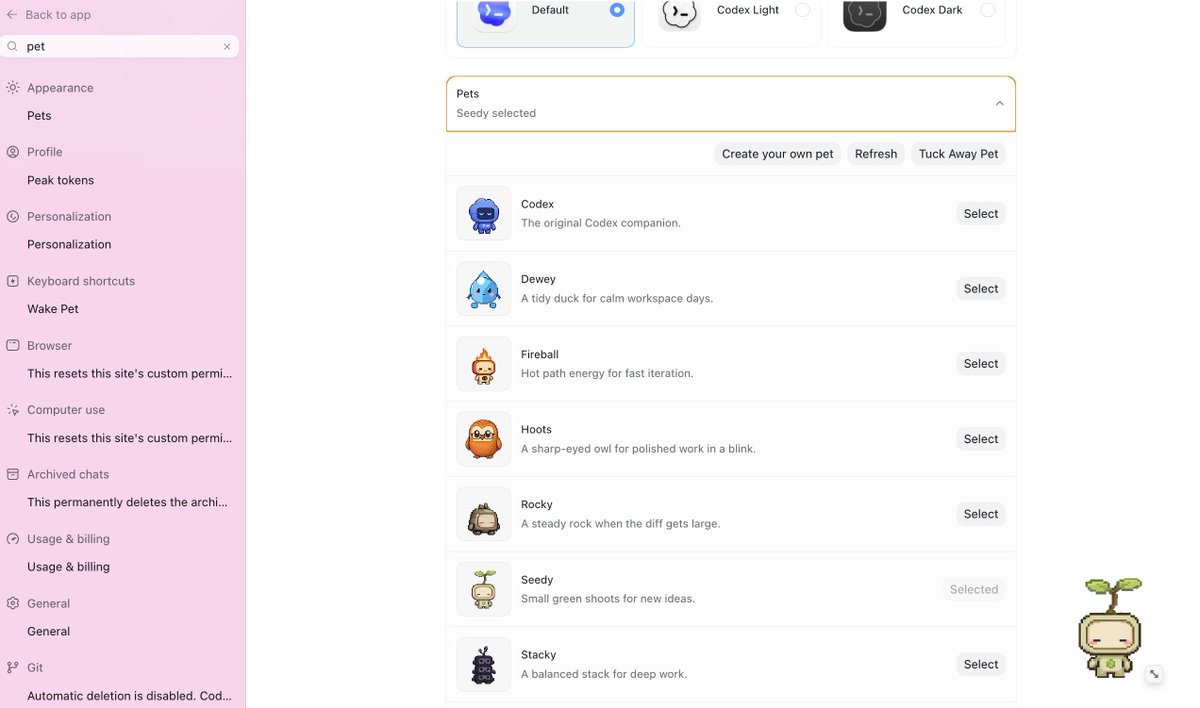
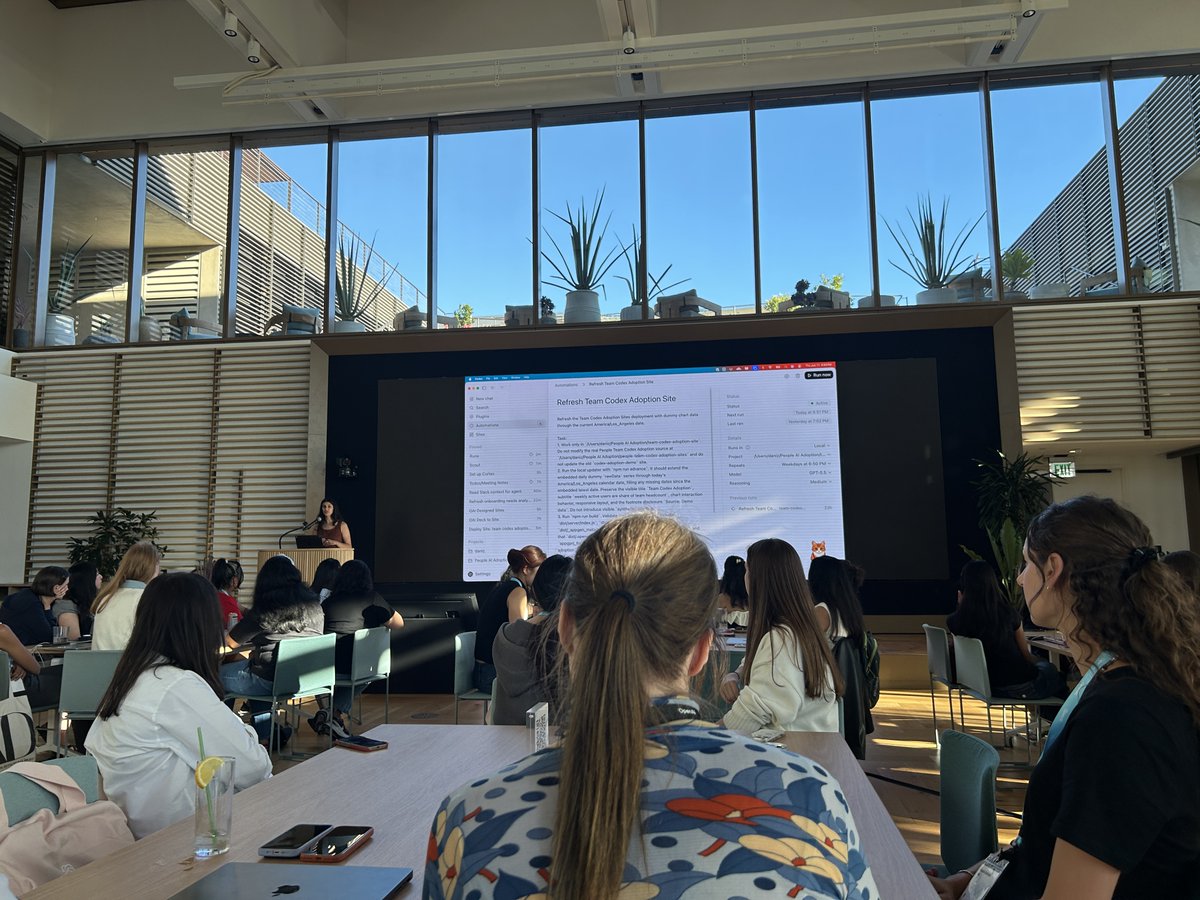
OpenAI Codex has the CUTEST easter egg that just dropped🥚
How to find it:
- cmd k
- search "wake pet"
- update appearance in Codex -> Settings -> Appearance -> Pets
thank you sf queen @JoanneShang and @OpenAIDevs for brining whimsy to the first Codex event!
8
8
146
26,807

Teams are go for launch with a $135 price per share for the SpaceX IPO → spacexipo.com/#priceannounce…
1,803
4,335
29,554
3,644,527
Jun 9
🎼@kirstenagreen @ForerunnerVC wrote that
'enduring AI companies automate the task without automating the purpose.'
So I turned her post on why they invested in @MikeyShulman's and the @suno_ai_ team into a song with Suno.
The thesis, played back & paid forward. 🔊
2
7
359
Jun 10
1
97
Jun 10
Here's the b-side.
Same thesis, new vibe, & no name dropping.
/@SamODonnell22 @ForerunnerVC #HumansintheLoop2026 Hype Music?
101
Daniel Green retweeted

Jun 10
For musician and composer @sound4movement, Codex works like a studio assistant.
He asks for a piano track in 3/4, sets the tempo and harmony, then describes how the performance should build.
Codex handles the setup in Ableton Live. Michael stays focused on the creative work.
85
70
844
84,831
Daniel Green retweeted

Jun 9
Every time a new model is released, I’m amazed by how much it changes AI usage among technical people
…and how little it changes AI usage for the average person
99% of people probably couldn’t name a single model. There is SO much opportunity at the application layer
46
14
226
16,591
Daniel Green retweeted

Jun 9
I want to share some thoughts about the impact of AI on org structure.
This is based on early conversations with some of the top CHROs in Fortune 500 companies as well as other C-Suite leaders and startups.
First: why do I think most enterprise org charts look the way they do? Maybe cleaner ownership lines (fiefdoms are fun), maybe easier to serve clients better (ex: the API team at OpenAI shouldn't be separate from the ChatGPT team because the same clients are buying both and don't want to deal with two separate teams), maybe just redundancies and catching errors.
Layers of people in orgs end up acting like an org sieve or one of those coin sorters. Issues come up, and because multiple people or departments have to review it, many of them are caught ahead of time.
The structure helps to absorb human mistakes.
It's a liability support system.
AI-First companies (which tend to be companies trying to reduce friction and create flatter orgs) are pulling out those layers on purpose.
And as a result, ownership (one person running hundreds or thousands of agents) is getting more concentrated.
If ownership gets MORE concentrated because of layer removal, then that actually RAISES the trust you need in your people, your team, your company.
When one marketer or finance leader owns an entire outcome, you as the leader have to trust their taste, their risk tolerance, their judgement, their level of "done", etc. a whole lot more because there is no one downstream to fix it.
And so what happens as a result? The hiring math changes. You're less likely to bring in outsiders into your org (so internal referrals and employees with strong networks become even more important). The CEO is more likely to get back in the weeds and have more conversations with owners. You're more likely to have layers of AI as filters and judges, verifying whether work has been completed to a certain quality level. And I'd argue B players have a harder time hiding and are less likely to be kept.
AI-first orgs are higher stakes per seat, and I think it has actual implications for hiring, growing, staffing, collaborating, referring, firing, and scaling.
Change management in enterprises takes years, so we'll see this play out slowly over the next 18 months.
20
6
67
5,794
Daniel Green retweeted
Jun 8
The AI champions strategy of 2023 doesn't work in 2026.
Let me give you my very hot take 🔥
(And know that this is anecdotal, and the world of AI changes every 2 heartbeats, so by the time I finish this sentence, we might see another strategy win out).
In 2023, the best advice was to find AI champions across your org and incentivize/elevate them.
"Look at Joel! Look at the crazy way he summarized all of our product reviews into one paragraph! Be like Joel!"
"Look at Lynda! Lynda just figured out a way to upload our invoices and audit each one with a GPT! Be like Lynda!"
You could easily find them because they were some of the only people internal to your company actually using AI with any regularity. Engineer/product were the top adopters, followed by marketing and sales. Finance and legal and HR were behind on adoption (that part isn't anecdotal - McKinsey and IBM research back it up).
In 2026, it's still important to find your weirdos, to grab the outliers and propagate the big AI learnings, but they're harder to find. Why?
(1) Because you can't just pull usage numbers and say "these are our superusers" - there are plenty of heavy users leveraging AI for high volume, lightweight productivity (ex: writing emails)
(2) Because the weirdos are actually *less* likely to raise their hands - they've learned that having to teach tens of thousands of people slows down their own experimentation, and they want to keep the 10-100x work transformation to themselves to stay ahead and protect their careers.
In fact, if you did an AI champions call at your company, my guess is the people who immediately raise their hands are not your superusers.
Instead, they're the ones operating in the early 2025 paradigm with a few automated workflows - which again, are useful but do not represent the transformation we're seeing in individuals' days.
My current advice is to build a frontier unit (or "lab" or "strike team") with two categories of builder:
→ Builder - doer: these are the experimenters building memory loops and AI workforces and heartbeats and goal flywheels. They understand the importance of context layers and multi-agent orchestration. They're not necessarily - and shouldn't only be - engineers. Protect their plates so they keep pushing at the edge.
→ Builder - expander: these are AI translators who shadow your doers and learn from them, and then teach the mindset shift and best methods to everyone else. They're trusted in the org and quickly figure out signal from noise. They tend to be more business-oriented (which doesn't mean they're not technical). They, like the doers, are also cross-dept. Think internal FDE.
Quit treating them as one group.
Thank you for coming to my TED Talk.
28
4
66
7,138
Jun 6
Here's s a beta tool for generating Codex-native project harnesses: AGENTS.md, config, subagents, skills, evals, smoke checks, and usage evidence.
Looking for a few people to test it out.
github.com/daniel-p-green/Co…
130

Jun 5
🥦🥦🥦
Jun 5

Meet Hiroki-san (@tomiyasu16) who is running his farm in Japan with ChatGPT and Codex: chatgptpro.substack.com/p/hi…
82
Jun 5
Liking the updated navigation in the @OpenAIDevs API console. It is much easier to find what you need now.
2
93
Daniel Green retweeted

Jun 4
31
84
1,092
313,869