
OG-Digen 💸⃤. 𓂀𓅓
Joined June 2025
- Tweets 445
- Following 268
- Followers 155
- Likes 1,176
93 Photos and videos











May 20
1
1
Digen retweeted

May 12
Does your bank or credit union integrate with blockchain technology? It will soon.
67
252
927
91,595
Digen retweeted
This is why you build a compliant DEX that has no central point of failure.

We experienced an outage at Coinbase last night, which is never acceptable. The root cause was a room overheating in an AWS datacenter when multiple chillers failed. We design our services to be redundant to downtime in any one AWS Availability Zone (AZ), and most of our systems worked this way last night, but not all.
Our centralized exchange did not. Exchanges have unique architectures that optimize for latency and co-location of clients. It is possible to make exchanges resistant to AZ failures, but this can introduce latency delays that are not desirable along with breaking customer co-location. Given this incident, we'll revisit these tradeoffs to ensure we're giving you the best possible venue to trade. At a minimum, the duration of an outage should be able to be reduced considerably when an AZ move is needed.
Thank you to the AWS and Coinbase teams for working through the night to mitigate the issue. We’ll share the detailed technical summary once it's ready.
35
131
498
27,933
Digen retweeted

Apr 29
🔸Fragmented Grace🔸
Not broken - but composed. She is mosaic - every fragment holds a memory, every piece a truth.
🟣 Super Rare Sentinel No. 173
ImaginatioNFT.com #NFT
soon.market/nft/439804700738…

1
5
13
105
Apr 28
In DeFi, you trade against an AMM pool with an algorithm.
In Forex, you trade through a web of brokers (in-house), banks (rarely) and venues competing for your flow
Most traders think the "price" is just... the price. But on a hybrid exchange, it's a conversation between two systems:
1. The CLOB (Central Limit Order Book)
This is the open marketplace. Buyers and sellers—humans or bots—post their bids and asks for everyone to see. The highest bid meets the lowest ask. That's your last traded price.
2. The AMM Swap (Liquidity Pool)
This runs on an algorithm, not an order book. Price changes automatically based on the ratio of assets in the pool. Swap a bunch of one token? The algorithm adjusts the price to rebalance.
3. The Bots (User-Deployed)
Anyone can run a grid bot or market maker bot using open-source code. These bots place hundreds of small orders on the CLOB—creating walls of liquidity at specific levels. They don't collude. They just follow their settings.
So who actually controls price?
No single person. Price is the result of:
Manual traders hitting bids or asks
Bots defending levels
The AMM's algorithm reacting to swaps
What breaks a range?
When real demand, not just bot activity, consumes all the sell orders at key levels. Once those walls are gone, the next tier of bots has to buy higher to re-enter. That's when price discovers a new range.
Watch the order book, not just the chart. If the same price keeps getting defended... someone programmed it that way. The real move happens when they get eaten.
37
Digen retweeted

SOLD to @digenarate
Congrats & thank you Ser. 🥳🫡
#122 Aureon Glint Owl
soon.market/nft/439804700606…

2
3
76
Apr 15
7️⃣
Apr 15

$300T in real-world assets is coming onchain.
Not “if.” When.
The moment it does, lending markets become the backbone of everything: liquidity, leverage, yield.
LOAN Protocol is built for that future.
1
10
299
Digen retweeted
Apr 13
🌸 Mirror Gate - April NFT
Commemorative NFT from the Mirror Gate (April) event
Mint your NFT Yourself
➡️ NFTpacks.io
by 77000 Snips
• 77 NFTs available
• max 7 per person
• all identical
NFT = proof of participation Imagination collectible
Purchase = entry into Mirror Gate
ImaginatioNFT.com

2
4
9
123
Digen retweeted
🚨**FRESH DROP**🚨
A unique NFT 1/1 & 100% hand drawn. 🎨
📦 #122 Aureon Glint Owl
👉 soon.market/nft/439804700606…
$OWL #owlnoctun @soon_market @MetallicusTDBN @XPRNetwork $XPR $METAL #Metallicus #XPRNetwork #XPR #MTL #snips #NFTCommunity

1
5
9
312
Digen retweeted

Apr 3
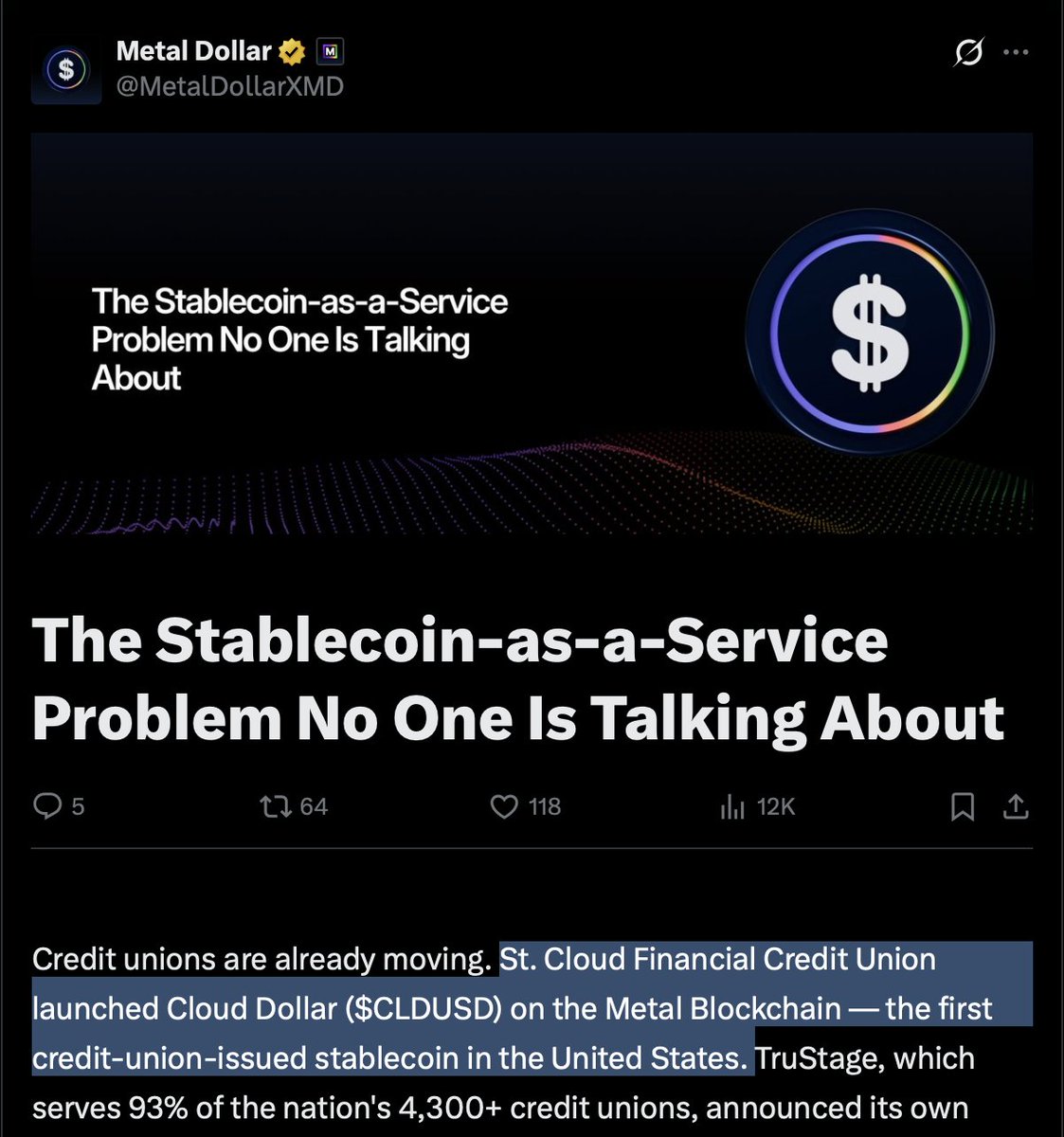
It's official :
St. Cloud Financial Credit Union launched Cloud Dollar ($CLDUSD) on Metal Blockchain!
America's first stablecoin issued by a credit union! $METAL
11
70
233
5,640

Digen retweeted

Mar 29
77 Mirror Gate Results
First draw (7 × 150,000 $SNIPS):
Ticket 039 - digen @digenarate
Ticket 013 - dropony
Ticket 002 - monoxpr @MM00584
Ticket 005 - mutt
Ticket 044 - chrisaiki @Chrisaiki
Ticket 043 - karmaxxxx @NEO121714
Ticket 006 - jennilyning @jennilyning
Second draw (2 × Imagination7oo NFTs):
Ticket 010 - ontrack2grow
Sentinel No. 144 - Eclipse, Unmoved
soon.market/nft/439804700249…
Ticket 016 - straz @straz101
Sentinel No. 142 - Gold in Restraint
soon.market/nft/439804700234…
Final draw (Main Prize):
@digenarate
Imagination NFT - "Love is a decision"
soon.market/nft/439804700258…
A total of 2,615,000 $SNIPS has been collected and will now be transferred to the holders’ wallet ⚛️axterisia, and staked via smart contract for 12 months.
After all transaction we stake 266 525 035 $Snips
congratulations IMAGINATIONFT.com FAMILY
All live videos are available on the Imagination Telegram channel, link here:
t.me/ImaginationNFT777
And of course - a preview of the April 77 Imagination Mirror Gate is coming soon.
Thank you all for taking part.
#Snipverse @XPRNetwork #NFT
2
4
11
201

Digen retweeted
Mar 27
It’s time to move to Metal (and pass the Clarity Act)
54
151
561
26,786
Digen retweeted
Mar 27
Let’s manifest the lending layer into existence!
Smash the❤️button to rally @GlennMarien to crush this new exciting challenge post-Pulse VM launch!
The future of lending happens on $LOAN $METAL
Send it Loanatics! ❤️❤️❤️
6
36
147
3,606
Digen retweeted
Mar 20
Deposit flight is real, Metallicus solved it. In fact, we didn’t just solve retention but we figured out customer acquisition, support, and experience. While the so-called leaders of the industry cozy up to big banks and fight pro crypto regulation, we will be here embracing it.
Mar 19

If there's actual evidence of deposit flight, those suffering from it should be demanding that this report be released immediately. That they aren't tells you everything.
22
96
348
27,164
Digen retweeted
Mar 17
Loved the rant! On point always! Independent thought!
1
1
1
48
Digen retweeted
12 Oct 2023
Determination is key. Never give up. You have nothing to prove to anyone, and everything to prove to yourself.
23
125
547
52,450
Mar 13
What is your argument gentlemen after listening to this?

⚡️ $BSV Interview with @ProjectBabbage
We discuss what is BSV, how it was created, FUD around Craig Wright, and why Bitcoin Satoshi Visions is in Ty’s opinion the TRUE Bitcoin.
Recording credit: @Kate_L_Mosso
Recorded at ETH Denver!
1
76
Digen retweeted
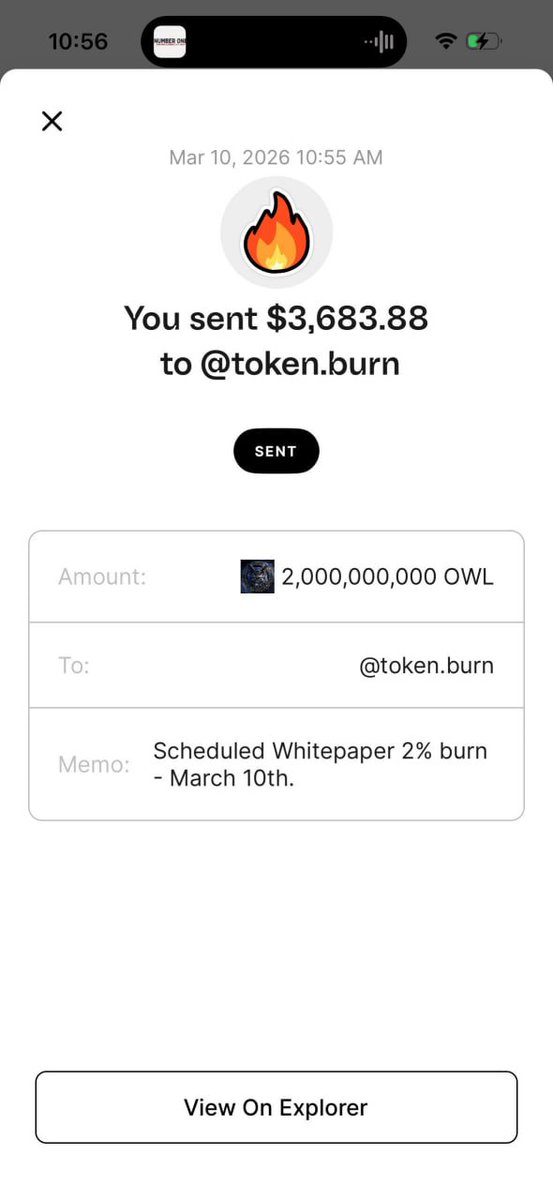
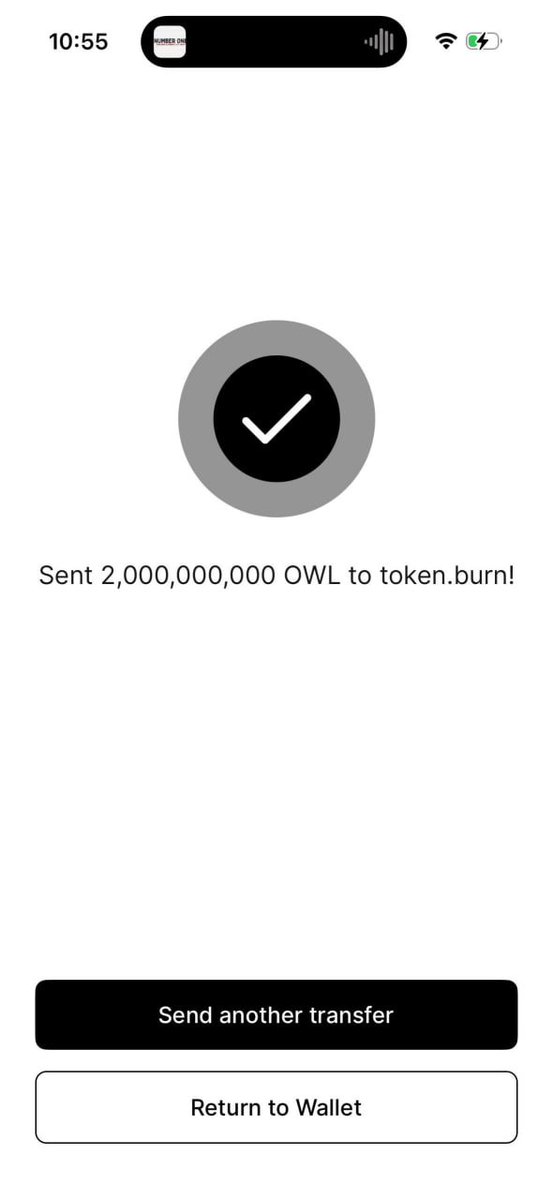
🔥 March 10th Whitepaper Burn
Following our roadmap, 2% $OWL of the total supply has been burned today.
Transparency. Commitment. Long-term growth. 💎
$OWL @MetallicusTDBN @XPRNetwork @WeAreMetallicus $XPR $METAL #Metallicus #XPRNetwork #XPR #NFTs #snips #NFTCommunity
2
6
11
295