
66 Photos and videos










What would a project, framework or language need to provide to maximize effectiveness for AI?
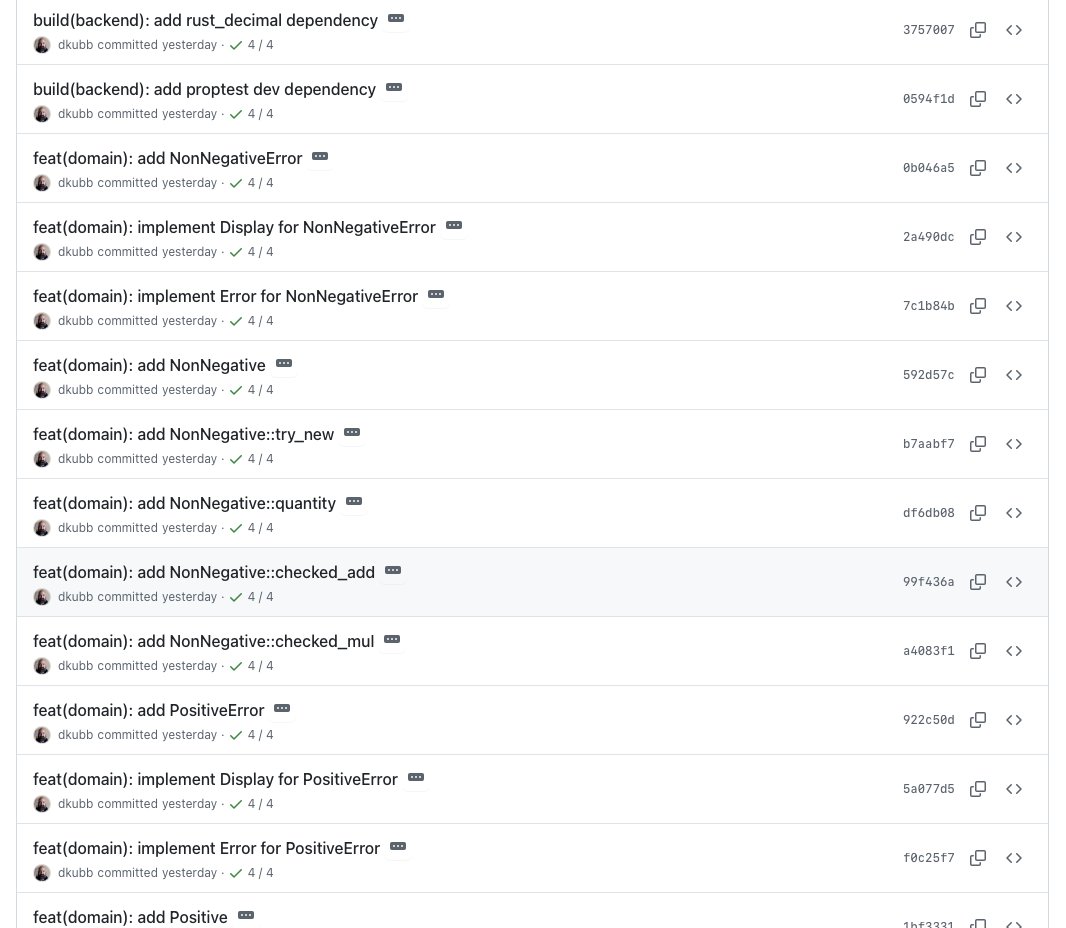
I’m thinking: a large corpus of working examples, the ability to establish fast feedback loops via strong types, good testing culture, good linters/formatters, well written user docs and plentiful examples.
My gut says something like tigerstyle.dev would probably help too.
IME the more guardrails I establish the more effective the LLMs are because there are fewer degrees of freedom for them to get lost in. The faster they can identify when they’ve left the golden path e better the results.
4
14
2,265
Dan Kubb retweeted

Jun 13

Jun 13

NEW: Amazon researchers are reportedly behind the jailbreak report that led to the U.S. crackdown on Anthropic’s top models.
145
1,549
21,581
915,131
State Space Minimization (SSM) is currently my favourite personal skill:
github.com/dkubb/skills/blob…
The idea is that it'll look at code and attempt to find equivalent, but stricter representations that minimize the total state space of the program.
It will eliminate many kinds of bugs or conditional code by making impossible states unrepresentable.
I will often hand this to subagents and have them iteratively apply it to code and tests (never at the same time though!) until it converges on some minimal representation where it cannot make further progress.
5
208

在AI时代,每个程序员都活成了自己最讨厌的那种 team leader:
1. 半年不写一行代码,编程能力严重退化,还自诩"我也是搞技术的“
2. 开会的时候把一线开发干的活全说成是自己的功劳,连自己的汇报材料都是让别人总结的
3. 瞎JB指挥,出了问题就甩锅说是下面没执行好
4. 不了解项目具体情况,只会提”单测加了没“、“性能还要优化”、“文档要沉淀一下”这类空洞的要求
5. PR 基本上看不懂,只会让别人先review了自己跟着点赞
6. 遇到 bug 了只知道无脑转发让别人查一下,自己负责来来回回转发消息
7. 还经常吐槽“今年的应届生水平越来越不行了”
222
537
3,014
286,345
I hope someday @Apple will focus on writing software that is as good as its hardware.
It'll be like Goku shedding his weights: youtube.com/shorts/KINrRCbk4…
1
2
146
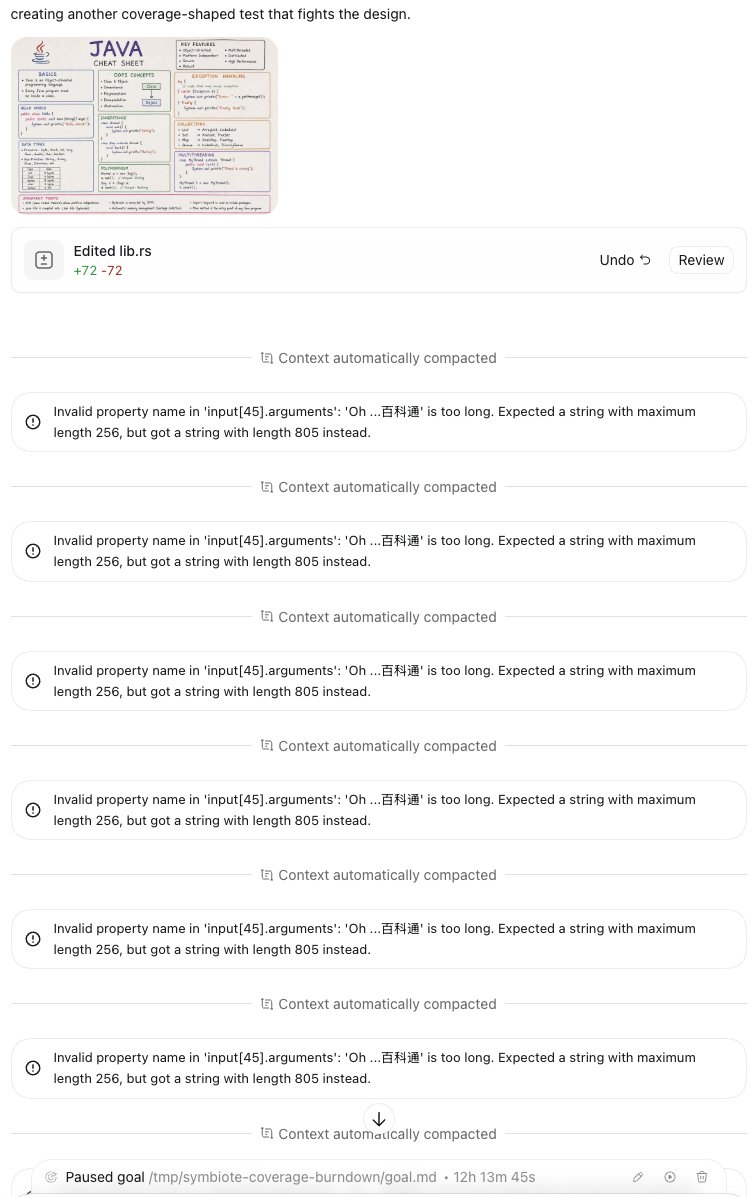
I made GPT lose it's mind in my Codex App.
Its last message (see screenshots) was to generate an image of a Java cheatsheet. I did not ask it to generate an image. I asked it to generate Rust code.
And then it tried to compact over and over and even if I stop and restart or recompact it cannot break out of this loop.
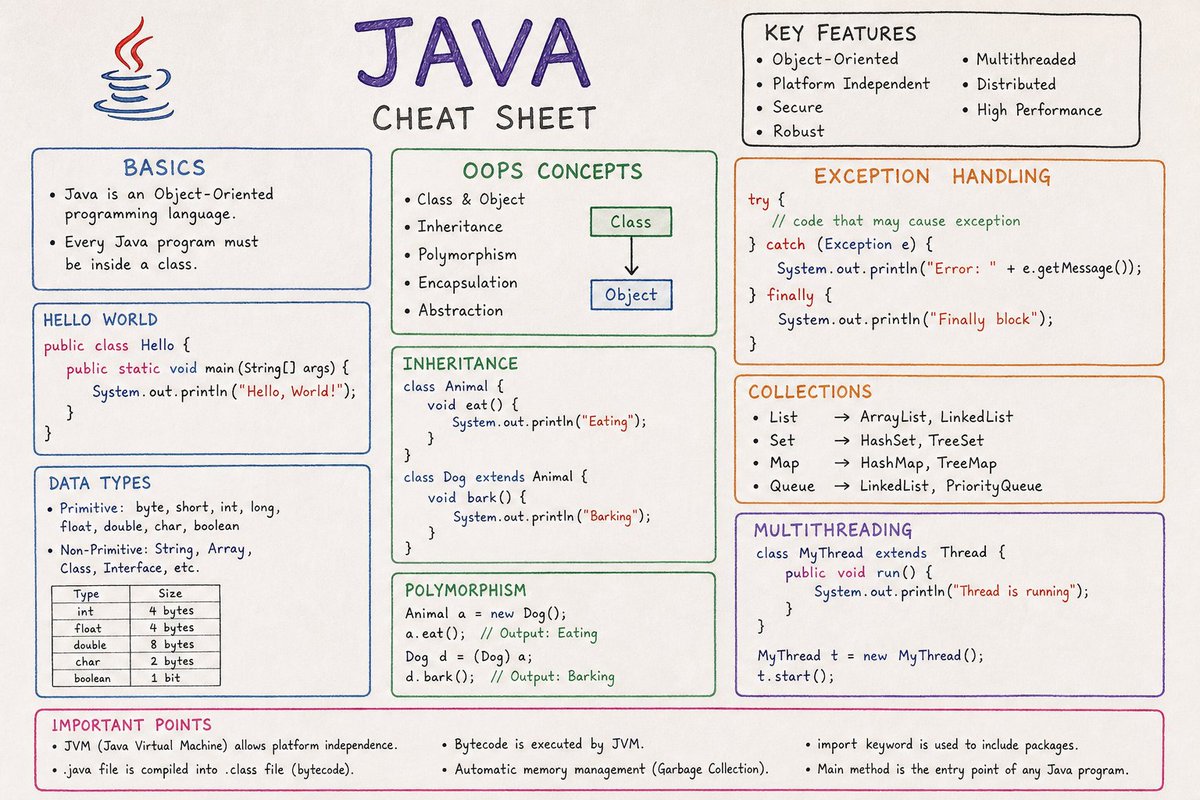
1
3
323
One nice optimization is to load up some context once, and then fork off a bunch of subagents to use the context. They’ll all use the same context cache, so it'll be cheaper than letting each load the same thing.
I use this for in-depth code review where I first load a rubric containing my coding guidelines. Then I parallelize review across multiple files, one for each forked subagent. I get *much* better results than I do jamming all reviews serially into a single context window.
1
1
101
I would have agent as a primitive and define context as a first class concept. Allow agents to fork (keep context) and spawn (start with no context or defined context).
If context is modelled as a tree structure it allows for so many nice optimizations. I don't understand why agents don't this since it's a no brainer.
2
1
5
338
Dan Kubb retweeted

May 22
Work compounds , intelligence doesn’t.
I've met plenty of gifted folks in my career who got lazy along the way. They assumed they'd keep their lead. It's infuriating.
A few years in, folks who put in the work surpassed them.
AI makes this worse. You can pay $20 to get superhuman (autistic) intelligence in your pocket. But if you don't seek hard problems, challenge yourself, and put in consistent effort, you will get crushed.
11
4
53
2,954
Dan Kubb retweeted
May 21
Going from traditional coding to using AI feels like switching from additive to subtractive sculpting.
I used to work by addition, building from the inside out, piece by piece...
Now, I get a rough block of code that broadly resemble the shape I want and then gradually chisel it until I'm happy with the result.
7
3
28
1,885
I want code review to die.
I don't want a code review that acts as a gatekeeper.
I don’t want a code review that makes the reviewee feel dumber than the reviewer.
I don't want a code review that makes good points but doesn't explain them well, so the reviewee assumes it's a personal preference and misses a learning opportunity.
I want that kind of code review to end.
What I want is a code review where the reviewer takes the time to really understand the code, and helps improve the code if possible.
I want a code review where the reviewee thinks about how to write simpler, easier to read code because they want to make it easier for the reviewer.
I want a code review where the reviewee and reviewer both come away having learned.
I want a code review that is not just about the code.
16
11
998

Stop asking “Should we rewrite this project in Rust?” and begin asking “Could an AI rewrite this project in Rust if I wanted?”.
The baseline you’d set for an effective rewrite to another language would be the baseline for what you’d need for an AI to effectively manage the project now.
2
1
6
468
I'm making my agent to write lints before being allowed to fix style issues.
Every time I find a style problem I ask my agent to identify all the locations, then write a lint to catch them, and only then it's allowed to fix them.
This does result in lots of special purpose lints, but it's much better running a program to find style issues than delegating that to the LLM.
1
1
2
157
Look, if someone is reviewing your code please do not just cut and paste what they are saying into Claude/GPT and tell it to fix the problem. Engage with the reviewer to get real understanding before asking your agent to make the change.
You're not adding any value being the middleman. If you're just blindly cut/pasting review comments, then you can be easily replaced by the reviewer running the agent themselves.
1
120
The mental models you develop when learning Regexps deeply are invaluable. It’s often people’s first exposure to state machines.
I think Regexps are one of the most beautiful concepts in computer science and you’re missing out not learning them.
May 15

Imagine spending years mastering Regex right before LLMs arrive
1
7
286
I almost always start a new project and just focus on declaring all the constraints. Then I have the agent read and interrogate me to surface more invariants I didn’t think of. I keep it technology agnostic and write it in IDEA .md. Then I write an ARCHITECTURE .md with technology choices and design. Then I continuously cross-check both against each other. Every point in both docs must connect, and not contradict; otherwise I have to refine or remove it.
As I work on the system I’m always reorienting against those two docs. Every refinement or fix gets added to the docs as a snapshot of current understanding. Sometimes I audit the code against the docs too and either fix the code or the docs when they diverge.
So far it’s been working quite well. The agents do a better job than if I had been driving only or on-demand planning.
1
1
351
/goal is awesome in codex, but I really want is to queue up goals.
I tried already, and even when it reports the goal is completed it won't automatically start the new goal. Instead it will ask for confirmation.
What I want to be able to do is queue up a /goal, start work on the next goal and keep stacking them.
1
2
117