
Not here to sell or advertise or promote anything. Views are personal and are not recommendations. AMFI Registered Mutual Fund Distributor: ARN-44580
Joined September 2011
- Tweets 64,934
- Following 165
- Followers 585,640
- Likes 92,399
1,403 Photos and videos
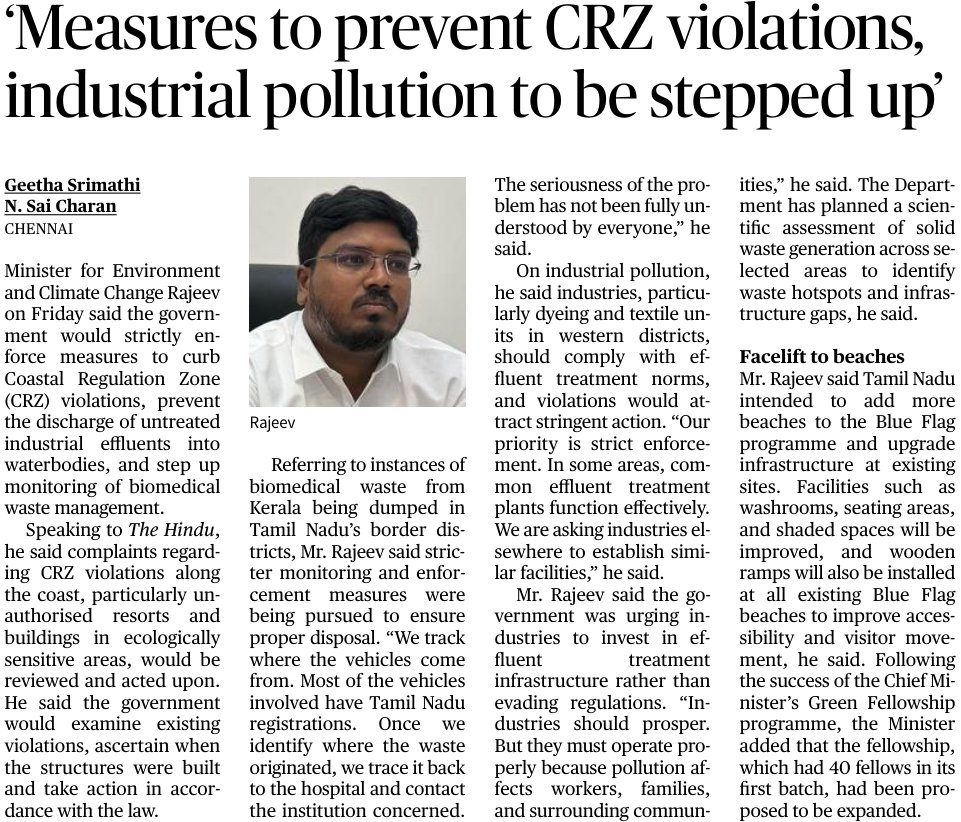
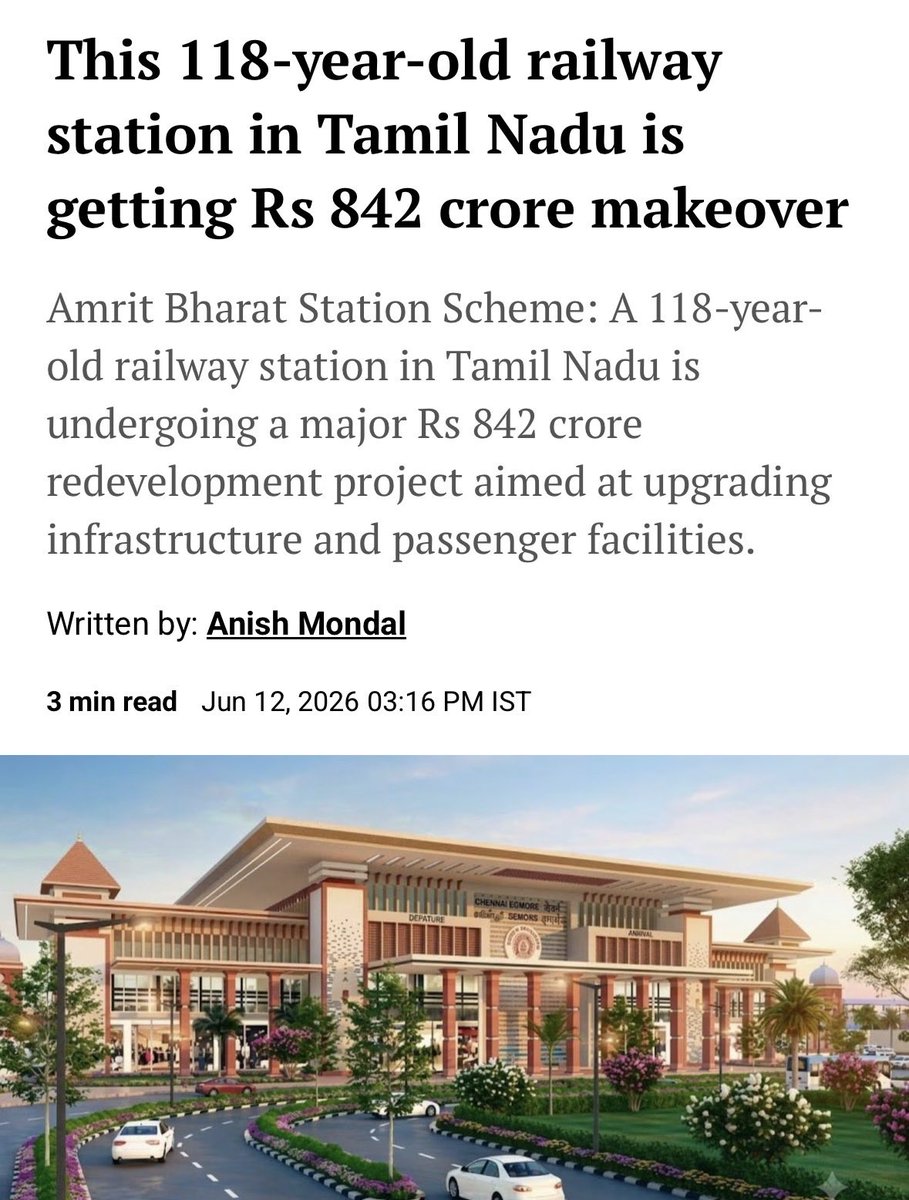
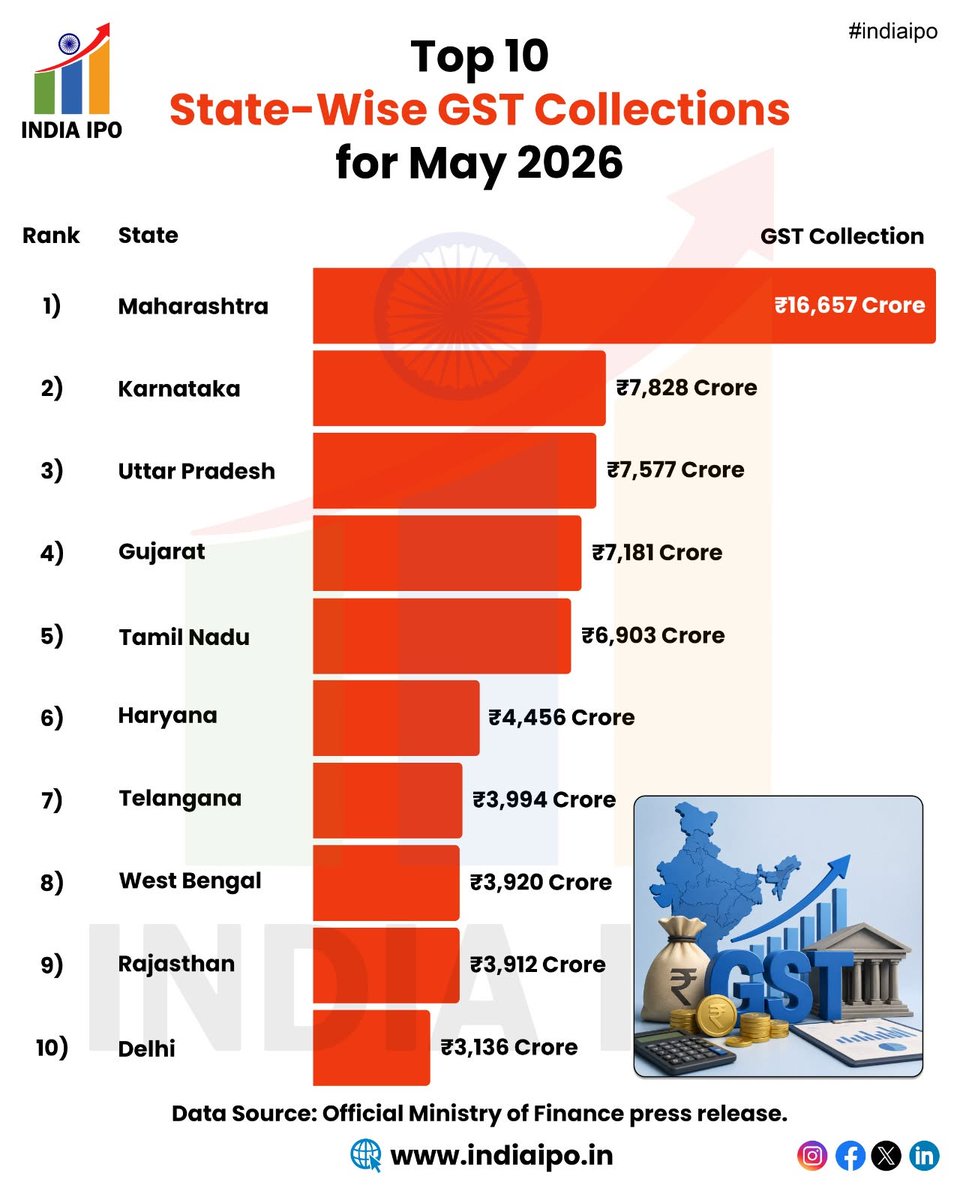
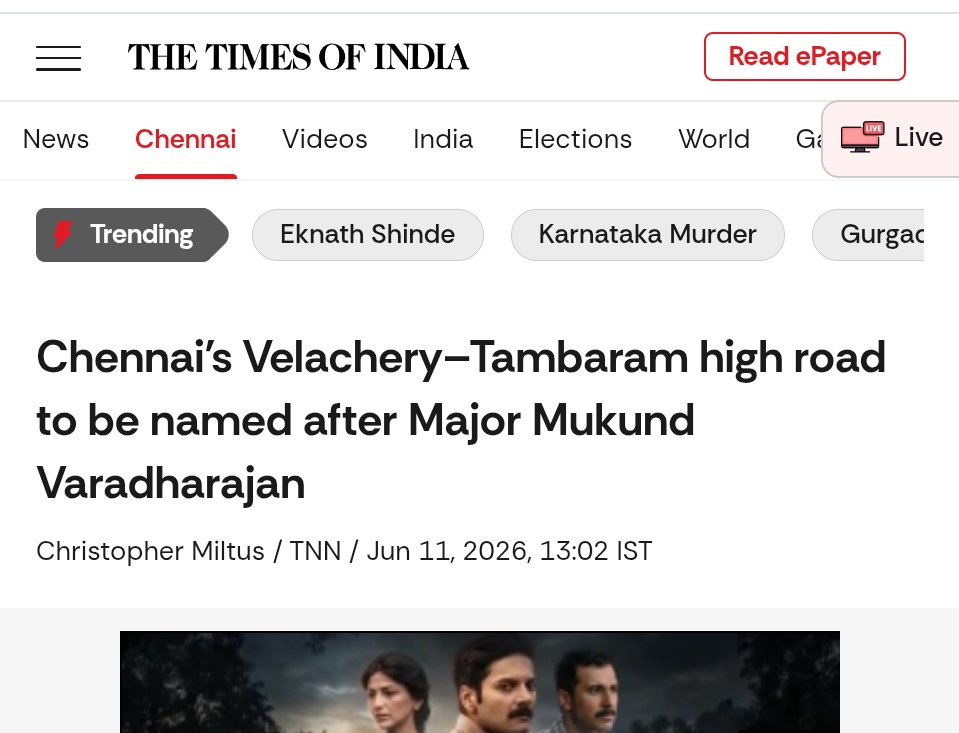

Privatisation will be the most profitable financial model.The state can make money thru licensing fees without the burden of providing employment and meeting other expenses of a shop.
It can curb corruption and privately run will be better for the public in terms of facilities.
1
2
334

Minister K. Vignesh has said that privatising liquor distribution (TASMAC) is also under government consideration. If it can bring more money to the state exchequer, remove corruption, and improve customer experience, it is worth considering.
22
24
285
10,834
It is the prerogative of the Chief Minister to decide how he wants to deal with past corruption cases based on their severity and nature.
I am sharing my views here in a different context.
How many people in the traffic police department would have never asked for money from the public?
How many VAOs would have never sought money for issuing certificates to the public?
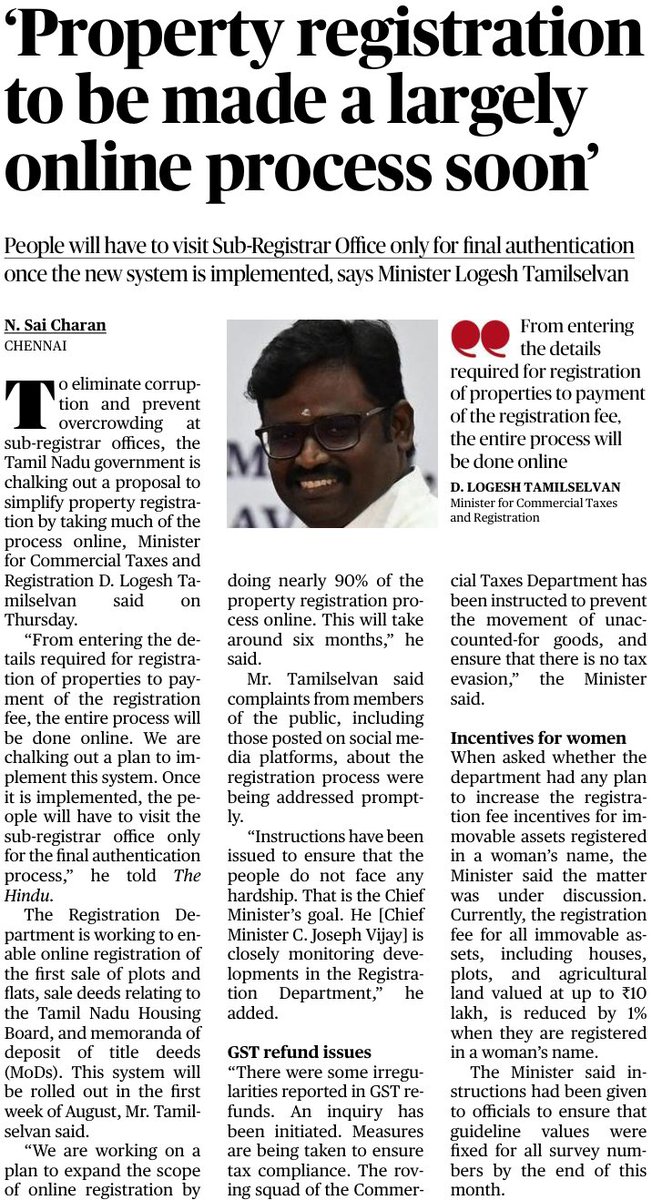
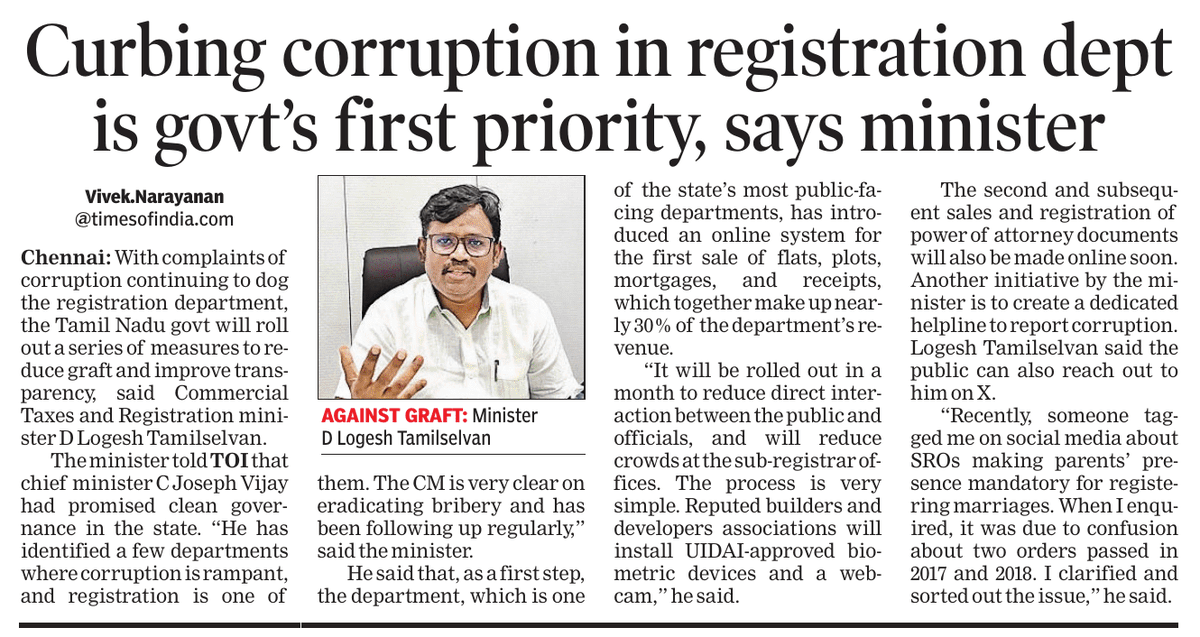
Is there any sub registrar office in our state that has never indulged in corruption?
I leave the answers to you.
As I repeatedly say, no one is going to come from outside and perform miracles in the system. We, the same set of people, need to change the direction of the state.
Moral classes alone will not suffice. Building adequate checks and balances, transparent processes, reduced personal discretion, compulsory turnaround times for addressing pending issues, stricter laws for punishing corruption, active citizen vigilance, and anonymous public reporting of corruption with strict resolution timelines- these are the way forward.
If we can sustain this approach say for the next two years, corrupt officials will start fearing demands for bribes, and the public will lose their fear of corrupt individuals.
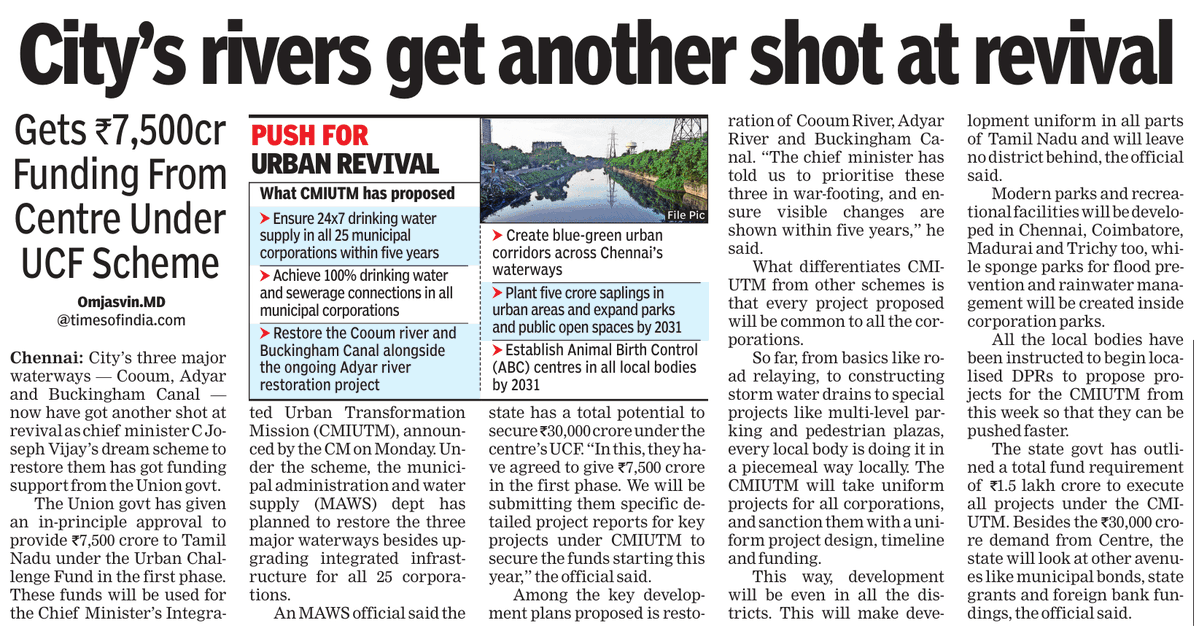
Media sources report that the Chief Minister has instructed the administrative machinery that the planned civic infrastructure rebuilding, with an outlay of Rs.1,50,000 crores, should have literally zero corruption. Even a VAO should not be able to extract one rupee from this project.
For these changes to become permanent and part of daily life, public participation is essential. We need to actively contribute ideas, provide feedback, question corruption, report it in the public domain, and offer healthy criticism.
If we insist on only people with perfect past records, I doubt whether we can even run the daily administration. Let us not get stuck in the past and instead move towards the future.
As I said in the beginning, it is for the Chief Minister to decide how he wants to handle past corruption cases based on their severity and nature.
My views are in a completely different context.
6
3
50
4,075
Muthukrishnan Dhandapani retweeted

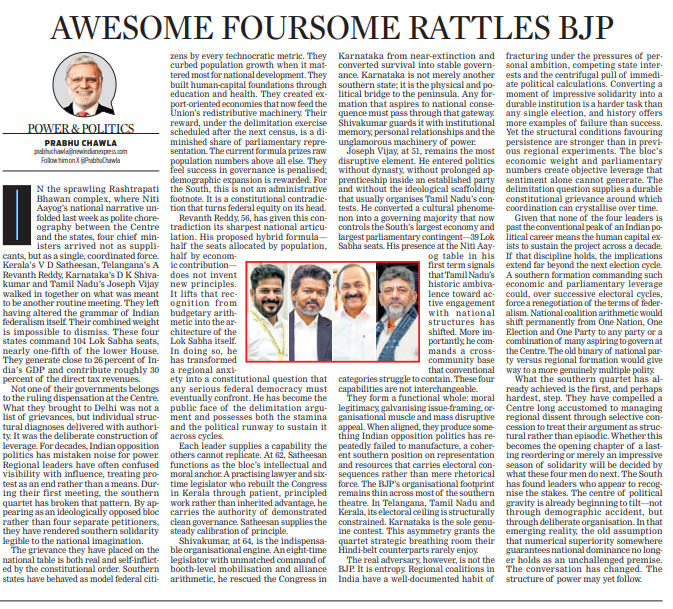
Awesome foursome rattles BJP
Kerala’s V D Satheesan, Telangana’s A Revanth Reddy, Karnataka’s D K Shivakumar and Tamil Nadu’s Joseph Vijay walked in together on what was meant to be another routine meeting but left having altered the grammar of Indian federalism.
In the sprawling Rashtrapati Bhawan complex, where Niti Aayog’s national narrative unfolded last week as polite choreography between the Centre and the states, four chief ministers arrived not as supplicants, but as a single, coordinated force. Kerala’s V D Satheesan, Telangana’s A Revanth Reddy, Karnataka’s D K Shivakumar and Tamil Nadu’s Joseph Vijay walked in together on what was meant to be another routine meeting. They left having altered the grammar of Indian federalism itself. Their combined weight is impossible to dismiss. These four states command 104 Lok Sabha seats, nearly one-fifth of the lower House. They generate close to 26 percent of India’s GDP and contribute roughly 30 percent of the direct tax revenues.
Not one of their governments belongs to the ruling dispensation at the Centre. What they brought to Delhi was not a list of grievances, but individual structural diagnoses delivered with authority. It was the deliberate construction of leverage. For decades, Indian opposition politics has mistaken noise for power. Regional leaders have often confused visibility with influence, treating protest as an end rather than a means. During their first meeting, the southern quartet has broken that pattern. By appearing as an ideologically opposed bloc rather than four separate petitioners, they have rendered southern solidarity legible to the national imagination.
The grievance they have placed on the national table is both real and self-inflicted by the constitutional order. Southern states have behaved as model federal citizens by every technocratic metric. They curbed population growth when it mattered most for national development. They built human-capital foundations through education and health. They created export-oriented economies that now feed the Union’s redistributive machinery.
Their reward, under the delimitation exercise scheduled after the next census, is a diminished share of parliamentary representation. The current formula prizes raw population numbers above all else. They feel success in governance is penalised; demographic expansion is rewarded. For the South, this is not an administrative footnote. It is a constitutional contradiction that turns federal equity on its head.
Revanth Reddy, 56, has given this contradiction its sharpest national articulation. His proposed hybrid formula—half the seats allocated by population, half by economic contribution—does not invent new principles. It lifts that recognition from budgetary arithmetic into the architecture of the Lok Sabha itself. In doing so, he has transformed a regional anxiety into a constitutional question that any serious federal democracy must eventually confront. He has become the public face of the delimitation argument and possesses both the stamina and the political runway to sustain it across cycles.
Each leader supplies a capability the others cannot replicate. At 62, Satheesan functions as the bloc’s intellectual and moral anchor. A practising lawyer and six-time legislator who rebuilt the Congress in Kerala through patient, principled work rather than inherited advantage, he carries the authority of demonstrated clean governance. Satheesan supplies the steady calibration of principle.
Shivakumar, at 64, is the indispensable organisational engine. An eight-time legislator with unmatched command of booth-level mobilisation and alliance arithmetic, he rescued the Congress in Karnataka from near-extinction and converted survival into stable governance. Karnataka is not merely another southern state; it is the physical and political bridge to the peninsula. Any formation that aspires to national consequence must pass through that gateway. Shivakumar guards it with institutional memory, personal relationships and the unglamorous machinery of power.
Joseph Vijay, at 51, remains the most disruptive element. He entered politics without dynasty, without prolonged apprenticeship inside an established party and without the ideological scaffolding that usually organises Tamil Nadu’s contests. He converted a cultural phenomenon into a governing majority that now controls the South’s largest economy and largest parliamentary contingent—39 Lok Sabha seats. His presence at the Niti Aayog table in his first term signals that Tamil Nadu’s historic ambivalence toward active engagement with national structures has shifted. More importantly, he commands a cross-community base that conventional categories struggle to contain. These four capabilities are not interchangeable.
They form a functional whole: moral legitimacy, galvanising issue-framing, organisational muscle and mass disruptive appeal. When aligned, they produce something Indian opposition politics has repeatedly failed to manufacture, a coherent southern position on representation and resources that carries electoral consequences rather than mere rhetorical force. The BJP’s organisational footprint remains thin across most of the southern theatre. In Telangana, Tamil Nadu and Kerala, its electoral ceiling is structurally constrained. Karnataka is the sole genuine contest. This asymmetry grants the quartet strategic breathing room their Hindi-belt counterparts rarely enjoy.
The real adversary, however, is not the BJP. It is entropy. Regional coalitions in India have a well-documented habit of fracturing under the pressures of personal ambition, competing state interests and the centrifugal pull of immediate political calculations. Converting a moment of impressive solidarity into a durable institution is a harder task than any single election, and history offers more examples of failure than success. Yet the structural conditions favouring persistence are stronger than in previous regional experiments. The bloc’s economic weight and parliamentary numbers create objective leverage that sentiment alone cannot generate. The delimitation question supplies a durable constitutional grievance around which coordination can crystallise over time.
Given that none of the four leaders is past the conventional peak of an Indian political career means the human capital exists to sustain the project across a decade. If that discipline holds, the implications extend far beyond the next election cycle. A southern formation commanding such economic and parliamentary leverage could, over successive electoral cycles, force a renegotiation of the terms of federalism.
National coalition arithmetic would shift permanently from One Nation, One Election and One Party to any party or a combination of many aspiring to govern at the Centre. The old binary of national party versus regional formation would give way to a more genuinely multiple polity.
What the southern quartet has already achieved is the first, and perhaps hardest, step. They have compelled a Centre long accustomed to managing regional dissent through selective concession to treat their argument as structural rather than episodic. Whether this becomes the opening chapter of a lasting reordering or merely an impressive season of solidarity will be decided by what these four men do next. The South has found leaders who appear to recognise the stakes.
The centre of political gravity is already beginning to tilt—not through demographic accident, but through deliberate organisation. In that emerging reality, the old assumption that numerical superiority somewhere guarantees national dominance no longer holds as an unchallenged premise. The conversation has changed. The structure of power may yet follow.
1
5
20
3,666
Muthukrishnan Dhandapani retweeted

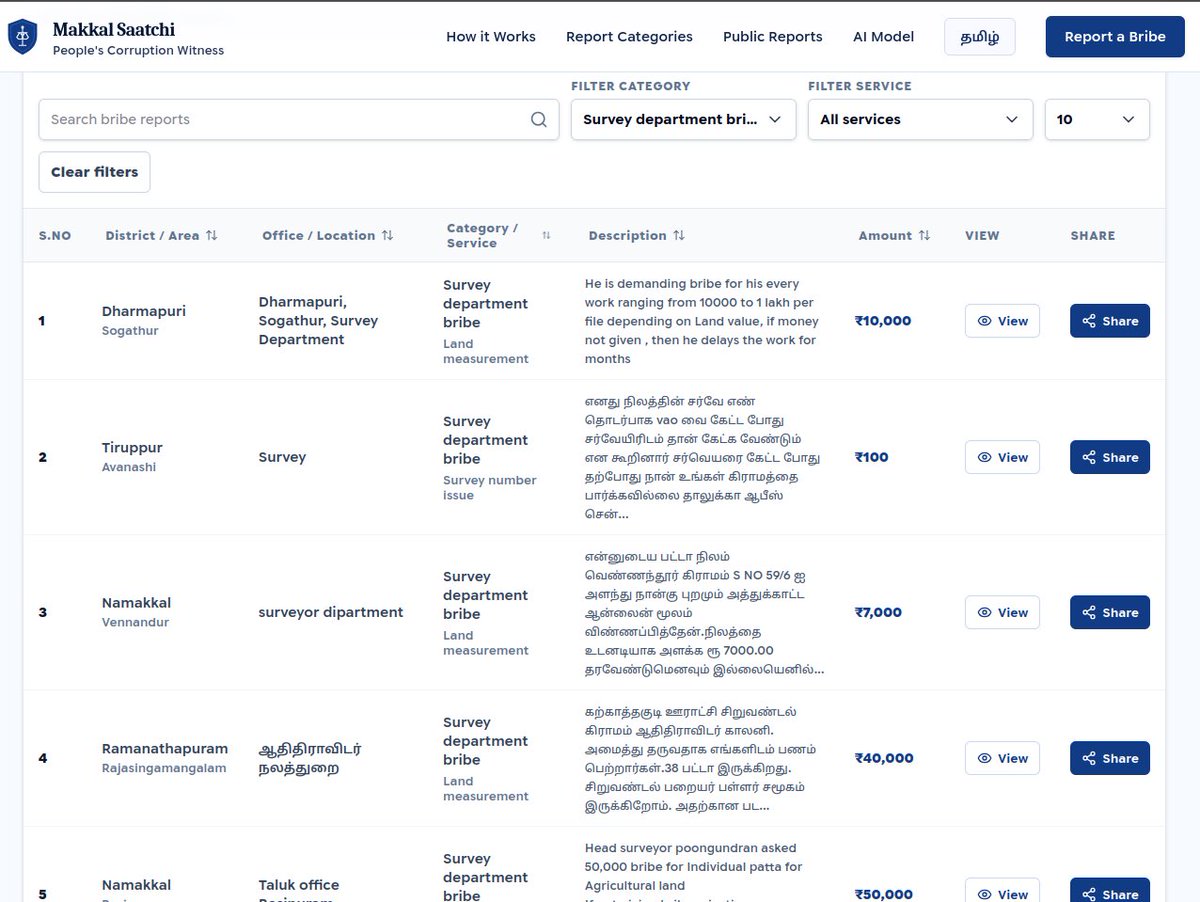
Some surveyors are not just measuring land now, they are measuring how helpless a person is.
For basic survey, subdivision, boundary marking or patta-related work, people are forced to run from office to office, waiting for their own legal work to move.
And then comes the “extra” demand.
Even with Makkal Saatchi’s small reach, these complaints are coming in. That itself shows how deep the pain is on the ground.
These complaints are not just numbers. They show people’s frustration, helplessness and pain.
Please verify and take action
@CMOTamilnadu @KASengottaiyan @AadhavArjuna @BussyAnand @TNDIPRNEWS @TVKVijayHQ
#MakkalSaatchi #TamilNadu #Corruption
11
62
145
5,586
Right from the recent killing of three Indian sailors in a US strike on an oil tanker to the strong headed behaviour of the Trump administration - its arrogance is not surprising. What is surprising is why we are becoming so meek?
87
107
783
23,535
In such cut throat geopolitics, one cannot entirely rule out international conspiracies and interferences. However, attributing every single failure in our country to some "deep state" is superficial.
In my view, many of our failures are of our own making. And as a sovereign nation, do we not have the ability to counter such international conspiracies?
17
10
120
7,824
The truth is that a certain political narrative- now mainstream in some circles - blames Tamil Nadu for India losing self sufficiency in copper production, alleging it was part of a Chinese conspiracy.
Gullible sections of the public often go by popular political narratives. International investors, however, look at the facts of the case. That is why, despite the Sterlite narrative, there has been no negative impact on new industries coming to Tamil Nadu.
If only Vedanta had complied with the laws by making the necessary investments in pollution control and environmental safeguards, neither the country nor the company would have suffered this outcome.
Why should any individual or company be above the law?
9
8
85
5,680
If Tamil Nadu had unfairly closed Sterlite Copper in Thoothukudi (Tuticorin), the same region would not have continued to attract significant industrial investments afterward.
I am tired of reading claims that Tamil Nadu politicians were part of a Chinese conspiracy to undermine India’s self sufficiency in copper.
In my view, as a large industrial player, Vedanta believed it could continue operations without fully addressing environmental concerns. Ultimately, the rule of law prevailed.
There is no need to take my word for it. If you are willing to spend the time, all the facts and court judgments are available in the public domain.
23
25
218
15,744
Industries are extremely important for economic growth. Tamil Nadu is one of the most industrialized states in the country, with manufacturing contributing around 33% to its GDP - among the highest in India.
The state also accounts for nearly 12% of India’s total manufacturing output and leads the nation in the number of factories.
Following the rule of law and addressing environmental concerns is not anti development. When compliance issues arise, companies are typically given time to rectify problems, and most comply.
The Sterlite Copper case was an anomaly. All relevant information is available in the public domain. The company failed to make the necessary investments to address environmental concerns despite multiple opportunities over several years.
It was initially closed temporarily, and the courts later upheld a permanent closure due to repeated and grave environmental violations. Reading the court judgments reveals the extent of the pollution and regulatory non compliance.
6
12
109
7,717
Some people are suggesting that industries should not be inspected. Nothing could be a more wrong suggestion. Right from Foxconn to Hyundai to the Tatas, every major industry undergoes routine inspections as part of standard regulatory practice.
When issues arose at Foxconn’s plant in Tamil Nadu a couple of years ago, the company was asked to rectify the problems within a stipulated time. Similar inspections and corrective actions apply across the board.
One of the key reasons investors respect Tamil Nadu and continue to pour in investments is that the rule of law is followed without bias. There is no bending of rules or compromising on routine checks and balances.
If you research the Sterlite Copper issue, the company was given multiple opportunities to address concerns and set things right.
However, repeated non compliance and grave environmental violations ultimately led to the closure of the unit by the courts.
A quick search online reveals appreciation from reputed investors and industry bodies for Tamil Nadu’s ability to be one of the most industrialized states in India while also balancing environmental concerns.
8
4
76
7,222
I have read media reports this morning regarding the Tata Electronics issue.
Based on inspections by the Tamil Nadu Pollution Control Board (TNPCB) between December 2025 and May 2026, the company was found to have discharged wastewater into a rainwater harvesting pond within its facility.
This allegedly overflowed, leading to contamination concerns in nearby agricultural lands and open wells.
A formal show cause notice from a government body would typically include standard clauses stating that failure to rectify the problem within the stipulated time and implement preventive measures could lead to the closure of the unit or other actions, such as stopping power supply.
Tata Electronics has informed media outlets that it has already submitted a formal response to the TNPCB within the stipulated time. The company claims it is fully compliant with environmental norms, supported by independent laboratory tests, and has taken corrective actions.
This is where things stand as of now.
It is plain common sense that Tata and the Tamil Nadu Pollution Control Board will work together to resolve this. The strong legal language used in formal government notices is standard protocol rather than an immediate intent to shut down operations.
Neither Tamil Nadu nor Tata would want the company to exit the state - the plant is a significant employer and part of India’s electronics manufacturing push.
Routine inspections and subsequent notices to take corrective action are common in industrial regulation. When one such procedure received media attention, it was portrayed as if the Tamil Nadu government had ordered the shutdown of Tata Electronics.
This is my understanding based on multiple media sources.
9
16
149
18,205
Muthukrishnan Dhandapani retweeted

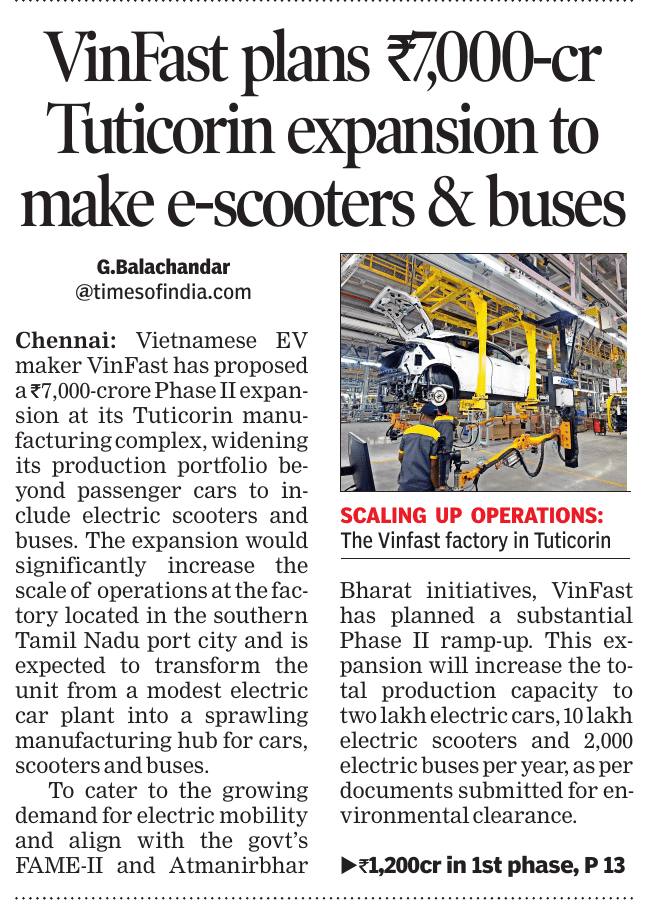
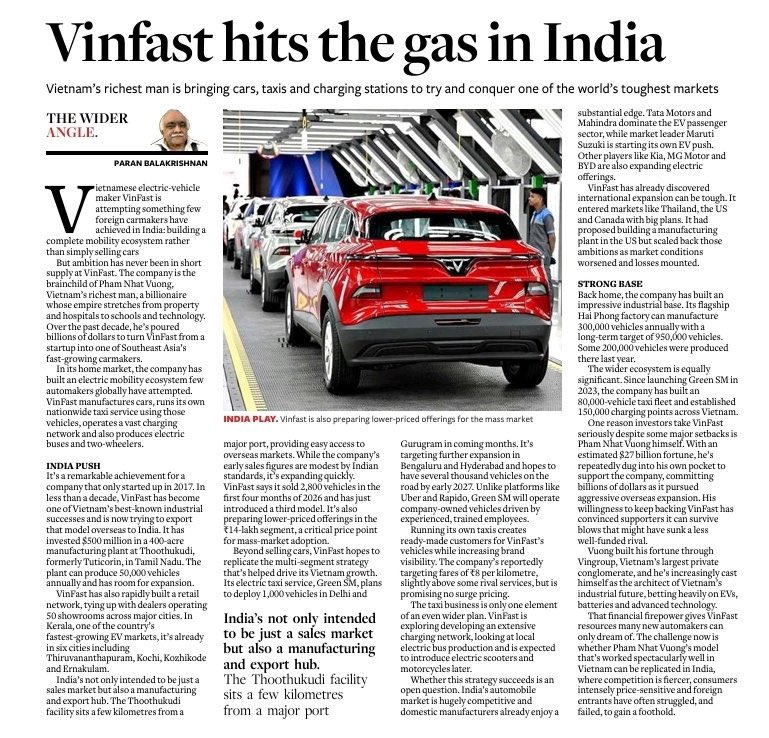
India has become an important part of VinFast’s long-term EV strategy.
Tamil Nadu is not just a manufacturing location — it is a foundation for local production, future ecosystem development, and deeper participation in one of the world’s most important mobility markets.
Exciting to see the journey continue.
$VFS #VinFast #India #InvestInTN #EV

From doubting the investment when the MoU was signed in 2024 to expanding big time in India, Vinfast has come a long way. They call TN their home in India. Hope to see more investments from them @VinFastIN ... #Vinfast #InvestInTN
5
38
291
16,534
The final decision that Sterlite cannot be allowed to operate due to repeated major environmental violations was made by the courts and not by the Government of Tamil Nadu.
The company appealed. The courts held that permanent closure is the only solution because the violations were that grave.
This simple fact is not known even among well informed people.
Narratives range from foreign funding to Chinese conspiracy. No one bothers to get into the details. The pain is self inflicted by the Vedanta Group.
26
54
409
30,468
I've replied to a follower's comment and am mentioning it as a separate post as well.
The narrative in the media has always been that Sterlite was very critical to the country and that politicians in Tamil Nadu ruined it.
It is always the most popular narrative, not facts, that wins.
In the past, I've provided detailed posts on what exactly happened regarding Sterlite, not quoting government sources but from detailed court verdicts.
There have been a lot of wrongdoings by Sterlite, and they were listed in detail by the court.
Both the Supreme Court and the Madras High Court have listed the major environmental violations by Sterlite.
Since it subsequently became a political issue, no further progress was possible.
Despite being one of the most industrialised states in the country, the state ensures that environmental concerns are not ignored.
7
8
113
9,871
In the past, I've provided detailed posts on what exactly happened regarding Sterlite, not quoting government sources but from detailed court verdicts.
There have been a lot of wrongdoings by Sterlite, and they were listed in detail by the court.
Both the Supreme Court and the Madras High Court have listed the major environmental violations by Sterlite.
Since it subsequently became a political issue, no further progress was possible.
Despite being one of the most industrialised states in the country, the state ensures that environmental concerns are not ignored.

People have also seen what TN politics does to Vedant’s copper Sterlite plant.
It’s a hit job for sure but by whom- one of the local political party.
2
2
48
6,766
Seeing accusations and counter accusations regarding why India missed the AI bus. As a nation, our growth depends upon our priorities. The government usually prioritises what society prioritises.
We need to decide where to focus and what is important for the future of coming generations.
16
8
120
10,649
More and more breaking news is becoming mere sensationalism, aimed solely at catching eyeballs without providing any authentic information. It is a race to the bottom. Credible and authentic sources will become increasingly valuable.
The Tatas are major investors in Tamil Nadu. Regardless of which party is in power, no government would demand the closure of Tata Electronics, which employs around 80,000 people in just one location.
Even if there has been any violation of pollution norms, the Tatas would only have been asked to take corrective action.
This is plain common sense for anyone who knows about the industrial ecosystem in Tamil Nadu.
4
16
213
24,013
I saw a Reuters report mentioning that Tata Electronics is being threatened with closure. Anything for eyeballs and sensationalism. There is no such threat. It’s very difficult to know who has what agenda. Tough life.
Over the last six months, the Tamil Nadu Pollution Control Board has carried out five inspections.
Key observations:
The inspections found that Tata discharged wastewater into a rainwater harvesting pond inside its facility, and that the pond overflowed, contaminating groundwater in the open wells located on adjacent agricultural lands.
Tata Electronics told Reuters in a statement that it had commissioned an independent analysis through an accredited laboratory. The study determined that the company is "in full compliance with all regulatory norms."
That’s where it stands.
There has been no official communication from either the Government of Tamil Nadu or the Tata Group.
14
28
243
22,496
Muthukrishnan Dhandapani retweeted

23h
This is a thoughtful perspective. While the internet rarely forgets, people do evolve. What truly matters is not whether every opinion ages perfectly, but whether we remain open to learning, changing our views and treating others with respect.
Ultimately, the tone of our communication often speaks volumes about us more than the content itself.
1
6
2,988