
Space weather only #AuDHD markorummelsburg.bsky.social…
Joined February 2011
- Tweets 1,368
- Following 292
- Followers 1,670
- Likes 633
790 Photos and videos


Jun 13
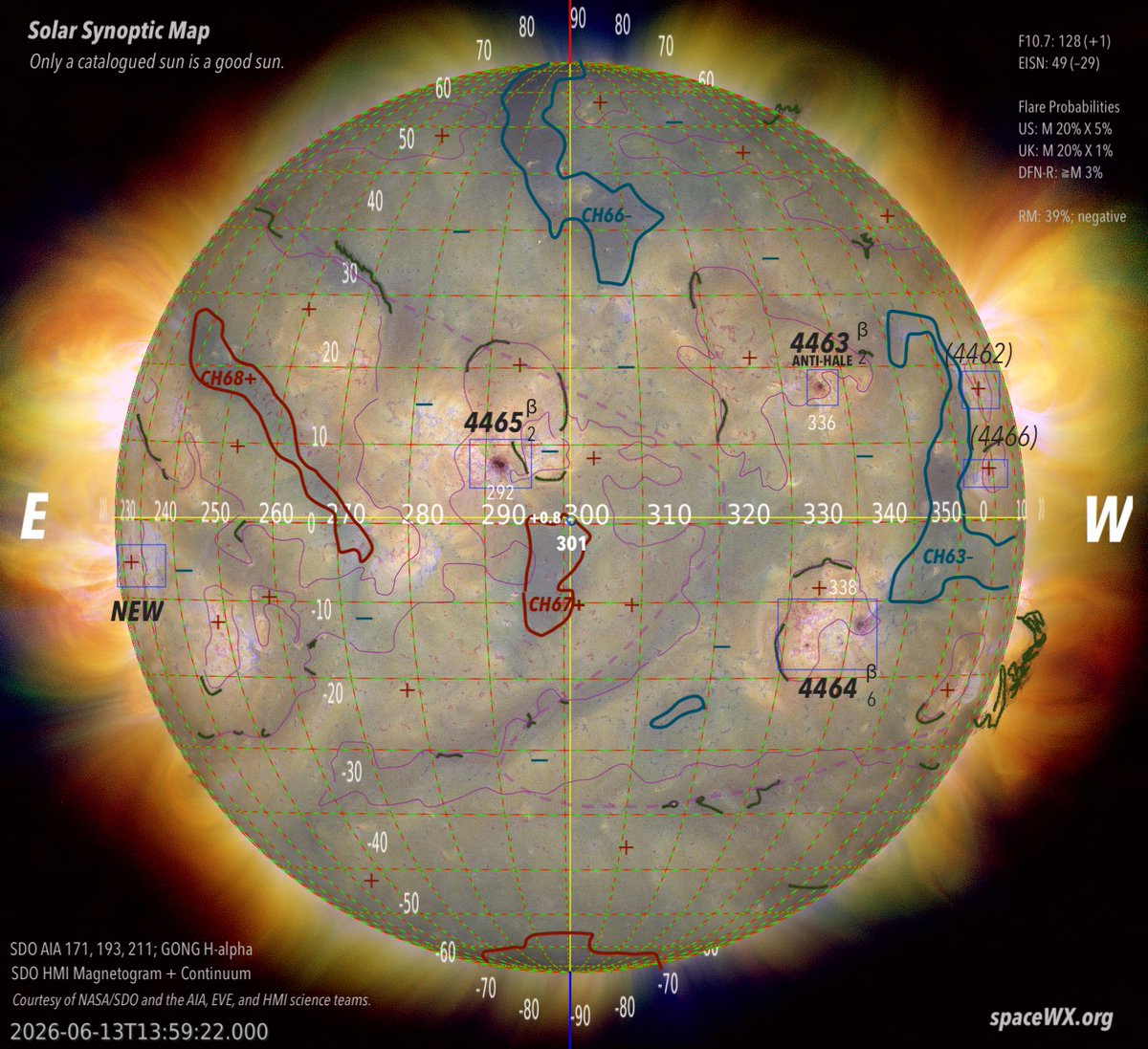
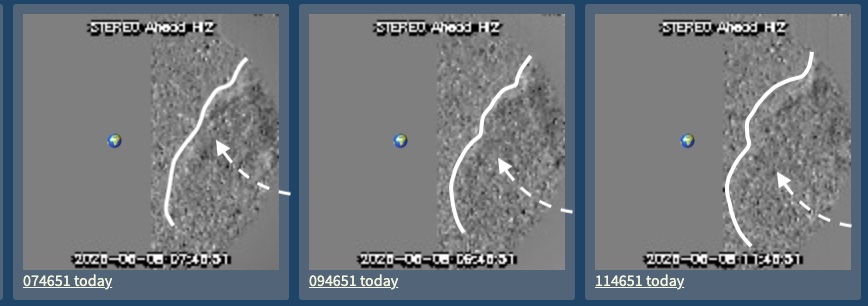
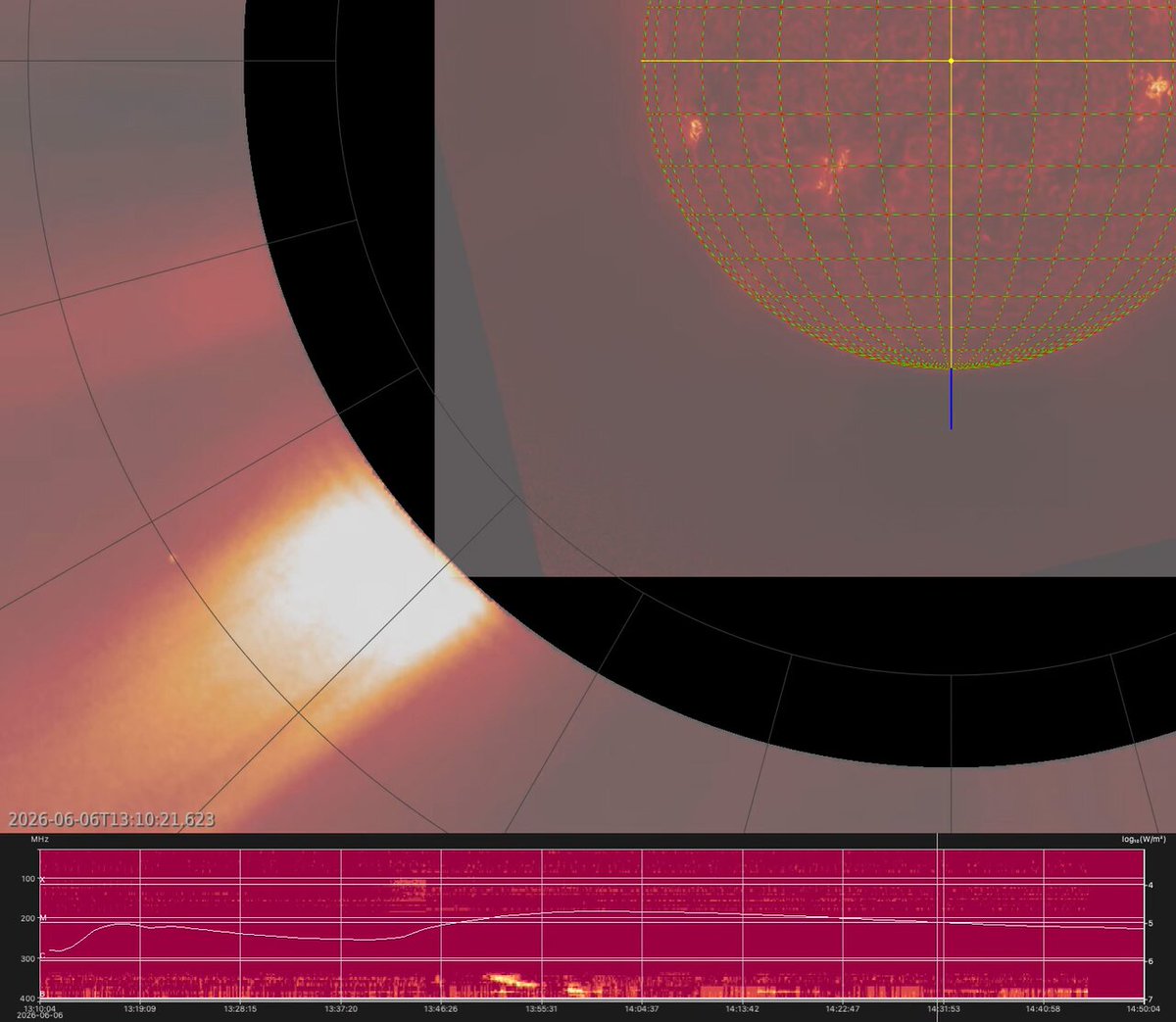
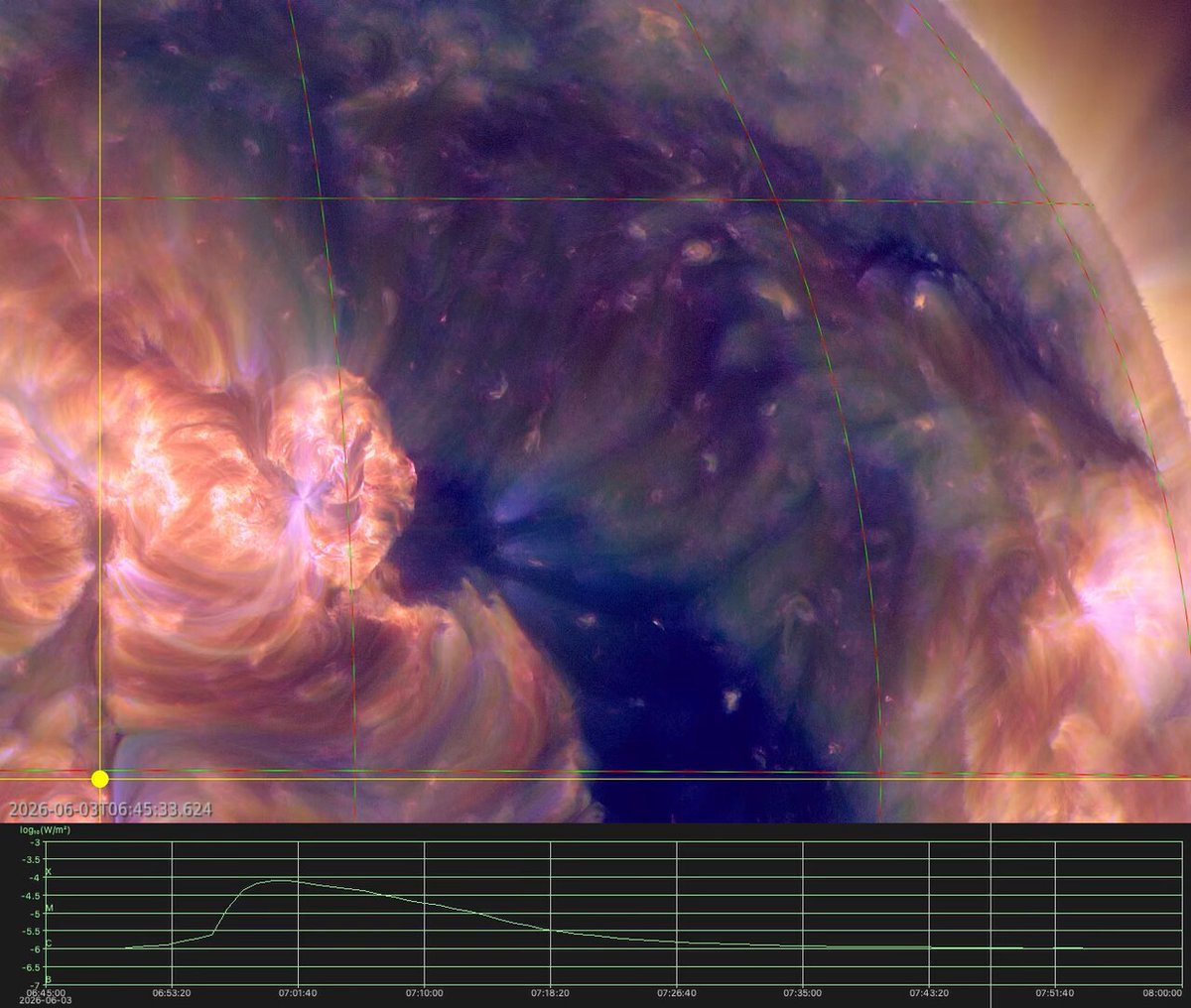
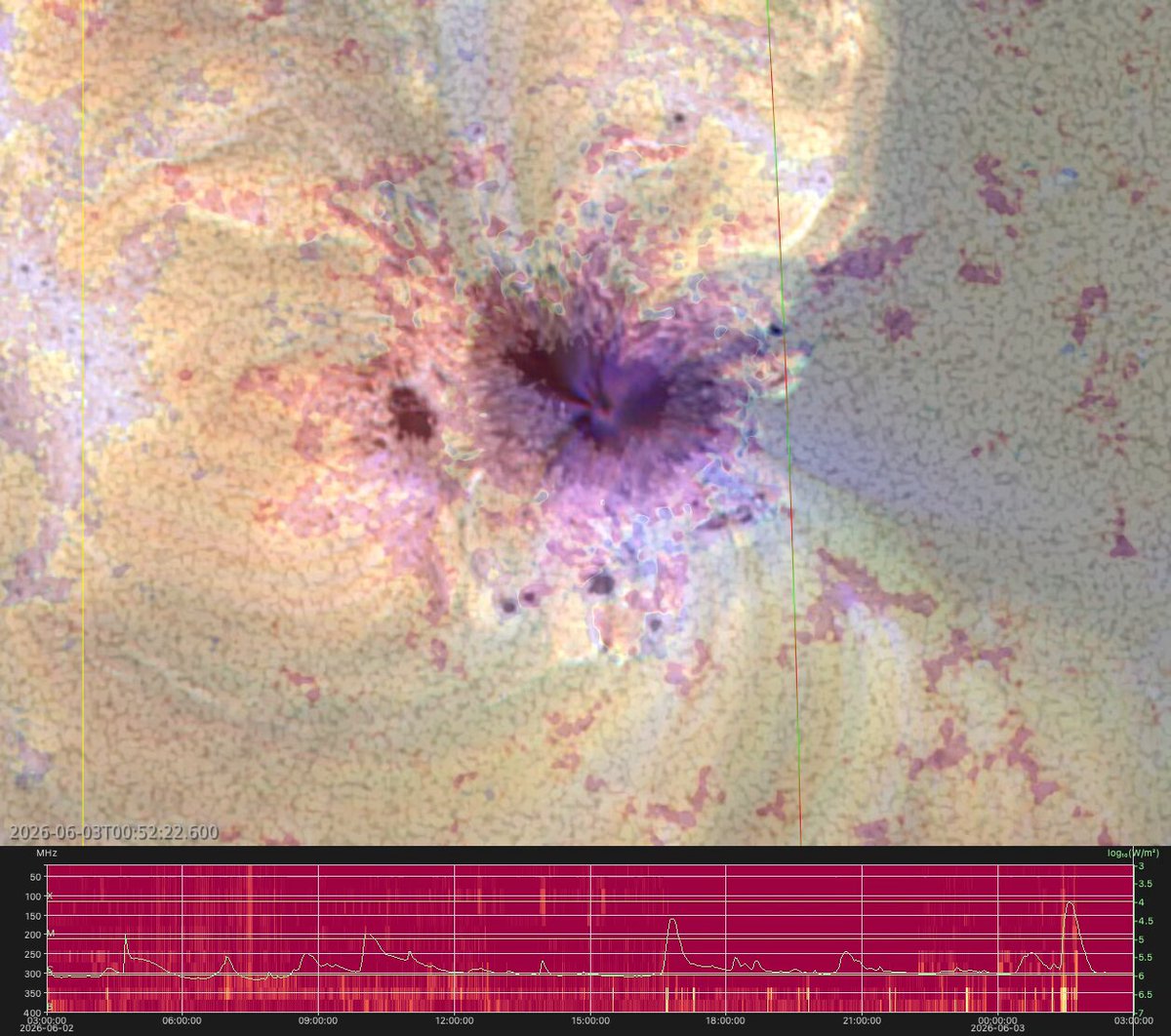
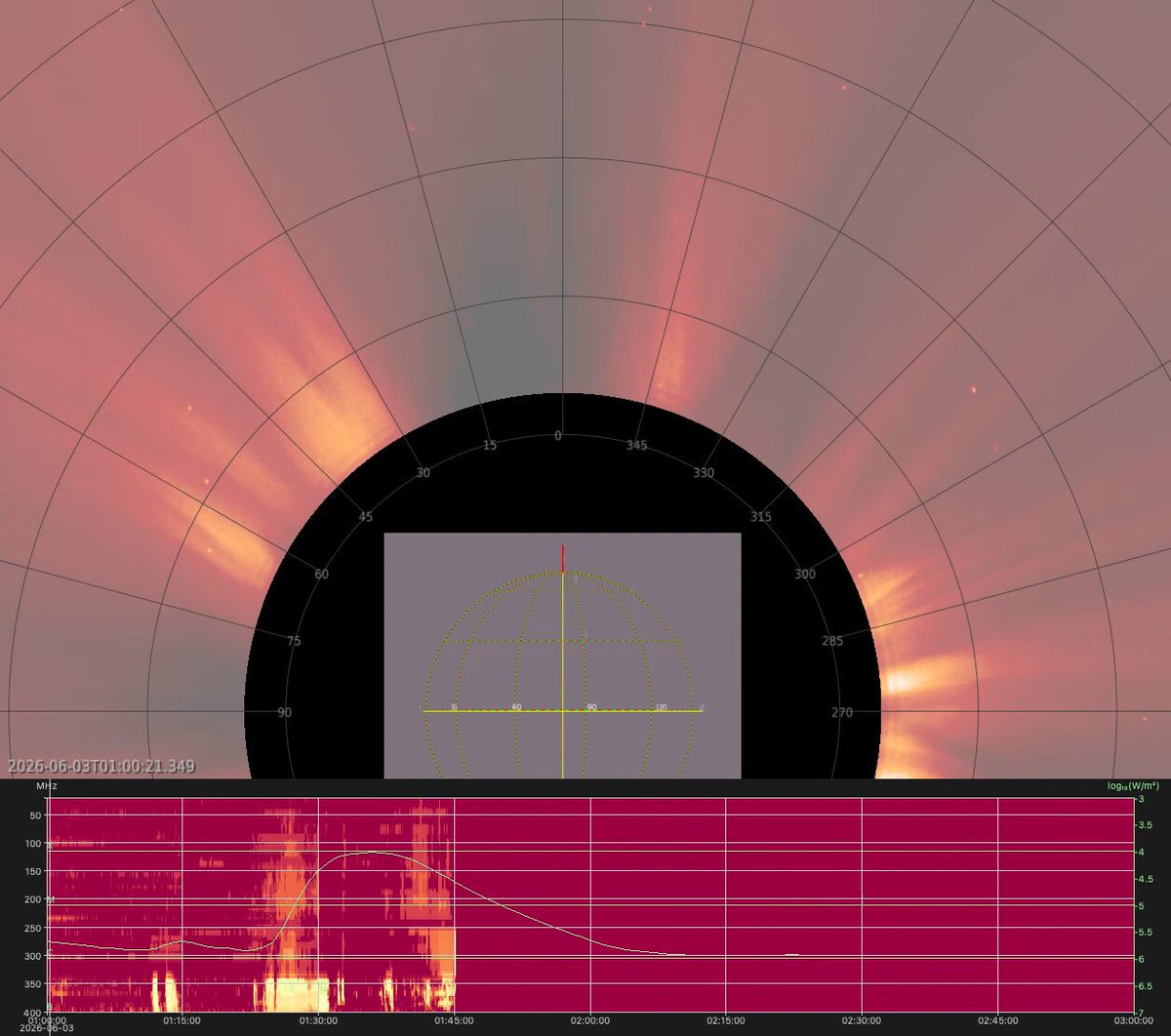
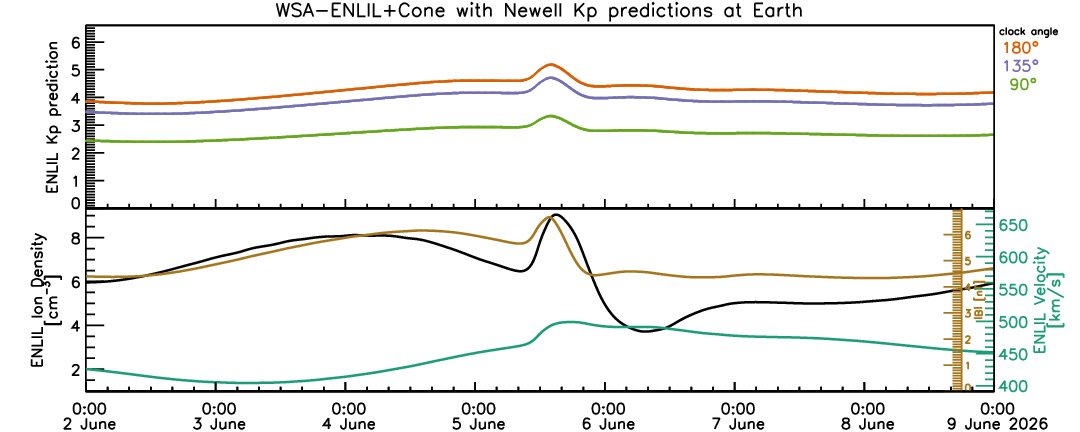
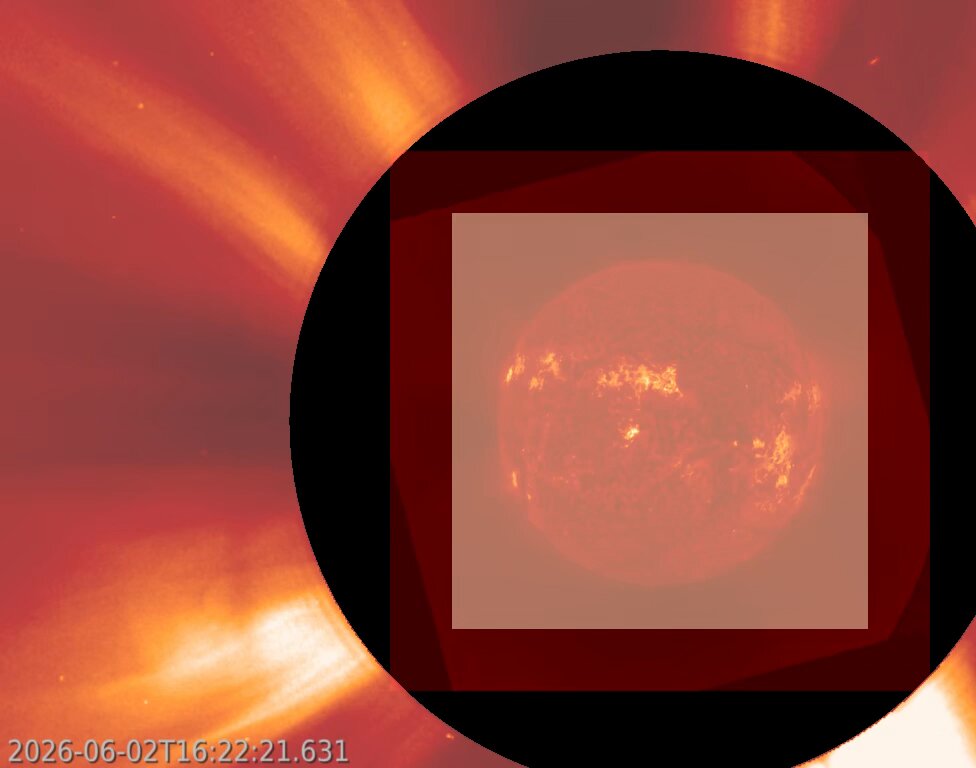
The sun has calmed down with low sunspot number and low probability of stronger flares. Eruptive events are mainly filament lift-offs at the moment. The regions that are approaching the east limb appear to be in decay as well.
14
51
1,938
Jun 12
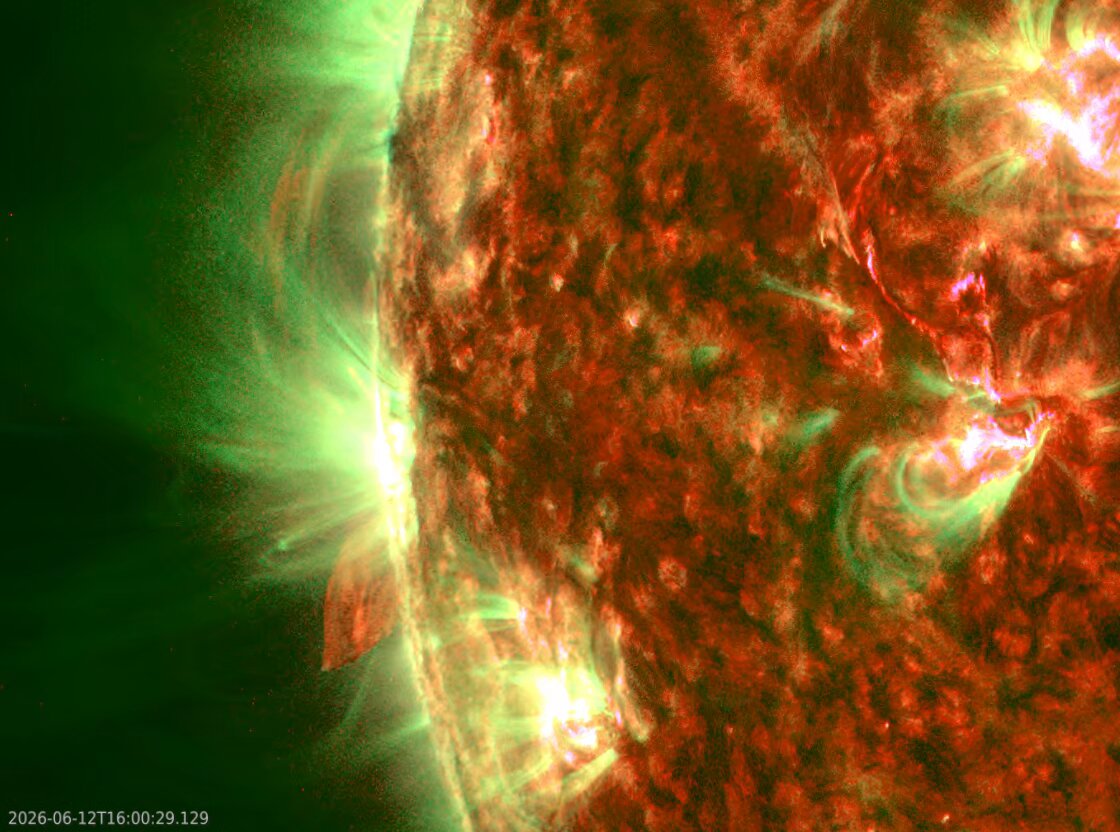
Two filament eruptions. The first produced a CME that could graze earth. The second one near the east limb shows gorgeous 'supra arcade downflows' a.k.a. SADpoles (image credits SDO AIA)
4
28
113
3,035
Jun 11
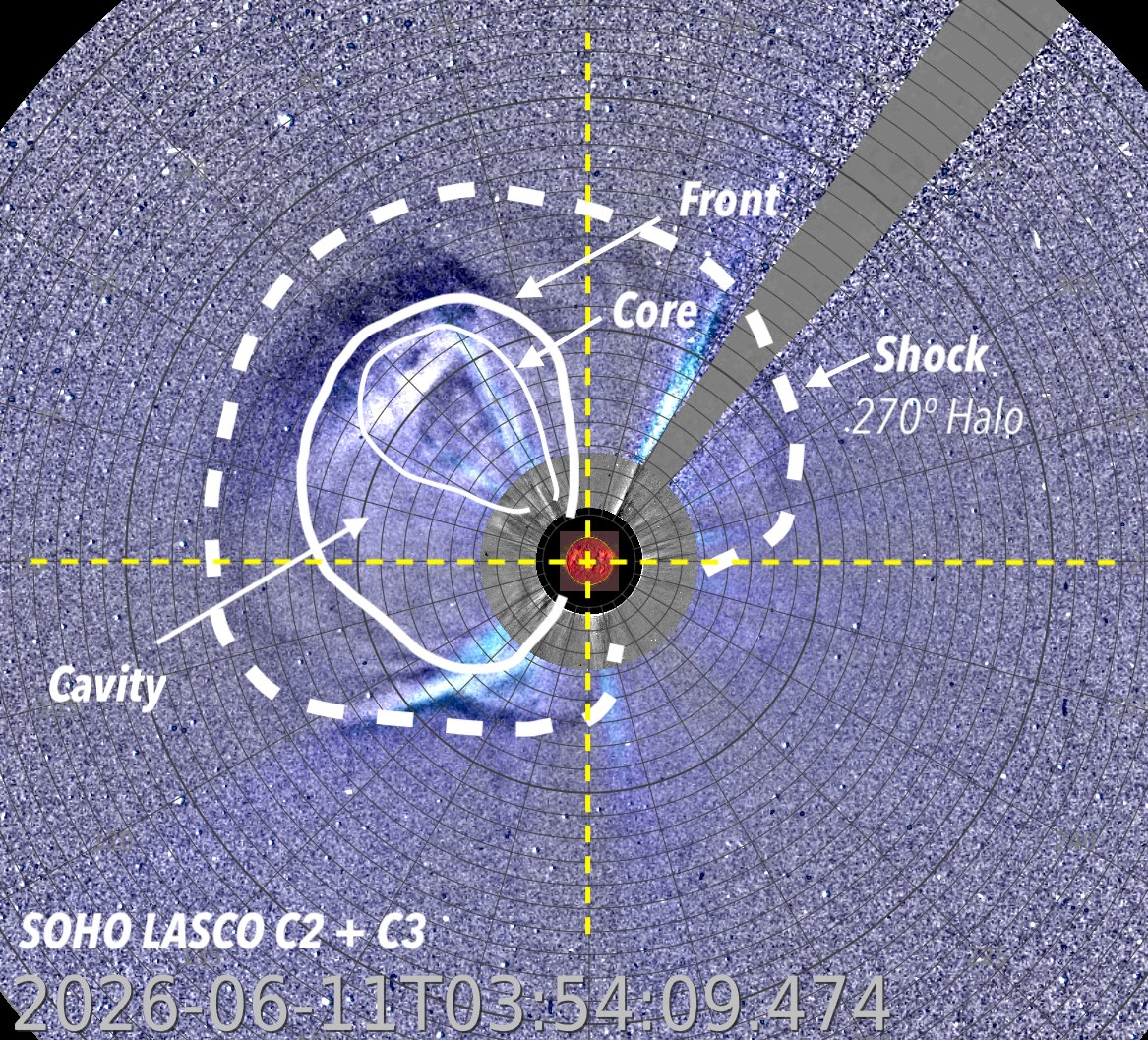
CME after long duration C-Class solar flare from region 4465 towards NE with classic 3-part structure, halo, ≈800 km/s, Type II and IV radio bursts, no energetic particles, could graze earth on Saturday, 2026-06-13. The core will probably miss us.
13
52
986
The CME is still 0.2-0.3 AU away – it will likely be a glancing blow rather than a flank hit (the later the arrival the weaker the impact)

Long duration M1.86 solar flare with large filament eruption heading southeast↙︎. The solar storm (CME) could graze earth in 2-3 days. A microwave radio burst and a type II radio sweep were detected, estimated velocity 838 km/s. Possible release of energetic particles.
4
14
80
8,834
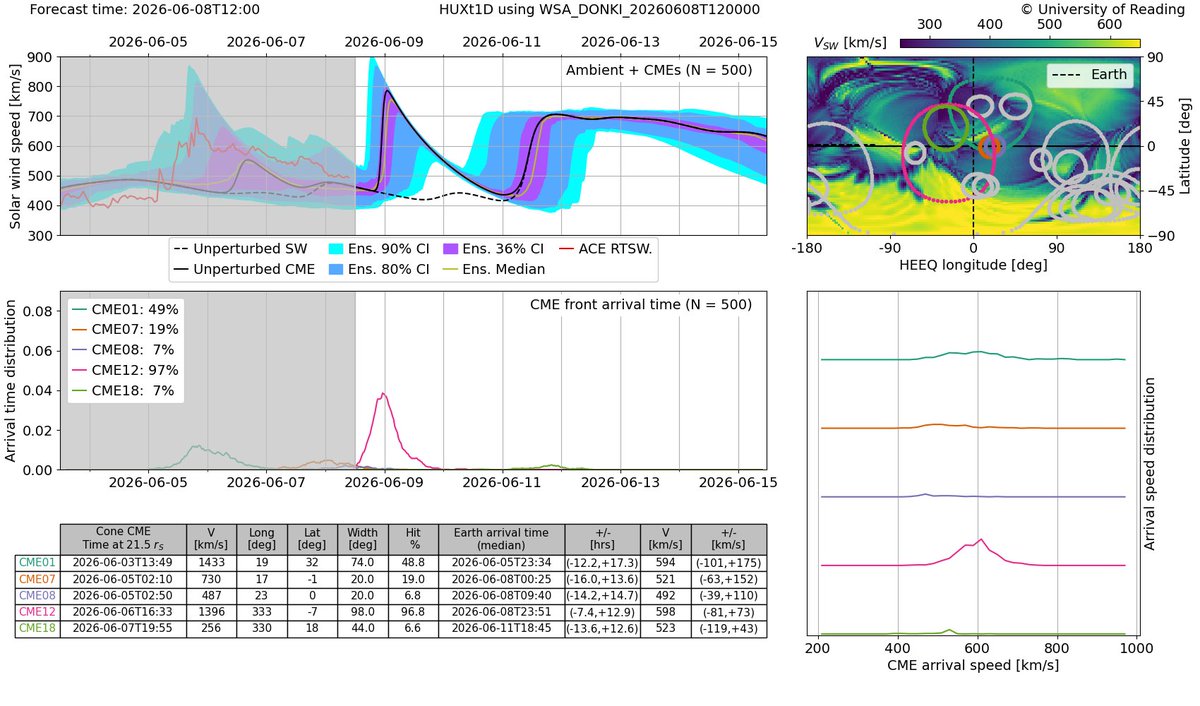
An arrival late on 06-08, early on 06-09 fits with HUXt – it could still be a fairly strong impact
2
9
313
Filament eruption and M1.8 solar flare: CME with earth–directed components - mid-latitude aurora not ruled out – analysis, images, videos, model runs
spacewx.org/cme-after-m1-8-f…
1
12
504
Long duration M1.86 solar flare with large filament eruption heading southeast↙︎. The solar storm (CME) could graze earth in 2-3 days. A microwave radio burst and a type II radio sweep were detected, estimated velocity 838 km/s. Possible release of energetic particles.
2
21
69
5,669
Some words, images and videos on the current events (earth-directed CMEs) spacewx.org/strong-flares-an…
1
2
16
458
Strong M7.6 solar flare erupted with a massive amount of plasma. The associated coronal mass ejection is deflected away from earth but very likely has earth-directed components.
1
33
107
2,330
24 hours of magnetic flux emergence around active region 4455. Spots of opposite polarity are developing west⇢ of the main spot right into the adjacent coronal hole. As we would expect negative spots east⇠ of the large positive spot this region is called 'Anti-Hale'.
Strong M9.3 solar flare (R2 radio blackout) with strong microwave radio burst type IV radio emission indicative of a decent CME (solar storm). A halo to the north is visible in coronagraphs, a front to southwest as well. We likely have a narrow but fast (≈ 1000 km/s) earth-directed CME here.
1
11
40
1,033
Strong M9.3 solar flare (R2 radio blackout) with strong microwave radio burst type IV radio emission indicative of a decent CME (solar storm). A halo to the north is visible in coronagraphs, a front to southwest as well. We likely have a narrow but fast (≈ 1000 km/s) earth-directed CME here.
2
25
66
2,446
M3.3 flare from region 4455 near the centre of the solar disc with dimming and a coronal wave moving towards southeast↙︎, however, no clear evidence for a CME ('solar storm') in coronagraphs so far – simultaneously a large filament eruption behind the E limb with large CME
2
10
53
1,067
NASA M2M has modelled an earth-directed CME with just STEREO A COR2 analysis source location and simulates a relatively weak impact on 5 June
1
9
279
May 29
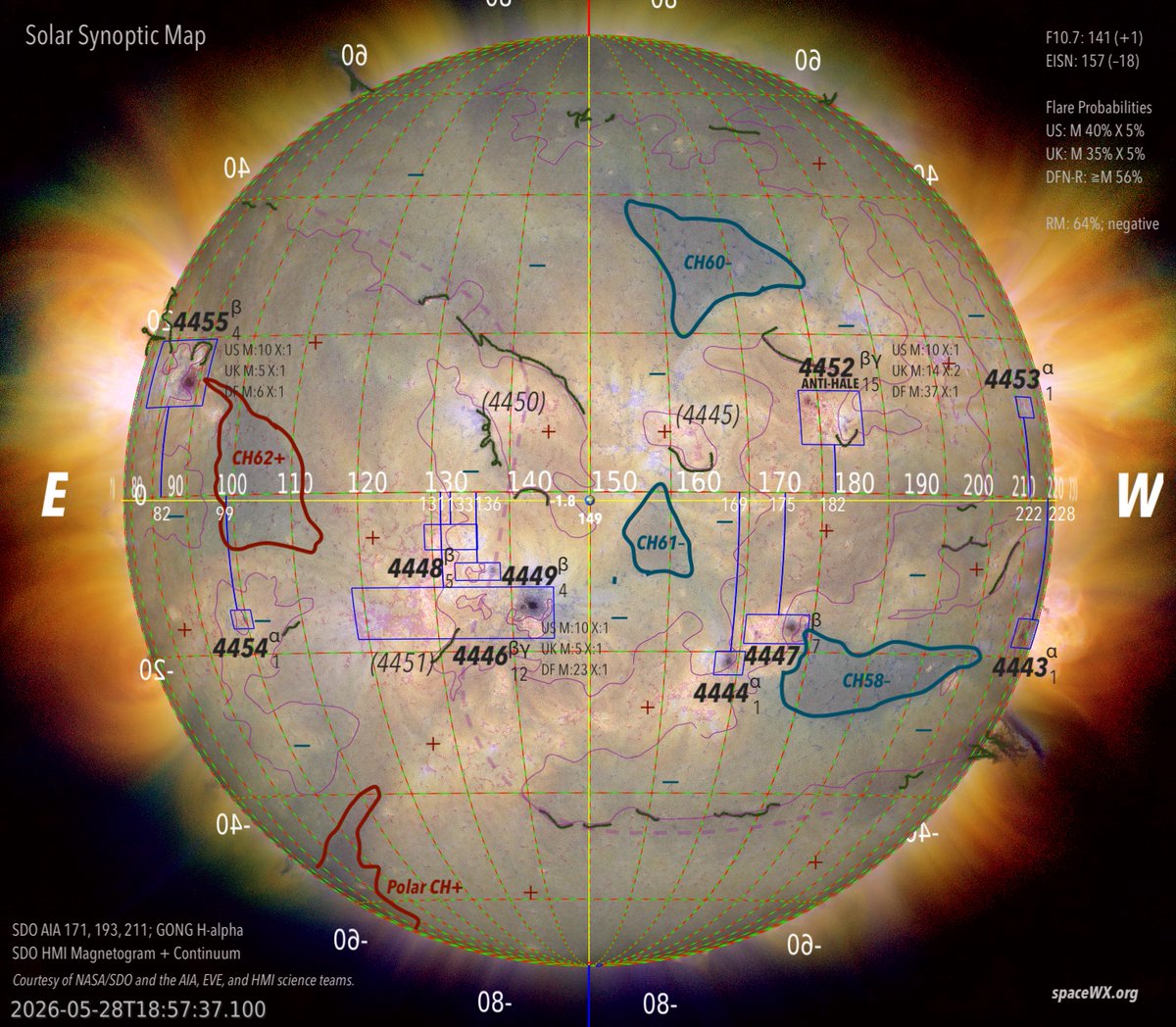
Solar Synoptic Map
- moderate chance for isolated M-class flares from 4452 (anti-hale), 4446 and maybe 4455
- moderate chance for smaller CMEs ('solar storms')
- connection with negative polarity coronal holes persists, elevated solar wind speeds, ACTIVE to G1 MINOR geomagnetic storm levels possible
23
47
1,140
May 27
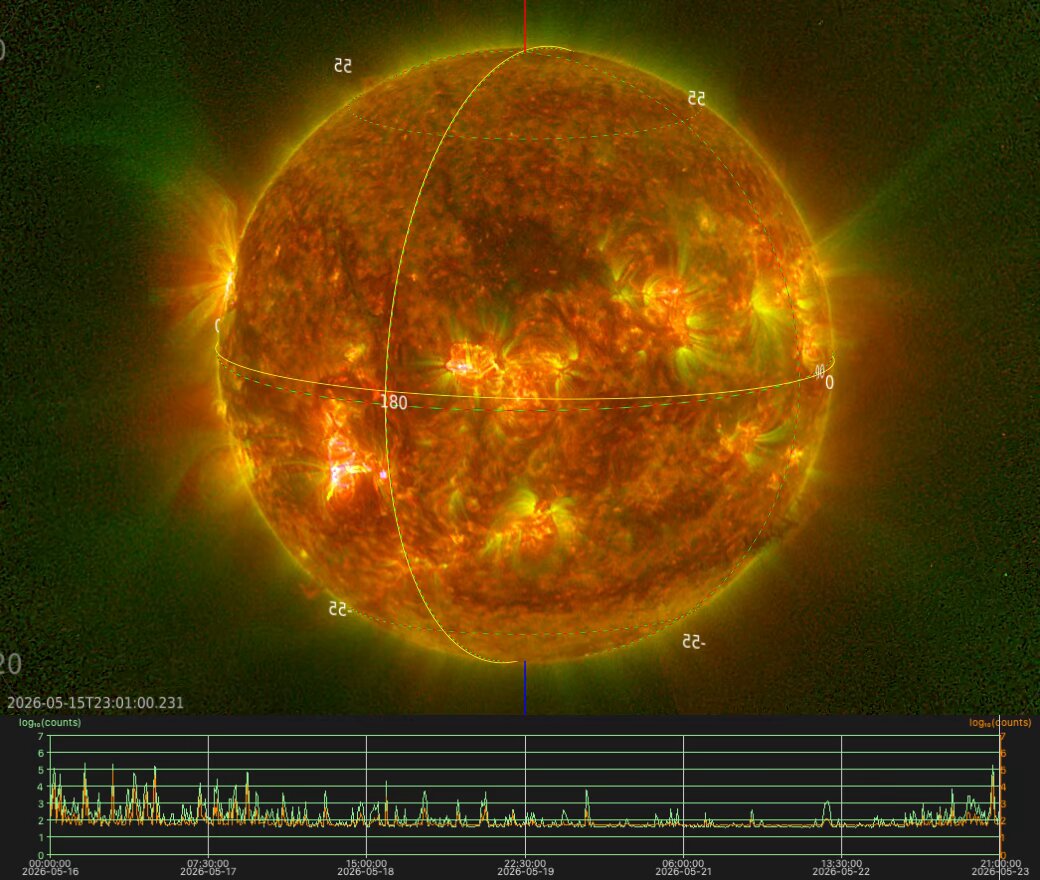
Sun's far side seen from Solar Orbiter with EUI FSI 171 304 Ångström instruments STIX solar flare plot
2026-05-16; 0000z - 2026-05-23; 2100z
35
100
5,783
May 25
Fast and wide CME ('solar storm') - from the sun's far side. >= 100 MeV energetic protons were released (radiation storm). Type II and likely type IV radio emissions detected.
credits: SDO AIA 171, 193, 211; COSMO KCor; SOHO LASCO C2; JHelioviewer
1
23
78
3,830
May 25
Active sunspot regions in the southern hemisphere of the sun.
3
25
85
2,190
May 23
Large and fast CME from the sun's far side with Type II radio emissions and a coronal wave spreading to the earth-facing disc. The source is likely a large region behind the NE limb ↖︎. The CME ('solar storm') is showing a strong northward deflection.
(SDO AIA 171,193,211; MLSO KCOR; eCallisto)
27
93
3,911
May 23
Large sunspot region approaching the visible solar disc
May 23
Large coronal loops coronal rain associated with one (or more) large active region behind the eastern limb of the sun that is approaching the visible disc. It has produced major solar flares on the far side but no significant CME (solar storm) and shows signs of decay now.
2
28
73
2,836