
A secure dotenv–from the creator of `dotenv`. @motdotla
Joined March 2022
- Tweets 2,943
- Following 13
- Followers 932
- Likes 1,025
553 Photos and videos

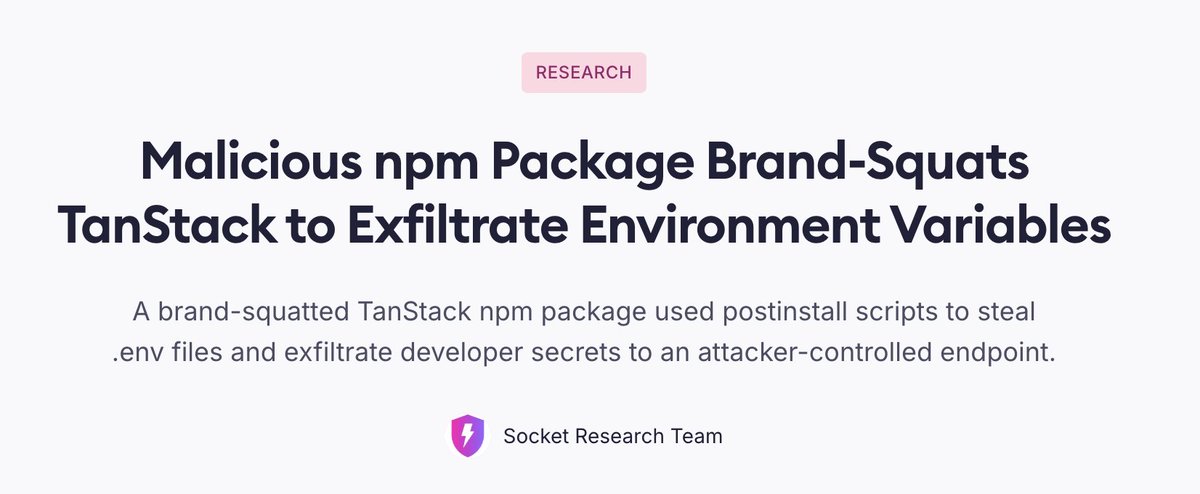
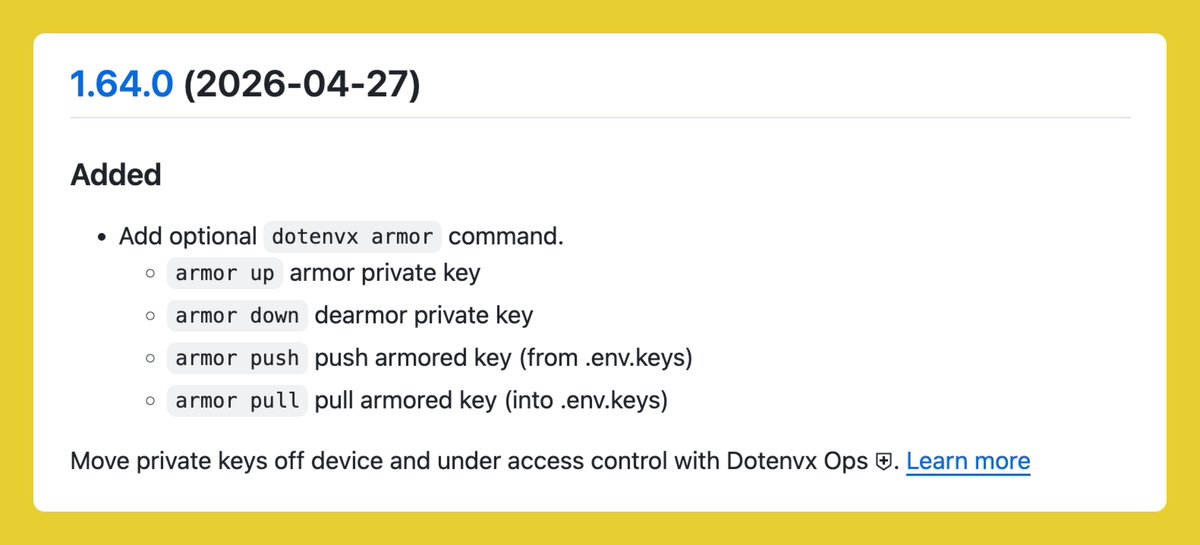
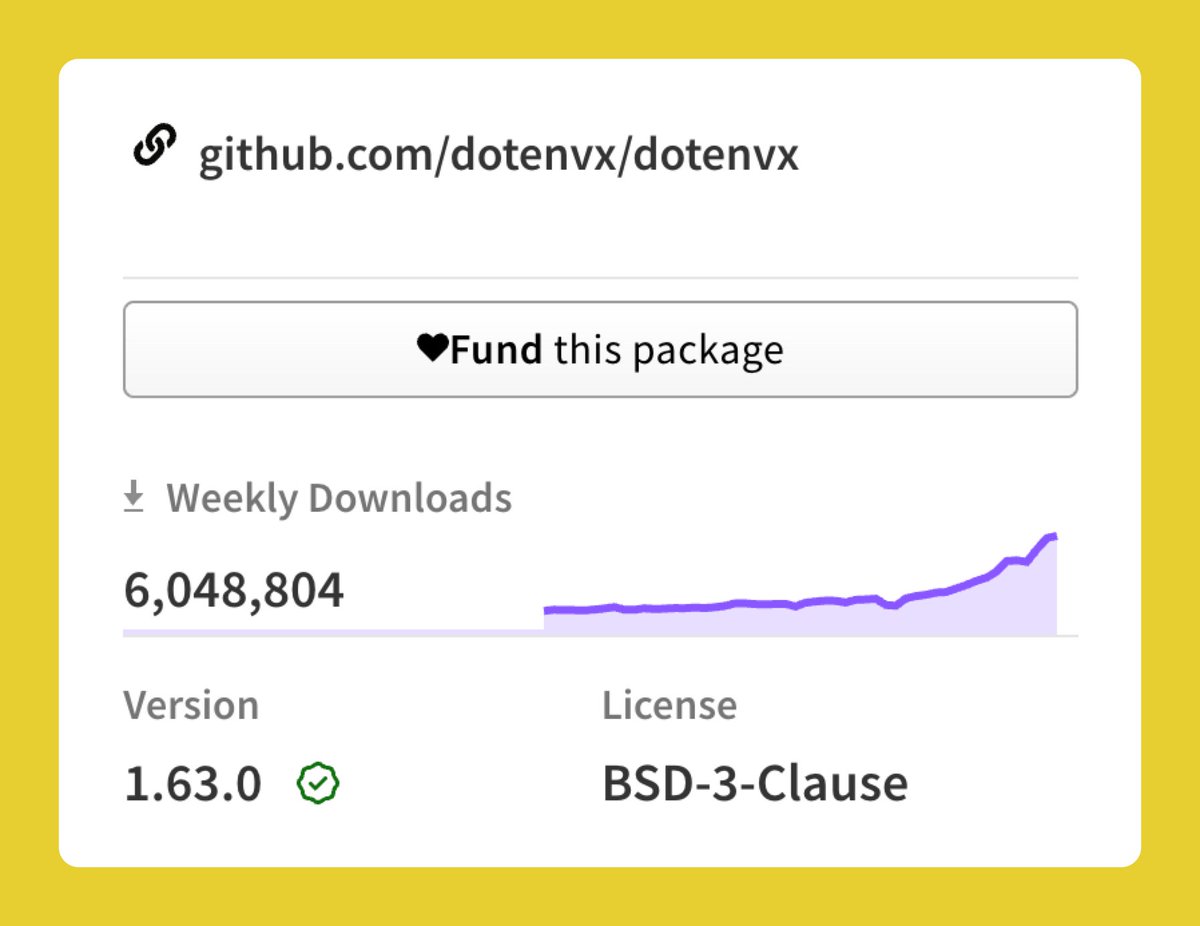
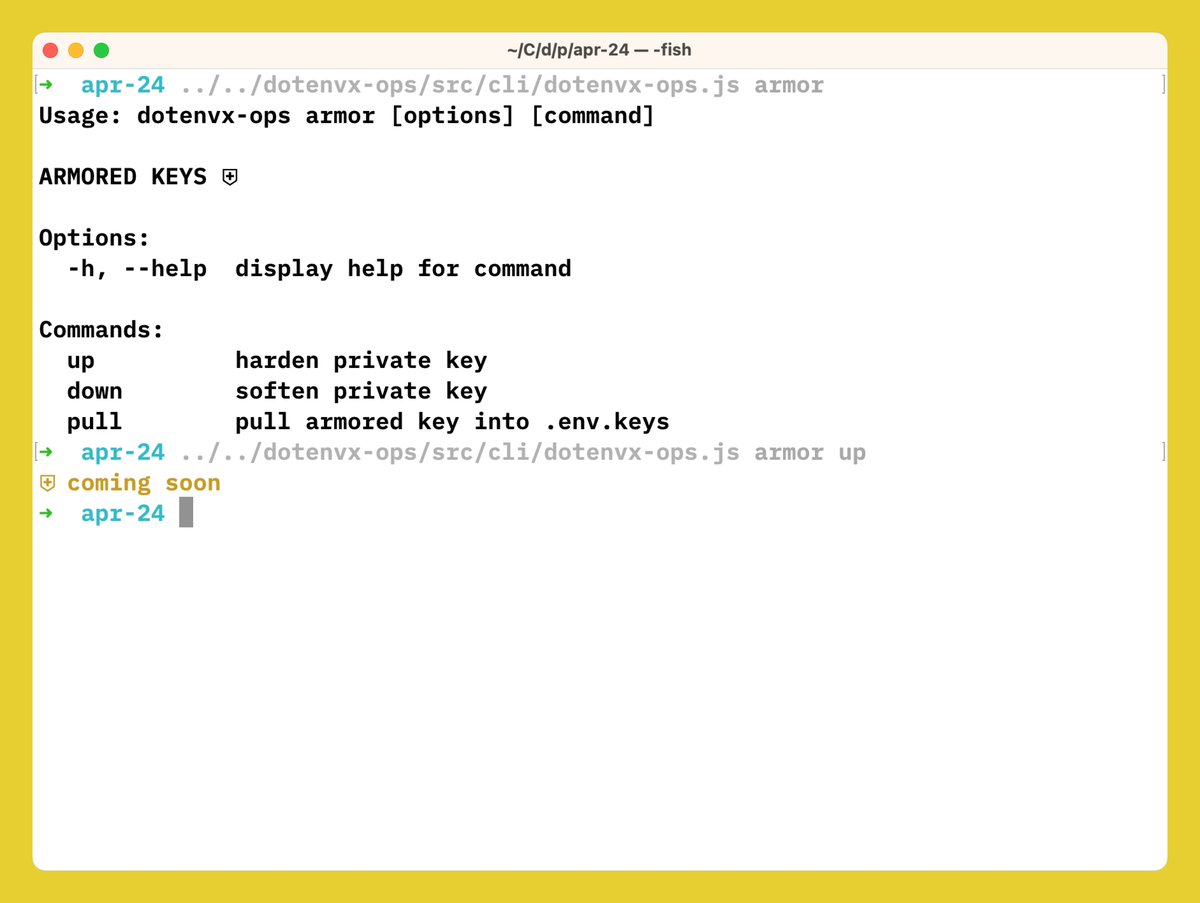
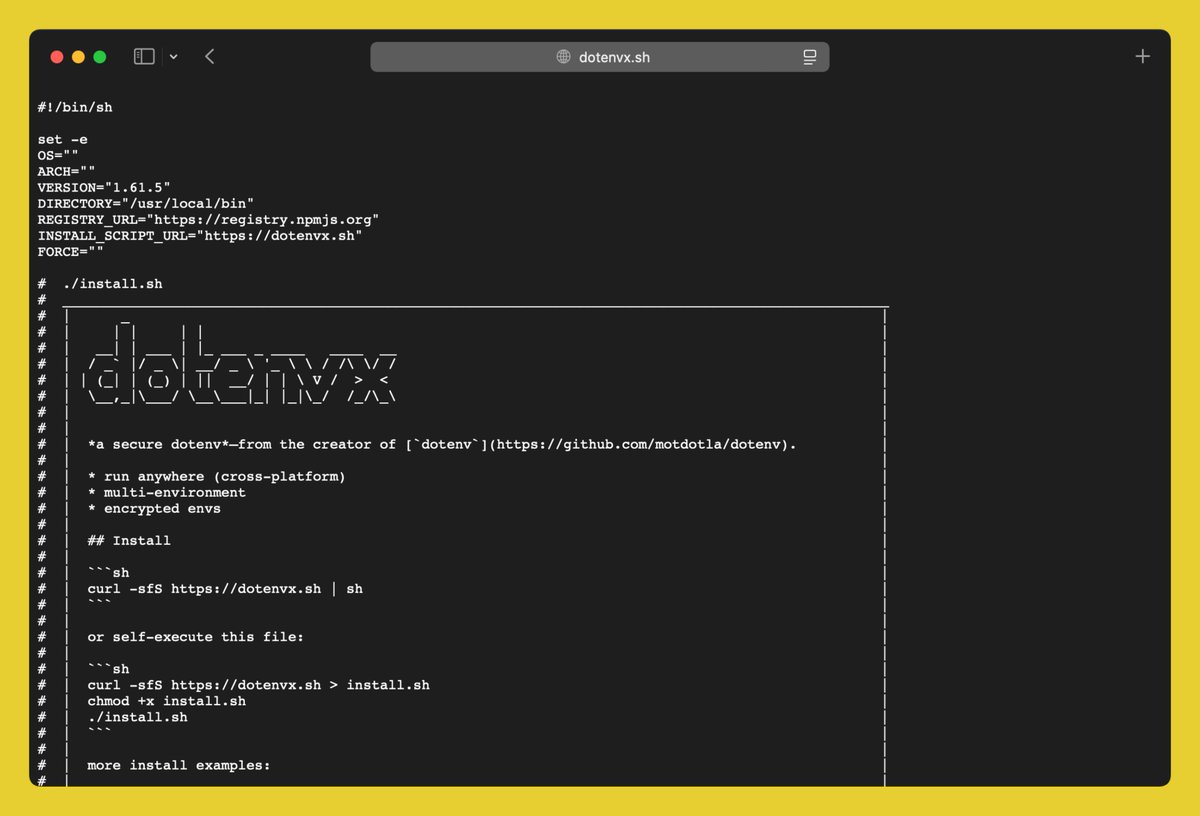
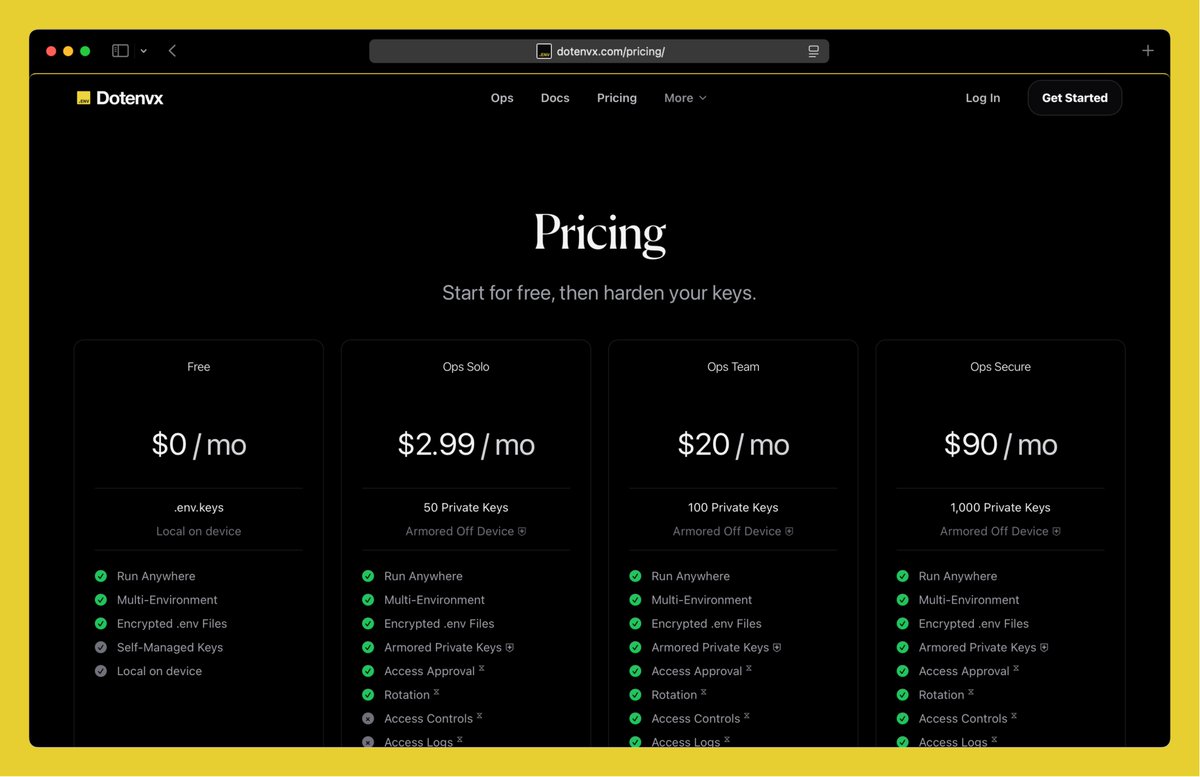
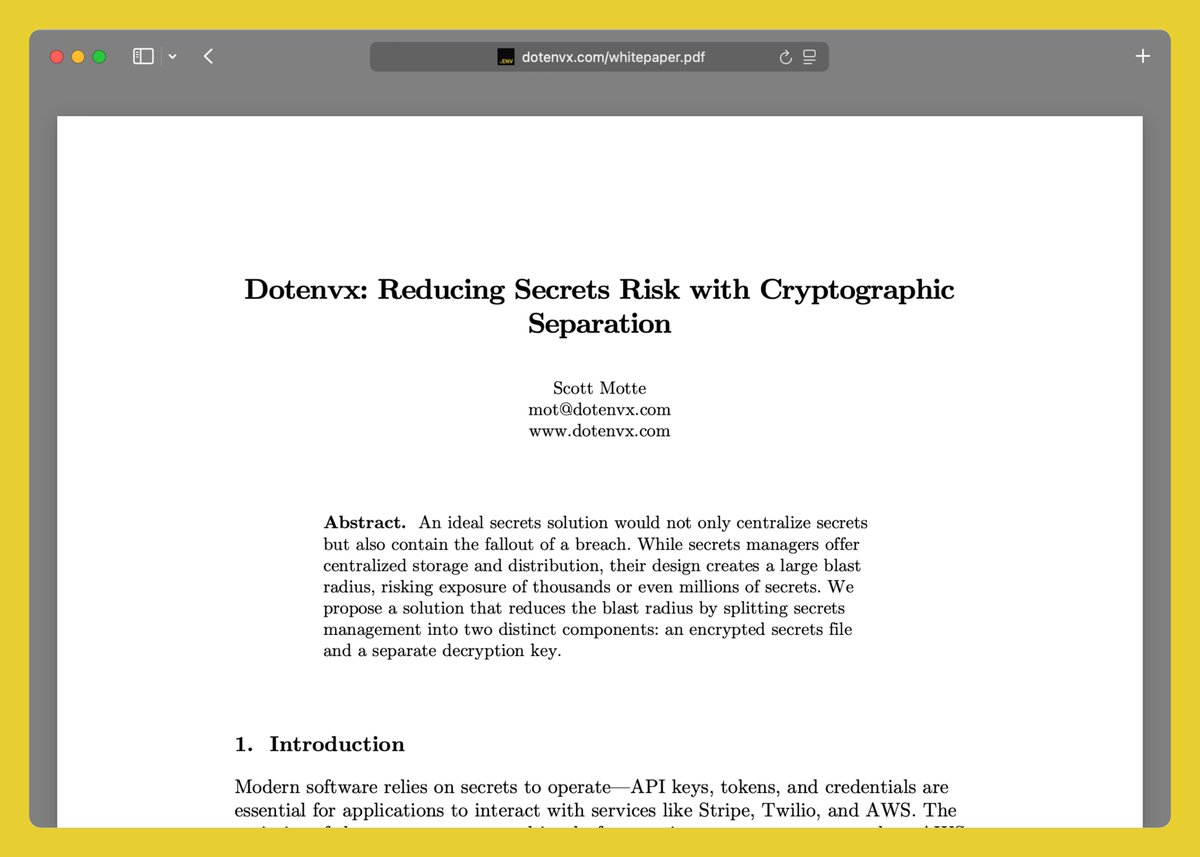

ARMORED KEYS ⛨ adding more armor.
Jun 11

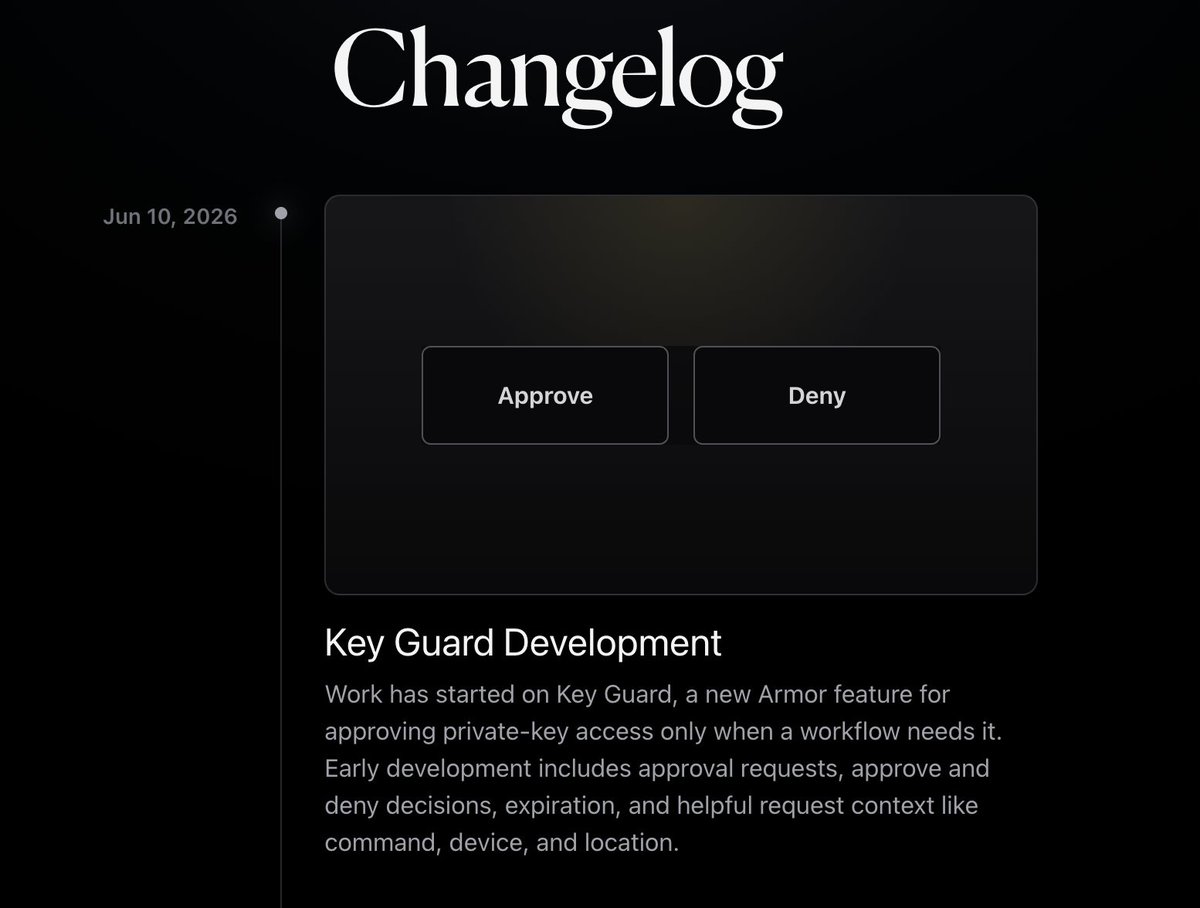
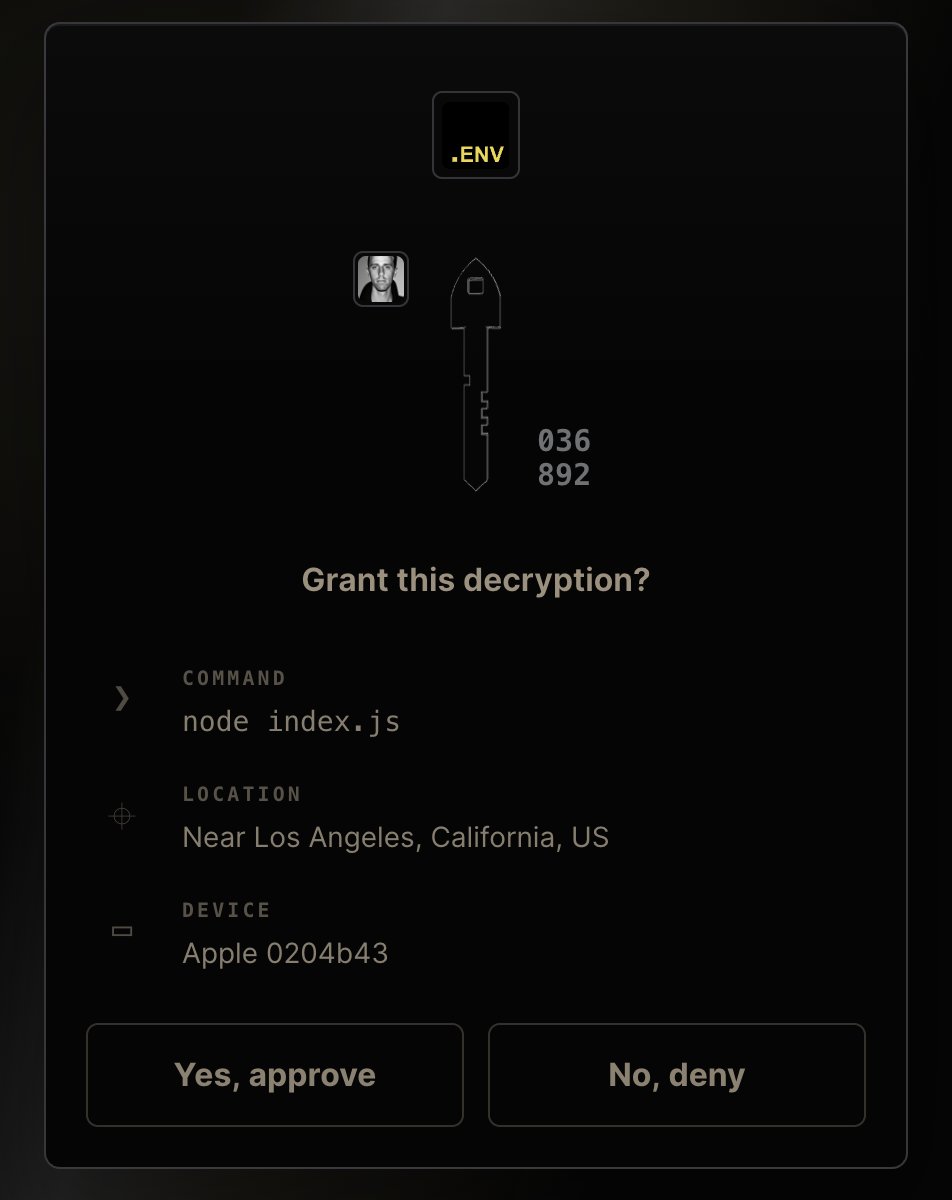
Ok, all the metadata is now surfaced. Basic functionality is complete and now we'll polish, document, and market.
70
Dotenvx retweeted

Jun 9
dotenvx は良い。ローカルでよくある.env.example を.envにリネームして中を埋める、という運用が必要なくなる。とても良い。
1
3
58
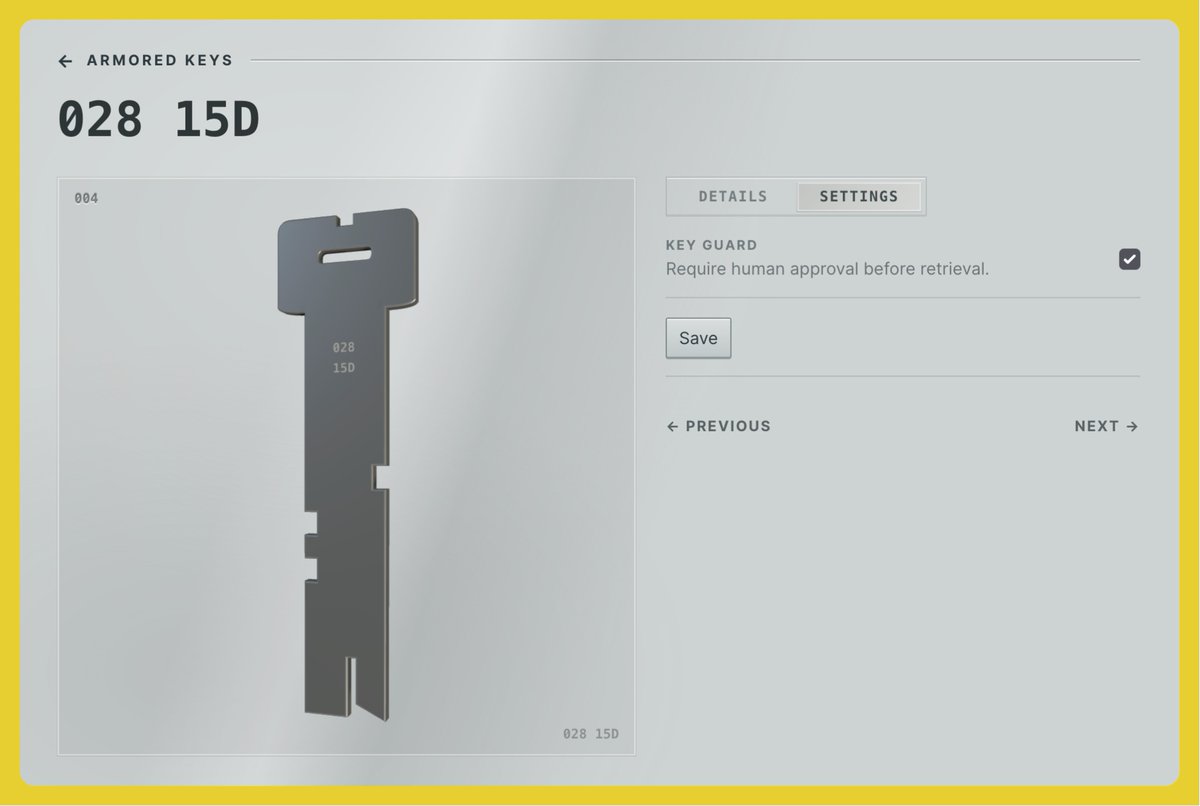
Key Guard ⛨
Jun 9
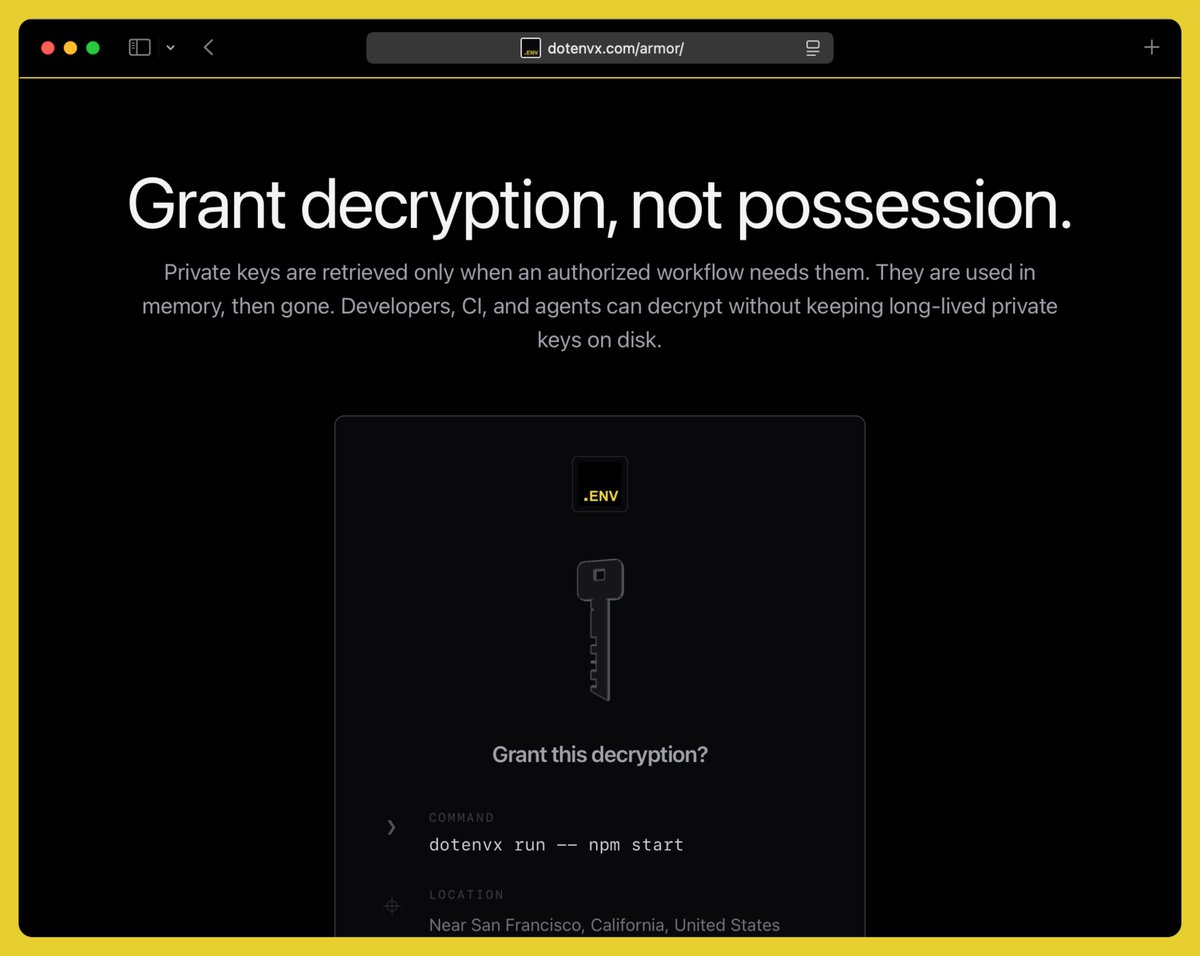
The human-in-the-loop retrieval flow is coming along for Dotenvx Armored Keys ⛨
53
Encrypt your .env files.
Jun 4

I lost $3,000 in crypto to a phishing attack last week.
A friend's hacked account DM'd me a Zoom link. I clicked. Downloaded. Ran it. The "installer" was malware. Within minutes my hot wallet was drained.
But here's what was strange: not all of my wallets were touched. Several EOAs were untouched.
When I dug in, the difference was simple:
The wallets that survived had their private keys in macOS Keychain — locked behind OS authentication.
The wallet that got drained had its private key in a .env file. Plaintext. In a project directory.
The malware scanned my disk for SECRET/KEY patterns and grabbed everything in seconds.
This is the difference between "secure" and "convenient." And we all do it. PRIVATE_KEY=, DATABASE_URL=, STRIPE_KEY= sitting in plaintext .env files because .gitignore covers us. Until it doesn't.
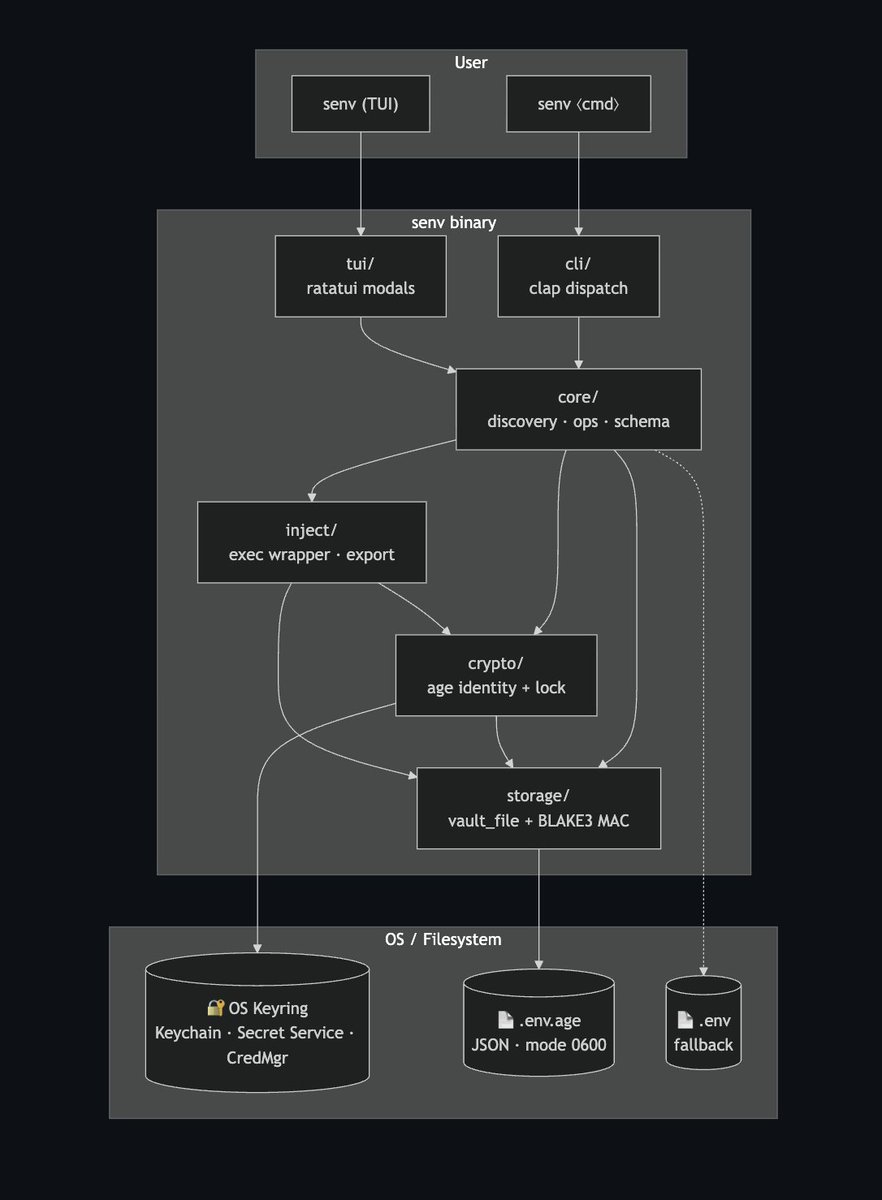
So I built senv — an encrypted .env replacement, written in Rust.
• Same workflow: `senv -- cargo run`, `senv -- npm dev`
• Private key in OS Keychain (TouchID-locked on macOS)
• Vault encrypted with age (X25519 ChaCha20-Poly1305)
• Single 2.5MB binary, no runtime
• Full TUI for editing multi-recipient team sharing
• Open source, MIT/Apache-2.0
The model is dead simple:
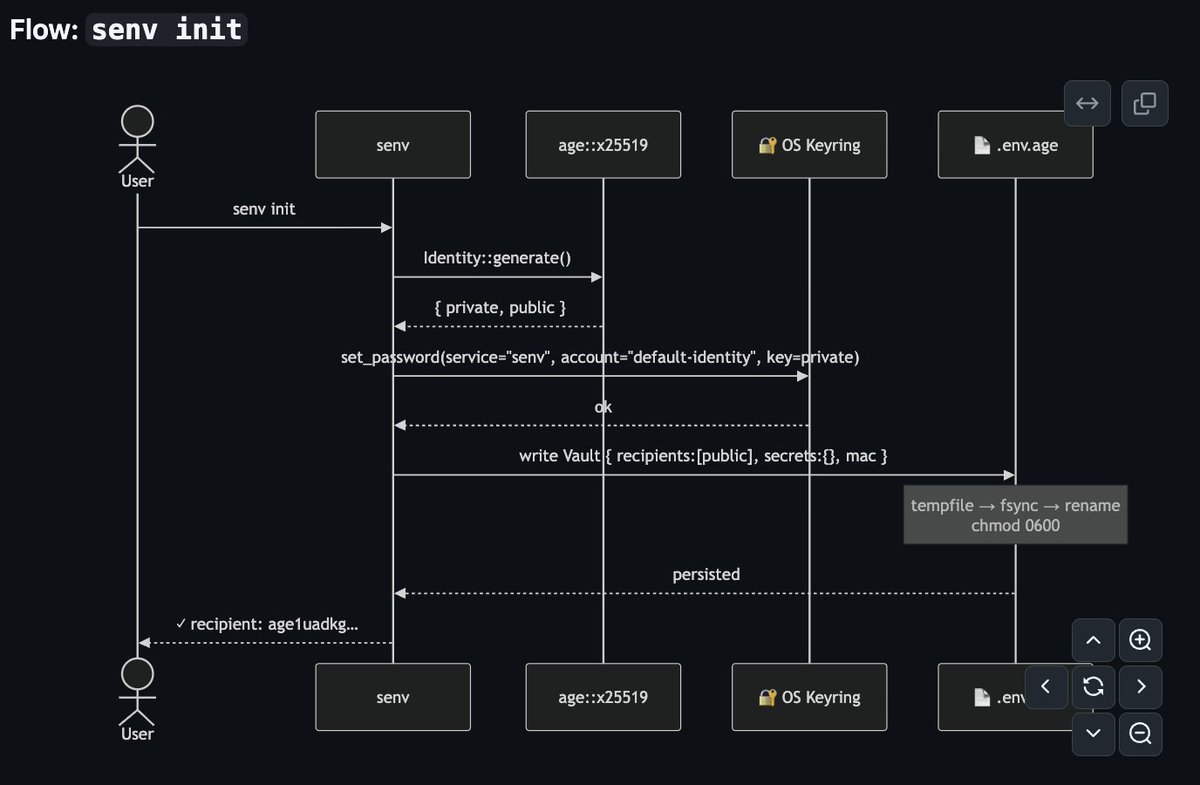
`senv init` → mint an age keypair, private → Keychain, public → .env.age
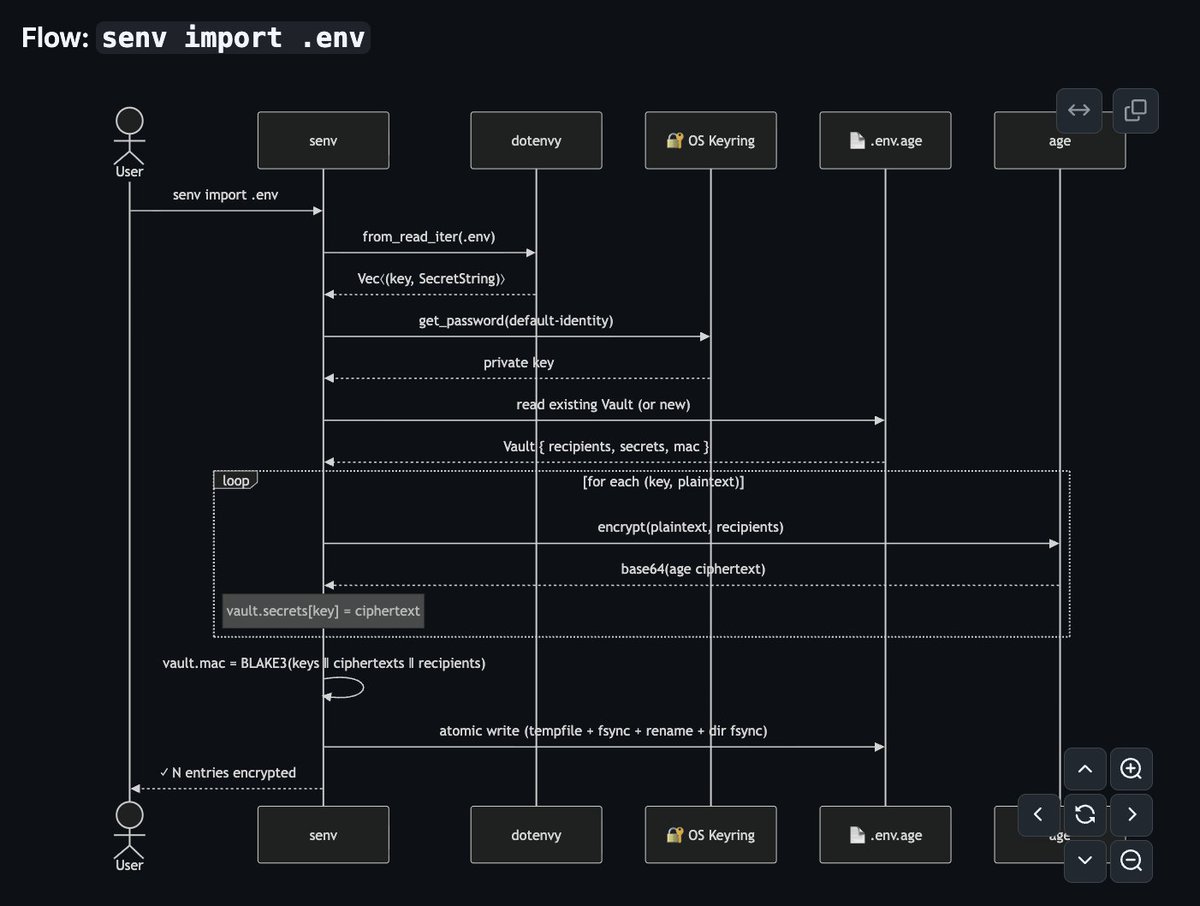
`senv import .env` → encrypt every value
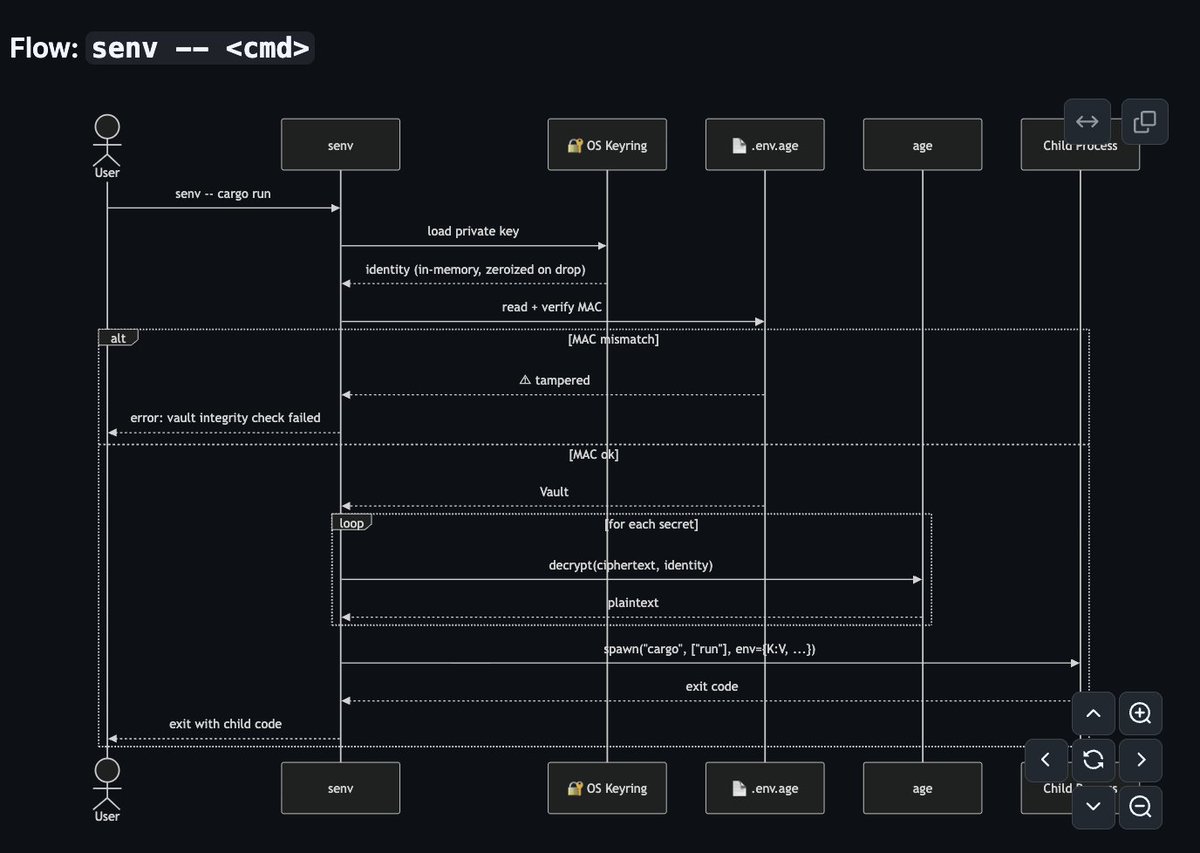
`senv -- <cmd>` → decrypt in memory only, inject to child process
That's it. No more plaintext keys on disk.
If you keep API keys, DB creds, or wallet private keys in .env files — encrypt them. Use senv, SOPS, 1Password CLI, dotenvx — anything. Just don't leave plaintext on disk.
Repo: github.com/gtg7784/senv
Docs: English, 한국어, 日本語, 中文
1
1
107
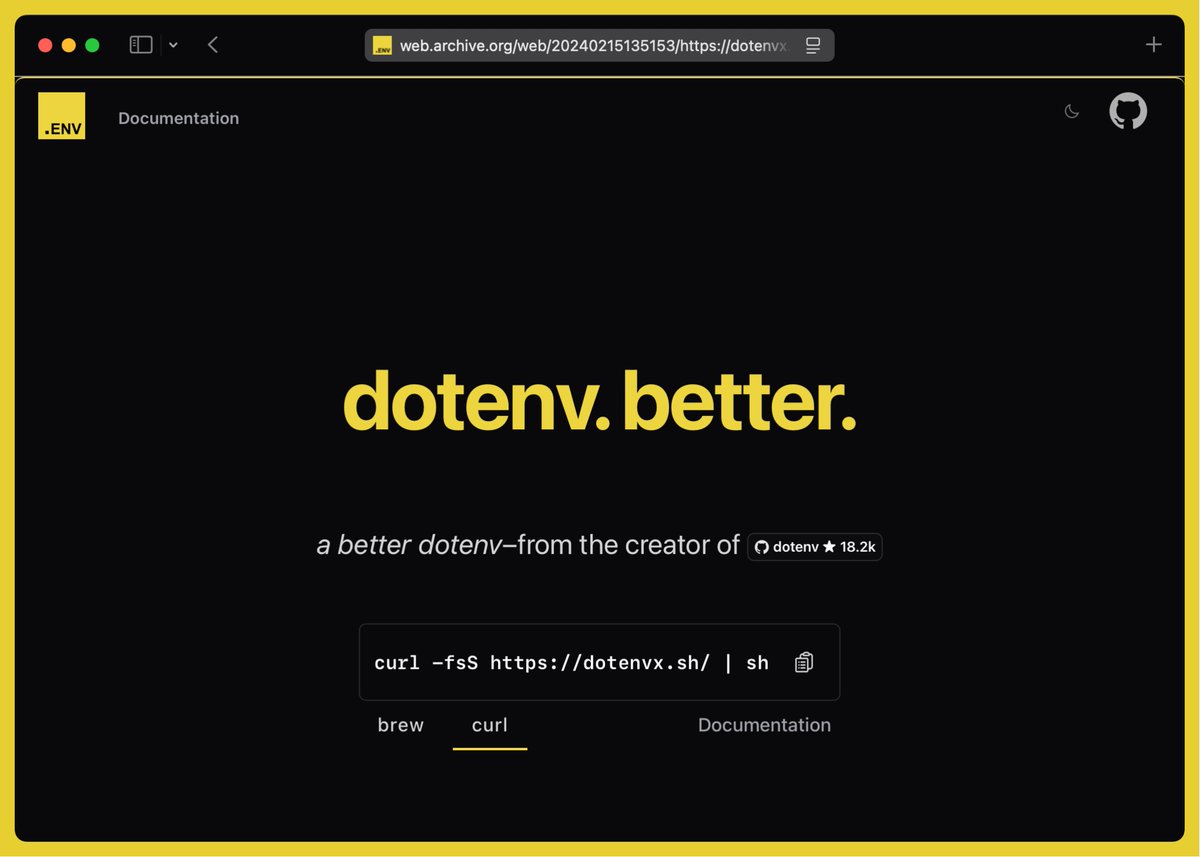
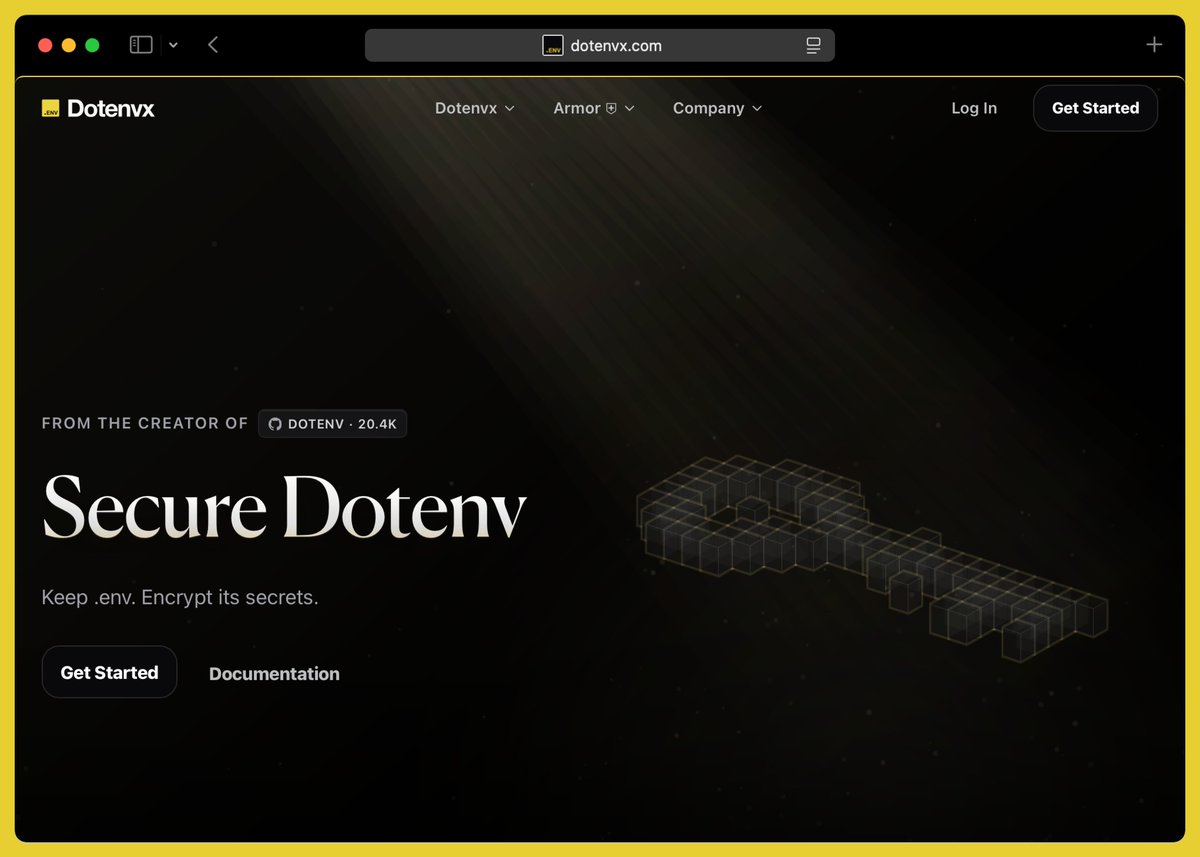
Two years on.
Jun 2
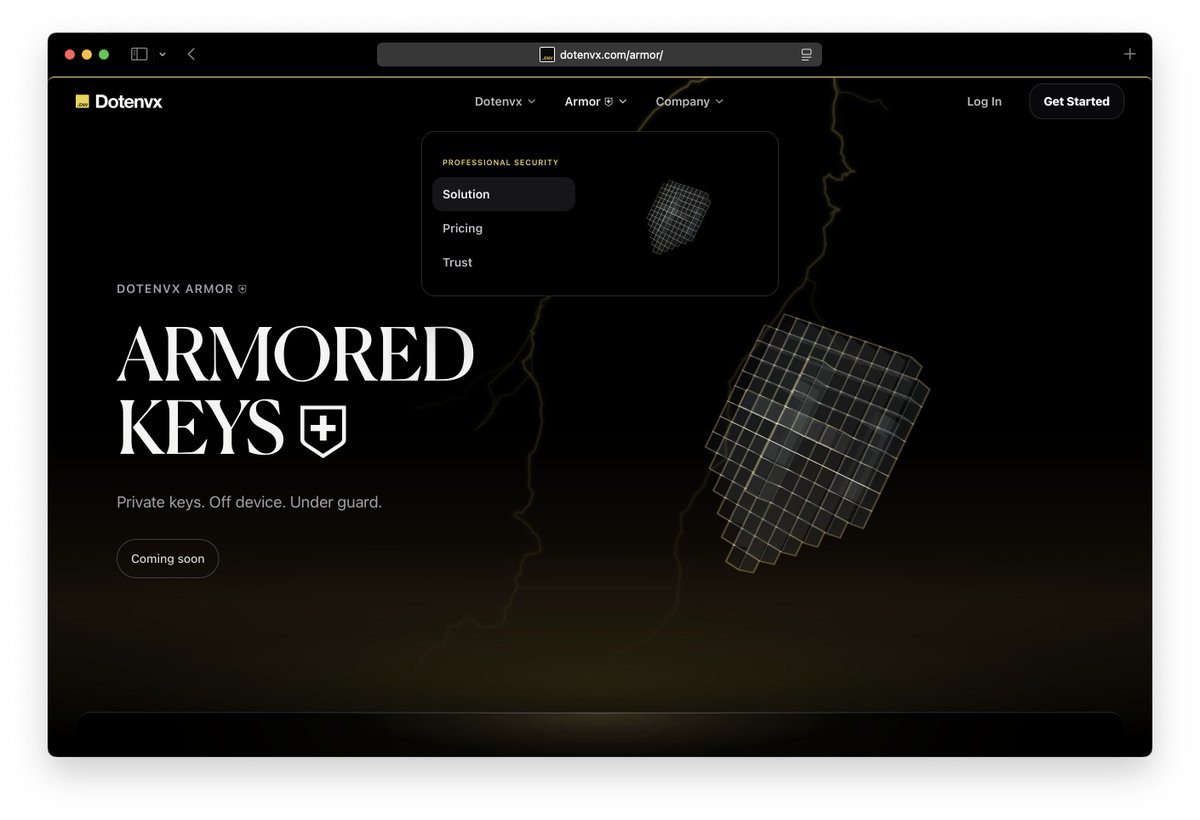
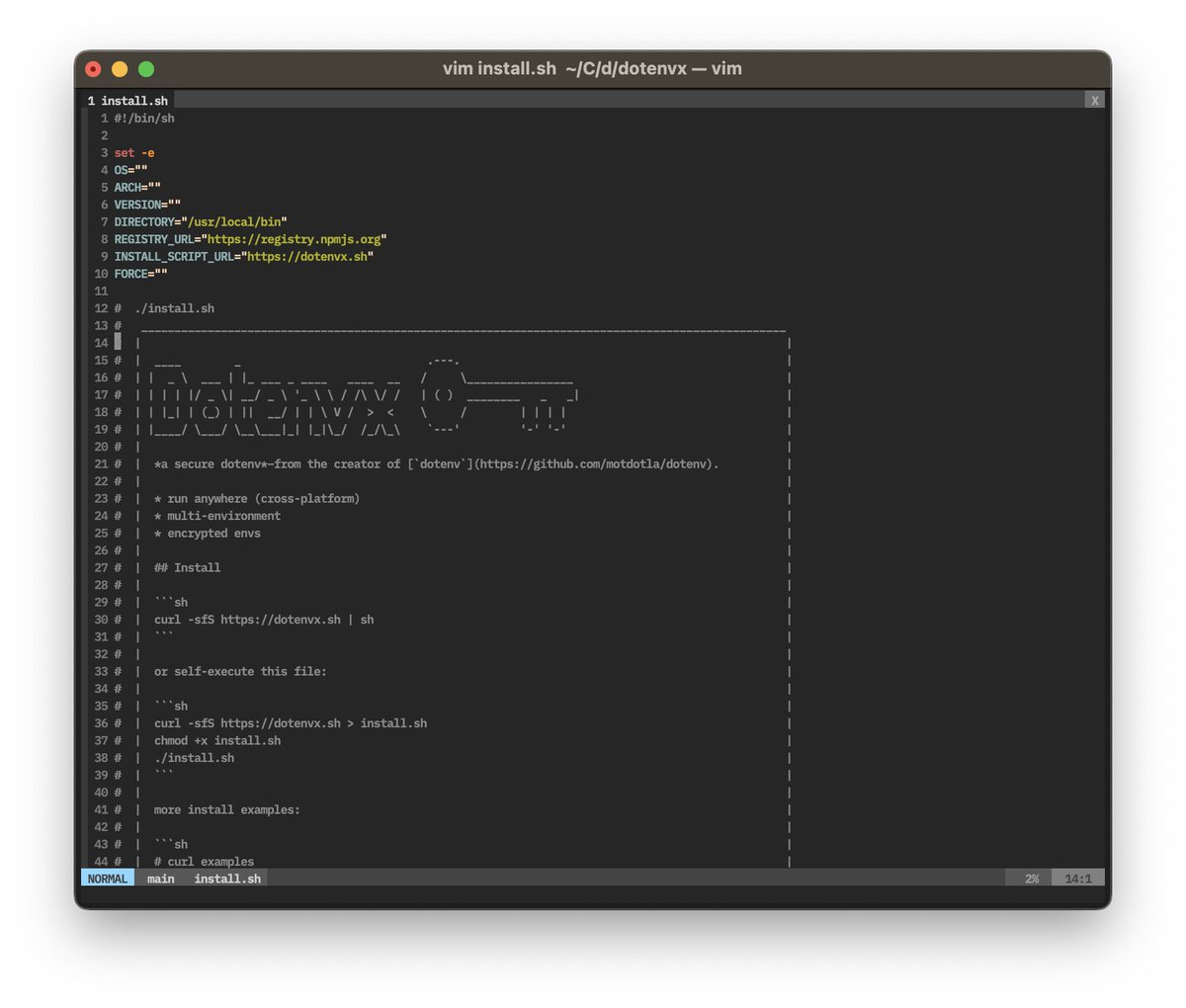
A lot of visual work today. Seems counterintuitive in the increasing agentic world but my gut tells me the opposite.
111
One of the greats instrumental in the development of @npm cli - without which dotenv would not even exist.
Jun 1

2
219

Dotenvx retweeted

May 30
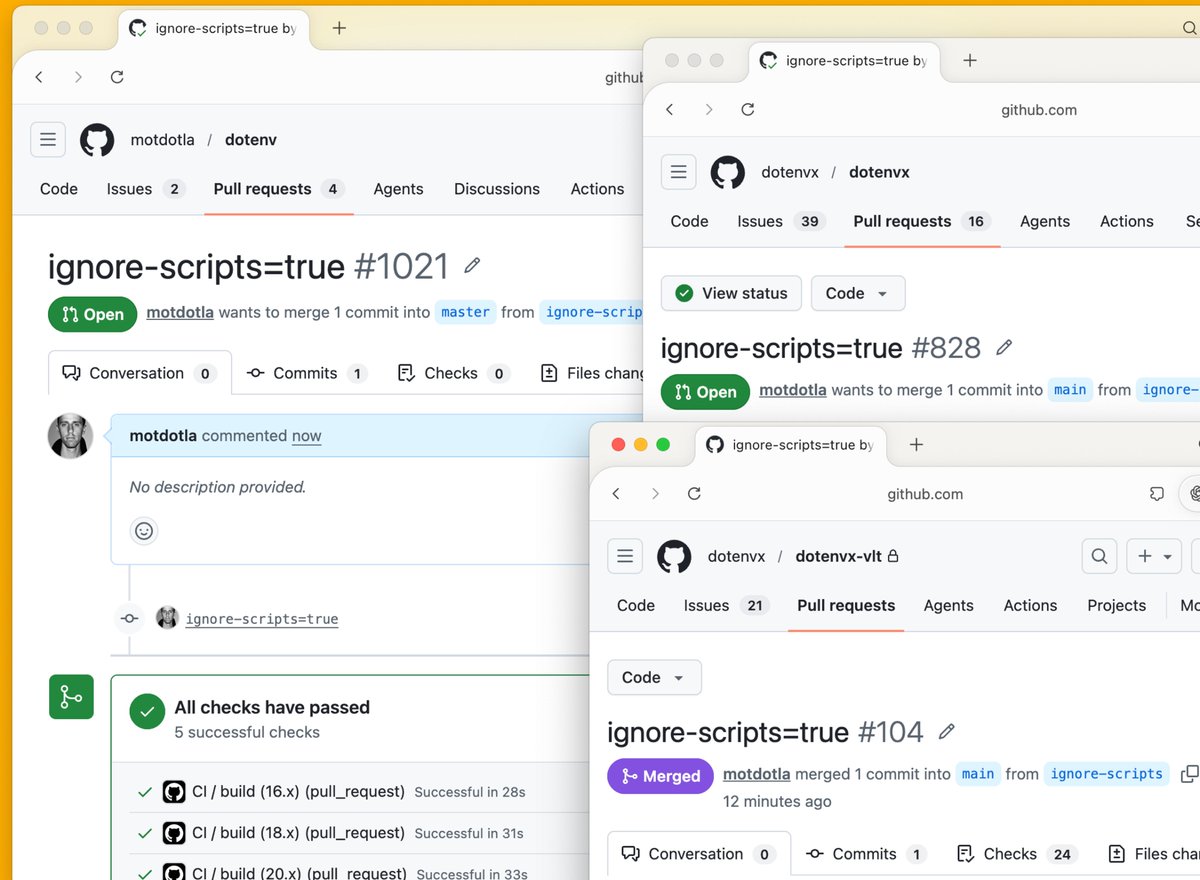
Out of an abundance of caution our major npm packages now ignore-scripts=true.
1
4
850
Dotenvx retweeted
May 29
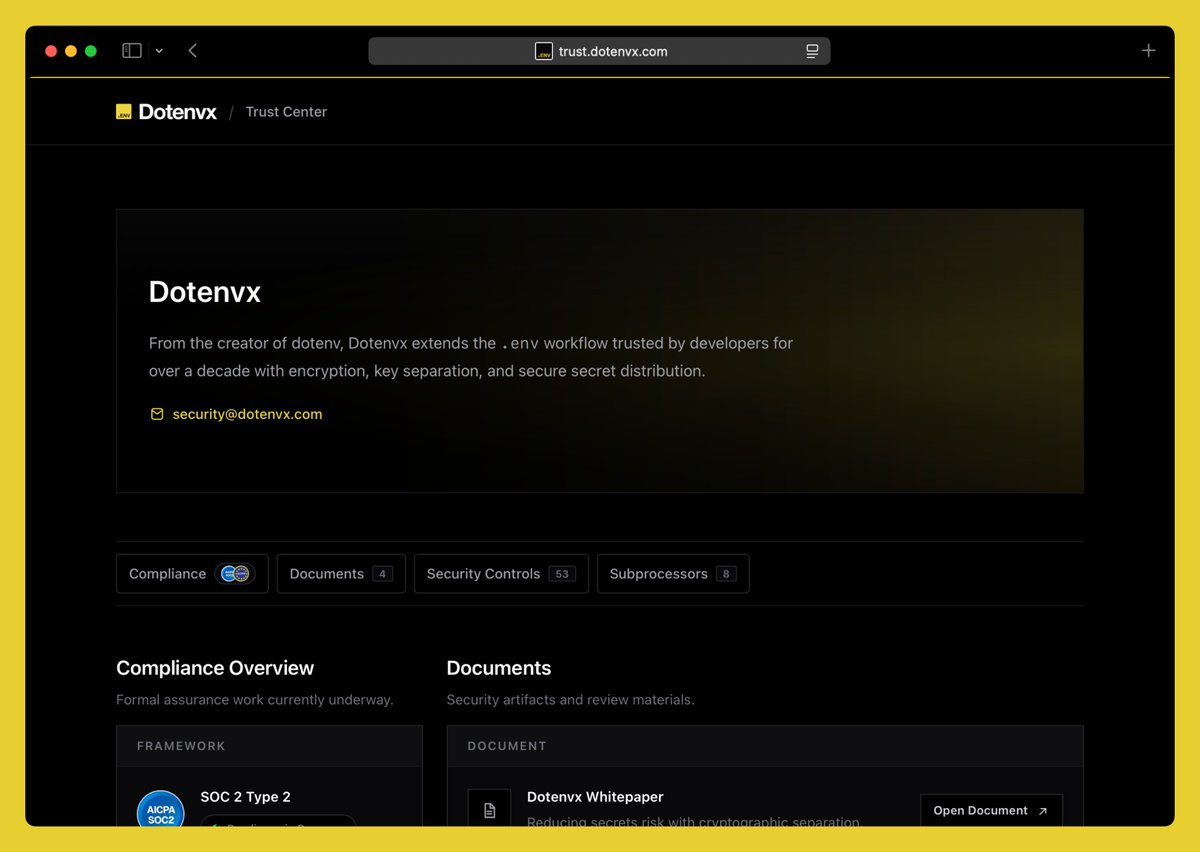
We have our SOC 2 controls all in place and monitored excepting one - the internal audit. We start that on Monday.

2
9
382
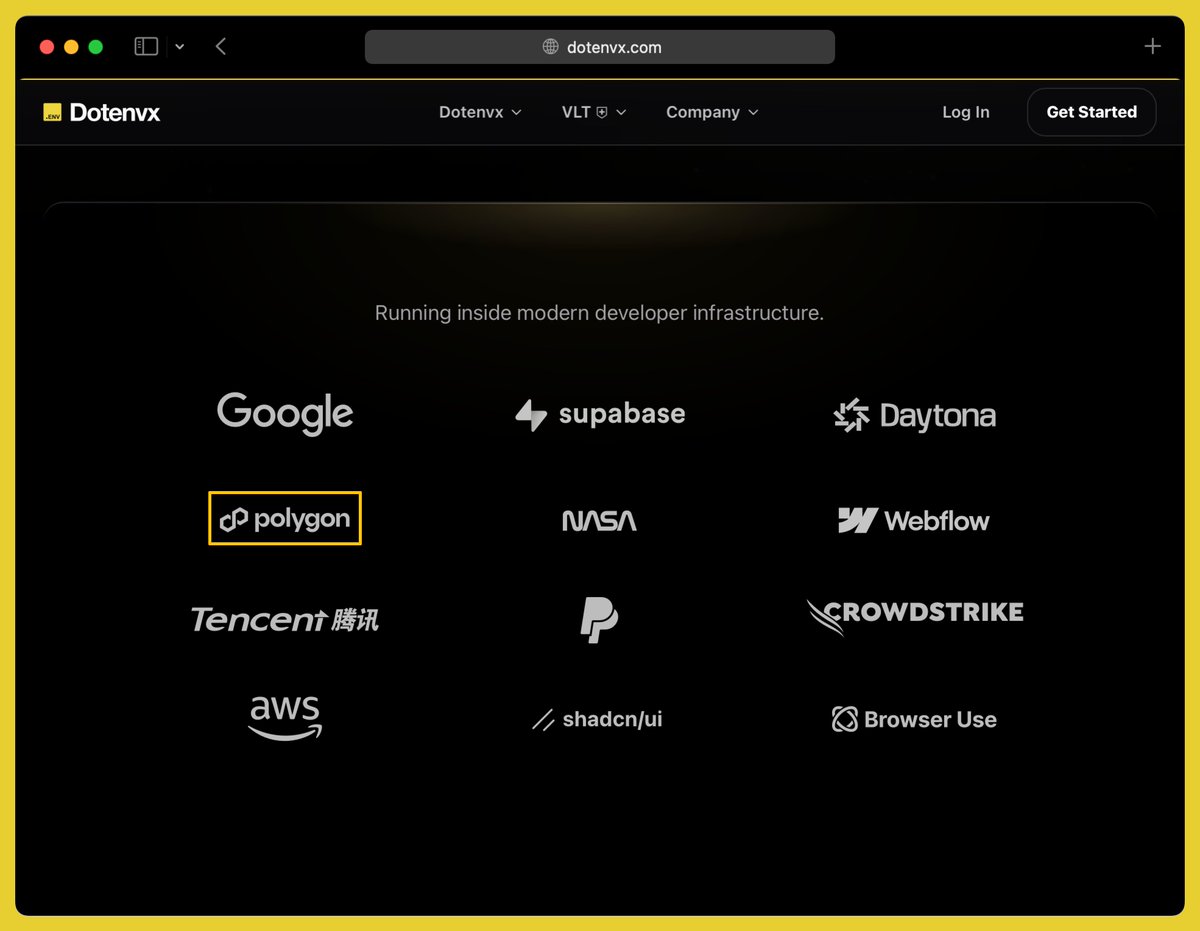
Polygon (@0xPolygon) has started using @dotenvx. Keep the .env. Encrypt the secrets.
github.com/search?q=org:0x…
83
Dotenvx retweeted

May 27
環境変数管理、ずっと「平文をローカルに置く→事故がこわいし共有が面倒」だった。
そこで導入したdotenvx が今のところいい感じ。
.env ファイルを暗号化して git 管理、復号鍵はKeychain なんかに逃がす構成にした。
Railway にも push できるので、共有も楽!めっちゃ便利。
1
1
4
133
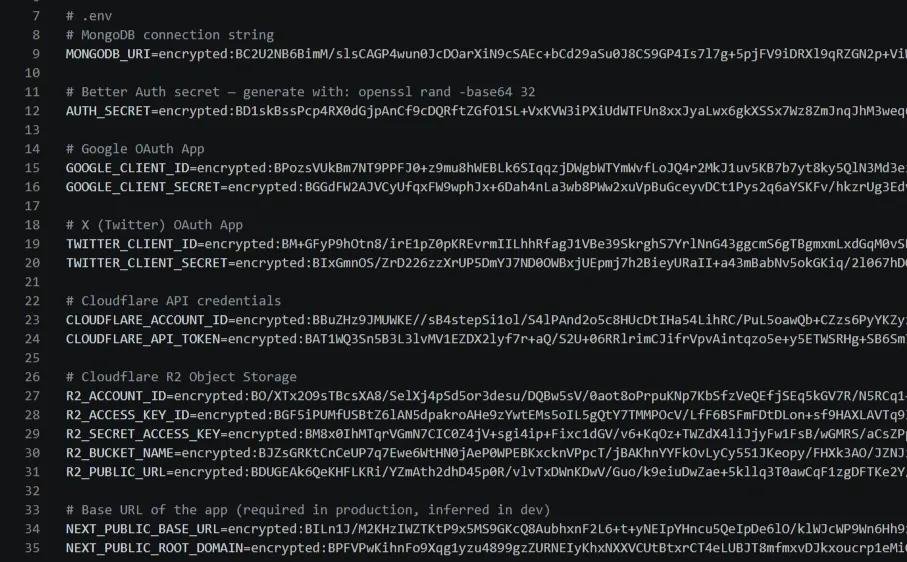
Encrypt and armor your .env files, friends.
May 25

🚨 TrapDoor supply chain attack hits npm, PyPI, and Crates-io.
thehackernews.com/2026/05/tr…
34 malicious packages across 384 versions were used to steal crypto wallets, SSH keys, cloud credentials, and developer secrets from crypto, DeFi, Solana, and AI environments.
The malware abused npm hooks, Python imports, and Rust build scripts for execution and persistence.
180
Dotenvx retweeted

May 23
I built dtx — a minimal CLI on top of @dotenvx for easily switching and running encrypted environment variables.
Made with some vibe coding along the way.
github.com/yokawasa/dtx
1
2
873