
Psychologist, author, lecturer, professor in the Department of Counseling Psychology at Pacifica Graduate Institute. All tweets are tentative hypotheses.
Joined April 2009
- Tweets 2,019
- Following 367
- Followers 1,249
- Likes 2,290
79 Photos and videos










Jun 6
instagram.com/reel/DZNNTWoCm…
Ive been a psychologist for 30 years, and this is the best training video for psychotherapists I have ever seen.
6
2
28
1,780
Jun 1
Deleuze, in Anti-Oedipus, inspires us to liberate desire from familial capture and Oedipal coding.
This is one of my biggest critiques of Freud and classical psychoanalysis: their reduction of desire to the Oedipal triangle.
Desire is neither about daddy, nor mommy, nor you. It is not even, as Lacan claims, about lack.
Desire is productive, free, unruly, nativistic. It feels important to me that psychotherapy accommodate this principle.
4
3
47
1,891
May 30
Because the Enlightenment places its confidence in rational consciousness, then Freud and Jung both become disruptive figures.
Freud remains largely within the disenchanted worldview created by the Enlightenment. He explains religion, myth, and symbolism as psychological projections rooted in instinct and childhood dependency.
Jung takes a different path, asking whether the symbolic forces discovered by psychoanalysis might reflect deeper structures of meaning that modern rationalism had excluded.
Freud pushes Enlightenment assumptions to their limit, but Jung is more radical in that he moves beyond them entirely (or rather, returns to assumptions predating the Enlightenment).
12
658
May 27
Shame is a free gift from the universe...we are probably capable of it almost immediately after birth (see "proto-shame"). I think some animals are capable of it...I am convinced dogs feel shame, but I'm not sure about cats, haha.
Guilt has to be earned and developed...it is a developmental achievement. Guilt is founded on an anaclitic capacity; you feel guilt when you feel attached to someone and may have transgressed or caused harm.
Some implications:
1. Whether someone is capable of guilt vs shame is diagnostic (sociopathic & narcissistic personalities may experience primitive shame behind rigid defenses but not necessarily guilt, and schizoid personalities avoid the whole viper's nest through what Lacan calls aphanisis).
2. Guilt rotates us over the anaclitic horizon and back again: we feel guilt exactly because we love and attach, yet guilt is a profoundly introjective function, pulling us back into ourselves, a recursive feeling that is part of the psychic braid of adult emotional life once we are capable of both anaclitic and introjective functions...what Freud called the self-protective and libidinal functions.
2
1
21
1,801
May 19
Friston's Free Energy principle identifies "free energy" (which we are now be becoming able to see in the cenrral nervous system) as a neuropsychological marker of "surprise," or psychologically speaking, ontological uncertainty.
Minimizing "surprise" therefore becomes an established model of reality.
People cling to painful and destructive identities because those identities are at least metabolically and informational stable.
Therefore, a depressed person predicts failure, an abandoned child predicts more abandonment, and a paranoid system reflexively predicts threat.
Psychologically, the upshot is that people don't attach to pleasure, but to a coherent predictive world.
This should sound familiar to Lacanians... jouissance can be seen as a psychologically / ontologically daring attempt to break open this static system of equilibrium by risking pleasure even when it has be ome painful and feels unsafe.
I would add personally that I think this perspective explains the intrinsic heroism of what we reductively call Hysteria.
5
1
16
2,157
May 19
What psychoanalysis identifies as primitive defenses can be seen through complexity theory as emergency stabilizers:
-splitting squelches (simplifies) complexity
-dissociation reduces intolerable prediction error
-projective identification externalizes uncertainty
-rigid character structures stabilize probabilistic chaos
3
6
79
3,662
May 19
A wee lapse into the boundaries of psychoanalytic and chaos theory....
The personality is a Markov Blanket...an informational boundary that separates the system (the personality) from the world around it. It filters what can enter and leave the system, so the system never contacts the world directly; only through signals crossing that boundary.
The Schizoid adaptation involves retreating the Blanket. Its logic involves minimizing free energy and protecting fragile self-structure from overwhelming, chaotic environmental input; therefore, the schizoid defense physically and psychologically shrinks its Markov blanket. By shrinking from external objects, the system isolates its internal states, choosing to prioritize internal data rather than risk the unpredictable prediction errors of relational intimacy (this is what Lacan calls "aphanasis").
The Histrionic (or Hysterical) strategy follows the logic of flooding the Blanket. The histrionic structure attunes exquisitely (anxiously) to external sensory and relational data, constantly seeking relational input and outward validation to stabilize an underlying internal vacuum. It opens the boundary wide, generating rapid, shifting, and highly charged emotional expressions to capture the attention of external "objects," effectively relying on the environment to modulate its internal prediction errors.
2
3
12
590
May 16
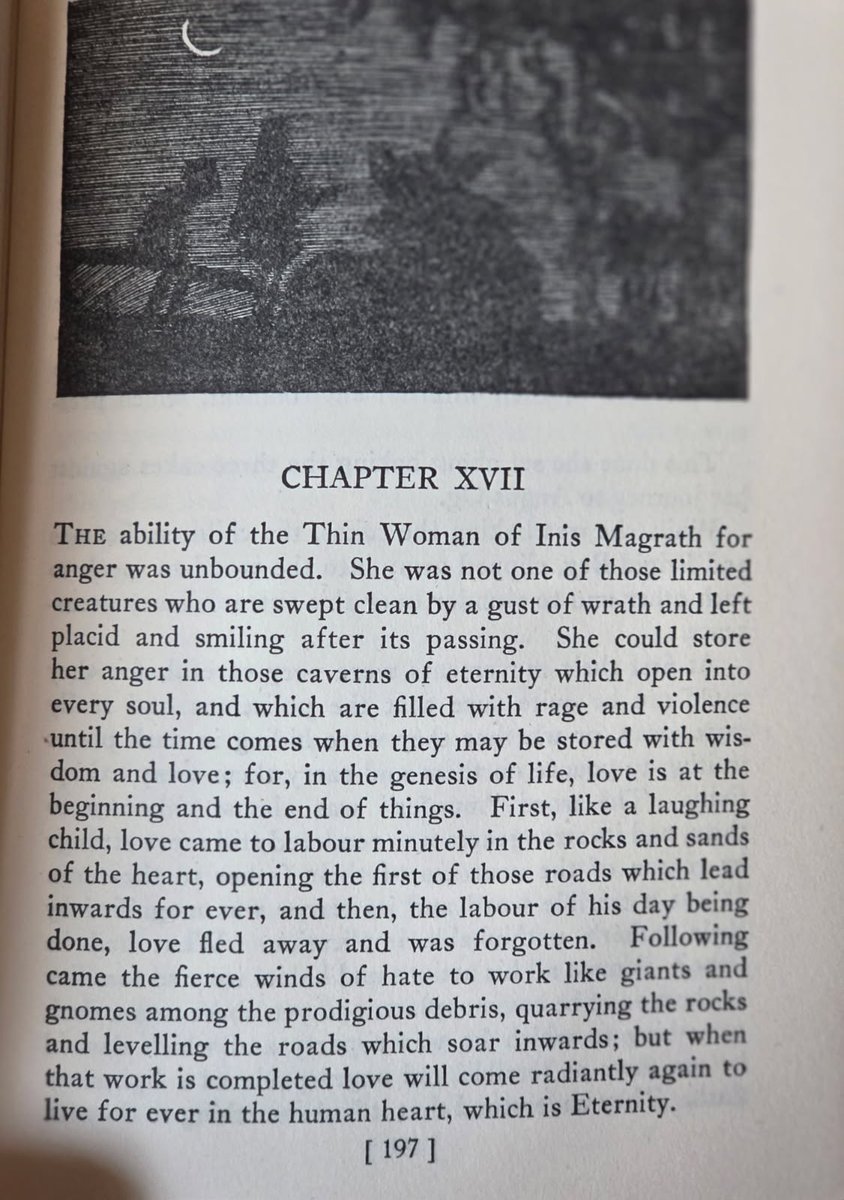
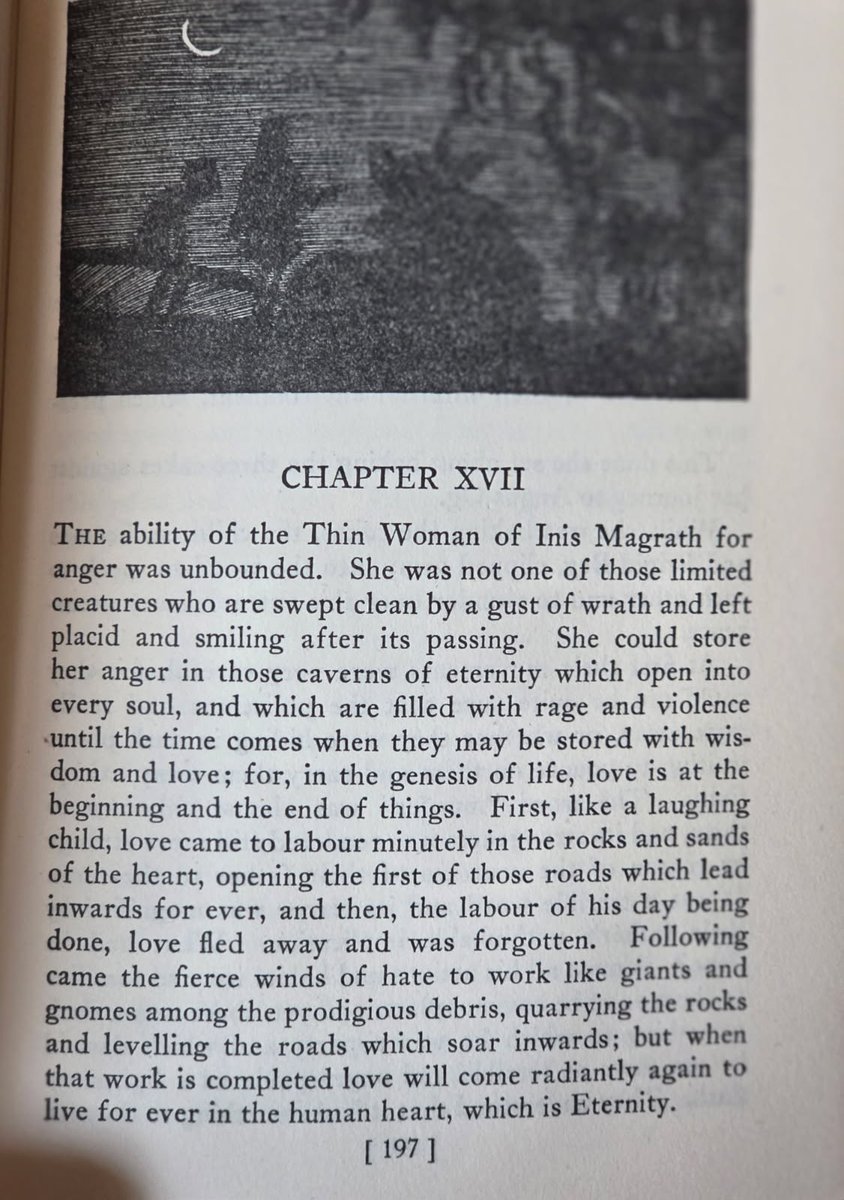
One of the wisest books I've ever read. The Crock of Gold by James Stephens.
6
302
May 8

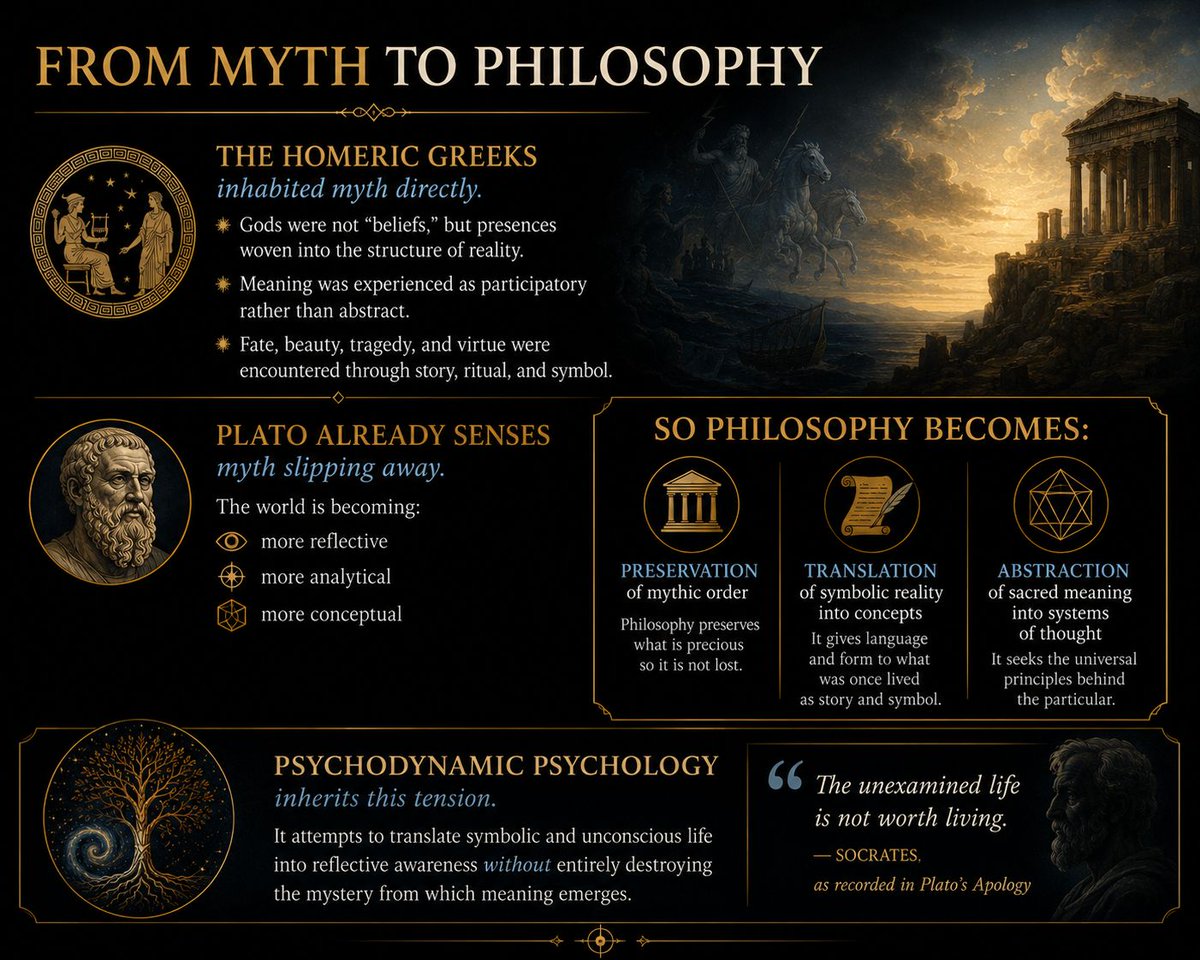
A pivotal moment from AION 101: Philosophical Foundations of Psychodynamic Theory. This course will soon be available for download as self-study content.
1
312
May 6
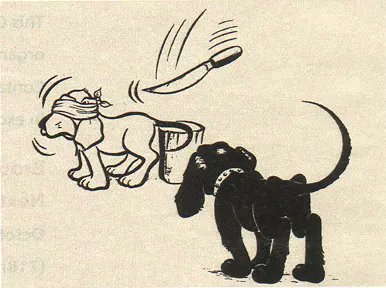
The Blacky Pictures test: When psychoanalysis worries you're missing the subtle nuances of their theoretical model.
278
May 6
Coming next week! AION 406 Sufism and Mystical Islamic Traditions. Fridays May 15, May 22, and May 29, 3-5 PM PDT. Enter into the inner world of Sufism, the esoteric and mystical dimension of Islam that emphasizes direct experience of the divine.
aioninstitute.corsizio.com/e…

2
206
Apr 20
Trying to understand the Jung hate from Freudians. I can understand hating BF Skinner or John Watson, but hating on Jung just sounds like primitive object relations to me...i.e., splitting.
I'd like to open a thread for Freudians to reasonably and thoughtfully critique Jung who (a) have actually read Jung, (b) understood what they've read, and (c) still think he's stupid / delusional / psychotic / ignorant etc.
And if you answer is something like "Jung offended my daddy Freud so I will always hate him"....I understand that's a common motivation among you guys, but it isn't a very interesting argument, and I'd rather hear interesting arguments please.
18
7
50
6,366
Apr 19
Why is it that our culture requires introverts to learn how to be extroverts, but doesn't require extroverts to learn how to be introverts?
16
8
58
2,930
Apr 17
Therapists whose idea of psychotherapy is manualized treatment, behavior checklists, and breathing exercises: you will soon be replaced by AI, and you had it coming.
19
53
264
52,540
Mar 27
The kinds of psychotherapy a therapist is inclined to do flows from deep epistemological and ontological questions which tend to argue for certain clinical perspectives (sometimes at the expense of other, equally valid clinical questions). Some of the more common patterns are:
1. What brain/body processes generate or regulate human experience? (Encourages approaches based on brain-based perspectives like neurobiological bases of attachment, somatic psychotherapy, psychopharmacology, neuropsychiatry etc)
2. What behaviors, beliefs, or learning patterns maintain the presenting problem? (Encourages behavioral and cognitive behavioral perspectives)
3. What is the subjective nature of the psyche itself? (Encourages psychodynamic perspectives)
4. What is the person’s lived experience of being? (Encourages humanistic-existential perspectives)
5. What social, cultural, and political systems shape experience and behavior? (Encourages contextual perspectives like culturally informed psychotherapy, feminist psychotherapy, etc.)
The various schools of psychotherapy therefore tend to focus on one or more pieces of the jigsaw puzzle of human psychology.
4
3
40
1,982
Mar 21
All diagnoses are metaphors.
The goal is to find the one that captures as much explanatory complexity as possible. But you don't go so far as to "believe" it.
9
11
100
4,394