Board-Certified Civil Appellate Lawyer | Appellate counsel for trial teams | Practicing, publishing, and podcasting on appellate issues shaping trial strategy.
Joined August 2008
- Tweets 10,456
- Following 898
- Followers 3,502
- Likes 4,896
986 Photos and videos


Pinned Tweet

Jan 12
A case that settled the weekend before voir dire revealed how the Texas Business Court is preparing to handle jury trials: early issue resolution, compressed timelines, and real trial readiness. It also showed where embedded appellate counsel can add value. #appellatetwitter
texappcounsel.com/2026/01/al…
9
427
Jun 4
Nearly 30 years writing briefs. I thought I had Word figured out. Then, on the @TexAppLawPod, Chris Schandevel suggested optional hyphens—Ctrl Alt hyphen—instead of auto-hyphenation. I was a convert in about three seconds. Still learning. #appellatetwitter
1
1
237
Jun 2
Had a cross-appeal in a court with no local rule on how to handle parallel briefing. Both sides faced 3 briefs—6 total. We filed a joint motion cutting the total from 6 to 4. Client saved money. The fix worked, but it shouldn't have required a motion.
texappcounsel.com/2026/05/fl…
152
May 21
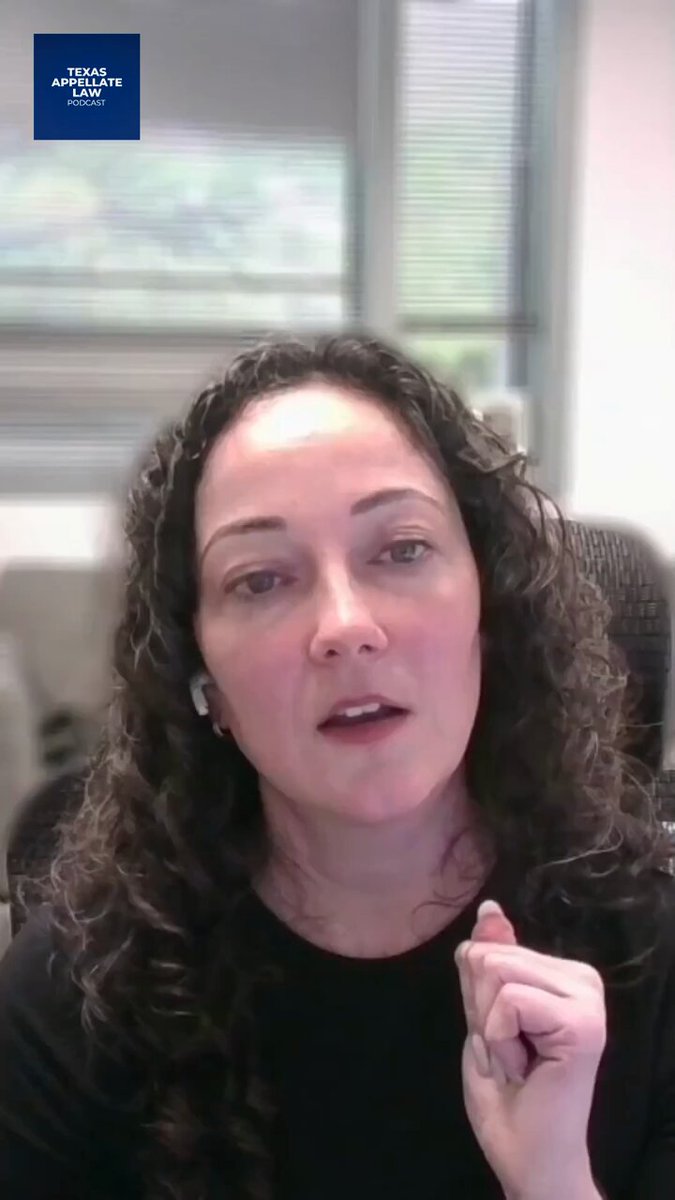
I first used the @SLLTexas during my #SCOTX clerkship, then let on-screen research make me lazy. Exec. Director Amy Small reminded me: the librarians are a resource—and that includes how they're thinking about AI. Clip from her @TexAppLawPod interview below. #appellatetwitter
1
3
180
D. Todd Smith retweeted

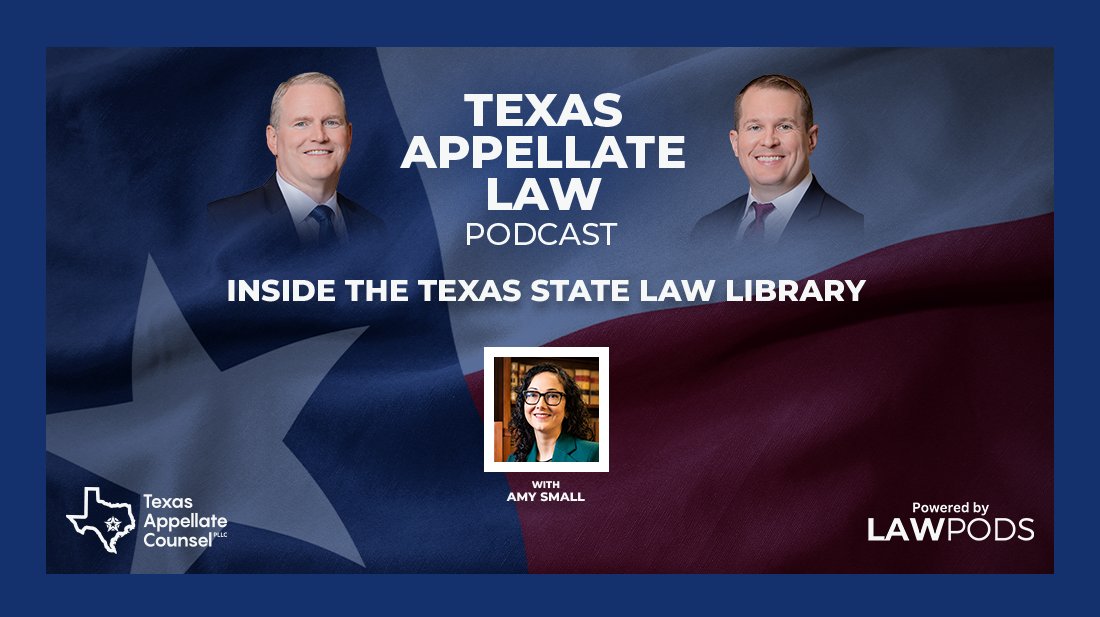
The Texas State Law Library gives every Texas resident free remote access to HeinOnline, Fastcase, e-books, Dorsaneo's, jury charges, pattern depositions, federal practice, and CLEs. Most lawyers have no idea. @SLLTexas Exec. Director Amy Small on Ep. 167. texappcounsel.com/2026/05/e1…
2
4
12
704
D. Todd Smith retweeted

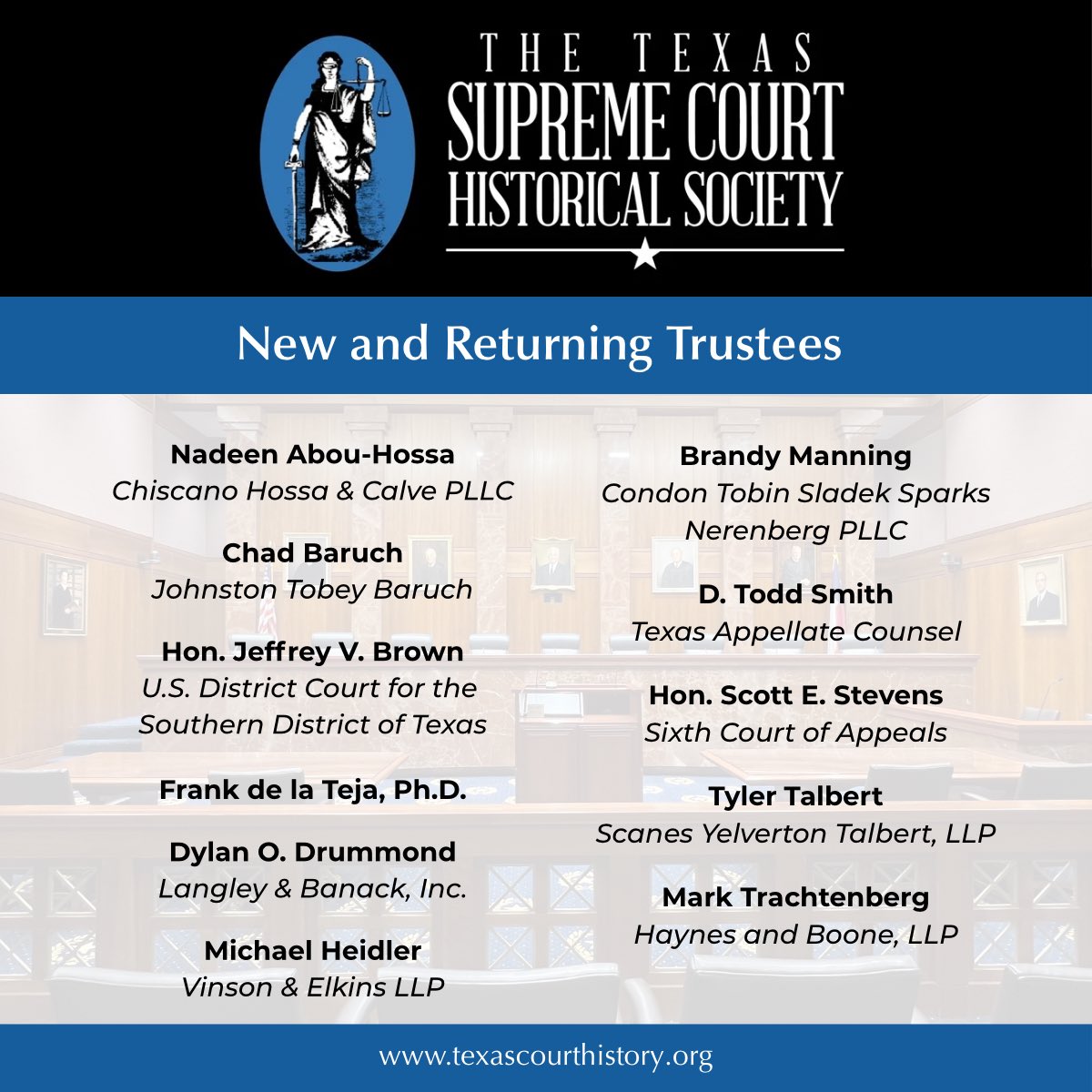
We are excited to announce the election of new and returning @SCOTXHistSocy Trustees. They were elected at the general membership meeting on May 1, 2026, and they will begin their three-year terms on June 1, 2026.
2
12
674
May 8
Texas has accelerated appeals that really aren't. The briefing deadlines are too short, extension practice varies by court, and the whole system runs on workarounds. Post 4 of Flipping the Script considers a fix. #appellatetwitter <texappcounsel.com/2026/05/fl…>
texappcounsel.com/2026/05/fl…
2
235
May 4
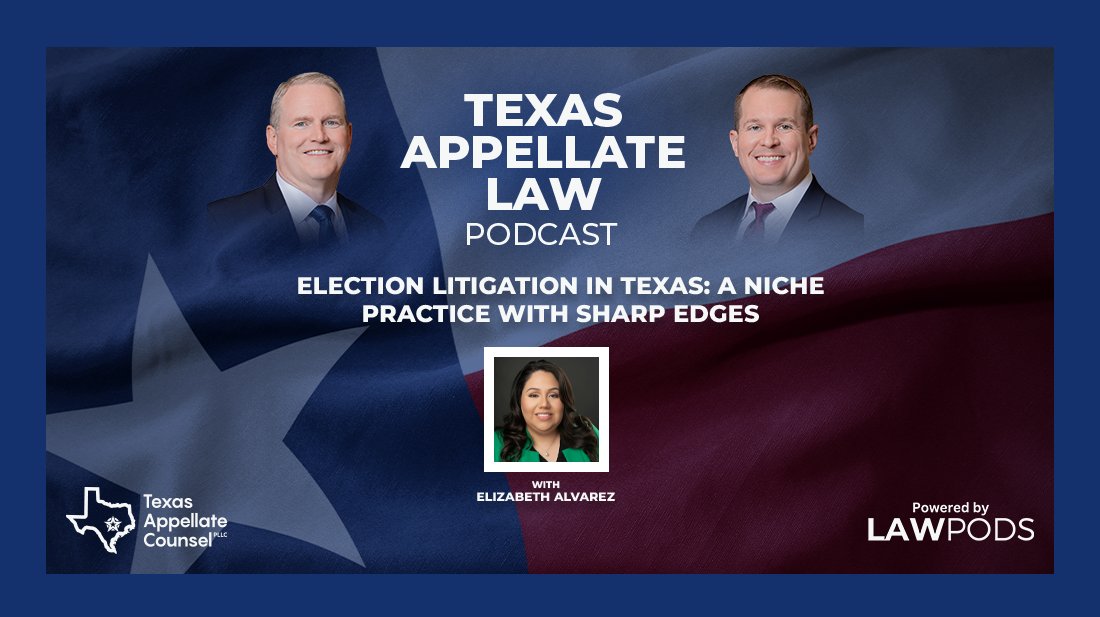
Elizabeth Alvarez has a war story about an unusually candid adverse witness. It's one of the best we've had on the @texapplawpod. Before getting there, the episode explores why civil litigators wander into election cases at their peril. #appellatetwitter
youtube.com/watch?v=d777s4WY…
2
137
D. Todd Smith retweeted
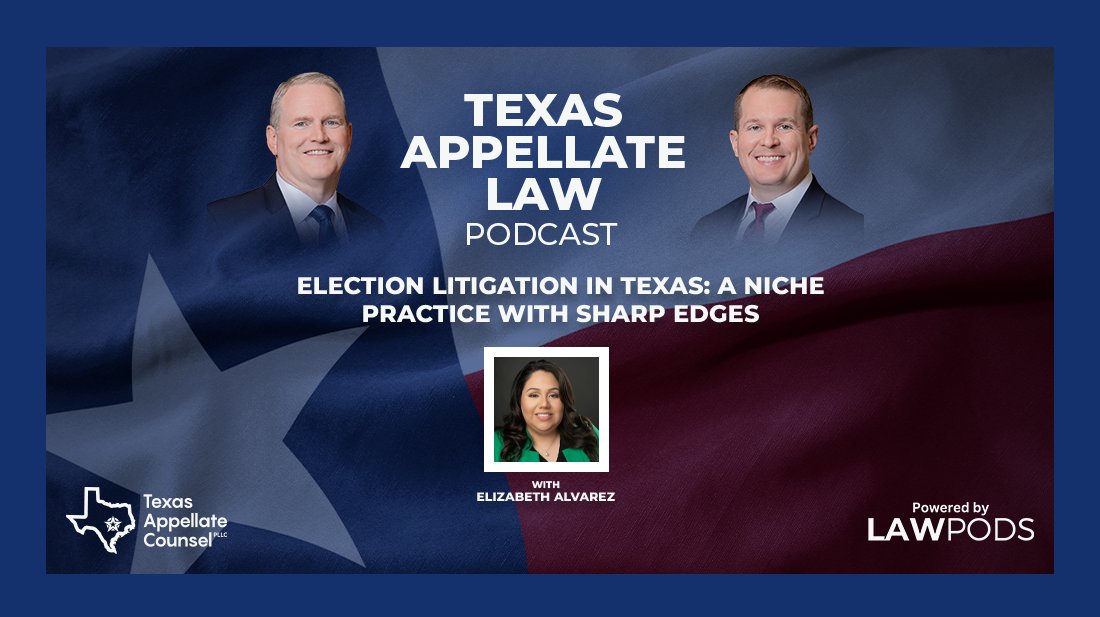
File on time. Hit every deadline. Lose without ever reaching the merits. That’s the Ferguson rule—and it’s just one of the sharp edges of election law that Elizabeth Alvarez walks us through in our latest episode. #appellatetwitter
texappcounsel.com/2026/04/e1…
2
7
233
Apr 28
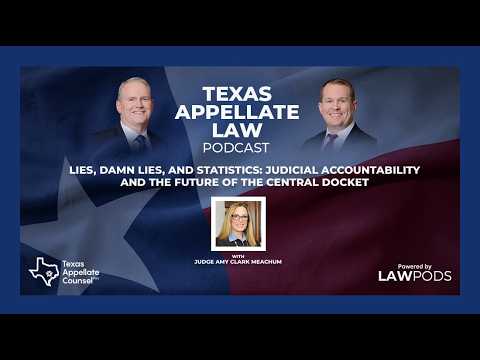
A sitting judge says the new judicial accountability metrics are designed to tell legislators what they want to hear. It is hard to argue with that framing. Judge Amy Clark Meachum's full take on the summary-judgment and central-docket overhauls is linked below. #appellatetwitter
2
3
213
D. Todd Smith retweeted

Apr 24
157
355
2,368
3,083,881
Apr 25
I think about this a lot. How does Rohrmoos/the lodestar (hours x rate) survive as the standard for reasonable and necessary attorney fees? (Spoiler alert: it shouldn’t.)
Apr 24

Courts often rely on the factors outlined in Arthur Andersen & Co. v. Perry Equip. Corp. to determine whether attorney fees are reasonable. These factors include, but are not limited to:
- the time and labor required
- the skill required to perform the legal service properly
- the experience…and ability of the lawyer performing the services
At what point does the competent use of AI—on the tasks where AI is demonstrably effective—cut against these factors?
Just as shifting the cost of two hours of reporter research is unreasonable when @LexisNexis or @Westlaw does the same work in minutes, the failure to competently use AI on appropriate tasks will soon be unreasonable as well. In certain circumstances, I would argue it already is.
The point is narrower than it may first appear. Strategy, judgment, advocacy, and the exercise of professional discretion are not volume tasks, and AI does not displace the hours required to do them well. But high-volume, pattern-driven work is a different matter. For example, is it reasonable to bill 8 hours to review hundreds of documents when a competent AI-assisted workflow produces a better result in a fraction of the time? See x.com/bradleybclark/status/2….
None of this is settled. What constitutes "competent" AI use is itself a developing standard, and good-faith disagreement about where the line sits is part of the current moment. But the Arthur Andersen factors ask what the work required, not what the work took — and that distinction is going to matter more every year.
#LegalAI #LegalEthics #AI
@statebaroftexas @legalethicstx @TexasBarCLE
429
D. Todd Smith retweeted
What does judicial accountability require of Texas trial courts? Judge Amy Clark Meachum joins us to discuss legislative mandates, modifications to the central docket system, and what the new summary judgment rule means for trial judges. #appellatetwitter texappcounsel.com/2026/04/e1…
1
1
182
Apr 23
Argued at the Third Court of Appeals here in Austin yesterday. The panel was engaged and asked good questions. That is all you can ask for. The best oral arguments feel like a conversation, and this one did. #appellatetwitter
1
9
683
Apr 15
Texas courts of appeals routinely deny mandamus petitions with a single sentence. After months of briefing and real client costs, lawyers and litigants deserve at least a brief explanation. New post in the Flipping the Script series. #appellatetwitter
texappcounsel.com/2026/04/fl…
1
1
1
319
Apr 6
The Texas civil docketing statement is an outdated fillable PDF. It feels like busy work. No integration, no efficiency, no good reason it hasn't changed. The technology to fix it exists. Latest in the Flipping the Script series. #appellatetwitter
texappcounsel.com/2026/04/fl…
116
Apr 2
We hear a lot about AI use among lawyers. Much less about judges. Our conversation with @Judgeschlegel covered where things stand and what courts actually need. If you're a judge interested in the Judicial AI Consortium, check it out at aiforjudges.com.

NEW EPISODE: @Judgeschlegel joins us to talk about the Judicial AI Consortium, the social contract of human adjudication, and where courts are drawing the line on AI. texappcounsel.com/2026/03/e1…
2
154