
53 Photos and videos


May 9
Good read.

1
155
Feb 18
Rare opportunity to be considered for USRA quantum team. Very flexible towards a variety of profiles (junior to senior). Work to be done in USA (but UK possible). Topics: AI Reasoning, QEC/FT Architectures, Quantum Algos, Quantum Thermodynamics. Likely NASA affiliation.
workforcenow.adp.com/mascsr/…
2
1
6
438
15 Sep 2025
I am hosting the Quantum Space Workshop at Quantum World Congress tomorrow! Super lineup. Join! linkedin.com/posts/davideven…
1
1
1
233
15 Sep 2025
@USRAedu @AFResearchLab @GeorgeMasonU @OTCatDOE @PhysicsIllinois @bosonqpsi @treq @capellaspace @Axiom_Space @infleqtion @Accenture_US @Boeing @LunateAi @ConnectedDMV
125
Davide Venturelli retweeted

Boeing, Axiom Space, Vescent, Qrypt, USRA join Infleqtion, Accenture, and Nebula Space Enterprises in DOE’s Quantum in Space MOU! Learn more: bit.ly/3PExDGP
8
12
11,685
2 Dec 2024
Looks like I am the top expert in "AI infrastructure optimization" according to AI itself !!!! 🤓 LOL
2 Dec 2024

introducing happenstance 🍀
we're building the best AI person search in the world
1
1
7
668
18 Nov 2024
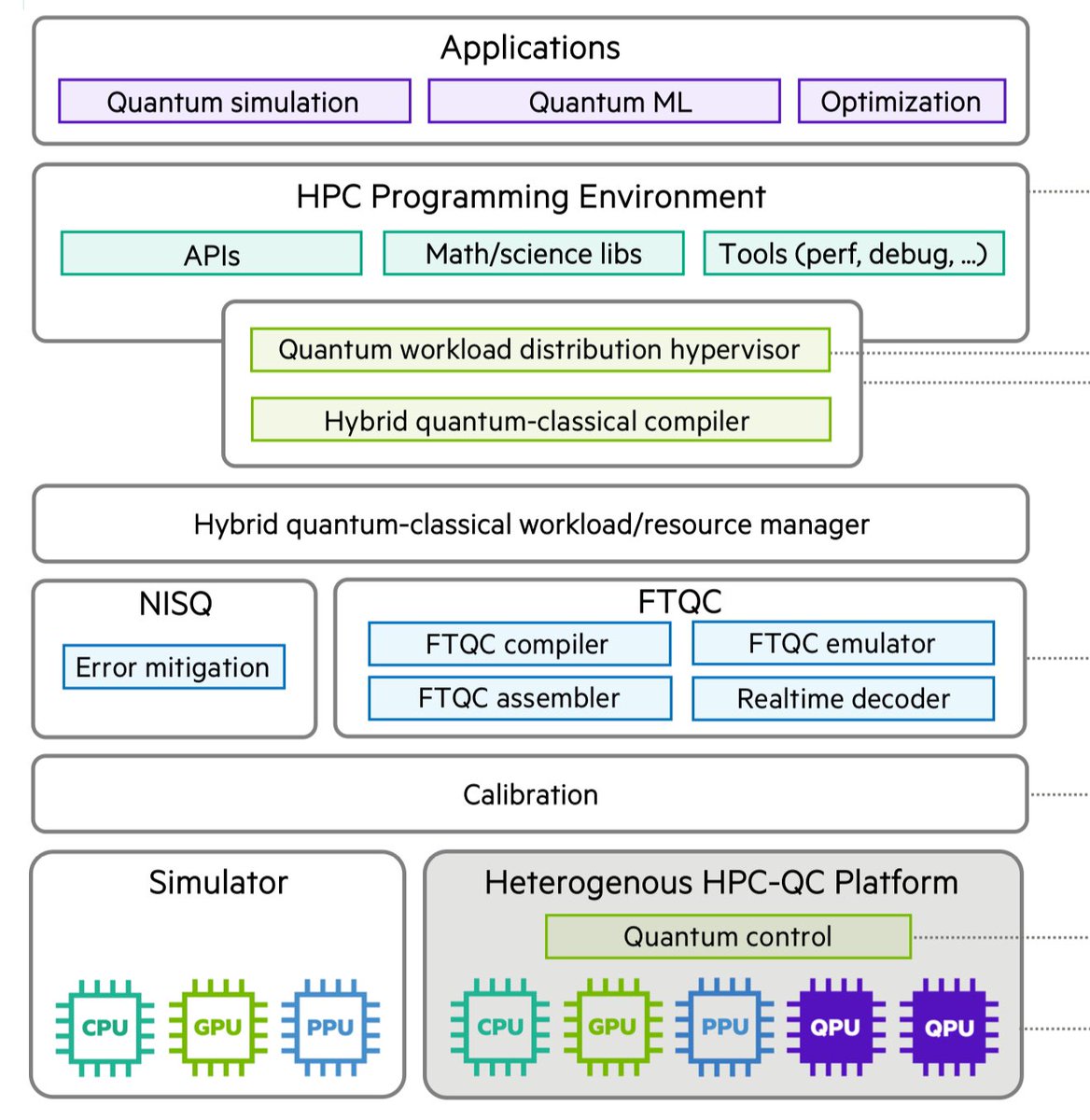
HPE, qolab, 1QBit, UCSB, Synopsis, AMAT, USRA/NASA, FNAL punching hard in this latest position paper on quantum supercomputing! community.hpe.com/t5/blogs/b…
4
11
976
10 Oct 2024
The eventual integration of quantum technologies into the IT/HPC infrastructure of the world is inevitable. Whatever the future holds, today there is a new force bringing stakeholders together to develop and deploy solutions that are
inherently modular and transparently engineered. Good luck to TreQ, the quantum engineering company!
7 Oct 2024

TreQ has secured $5 million in funding to develop open-architecture quantum computers, with support from @LavrockVC , @CreatorFund , @firstminutecap and @GreenSandsE 👏
thequantuminsider.com/2024/1…
#Quantum #Ecosystem #CreatorFund #QuantumComputing #Funding
1
4
314
6 Sep 2024
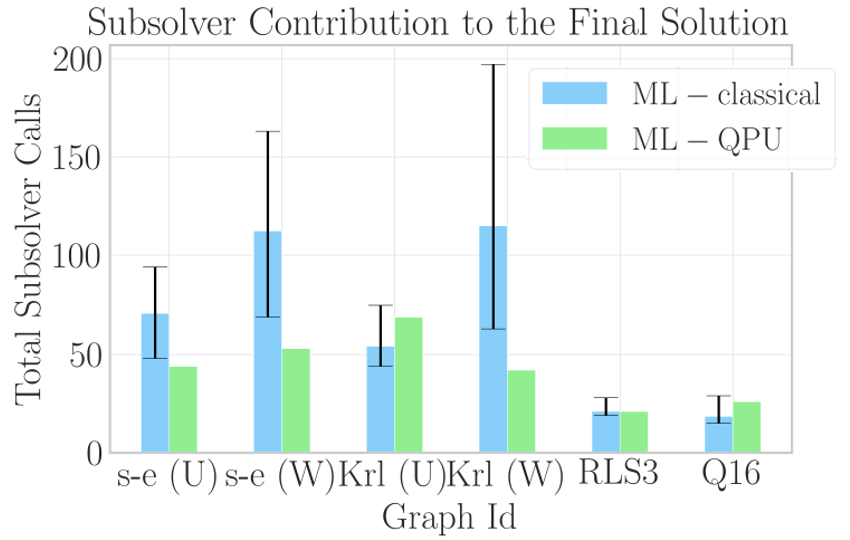
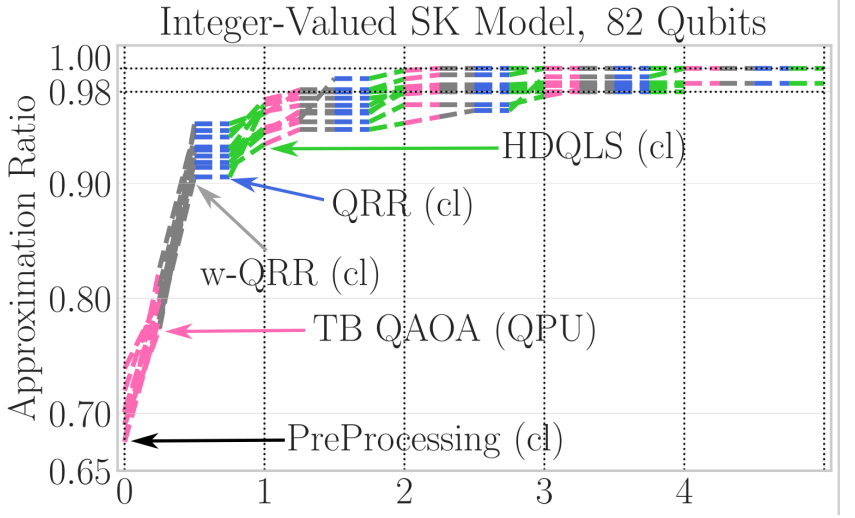
Happy to advertise the great work led by our @phase_filip in collaboration with @UDelaware (Safro group) and @rigetti - to be presented in a few weeks at the IEEE High Performance Extreme Computing Conference: A Multilevel Approach For Solving Large-Scale QUBO Problems With Noisy Hybrid Quantum Approximate Optimization arxiv.org/pdf/2408.07793 - truly one of the largest scale experimental demo of hybrid quantum computing with remarkable performance and outlook for improvement.
2
1
11
440
6 Sep 2024
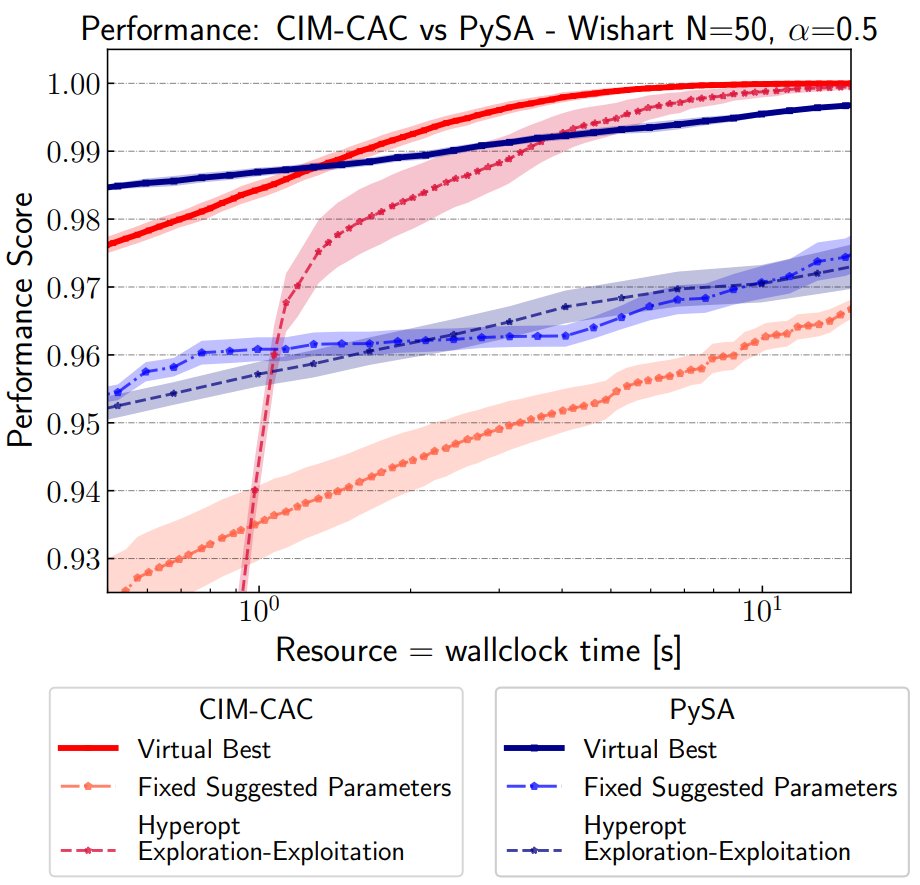
The paper creates a new framework that can be profitably executed leveraging Ising machines of arbitrary size to solve problems of arbitrary size. We have some numerical evidence that for soc-epinions graphs (26k nodes MaxCut) if subproblems can work on thousands of variables then the decomposition method beats the state-of-art. We also have initial experimental evidence that quantum solvers as implemented by us are qualitatively different and can potentially allow faster convergence in some "oracle" terms.
1
140
6 Sep 2024
Lots to built upon. It is painful to work in the era of utility scale "augmented NISQ" we live in - but we are up to the challenge because lessons from theory cannot be the only guidance. Lots of QPU hours to burn. Lot of noise to tame. No pain no gain. Even if reliable advantage is not behind the corner, with every sweat drop we learn something valuable. We are far past running toy problems.
More discussions on these general considerations at the IEEE QCE24 "The Next NISQ Phase" Panel: qce.quantum.ieee.org/2024/pr…
101
2 Jul 2024
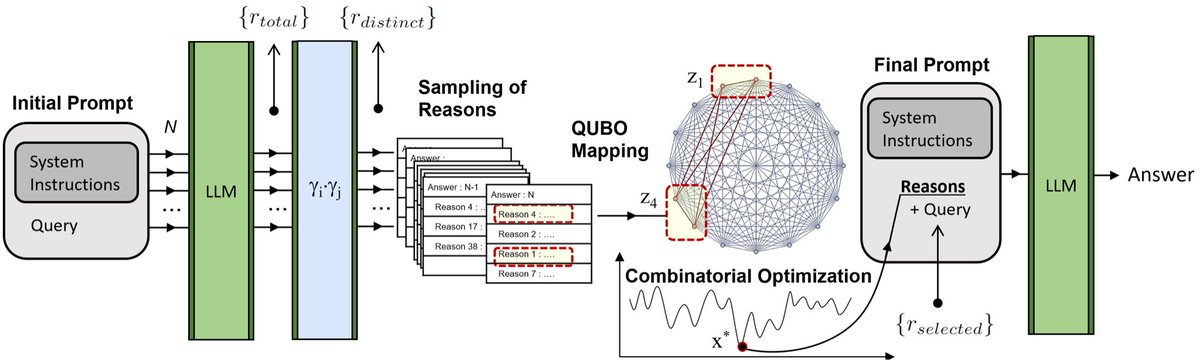
If you think Ising solvers do not intersect this next wave of gen-AI think again! In our recent preprint arxiv.org/abs/2407.00071 with Icosa and HPE we look at the statistics from LLM trying to think, exploiting it to define a combinatorial cost function that if optimized could lead to a powerful chain-of-thought. Intriguing!
1
6
32
2,406
16 Jun 2024
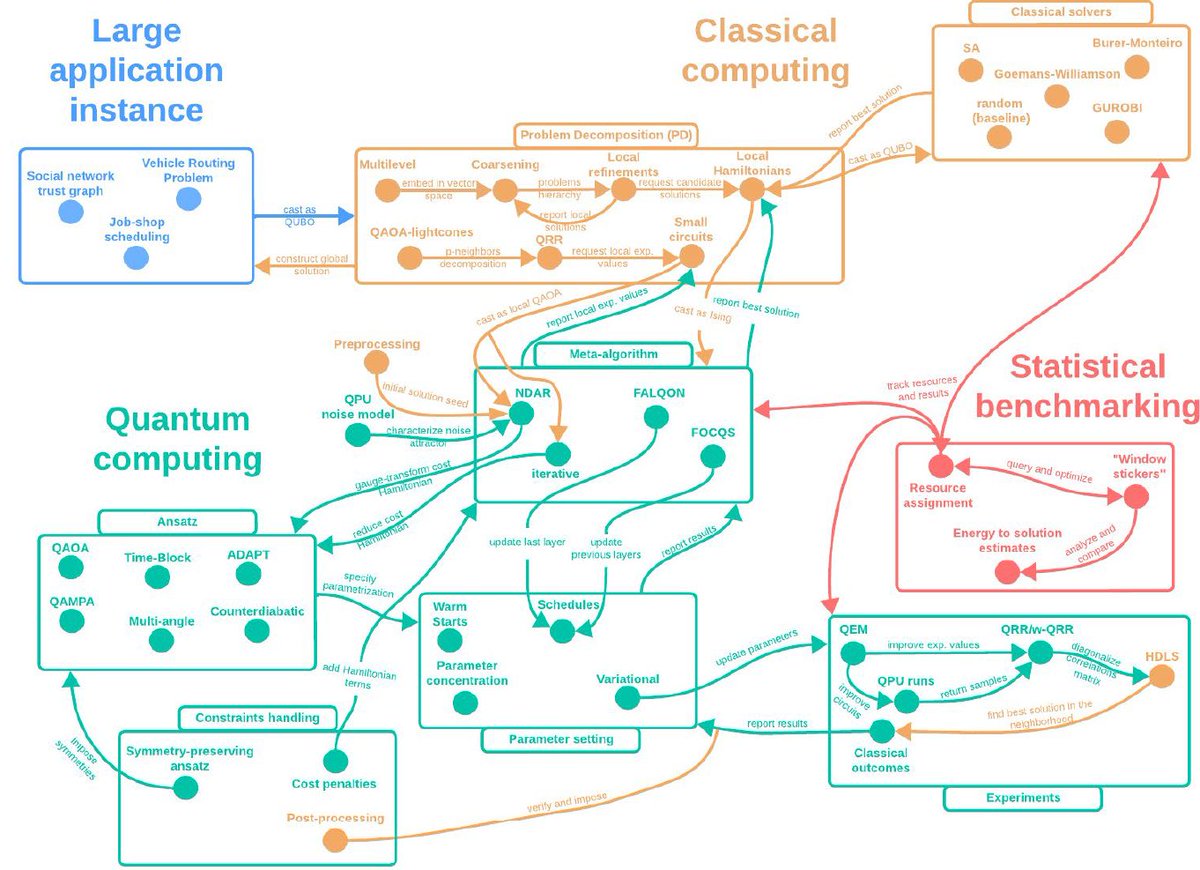
Finally out the review paper summarizing the scientific output of the NASA Quantum AI Lab for the last 4 years… sciencedirect.com/science/ar… - the easiest way to answer the question “what is NASA doing in quantum computing” :) we should do this every 2-3 years going forward (see also papers in 2017
sciencedirect.com/science/ar… and 2019 books.google.com/books?hl=en…)
3
28
2,798
Davide Venturelli retweeted

3 Apr 2024
Improving Quantum Approximate Optimization by Noise-Directed Adaptive Remapping
scirate.com/arxiv/2404.01412
Say you want to ≈solve a diagonal Hamiltonian but only have access to a quantum device that is fairly noisy (like, well, everyone who has access to quantum devices) 1/n
1
4
19
2,675
24 Mar 2024
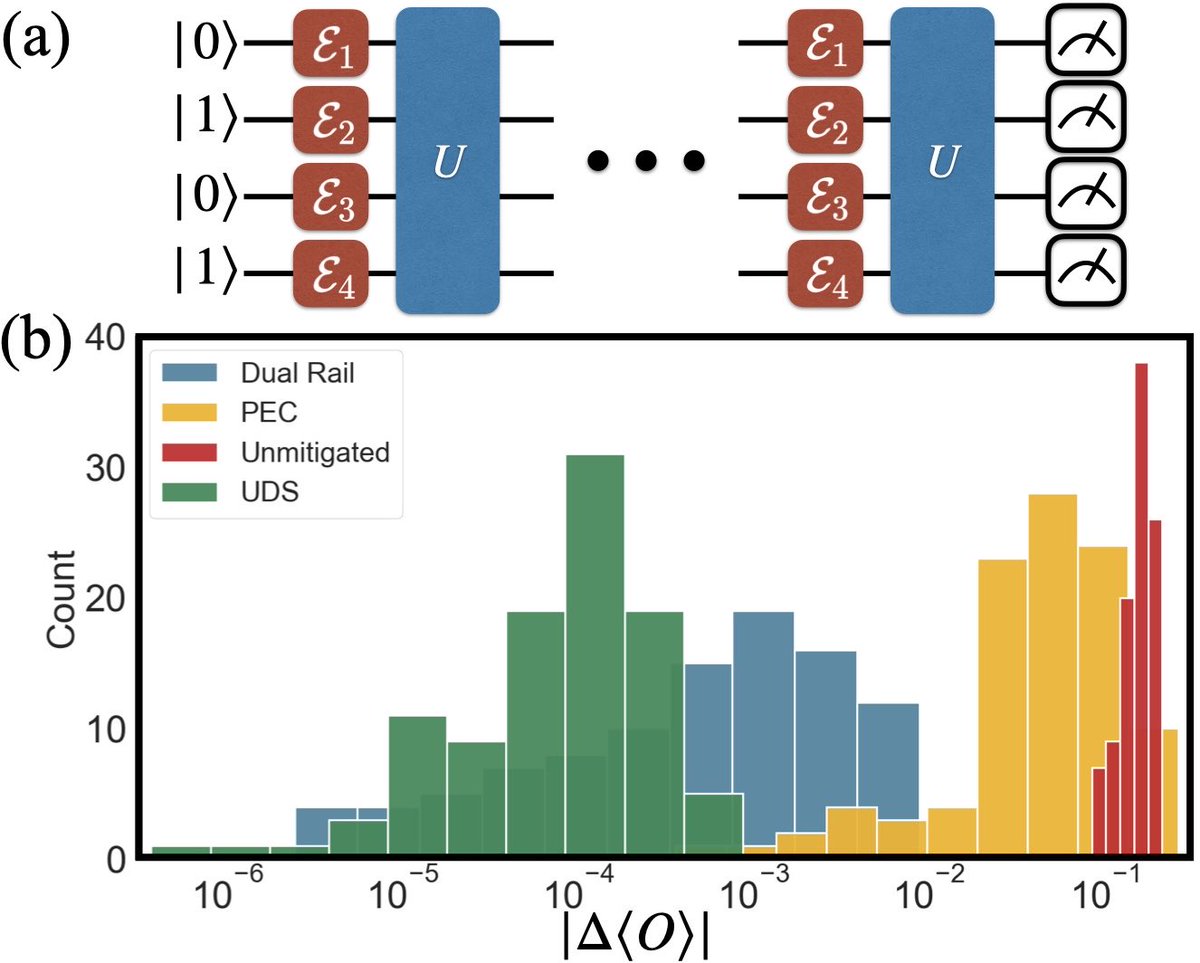
What you need is to encode your Hamiltonian evolution in dual-rail subspaces (doubling the number of qubits), average over N orderings of the encoding and then correct the measured estimators with a prefactor. The end result beats symmetry-verification discarding and probabilistic error cancellation. 2/3
1
1
143
24 Mar 2024
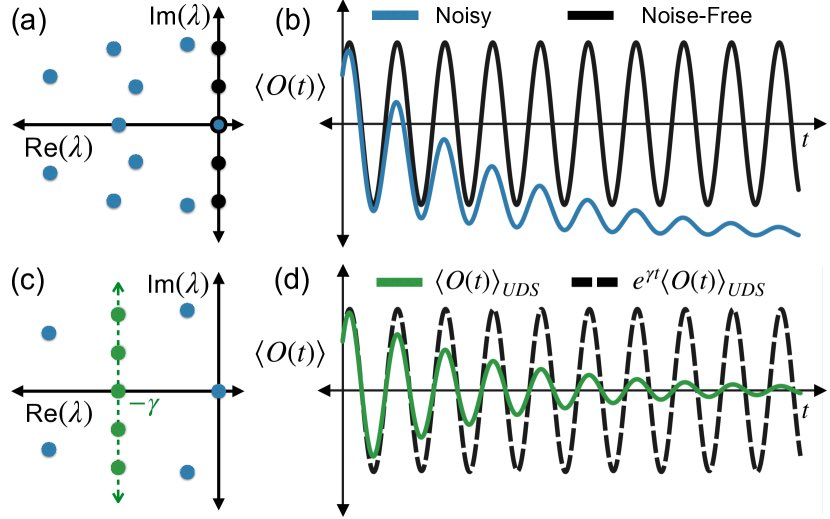
But it is more general than that! You don’t need dual rail (any k-hot work), you don’t need qubits (qudits work) and the theory is formulated very generally for Lindblads in analogy to decoherent free subspaces. Work sponsored by @sqmscenter 3/3
80
24 Mar 2024
In our recent paper “Uniformly Decaying Subspaces for Error Mitigated Quantum Computation” led by @NishchaySuri we present a nice way to correct noisy expectation values of observables quantum or digital simulation in the presence of inhomogeneous dissipative noise arxiv.org/abs/2403.00163 1/3
1
1
207
4 Mar 2024
Greetings from sunny Minneapolis #APSMarchMeeting . As customary gentle advertising in the first reply with links to 14 (!) NASA Quantum AI Lab talks! (Soon will do🧵 on #1 and #5 😉🤓) - check out also the 28 (!!!) talks of @sqmscenter members by searching SQMS in the Epitome
1
2
17
2,344
4 Mar 2024
1. Uniformly Decaying Subspaces for Quantum Computation meetings.aps.org/Meeting/MAR…
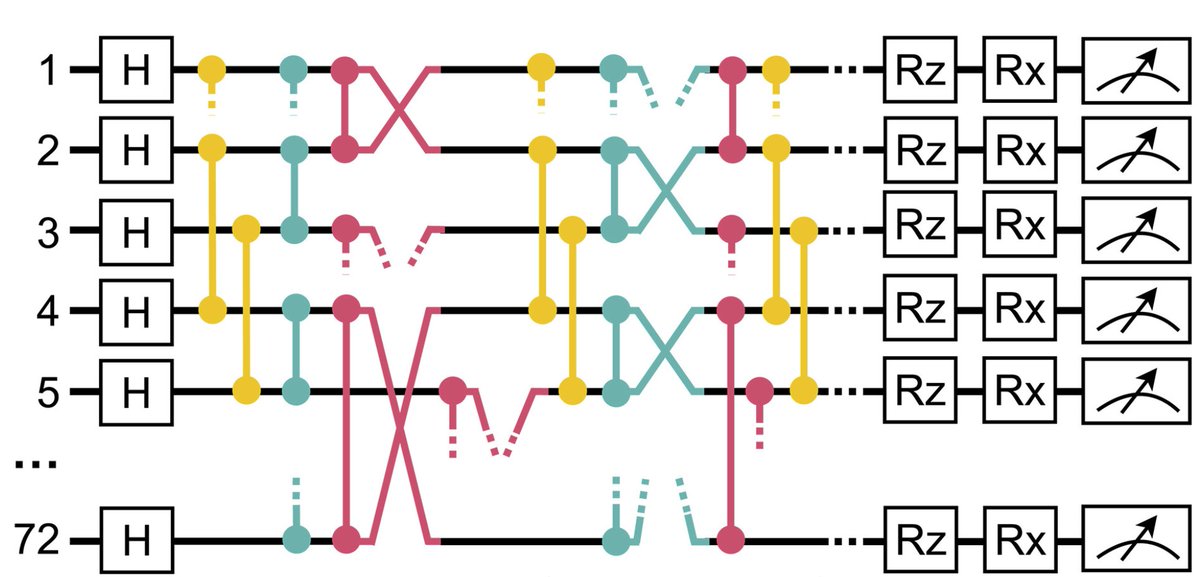
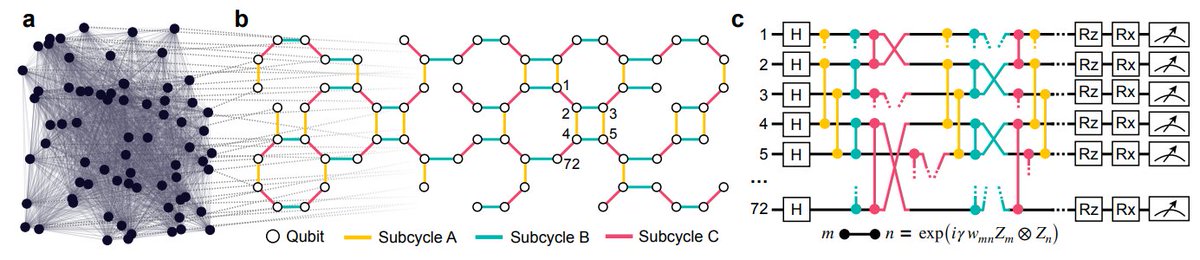
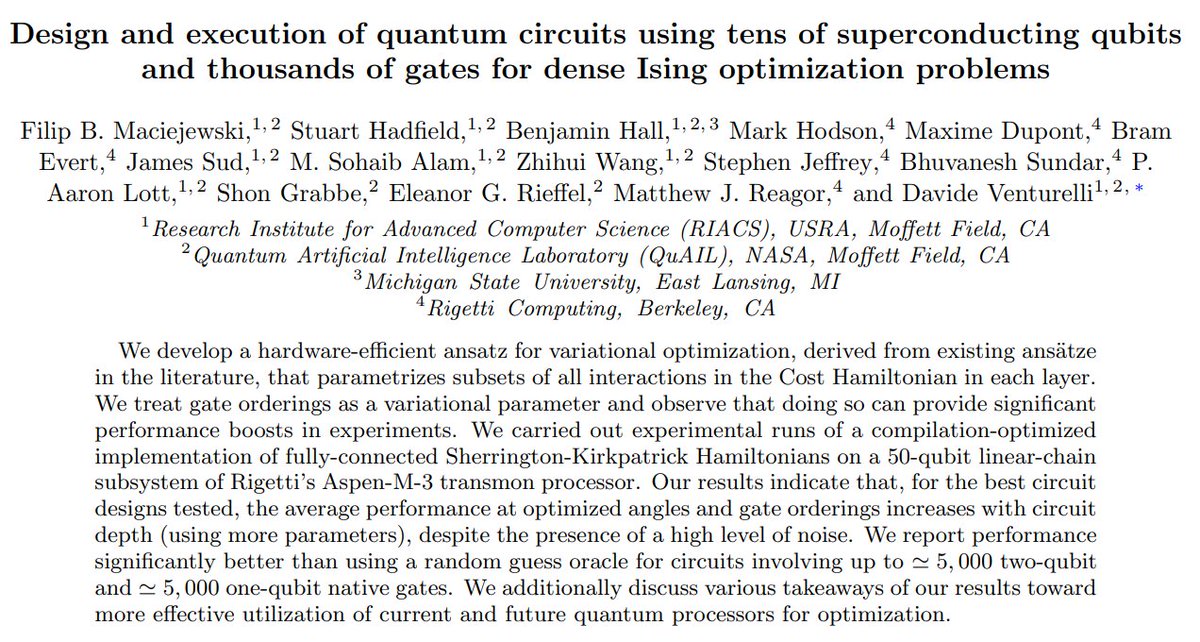
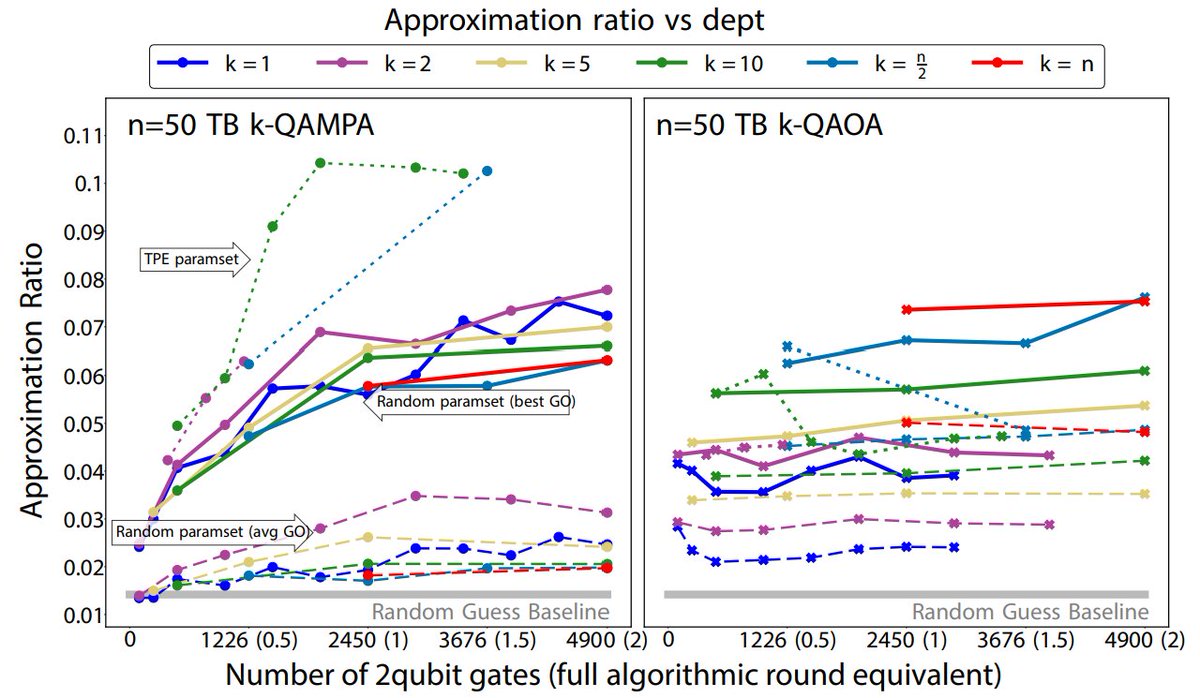
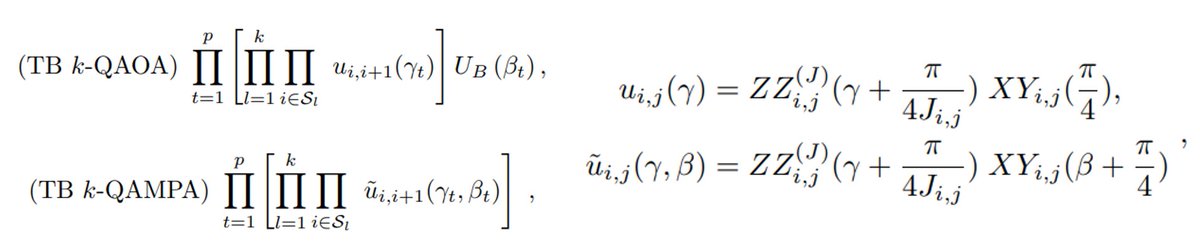
2. Design and execution of quantum circuits using tens of superconducting qubits and thousands of gates for dense Ising optimization problems meetings.aps.org/Meeting/MAR…
3. Floquet Codes on Non-Trivalent Lattices meetings.aps.org/Meeting/MAR…
4. Surrogate Optimization for Quantum Circuits meetings.aps.org/Meeting/MAR…
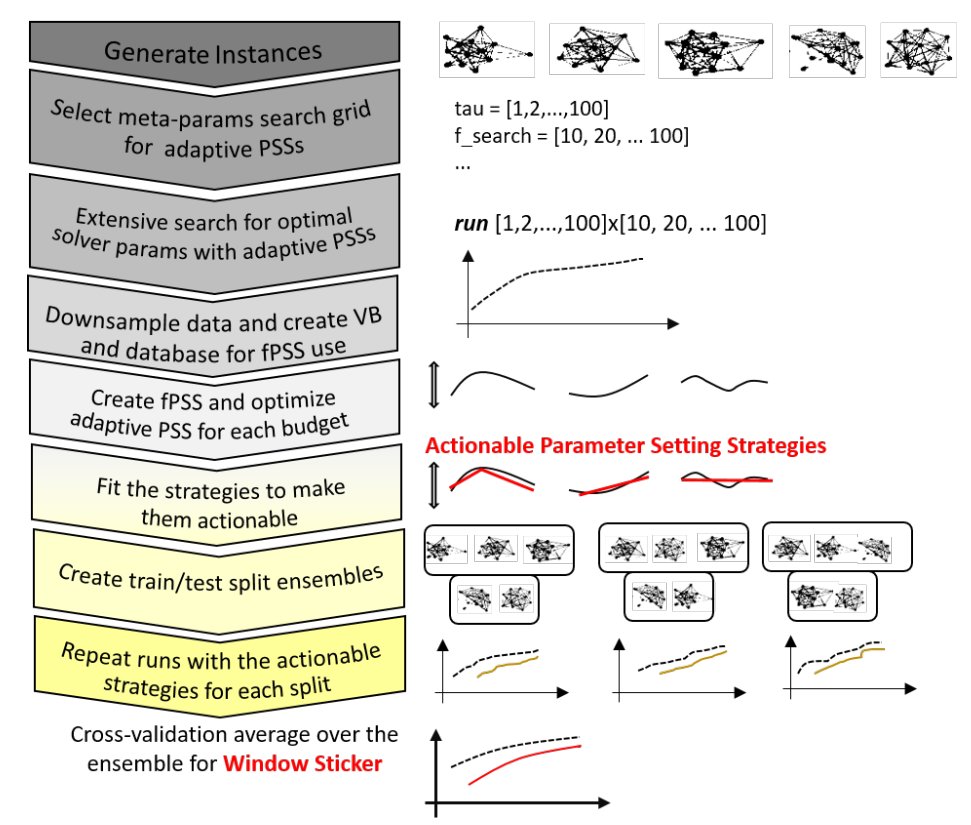
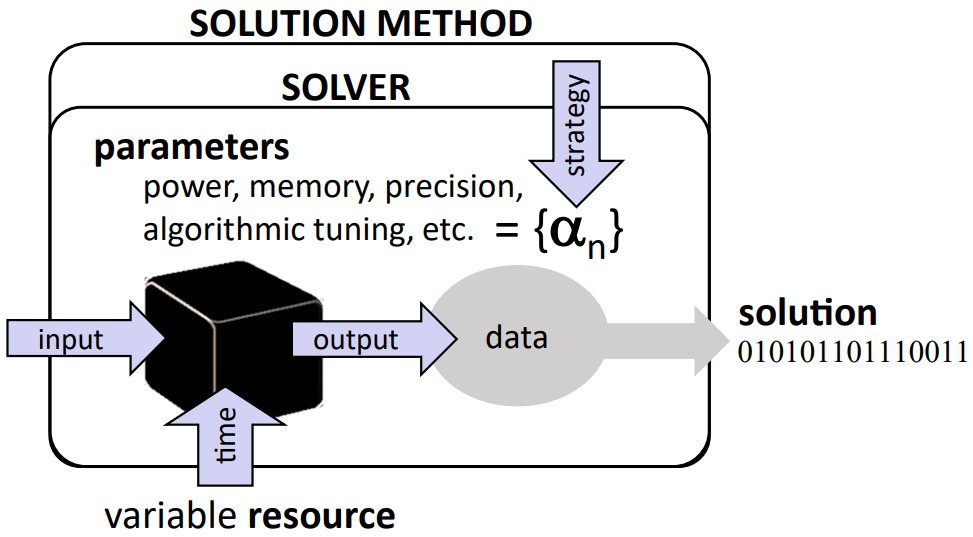
5. Extracting and evaluating performance of NISQ Optimization experiments: beyond angle-parameter setting meetings.aps.org/Meeting/MAR…
6. Scrambling of algebras in open quantum systems meetings.aps.org/Meeting/MAR…
7. Benchmarking Hard Ising Instances with Energy Scrambling meetings.aps.org/Meeting/MAR…
8. Classical and Quantum Distributed Algorithms for the Survivable Network Design Problems meetings.aps.org/Meeting/MAR…
9. Effective quantum volume, fidelity and computational cost of noisy quantum processing experiments meetings.aps.org/Meeting/MAR…. Scrambling and operator entanglement in local non-Hermitian quantum systems[SG1] meetings.aps.org/Meeting/MAR…
11. Variational quantum optimization with qubit-efficient encoding of problems[SG2] meetings.aps.org/Meeting/MAR…
12. On Penalty Functions for Variational Quantum Algorithms
meetings.aps.org/Meeting/MAR…
13. A look at the truths and misconceptions of the variational quantum eigensolver and the implications of overparameterization meetings.aps.org/Meeting/MAR…
14. The quantum algorithmic reach of a high-Q radio frequency cavity meetings.aps.org/Meeting/MAR… (edited)
5
268