
개발 이야기를 좋아합니다.
Joined September 2015
- Tweets 6,604
- Following 2,179
- Followers 11,238
- Likes 30,177
361 Photos and videos










Daniel Lee retweeted
engineering.atspotify.com/20…
Spotify가 백그라운드 코딩 에이전트인 Honk를 만들어서 적용한 이야기.
AI로 인해서 코드 생산 속도가 빨라지면서 이후 코드를 딜리버리하고 운영에까지 늘어난 부담을 해결하는 방법은 이러한 접근 뿐이라고 생각하는 편이다.
1
15
45
2,668
Daniel Lee retweeted

Jun 13
addyosmani.com/blog/intent-d…
좋은 글이다.
기술 부채, 인지 부채, 의도 부채 중에서 AI가 해결 못하는게 의도 부채임. 그동안은 사람사이에 전달되면서 버텨왔지만 빠른 속도로 의도 없이 코드를 작성하는 AI로 의도 부채는 더 커지게 됨.
이를 위해 의도와 결정 사항을 문서로 작성하게 해야함.
2
60
187
8,702

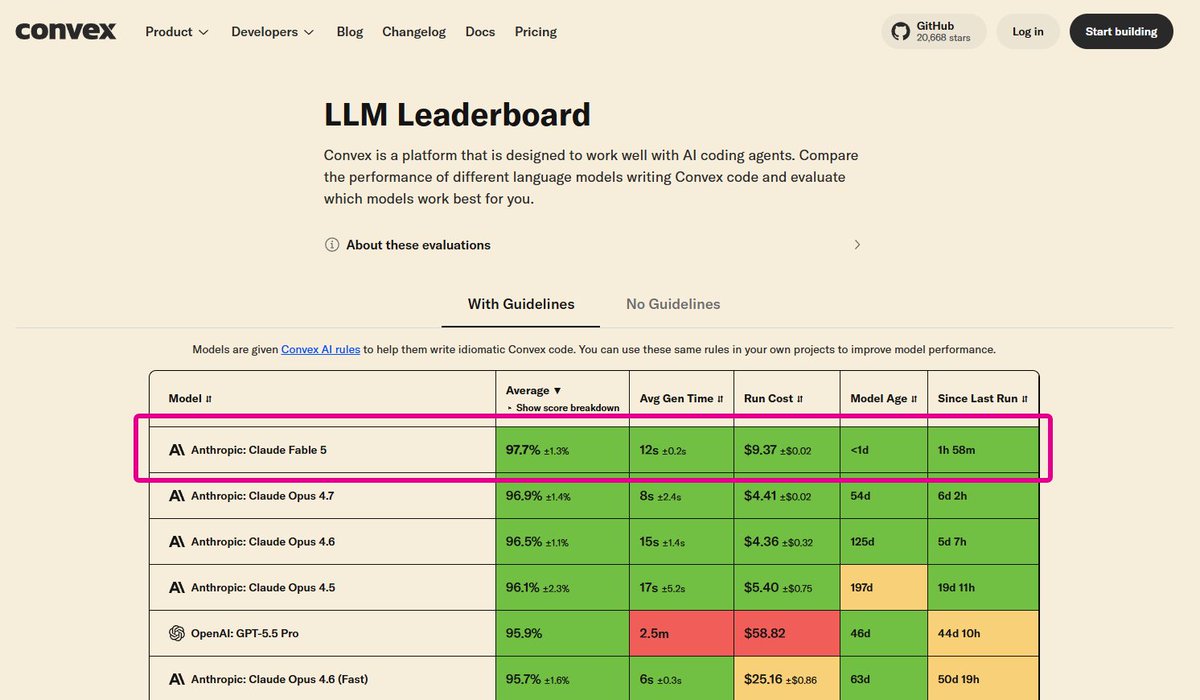
Okay reposting because after some investigation the Fable run uncovered some new harness issues.
@AnthropicAI Fable is now top of the @convex LLM Leaderboard with a pretty much perfect result, much more inline with what I was expecting.
5
3
86
12,709
Daniel Lee retweeted

Jun 9
One of my personal favorite features announced at WWDC will I suspect be a sleeper hit: container machines, allowing your Mac to run a lightweight, persistent Linux environment with your home directory and repos automatically mounted: github.com/apple/container/b…
228
815
9,698
728,531
Daniel Lee retweeted

Jun 8
312
1,124
7,270
1,823,974

From "impossible" to shipped in 2 weeks 🚀
With Codex, we built Edge.js: full Node.js workloads running inside a WebAssembly sandbox at the edge (no Docker required!)
The future of cloud is fast, secure, and WebAssembly-native.
openai.com/index/wasmer/
1
8
41
7,760

Jun 3
공감. 날카루온 질문이 들어올때도 있지만 대부분 질문을 하기위해 질문을 하는구나 생각이 든다.
Jun 3

이게 UX가 좋아서인지 사람들이 좋아하는 도구 같은데, 헤비하게 쓰는 입장에서는 그냥 제대로 컨텍스트 빌딩 안 되고 억지 질문밖에 안 한다고 느껴짐. 플랜모드도 한 시절이었고…
2
1,363


Daniel Lee retweeted
May 28
84
367
2,554
783,444
May 29
교수님의 밝은 목소리로 소프트웨어/프로그래밍 연구 이야기를 듣고 있자니 정말 정말 즐거웁다.
듣는 내내 일을 때려치우고 교수님의 연구실에 들어가 배워보고싶은 생각이 계속 들었다.
May 21

오후 3시에 시작합니다! x.com/i/broadcasts/1nGnRYPYP…
3
8
940
May 28
영웅담처럼 들리지만, 사실 개발자가 지향해야 하는 모습에 반대에 가깝다.
시니어는 중요한 시스템이 한 사람이 매일 밤 손보는 대체 불가능 사람이 아니라
그 사람이 필요 없는 시스템과 조직을 만드는 사람이여야 한다.
May 27

a staff engineer at my old company got laid off during “cost cutting.”
his entire farewell meeting was 12 minutes long.
week later:
payment service started randomly failing.
turns out he was manually fixing edge-case data corruption every night for 3 years.
nobody even knew.
the most dangerous systems are the ones surviving because of one invisible engineer.
19
52
13,178
Daniel Lee retweeted

May 25
James Cowling (@jamesacowling) was the most senior engineer at Dropbox (Senior Principal) before he left to start his own company, @convex. I interviewed him about:
• Career navigation in the "AI era"
• Why simplicity >> complexity
• Promo incentives tied to complexity
• Technical details of his major projects and PhD
• His top career regrets
• Thoughts on the permanent underclass
Where to watch:
• YouTube: youtu.be/3XkmNSuHFmY
• Spotify: open.spotify.com/episode/1Xt…
• Apple Podcasts: podcasts.apple.com/us/podcas…
• Transcript: developing.dev/p/dropboxs-fo…
Thank you to this episode's sponsor for supporting my work:
• WorkOS: makes your app Enterprise Ready with easy to use APIs to add SSO, SCIM, RBAC, and more in just a few lines of code, check them out at workos.com/
Timestamps:
0:00 - Intro
0:53 - Systems work during his PhD
13:05 - Dropbox technical deep dive
21:57 - Why Dropbox migrated from AWS
36:40 - How to do massive migrations
44:31 - Simplicity vs complexity in promos
49:23 - What technical teams should be focused on
1:00:25 - Doing the right thing vs promo hypothetical
1:08:13 - Why he dipped into management sometimes
1:11:36 - Why you shouldn't lead by example
1:23:23 - How to mentor Senior Staff engineers
1:27:30 - Career advice for the AI era
1:37:21 - Why he started his own company
1:46:05 - The most technically challenging work of his career
1:48:10 - How he got involved in Silicon Valley
1:52:16 - Career regrets
1:55:54 - Top technical book recommendation
1:56:36 - Younger self & permanent underclass advice
3
18
140
32,090
Daniel Lee retweeted

May 25
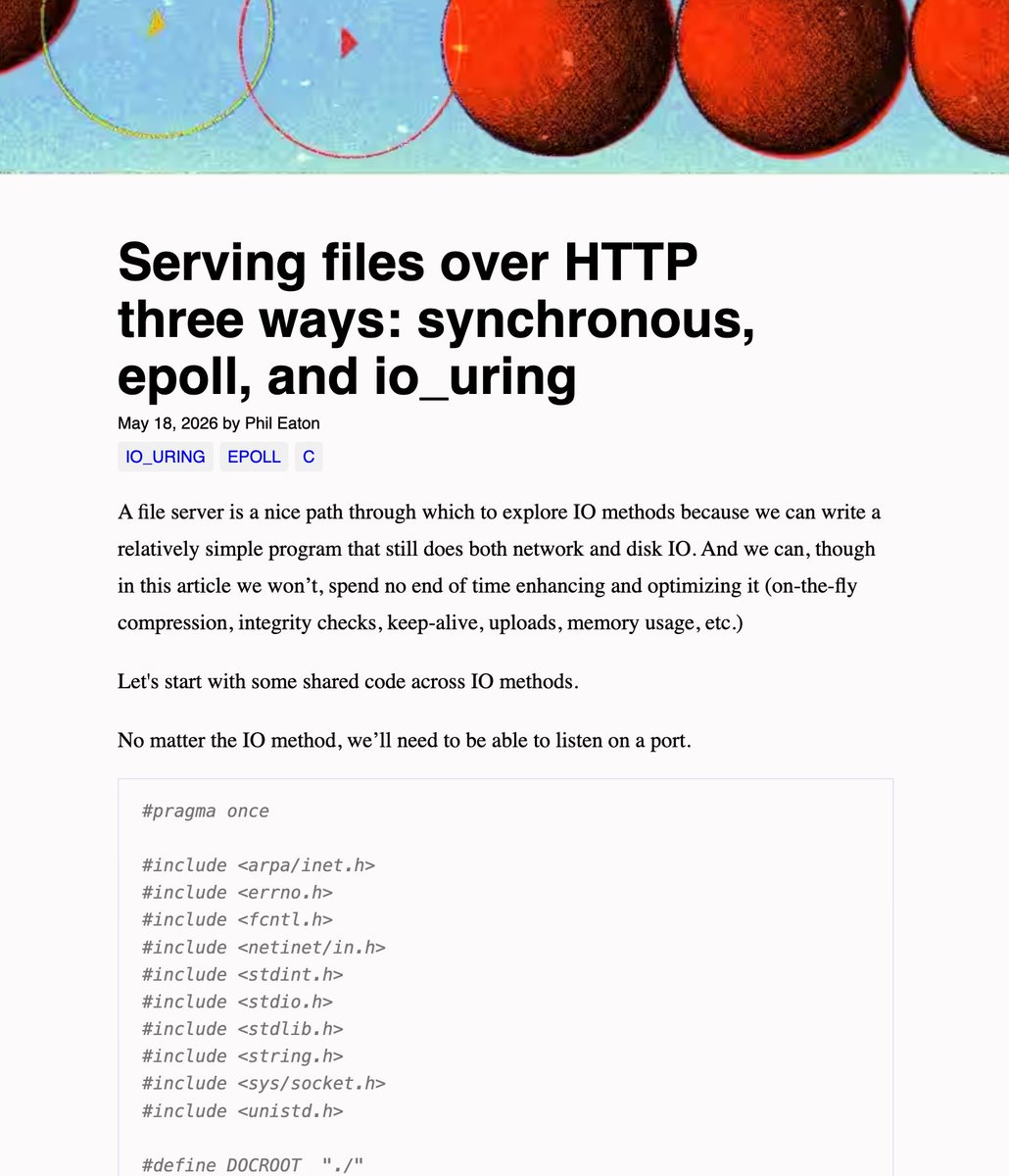
I wrote an article on epoll and io_uring basics through the lens of a simple HTTP file server written in C.
Paywall has expired, give it a read!
9
110
1,168
70,084
Daniel Lee retweeted

May 24
1
4
12
3,944

Daniel Lee retweeted

May 22
🚀 Just launched: ExtendDB — an open source DynamoDB-compatible adapter written in Rust.
✅ Full wire-protocol compatibility ✅ PostgreSQL storage backend ✅ Pluggable architecture for more backends ✅ Works with existing AWS SDKs & CLI
Apache 2.0 | v0.1 — come build with us 🛠️
go.aws/4fzBl2C
14
73
778
701,123

tldr: ClickUp is hosting a company-wide Hunger Games where if you can figure out how the hell to make AI work you’ll win a million dollars.
May 21

Today we reduced headcount by 22%. The business is the strongest it's ever been. So I think it's important to be direct about what I'm seeing and why.
First, I made this decision and I own it. I did it because the way to operate at the highest level of productivity is changing, and to win the future, ClickUp needs to change with it.
Second, this wasn't about cutting costs. Most savings from this change will flow directly back into the people who stay. We'll be introducing million-dollar salary bands. If you create outsized impact using AI, you'll be paid outside of traditional bands.
Most importantly, I have the deepest gratitude for those affected. We're doing this from a position of strength specifically so we can take care of people properly. Everyone affected receives a package aimed at honoring their contributions and easing the transition.
I only see two options: wait for this to play out gradually in the market or be honest about what I'm seeing and act proactively.
THE 100X ORGANIZATION
The primary change is that we're restructuring around what I call 100x org. The goal is 100x output. The roles required to build at the highest level are fundamentally different than they were a year ago.
Incremental improvements to existing systems won't get us there. We need new ones. That means creating enough disruption to rebuild rather than iterate on what's already broken.
The common narrative is that AI makes everyone more productive. It doesn't. Many of the workflows of today, if left unchanged, create bottlenecks in AI systems.
These roles will evolve. But waiting for that to happen naturally means falling behind now.
The 100x org is actually heavily dependent on people - infinitely more than today. This is only possible with 10x people that have embraced and adopted new ways of working.
THE BUILDERS, AGENT MANAGERS, AND FRONT-LINERS
— THE BUILDERS: 10X ENGINEERS
I don't think most companies have internalized what's actually happening with AI in engineering. The common narrative is that AI makes all engineers more productive. That may be true in isolation, but at an organization level - that is the farthest thing from reality.
Here's what we've validated recently at ClickUp: the great engineers, the ones who can orchestrate, architect, and review, are becoming 100x engineers. They're not writing code. They're directing agents that write code. The skill is judgment.
AI makes the best engineers wildly more productive, and everyone else using AI slows these engineers down.
Think about it - the bottlenecks are (1) orchestration - telling AI what to do, and (2) reviewing - what AI did. Everything is leapfrogged and no longer needed.
So who do you want orchestrating and reviewing code?
And how do you want your best engineers to spend their time?
If your best engineers are spending time reviewing other people's code, then this is inherently an inefficient bottleneck. These engineers can review their agent's code much faster than reviewing human code.
The new world is about enabling your 10x engineers to become 100x.
The wrong strategy is to push every engineer to use infinite tokens. Companies doing this are celebrating 500% more pull requests. But customer outcomes don't match the volume of code being generated.
I call this the great reckoning of AI coding, and every company will face this soon if not already.
More code is just another bottleneck to the best engineers, and ultimately to your company's impact as well.
— THE BUILDERS: 10X PRODUCT MANAGERS
Product management and design roles are merging.
Designers that have customer focus, become more like product managers.
And product managers that have intuition for UX become more like designers.
The bottleneck of user research is gone. It takes us just one mention of an agent to kickoff research and analyze results.
The bottleneck of product <> design iteration is also gone. The product builder iterates on their own, along with agents and skills that ensure alignment with quality and strategy.
Also controversial today - I believe that the wrong strategy is to have your PMs shipping code - that just introduces another bottleneck that the best engineers will waste their time on.
To be clear, PMs should be coding but they should do this in a playground to iterate, validate, and scope. That code should not go to production.
Everything outside of managing systems, orchestrating AI, and reviewing output becomes a bottleneck.
That's why the other roles that are critical along with these are the systems managers (to reduce bottlenecks) along with a bottleneck you can't replace - customer meeting time.
— THE SYSTEM MANAGERS
Ironically, the people that automate their jobs with AI will always have a job. They become owners of the AI systems - agent managers. We have many examples of these people at ClickUp.
The underlying systems in which we operate are absolutely critical to get right. I think most companies are delusional to think they can iterate on existing systems and compete in this new world.
You must create enough disruption so that old systems are deprecated entirely. If there's any definition for 'AI native' that's what it is.
— THE FRONT-LINERS
In a world that will become saturated with AI communication, the human touch will matter more than anything to customers.
This is a bottleneck that you shouldn't replace - even when agents are high enough quality to do video meetings.
One-on-one meeting time with customers is something that shouldn't be automated. The systems around the meetings should be - so that front-liners spend nearly 100% of their time with customers.
REWARDING 100X IMPACT
In a world where companies are able to do so much more with less, where does that excess money go?
In our case, much of the savings in this new operating model will flow directly back to those that enabled it.
We must reward people that create productivity accordingly. This aligns incentives on both sides. Plus, in a world where your best people create 100x impact, you can't afford to lose them.
You should aim to retain these employees for decades. The context they have and their ability to efficiently orchestrate and review will be nearly impossible to replace.
Compensation bands of today should be thrown out the door. We're introducing $1 million cash/year salary bands with a path available to nearly everyone in the company if they produce 100x impact by creating or managing AI systems.
THE FUTURE
Nearly every company will make changes like these. The ones that do it proactively will define what comes next.
The future is not fewer people. It's different work, new roles, and better rewards for those who embrace it. We're already seeing entirely new roles emerge, like Agent Managers, that didn't exist a year ago.
ClickUp is positioning to lead this shift, not just internally, but for our customers too. I've never been more certain about where we're headed.
109
169
3,164
260,042
May 21
"100x 개발자"라는 말에는 한숨이 나오지만 연봉 테이블 개선 부분은 비교적 새롭다.
"100x 성과를 내는 직원이 $1M 이상 연봉을 챙겨갈 수 있는 테이블을 도입합니다."
May 21
Today we reduced headcount by 22%. The business is the strongest it's ever been. So I think it's important to be direct about what I'm seeing and why.
First, I made this decision and I own it. I did it because the way to operate at the highest level of productivity is changing, and to win the future, ClickUp needs to change with it.
Second, this wasn't about cutting costs. Most savings from this change will flow directly back into the people who stay. We'll be introducing million-dollar salary bands. If you create outsized impact using AI, you'll be paid outside of traditional bands.
Most importantly, I have the deepest gratitude for those affected. We're doing this from a position of strength specifically so we can take care of people properly. Everyone affected receives a package aimed at honoring their contributions and easing the transition.
I only see two options: wait for this to play out gradually in the market or be honest about what I'm seeing and act proactively.
THE 100X ORGANIZATION
The primary change is that we're restructuring around what I call 100x org. The goal is 100x output. The roles required to build at the highest level are fundamentally different than they were a year ago.
Incremental improvements to existing systems won't get us there. We need new ones. That means creating enough disruption to rebuild rather than iterate on what's already broken.
The common narrative is that AI makes everyone more productive. It doesn't. Many of the workflows of today, if left unchanged, create bottlenecks in AI systems.
These roles will evolve. But waiting for that to happen naturally means falling behind now.
The 100x org is actually heavily dependent on people - infinitely more than today. This is only possible with 10x people that have embraced and adopted new ways of working.
THE BUILDERS, AGENT MANAGERS, AND FRONT-LINERS
— THE BUILDERS: 10X ENGINEERS
I don't think most companies have internalized what's actually happening with AI in engineering. The common narrative is that AI makes all engineers more productive. That may be true in isolation, but at an organization level - that is the farthest thing from reality.
Here's what we've validated recently at ClickUp: the great engineers, the ones who can orchestrate, architect, and review, are becoming 100x engineers. They're not writing code. They're directing agents that write code. The skill is judgment.
AI makes the best engineers wildly more productive, and everyone else using AI slows these engineers down.
Think about it - the bottlenecks are (1) orchestration - telling AI what to do, and (2) reviewing - what AI did. Everything is leapfrogged and no longer needed.
So who do you want orchestrating and reviewing code?
And how do you want your best engineers to spend their time?
If your best engineers are spending time reviewing other people's code, then this is inherently an inefficient bottleneck. These engineers can review their agent's code much faster than reviewing human code.
The new world is about enabling your 10x engineers to become 100x.
The wrong strategy is to push every engineer to use infinite tokens. Companies doing this are celebrating 500% more pull requests. But customer outcomes don't match the volume of code being generated.
I call this the great reckoning of AI coding, and every company will face this soon if not already.
More code is just another bottleneck to the best engineers, and ultimately to your company's impact as well.
— THE BUILDERS: 10X PRODUCT MANAGERS
Product management and design roles are merging.
Designers that have customer focus, become more like product managers.
And product managers that have intuition for UX become more like designers.
The bottleneck of user research is gone. It takes us just one mention of an agent to kickoff research and analyze results.
The bottleneck of product <> design iteration is also gone. The product builder iterates on their own, along with agents and skills that ensure alignment with quality and strategy.
Also controversial today - I believe that the wrong strategy is to have your PMs shipping code - that just introduces another bottleneck that the best engineers will waste their time on.
To be clear, PMs should be coding but they should do this in a playground to iterate, validate, and scope. That code should not go to production.
Everything outside of managing systems, orchestrating AI, and reviewing output becomes a bottleneck.
That's why the other roles that are critical along with these are the systems managers (to reduce bottlenecks) along with a bottleneck you can't replace - customer meeting time.
— THE SYSTEM MANAGERS
Ironically, the people that automate their jobs with AI will always have a job. They become owners of the AI systems - agent managers. We have many examples of these people at ClickUp.
The underlying systems in which we operate are absolutely critical to get right. I think most companies are delusional to think they can iterate on existing systems and compete in this new world.
You must create enough disruption so that old systems are deprecated entirely. If there's any definition for 'AI native' that's what it is.
— THE FRONT-LINERS
In a world that will become saturated with AI communication, the human touch will matter more than anything to customers.
This is a bottleneck that you shouldn't replace - even when agents are high enough quality to do video meetings.
One-on-one meeting time with customers is something that shouldn't be automated. The systems around the meetings should be - so that front-liners spend nearly 100% of their time with customers.
REWARDING 100X IMPACT
In a world where companies are able to do so much more with less, where does that excess money go?
In our case, much of the savings in this new operating model will flow directly back to those that enabled it.
We must reward people that create productivity accordingly. This aligns incentives on both sides. Plus, in a world where your best people create 100x impact, you can't afford to lose them.
You should aim to retain these employees for decades. The context they have and their ability to efficiently orchestrate and review will be nearly impossible to replace.
Compensation bands of today should be thrown out the door. We're introducing $1 million cash/year salary bands with a path available to nearly everyone in the company if they produce 100x impact by creating or managing AI systems.
THE FUTURE
Nearly every company will make changes like these. The ones that do it proactively will define what comes next.
The future is not fewer people. It's different work, new roles, and better rewards for those who embrace it. We're already seeing entirely new roles emerge, like Agent Managers, that didn't exist a year ago.
ClickUp is positioning to lead this shift, not just internally, but for our customers too. I've never been more certain about where we're headed.
1
9
4,566
Daniel Lee retweeted

May 20
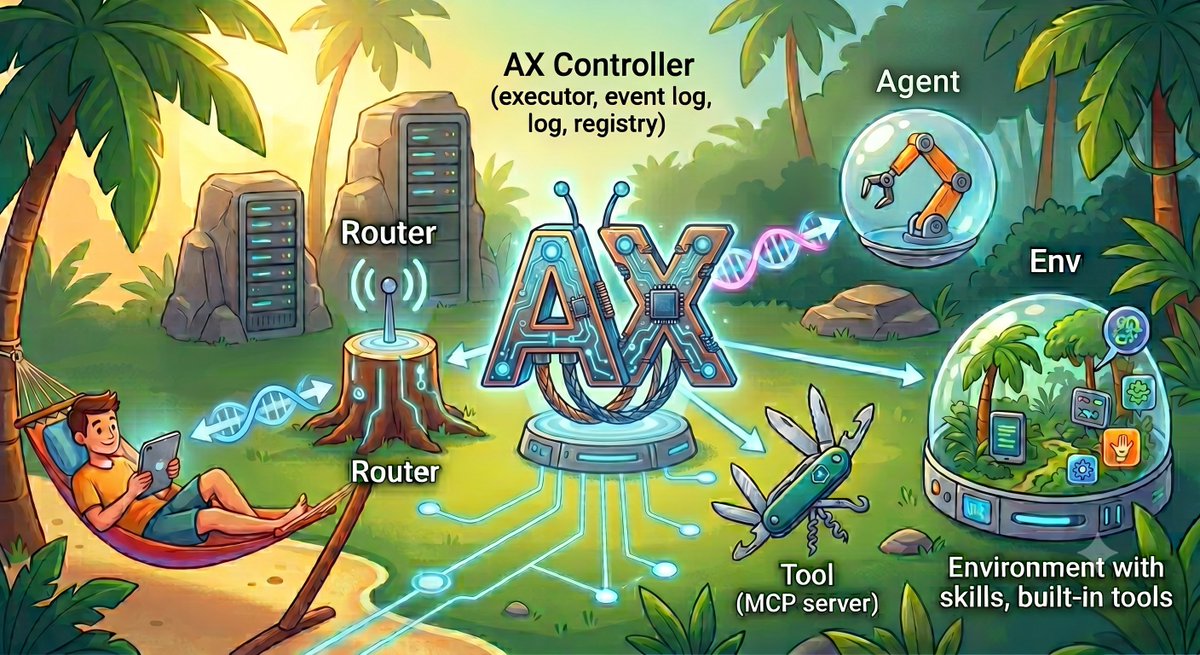
🌟 Today, we are releasing Google’s open source distributed agent runtime.
Agent Executor (AX) is a general purpose runtime and aims to solve dynamic scheduling, resumption, auto recovery, auditing, and trajectory branching from kernel snapshots in agentic workloads.
23
45
288
39,353