
The @mit early stage deep tech venture fund. Supporting and and investing in the AI and deep tech startups
Joined March 2017
- Tweets 408
- Following 161
- Followers 1,198
- Likes 605
21 Photos and videos








If you are at ICRA, join our friends at Eka for drinks and learn about they are building
Jun 2

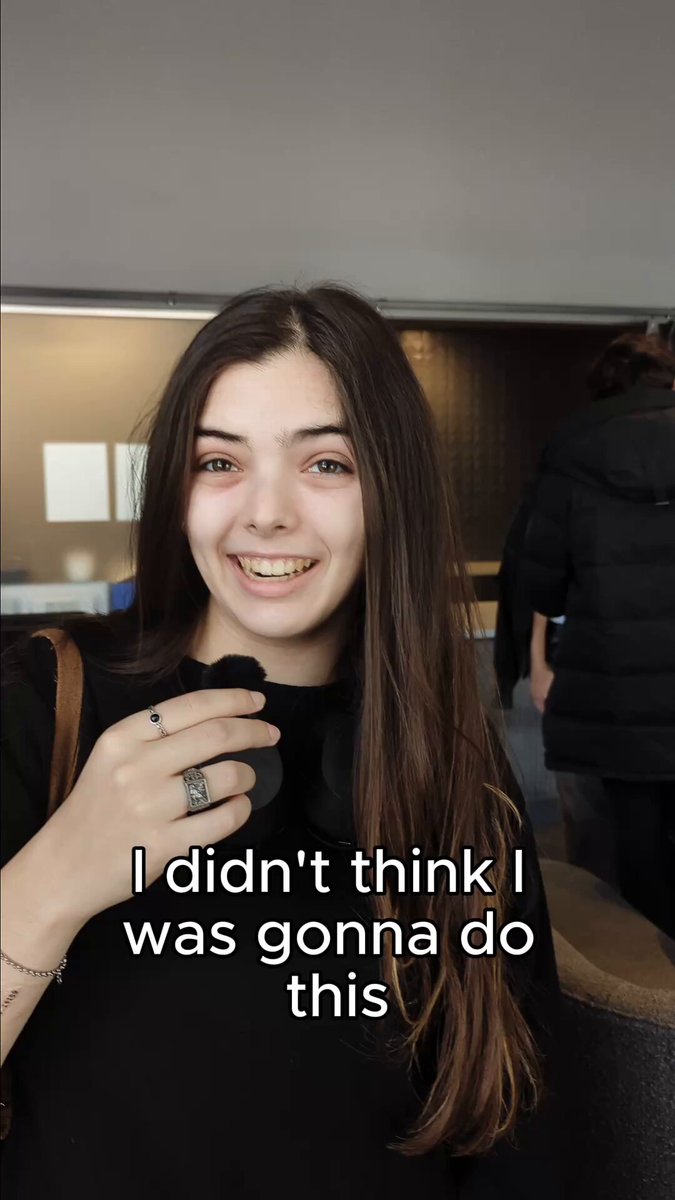
@EkaRobotics ICRA social tonight. Join me to learn more about Eka, spirited discussions, stories from startup and research life, and of course, everything robotics.
Limited capacity, so please RSVP if you plan to attend: luma.com/lbnv4ueq
192
E14 Fund retweeted

Jun 1
Physical AI is more than just humanoid bots.
At our HARD MODE community show & tell for #BosTechWeek builders brought:
🦆⌨️AI typing ducks
🧫🧭Magnetic AI lifeforms
👃🎞️A scent-memory machine
🤖👋The very viral Human Operator
🦾🧱Assembly robots
📷🎵A music camera
🎸🎻 🎹 An orchestra of intelligent musical instruments
And more…
The future of AI in the physical world is weirder, wilder, and much more wonderful than you think.
1
4
7
439
Heading to #CVPR2026 in Denver? We put all the events in one place so you don’t have to hunt for them ➡️ e14.vc/cvpr
Let us know if we missed your event!
324
Cambridge is buzzing this week: MIT and Harvard Commencement the inaugural #BOSTechWeek. We're co-hosting three events:
- HARD MODE: Physical AI at MIT Media Lab → partiful.com/e/4wahZxSOBB3Iv…
- Multi-Agent Orchestration Hackathon → partiful.com/e/ygDGE5ENT6Ipa…
- Lego and Movie Build Night → partiful.com/e/vD1pCBjTjJ4Zq…
With our amazing collaborators @AHA_MediaLab @massaicoalition @RedHat @womenxinnovator @Techweek_ @agihouse_org @blainegame @wandb @enginexyz
3
7
630
Heading to #ICRA2026 in Vienna?
We put all the events in one place so you don’t have to hunt for them ➡️ e14.vc/icra
What did we miss?
153

E14 Fund retweeted

We've spoken with hundreds of ad creatives, marketing designers, filmmakers, and animation teams — and heard the same thing: the outputs look great… until they don't 😅. When they fail, it's incredibly hard to tell why. Is it the prompt, the model, or the world itself quietly breaking? That ambiguity is the real bottleneck.
Physion-Atlas 1.0 introduces a more objective, diagnostic way to evaluate video world models — moving beyond high-level comparisons to surface what actually matters. It disentangles prompt misalignment from physical and visual inconsistencies, grounding every judgment in explicit spatiotemporal evidence. Not just which output is better, but what breaks, when, where, and why. From abstract comparisons → diagnosable reality 🔍
📄 Blog: physionlabs.ai/blog/physion-…
📝 Evaluate your model: docs.google.com/forms/d/e/1F…
4
18
32
2,896
E14 Fund retweeted

Apr 30
Excited to share @tutorintel's Data Factory 1, a 100 robot semi-humanoid research farm and the largest robot data factory in the United States.
Our first embodiment “Cassie” is deployed at industrial scale across the supply chain. We built DF1 to bootstrap fleet-scale learning for our "Sonny" industrial semi-humanoid embodiment, powered by our first end-to-end robot foundation model Ti0.
41
103
587
98,503
The answer to unlocking robotics has always been at our fingertips.

From sorting chicken nuggets to screwing in light bulbs, Eka’s robots are eerily lifelike. But do they have real physical smarts? wired.com/story/when-robots-…
2
160
E14 Fund retweeted

Apr 28
Forces are the language of the physical world. At @EkaRobotics, we're building a Vision-Force-Action Model (VFA).
18
42
439
42,734
E14 Fund retweeted
Apr 28
We don't speed up our videos. We slow them down.
1/25x. @EkaRobotics.
2
16
220
20,515
E14 Fund retweeted
Apr 27
Until now, robotics stopped where the human hand begins.
Strong, but not delicate.
Precise, but not adaptive.
Repetitive, but not creative.
The human hand wasn’t a benchmark — it was a boundary.
We are crossing it.
@EkaRobotics.
Coming soon.
24
39
493
73,027
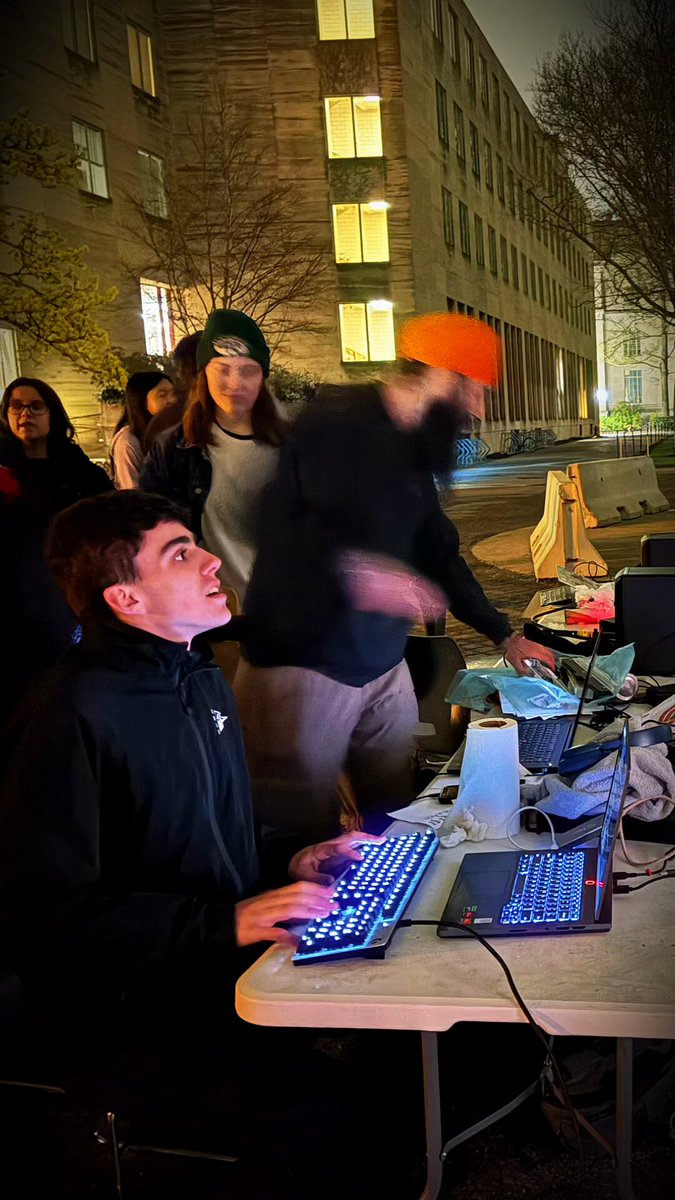
Midnight of Campus Preview Weekend. A group of MIT students took over Building 54 and turned 21 stories of the tallest building on campus into a playable Tetris game.
The same instinct that makes someone spend 10,000 hours wiring up a building is what makes them spend the next decade building a company that matters.
That's who we back.
2
165
E14 Fund retweeted

Apr 14
Unreasonable Labs exists to build a different kind of machine for discovery: an AI designed to help close the gap between the known and the unknown.
Our goal is not simply to generate plausible language about the world, but to reason about the world itself: to compress complexity into transferable principles, recompose them across domains, test them against physics rather than token statistics, and evolve with every hypothesis it examines.
We design for the human as co-reasoner, contributing tacit knowledge, judgment, and cross-domain intuition that remain the deepest sources of leverage in discovery.
Unreasonable Labs is built on a simple conviction: reasoning grounded in first principles can take us beyond the limits of statistical prediction. Conventional AI optimizes for plausibility within distributions it has already seen - it doesn't reason about what lies outside them. If we want to invent a novel composite resin, discover a new chemical compound, or design a bio-inspired material, probabilistic fluency isn't enough.
Our dynamic world model continuously evolves by integrating data with physics engines and experiments, updating its structured understanding of physical reality with every new hypothesis it tests.
In one of our example use cases, a materials engineer searching for structures that are simultaneously impact-resistant, flexible, and lightweight discovers unexpected inspiration in butterflies. This is the sort of cross-domain, unreasonable connection that standard AI misses, and that our platform is designed to surface, validate, and ground in physics. This approach extends the range of discoverable designs by making hidden cross-domain principles visible and testable, and brings AI to the physical world.
We are building a transparent, visual workspace where scientists can see the AI's logical steps, verify its connections, and steer the process using their own expertise - choosing the degree of autonomy appropriate to the task, from fully autonomous to deeply collaborative.
We wrote more about why we are building Unreasonable Labs, and where our name comes from (link below). The hint is in the word itself: it often takes unreasonable people to change the world.
“The reasonable man adapts himself to the world: the unreasonable one persists in trying to adapt the world to himself. Therefore all progress depends upon the unreasonable man.” (George Bernard Shaw)
@unreasonable_ai @caoyuan33, Andrew Lew, Haiqian Yang, Jennifer Kang, Matt Insler, @ProfBuehlerMIT
7
20
96
7,242
E14 Fund retweeted

Apr 9
We're launching our new multimodal reasoning lab @ElorianAI out of stealth today with $55M backed by @strikervp, @MenloVentures and @AltimeterCap with participation from @nvidia, 49 Palms and others including @JeffDean. Find out more here youtu.be/YlvfNpOMeOY?si=iiVT….
Apr 9

After almost 12 years in Brain/DeepMind, I’ve finally decided to take the leap. My cofounders: @yinfeiy, Seth and I have kicked-off @ElorianAI. The first multimodal reasoning lab founded and led by former LLM pretraining, data and multimodal leads. youtu.be/YlvfNpOMeOY?si=iiVT… (1/n)
4
4
34
7,150
E14 Fund retweeted

Apr 9
After almost 12 years in Brain/DeepMind, I’ve finally decided to take the leap. My cofounders: @yinfeiy, Seth and I have kicked-off @ElorianAI. The first multimodal reasoning lab founded and led by former LLM pretraining, data and multimodal leads. youtu.be/YlvfNpOMeOY?si=iiVT… (1/n)
82
77
841
383,037
E14 Fund retweeted

Mar 30
I'm thrilled to announce @SycamoreLabs, the trusted agent OS for the enterprise. We raised a $65M seed led by @coatuemgmt and @lightspeedvp, with @AbstractVC, @DellTechCapital, @8vc, @Fellows_Fund, @e14fund, and an exceptional group of angel investors.

33
22
264
63,573
E14 Fund retweeted

Mar 25
Hollywood isn't dead. It's evolving. And we're leading that evolution.
We just shipped Koyal v2.5: The best Agentic AI filmmaking platform. It goes from your script or music to full video with consistent characters, settings & storylines.
Large Production houses, music labels & ad agencies use @KoyalAI for storyboarding & pre-viz.
Smaller studios use it for making content they never had the time, budget or resources to create.
Write a scene. Direct the camera. Build a world. @KoyalAI brings it to life.
Here's what's new:
- Go from script to video:
Write a scene with dialogue, pacing, emotion. Koyal fully realizes it. Using the best voice models on the planet.
- Direct the camera:
Push in. Pull back. Drift through a scene. Real 3D camera blocking. Shape the shot the way you see it in your head.
- Build a world that stays:Lock in a location and return to it. Your scenes stay consistent from the first frame to the last.
Plus: dialogue, SFX, annotations for editing, and more control over every shot.
Under the hood, we benchmark 40 models weekly with real humans so Koyal always uses the best available (more on that next week!)
Our agents pick the best models for each scene in run-time so you focus on the story, we handle the complexity.
You don't need to prompt a film, you can direct it.
With Koyal, we're looking to replace the camera, not the filmmaker behind it.
Try it now at beta [dot] koyal [dot] ai
DM me for credits!
95
75
372
72,998
E14 Fund retweeted

Mar 19
Re-introducing...Bond, your AI Chief of Staff.
You worked 10 hours yesterday. Maybe 2 of them actually mattered.
The rest? Standups, Slack threads, status updates, triaging emails.
Executives don't need to work harder. They need Bond
👉 bondapp.io
49
27
247
81,669