
3,449 Photos and videos








e4tango retweeted
The Marine Corps Silent Drill Platoon at UFC Freedom 250. I’ve had the privilege of seeing these gentlemen on several occasions. I’m always floored by their professionalism.
Semper Fi, men! 🇺🇸🙏🫡
101
891
7,543
48,633
e4tango retweeted

Jun 13
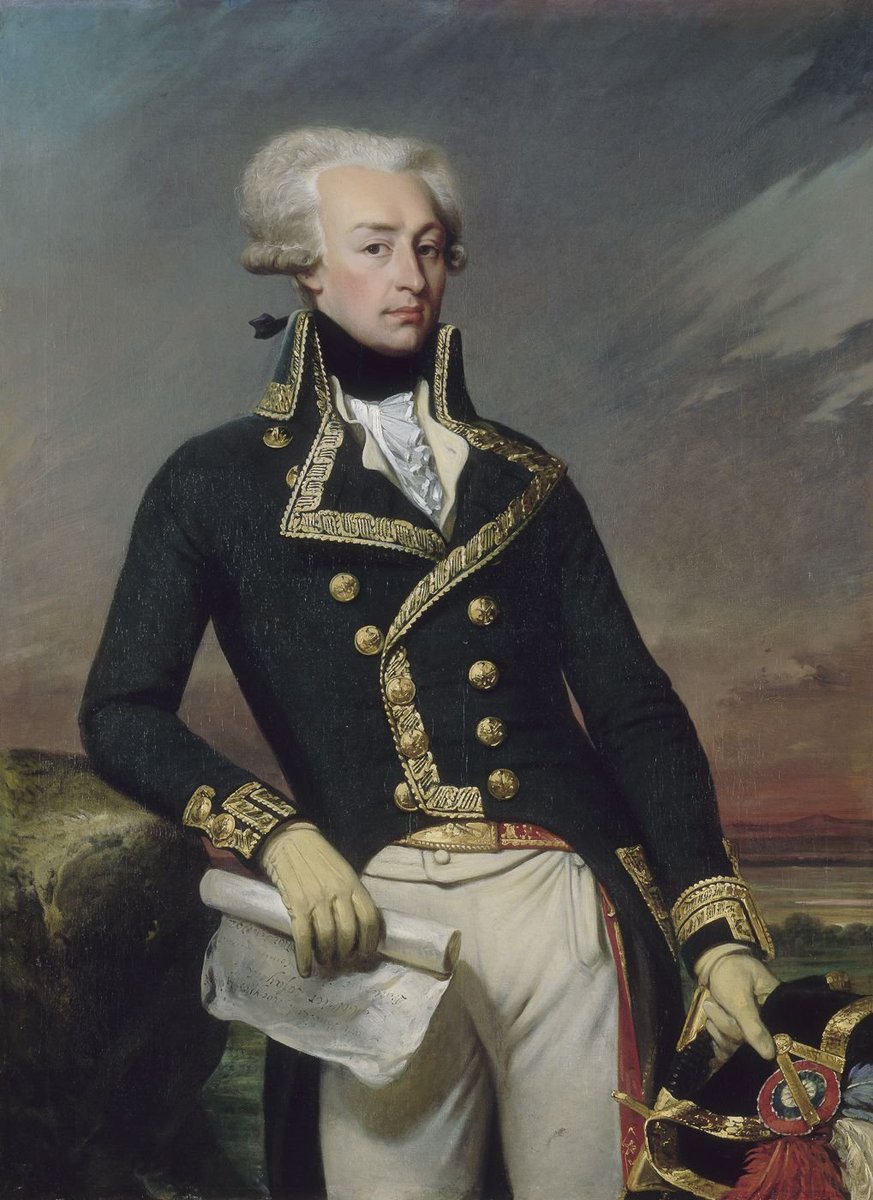
On June 13, 1777, a 19-year-old French teenager landed on a beach in South Carolina, uninvited, to fight in someone else's war. He would become one of the most important men in American history.
The Marquis de Lafayette was one of the richest young aristocrats in France. He had a beautiful wife, a fortune, and zero reason to risk any of it. But he believed in the American cause so fiercely that when the French king forbade him from going, Lafayette bought his own ship and sailed anyway. He literally went AWOL from a life of luxury to bleed for a country that didn't exist yet.
Congress was annoyed at first. Another foreign officer looking for a paycheck? Then Lafayette offered to serve for free and pay his own way. That got their attention.
He met Washington and the two formed one of the great father-son bonds in American history. Washington had no biological children. Lafayette named his only son George Washington Lafayette.
He took a bullet in the leg at Brandywine and kept rallying the retreat. He was instrumental at Yorktown, the battle that won the war. He went home a hero on two continents.
A foreign teenager believed in America before America did. 249 years ago today.
443
5,659
30,191
1,662,509
e4tango retweeted

Nature just dropped the best beat of the year
47
373
1,839
81,529
e4tango retweeted

Jun 15
今ネットで話題になっているSpaceXの27歳女性、郭璨。スターシップの女王と言われ注目されている。
SpaceXのミッションコントロールルームを支える中核エンジニア
↓
ロケットエンジンのパラメータをリアルタイムで監視、異常があれば中止指令を出す統括
↓
彼女が20代で開発したコードが打ち上げ制御ロジックとしてメインで使われている
↓
年俸はたった13万ドル(約2,000万円)
シリコンバレーのこの役職では低年俸
↓
しかしSpaceXを8-15万株ほど保有しており、先日の上場で資産価値が2,400万ドル(約38億円)に
単なる個人の話ではなく、低現金高株式で恩恵を受ける分かりやすいロールモデルとなった


Community note
写真の人物は郭璨ではなくSpaceXエンジニアのTinaです。彼女自身が名前と情報の誤りを訂正しています。 x.com/Boca_Tina/stat…
244
1,162
12,572
2,995,825
e4tango retweeted

Jun 14
Here’s a little bit of Moonjoy for you on this Sunday afternoon!
Nothing quite like elevating humanity through a shared love of space.
35
142
1,244
23,998
e4tango retweeted

Jun 13
It was at this point that the elite of the elite knew they couldn’t control Elon Musk.
And they hated him for it, instantly.
And we respected him for it.
51
341
1,996
10,432

Democrats are already screaming about wanting more of Elon’s money.
A man who once paid $12 billion in taxes.
A man who creates 1000’s of jobs.
Dems create nothing.
Dems just take.
Dems are like a bloodsucking parasites that need a host.
Alone they wither and die.
Facts.
192
1,652
6,337
38,465
e4tango retweeted

Jun 12
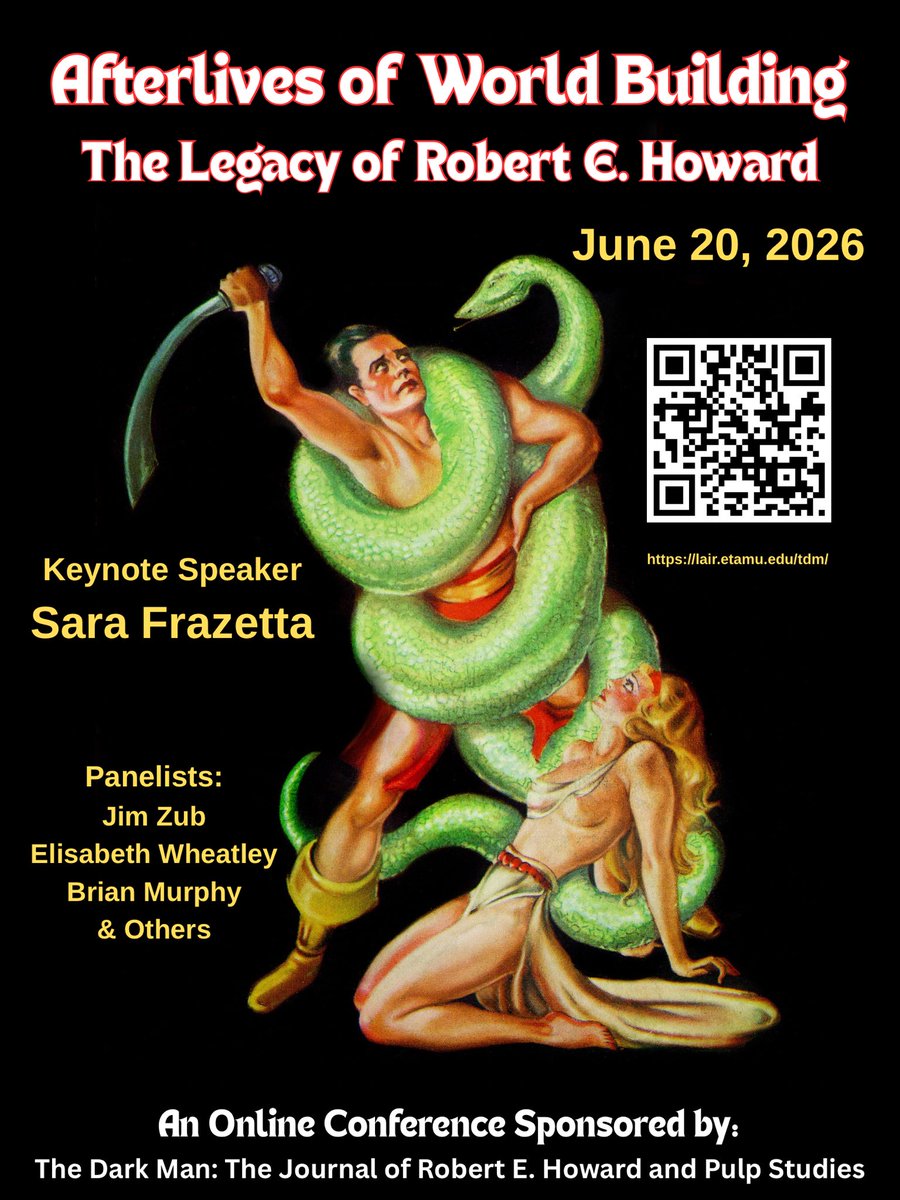
A pulp writer from Texas and an artist from Brooklyn never met, yet together helped shape modern fantasy. On June 20, I’ll be speaking about Robert E. Howard, Frank Frazetta, and the strange ways imagination survives across generations.
Join us online for this free conference.
3
30
162
8,739
e4tango retweeted

Jun 12
A man working as a welder at SpaceX for $28 an hour has just become a millionaire.
Juan Hernandez, who came from Mexico, welded rockets for SpaceX at $28 an hour.
SpaceX gave him $10,000 in stock when he went full time in 2015, and he bought more with every paycheck for 10 years.
$SPCX is now trading at $167, making his shares worth over $1 million.



1,927
6,319
58,946
6,177,369
e4tango retweeted

Jun 12
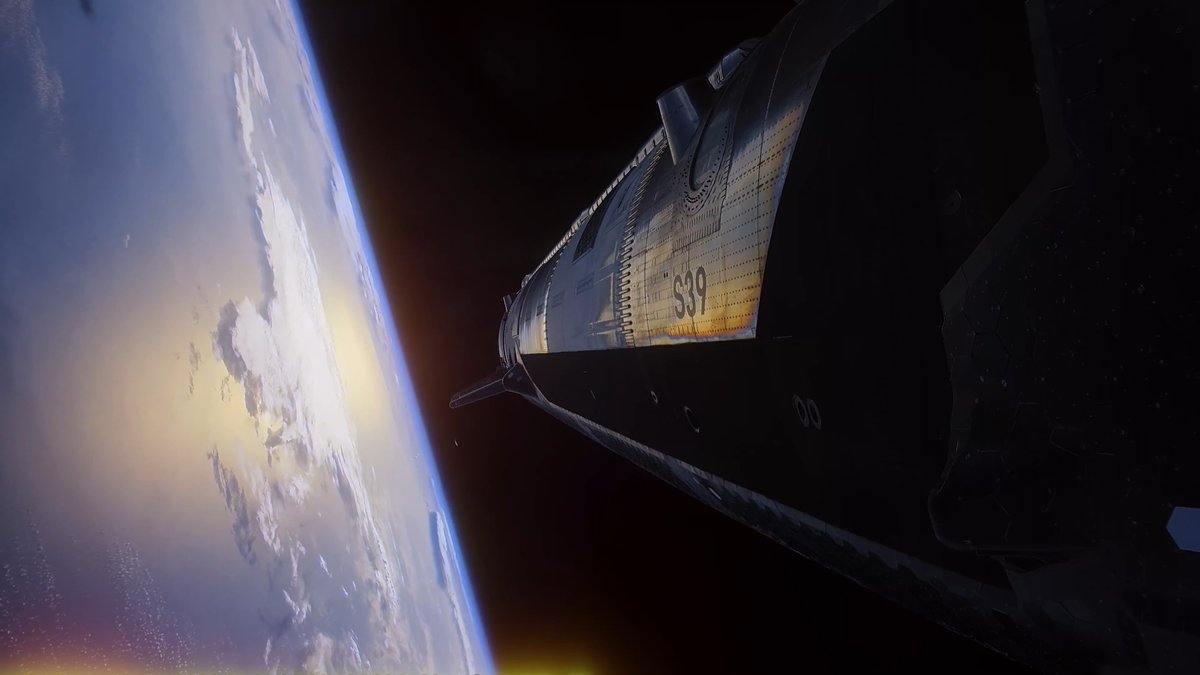
Very inspiring words from Elon Musk today:
"I always think about this. There are always problems on earth. There’s always things that we wish to be better, that we want to solve on Earth, and we should solve them. But there there also has to be things that get you excited about the future — that make you glad to wake up in the morning, because you can’t wait to see what happens next.
That’s the future @SpaceX wants to bring to you."
Let’s goooooo🚀
685
3,160
14,419
1,048,706

Follow today’s $SPCX events → x.com/i/events/2062294933059…
898
2,720
11,218
1,463,684
e4tango retweeted
Jun 11
The quality of these prints is insane. Looks like you could feel the texture if you run your hands across it
Super high dpi so you can look closely and see more features, even on larger prints!
Get yours at the link in my bio, all proceeds are going to @UTMDAnderson.
39
120
1,662
29,548
e4tango retweeted
Jun 11
Long post, but this one is important to me so I hope you stick it out!
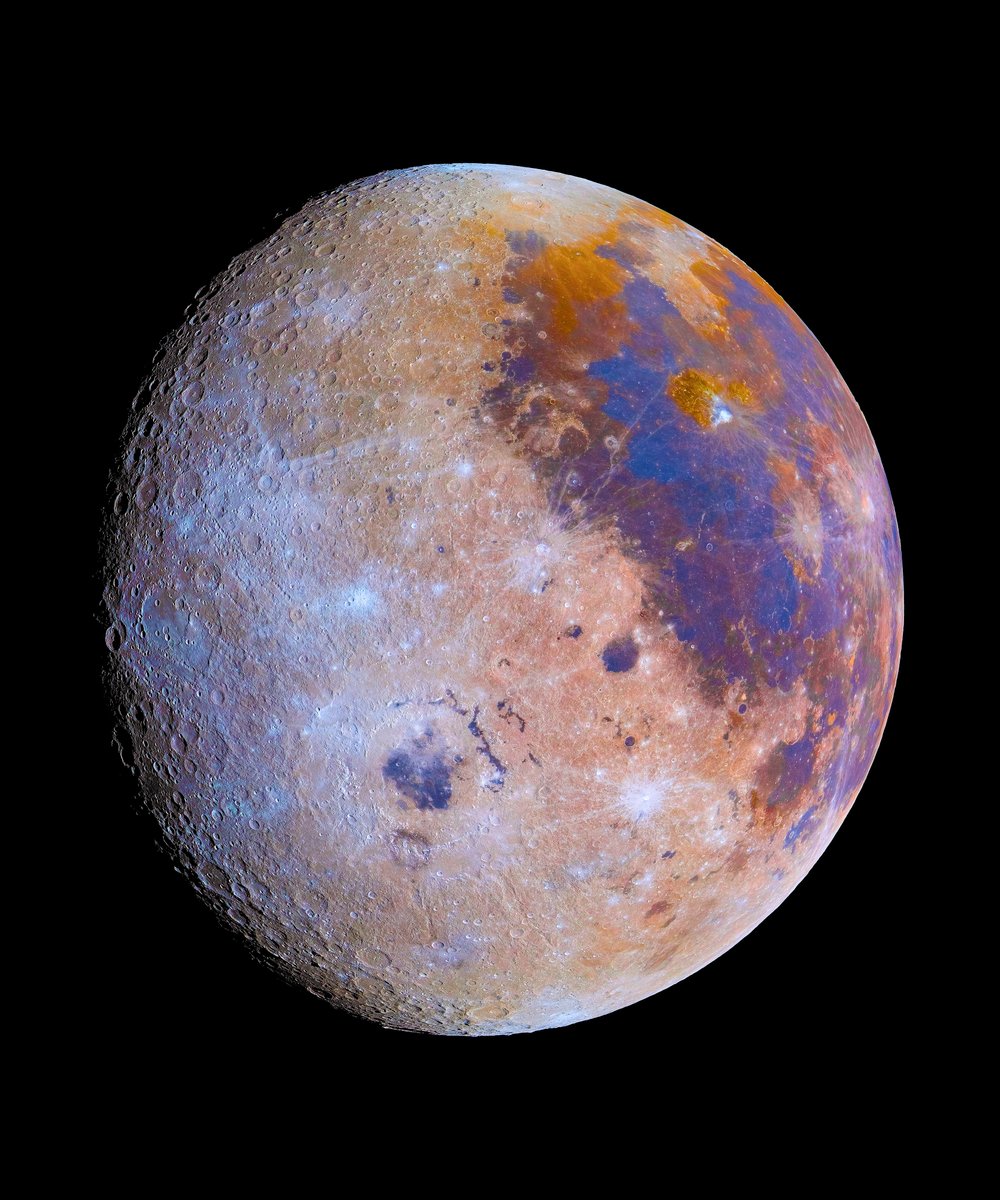
In January I reached out to Artemis II Commander @astro_reid with a simple ask- was he open to capturing the moon like I do for my colorful moon photos during the flyby?
He humbly agreed, and we worked out a plan to incorporate into the photos captured as the crew approached the moon. The premise was simple- just capture enough photos in a burst to allow for image stacking to improve image fidelity, potentially to reveal color no human has ever captured.
What he brought back was nothing short of magnificent. When I initially stacked the raw photos, it exceeded my expectations by far. The color came right out of the seemingly gray images, and showed details I've never seen before. It's possible nobody has. The lack of atmosphere meant a lot of color normally absorbed and scattered was present, so even the "near side" features looked exotic and unfamiliar.
This view of the moon from an alien perspective made the usually-familiar lunar surface fresh and exciting, and the color we were able to resolve gave us valuable insight to the complex geological history of it's battered surface.
Then, I faced a bit of a moral dilemma.
I wanted people to be able to own these images in print- but I wouldn't feel right to profit off of them. As an active NASA astronaut, Reid certainly can't. He took these photos as part of a taxpayer-funded mission. If I couldn't split profits with him I didn't see a way to do this ethically, so I decided to release the images initially with no print offering, despite many requests!
Then, it clicked. After doing some research- I decided that I should do a print sale where the profits go 100% to charity. That way I can make prints available, do some good in the world, and it doesn't feel like an ethical conflict.
I'm pleased to share my first EVER entirely-for-charity print release.
At the end of this sale all proceeds with be donated to UT MD Anderson Cancer Center. It feels fitting. I will follow up in a future post with a receipt from the donation, so you know how much we were able to donate. When I released this to my email subscribers only, we were already able to raise around $15k. Amazing!
The limited edition fine art print is now publicly available, you can grab one of them at the link in my bio (also linked further in the thread) for a short time.
Thank you for helping me do something good with my platform. Seriously... it feels amazing.
130
704
4,524
144,500


Follow along…
We’re taxed.
Taxes go to Gov.
Leftists create a NGO.
NGO is funded by Gov.
Leftists in NGO do 0 real work.
NGO pays Leftists huge salaries.
Leftists donate salaries from NGO to Dems via ActBlue.
Dems use laundered taxpayer cash to destroy America
Simple.
221
2,308
6,601
69,938
If you understand this, you're smarter.
If you understand the implications of this, you're wiser.
Jun 11

Progress update on the physics-based vibe coding.
Yesterday I got 2 days of work done in 30 minutes. I noticed the software, which simulates the loss of ice from lunar soil as it sits in an excavator bucket in the sunlight, was outputting a plot that seemed wrong. I pointed out the error to the AI, which told me immediately the cause of the problem in the code structure. In the first timestep the sublimation rate is high, and it extrapolates that rate for the entire time step, which predicts an unreasonably high amount of sublimation. I suggested to the AI that vapor pressure in lunar soil reaches equilibrium in a microsecond, which is short relative to the timestep, so we could restructure the code to always assume equilibrium conditions and use a Robin boundary condition for the outflow.
After discussing with the AI how to make these changes in the least disruptive way — to minimize the risk of introducing bugs — I told the AI to make it so, and it gave me error-free code on the first try. For the past 24 hours, I have now been running simulations and getting perfect outputs. I feel confident that we now know how to design lunar ice mining to avoid loss of the resource.
I’m working in python, and I don’t even know python. I’m working from my laptop, but there is no compiler installed on my laptop. Everything is running in the cloud. My productivity has been multiplied by a large factor. The people who say AI is not giving us practical benefits are simply not paying attention.
1
8
e4tango retweeted

Jun 10
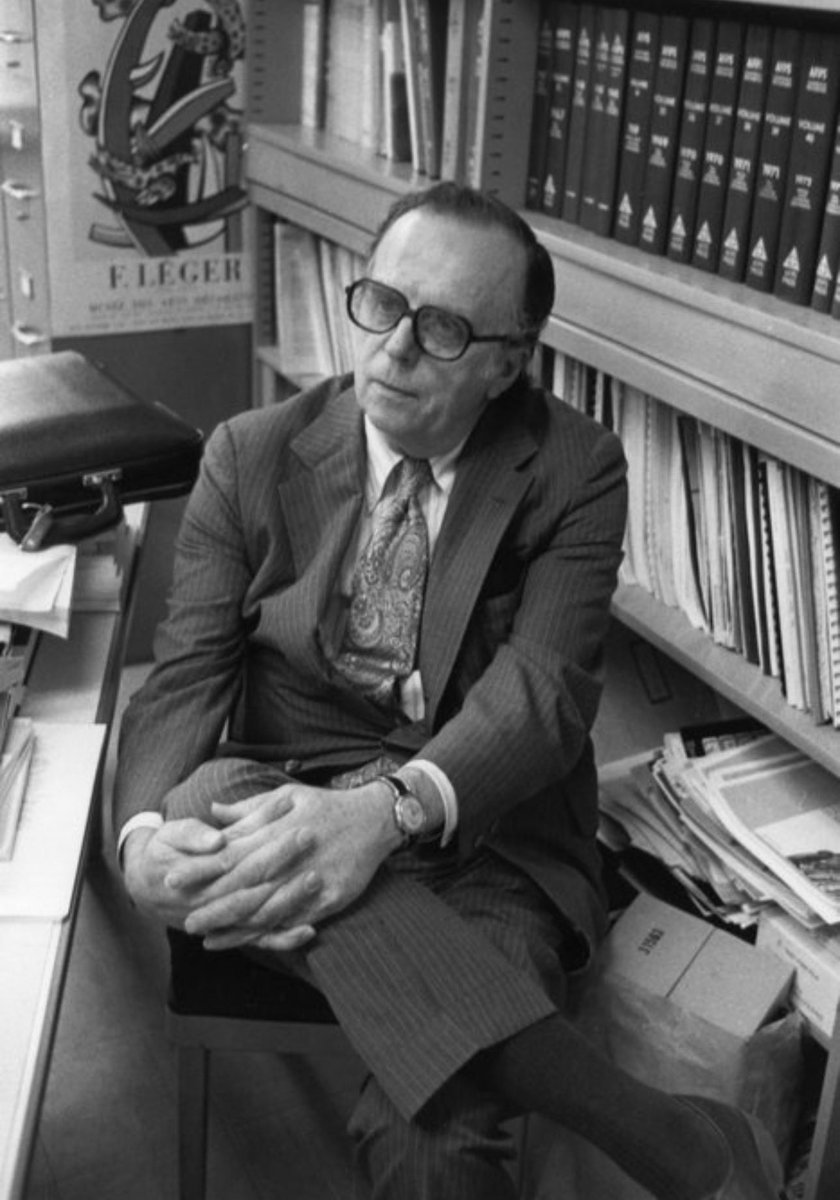
He didn’t build a single computer. Yet he saw the future so clearly it feels like prophecy.
One night at the Princeton University Library in the late 1970s I stumbled across the research papers in microfilm of J.C.R. Licklider.
I still feel it today..
In 1960, computers were temple-sized monsters locked in climate-controlled rooms. You punched your program onto cards, surrendered them to a high priest in a lab coat, and prayed for an answer days later—if you were lucky.
No one touched the machine. No one talked to it. A computer on your desk that answered in real time? That was pulp sci-fi.
Licklider wasn’t a programmer no STEM or Stanford.
He was a psychologist studying how the human brain processes sound.
But he used these iron giants in his research, and one day he did something radical: he tracked where his own time went.
The numbers were brutal. Eighty-five percent of his waking hours were not spent thinking.
They were devoured by soul-crushing drudgery plotting graphs by hand, chasing numbers across printouts, reformatting data just to compare two ideas. The actual insight? Seconds. The setup? Hours. Days.
He realized the tragedy wasn’t that humans were slow. It was that humans and machines were stuck doing each other’s worst jobs.
Let the human ask the questions.
Let the machine crush the grunt work.
Fuse them so tightly they think as one.
It sounds a lot like AI today.
He poured that fire into a 1960 paper titled “Man-Computer Symbiosis.”
groups.csail.mit.edu/medg/pe…
Read it today and your jaw drops.
He described a person at a glowing screen, conversing with the machine in real time.
The computer answers instantly, runs the math, draws the graphs, pulls knowledge from everything it has ever seen.
He was describing the laptop, the smartphone, the AI assistant you’re using right now decades before any of it existed.
Most visionaries stop there.
In 1962, the Pentagon handed him the keys to ARPA’s research budget and near-total freedom. Most men would have played it safe. He bet everything on a dream with zero guaranteed military payoff.
He hunted down the handful of mad geniuses scattered across the country who shared his vision and gave them real money no strings attached.
He didn’t just fund projects. He built a tribe.
He bankrolled time-sharing the first systems where humans could actually talk to computers.
He seeded the labs that invented the mouse, the graphical window, the interactive screen.
He created entire computer science departments from nothing.
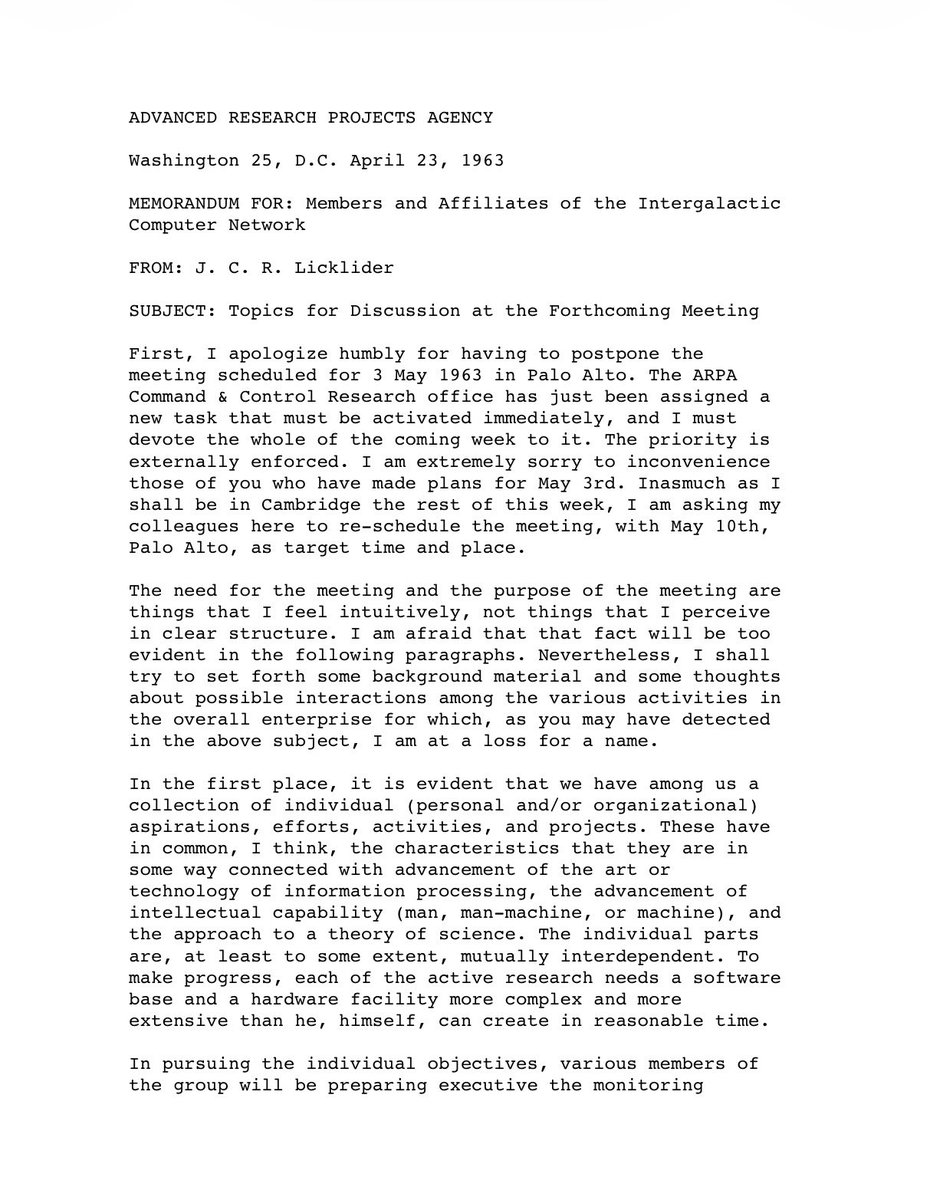
Then, in 1963, he dropped the bomb that still gives me chills.
He fired off a memo to everyone he funded. Addressed, with a wink, to the “Members and Affiliates of the Intergalactic Computer Network.”
worrydream.com/refs/Licklide…
Inside, he asked the question no one else was brave enough to ask:
What if all these separate machines could link together?
What if anyone, anywhere, could share knowledge and build on each other’s work in real time?
He had just sketched the internet—thirty years before it reached your home.
He left ARPA in 1964. He never built the network himself. But the people he empowered carried the torch. His successors turned that memo into ARPANET.
The researchers he funded went on to Xerox PARC and birthed the personal computer. Every piece of the world he imagined was constructed by the tribe he assembled.
And here is the part that hits like a freight train:
He gave the credit away on purpose.
Licklider didn’t want his name stamped on the breakthroughs. He believed the vision had to outlive him, so he made the people around him strong enough to own it.
He succeeded so completely that the future arrived… and the man who paid for it vanished from the story.
Ask who invented the internet. You’ll hear a dozen names. Almost none will be his.
He died in 1990. He never owned a personal computer that worked the way he dreamed. He never surfed the web. He never saw the digital universe he midwifed
15
74
263
15,634
e4tango retweeted

Jun 10
The History of the President’s Military Aide and Nuclear Football
I talk about it often, but I don’t think I’ve ever laid out the full story of my old job and that famous “Nuclear Football.”
You’ve seen them: those sharp, uniformed officers always glued to the President’s side—state dinners, motorcades, golf courses, or some godforsaken crisis at 3 AM.
They’re the President’s Military Aides, and their lineage is pure Americana, stretching back to the founding of the Republic.
It began with General George Washington’s aides-de-camp—trusted officers who carried battlefield dispatches, delivered counsel, and handled whatever the Commander-in-Chief needed. That tradition of personal military support never faded. Through every administration, aides stayed close, but the role became more structured as the White House itself grew.
In 1902, President Teddy Roosevelt—never a man for half-measures—formalized things after the White House expansion. He created the White House Military Social Aides program, pulling in sharp young officers (O-2 to O-4, all branches) to manage the exploding social calendar. Protocol, dignitaries, logistics—they made sure every event ran with dignity and precision. These officers became assistant hosts at every major function. Today, 40 to 50 of them still volunteer their evenings while keeping their regular duties. It’s a high honor that puts them ringside to history.
Then came the Cold War, and the mission turned deadly serious.
By the late 1950s under President Dwight D. Eisenhower, the permanent Military Aides—one senior officer from each branch (Army, Navy, Air Force, Marines, and now Coast Guard)—took on the ultimate responsibility: carrying the “football.”
That 45-pound Presidential Emergency Satchel holds the Black Book of nuclear strike options, authentication codes, secure communications gear, and some stuff I can’t talk about.
Continued…

17
53
397
6,992
This is the plan…
Import a new voting block from the 3rd World.
Bribe them with taxpayer paid government benefits for votes.
Never lose elections again.
Become 1 party totalitarian governments that rule with iron fists.
Destroy Western Civilization and Culture.
Pure evil.


203
2,682
6,908
42,935