
Crypto & Financial Markets Analyst | Educator & Content Creator
Joined September 2024
- Tweets 1,382
- Following 215
- Followers 116
- Likes 2,003
350 Photos and videos






GM
Market Activity Update
Buying interest is showing up in $BABY and $CHIP, while sell pressure is visible in $MEGA and $COAI.
Capital flowing into strength:
• $BABY ( 12.47%)
• $CHIP ( 27.66%)
• $BANANAS31 ( 25.45%)
• $BSB ( 18.09%)
• $JELLYJELLY ( 43.95%)
Heavy sell-side activity:
• $MEGA (-3.36%)
• $COAI (-31.03%)
• $ALLO (-8.12%)
• $SAHARA (-3.29%)
• $VELVET (-31.12%)
6

12h
When you first enter X and the world of Web3, the first thing you usually notice isn’t opportunity — it’s the noise. Endless promises, airdrops, links, and accounts all competing for your attention
A lot of people think succeeding on X means posting more often or replying under every tweet, but the reality is that before building your presence, you need to learn how to move safely and intelligently inside this environment
That’s where tools like @realScamSniffer come in
ScamSniffer is essentially a security tool for Web3 users that helps add an extra layer of verification before you click a link, visit a website, mint, or connect your wallet. It aims to identify suspicious activity, phishing pages, fake domains, and other risky behavior patterns so the chances of making costly mistakes become lower
For someone who is just starting on X, the issue isn’t only losing funds
The bigger challenge is that early on, you still haven’t developed the ability to tell what’s real, what’s promotion, and what’s simply a trap designed to capture your attention, engagement, or wallet access
Imagine it’s your third day on the platform
You see an account that looks professional
Its post has thousands of views
It says:
“Limited airdrop — only available for the next 10 minutes.”
You open the site
The website looks identical to the real project
You connect your wallet
And within seconds, everything is over
Later you realize the problem wasn’t a lack of technical knowledge — the problem was having no verification layer before taking action
That’s why if you’re starting on X, these three habits matter more than follower count:
— Don’t click every link
— Verify before connecting your wallet
— Never sacrifice judgment for speed
In Web3, people rarely win because they move faster — they usually win because they make fewer expensive mistakes
X is not just a place to create content; it’s a massive filter of information, opportunities, and unfortunately, traps
Build security into your routine from day one instead of waiting for your first mistake to make it a priority
26
Jun 14
GM
Market Activity Update
Buying interest is showing up in $BABY and $MEGA, while sell pressure is visible in $SIREN and $TRUMP.
Capital flowing into strength:
• $BABY ( 12.04%)
• $MEGA ( 23.31%)
• $COAI ( 38.36%)
• $H ( 83.09%)
• $RIF ( 18.77%)
Heavy sell-side activity:
• $SIREN (-17.27%)
• $TRUMP (-6.12%)
• $ALLO (-9.68%)
• $AXL (-8.07%)
• $ORCA (-6.39%)
4
6
370
Jun 13
ETH Futures Flash Bearish, Yet Staker Commitment Buffers Downside
Futures turn lower, but on chain staking activity shows the market’s core remains resilient.
The latest ETH futures data posted a bearish signal as open interest and price momentum slipped, reflecting weak demand for leveraged exposure. At the same time, corporate wallets have continued to accumulate ETH, and the staking participation rate has held steady, indicating that long term holders are not exiting. This divergence suggests that the bearish futures signal is more a reflection of short term speculative appetite rather than a fundamental shift in ETH’s valuation. Low leverage demand combined with sustained staking participation reduces the probability of an abrupt price collapse toward $1,500, because the staking base can absorb additional selling pressure.
For traders, the environment signals that aggressive short positions are less supported by market fundamentals, as the lack of leverage demand and a solid staking foundation act as a floor for price declines. The interplay between weak futures activity and robust on chain commitment creates a range bound backdrop, while any acceleration in corporate buying could provide the catalyst for a modest rebound. Ongoing monitoring of staking inflows and corporate accumulation will be essential to assess whether the bearish bias can be maintained.
1
1
55
Jun 13
GM
Market Activity Update
Buying interest is showing up in $TRUMP and $ORCA, while sell pressure is visible in $SIREN and $STG.
Capital flowing into strength:
• $TRUMP ( 25.21%)
• $ORCA ( 18.43%)
• $ENJ ( 13.12%)
• $COAI ( 20.82%)
• $AXL ( 18.82%)
Heavy sell-side activity:
• $SIREN (-74.46%)
• $STG (-25.83%)
• $VELVET (-75.25%)
• $SAHARA (-5.45%)
• $BANANAS31 (-14.56%)
146
Jun 12
SEC’s Repeal of Rule 611 Opens Door to Tokenized US Stock Trading
The SEC’s decision to eliminate Rule 611 removes a long standing barrier for decentralized exchanges that want to list tokenized equities. By taking the rule off the books, the regulator has lowered the cost of compliance and cleared a path for on‑chain securities to reach a broader audience.
Rule 611 required strict order handling and quote maintenance obligations, conditions that discouraged most platforms from offering tokenized US stocks because the operational burden outweighed the potential upside. Its removal therefore reduces the administrative friction that previously kept tokenized equities confined to niche corners of the market. In this context, Galaxy’s Alex Thorn describes the change as a catalyst for liquidity growth, noting that a more permissive regulatory environment will encourage market participants to provide deeper order books and tighter spreads. The easing of rules aligns with other recent developments, such as Coinbase’s rollout of AI driven trading tools, LG’s launch of a blockchain‑based advertising platform, and Avalanche’s partnership with Nasdaq, all of which signal an ecosystem that is increasingly comfortable blending traditional assets with decentralized technology. Together these trends suggest a structural pivot: on-chain securities are moving from experimental status toward recognition as a viable asset class, supported by both technological innovation and a regulatory framework that no longer imposes prohibitive constraints.
For traders, the repeal creates a clear opportunity to exploit price differentials between tokenized and conventional equity markets, while also expanding the set of instruments available to crypto native capital. The shift will likely drive capital toward platforms that can deliver reliable execution and settlement for tokenized stocks, prompting risk management to focus more on the quality of on-chain order flow and the evolving legal landscape. As sentiment adjusts to the prospect of higher yields and diversification through tokenized equities, market participants can expect a reallocation of resources toward these new products, reinforcing the emerging role of on-chain securities in the broader financial ecosystem.
31
Jun 11
Tokenization Gains Traction as European Capital Efficiency Outlook Improves
European banks and asset managers are beginning to treat digital assets as a practical tool for unlocking liquidity across the region. Executives at Franklin Templeton and BNP Paribas argue that tokenized securities and stablecoins can streamline settlement, cut collateral requirements and accelerate cross‑border funding.
These arguments echo the broader momentum on Wall Street, where pilots such as Digital Asset’s $355 million raise to expand its Canton Network signal institutional confidence in blockchain based infrastructure. At the same time, regulatory pressure is easing; Hungary’s decision to unwind crypto trading restrictions points to a more permissive environment for tokenized finance in Europe. The convergence of traditional finance and blockchain therefore rests on three linked developments: the operational benefits of tokenization, the influx of capital into supporting platforms, and a regulatory backdrop that is becoming less obstructive. When settlement processes become faster and collateral needs shrink, firms can redeploy capital more efficiently, which in turn attracts additional funding to tokenization providers. This feedback loop expands the pool of liquidity available to both legacy institutions and new entrants, reinforcing the appeal of stablecoin driven funding and creating a tighter link between tokenized and conventional markets.
For traders, the growing acceptance of tokenized assets suggests a broader flow of capital toward platforms that build or adopt blockchain rails, potentially sharpening the risk reward profile of those firms. Increased stablecoin liquidity may influence funding rates and collateral dynamics, while the softened regulatory stance reduces compliance friction and encourages wider institutional participation. The combined effect is a market environment where arbitrage opportunities between tokenized and legacy assets could become more pronounced, and where the efficiency gains from digital settlement may gradually reshape capital allocation across Europe.
25
Jun 11
GM
Market Activity Update
Buying interest is showing up in $STG and $VELVET, while sell pressure is visible in $BABY and $SAHARA.
Capital flowing into strength:
• $STG ( 33.70%)
• $VELVET ( 135.12%)
• $HOME ( 24.47%)
• $ASTR ( 15.75%)
• $GENIUS ( 7.84%)
Heavy sell-side activity:
• $BABY (-11.90%)
• $SAHARA (-16.00%)
• $ALLO (-8.92%)
• $CHIP (-9.47%)
• $WLD (-5.90%)
125
Jun 10
$GOOG lease with Anthropic adds AI growth risk
Alphabet's $35bn commitment deepens its stake in generative-AI infrastructure, Liquidity is solid, but cash-flow strain from the lease warrants caution.
Alphabet’s market capitalisation stands at roughly $4.44 trillion and daily trading volume is about 29.4 million shares. The stock’s 52week range is $162.00 to $408.61, but current price and valuation multiples are not provided.
The company is backing a $35 billion financing arrangement with Anthropic, securing lease payments for high end tensor processing chips and signaling deep involvement in generative AI infrastructure. Expanded collaboration with GitLab to deliver managed DevSecOps services that incorporate Gemini and Gemma models could open new enterprise revenue streams. Additionally, Google Cloud’s GPU offering is being used for Apple’s privacy‑focused AI workloads, highlighting demand for Alphabet’s cloud compute capabilities among leading tech firms.
No price, earnings or PE data are disclosed, leaving valuation and profitability unclear. The $35 billion loan‑backed lease represents a sizable financial commitment that could become a liability if Anthropic’s usage falls short. Absence of dividend information and beta also limits assessment of income and volatility.
Alphabet’s massive market cap and solid trading volume suggest a highly liquid, large cap stock. The 52‑week price range indicates substantial upside potential from the low end, but without current price or earnings figures it is impossible to gauge how far the stock is from its historical extremes or whether it is fairly valued.
Exposure to a $35 billion financing arrangement with Anthropic could strain cash flow if the lease is not fully utilized. Lack of disclosed earnings, PE ratios and dividend yield prevents a clear view of profitability and return. Competitive pressure in AI cloud services from other major providers could limit growth of the highlighted partnerships.
Based solely on the available data, Alphabet’s strategic AI and cloud collaborations provide a compelling growth narrative, yet the absence of pricing and earnings metrics, combined with a large financing commitment, creates uncertainty around valuation and risk exposure. Investors should seek additional financial details before forming a definitive position.
1
65
Jun 10
South Korean Police Partner with Chainalysis, Raising Enforcement Pressure on Crypto
The South Korean National Police Agency has formalized a data sharing link with blockchain analytics firm Chainalysis, signaling a new level of regulatory scrutiny in the region. The partnership gives authorities real time insight into wallet activity and a sharper tool for targeting illicit transactions.
By integrating Chainalysis’ forensic platform, Korean law enforcement can move from broad sweeps to targeted takedowns, identifying suspicious patterns as they emerge rather than after the fact. This capability expands the reach of investigations from state sponsored hacking to retail scams, allowing faster identification of illicit flows across both centralized exchanges and decentralized protocols. At the same time, the public private model sets a precedent that other jurisdictions may follow, potentially accelerating the adoption of similar compliance frameworks worldwide. The result is a higher operational cost for actors who rely on anonymity, because the analytical depth now available makes covert activity more detectable and less profitable. Consequently, assets that are most exposed to illicit use—such as privacy‑focused coins and unregulated DeFi projects—are likely to bear a larger risk premium as market participants price in the increased enforcement risk.
For traders, the immediate implication is a shift in market dynamics around Korean linked tokens and platforms. Tighter KYC/AML requirements on domestic exchanges may prompt short term liquidity moves toward jurisdictions with looser oversight, while custodians could raise margin requirements to compensate for the heightened compliance burden. Monitoring enforcement actions will therefore become a key sentiment gauge for Asian crypto flows, as volatility may rise around assets most vulnerable to regulatory pressure.
1
1
39
Jun 9
GM X Fam
Market Activity Update
Buying interest is showing up in MOVE and ALLO, while sell pressure is visible in SAHARA and H.
Capital flowing into strength:
• $MOVE ( 16.71%)
• $ALLO ( 7.95%)
• $SLX ( 31.60%)
• $BIO ( 10.06%)
• $IO ( 17.76%)
Heavy sell-side activity:
• $SAHARA (-56.86%)
• $H (-82.97%)
• $HOME (-19.89%)
• $BABY (-11.19%)
• $SKYAI (-13.54%)
1
2
182
Jun 8
The question isn't whether TRX has fallen from 0.377 to 0.321
The real question is:
Has the market broken the foundation of its uptrend?
Until 0.308–0.295 gives way, the broader structure remains bullish despite the current pullback
$TRX Analysis:
tradingview.com/chart/TRXUSD…
1
56
Jun 8
BTC bounced
The structure didn't
Until 67K–68K breaks, the broader trend remains bearish — no matter how many green candles appear in the short term
Full $BTC Analysis:
tradingview.com/chart/BTCUSD…
20
Jun 6
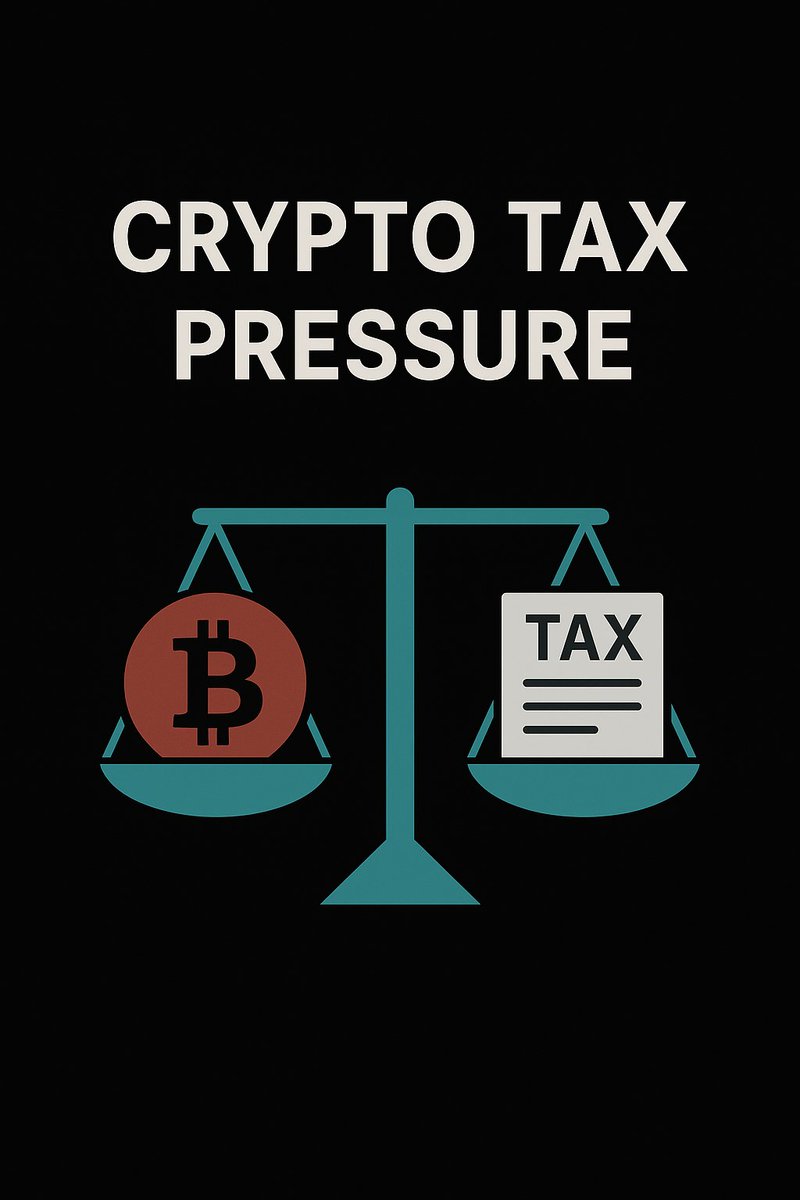
Crypto Tax Debate Deepens Pressure on ETH and BTC Amid Rising Short Interest
U.S. lawmakers are preparing tighter reporting rules for crypto transactions, and the market is already reacting as Ether fell to a 13 month low and Bitcoin slipped below $60,000. The simultaneous rise in short positions adds a new layer of uncertainty for traders.
The House hearing on “deminimis” reporting exceptions signals a shift toward more comprehensive transaction disclosure, a move that aligns with recent price weakness in the sector. Ethereum’s decline follows a Zcash vulnerability that rattled confidence, while Bitcoin’s breach of the $60,000 barrier has amplified existing short positioning, now estimated at $2.6 billion. This convergence creates a double-edge scenario: on one hand, tighter tax compliance may deter speculative inflows and reinforce bearish momentum; on the other hand, the sizable short exposure introduces the possibility of a rapid price correction if funding rates turn against shorts. Traders must therefore balance the likelihood of a regulatory driven demand shock against the mechanics of a potential short squeeze, calibrating stop-loss levels and hedge ratios to accommodate both outcomes. At the same time, innovative use cases such as AI driven hotel bookings on Base and tokenized SpaceX equity demonstrate that capital inflows are still possible, but they will increasingly be filtered through the emerging tax framework. Assets that demonstrate clear compliance, for example platforms integrating $USDC payments, are likely to attract a more resilient class of institutional capital, offering a modest buffer against the broader market stress.
The combined effect of heightened reporting requirements and deteriorating price momentum suggests that market participants should expect tighter liquidity and heightened volatility, while compliance focused projects may retain relative strength as the sector adjusts to the new regulatory environment.
45
Jun 4
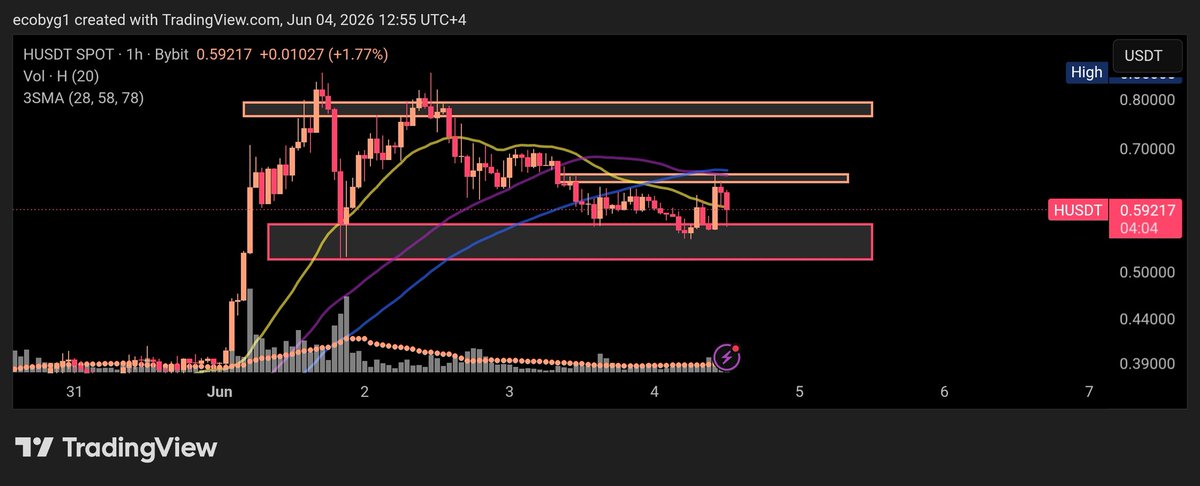
Check $H
Then the uptrend entered a correction and the volume decreased relatively in the correction.
1
55
Jun 4
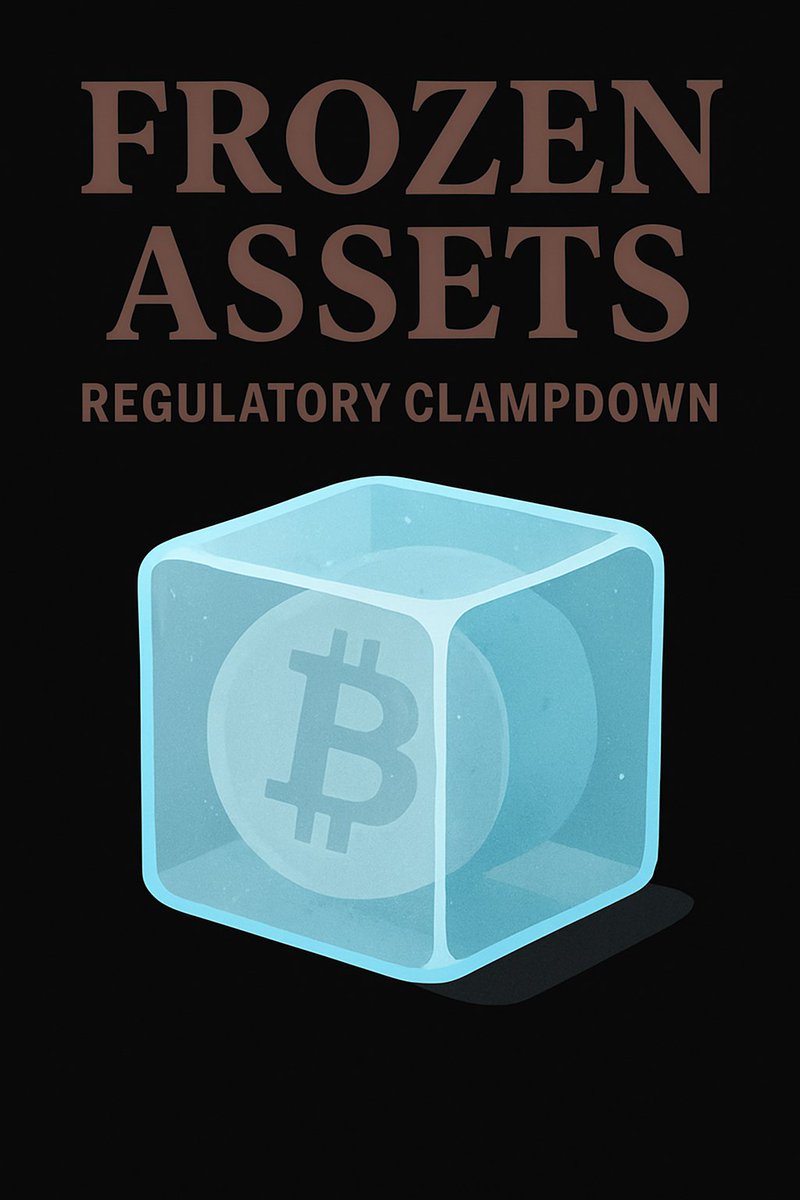
Regulatory clampdown intensifies as Coinbase freezes $3M linked to Southeast Asian fraud networks
Coinbase’s latest freeze signals a coordinated tightening of enforcement on crypto activity in high risk jurisdictions.
The $3 million freeze underscores a broader global push against illicit crypto flows, mirroring simultaneous actions by authorities in the United States, United Arab Emirates, China, Austria and Albania. This move arrives as U.S. regulators shift stance, with the CFTC abandoning its “no-deny” settlement policy, thereby signalling less tolerance for ambiguous compliance. At the same time, Israel’s tax authority delivered a disappointing voluntary disclosure response, reinforcing the perception that regulators worldwide are demanding clearer, more concrete cooperation. While these developments tighten the regulatory net, market participants such as Bitmine are exploring alternative capital structures—specifically dividend‑paying preferred shares—as Ether slides to a 14month low. The convergence of stricter AML enforcement, evolving settlement flexibility, and heightened cyber threat capabilities, highlighted by Anthropic’s findings on AI-enabled attacks, creates a risk laden environment for crypto assets operating in loosely regulated regions.
Traders should anticipate tighter liquidity and higher compliance costs for assets with exposure to Southeast Asian markets, which raises the likelihood of further freezes or delistings. This regulatory pressure is likely to dampen short-term price action for tokens tied to the region and may redirect capital toward exchanges and assets that demonstrate robust compliance frameworks. Consequently, market dynamics will favor positioning that accounts for enforcement risk and potential volatility spikes.
55
Jun 3
Binance Moves NFT Trading to NonCustodial Wallet, Signaling Shift in Exchange Strategy
Binance has announced a 30day window for users to transfer their NFTs from the exchange’s custodial platform to a non custodial wallet. The change removes NFTs from the order book and ends on exchange liquidity provision for digital collectibles.
The decision reflects mounting regulatory pressure and heightened risk-management concerns surrounding custodial NFT services. By withdrawing NFTs from its order book, $BNB eliminates the need to match buyers and sellers directly on the platform, thereby pushing trading activity to secondary marketplaces and peer-to-peer transactions that operate through users’ own wallets. This shift also reallocates fee revenue: fees that were previously earned on NFT trades will now be generated from wallet related services, which could increase demand for non custodial solutions. At the same time, the broader industry is pivoting toward tokenized assets, as illustrated by Kraken’s upcoming tokenized IPO offering, suggesting that exchanges are rebalancing their product focus toward more regulated and compliant instruments. For traders, the immediate effect is likely to be a dip in NFT related token volumes on #Binance, creating short term arbitrage opportunities in related liquidity pools, while the longer‑term outlook points to reduced on exchange NFT exposure and a potential migration of capital toward platforms that retain custodial services or toward decentralized marketplaces. Monitoring wallet adoption rates and the evolution of fee structures will be essential to assess the new revenue dynamics and the liquidity landscape.
The market now faces a contraction in Binance’s NFT trading volume, which may depress related token prices in the short term and open temporary pricing inefficiencies. Over time, capital is expected to flow toward exchanges or platforms that continue to offer custodial NFT services or toward decentralized venues that can sustain liquidity. Consequently, the overall distribution of #NFT linked assets could become more fragmented, and fee revenue may increasingly favor wallet based services rather than on‑exchange trading. This reallocation underscores a broader industry move toward regulated, tokenized products and highlights the importance of tracking how non‑custodial wallet adoption reshapes revenue streams and liquidity across the #crypto ecosystem.
35