
Working on new platforms for collective decision-making @ Spherical Harmonics. demo.cityedit.org
Joined April 2014
- Tweets 461
- Following 1,009
- Followers 268
- Likes 1,026
53 Photos and videos




Eric Bolton retweeted

Jun 11
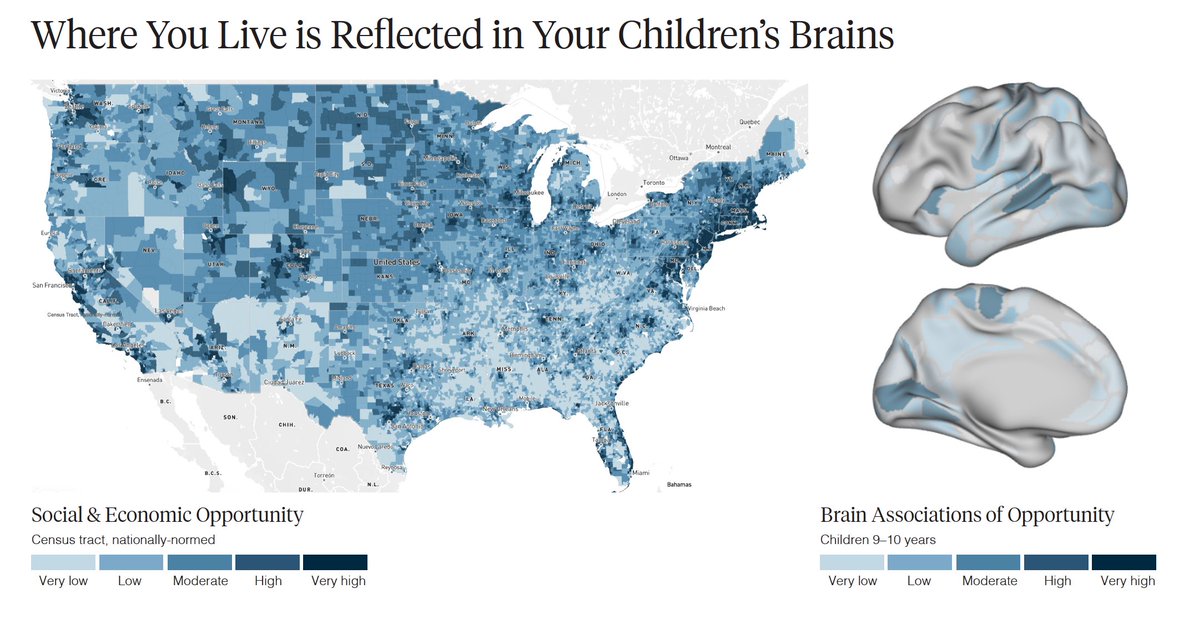
SES dominates childhood brain organization. Zip code matters most.
These findings have consumed my mind daily, with Darwin’s quote living rent free in my head: “if the misery of the poor not be caused by the laws of nature, but by our institutions, great be our sin.”
9
57
337
24,877

May 27
We have our best minds on aligning the AI models, but the trickiest part is aligning the AI companies.
May 27

I really believe there’s a substantial chance we could all die from AI. I told Caitlin this, and she asked how that could happen.
Here's what I said: Because AI companies are trying to make basically a smarter species that can do everything we can do. Everything that makes humans the dominant species on the planet, and not chimpanzees or tigers — it’s because we’re smart, we have language, we can use tools. And AI companies are making that, but they’re trying to make it smarter and better at everything.
(Time stamp: 46:06)
We also discussed robots, hacking, and why strategy is a key capability that AI agents don't currently possess but would have to in order to take over.
Also, why nearly every computer has vulnerabilities that some hacker could exploit, but most computers are not hacked most of the time. And how AI will change the cybersecurity space and what you should do in response. It was a fun conversation, and I hope @caitlinquestion does a bunch more of these!
26
May 27
Progressive thinkers need to create spaces with which to make more radical bets.

18
May 27
Michelin food for thought.
This great video essay culminates with a stupidly simple illustrative question that we somehow collectively forgot to ask:
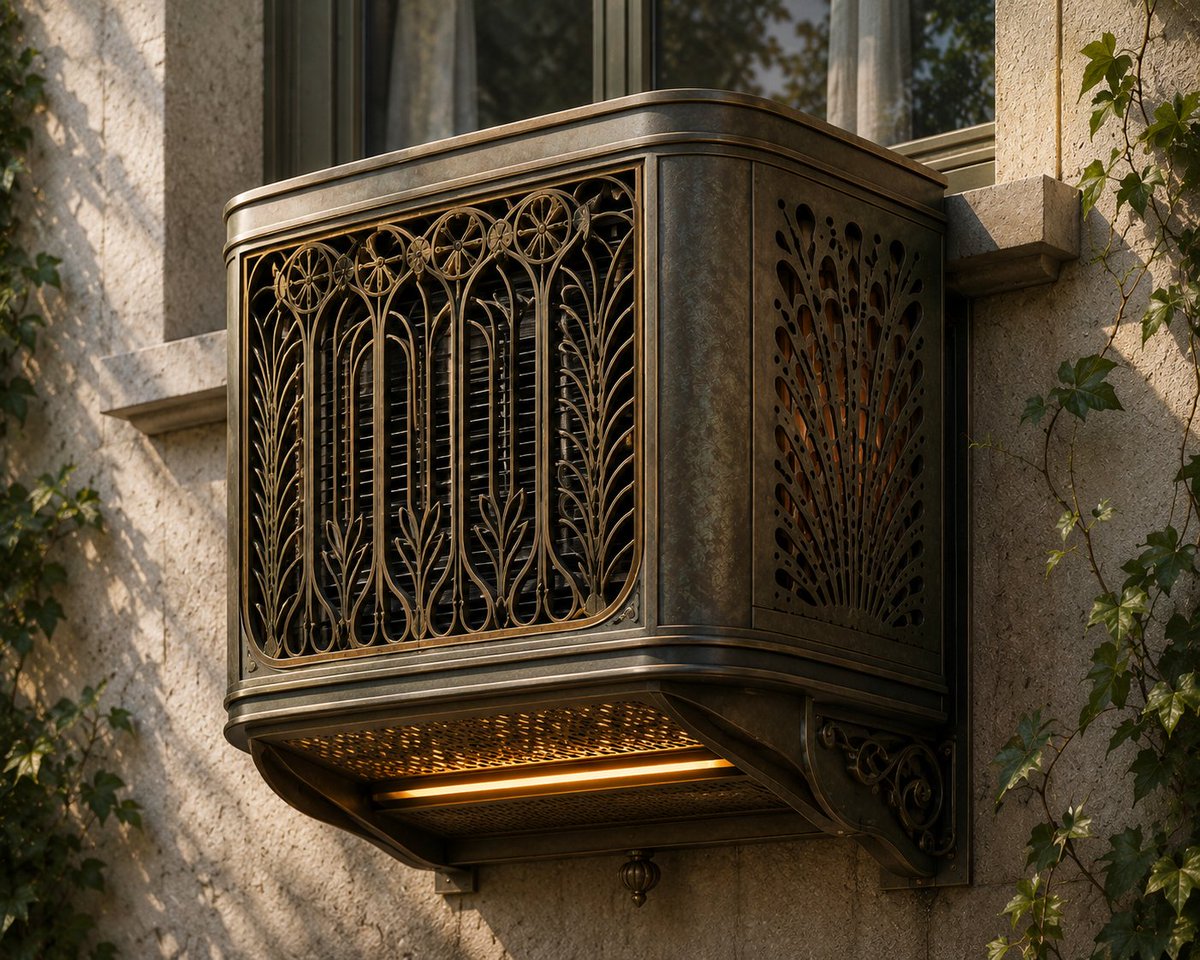
Can AC units, a ubiquitous and defining modern technology, be made beautiful?
May 27

I’m making a show about buildings.
The concept is simple: do for the man-made world what Planet Earth did for the natural world.
But, when I pitched the idea, the answer was that nobody would watch it.
So I released a pilot episode on YouTube. It’s got 5.4 million views, 379k likes, and 23k comments.
People are interested, and now it’s time to make the full show.
Six episodes, filming in the UK, France, Belgium, Germany, Italy, and the USA, and releasing on a streaming service like HBO, Netflix, or Prime.
Why does this show matter?
First: we’re surrounded by buildings all the time. Look around yourself, right now… what do you see? Buildings are the logical conclusion of everything a society believes in. That’s the real focus of this show: not the buildings themselves, but what they say about us.
Second: there’s global dissatisfaction with modern architecture. This feeling gets written about online, but nobody’s given a voice to it on film or TV. That’s what this show will be. But this isn’t just about criticising modernity. That’s easy. This is about learning from the past in order to understand and improve the present, for everybody.
Third: there’s a drought of high-quality culture shows. When I spoke to film executives they said that only documentaries about sports, music, or true crime get funded. That’s a colossal missed opportunity. Galleries are always full, content about architecture goes viral online all the time, and people spend their precious holidays visiting beautiful cities.
Why no shows about architecture, then?
Tourists flock in their millions to see (for example) the buildings of Antoni Gaudí in Barcelona. But, if you asked those same people if they’re interested in “architecture”, they’d probably say no.
To put that another way: not many people want to watch “a show about architecture”, but lots of people want to watch a show that illuminates the real world they’re living in, each and every day.
What will the show be like?
Six episodes, going chronologically through history and arriving at the present, each focussing on the architecture and design of a specific period:
1. Middle Ages
2. Renaissance
3. Enlightenment
4. The Nineteenth Century
5. Art Nouveau & Art Deco
6. Present Day
But, in each case, the point isn’t just to learn about that era; the point is to learn about our modern world through those eras and what they’ve left behind. If you watch the pilot episode (included below) you’ll see what I mean.
So the show’s not really “about” the past; it’s about the twenty-first century.
That’s why it’s called The Modern World.
When you think of a typical history show there are loads of interviews, stock footage, archive photos, historical recreations, and graphics. We’re doing none of that. Everything will be filmed on location, because we’re telling our story only through the real world that exists right now. And, rather than going to the most obvious places, we’ll focus on buildings that aren’t well-known but should be more famous.
But that’s all big picture; what will it be like on screen?
Buildings used to look different in every country, and now they look the same. Why? Because the weather is different everywhere, and buildings were always a way of dealing with that weather, using local materials. Now we have air conditioning and we ship concrete around the world, so we don’t need to design our buildings with regard to local weather or rely on local materials.
Look at really old clocks and you’ll notice something: they don’t have a second hand… because it was only invented 300 years ago! Then you look at the present and you realise we’re surrounded by timers, by seconds ticking down and ticking up relentlessly. If we’re looking for a cause of our anxiety-inducing culture, that might be it.
When you spend time with the sun-softened bricks and time-warped timbers of old cities you notice that synthetic materials like plastic have taken over. When we’re surrounded by things that feel temporary, how do you think it makes us feel?
It’s only by seeing 19th century train stations, designed like cathedrals, that you realise tradition and technology aren’t enemies. New things don’t have to look boring: if the Victorians had designed AI data centres, they’d look like Medieval castles.
In the 1920s, at the zenith of Art Deco, people believed technology would uplift humanity. That’s why they decorated their buildings with statues inspired by electricity. Only by seeing their enthusiasm can we realise our own cynicism, and perhaps begin to fix it.
All of that… and much, much more.
But, above all else, this show is about a way of seeing. If you want to understand any society then you need to look at what it creates, not what it says about itself.
There’s a worldview in every single object; our skyscrapers are designed the same way as our phones. Learn to look at this world, to notice its details, and everything else starts to make sense.
What now?
I’ve been quiet online recently because I’ve been researching and working on scripts for six full-length episodes. Production begins when we’ve raised the funding.
The Modern World is coming.
49
Eric Bolton retweeted

May 27
dude who made this is a real reader cause this is how it is
35
1,032
21,064
638,280
Eric Bolton retweeted

May 26
Totalmente enamorado de esta propuesta de bandera planetaria. Un circulo azul para representar nuestro planeta, y el resto transparente para que el fondo sea parte de la bandera
Apr 7

The One World Flag is easily the best (transparent so the background is incorporated into the flag)

1,870
3,694
50,631
17,071,109

9 Feb 2025
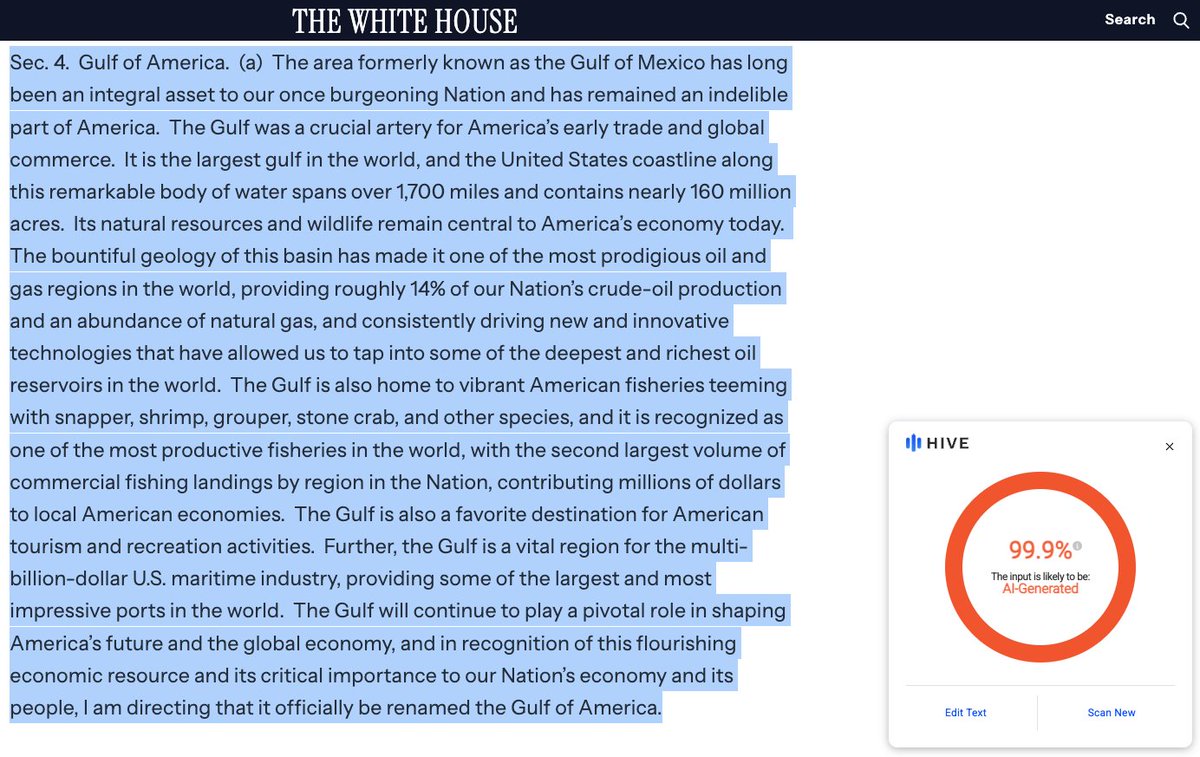
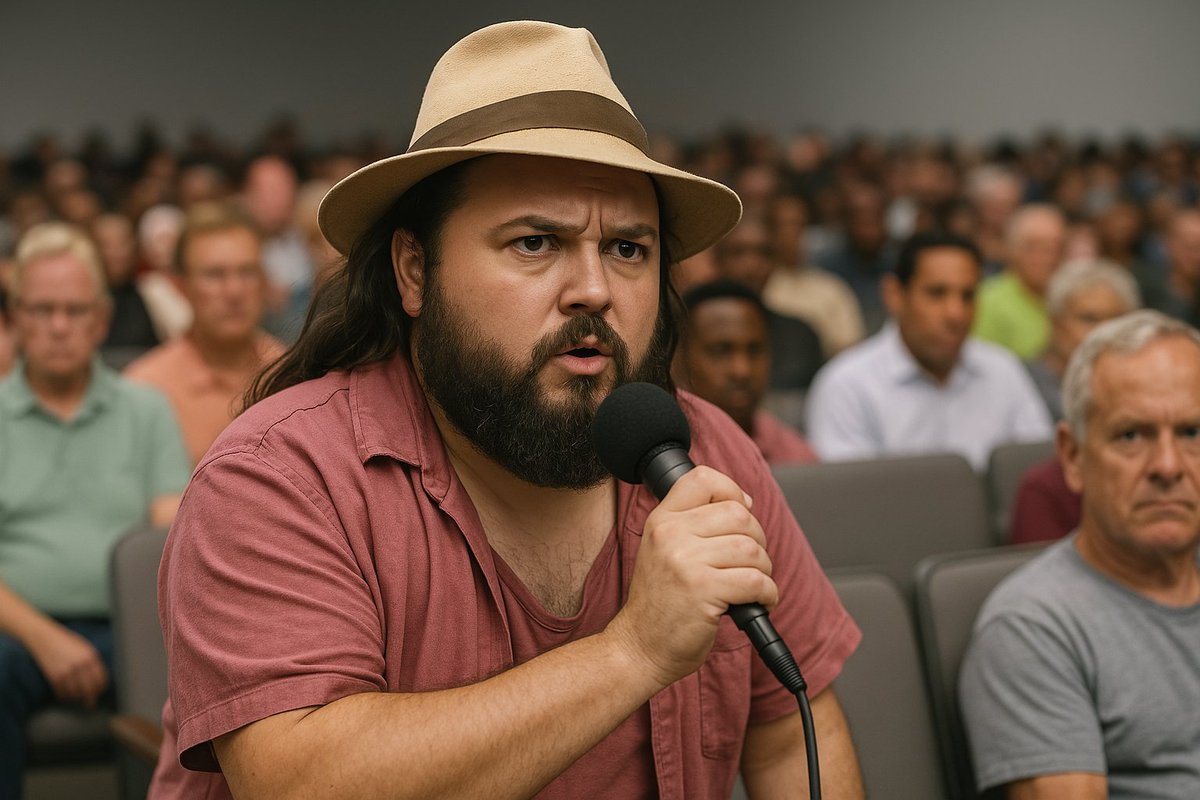
AI-gen passages in executive orders confirmed.
See for yourself: whitehouse.gov/presidential-…
1
4
6
1,171
7 Feb 2025
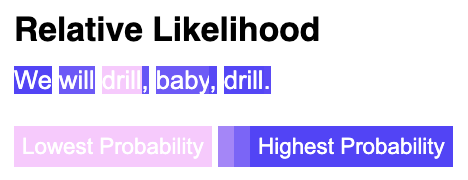
Can AI help us understand what's 'normal' in politics? We trained language models on Trump's campaign speeches and social media posts to analyze his 2nd inauguration speech. The results were fascinating. Analysis methodology here:
alignedforesight.substack.co…
2
64

Call it Field of Bad Dreams: Harris tried to build it, but they just didn’t come.
wsj.com/politics/elections/v…
In every core blue bloc, voters didn’t turn out. The electorate that did shifted toward Trump—an analysis of vote data from me, @karadapena, @maureenlinke, and @rob_barry.
5
9
9
3,068
8 Nov 2024
In the era of generative AI, we forget that the most harmful AI (and the AI that has only gotten more potent) is the collaborative filtering powering social media algorithms.
When we boost narratives based on engagement rather than underlying truth, the most misleading ones win.
This tweet is unavailable
3
115
Eric Bolton retweeted

7 Nov 2024
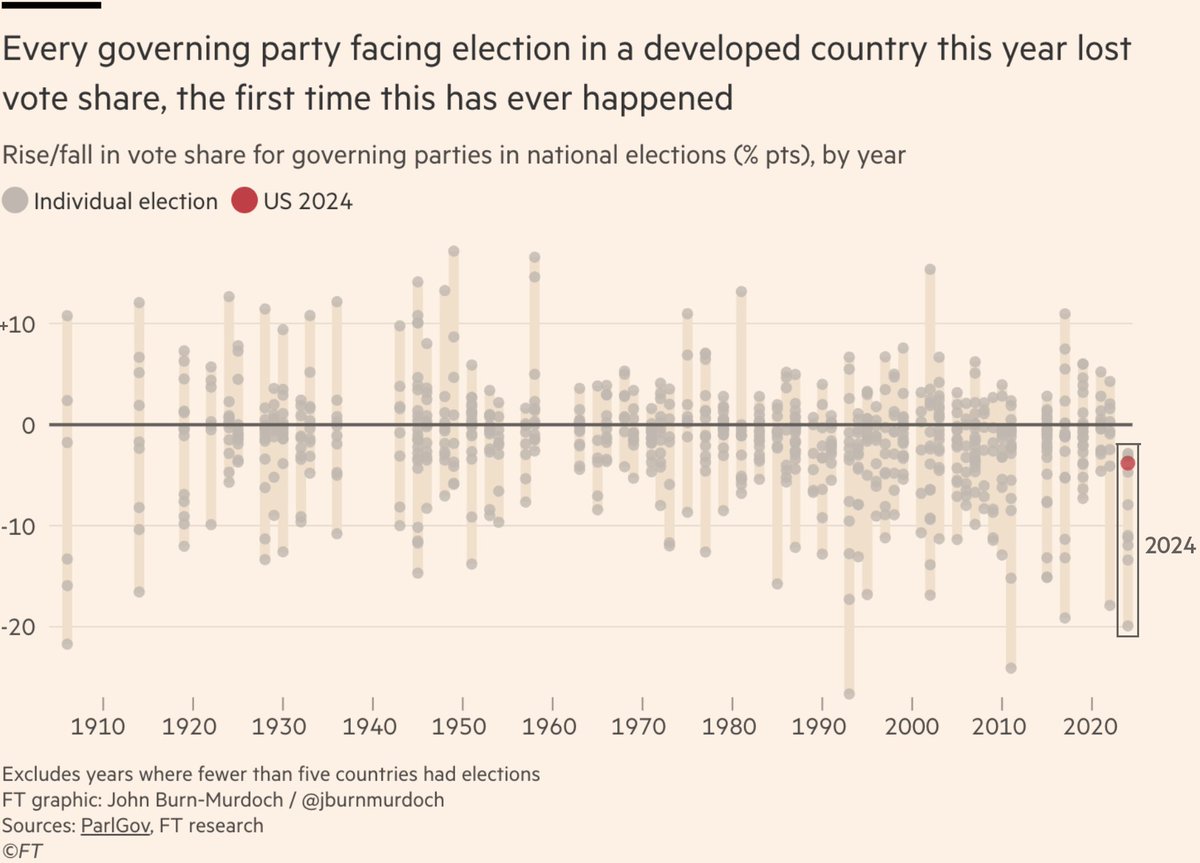
Just to clarify: this isn’t just the first time since WW2 that all incumbent parties in developed countries lost vote share.
It’s the first time since this data was first recorded in 1905. Essentially the first time in the history of democracy (universal suffrage began in 1894).
120
1,263
4,785
746,122
Eric Bolton retweeted
7 Nov 2024
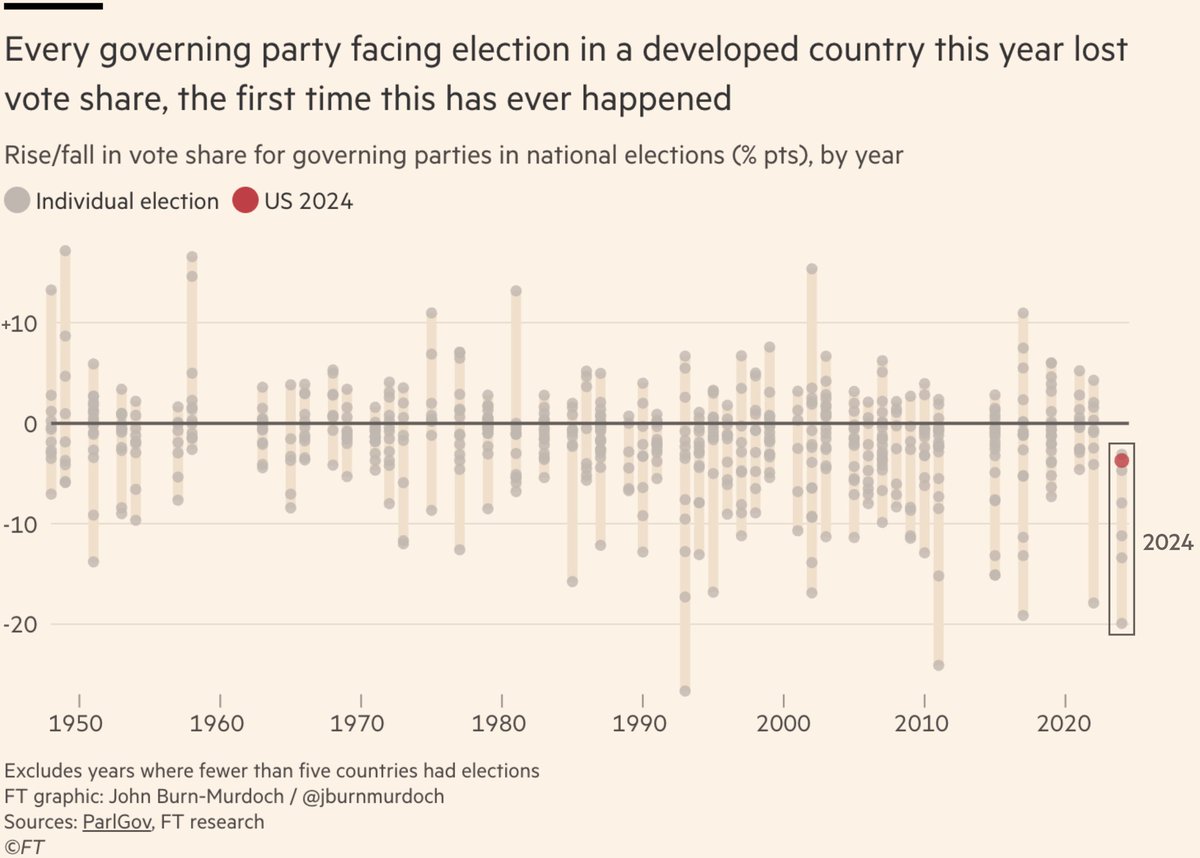
We’re going to hear lots of stories about which people, policies and rhetoric are to blame for the Democrats’ defeat.
Some of those stories may even be true!
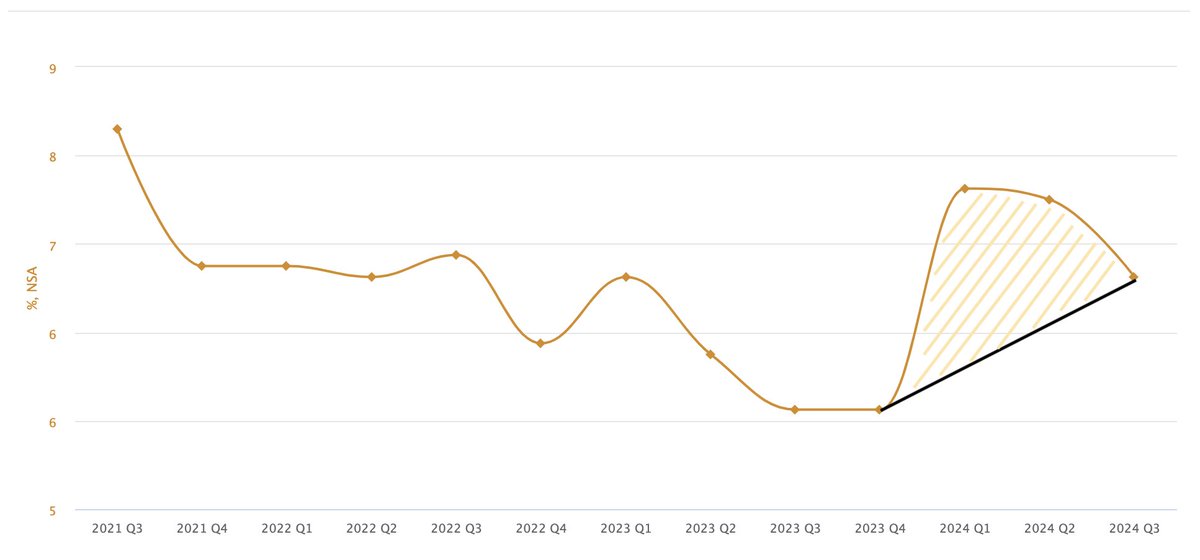
But an underrated factor is that 2024 was an absolutely horrendous year for incumbents around the world 👇
177
1,717
6,937
1,688,315
Eric Bolton retweeted

6 Nov 2024
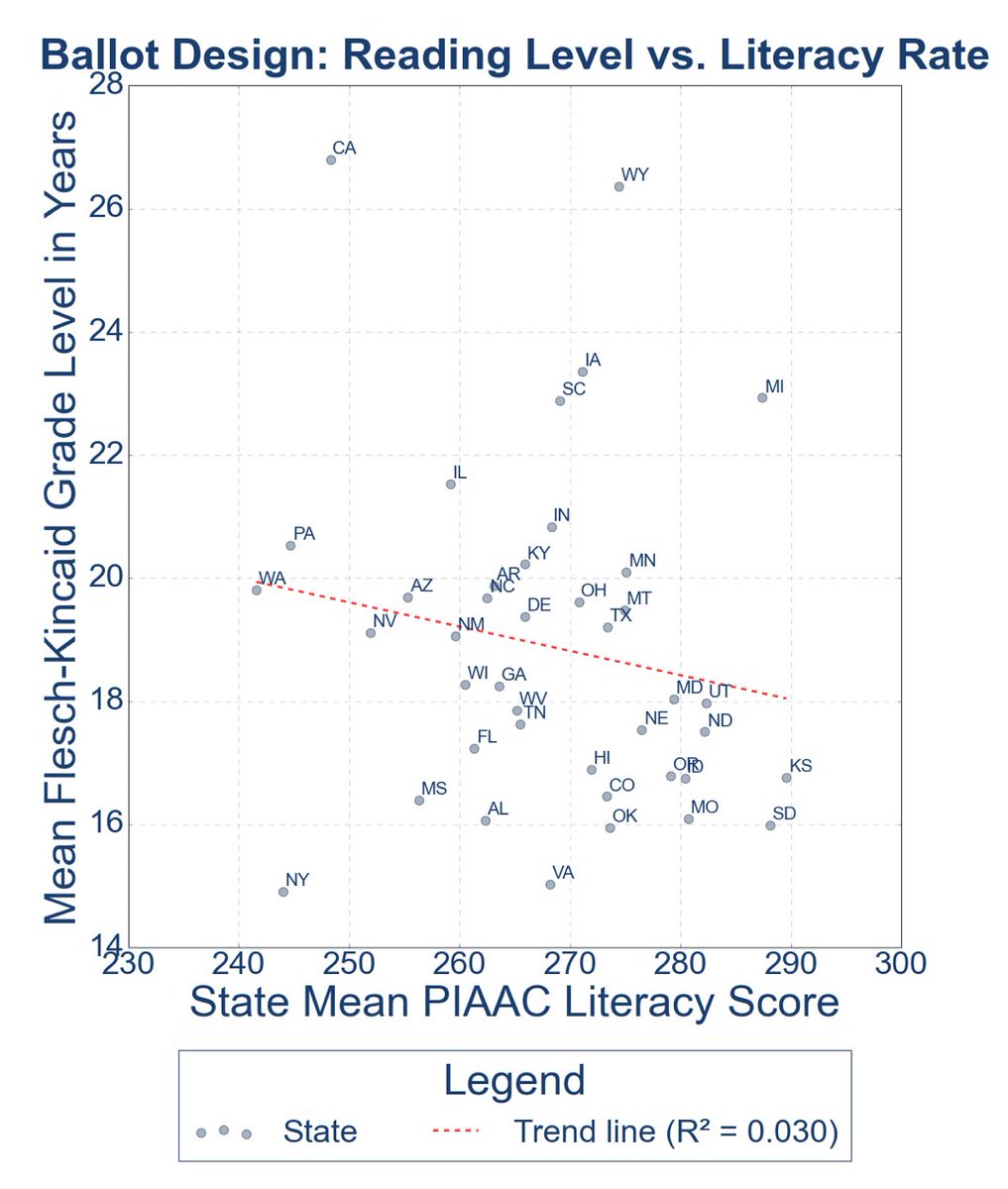
Despite wide variation in county literacy levels (180-300), ballot complexity stays stubbornly high (Flesch-Kincaid grade level 15-30) regardless of local reading abilities.
The near-flat trend line (R²=0.030) among states suggests constituents' needs aren't at the forefront of ballot designers' concerns.
See how your ballot compared to others: showmetheballot.org
1
2
6
189
Eric Bolton retweeted
5 Nov 2024
Here's a shoutout to @monroecounty_ny for having the most voter-friendly ballot in the nation!
At the federal and state levels, it has only 6 questions, clear language (Flesch-Kincaid grade level 13), and 1 ballot measure. Simpler than 99% of US ballots 👏
See the ballot complexity report for yourself: showmetheballot.org/?q=Monro…
1
1
5
74
Eric Bolton retweeted
5 Nov 2024
Per @yvonnewingett @ WaPo, Maricopa County voters are facing 30-45 min delays just to complete ballots - their longest in 20 years: washingtonpost.com/politics/…
#ShowMeTheBallot: our ballot complexity report shows why. Their ballot is more complex than 97% of US ballots:
showmetheballot.org/?q=Maric…
2
2
6
1,722