
Joined December 2021
- Tweets 2,796
- Following 400
- Followers 608
- Likes 5,587
539 Photos and videos











eGold Duck retweeted

Apr 10
America First > MAGA
3,578
12,919
114,583
2,105,181



9 Mar 2025
Democracy is great, unless that means letting far right win elections
9 Mar 2025

BREAKING: Romanian Court bans right-wing candidate Carlin Georgescu from competing following his upset win
Protests are forming
63
eGold Duck retweeted

5 Dec 2024
Show me your @elrondduck and tell me why you like your duck
Do you know The Ducks have 8 types of plumages
Golden 133
Sothern 347
Undead 277
Northern 329
Alien 232
Arctic 509
Zombie 269
Sand 2875
Buy a duck and BE FLY🚀
More info @ElrondDucks 🤘
Quack 🦆💯💎
#Quack ##BILLS


13
9
20
691
25 Nov 2024
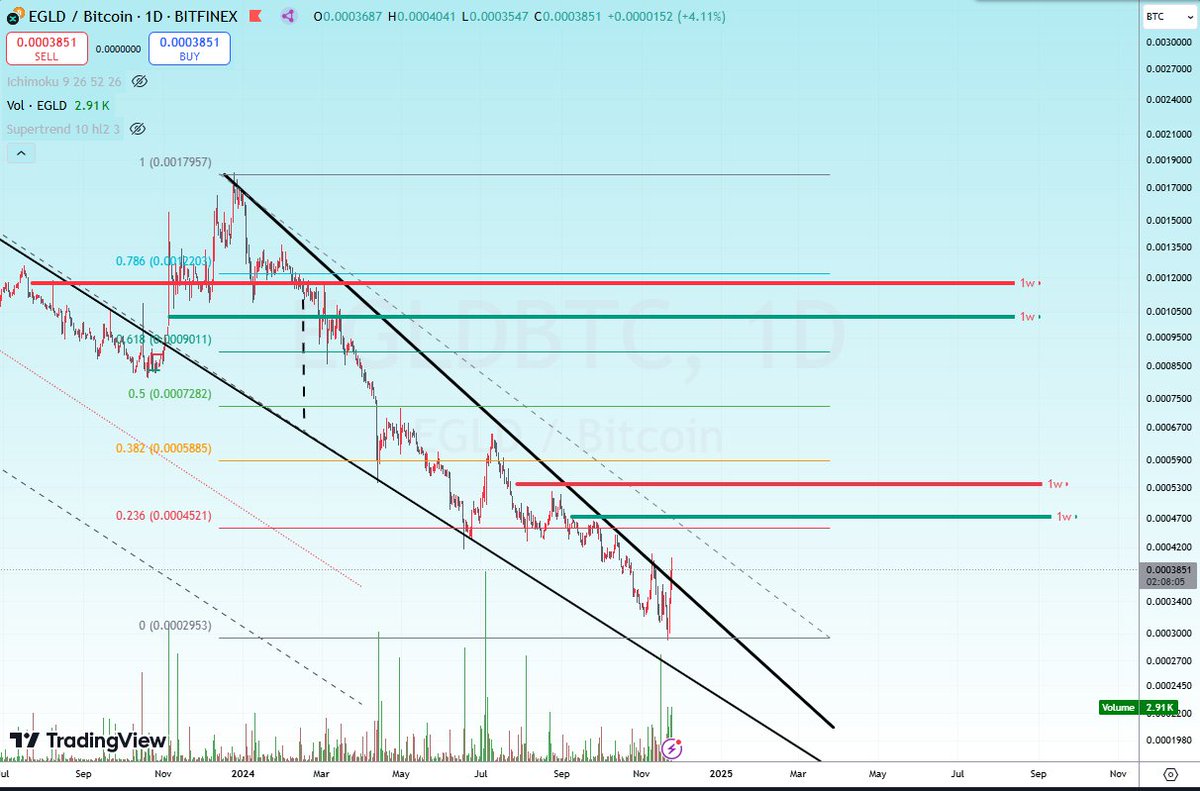
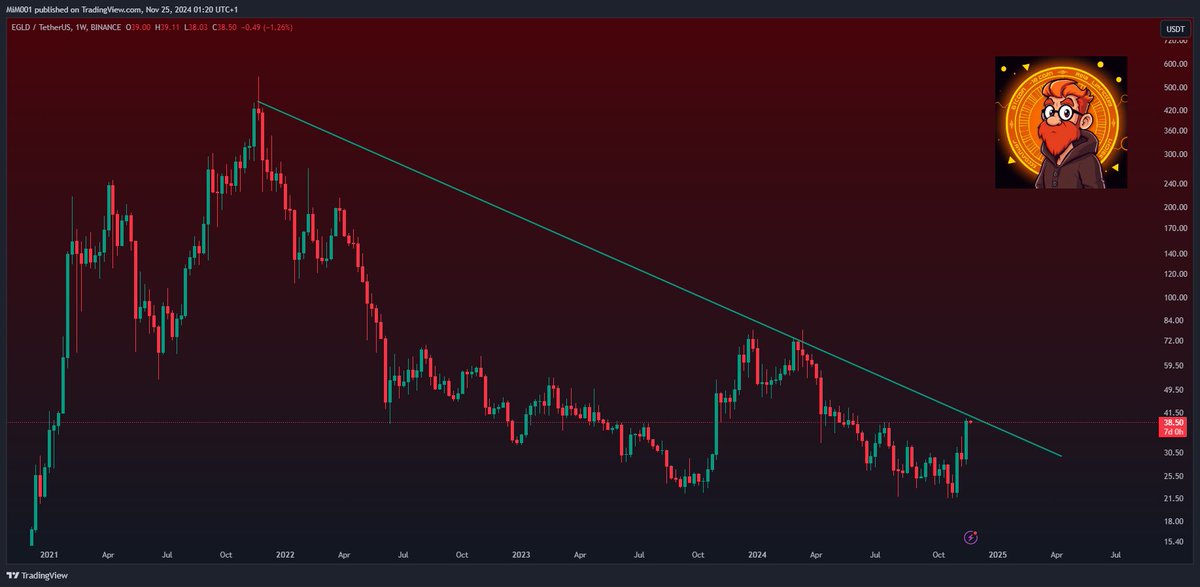
This is a chart to watch

38
25 Nov 2024
Let’s connect and grow each others following. I will follow every MultiversX account that interacts with this post.
1
59
eGold Duck retweeted

25 Nov 2024
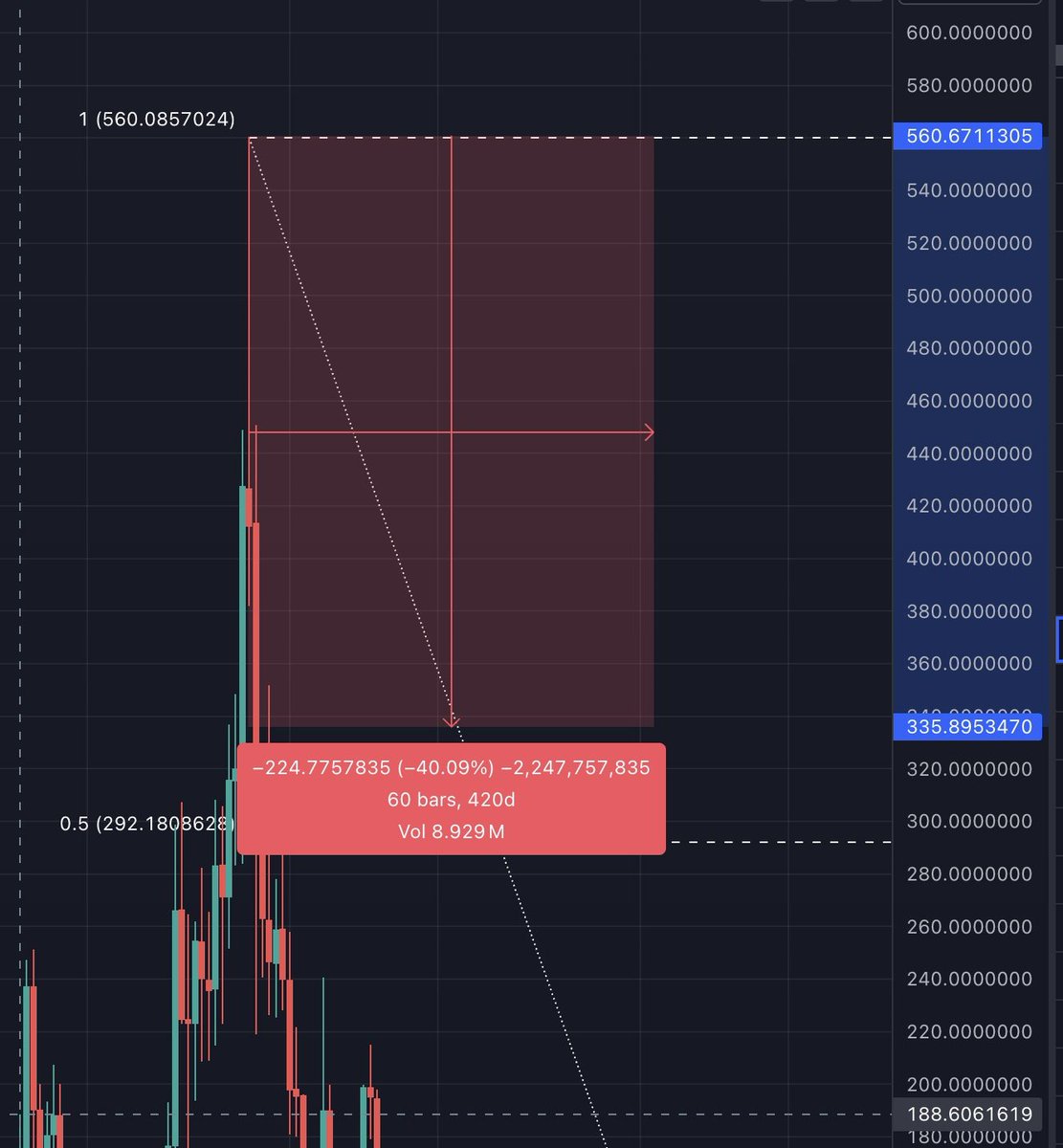
I thought this would be an interesting exercise, purely speculative.
What if $EGLD followed $XRP's price action but lagging 1 cycle behind?
$XRP ATH in 2017/18: $3.31
$XRP local high in 2021: $1.96
~40% short of ATH in 2021.
IF $EGLD was to repeat $XRP's price performance with a cycle's lag, it would mean topping around ~$330 this cycle.
If $330 was the top for #EGLD, would you be ok with this?
23
4
72
6,584
eGold Duck retweeted

23 Nov 2024
The only way to success is to…
🚀 🚀 🔥🔥 🚀🚀 🔥
🚀 🚀 🔥 🔥 🚀 🚀 🔥
🚀🚀🚀 🔥 🔥 🚀 🚀 🔥
🚀 🚀 🔥 🔥 🚀 🚀 🔥
🚀 🚀 🔥 🔥 🚀🚀 🔥🔥🔥
1
2
16
162
eGold Duck retweeted

25 Nov 2024
17
35
245
10,076

eGold Duck retweeted

22 Nov 2024
L2s go so much against the principles of permissionless, open, decentralised public ledger.
L2s are a bad take on scaling.
L2s throw back the web3 world to look like web2 again.
There is no need for L2s when you have a scalable L1.
There is no need to spin up yet another infrastructure layer to run some memecoins when you have scalable L1 which can handle all.
Focus on building the dApp, not on launching yet another L2. It does not make sense.
Build directly on L1. That is where the core principles and value lays. If you can’t build on your favourite L1, there is something wrong with it. Move to another one, which scales and which is cheap and super secure.
When will the L2 maxis sees how wrong is this narrative they are pushing?
5
38
138
6,889
eGold Duck retweeted

23 Nov 2024
Let's cut through the BS with hard facts: 🧵
ETH= 119 TPS with 50k nodes
SOL= 10k TPS with 1.4k nodes
ADA= 18 TPS with 2k nodes
SUI= 10k TPS with 100 nodes
NEAR= 100k TPS with 238 nodes
APT= 10k TPS with 151 nodes
ALGO= 10k TPS with 1.5k nodes
EGLD= 100k TPS with 3k nodes
(TPS = Capacity) (Nodes = Decentralization)
Capacity/Decentralization = Scalability!
This is all of course a gross oversimplification, as there are far more metrics to take into account & many more devils in the details. However, these are still incredibly important metrics on their own & should not be underestimated!
Methodology:
When it comes to the number of nodes I was specifically referring to native-delegated & solo validators (block producers). I did make an exception with Rocket Pool, EtherFi & others in ETH's case as these do achieve a form of trustless delegation equivalent to native delegation. I did however reduce these numbers significantly again to reflect the positive skew due to ETH having a maximum ETH limit per validator
When it comes to TPS; I was specifically referring to the Max Theoretical Transaction Per Second for basic 1 to 1 value transfers
I also rounded the TPS figures down to the extreme, SOL is really capable of 20k & EGLD of 200k for instance. But for simplicity's sake, I put them into general categories. So chains utilizing parallelization are in the 10k TPS range & chains utilizing sharding are in the 100K TPS range (this is assuming more shards can be deployed to meet demand in the latter case)
For any chain that does not deploy advanced on-chain scaling techniques, I give an exact TPS figure, as there are hard limits that can be easily calculated like in ETH (gas limit) & ADA (block size limit) respectively
My Picks, Deal With It:
Instead of strictly following market capitalization as I usually do for such lists & following specific rules for inclusion. I just included whatever I wanted to...
Because I will be accused of being a paid shill no matter what I do at this point while also facing extreme toxicity for telling everyone about these basic truths
That is why I only included what I thought was interesting & whatever happened to fit within the X-character limit, as most people do not read the body of the text, only the start
However, I did exclude modular chains & non-smart contract-capable chains if that makes you feel better. It is also highly likely that some of you will still think it is a grand conspiracy against your obscure chain because the tech is just so good... The tribalism, cope & delusion have become so ridiculous for some
Honorable Mentions:
I usually exclude ALGO from such lists due to the issue with its centralized relay nodes, but considering they are very close to fixing that issue, I thought I could make an exception here... As I decided to be less "strict" when making such lists. If you all hate this new approach let me know!
Another important metric I excluded here was speed, as that is currently the big trade-off with the parallelized chains in the 10k range & the sharded chains in the 100k range (sharded chains are slower)
You might also notice there is very little correlation between the number of nodes & TPS. That is because many aspects of the blockchain trilemma have been effectively solved & the trade-offs in the design space are focusing more on other metrics now. The economic & consensus design ends up having a far greater impact on node counts for instance, at least compared to the total capacity of these chains
Conclusion:
Shoutout to ETH for having the most nodes & EGLD for having the highest capacity! 🏆
I can also give your chain a shout in the comments by quoting the TPS & validator figures as a reply, if they are something to be proud of, I will be happy to help promote it!
We should all strive to increase these figures & praise those who push the boundaries of innovation. The goal is to maximize freedom (decentralization) for as many people as possible (scalability)
As cryptocurrency is useless without capacity & pointless without decentralization! 🔥
411
392
1,395
263,738

eGold Duck retweeted

23 Nov 2024
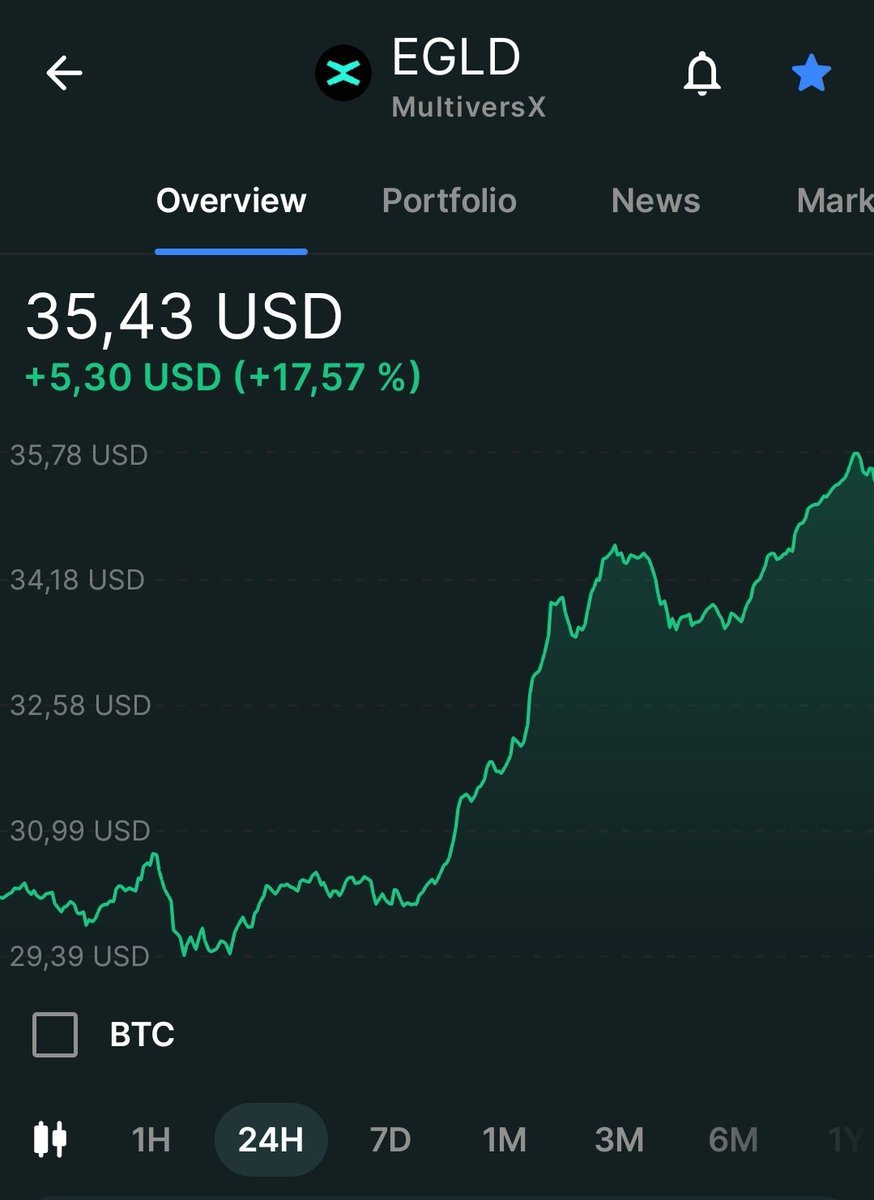
Go $Egld 🔥🚀
The Romanian national coin
The future international currency
Let's make @MultiversX famous
Like and retweet 🚀
#MultiversX #egld #bober
29
155
597
11,860
eGold Duck retweeted
23 Nov 2024
Let's see what I have in my wallet
Quack Quack Quack Quack
Look my Pirates Ducks are ready for .......
Show your Pirate from @ElrondDucks
Let's Quack 💥💥💥
Quack 🦆❤️
#Quack #BILLS #PROJECTX
2
5
12
417