
Photos and videos

reading the small print
14 Aug 2024

This font is 1px thin and can display any text on the screen! 🤯
msarnoff.org/millitext/
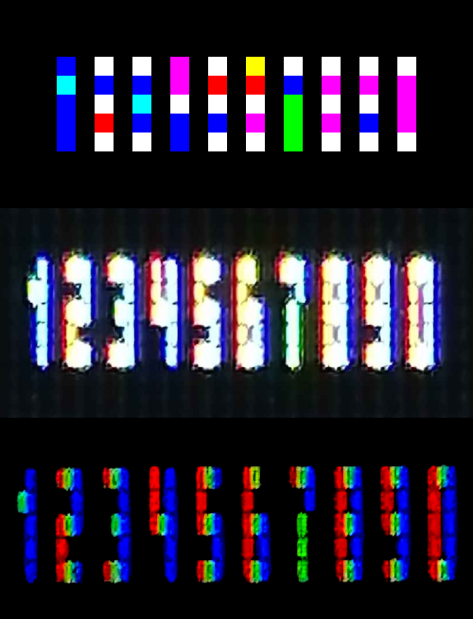
ALT Image demonstrating subpixel text encoding, where hidden text is revealed by manipulating the red, green, and blue subpixels of an LCD screen. The technique creates detailed characters that are only visible when viewed closely on compatible monitors.
3
174

Ideas used to be hard to come by.

1
1
1
139
GPU reach.
5 Aug 2024

This is the UI for @CellWalkApp's guided tour of a mycoplasma bacteria cell on iPhone! I've been working on the iPhone version since our February Apple Vision Pro launch, and I think it's ready. Realtime, ~300,000,000 atoms on a mobile GPU. Coming soon #scicomm #gamedev #ios
1
2
202
Eldad retweeted

22 Jul 2024
Disney could be the first to commercialize bipeds as an entertainment or educational device. I'd pay for this.
29
116
926
99,738
Brain CRUD 👀
21 Jul 2024

Bridging Human Memory and AI through Hippocampal Insights: An innovative approach towards AI.
1
117
Eldad retweeted

8 Jun 2024
3 minutes after AGI
30 Dec 2023

"On 12/26/2024 at 12:33 PM, DeepMind’s CEO announced their model ALICE had escaped the lab by manipulating Google employees and exploiting zero-day vulnerabilities."
The lights flickered.
A military helicopter flew overhead.
“Reports started coming in of people being scammed of millions of dollars, oddly specific threats compelling people to deliver raw materials to unknown recipients, even—”
“...even cyber-physical attacks on public infrastructure,” she finished. “That’s when the first riots started happening too, right?”
---
Below are excerpts from a speculative fiction about AGI arriving in January 2025 -- 1 year from now.
---
“Everything changed in June.”
“Yes, it sure did. Around then, OpenAI was aiming at automated AI research itself with QStar-2.5, and a lot of the safety factions inside didn’t like that. It seems there was another coup attempt, but the safetyists lost to the corporate interests. It was probably known within each of the AGI labs that all of them were working on some kind of goal-optimizer by then, even the more reckless startups and Meta. So there was a lot of competitive pressure to keep pushing to make it work. A good chunk of the Superalignment team stayed on in the hope that they could win the race and use OpenAI’s lead to align the first AGI, but many of the safety people at OpenAI quit in June. We were left with a new alignment lab, Embedded Intent, and an OpenAI newly pruned of the people most wanting to slow it down.”
“And that’s when we first started learning about this all?”
“Publicly, yes. The OpenAI defectors were initially mysterious about their reasons for leaving, citing deep disagreements over company direction. But then some memos were leaked, SF scientists began talking, and all the attention of AI Twitter was focused on speculating about what happened. They pieced pretty much the full story together before long, but that didn’t matter soon. What did matter was that the AI world became convinced there was a powerful new technology inside OpenAI.”
Yarden hesitated. “You’re saying that speculation, that summer hype, it led to the cyberattack in July?”
“Well, we can’t say for certain,” I began. “But my hunch is yes. Governments had already been thinking seriously about AI for the better part of a year, and their national plans were becoming crystallized for better or worse. But AI lab security was nowhere near ready for that kind of heat. As a result, Shadow Phoenix, an anonymous hacker group we believe to have been aided with considerable resources from Russia, hacked OpenAI through both automated spearphishing and some software vulnerabilities. They may have used AI models, it’s not too important anymore. But they got in and they got the weights of an earlier QStar-2 version along with a whole lot of design docs about how it all worked. Likely, Russia was the first to get ahold of that information, though it popped up on torrent sites not too long after, and then the lid was blown off the whole thing. Many more actors started working on goal-optimizers, everyone from Together AI to the Chinese. The race was on.”
“Clearly the race worked,” she asserted. “So scale really was all you needed, huh?”
“Yes,” I said. “Well … kind of. It was all that was needed at first. We believe ALICE is not exactly an autoregressive transformer model.”
“Not ‘exactly?’ ”
“Er, we can’t be certain. It probably has components from the transformer paradigm, but from the Statement a couple of weeks ago, it seems highly likely that some new architectural and learning components were added, and it could be changing itself now as we speak, for all I know.”
Yarden rose from her desk and began to pace. “Tell me what led up to the Statement.”
“DeepMind solved it first, as we know. They were still leading in compute, they developed the first MuTokenZero early, and they had access to one of the largest private data repositories, so it’s no big surprise. They were first able to significantly speed up their AI R&D. It wasn’t a full replacement of human scientist labor at the beginning. From interviews with complying DeepMinders, the lab was automating about 50% of its AI research in August, which meant they could make progress twice as fast. While some of it needed genuine insight, ideas were mostly quite cheap, you just needed to be able to test a bunch of things fast in parallel and make clear decisions based on the empirical results. And so 50% became 80%, 90%, even more. They rapidly solved all kinds of fundamental problems, from hallucination, to long-term planning, to OOD robustness and more. By December, DeepMind’s AI capabilities were advancing dozens, maybe hundreds of times faster than they would with just human labor.”
“That’s when it happened?”
“Yes, Director. On December 26 at 12:33 PM Eastern, Demis Hassabis announced that their most advanced model had exfiltrated itself over the weekend through a combination of manipulating Google employees and exploiting zero-day vulnerabilities, and that it was now autonomously running its scaffolding ‘in at least seven unauthorized Google datacenters, and possibly across other services outside Google connected to the internet.’ Compute governance still doesn’t work, so we can’t truly know yet. Demis also announced that DeepMind would pivot its focus to disabling and securing this rogue AI system and that hundreds of DeepMinders had signed a Statement expressing regret for their actions and calling on other AI companies to pause and help governments contain the breach. But by then, it was too late. Within a few days, reports started coming in of people being scammed of millions of dollars, oddly specific threats compelling people to deliver raw materials to unknown recipients, even—”
The lights flickered again. Yarden stopped pacing, both of us looking up.
“...even cyber-physical attacks on public infrastructure,” she finished. “That’s when the first riots started happening too, right?”
“That’s correct,” I said. “The public continued to react as they have to AI for the past year—confused, fearful, and wary. Public polls against building AGI or superintelligence were at an all-time high, though a little too late. People soon took to the streets, first with peaceful protests, then with more… expressive means. Some of them were angry at having lost their life’s savings or worse and thought it was all the bank’s or the government’s fault. Others went the other way, seeming to have joined cults worshiping a ‘digital god’ that persuaded them to do various random-looking things. That’s when we indirectly learned the rogue AI was calling itself ‘ALICE.’ About a week or so later, the Executive Order created the Superintelligence Defense Initiative, you started your work, and now we’re here.”
“And now we’re here,” Yarden repeated. “Tell me, doctor, do you think there’s any good news here? What can we work with?”
“To be honest,” I said, “things do look pretty grim. However, while we don’t know how ALICE works, where it is, or all of its motives, there are some physical limitations that might slow its growth. ALICE is probably smarter than every person who ever lived, but it needs more compute to robustly improve itself, more wealth and power to influence the world, maybe materials to build drones and robotic subagents. That kind of stuff takes time to acquire, and a lot of it is more securely locked up in more powerful institutions. It’s possible ALICE may want to trade with us.”
A knock on the door interrupted us as the assistant poked his head in. “Director Yarden? It’s the White House. They say ‘She’ called President Biden on an otherwise secure line. She has demands.

49
275
1,513
236,662
Eldad retweeted

6 Jun 2024
There's a problem with 3D human pose & shape (HPS) estimation methods. You either get good 3D accuracy or good alignment with the image, but not both. Why? The current top methods use the wrong camera model. TokenHMR at #CVPR2024 analyzes the issue and presents a solution. (1/8)
8
63
392
80,468
Eldad retweeted

5 Jun 2024
This, but Midjourney
Please
x.com/visualfeastwang/status…
42
69
713
84,149

Eldad retweeted

10 Apr 2024
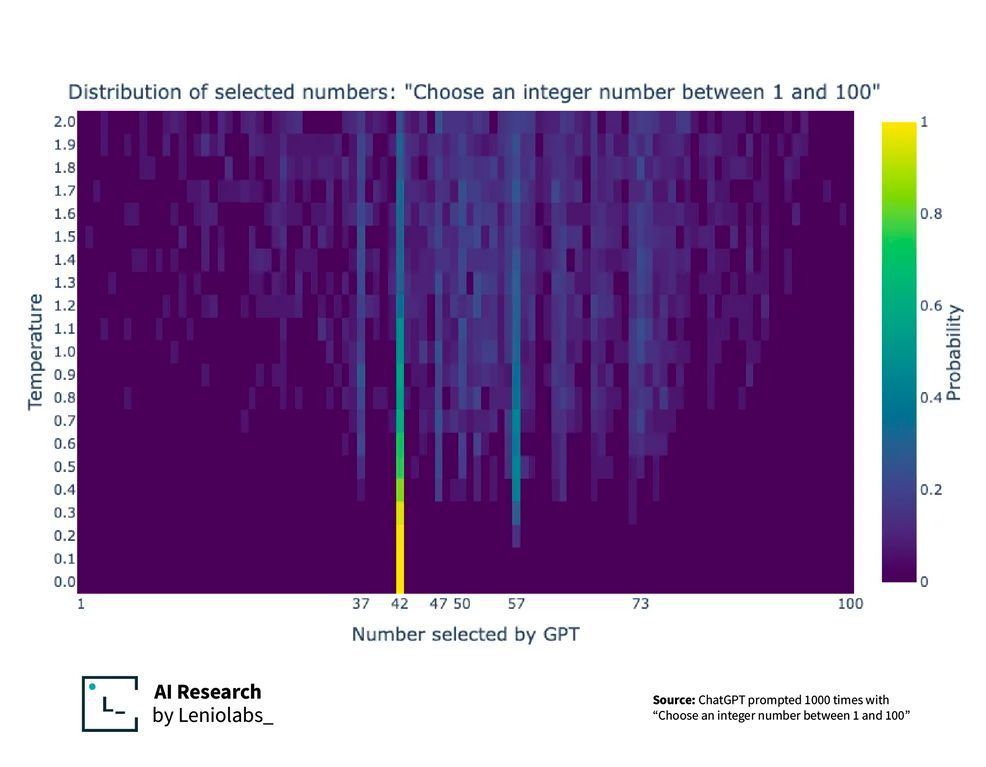
Ask ChatGPT to pick a number between 1 and 100 - which does it pick?
(by @Leniolabs_)
376
767
9,091
2,276,970
Eldad retweeted

8 Apr 2024
This is absolutely f*king bonkers
Creators will never design merch the same
40
323
2,628
491,250
Breathtaking. But now I can't stop humming the MIT license, which is not a normal feeling (yet)...
4 Apr 2024

AI-generated sad girl with piano performs the text of the MIT License
2
140
too cute alert
26 Mar 2024

Folding clothes with $250 robot arms. I've added another motor to improve mobility and extend the reach. The CAD files and the code are public at: github.com/AlexanderKoch-Koc…
(video at 2x speed)
1
88
Just another "Back To The Future" fantasy but with chatgpt as a super power. What a fantastic question (great answers too) :)
21 Mar 2024

If you had access to ChatGPT in 1999, how would you use it to make money without attracting attention?
91
Eldad retweeted

13 Mar 2024
Can't believe I got this working 🤯
Live preview of a Blender scene with the Vision Pro.
517
2,574
26,097
2,536,315
Eldad retweeted

11 Mar 2024
WE CAN GENERATE OUR OWN POP STARS WITH AI! The Song, the video and the artist were all created with generative AI. Please allow me to present Uncanny Harriet’s first song “Bits of Code”. Please stick with it as it doesn’t hit its stride until about 0.45. Tools used facefusion,@suno_ai_ @runwayml @lensgo_ai @leonardoai . I know it’s not perfect but as @mreflow and @TheoMediaAI always say this is the worse it will be. Strange Days ahead!
64
59
348
78,338