
Joined November 2021
- Tweets 33,597
- Following 288
- Followers 384
- Likes 19,448
2,041 Photos and videos








Pinned Tweet

11 Mar 2023
TOP SECRET PFIZER DOCUMENT LEAKS ONLINE... rumble.com/vw6s87-top-secret…
#Nuremberg2
6
3
33
12,197
noname retweeted

Jun 13
Pendant que le gratin montréalais est outré parce que certains policiers auraient été pas fin avec des "minorités", à Toronto un agent se police a été sauvagement tué par un islamiste.
Mais on n'en parle pas! Chut!
youtu.be/FUjUb6iE-F8?si=ZEzx…
8
34
86
1,743
Bon déjà un like sur 1k vues et on se permet de bloquer les commentaires…
@SPVM toujours un peu en retard mais c’est normal dans une ville gérée avec autant de laxisme aux frais des citoyens.
10
Carry on… s’ils sont trop idiots pour les buter.

5

noname retweeted

Jun 12
C'est excellent !!!
Donc, le voile, c'est la diversité, mais la croix, c'est le viol de la loi sur la laïcité 😂😂😂
146
609
3,376
36,175
Jun 13
Yes a fucking nightmare… which you are FUNDING right now with every 60h or work per week

6
noname retweeted

COVID-19 "VACCINES" INCREASE YOUR RISK OF 7 MAJOR CANCERS
1. Breast: 54%
2. Prostate: 69%
3. Lung: 53%
4. Bladder: 62%
5. Colon: 35%
6. Stomach: 34%
7. Thyroid: 35%
This is based on two MASSIVE vaccinated vs. unvaccinated studies involving 8.7 MILLION people.

This is one tragic result of the legacy media NOT reporting on the cover-up of safety signals associated with these mRNA injections.
Read my report to find out what a travesty these CDC contracts truly are.
142
4,097
6,451
141,332
noname retweeted
VETERINARIANS ACROSS AMERICA ARE SILENTLY GIVING SELF-AMPLIFYING RNA INJECTIONS TO OUR DOGS AND CATS
The USDA approved Merck’s experimental saRNA shots for rabies, flu and FeLV — called Nobivac NXT.
1,000 pages of new FOIA data shows they're EXTREMELY DANGEROUS: Deaths, cardiac arrests, neurological issues, and strange masses — often within HOURS of injection.
108
1,715
2,391
45,951
Jun 13
100 millions c’est RIEN.
Calcules combien nos immigrés reçoivent sans avoir à contribuer à la société pour le simple fait de faire des enfants et de décupler notre endettement et diminuer notre qualité de vie.
Jun 12

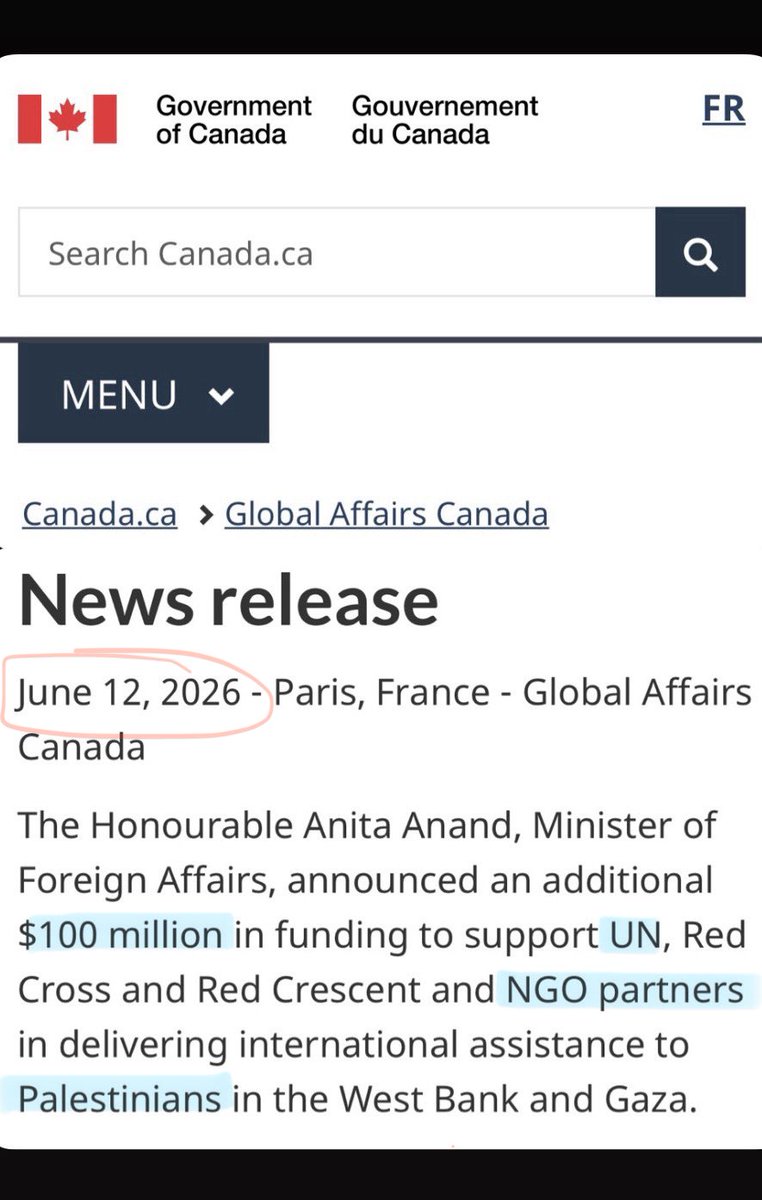
INSANE 🇨🇦 Canada sending $100,000,000 to Palestine, announced just now from Paris France 🤯 $100 MILLION.
I’m sure Ukraine is next
8
Jun 13
Interessant point de vue
Jun 12

Put your faith in Jesus TODAY because we’re at the end.
Even the Nephilim are telling us.
7
Jun 13
Tous des merdes
7
Jun 13
La pognes-tu?
Legault: refus de revoir le mode de scrutin
Fréchette: doublé le nombre de députés dans deux de ses circonscriptions
Crois-tu toujours à la démocratie? 🤡


5
Jun 12
Good

🇮🇪⚔️ An armed Irish group has issued a direct warning to politicians:
“You have flooded our communities with military-age migrant men.
We will not sit back and watch our culture and religion destroyed.”
The pushback has begun.
Ireland is waking up.
10
noname retweeted

1 Corinthians 15:36 Commentary
Verse Quoted in KJV
“Thou fool, that which thou sowest is not quickened, except it die:” (1 Corinthians 15:36)
Detailed Exegesis of Each Phrase
“Thou fool,”
Paul answers the resurrection objector with sharp language: “Thou fool.” This is not Paul losing his temper or being unspiritual. This is the Holy Ghost’s judgment on a man who questions resurrection as though God’s power must bow before human ignorance. The objector in verse 35 asked, “How are the dead raised up? and with what body do they come?” Paul’s reply shows that the question was not being asked in humble faith, but in unbelieving arrogance. A sincere learner may ask how God works; a fool asks in order to mock what God has plainly revealed.
The Bible does not use the word “fool” lightly. A fool is not merely someone with low intelligence. A fool is a moral and spiritual problem. Psalm 14:1 says, “The fool hath said in his heart, There is no God.” Proverbs repeatedly describes the fool as one who despises wisdom, rejects instruction, trusts his own heart, and hates correction. Here the fool is the man who looks at death, decay, and the grave, then concludes that bodily resurrection must be impossible because he cannot explain it. That is not intelligence. That is unbelief wearing a scholar’s coat.
Paul’s sharpness is necessary because resurrection denial is not a harmless classroom exercise. If there is no resurrection, Christ is not risen; if Christ is not risen, faith is vain; if faith is vain, believers are yet in their sins. A man attacking resurrection is not playing with a small doctrine. He is swinging at the foundation of the gospel. When a man’s question undermines the power of God, the promise of Scripture, and the hope of the saints, Paul does not flatter him. He says, “Thou fool.”
“that which thou sowest”
Paul now points the objector to something ordinary: sowing seed. He does not begin with a complicated philosophical argument. He points to a field. “That which thou sowest” refers to the seed a farmer places in the ground. The objector is stumbling over resurrection while walking through a world filled with illustrations of life following death. Every harvest preaches against him. Every seed dropped into the dirt is a quiet sermon on the wisdom and power of God.
This phrase also brings the argument down to man’s own experience. “That which thou sowest” means the objector himself participates in a process that resembles the principle he mocks. He sows seed, but he does not expect the seed to remain in its original form. He expects something to happen after it is buried. He expects life to appear from what seems dead. He expects a new body, a new form, a new manifestation. He may not understand all the hidden operations of life in the seed, but he still plants it and waits for the result.
Paul’s illustration is powerful because it exposes the inconsistency of unbelief. The fool thinks resurrection is absurd, yet he trusts the mystery of seedtime and harvest. He cannot make a seed live. He cannot explain every secret of life locked inside it. He cannot command the process by his own power. Yet he does not call farming foolish. Paul is saying, in effect, “You already live in a world where God brings life out of burial. Why do you think the resurrection body is impossible?”
“is not quickened,”
“Quickened” means made alive. The seed is not quickened unless God gives it life after it is sown. In Scripture, quickening is life-giving power. God quickens the dead. The Spirit quickens. Christ quickens whom He will. Here Paul uses the word to show that life comes after the seed is placed in the ground. The seed does not reach its intended fruitfulness by staying above the soil in its original condition. It must pass through the appointed process.
This word connects directly to resurrection. Resurrection is quickening. The dead body is not improved by man’s effort, philosophy, embalming, or memorial
1
1
7
728
Jun 10
Elle a pas l’air de connecter trop trop, sauf financièrement. Trudeau peut pas respirer sans que tout soit fake autour de lui, c’est important pour lui.
Jun 10

To think of the damage this guy caused our Country and for what? He just walks off into the sunset like he didn’t divide our nation?
Are we to forget that he froze the bank accounts of non criminal Canadians?
Or that he banned millions of people including children from air travel & also paid for a segregation passport system to be implemented across Canada?
I will never stop pointing out what an absolutely horrible person this guy is. It says a lot about Katy Perry’s judgment in people as well.
36
noname retweeted

Jun 10
The Irish are taking Ireland back! Know the rest of the west stands with you, you may be the first domino to kick off serious reforms in the West.
545
2,843
12,661
82,696
Jun 10
Yes! Malheureusement nos sociétés gauchistes vont attendre de nombreux « incidents » jusqu’à ce que ça les menace de près.
Jun 9

🚨🇮🇪BREAKING: Conor McGregor just called for the only solution after an African migrant butchered a local man in the middle of a Belfast street!
"CLOSE THE BORDERS - remove ALL illegal entrants from this island NOW!"


12
noname retweeted

Jun 9
The chicken that believed it was a duck is now facing the truth.
220
946
9,304
555,743
Jun 10
C’est dur de réaliser à quel point on se fait crosser… nous aussi on donne la moitié de notre vie à l’impôt… et les ressources naturelles sont comme les vaches à corne en Inde.
Ça n’a même pas de sens.

2
33