
Our mission is the advancement and protection of the rights and general welfare of wild animals, children, elderly persons and other vulnerable groups in SA.
Joined October 2017
- Tweets 5,025
- Following 2,370
- Followers 2,065
- Likes 3,159
459 Photos and videos
Pinned Tweet
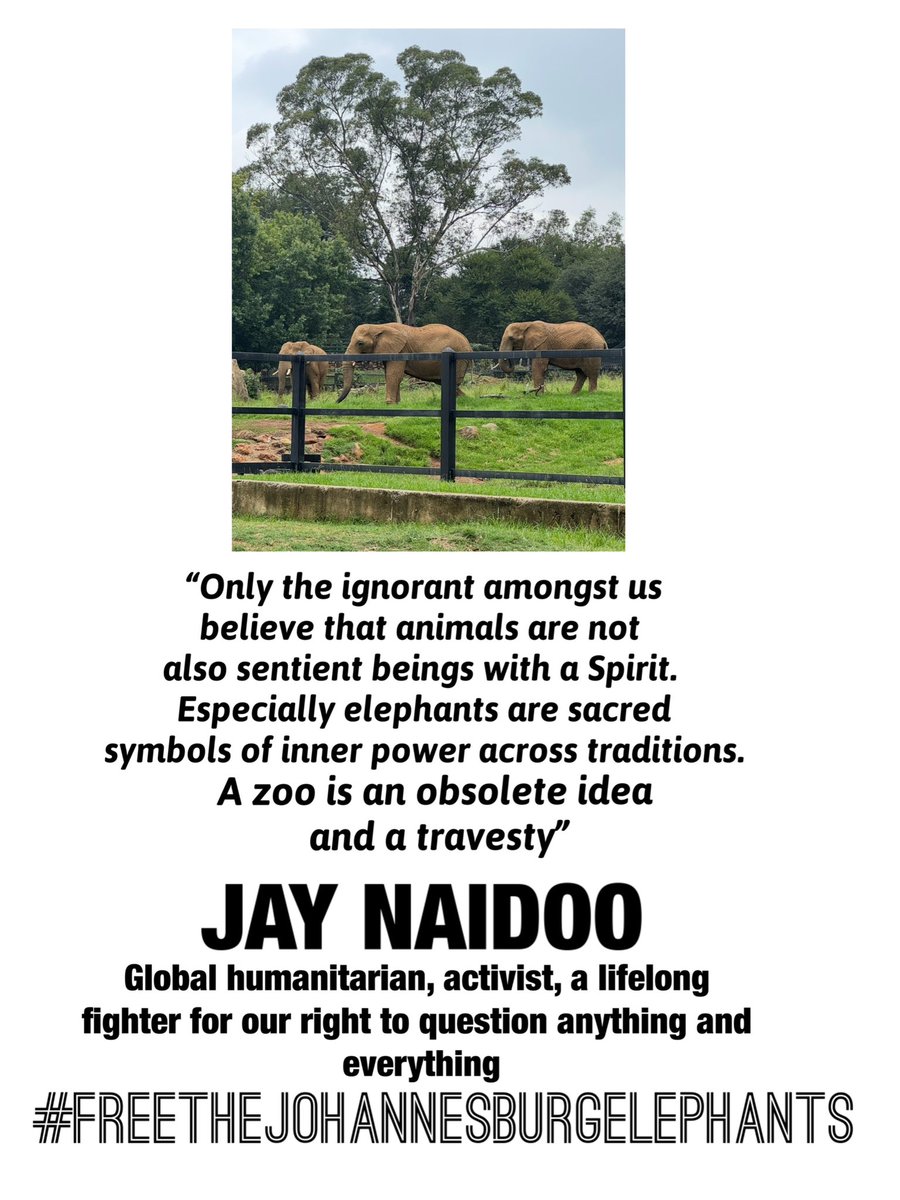
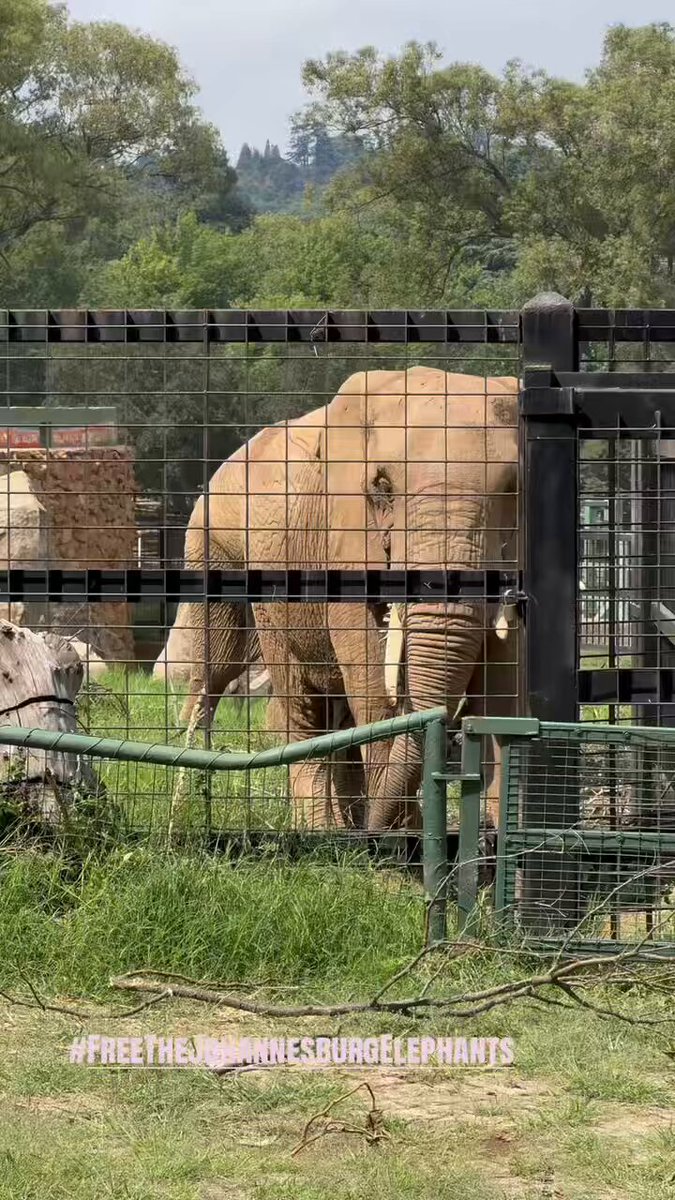
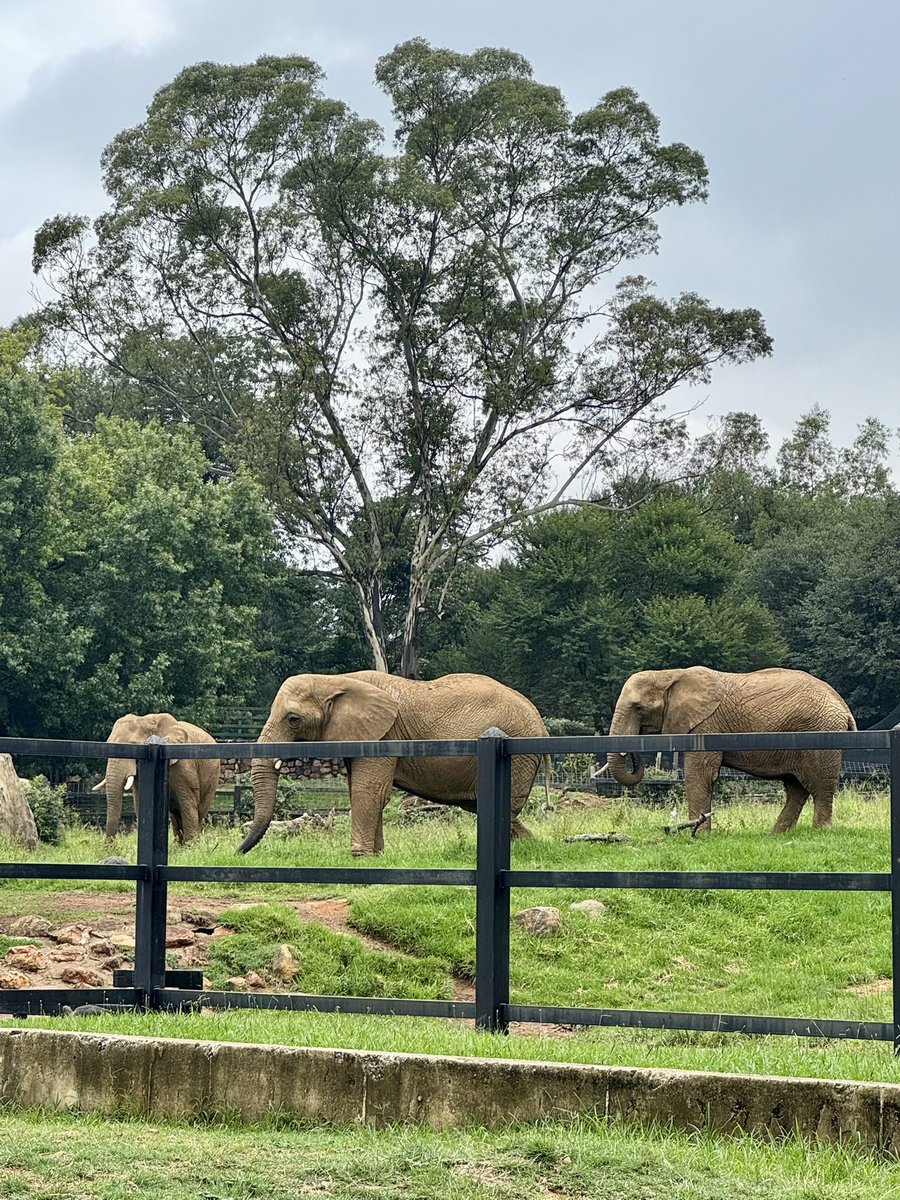
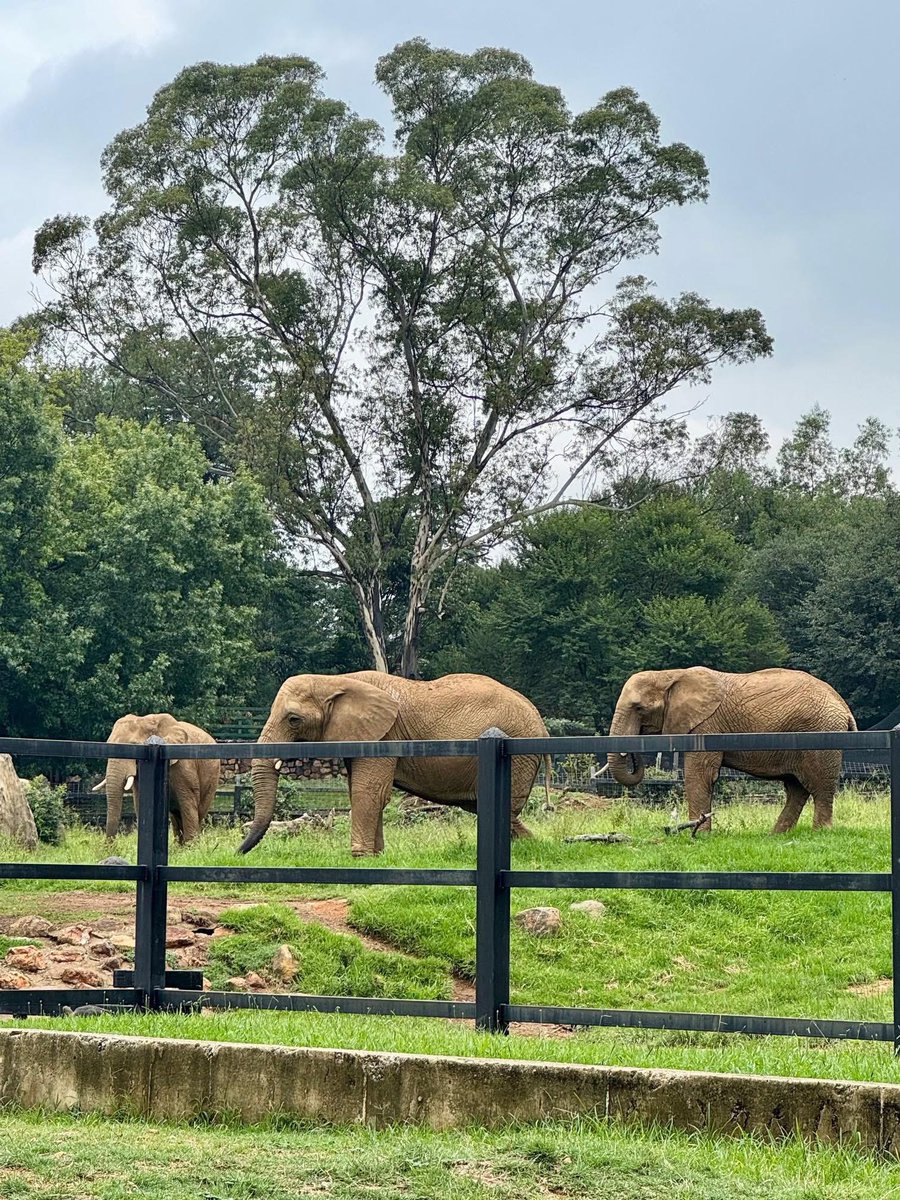
“The case of Lammie, Ramadiba and Mopane — the three African elephants being kept at the Johannesburg Zoo under reportedly distressing conditions — is a deeply tragic one.
In 2019, Ramadiba and Mopane were transferred from captivity in the Eastern Cape to the Johannesburg Zoo, where reports now indicate that they are displaying signs of distress, frustration and listlessness associated with prolonged confinement and unnatural living conditions.
The environment does not speak for itself, and if we as human beings fail to act as its custodians, we risk accelerating the destruction of species, ecosystems, rivers, forests and oceans that future generations will depend on. As renowned activist Jay Naidoo has noted, elephants carry deep cultural and spiritual significance across many traditions, including among South Africa’s diverse peoples.
This is why ActionSA would support any lawful and appropriate legislative or legal intervention — including the matter currently before the courts concerning the Johannesburg Zoo — that advances the dignity, humane treatment and long-term preservation of South Africa’s invaluable wildlife heritage.
ActionSA remains concerned that sections of government are increasingly failing in their duty to protect South Africa’s rich environmental and wildlife heritage, too often allowing commercial interests and institutional convenience to take precedence over ethical conservation and animal welfare.
ActionSA is actively engaging with environmental stakeholders, conservationists and concerned South Africans as we work to table an updated version of our already first-in-class environmental policy. South Africans deserve a clear understanding of which political parties are genuinely committed to protecting our wildlife, oceans, mountains and forests — and which continue to neglect the constitutional responsibility to preserve them for future generations.”
— Alan Beesley MP, ActionSA Member of Parliament
5
42
44
692
EMS Foundation retweeted

The @Our_DA IS A DISGRACE
Willie Aucamp should NEVER have been appointed minister DFFE!
WHY are the DA now OPPOSING all efforts and measures made by Dr Dion George to protect South Africa's wildlife? 😡
WHO has BOUGHT the DA Helen Zille? Who OWNS Willie Aucamp?
Money talks!
3
3
91
A LETTER OF CONCERN DELIVERED TO THE DEMOCRATIC ALLIANCE FEDERAL COUNCIL
@helenzille
@Our_DA
“The EMS Foundation writes to you not merely as a civil society organisation, but as a participant in South Africa’s democratic project, one that is increasingly alarmed by what appears to be a profound and politically consequential shift within the Democratic Alliance (DA).
At stake is not only environmental policy, but the DA’s credibility as a constitutional party, its claim to ethical governance, and its commitment to non-racialism, accountability, and the public good.
A Party at Risk of Capture
Serious allegations, emerging from conservationists, animal protection organisations, and within the DA itself, suggest that the party may no longer be acting independently in matters of environmental governance, but is instead advancing the interests of a narrow, well-organised lobby tied to wildlife breeding, hunting, and the captive lion industry.
The removal of Minister Dr. Dion George, and the appointment of Minister Willie Aucamp in November 2025, has become a flashpoint for these concerns. Minister Aucamp’s explicit alignment with the Sustainable Use Coalition (SUCo) and Wildlife Ranching South Africa (WRSA) signals not neutrality, but political positioning in favour of consumptive wildlife industries.
The appointment of South Africa's Minister of Forestry, Fisheries, and the Environment on 17th November 2025 has drawn intense criticism for allegedly mirroring "state capture" tactics. The controversy stems from claims that he was placed in the role to serve minority private wildlife and hunting interests rather than the public mandate.
Mr Aucamp has openly supported and aligned himself with the SUCo. For example in June 2025 social media post, Aucamp stated it was a "huge privilege" to address the Annual General Meeting of SUCo-SA, where he described their mission of "Driving Sustainable Use to Enable Biodiversity Conservation through Species Enhancement and Habitat Conservation" as a "noble one".
However, his alignment with SUCo-SA, particularly with member organisations like the South African Predator Association (SAPA), has drawn criticism from conservationists and animal welfare groups, who have raised concerns about a potential conflict of interest due to the organisation's advocacy for the captive lion breeding and hunting industry. SAPA is currently engaged in legal action against the Department of Forestry, Fisheries and the Environment (DFFE) to compel the reinstatement of lion bone export quotas (case number 2024-146251).
This raises a deeply political question: who is shaping DA policy, elected representatives accountable to the public, or private sector actors with vested financial interests?
Equally troubling is the DA’s proximity, whether direct or indirect, to figures such as Steve Hofmeyr through SUCo and related platforms. Mr Hofmeyr’s record is well documented. It includes:
Repeated racial generalisations about Black South Africans,
The use of deeply offensive racial slurs,
The promotion of the discredited “white genocide” narrative,
Judicial commentary that his views “lend themselves to racism.”
While not all such conduct has resulted in legal sanction, its political meaning is unmistakable.”
READ THE FULL LETTER ✉️
emsfoundation.org.za/a-lette…
1
5
6
372
EMS Foundation retweeted

Mar 22
The DA has a very clear credit control policy. If a public representative contribution is not paid within 7 days after it is due, action is taken. If Karabo missed a payment, she should have received a letter - if she didn’t, that process failed HER. Double standard indeed!
2
8
11
1,607
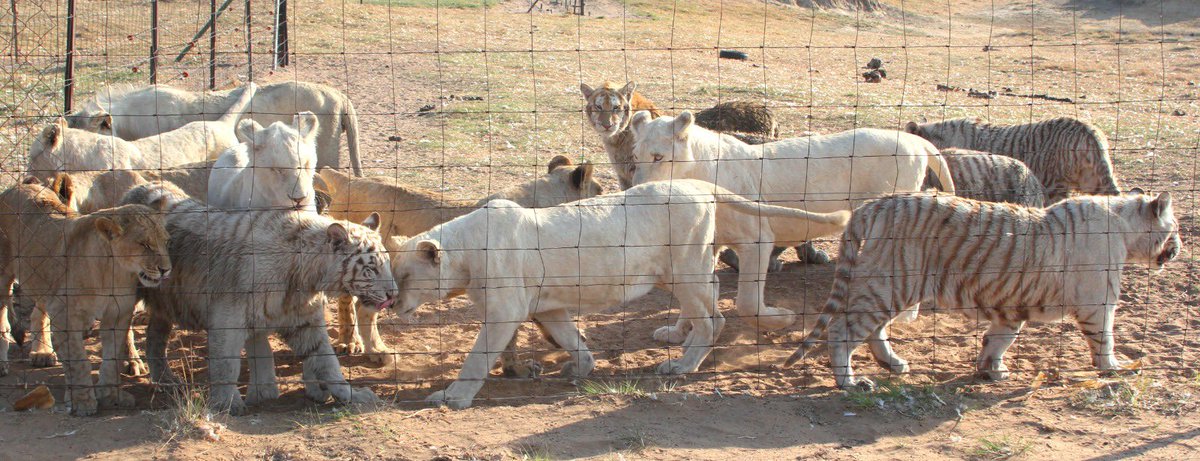
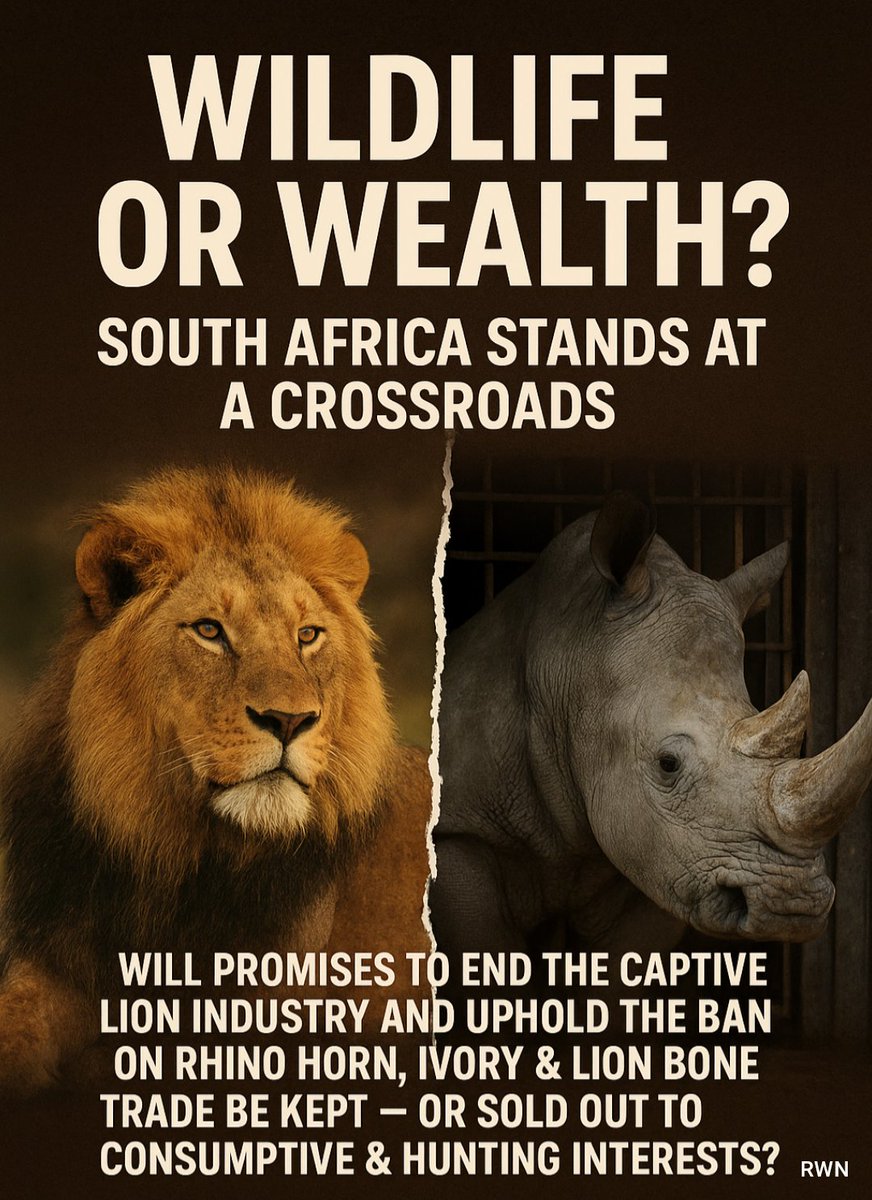
PARLIAMENT MUST ENFORCE ITS OWN RESOLUTION: END THE CAPTIVE LION INDUSTRY NOW
South Africa stands at a constitutional, ethical and political crossroads.
Eight years ago, Parliament resolved that captive lion breeding and the lion bone trade should be reviewed with a view to ending the practice.
Cabinet reinforced this direction in 2024 by approving a revised Policy Position explicitly committing to close captive lion breeding for hunting and the lion bone trade .
Yet today, commercial exploitation of captive lions continues. This is not a policy gap. It is an implementation failure.
PARLIAMENT SPOKE CLEARLY IN 2018
Following the 2018 Colloquium on Captive Lion Breeding in South Africa, the Parliamentary Portfolio Committee found that the industry:
•Has no conservation value
•Damages South Africa’s conservation image and tourism brand
•Raises serious systemic animal welfare concerns
The Committee directed that:
•Policy and legislation be reviewed with a view to ending the practice
•A full audit of facilities and lions be conducted
•Welfare and health concerns be urgently addressed
•The Department report quarterly to Parliament on progress
This was not symbolic. It was a formal parliamentary directive.
Eight years later:
•No complete, independently verified national audit is publicly available
•No transparent quarterly reporting record exists
•No legally enforceable phase-out timeline has been published
•No clear welfare plan exists for thousands of lions currently in captivity
Parliament must now ask: Has its own mandate been ignored?
CONSTITUTIONAL DUTIES CANNOT BE DEFERRED
Section 24 of the Constitution requires the state to secure ecologically sustainable development while protecting the environment for present and future generations.
The Constitutional Court has recognised that animal welfare is constitutionally relevant within environmental protection jurisprudence.
An industry that:
•Lacks conservation benefit
•Systematically exploits animals
•Harms the national conservation brand
cannot be rationally defended under sustainable development principles.
Continued tolerance of the captive lion industry is constitutionally suspect.
THE LION PROHIBITION NOTICE: A FIRST STEP - NOT THE END
Government announced in July 2025 that it was advancing a Lion Prohibition Notice to ban new captive lion breeding facilities and cub petting operations .
Parliament has now approved the Regulations and Draft Lion Prohibition Notice.
The EMS Foundation welcomes this critical first step. But let us be clear:
•Limiting new facilities does not close existing ones.
•Policy positions do not automatically become enforceable law.
•Administrative engagement with provinces does not equal implementation.
Without binding regulations, audits, enforcement action, transition funding and transparent timelines, the industry continues.
THE DEMOCRATIC ALLIANCE POLITICAL CAPTIVE LION INDUSTRY DILEMMA
The issue has become politically charged. Serious concerns have been raised about potential political conflicts of interest and policy reversals.
Regardless of cosy relationships, alignment with wildlife and hunting industries and party politics, one principle must prevail:
Parliament’s 2018 resolution remains binding in spirit and intent.
Wildlife governance cannot shift with political tides. It must be anchored in constitutional duty, scientific integrity and ethical governance.
THE OUTSTANDING QUESTIONS PARLIAMENT MUST NOW DEMAND ANSWERS TO
Parliamentarians must urgently require the Minister and Department to provide:
1A verified, independently audited number of all captive lion facilities and lions, disaggregated by province.
2A legally binding, time-bound phase-out framework for commercial captive lion breeding and associated trade.
3Public quarterly implementation reports as originally mandated.
READ FULL STATEMENT: emsfoundation.org.za/parliam…
4
8
261
EMS Foundation retweeted

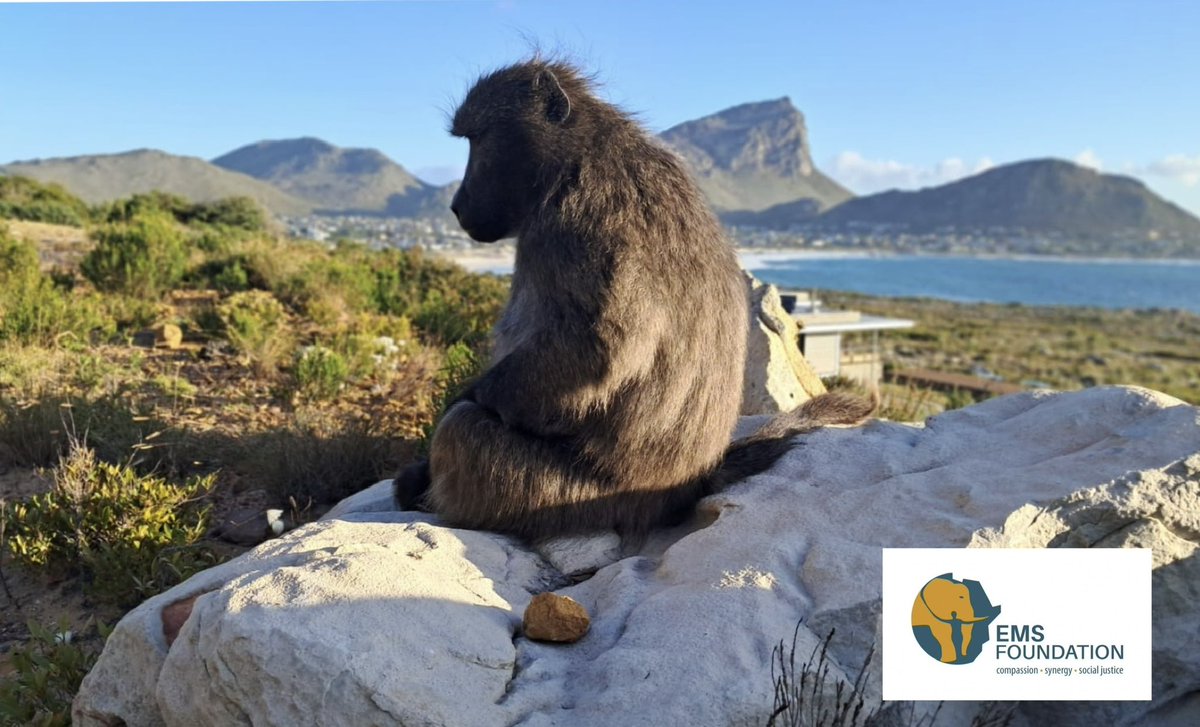
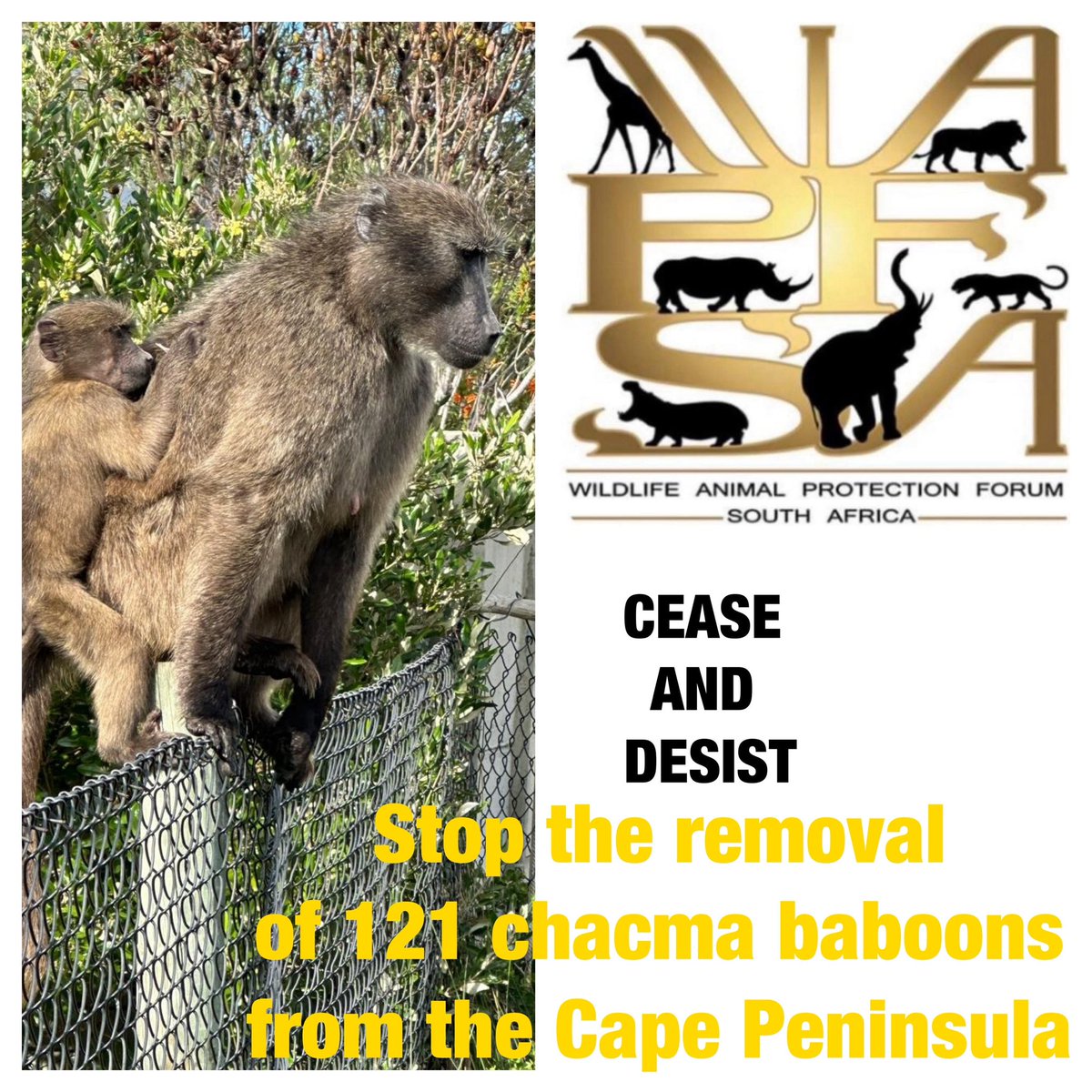
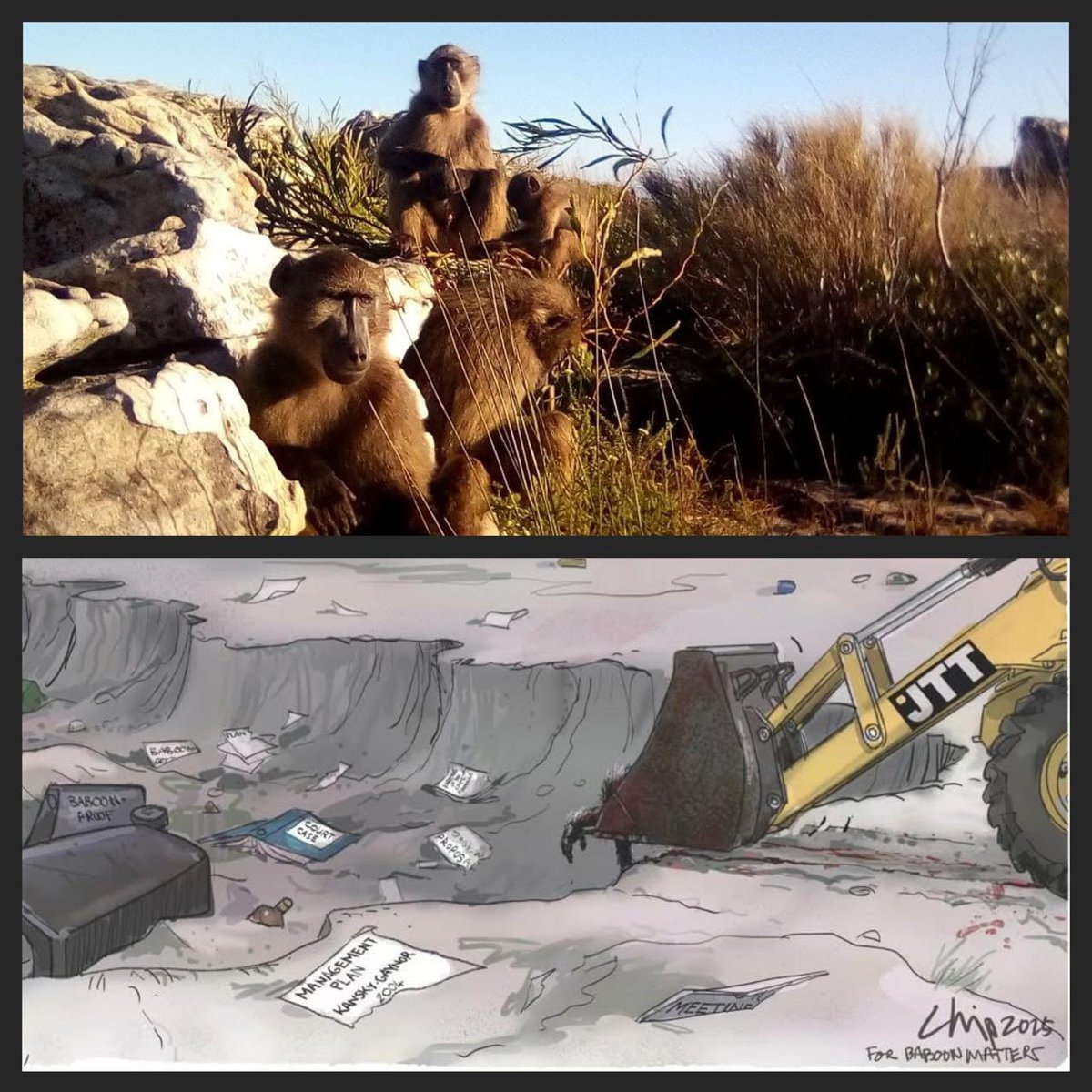
The Slangkop baboon troop inhabits Kommetjie, OceanView and Scarborough areas of the Cape Peninsula they are managed by @TableMountainNP @CityofCT @CapeNature1 please urgently confirm that juvenile baboons have not been permanently removed from this troop?
3
2
110

13 Dec 2025
ABALONE AND AUCAMP: THE PLOT SICKENS
On the 18th November the EMS Foundation made a statement, The Axing of Minister Dion George – The Democratic Alliance Shows Its True Colours, where we said that Minister George’s sacking raises urgent questions:
− Will Aucamp withdraw the state’s appeal in the rhino-horn case?
− Will the lion-bone export quota be restored?
− Will the captive lion industry gain new life?
− Will trophy-hunting quotas be rushed through?
− Will animal-wellbeing protections be gutted?
What we failed to ask was: will South Africa’s crucial Abalone Proposal, aimed at protecting endangered abalone from the illegal wildlife trade by uplisting dried abalone onto the CITES Appendix II listing (Prop.39), be mysteriously and without warning, withdrawn at the CITES COP20?
But withdrawn it has been by the South African delegation, leaving CITES Parties and conservationists concerned and flabbergasted. No other Proposal was withdrawn at COP20 that we can find record of.
In the same vein, we expect the trophy hunting quotas to be announced in the next few days, making the current litigation against the Minister moot and presumably saving the wildlife industry plenty of money in legal fees in the process.
Withdrawing a Proposal at the COP is not an easy process, and unlike previous instances where countries have withdrawn species proposals at CITES COPs, South Africa provided no public statement or explanation to fellow delegates despite the fact that Deputy Minister Singh was at the CoP20 conference.
There were 184 countries and the European Union represented, Deputy Minister Singh was one of only a handful of government Ministers to attend the conference. Was it to negotiate the withdrawal of the Proposal?
Dr Dion George the former Minister of Forestry, Fisheries and the Environment (DFFE) has issued a statement expressing the belief that he was fired as Environment Minister because of his stand against illicit wildlife trafficking.
The proposed uplisting of the South African abalone (Haliotis midae) to Appendix II the Convention on International Trade in Endangered Species of Wild Fauna and Flora (CITES) to at CoP20 held in Samarkand in Uzbekistan at the end of November and the fist week of December, by the Department of Forestry, Fisheries and the Environment was vitally important for combating the massive illegal trade driven by organised crime. “We will move to specifically list dried abalone on Appendix II poaching syndicates thrive on the illegal international trade in dried abalone, and this listing will close critical loopholes in global enforcement.” said Dr George.
The illegal trade also involves a variety of criminal activities, illegally poached South African dried abalone is traded for drugs by organised crime syndicates. This has devastated the social fabric of many coastal communities in South Africa.
READ THE FULL STATEMENT
emsfoundation.org.za/abalone…
2
4
192
19 Nov 2025
The Wildlife Animal Protection Forum of South Africa (WAPFSA) Lodged an Official Complaint with the Democratic Alliance Federal Legal Commission
10th November 2025
“The Democratic Alliance leader and Minister of Agriculture John Steenhuisen has publicly proposed that Mr Willem Aucamp, National Spokesperson of the Democratic Alliance, replace Minister of Forestry, Fisheries and the Environment Dion George.
Members of the Wildlife Animal Protection Forum South Africa (WAPFSA) are hereby raising an official complaint with regards to this proposal.
In our view, Mr Willem Aucamp’s private interests could influence the state’s decision-making to his own advantage, by shaping laws to benefit himself.
In June 2025, WAPFSA founding member EMS Foundation, raised concern about the ambiguous and contradictory messages created by the Democratic Alliance with regard to the highly contentious issue of the captive lion industry.
Given the above, of deep concern was the fact that Mr Willie Aucamp, the National Spokesperson for the Democratic Alliance and Desiree van der Walt attended the Annual General Meeting of the Sustainable Use Coalition of South Africa (SuCO) at Mabalingwe in Limpopo in June 2025. This was not in their personal capacities. Willie Aucamp, stated in on his social media platform that he was privileged to address the Annual General Meeting of the Sustainable Use Coalition of South Africa (SUCo-SA) at Mabalingwe.
Mr Willie Aucamp, is proudly, explicitly and publicly aligned with South Africa’s hunting and wildlife breeding, including genetically modifying species, specifically for trophy hunting.
His family have interests in the hunting and breeding of wild animals for profit. Aucamp’s clear alignment with this specific sector which vociferously supports the agriculturalization of biodiversity makes him an entirely inappropriate candidate for Minister of Forestry, Fisheries and Environment as it stands in stark conflict with South Africa’s environmental legislation and policies as well as international Treaties to which South Africa a Party.
Noting that The Public Service Commission Act clearly states that a "perceived conflict of interest" is where a public official is in a position that appears to be influenced by his/her private interests when doing his/her job." If Aucamp is appointed there will be a clear situation in which a public official has a private interest which influences, or appears to influence a public decision. Moreover, given that his family will likely benefit commercially from decisions that benefit captive breeding and hunting it may constitute corruption in terms of theThe Prevention and Combatting of Corrupt Activities Act (PRECCA) 12 of 2004.
We also draw your attention to section 195 of the South African Constitution which sets out the basic values and principles that govern public administration. Services must be provided impartially; fairly; equitably and without bias.
Undermining the independence of key departments such as the Department of Foresty, Fisheries and Environment for private or factional gain and/or advancement will severely damage public trust and confidence in government and the political system as a whole”.
EMS Foundation is a member of WAPFSA
2
6
8
263
19 Nov 2025
“THE OVERSTRAND BELONGS TO ALL WHO
LIVE IN IT” Residents push back against lethal
baboon “management”
On a mild Monday evening, 3 November 2025, more than 80 residents of Greater Hermanus gathered at the Marine Hotel. They came not for whales or wine, but for baboons. The public meeting, open to all, was convened by the EMS Foundation, drew conservationists, scientists, residents’ groups, animal protection organisations and concerned locals.
Over two hours, no meaningful dissenting voices emerged. In a town often driven by politics, an unusual consensus surfaced: the Chacma baboons of the Overstrand are not the problem. We are.
For years, the Overstrand Municipality’s approach has been packaged as “baboon management” – a neutral-sounding phrase for a system that has included aggressive herding, collaring and, in some cases, killing.
At the Marine Hotel, that framing was turned on its head. Six speakers in environmental law, conservation, environmental learning and wildlife policy set out a shared starting point:
• Hermanus “belongs to all who live in it” – human and non-human.
• Baboons are sentient beings with intrinsic value, not inherently “problem animals”.
• The real driver of conflict is human behaviour and how authorities choose to respond.
Speakers included environmental attorney Cormac Cullinan (Cullinan & Associates; Wild Law Institute), Dr Pat Miller (Whale Coast Conservation), environmental scientist Sheraine van Wyk, Liezl Smith and Francois van Zyl of the Kogelberg Villages Environmental Trustees (KVET), and investigative environmental journalist Dr Adam Cruise.
Their argument was simple: conflict escalates not because baboons are “naughty”, but because humans treat them as intruders in landscapes where humans are in fact the late arrivals.
The village of Pringle Bay, was cited as a warning: a hard-line, lethal model has fractured community relationships and harmed the local ecosystem. Hermanus, many warned, is on the same trajectory.
Beyond ethics, the declaration that emerged from the meeting points to a legal problem for the municipality.
South Africa’s Animal Protection Act (Act 71 of 1962) prohibits cruelty and obliges humane treatment of animals. The National Environmental Management: Biodiversity Act (NEMBA, Act 10 of 2004) – in particular Section 9A – requires that biodiversity management plans promote animal well-being and commit to humane practices.
Read together, these laws create a clear duty: a baboon “management” plan that normalises suffering, cruelty or unnecessary killing is not just morally troubling – it may be unlawful.
Participants also voiced anger at the South African Police Service in the area, citing repeated failures to investigate or prosecute deliberate injuring or killing of baboons. That institutional silence, they argued, effectively green-lights cruelty. If no one is ever charged, the message is clear: baboons are expendable.
A recurring theme of the evening was that
coexistence will not be achieved with new gadgets or more aggressive rangers, but through changes in human lifestyle.
Residents and experts called for:
• A deeper understanding of baboon culture and social structure, including their long-standing presence around human settlements in the Overstrand.
• Serious changes to how we manage attractants – food waste, fruit trees, unsecured bins, open doors and windows.
• An ethic of respect, or hlonipha, that treats baboons as part of the local community rather than as pests to be suppressed.
As several speakers put it, unless humans transform how we dispose of waste, design settlements and enforce by-laws, “management” will remain an endless, expensive and often violent game of whack-a-mole.
Much of the criticism focused on the Overstrand Municipality’s Adapted Baboon Management Plan, which residents say entrenches a failed paradigm.
emsfoundation.org.za/residen…
3
5
159
19 Nov 2025
EMS FOUNDATION: PUBLIC STATEMENT
Axing of Minister Dion George: the Democratic Alliance Shows Its True Colours
“Environmental protection and the rule of law must walk hand in hand, justice for the people and justice for the planet. Our country is rich in biodiversity, but that richness has made us a target. Along our coasts, abalone poaching has become a global criminal enterprise. It strips our oceans bare and destroys the livelihoods of coastal communities. In our parks, rhino horn and ivory trafficking continues to fuel violence and corruption. Across our veld, captive-bred lions are raised for commercial hunting, reducing living creatures to commodities. These are not legacies worth defending. They are systems that must end.”
These are the words of Dr Dion George, the former Minister of Forestry, Fisheries and Environment, representing South Africa at the Rio Declaration on Crimes that Affect the Environment which was endorsed by eighteen governments, international environmental and civil society organisations in Brazil on the 4th November 2025.
When President Cyril Ramaphosa fired Dr Dion George as Minister of Forestry, Fisheries and the Environment, the official explanation was carefully scripted: “under-performance.” But the timing, the political choreography and the beneficiaries tell a far more revealing story — one that exposes the growing influence of wildlife-breeding and trophy-hunting lobbies inside government. George’s removal was not simply a cabinet reshuffle. It was a political execution. And South Africa’s wild life will pay the price.
When Dr Dion George took over from Barbara Creecy, he did not retreat from her bold and much needed environmental reforms; he deepened them. He embraced the High-Level Panel recommendations, which called for the end of captive lion breeding, the phasing out of intensive rhino farming, and a shift toward ethical, ecologically sound conservation. He:
Moved to shut down the captive-lion industry, pushing forward with the voluntary exit programme.
1. Set the lion-bone export quota at zero for
2025, effectively ending commercial trade in lion skeletons.
2. Confirmed South Africa would not back any attempt to reopen international trade in rhino horn or ivory.
3. Refused to issue trophy-hunting quotas for elephant, black rhino and leopard while a court case challenged the quota process.
4. Defended animal-wellbeing provisions in NEMBA.
5. Appealed the Kimberley High Court ruling that opened the door for exporting rhino horn from privately owned breeding facilities.
And that made Minister George dangerous — not to the public, not to conservation, but to powerful private interests who have long treated wildlife as inventory.
READ the full statement and background information
emsfoundation.org.za/axing-o…
4
7
204
10 Nov 2025
This article was probably a step too far for the sustainable use and wildlife breeding community … a Minister who like Minister Creecy wanted an end to the captive lion industry @WAPFSA @prowildlife @DrDionGeorge @BornFreeFDN @CITES
28 Oct 2025

“As South Africa’s Minister of Forestry, Fisheries and the Environment, I am entrusted with safeguarding the beating heart of our nation’s biodiversity, a vibrant tapestry woven from the threads of our wild heritage.” - @DrDionGeorge
mg.co.za/thought-leader/opin…
1
90
EMS Foundation retweeted

5 Nov 2025
Minister @DrDionGeorge addressed the United for Wildlife Global Summit 2025 in Rio de Janeiro, calling for global action to turn words into action on environmental crime.
He reaffirmed South Africa’s leadership in closing the captive-bred lion industry and protecting abalone under CITES. Watch the video for his key message.
#EnvironmentalCrime
1
6
12
1,759
EMS Foundation retweeted
7 Nov 2025
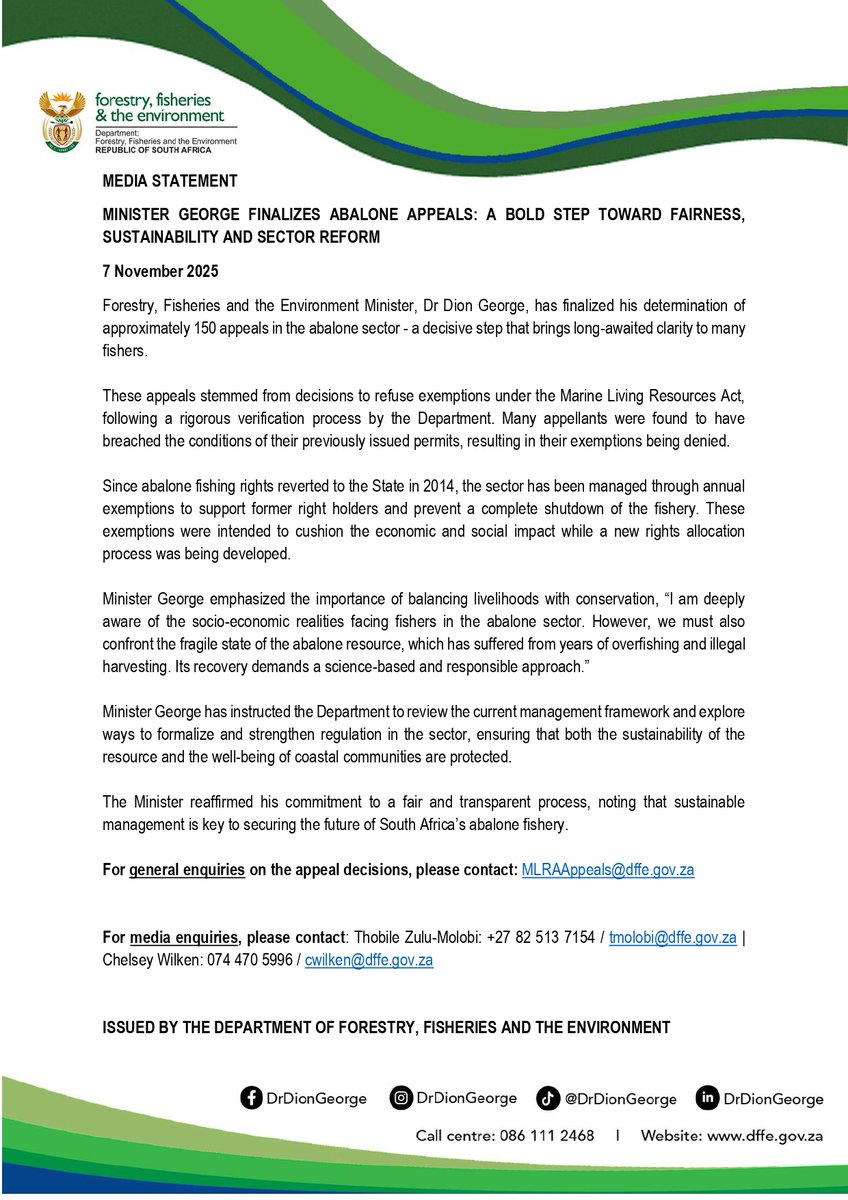
MEDIA STATEMENT
MINISTER GEORGE FINALIZES ABALONE APPEALS: A BOLD STEP TOWARD FAIRNESS, SUSTAINABILITY AND SECTOR REFORM
7 November 2025
Forestry, Fisheries and the Environment Minister, Dr Dion George, has finalized his determination of approximately 150 appeals in the abalone sector - a decisive step that brings long-awaited clarity to many fishers.
For general enquiries on the appeal decisions, please contact: MLRAAppeals@dffe.gov.za
#sustainablefishing #FishingforFreedom #DFFE
Read Full Media Statement Below:
2
3
2,445
30 Oct 2025
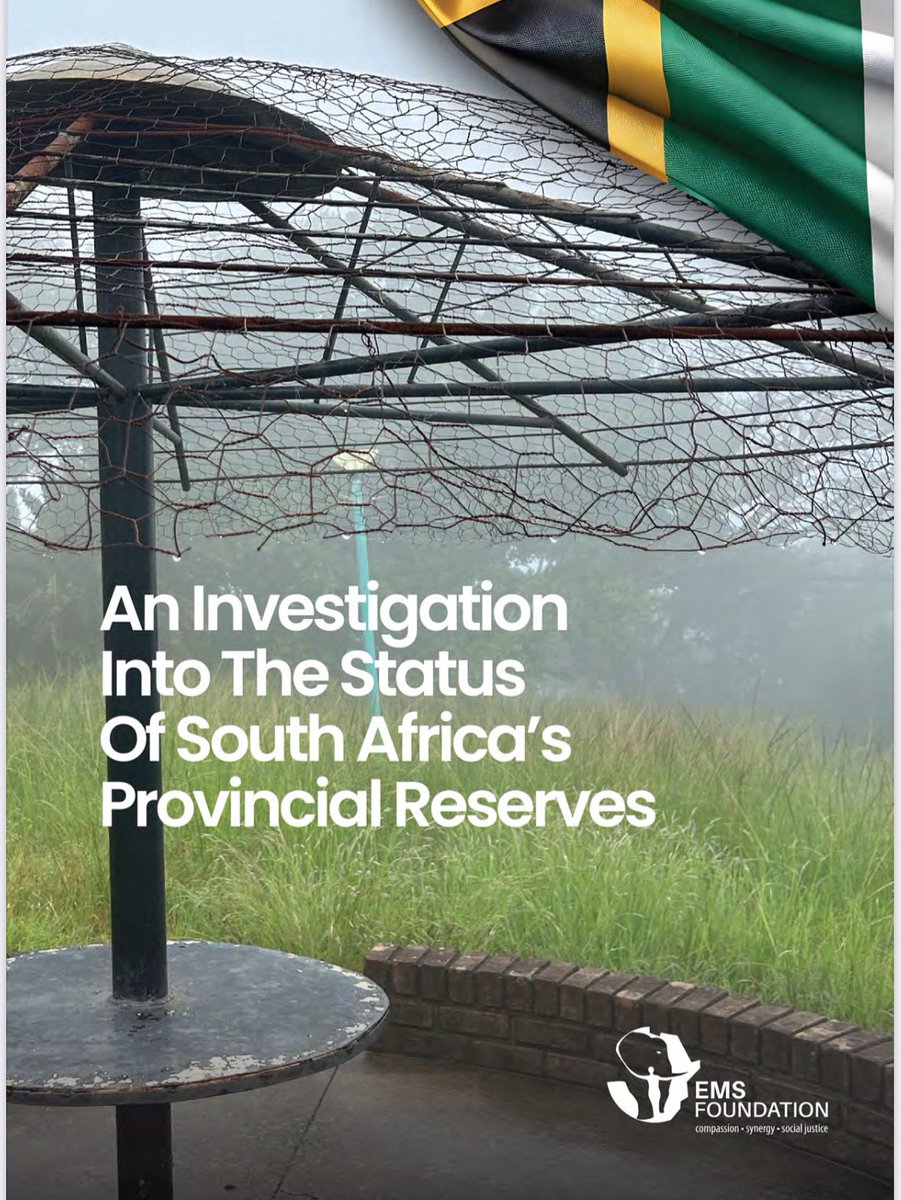
A new on site investigation by the EMS Foundation into 53 provincial nature reserves in South Africa paints a stark picture: only 5.6% are functioning as intended. The rest are in various stages of decay, abandonment, or repurposing, often for hunting or grazing. emsfoundation.org.za/the-sta…
1
1
106
17 Sep 2025
A technical note written by economist Francisco Aguayo critiques a recent study by Van der Merwe and Saayman on the economic significance of hunting tourism in South Africa.
emsfoundation.org.za/the-eco…
Despite this relevant critique ⬆️⬆️⬆️ which casts doubt on the conclusions reached by Van der Merwe and Saayman, the media continues to republish the figures quoted by the hunting industry.
15 Sep 2025

Wildlife ranchers slam Dion George over hunting quota standoff
mg.co.za/the-green-guardian/…
1
79
17 Sep 2025
A technical note written by economist Francisco Aguayo critiques a recent study by Van der Merwe and Saayman on the economic significance of hunting tourism in South Africa.
emsfoundation.org.za/the-eco…
Despite this relevant critique ⬆️⬆️⬆️ which casts doubt on the conclusions reached by Van der Merwe and Saayman, the media continues to republish the figures quoted by the hunting industry.
“SA environment minister said he won’t immediately approve trophy hunting quotas for black rhinos, elephants and leopards, deepening a dispute with the $2.5 billion industry” bloomberg.com/news/articles/…
1
43
6 Sep 2025
Finally free: Tswale finds his wild home after 20 years in captivity citizen.co.za/lowvelder/news… We are so thankful to everyone involved @Mtpatourism @WeWildAfrica #TowardsFreedom
2
4
14
145
6 Sep 2025
IMPORTANT UPDATE!!!! @IOL Judge granted permission for @Harvard to join our legal case yesterday.
Harvard Law School academics seek to join court case for release of elephants from Johannesburg Zoo iol.co.za/news/crime-and-cou…
6
12
23
346
6 Sep 2025
One year in the wild: Pretoria Zoo elephant celebrates his new Limpopo life citizen.co.za/rekord/news-he…
4
8
25
757