
Views = mine. Engineering Manager at Spotify 🤓👩🏽💻 ✊🏾 Whisk(e)y woman 👩🏽🏫🥃 UVA Alum🔸 Scuba Diver 🤿 IG: womanwithwhiskey
Joined June 2017
- Tweets 29,510
- Following 2,924
- Followers 48,943
- Likes 65,677
1,835 Photos and videos















Pinned Tweet

Random internet manager here 👋🏽 I have so many thoughts here and if you don’t know me, I’m known for building psychologically safe and efficient teams. Some of my favorite compliments I’ve received about my management are: 1- “your team would run through brick walls for you”. 2- “your team doesn’t play about you, even when you’re not around” 3- many of my engineers saying they’d following me “anywhere”
I know it’s not common but I LOVE trying to be the best manager I can be to each person on my team. However, I understand that mode of thinking isn’t for everyone.
But no matter what your mindset is on management, I truly believe a few ways of working will help you build an effective and stable team that’s built to last.
First, the quoted post is right. Some managers intentionally don’t grow engineers to keep the team “stable”. But if an engineer feels they don’t have room to grow and/or are unhappy, they’re not going to do their best work. Potentially creating a drag on the team until they finally find their exit. If you have motivated people, do your best to align them with what makes them tick and let them soar. Quality people will always be able to leave, help them see the value in staying. And when it does come time for them to leave, don’t take it personal. It’s a job 💜
Second, if onboarding people is a grueling task, dig into why. Yes, people take time to get organizational context, but are there other onboarding changes you could make to make things more smooth? Outdated documentation? Breaking down knowledge siloes? Engineers who don’t want to help their team? Whatever it is, lessen the impact of the onboarding drag.
Third, great employees are hard to find. If you find a few, do you really want to lose them because you’re scared they’ll leave? IMHO, I prefer to give these phenomenal employees a work environment that’s hard to find elsewhere. Giving a crap puts you ahead of majority of managers.
Fourth, I want to acknowledge that the industry is in a tight spot right now. If you lose someone, you may not get the backfill. Which can feel scary when the workload isn’t decreasing. But even with the potential of losing the headcount, I still stand by the fact that limiting your people’s growth isn’t the fix here. If anything, managers should lean into coaching and aligning their people with high impact work in case the team’s value ever comes into question.
Lastly, remember that your best people can always leave. If they’re good enough, there’s likely always another company that wants them. Refusing to nurture their career will only expedite their exit. My approach is to make sure they enjoy their time under my management so I can slowly but surely build my “forever team” of people I’d hire anywhere I work.
Mar 10

Most managers already know how to run great 1:1s. They choose not to because their org punishes them for it.
Every experienced manager has heard the advice. Let your reports own the agenda. Focus on their growth. Coach instead of direct. They learned it in their first leadership training. They’ve read the books. They’ve nodded along in the workshops.
They still run status update 1:1s. And the reason is structural.
A manager who develops their reports well creates people who get promoted out, get poached, or start asking for the manager’s job. A manager who runs low-energy status updates keeps the team stable, dependent, and unlikely to leave. HR tracks attrition as a negative on the manager’s scorecard. Nobody tracks “I developed three people so well they all got promoted in 18 months” as a win.
The incentive math is brutal. Develop your people → they leave → you backfill → you spend 6 months ramping a new hire → your team’s output craters during the transition → your performance review suffers. Run status updates → team stays put → output is predictable → you look like a stable operator.
This is why advice like this resonates massively and changes almost nobody’s behavior. The managers reading and bookmarking it will open their next 1:1 on Monday and ask “so what’s your status on the Q2 deliverables?” Because their org rewards exactly that.
The managers who actually run great 1:1s tend to work at companies where developing people out of your team is celebrated. Those orgs are rare. And until that changes, most 1:1s stay exactly where they are: status updates with a calendar invite.
8
14
225
42,730
Completing my errands when I suddenly realize it’s been 14 hours and my mom hasn’t responded to any of my texts.
AHT AHT time for a wellness check call 😂💜
ALT A woman in a green crop top sweat suit holding a red solo cup and LV purse. Looking flummoxed, mildly concerned, and a tiny tiny tiny bit annoyed.
1
16
889
PS - she's fine. Me traveling abroad threw her off and she was trying not to text me while I may be resting 💜
2
6
476
It's giving Severance vibes.
What in the heck will the future of work look like?
Jun 13

META IS AN ABSOLUTE MESS INSIDE RIGHT NOW
Wired just dropped an exclusive, and the details are wild.
This week someone interrupted a livestreamed Meta meeting, open to thousands of employees, with an expletive-filled rant about "being the company's bitch." They told the presenters to find a specific Meta AI executive and "tell him that he's a piece of shit."
A presenter covered their face with their hands. Employees in the chat called the start "spicy."
Here is what's behind it.
Meta's AI restructuring cut 8,000 jobs last month, 10% of the company. The same restructuring feeds a unit called Applied AI, where 6,500 engineers and product managers have been drafted in waves since April. There is no application process. You get selected, and your options are join or leave the company. Members call themselves "draftees."
The new job: writing puzzles and coding problems to train Meta's AI models, two tasks a week. People hired to build apps for billions of users now assemble training data for hundreds of AI scientists.
"It's literally the gulag," one employee told WIRED. "You have zero purpose in life all of a sudden, you barely interact with anyone, you just have these tasks every week."
Another: "Most people find the work soul-crushing."
At the same time, Meta started recording US employees' clicks and keystrokes to generate more AI training data. Over 1,600 employees signed a petition demanding it stop. The concession: employees can pause the tracking for up to 30 minutes.
Zuckerberg's response came in an internal memo Friday: "We've made mistakes and will almost certainly make more." He repeated his promise of no more mass layoffs this year. His fixes: limits on the manager ratios Meta had deliberately pushed to 50-to-1 on some teams, bigger budgets for team events, a hackathon next month, and assigned desks by the end of the year.
That same memo says Meta's north star is "to be the best place for the most talented people in the world to make an impact."
The most talented people in the world are writing puzzles for a model and asking permission to pause the keystroke logger.
META declined to comment.

4
6
50
10,994
Taylor Poindexter retweeted

Jun 12
A federal judge just ordered the Trump admin to reinstall exhibits and signs relating to slavery and climate change that it had removed from parks and monuments nationwide reuters.com/world/trump-admi…
207
7,364
24,169
350,994
My husband and I often don’t sit beside each other on planes since we both love aisle seats.
Today, an old man warned me a woman may try to steal my husband if I don’t sit beside him and my immediate thought was “that’s f*cking ridiculous”. But then during the flight I remembered at least 3 occasions where a woman has tried to flirt with him because they assumed he was alone 🤣
He obviously immediately cuts it off every time but maybe airplanes are hot spots to meet folks!
9
136
23,764
My attention is piqued 👀🤠

A young woman in East Texas gives birth in her car. When rushed to the hospital, doctors will quickly realize that the baby is not her own and neither is the blood she’s covered in.
Maternal Instinct — a new documentary — is now on Netflix.
1
1
16
4,487
Taylor Poindexter retweeted

Jun 11
"You're allowed to think about the worst case scenario, but you gotta do something about it"

23
3,354
17,031
4,225,000

Going from Swedish tap water to Belgian tap water for the first time was a mild shock to my system 😂
1
570
Still putting my mom as my emergency contact even though I’m a full blown adult
1
28
1,334
Taylor Poindexter retweeted

Jun 10
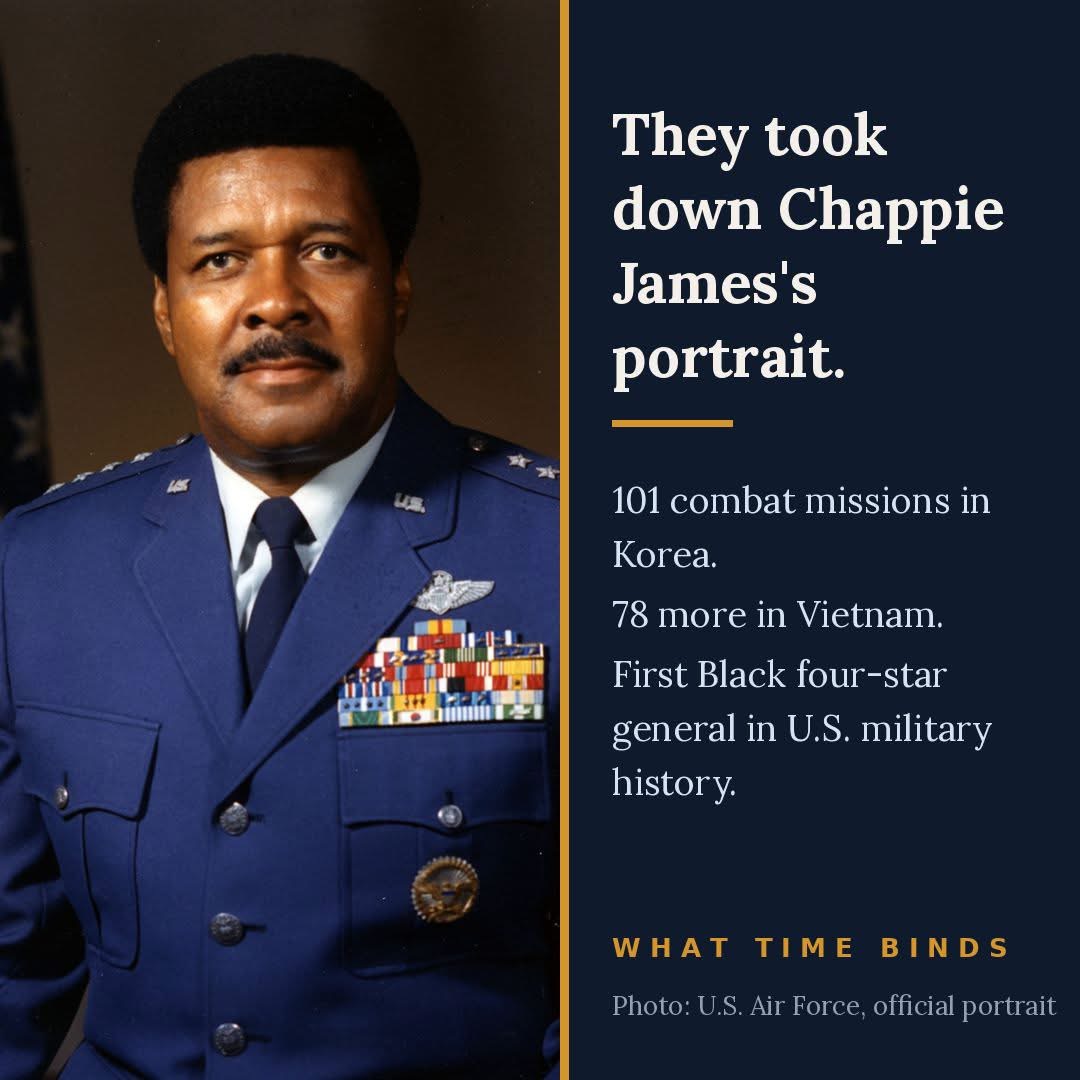
This Administration has removed the achievements of the Air Force’s first female Thunderbird pilot Retired Colonel Nicole Malachowski. The removal of these articles have sparked criticism because her place in Air Force history is not a Political slogan it’s well documented.

945
9,083
14,246
205,892
I visited the Eiffel Tower for the first time and was surprised to see so many armed military personnel.
I was even more surprised to have a soldier muzzle swipe the lower half of my body with an AR while his finger rested on the trigger as he walked by.
12
23
10,921
I love when I’m in a foreign country, greet a local in the local language, and they IMMEDIATELY respond in English 😂
2
17
958
I really hope this family can get some kind of closure and peace. I would be so incredibly unwell if this were my mother 😞

"Today" co-host Savannah Guthrie got emotional while talking about her mother Nancy 💔
2
2
14
3,362
Took a sleeping pill this last time and still was only able to sleep 3 hours overnight 🥲

Do y’all go to sleep on the plane??
2
2
1,265
Taylor Poindexter retweeted

Jun 6
This is really stupid, and it’s not getting enough attention.
The Trump administration is pulling a working $368 million ocean monitoring system out of the water, equipment taxpayers already bought, built, and sank into the deep ocean.
And they are doing it right when the oceans are behaving in ways that alarm the scientists who study them.
Record-breaking temperatures.
A system of Atlantic currents that may be lurching toward collapse.
The response?
Yank out the instruments and walk away.
That is not budgeting. That is smashing the gauges while the engine is on fire and calling it efficiency.
For what? The Trump administration dressed it up as a “nimbler approach” and “smart lifecycle management,” which is fancy nonsense for “we shut it off and hoped nobody would ask why.” There is no return-on-investment analysis. They cannot show taxpayers save a dime, because the gear is already paid for and the science it produces protects real money and real lives.
The kicker: the same people killing the monitors want to mine the deep sea for minerals. So they are destroying the only tools that could measure what that mining does. That is not an accident.
That is the point. You cannot see the damage if you break the instruments first.
cnn.com/2026/06/03/climate/o…
1,165
15,137
30,218
1,004,835
What conferences do you recommend for quality and deep technical talks?
12
6
29
10,879
I hate those little half shower walls hotels install in bathrooms. I’m unable to shower without getting suds and water outside of the shower 🥲
1
13
7,476