
Joined April 2018
- Tweets 2,917
- Following 563
- Followers 4,944
- Likes 8,641
408 Photos and videos


Pinned Tweet

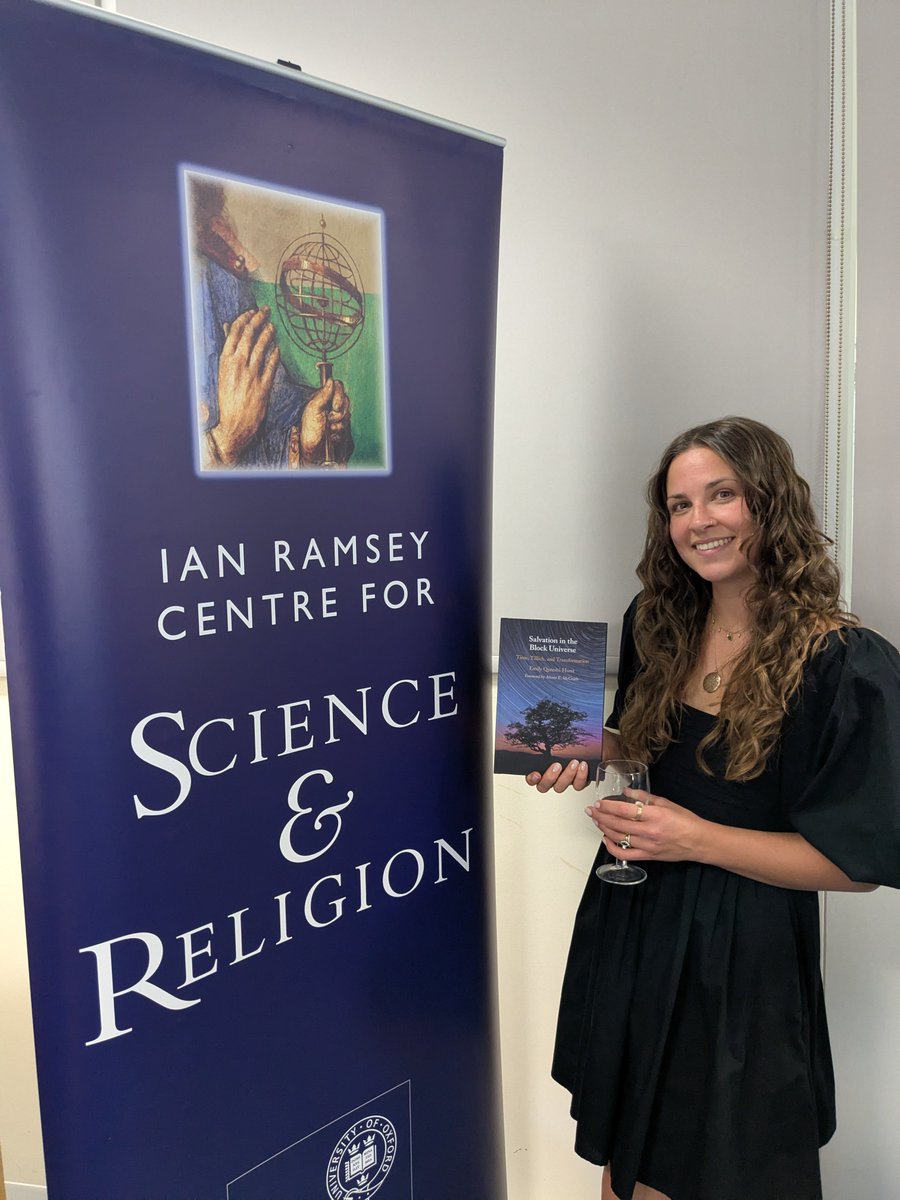
It is an honour to have been awarded the International Society for Science and Religion's 2025 Book Prize for my book 'Salvation in the Block Universe: Time, Tillich, and Transformation'
I am so grateful to the ISSR and to everyone who supported me as I wrote the book!

The winners of the ISSR 2025 Book Prize have been announced. You can read about it here: issr.org.uk/issr-statements/…
9
1
69
8,592
I'm barely here anymore since the Musk takeover, but this hideous business with Grok feels like the final straw for me. Unless something significant changes I won't be back on X.
1
4
777
Emily Qureshi-Hurst @emilyqureshihurst.bsky.social retweeted

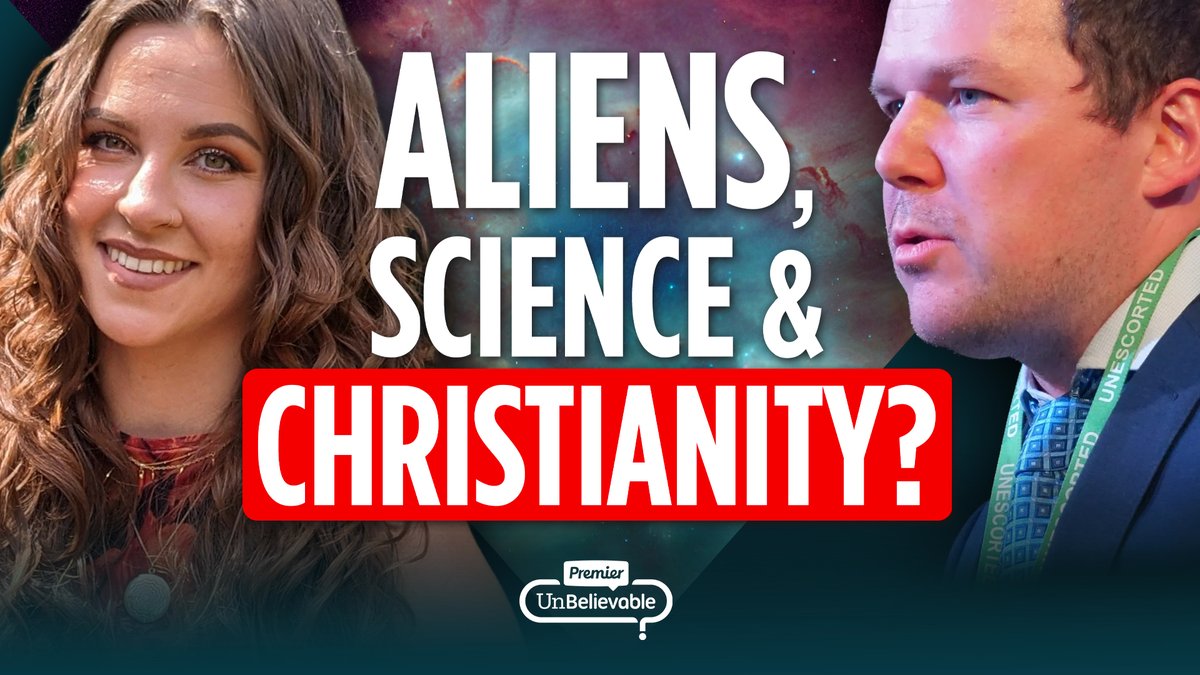
Is the universe fine-tuned for life—or are we just lucky? Atheist philosopher @equreshihurst and Christian scientist @MolecularSamm debate time, incarnation, and aliens in this cosmic clash! #CosmosDebate #ScienceAndFaith
premierunbelievable.com/deco…
2
2
5
963
It was great to be back on Premier Unbelievable to discuss 'Decoding the Cosmos' - do check it out to hear a wide-ranging conversation on all things God and modern physics!
youtube.com/watch?v=uUD6x0bx…
2
7
1,265
Less than a week to go until you can watch my discussion with Sam McKee exploring a range of topics including whether the cosmos was designed, the nature of time, and the incarnation and alien life
youtube.com/watch?v=uUD6x0bx…
5
786
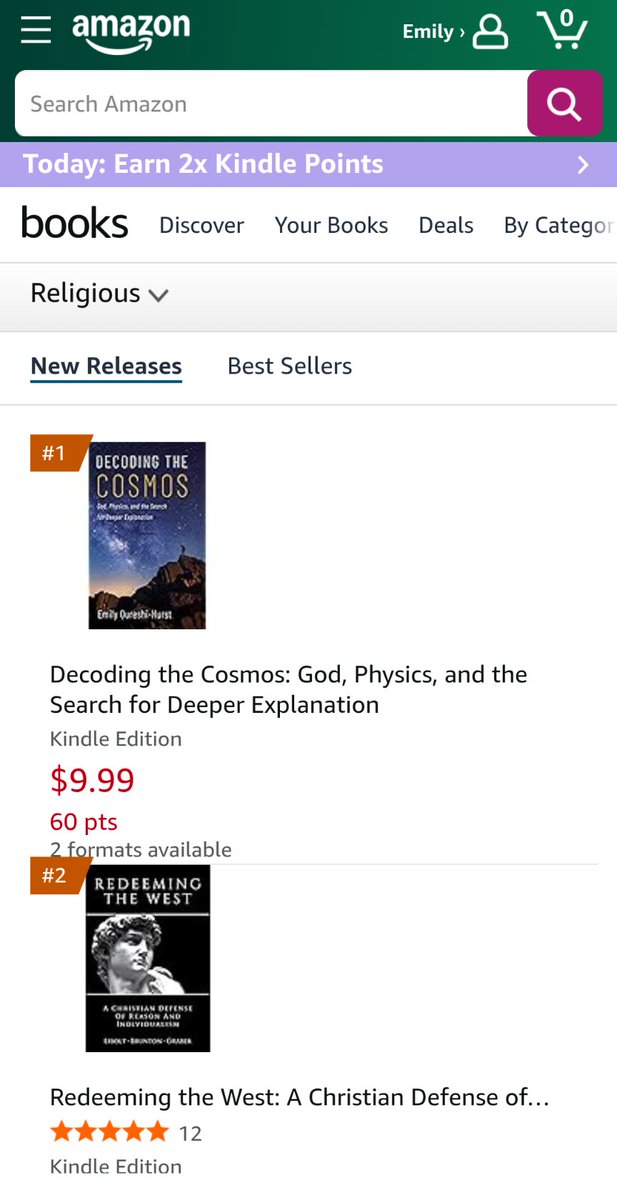
If you've read Decoding the Cosmos over the Christmas break, please do consider leaving it a review (Amazon, Goodreads, etc) it really does help me out!
4
443
Emily Qureshi-Hurst @emilyqureshihurst.bsky.social retweeted

18 Dec 2025
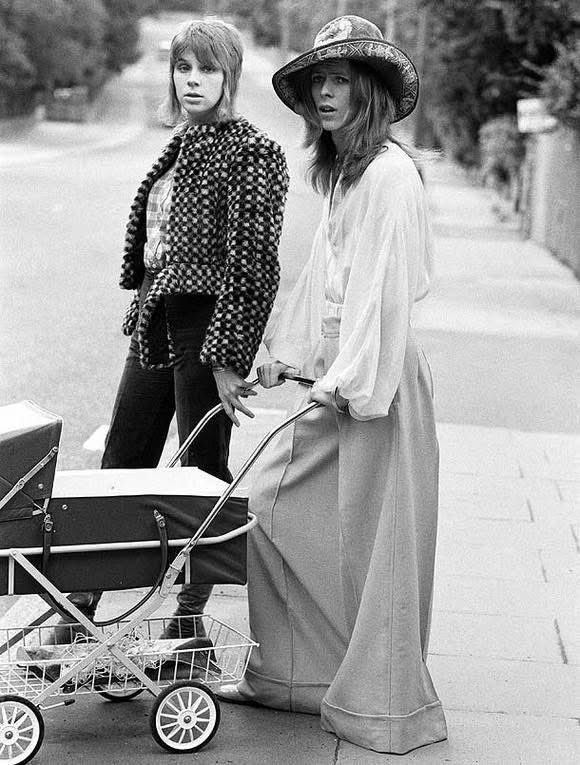
I genuinely cannot understand how generation above me ended up here. We grew up idolising David Bowie and through him discovered Lou Reed and Iggy Pop. We lived through punk and post punk smashing gender norms in public. We watched Prince blur masculinity and desire. We danced to Boy George. We worshipped Grace Jones. Then came the flamboyance of the eighties where androgyny excess and self invention were celebrated. Gender bending was not a threat. It was art. It was freedom. It was cool.
So how did the same generation become so hostile to people simply existing outside rigid boxes. How did we go from celebrating difference to fearing it. This backlash does not come from culture or history. It comes from forgetting who we were and what we stood for. None of this is new. Get over it.
3,893
1,908
10,801
1,044,261
Now that the announcement has been made, I'm delighted to share that after my maternity leave comes to an end I will be returning to Oxford to work on this fantastic interdisciplinary project running until 2029! Really excited to get to work next year.
irc.web.ox.ac.uk/article/uni…
4
4
44
3,202
Emily Qureshi-Hurst @emilyqureshihurst.bsky.social retweeted

Book Review of Decoding the Cosmos: God, Physics, and the Search for Deeper Explanation by Emily Qureshi-Hurst (@equreshihurst) :)
I picked up Emily Qureshi-Hurst’s Decoding the Cosmos for two reasons. First, she personally recommended it to me over email. Second, it was presented as an introductory book, and I am always searching for accessible texts that can serve my students well. Emily is very open about her atheism, but the tone of the book is not confrontational. It is pedagogical and genuinely interested in helping newcomers understand how science and religion have been explored in the contemporary literature. The review that follows is with my academic and pedagogical hats on.
INTRODUCTION
The introduction itself is excellent. Emily walks the reader through different conceptions of science and religion, before laying out the main models of science religion interaction. She discusses conflict, contrast, complementarity, and complexity, aligning them with familiar frameworks but adding her own interpretive twists. It is clear, engaging, and a thoughtful way to prepare readers for what comes next.
The book then follows the structure of five core Christian doctrines: creation, design, providence, incarnation, and salvation. This makes the book especially useful for those teaching or studying Christian thought, though the thematic approach still works as a general case study in how religious ideas intersect with scientific ones.
As a general note, I love that she is an active author. She is not just summarising the state of affairs, but bringing her own voice in at times. Some may find this unhelpful, but I thought it was really good. And she definitely gives upcoming theists food for thought when presenting her critical opinions and counter objections.
1. CREATION
The creation chapter opens with biblical interpretation before moving into cosmology. Emily gives an accessible survey of the Big Bang, the history of the steady state debate, and the evolution of modern cosmology. She also reviews Young Earth Creationism and Old Earth Creationism, mapping them onto her own analytic models. I found the chapter solid overall, though I wish the section on cosmological arguments had been developed further. She gestures toward the kalām and contingency arguments, offers some criticisms, but moves on rather quickly. Given the importance of these debates, I would have appreciated a deeper back and forth. Still, it is understandable in an introductory text.
2. DESIGN
This chapter is one of the strongest. Emily begins with a helpful overview of natural theology, then moves into classical and contemporary design arguments. Her ability to keep the discussion compact without oversimplifying is impressive. A small example stood out to me. When setting up her basic syllogism, she highlights that the term “world” can refer to the planet, the cosmos, or even cultural regions. It is a very elegant way of showing how placeholders in philosophical arguments work. She also handles evolution, fine tuning, and the classic question of competing explanations with clarity. Most importantly, she subtly introduces meta-level criteria like simplicity and elegance in explanatory reasoning, a move that reminded me of Jeffrey Koperski and, at times, Swinburne. It is done lightly, almost without the reader noticing a shift into philosophical terrain. Pedagogically, this chapter is superb.
3. PROVIDENCE
The providence chapter offers a tour through general and special providence, Newtonian mechanics, quantum mechanics, and the Divine Action Project associated with CTNS and the Vatican Observatory. Emily presents the Copenhagen Interpretation clearly, which then allows her to introduce Russell’s well known proposal of NIODA and John Polkinghorne’s contrasting vision that draws on chaos theory. Her contrast of bottom-up with top-down approaches was handled with surprising deftness. She manages to show both the local debates and the larger methodological tensions in a very accessible way. I found myself admiring the care she took in shaping these discussions for newcomers.
4. INCARNATION
This is my favourite chapter of the book. Emily begins with a clear presentation of traditional doctrine, then shifts into the philosophy of time. She explains divine temporality and divine atemporality, and shows how each position interacts with incarnational theology. The discussion is lively, creative, and in several places genuinely thought provoking. I learned something new myself, particularly regarding Niels Henrik Gregersen’s idea of deep incarnation, which I had not encountered before.
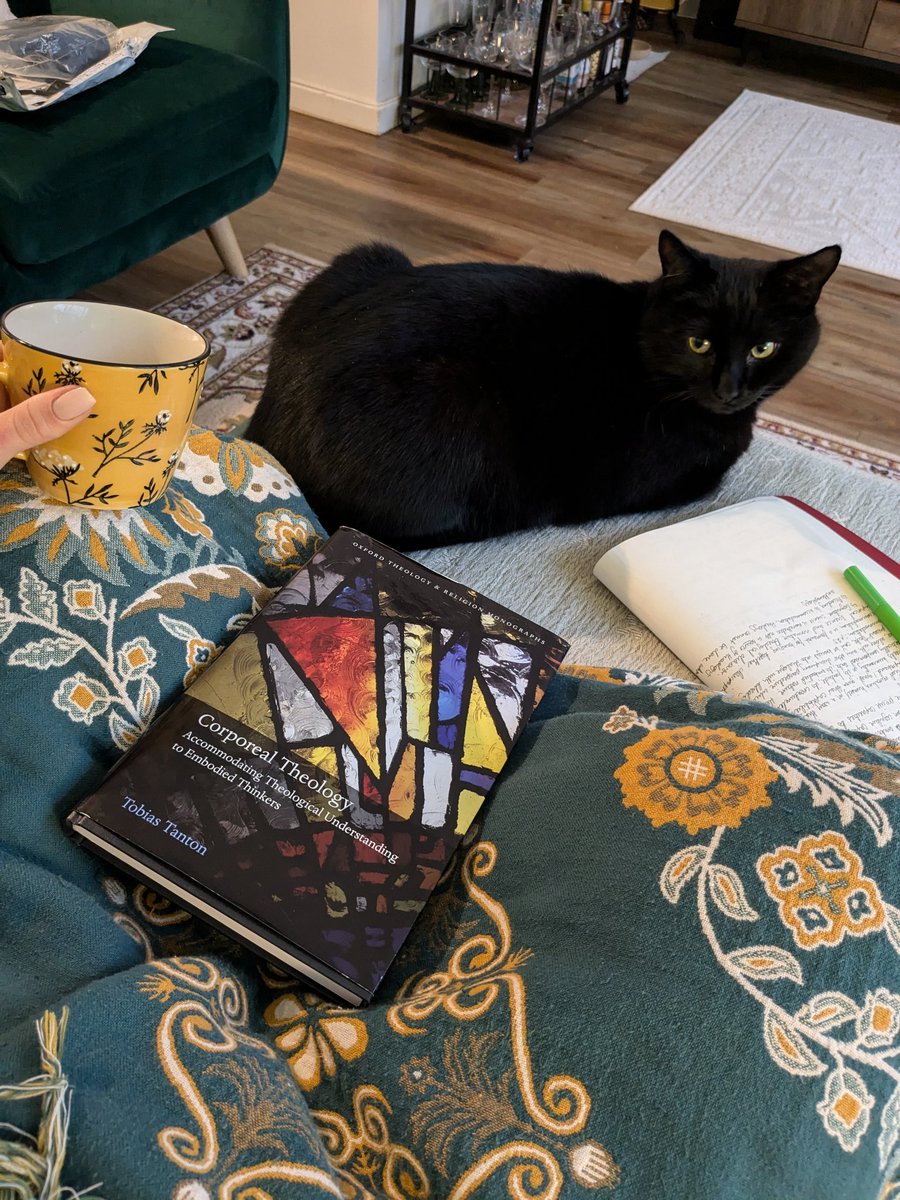
The real delight, however, is the movement into astrobiology. Emily explores what incarnation might mean in a universe with extraterrestrial life, which raises all kinds of theological and philosophical questions. Her discussion of the Imago Dei is clever and well structured, integrating structural, functional, and relational models. Tobias Tanton’s view that theological knowledge is fundamentally embodied adds another fascinating angle, especially when considering alien cognitive possibilities. This is the most exploratory chapter of the book and easily the most enjoyable.
5. SALVATION
The final chapter shifts back to time, this time through relativity and philosophical theories like the A series, B series, and C series. Emily uses these frameworks to examine how salvation might be understood in relation to temporal structure. She engages with William Lane Craig’s A theory commitments and briefly introduces her own view that salvation is best understood as a subjective transformation rather than an objective change in the world. It is interesting, even if I personally did not gain as much from this chapter as the others. The discussion of the universe’s eventual fate and how it may relate to bodily resurrection will interest those who enjoy eschatology and soteriology.
Overall Reflections
I read the entire book on a train from Edinburgh to Manchester today, and that alone tells you how accessible it is. Emily writes with clarity and purpose. She has a strong pedagogical instinct, and her chapter structure uses Christian doctrines as a clever way of mapping theological questions onto scientific debates. There are sections where I would have liked more depth, especially in the cosmological argument chapter, but this is a feature of introductory texts, not a flaw.
All things considered, Decoding the Cosmos is an excellent starting point for students entering the field of science and religion, especially those interested in contemporary Christian perspectives. I am very happy to recommend this book to my students, and I think Emily has done a commendable job in bringing these conversations to life for a general audience.
Well done and bravo!
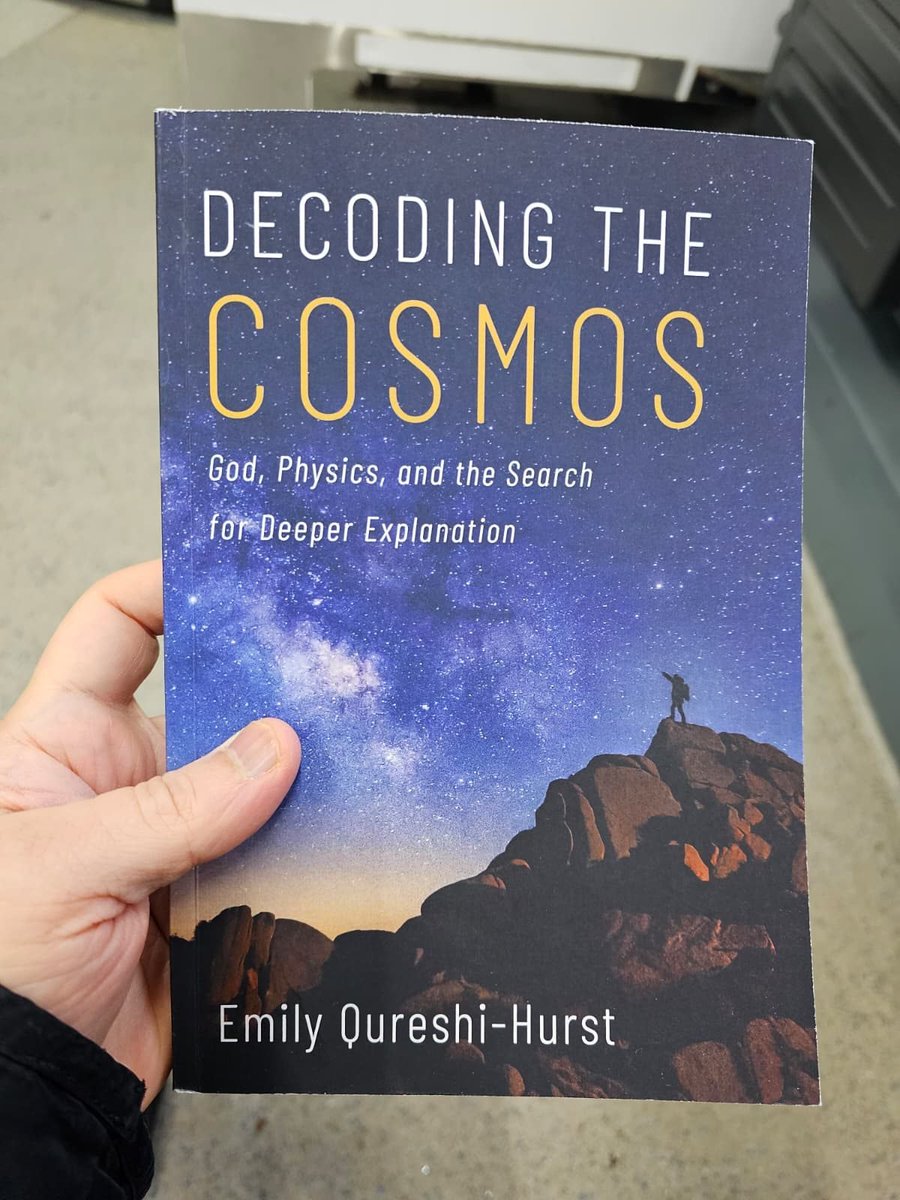
7
12
81
4,834
Emily Qureshi-Hurst @emilyqureshihurst.bsky.social retweeted

Curious about science & religion? Want a guide to how Christian theology connects with physics?
@equreshihurst may have the answers...
Last week’s book launch is now available to watch again on the @CamDivinity YouTube channel:
youtube.com/channel/UC3J6SXw…
2
6
1,177
Emily Qureshi-Hurst @emilyqureshihurst.bsky.social retweeted

📺We are delighted to share a recording of Dr @equreshihurst 📕book launch, organised by Dr Iona Hine @CamInterfaith, jointly with Dr @TheaGomelauri #OxfordInterfaithForum
with responses from
🌟Prof Mark Harris @OU_TheoReligion
🌟Allan Furic @KebleOxford
#OXBRIDGE #INTERFAITH

Decoding the Cosmos: Dr Emily Qureshi-Hurst’s new book is out. Register now to attend an online launch, 26.11.2025 joint with Oxford Interfaith Forum.
Details: interfaith.cam.ac.uk/events/…
Register: forms.office.com/e/Vx6fUVgpZ…
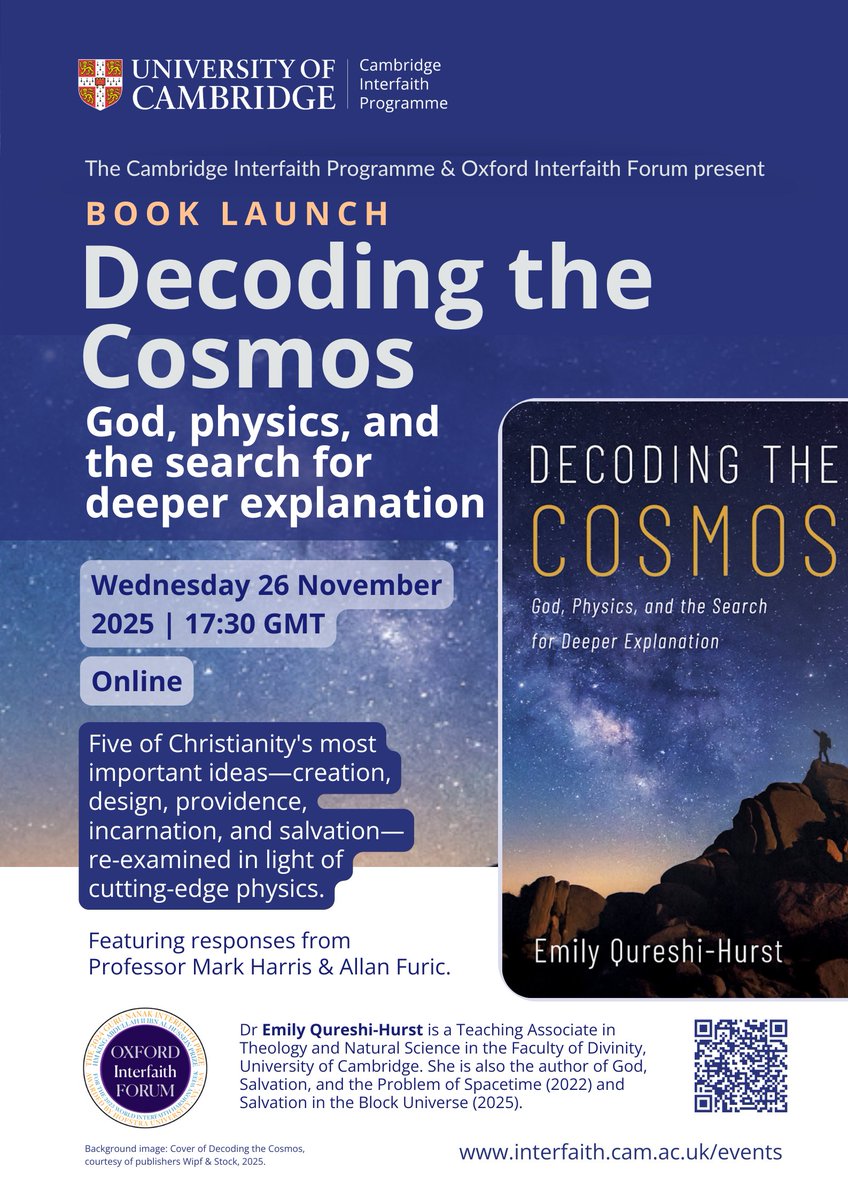
ALT Poster for 26 November launch, featuring cover of Decoding the Cosmos. Online at 17:30 GMT.
1
3
5
1,146
This is a hugely exciting opportunity, based in Oxford, to work with an interdisciplinary team on a project examining Quantum Mechanics and Theology
jobs.ac.uk/job/DPQ622/postdo…
2
6
728
Just gave my final lecture at Cambridge before my maternity leave. Really really looking forward to resting over the festive period before life changes completely and rest is a distant memory 😂
3
36
2,939
Thoroughly enjoyed this conversation, thanks so much Justin for having me on the show!
And now is as good a time as any to share (as the photo below makes rather obvious) that I'll be taking the first half of next year off to have a baby 🐣 looking forward to the next adventure!
1 Dec 2025

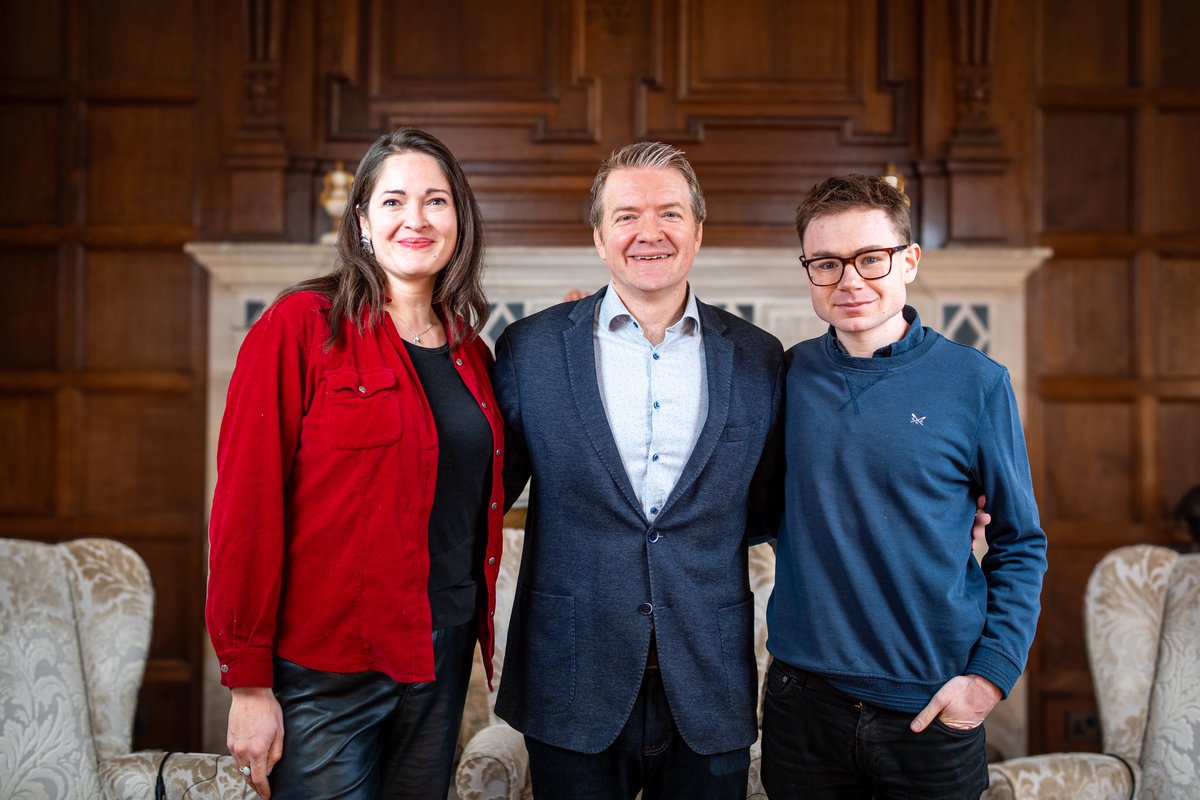
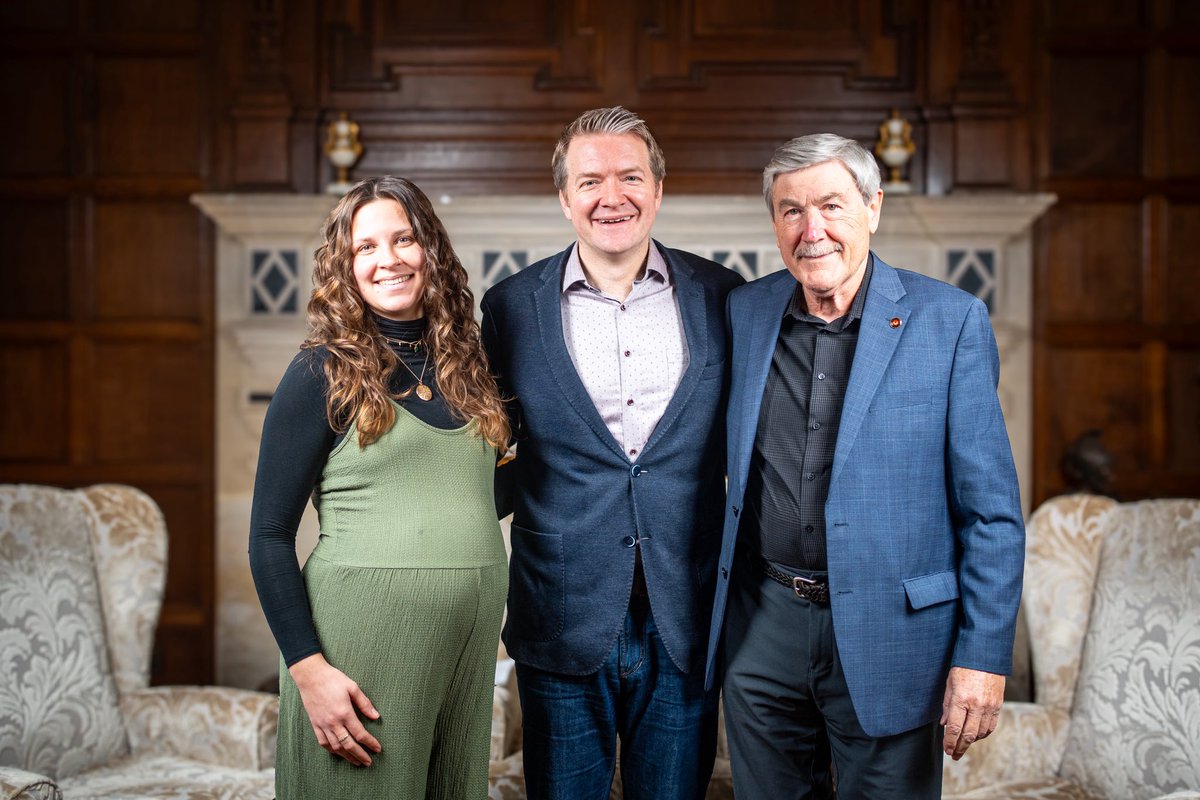
I seriously can’t wait to share the conversations we’ve been capturing in Oxford for my new show ‘Uncommon Ground’.
2 recent recordings:
Podcast host & author Elizabeth Oldfield & journalist @j_amesmarriott - Is There Meaning To Life?
Physicist Paul Davies & atheist theologian @equreshihurst - Is There Meaning To The Universe?
Just the small stuff.
Look out for Uncommon Ground, launching early 2026.
1
2
5
1,168
Earlier in the summer I had a great conversation with two colleagues from Cambridge's Faculty of Divinity on my research in science and religion. You can listen below!
open.spotify.com/episode/4Jz…
2
3
393
Only a few days left to take advantage of the huge 50% discount on 'Decoding the Cosmos' if you buy direct through my publisher's website!
All you need to do is select 'Free Media Mail' at checkout and enter the code: CONFSHIP
wipfandstock.com/97816667856…
350
My editorial for the 'Religion and Contemporary Crises' special issue of Zygon is now live!
I really loved putting this special issue together and showcasing the fantastic conversations we had at our workshop last year.
zygonjournal.org/news/872/
1
350
I'm holding an online book launch for Decoding the Cosmos tomorrow at 5:30pm GMT, do come along!
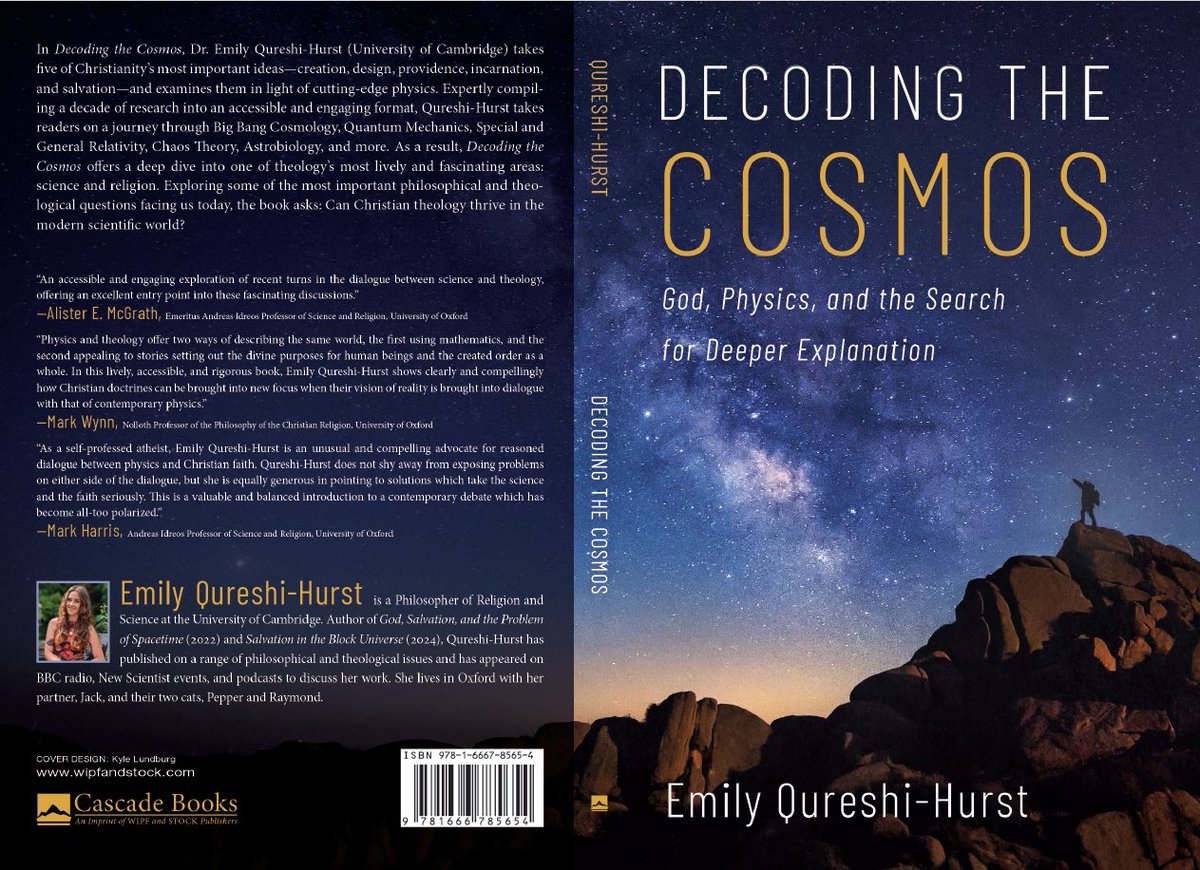
Decoding the Cosmos: Dr Emily Qureshi-Hurst’s new book is out. Register now to attend an online launch, 26.11.2025 joint with Oxford Interfaith Forum.
Details: interfaith.cam.ac.uk/events/…
Register: forms.office.com/e/Vx6fUVgpZ…
ALT Poster for 26 November launch, featuring cover of Decoding the Cosmos. Online at 17:30 GMT.
2
5
1,134
Emily Qureshi-Hurst @emilyqureshihurst.bsky.social retweeted

18 Nov 2025
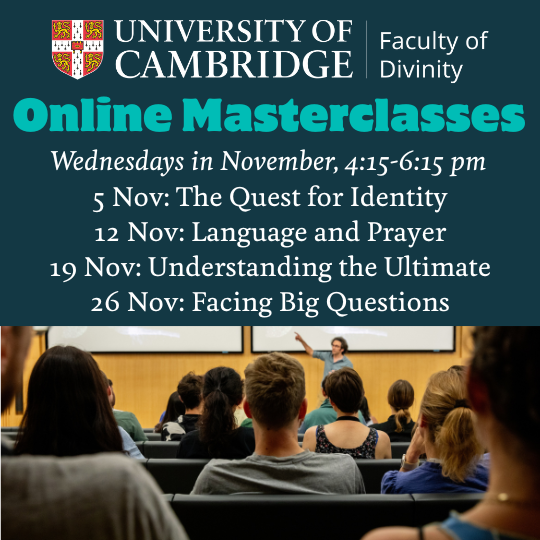
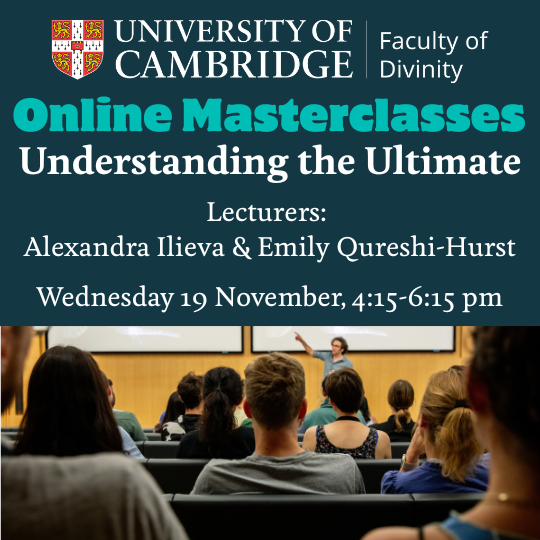
Still time to register for the third session in our Masterclass series!
eventbrite.co.uk/e/183928615…
There is no cost for attending these events, which are designed for Year 12 (or equivalent) and mature students. Both UK and International students are welcome to attend.
2
505
Very pleased to hear William Lane Craig responding to my critiques of his work in his latest episode of Reasonable Faith!
open.spotify.com/episode/2M1…
2
517
Emily Qureshi-Hurst @emilyqureshihurst.bsky.social retweeted
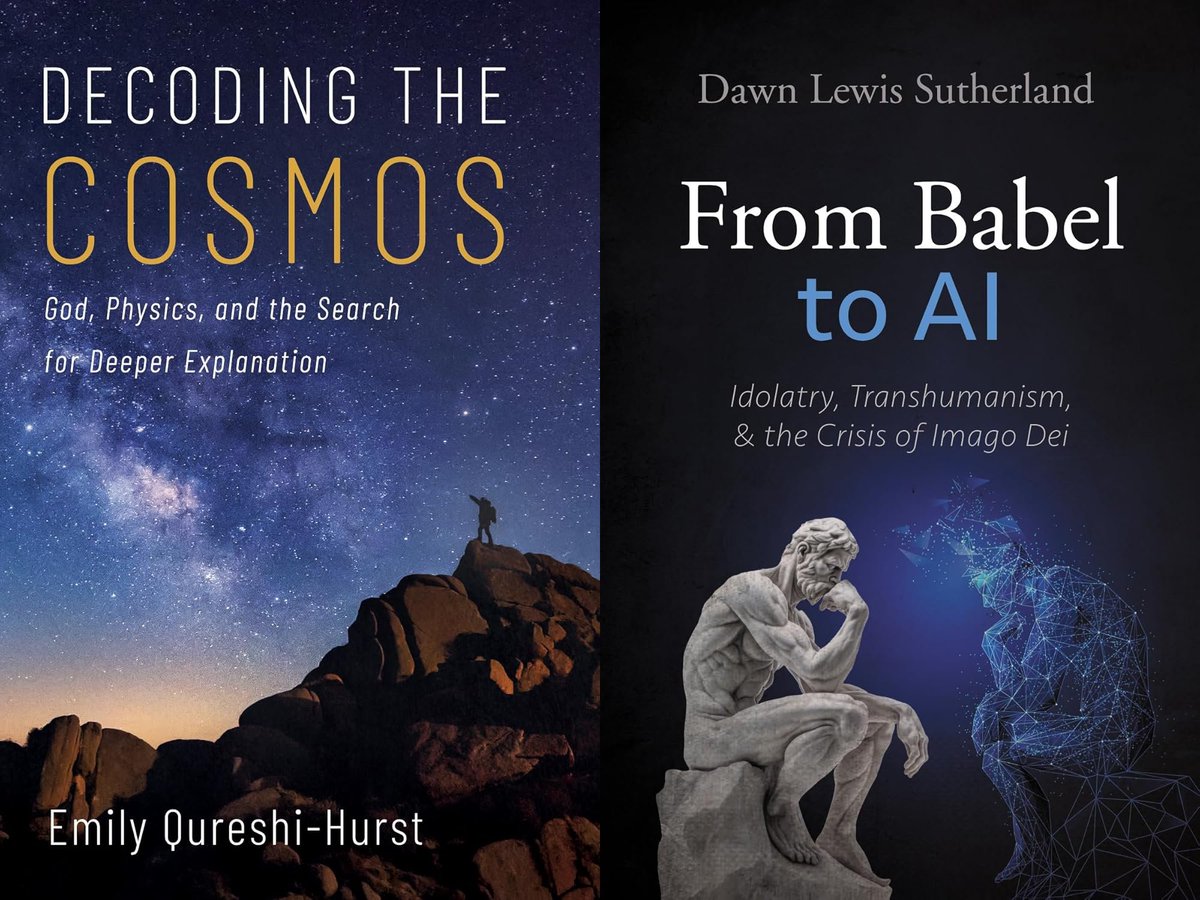
Just bought two very interesting books. My favourite colour theme, too!
6
11
105
5,299