
Developer Relations Program Manager, Google
Joined April 2007
- Tweets 11,289
- Following 500
- Followers 3,084
- Likes 347
156 Photos and videos

Eric ShangKuan retweeted

May 22
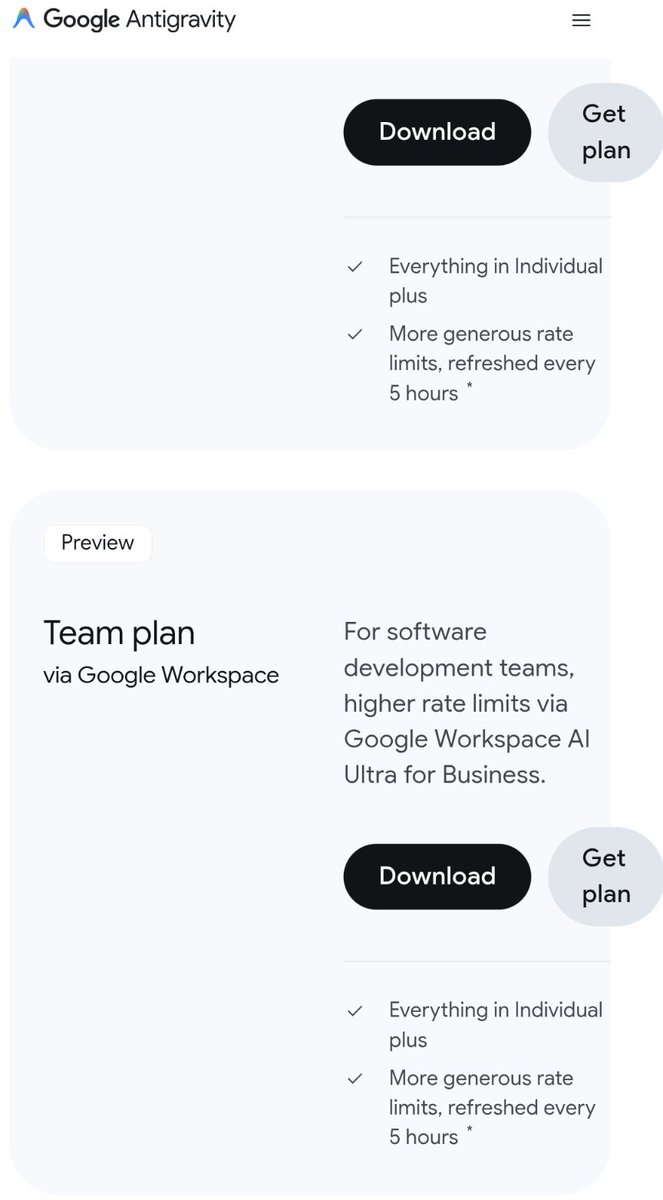
Yesterday, we 3x’d limits on Antigravity and are seeing you build so much more. One thing we heard was people are worried about hitting their weekly limits after a couple work sessions. To give you more runway, we’re 3x’ing the weekly Gemini quotas AGAIN on all paid plans.
We’ve also gone ahead and reset Gemini quotas on all paid plans. Don’t stop building!
387
157
2,296
920,698
Eric ShangKuan retweeted
May 21
An update: we’re 3xing the rate limits for Gemini models across all paid tiers in Antigravity and resetting everyone’s Gemini quota for the week.
We understand some people hit their rate limits quickly and wanted to respond fast. Lots more to come and enjoy building!
534
250
3,075
1,215,395
Eric ShangKuan retweeted

May 18
On our way to I/O 2026. See you at 10am PT tomorrow!
503
782
11,546
1,201,587
Eric ShangKuan retweeted

Apr 29
20
47
442
198,172

Google Translate is turning 20! 🎉. There are 20 fun facts and tips in the thread below.
Translate is one of my favorite Google products because it brings us all closer together!
I've been involved with a couple of things over the years. The first was our deployment of the initial system in 2006, which provided a huge leap forward in quality because it used a much larger 5-gram language model trained on trillions of words of text (indeed, probably the first trillion token language model training in the world: paper has some nice heads showing scaling-law-like quality improvement from scaling to more data/compute).
See "Large Language Models in Machine Translation", Thorsten Brants, Ashok C. Popat, Peng Xu, Franz J. Och and Jeffrey Dean, aclanthology.org/D07-1090/
The second major collaboration was in 2016 when we moved Translate over from a statistical machine translation approach to using deep neural networks. This approach relied on two key innovations. The first was Google's work on Sequence-to-Sequence models (arxiv.org/abs/1409.3215). The second was our development of TPUs, custom cups that improved the performance of inference for deep neural networks by 30-80X over existing CPUs and GPUs of the day (and reduced latency by 15-30X). This made launching compute-intensive language model services like Translate feasible for hundreds of millions of users. See "In-Datacenter Performance Analysis of a Tensor Processing Unit", Norman P. Jouppi et al. arxiv.org/abs/1704.04760
GNMT paper:
"Google's Neural Machine Translation System: Bridging the Gap between Human and Machine Translation", Yonghui Wu, Mike Schuster, Zhifeng Chen, Quoc V. Le, Mohammad Norouzi, Wolfgang Macherey, Maxim Krikun, Yuan Cao, Qin Gao, Klaus Macherey, Jeff Klingner, Apurva Shah, Melvin Johnson, Xiaobing Liu, Łukasz Kaiser, Stephan Gouws, Yoshikiyo Kato, Taku Kudo, Hideto Kazawa, Keith Stevens, George Kurian, Nishant Patil, Wei Wang, Cliff Young, Jason Smith, Jason Riesa, Alex Rudnick, Oriol Vinyals, Greg Corrado, Macduff Hughes, and Jeffrey Dean, arxiv.org/abs/1609.08144
Most recently, we have advanced Translate further using Gemini models.
Each of these advances relied on research that have major quality leaps over the existing status quo translation approaches, bringing better quality and connectedness to all of our Translate users! 🎉

🧵 To celebrate Google Translate turning 20, we’re sharing 20 tips, features and fun facts you may not know about Translate.
1️⃣ Google Translate was one of the initial Google Research experiments that kickstarted our machine learning work.
2️⃣ The most common phrase on Google Translate — this month, like almost every month for the past 20 years — was “thank you.” Other top searches include: “How are you?” “I love you,” “Hello,” and “Please.”
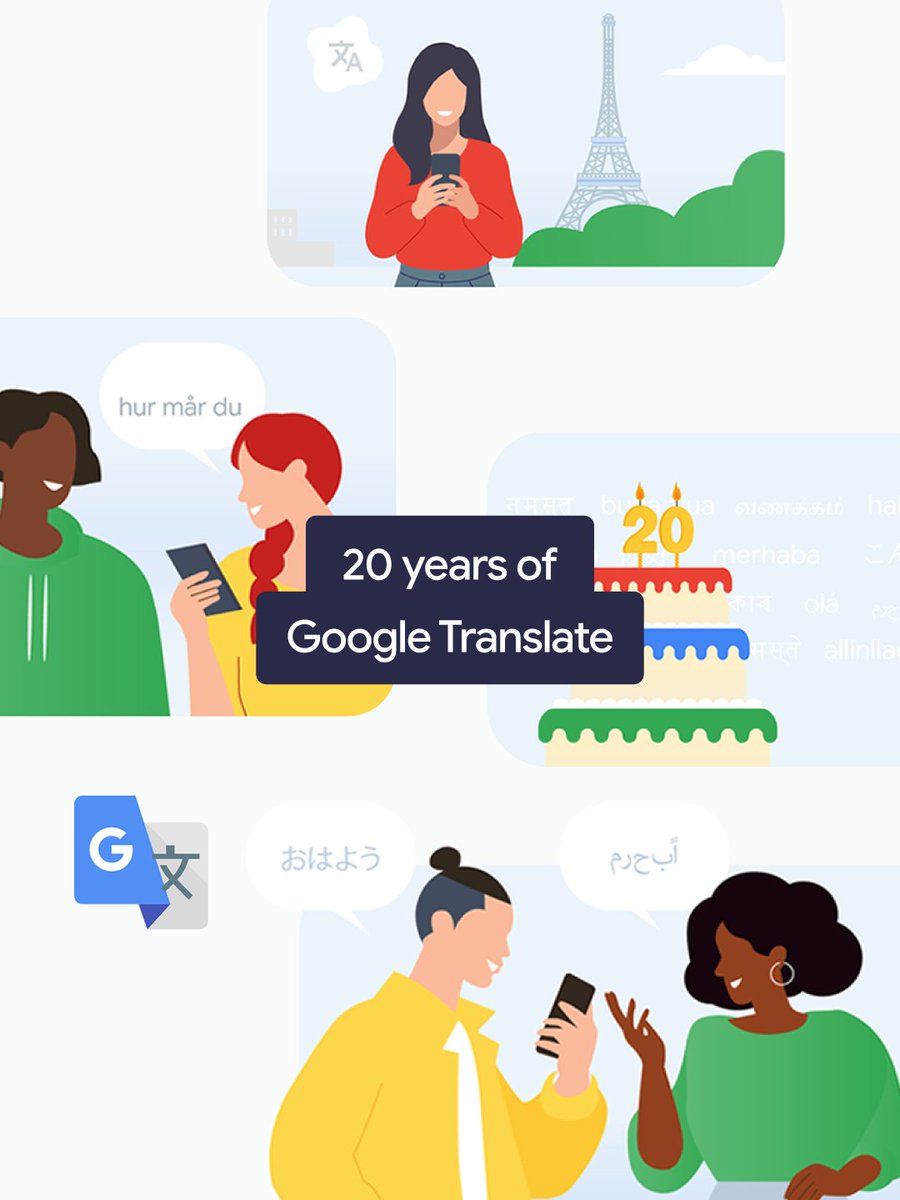
ALT A collage featuring the text "20 years of Google Translate" alongside people using phones and a birthday cake. Illustrations show global communication in various languages near landmarks like the Eiffel Tower.
32
68
462
184,381
Eric ShangKuan retweeted

Apr 13
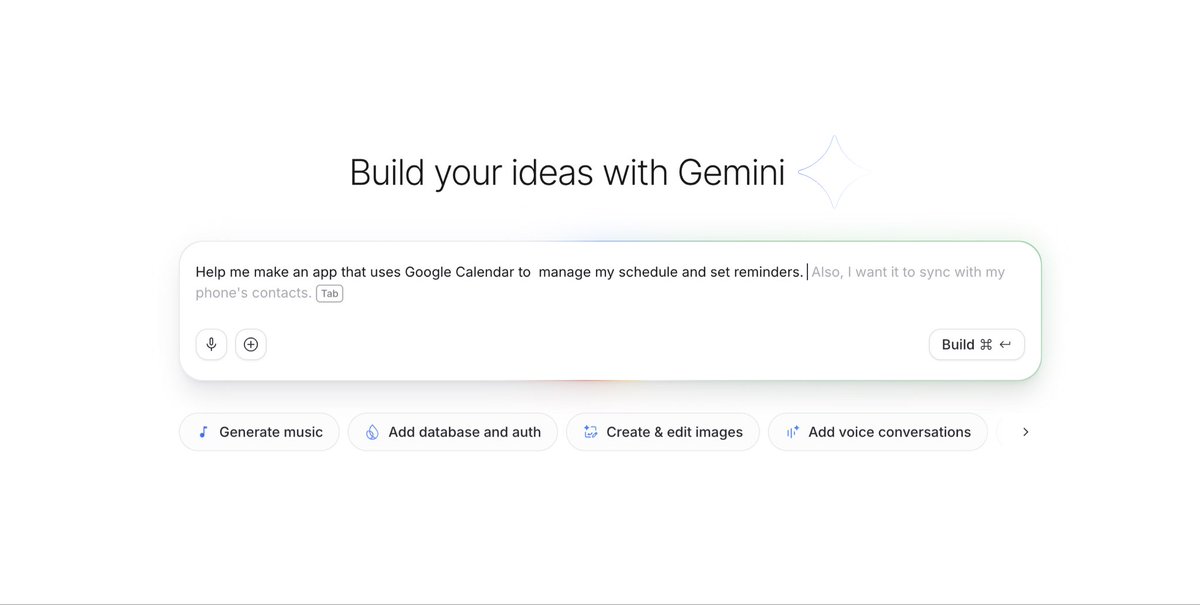
Introducing Tab Tab Tab, our new prompt auto complete engine in @GoogleAIStudio's vibe coding experience.
Now when you show up with your fuzzy ideas, you can rely on Gemini to fill in the blanks : )
98
93
1,280
64,068
Eric ShangKuan retweeted

Apr 9
Gemini can now transform your questions and complex concepts into customizable interactive visualizations directly in your chat.
Adjust variables, rotate 3D models, and explore data for a more immersive way to learn and explore in Gemini.
318
1,201
10,215
5,881,298
Eric ShangKuan retweeted
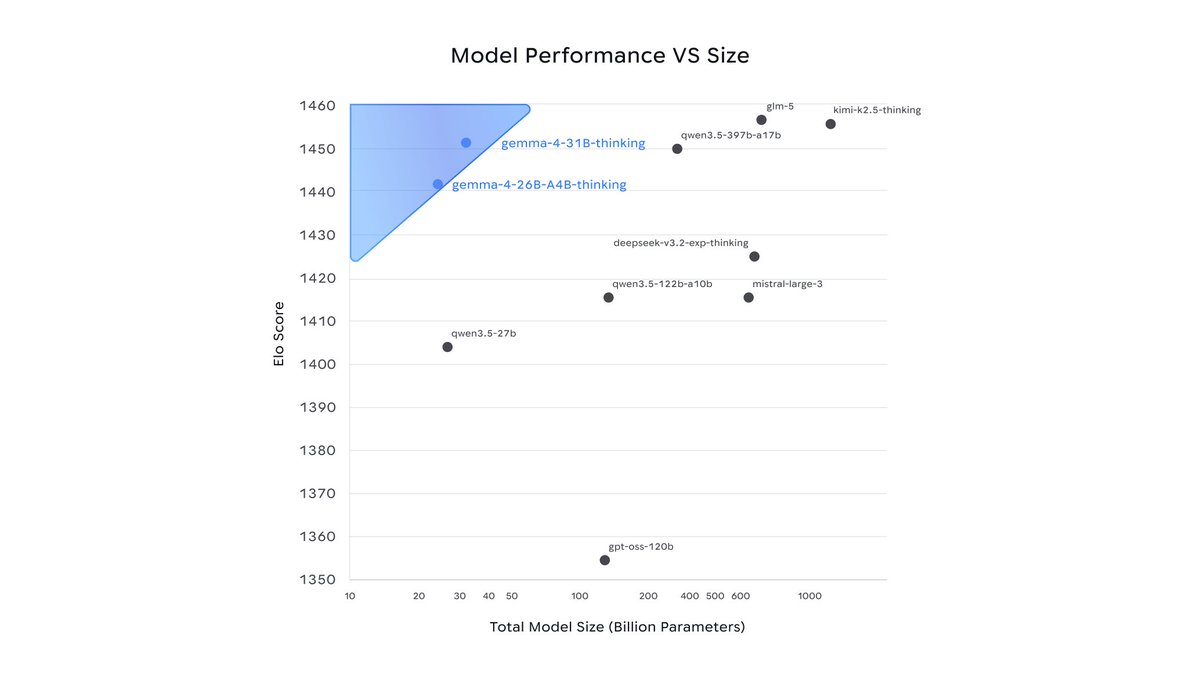
Introducing Gemma 4, our series of open weight (Apache 2.0 licensed) models, which are byte for byte the most capable open models in the world!
Gemma 4 is build to run on your hardware: phones, laptops, and desktops.
Frontier intelligence with a 26B MOE and a 31B Dense model!
286
589
6,150
525,621
Eric ShangKuan retweeted

Mar 27
Gemini 更新了 03/17 的「組合技」包!🚀 以前做 LINE Bot 要手動串 API 判斷邏輯,現在全交給模型自己導播。
核心功能:Tool Combinations同一 Call 裡同時掛上 Google Search Maps 自訂 Function。
它會自己決定:
1️⃣ 什麼時候去 Search 查即時資訊
2️⃣ 什麼時候開 Maps 定位
3️⃣ 最後整合生成回答
詳細開發實測看這裡 👇 evanlin.com/gemini3-flash-co…
#Gemini #LLM #GoogleCloud #DevRel
3
2
444
Eric ShangKuan retweeted
Mar 19
Our AI Studio vibe coding roadmap for the new few weeks:
- Design mode
- Figma integration
- Google Workspace integration
- Better GitHub support
- Planning mode
- Immersive UI
- Agents
- Multiple chats per app
- Simplified deploys
- G1 support
And more, should be fun : )
276
137
2,271
114,652
Eric ShangKuan retweeted

Mar 19
167
751
5,810
8,472,288
Eric ShangKuan retweeted
Mar 16
38
57
545
115,434
Eric ShangKuan retweeted

110
949
4,429
1,802,050
Eric ShangKuan retweeted
Mar 10
Introducing the new Gemini powered Docs, Sheets, Slides, and Drive experience featuring AI Overviews, fulled editable AI made slides, and new grounding sources to make writing docs context aware 📃
Available today to G1 Pro and Ultra users : )
275
441
5,279
756,536
Eric ShangKuan retweeted

Feb 26
Introducing Nano Banana 2 🍌🍌, our best image generation and editing model yet. Try it now in the @GeminiApp, @GoogleAIStudio and more.
277
337
6,248
514,175
Eric ShangKuan retweeted
Feb 26
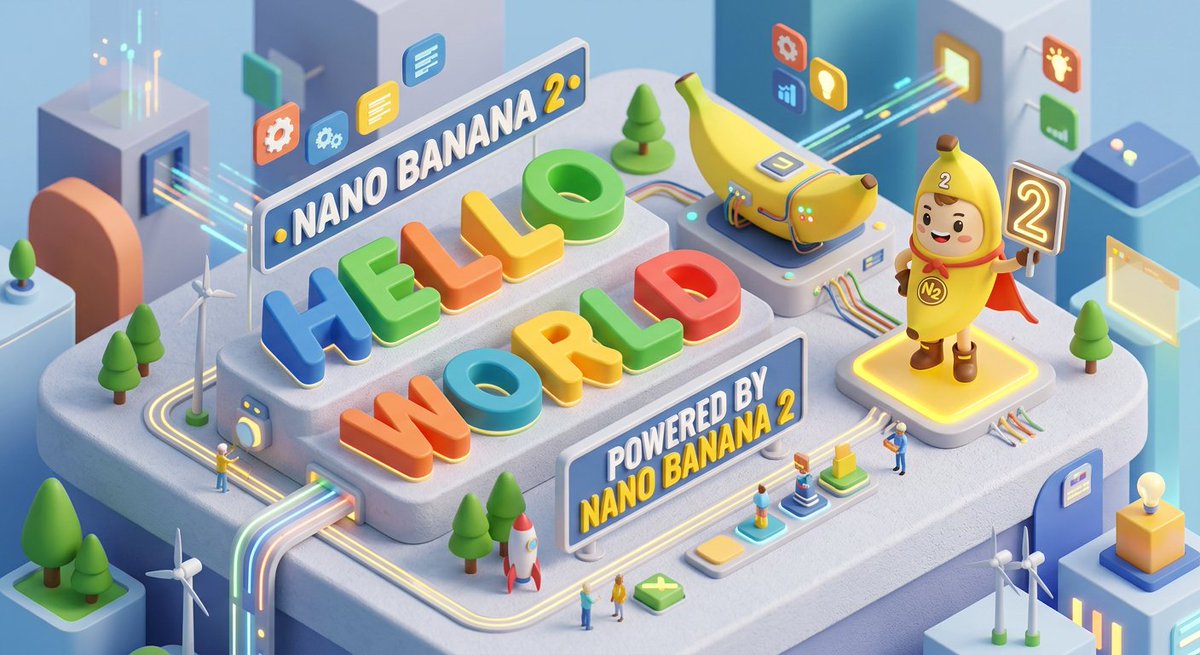
Say hello to Nano Banana 2, our best image generation and editing model! 🍌 You can access Nano Banana 2 through AI Studio and the Gemini API under the name Gemini 3.1 Flash Image.
We are also introducing new resolutions (lower cost) and tools like Image Search!
260
220
3,502
579,860
Eric ShangKuan retweeted
Feb 18
Introducing Lyria 3, our latest and most advanced music model, available in the Gemini App starting today : )
Go from idea, image, or video to music in seconds!
300
289
4,543
401,817
Eric ShangKuan retweeted

Jan 22
How Google SREs Use Gemini CLI to Solve Real-World Outages cloud.google.com/blog/topics… < we're increasingly using the same tools in @googlesre that you do to quickly diagnose problems and drive improvements
1
3
41
2,304
Eric ShangKuan retweeted
Jan 17
PSA: You can vibe code with Gemini 3 Flash and Gemini 3 Pro for free in Google AI Studio
app.new
176
158
3,026
264,868