
Clinical Psychologist Director, KY Psych Assoc. Louisville Psychotherapy Group. Workhaven. Tweets my own.
Joined October 2011
- Tweets 3,661
- Following 1,226
- Followers 402
- Likes 5,394
25 Photos and videos









Eric Russ retweeted

Mar 30
Hi, Kentucky-based politics reporter here — this article is inaccurate.
Here’s my fact-check explainer on the situation for @QueerKentucky 👇
queerkentucky.com/kentucky-t…
18
216
870
120,980
Eric Russ retweeted

Feb 12
New: WHY THE POLYVAGAL THEORY IS UNTENABLE
doi.org/10.36131/cnfioritied…
#vagus #vagal #parasympathetic #sympathetic #autonomic #shutdown #polyvagal
2
10
48
27,877
Eric Russ retweeted

Feb 4
I think it's best for everyone to understand that the unified class project of billionaires right now is to do to white collar workers what globalization and neoliberalism did to blue collar workers.
372
2,756
17,300
1,576,878
Eric Russ retweeted

Jan 24
Your brain on stimulants vs your brain on ADHD
There is more to what ADHD is than what stimulants do, and there is more to the clinical use of stimulants than the boundaries of ADHD
psychiatrymargins.com/p/adhd…
9
36
158
21,231
Eric Russ retweeted
20 Nov 2025
6 Suggestions for DSM-6
Making the next DSM look less like a house of mirrors
psychiatrymargins.com/p/6-su…
12
25
102
39,451
Eric Russ retweeted

11 Nov 2025
"As Winnicott observed, fear of breakdown is rarely a fear of a future catastrophe; it is instead the displaced anxiety of a breakdown already suffered but unacknowledged.”
—Eric Reinhart
8
49
414
31,649
Eric Russ retweeted
2 Nov 2025
The success and safety of any psychotherapeutic modality depends a lot on the culture that exists within the community of its practitioners and the intellectual and ethical traditions they have inherited. There are many communities out there that have very little regard for scholarly inquiry, scientific skepticism, clinical complexity, and therapeutic neutrality. One can have elaborate ideas and psychological techniques that well-meaning practitioners can use to remarkable effect with some people, but without the grounding of a tradition that takes observation, inquiry, craft, and self-correction seriously, things devolve quickly into spectacle and exploitation. (I’d say both psychodynamic and cognitive-behavioral psychotherapies are paradigmatic examples of psychotherapy traditions that have done it well in their own ways—as well as possible in clinical psychology—and I have great respect for both)
4
23
107
7,640
Eric Russ retweeted
1 Nov 2025
The fundamental insight of psychoanalysis is that the mind is divided against itself. We are of many minds. We have conflicting and contradictory motives. This was Freud, circa 1900. No living person came up with it. Also, generations of psychoanalytic therapists have been honing and refining this foundational understanding for more than a century—and evolving ways of working with it to help patients become more self-aware, whole, and at peace with themselves.
It’s not secret knowledge, you don’t need to become a devotee of an acronym, you don’t need a certification from a for-profit business.
This is literally the starting point for all legitimate psychtherapies aimed at self-understanding, self-awareness, congruence, and authenticity.
Just saying.
30 Oct 2025

I was going to add a comment, but I think anything I add could only detract. A must read for mental health professionals.
6
41
327
27,312
Eric Russ retweeted
26 Oct 2025
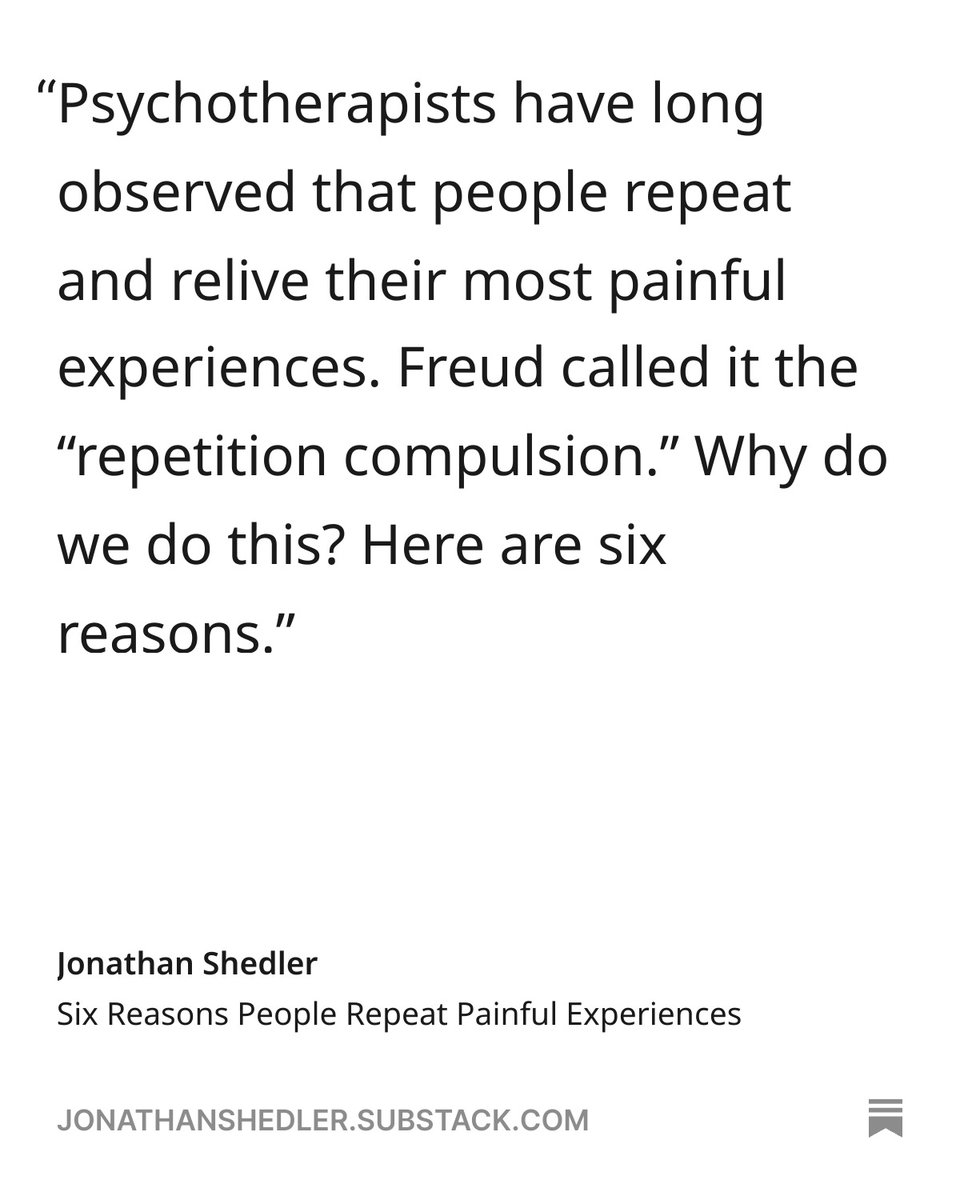
✍️ My other most popular post
▶︎ Six Reasons People Repeat Painful Experiences
People seek pleasure and avoid pain, but it’s not that simple.
(full text 👇)
1
14
119
14,394
Eric Russ retweeted

24 Oct 2025
Disagree with this take.
My impression is that people are putting too much on the separation between humans and AI. In the future, this line will blur, much like how people 30 years ago mistakenly drew a hard line between online and "the real world." With dating apps and online friend meet-ups, that border got destroyed a long time ago.
IMO, the title of this clip already suggests why the viewpoint is wrong. "Will AI End the Influencer Era" assumes that influencers started with the internet. In reality, influencer marketing goes way back.
In the 18th century, English potter Josiah Wedgwood promoted his products by giving members of British aristocracy free products that they could display, such as earthenware tea sets, ornamental vases, and fancy plates. Since his products were associated with the British ruling class, he eventually commanded a premium from members of the lower class who wished to copy them. In fact, if you look up "Wedgwood plates" online, you'll probably see them as "refined" and "tasteful." His product seeding — not unlike how fashion brands give Kim Kardashian free clothes — can still be felt today. The reason why you see them as "tasteful" is purely about their association with British aristocracy.
I disagree with this take because it misunderstands the motivations behind much human consumption. The man in the video suggests that AI in the future can help us personalize products to fit our desires, rather than the preferences of another person (a designer or influencer). However, this assumes that your desires are independent and not couched in a broader social framework. I'd argue that people's consumption habits are more often about social relations.
I'll give you an example. When I was on a menswear forum, a well-respected member touted this beautiful light-blue shirt fabric he got from his far-flung bespoke tailor in Naples. It had unique mottling, which allowed it to sit somewhere between the formality of dressy white poplins and the light blue chambray workwear cloths. Later, another well-regarded member found the company that made the fabric: the oldest mill in France, founded in 1787, known for its fine textile weaving and lacework. He bought a few bolts and sold cut lengths to American customers. The fabric soon became popular with other influential members on the board.
Another member later discovered that this fabric was not pure cotton. Instead, it contained a bit of polyester, which accounts for why some members boasted about the fabric's seemingly natural ability to resist wrinkles. This caused a fire sale among the remaining boutique retailers, and I bought as much as I could.
I will always love this cloth, despite its small percentage of synthetics, because of what it represents in a broader social context. It reminds me of a funny story about some memorable people in the social group I was part of. AI will never be able to replicate this feeling in me because it can't create that situation.
The same is true for a lot of stuff I consume. I'm enamored with Norwegian split-toe derby shoes because they are worn by people I admire, such as menswear writer Bruce Boyer and Japanese clothier Yukio Akamine. I like raw denim jeans because there's an online social group that talks about "sick fades." I hope to one day buy a Rolex 1016 underline gilt dial with a chapter ring because it was recommended to me by someone I consider to have good taste.
There are large online economies centered on consumer products, such as fountain pens, mechanical watches, menswear, audio systems, and perfumes. People engage with these things partly because they love the product in question (e.g., a fountain pen hobbyist obviously loves fountain pens). But they are also in it for the *community.* They buy things because an influential person in that community — let's call them an influencer — recommended it. Then they show off their purchase to their online hobbyist friends (e.g., "In my experience with Nakaya toki-tamenuri cigar pen, the nib is too stiff."). This garners them social capital in the community, making them feel like they belong and are respected.
Clothes perform certain utilitarian functions, such as protecting us from cold and wind. But their most important function is signaling to a group, such as saying "I'm nerdy," "I'm countercultural," or "I'm artistic." They signal belonging to a group and our individuality within that group (e.g., "I'm a punk rocker, but I'm also a very unique person within this broader social group"). AI can never completely replace the influencer because it can't hold cultural capital within a group, as it's not a member of that group.
Casual consumers may turn to purely AI-driven systems for product recommendations in the future. I sometimes use the NYT's Wirecutter to figure out which spoon to buy, even though I'm not in a spoon community and don't care what my spoon signals. But there are many products oriented around groups, and this is where the influencer will continue to thrive, just as people bought Wedgwood plates after seeing them on Queen Charlotte's shelf.
32
60
863
150,673
Eric Russ retweeted

23 Sep 2025
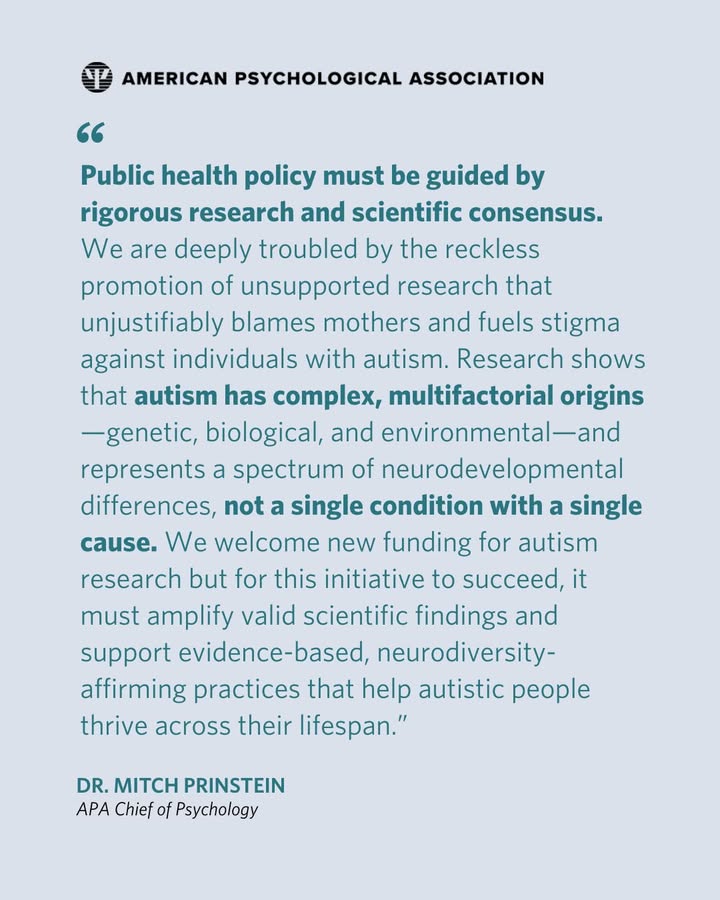
The American Psychological Association is deeply concerned about the Administration’s recent announcement on #autism.
Promoting unsupported scientific theories risks fueling stigma, undermines public trust and distracts from real scientific progress.
124
817
2,180
105,681
Eric Russ retweeted
19 Sep 2025
“Patients coming for therapy usually expect to begin therapy. They do not realize there are many different places one might begin. This pull simply to begin can be contagious, and the therapist, in empathic response, may find herself ‘beginning’ without having clearly thought through where to begin and why.”
—Mary Jo Peebles, Beginnings: The Art an Science of Planning Psychotherapy
1
14
175
9,154
Eric Russ retweeted

12 Sep 2025
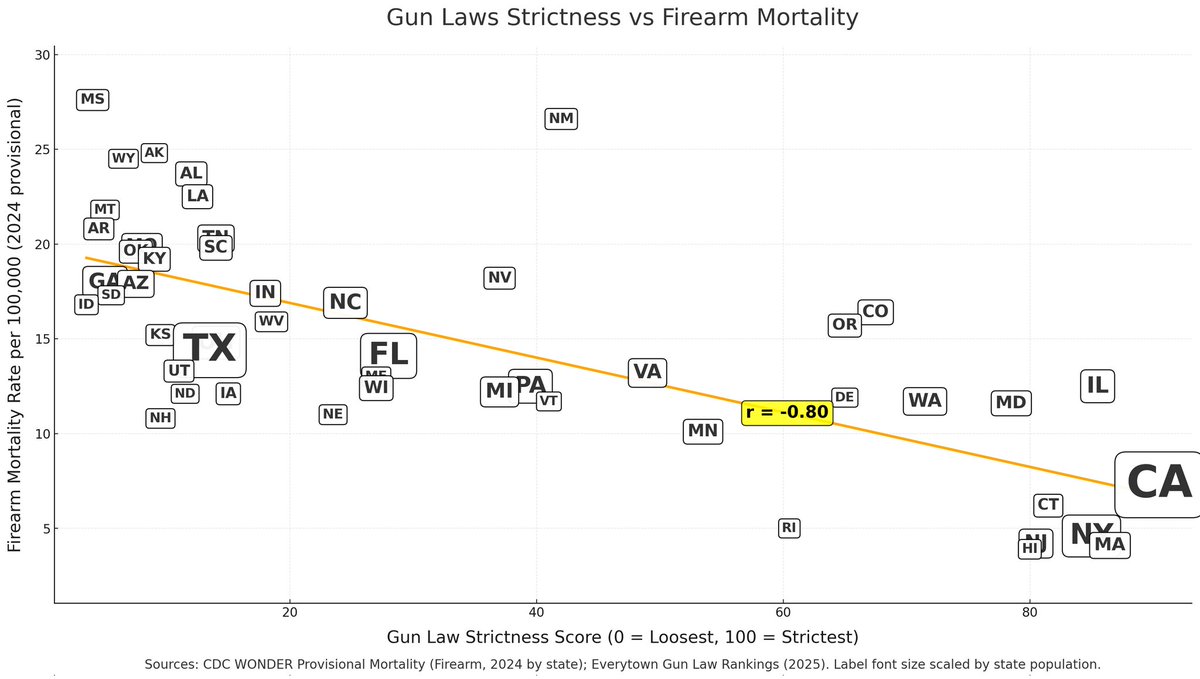
Using the latest dataset from CDC and a numeric scale for gun laws, we can clearly see the impact of gun laws on firearm mortality. The population-weighted correlation is an astounding r = -0.8, which is quite significant.
17
93
257
43,813
Eric Russ retweeted
29 Aug 2025
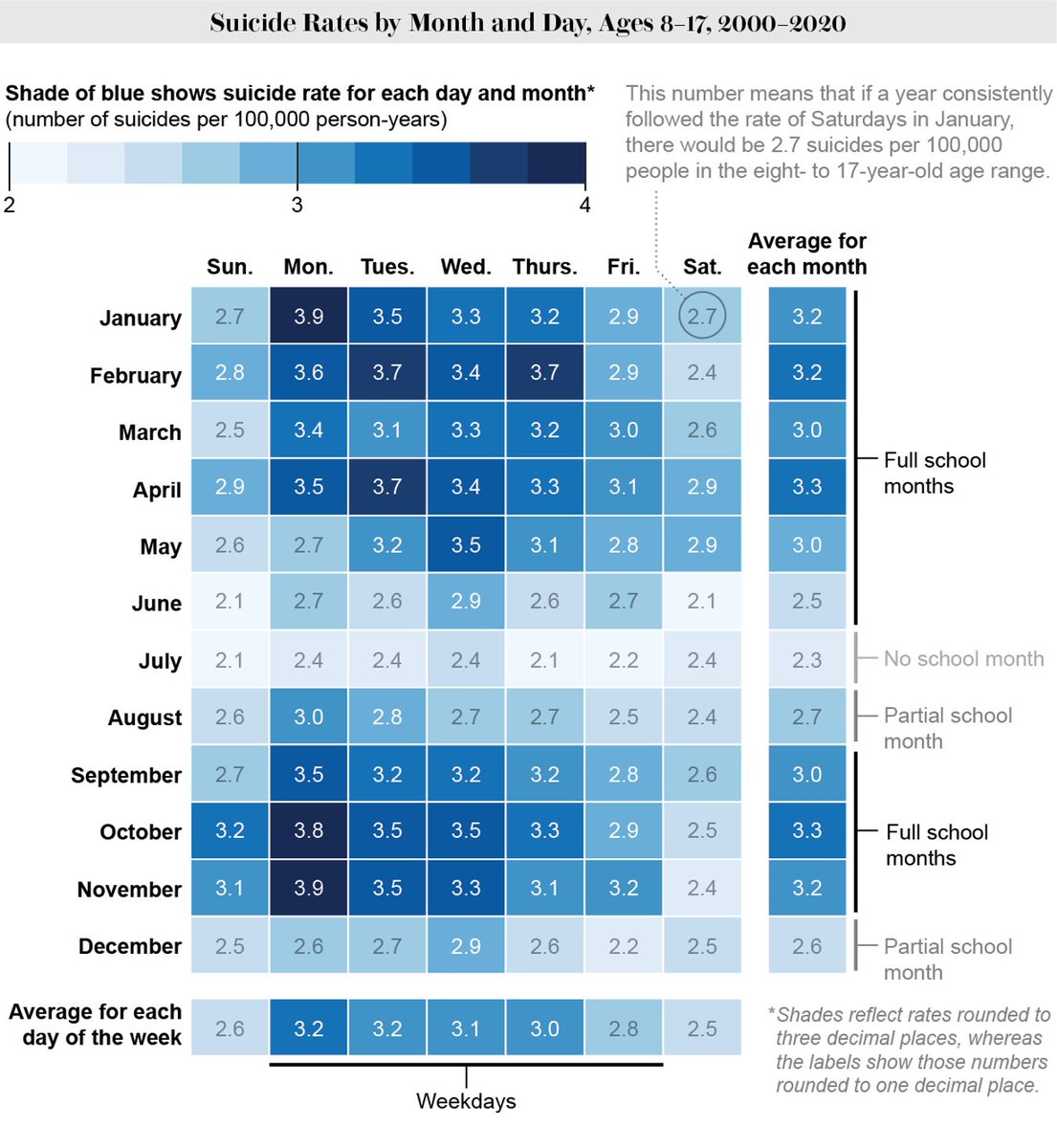
Hey media while you're talking about back to school... Feel free to reach out and talk about the extremely important and ignored connection between school days and suicide.
DM or email me!
6
31
118
6,396
Eric Russ retweeted

5 Aug 2025
For those attending APA 2025, check out the awesome ECP-focused opportunities offered by the Committee on Early Career Psychologists! Please come to our events or stop by our booth to say 'hi'
apa.org/education-career/dev…
2
3
223
Eric Russ retweeted

21 Jul 2025
Did you know that your personality isn't set in stone? You can intentionally shape your traits to align with life you want. I spoke with 🌞 @CBSSunday Morning's Susan Spencer on the science of personality change:
1
2
6
414
Eric Russ retweeted

3 Jul 2025
Yes. Would’ve been great if prominent Dems hadn’t spent the week making their misgivings with Mamdani the topic of conversation. My minor role here is to look ahead and see that directing the blame where it belongs will require an appetite for procedural hardball not in evidence.
24
14
222
27,210



Eric Russ retweeted

22 May 2025
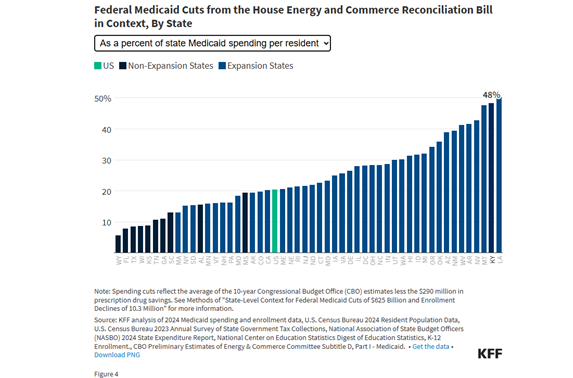
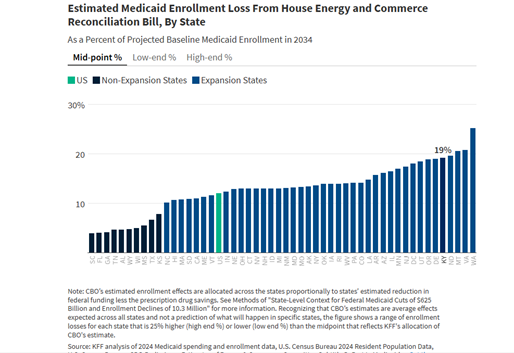
Medicaid in Kentucky gets absolutely hammered in the House bill--loss of $1.7 billion, 2nd-worst proportionally of all states, and lost coverage of 207,000-345,000 Kentuckians, 5th-worst among states
17
122
256
26,884
Eric Russ retweeted
14 Mar 2025
Six reasons people keep repeating painful experiences
1️⃣ To alleviate guilt. Some people feel guilty about success or pleasure, as if enjoyment were a transgression. They seek suffering to expiate guilt and pay off their conscience. In some cases, pain and suffering become the “admission price” for whatever pleasures they allow themselves
2️⃣To gain a sense of control and mastery. The person attempts to gain a sense of control over painful or traumatic experiences they once experienced helplessly. There is an underlying (unconscious) fantasy they can undo a past trauma, or right a past wrong, by repeating it and getting it to come out differently (but in reality, they just keep reliving the same pain)
3️⃣Suffering is home. An analogy can help us understand this: when panicked horses are rescued from a burning stable, they often run back in. The horses associate the stable with safety and security—it’s home
A child’s earliest attachments, however unhappy, are also home. However neglectful or abusive, that was where the child experienced whatever care and comfort they knew. In their search for comfort, they seek the same pain
4️⃣Secondary gain. Pain, suffering, and MH symptoms come with indirect or hidden benefits, which clinicians call “secondary gain.” Their difficulties may bring attention, sympathy, release from responsibilities, special treatment, even financial incentives (eg, disability pay). Secondary gain can be a powerful incentive for continued suffering
In psychotherapy, it can be helpful to invite patients to reflect on the *downside* of getting well. The first response is likely to be something like, “There is no downside, I’d do anything to get better.” If the therapist persists and says something like,“Not so fast, let’s really think about this,” there may be some suprising insights
5️⃣To punish others (passive-aggression). The desire to punish someone else can be more powerful than the desire to avoid pain. For example, a person may unconsciously sabotage their prospects for success or happiness *precisely because it’s what someone else wants for them* (hence the expression, “cutting of your nose to spite your face”)
Mental health symptoms also cause pain and suffering for *other* people. For example, a depressed person may be too depressed to do their share of work, earn a living, keep their social commitments, have sex with their partner, etc. There can be (generally unconscious) sadistic pleasure in inflicting this pain on others, especially without responsibility or consequences. But who can blame the suffering person? After all, they’re the victim
6️⃣To enhance self esteem or feel superior. For some, feelings of self-worth and even superiority are tied to self-deprivation and self-punishment. The person seems organized around the belief, “I am better than you because I suffer more.” The more suffering, the more they feel morally superior. In the clinical literature, this is called “moral masochism”
One caveat: these are rarely conscious choices. These patterns come about unconsciously

33
231
986
250,978