
He who arrangeth the nuts in the husk right from the belly of the soil for it is he who is the author & finisher of our faith. eFarmer @efarm_ing | @efarmcoin
Joined February 2023
- Tweets 3,491
- Following 476
- Followers 1,564
- Likes 8,883
518 Photos and videos







Pinned Tweet

Jun 12
Floriculture is another underrated industry.
We are looking forward to having beautiful courses around flower productions.
We have the Horticulture department covering this field.
If you're a vegetable farmer or a florist, watch out for @efarm_ing
2
1
13
290
Farmer EshPresh retweeted
Agriculture is evolving, and access to the right information can make the difference between a successful harvest and disappointing yields. eFarming brings practical farming knowledge directly to farmers, empowering them to make informed decisions every day.

1
4
5
44
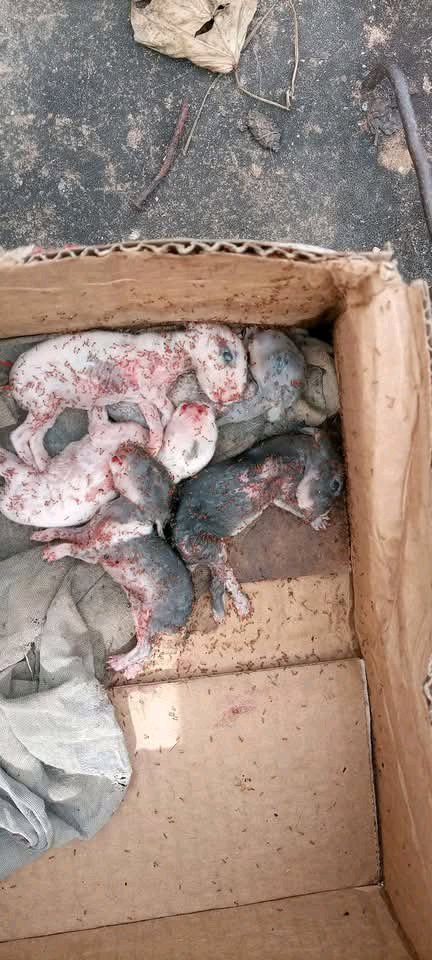
Do Ants Harm Rabbits? (Ultimate Protection Tips!)
(Farmer shares his sad Experience)
I panicked when I discovered ants were inside the cage. I knew ants would harm rabbits when it gives birth, but i turned the blind eye.
If you have ants at home and also raise rabbits, you need to go take precautions, thats why i am sharing my experience.
Ants do sting rabbits and are also poisonous. Hence, it is always better to keep your rabbit’s hutch clean to prevent ants.
Keep cage clean and free of food debris because ants are naturally attracted to sugar.
Another type of insect that can harm rabbits is mosquito. Mosquitoes can spread a virus called myxomatosis to rabbits. The virus can cause the rabbit to develop a fever, become lethargic, and eventually die.
Some ants are attracted to the moisture that greens can contain. These ants may be looking for a new water source, or they may be seeking moisture to help them digest their food. Other ants may be attracted to the proteins and other nutrients that greens contains.
These ants may be looking for a new food source, or they may be seeking additional nutrients to help them build their nests or care for their young.
Greens can also contain small amounts of mold, which some types of ants may find attractive.
In general, ants are attracted to anything that smells or looks like food. So if you have hay in your yard, there is a good chance that ants will be attracted to it.
There are a few things you can do to help reduce the chances of ants invading your indoor rabbit’s living space:
Keep your rabbits’ area clean and free of debris
If you have any piles of hay, store them in a sealed container
Sprinkle diatomaceous earth around the perimeter of your rabbits’ living space as a deterrent
Monitor your rabbits’ food and water dishes to ensure that they are clean and free of bugs/debris. This was my mistake. I forgot to monitor yesterday through the night to this morning.
If you notice any anss, take action immediately to get rid of them if not you will be crying
Preparing a mixture of 50% distilled white vinegar and 50% water and spraying on the environment around will help in getting rid of ants.
This mixture can also be sprayed directly on the ants to kill them.
Apart from this, cinnamon can also be used as an effective deterrent against other insects like cockroaches, spiders, etc. It is because of the presence of a certain compound in cinnamon that is toxic to these creatures. You can either use ground cinnamon or essential oil of cinnamon for this.
Sprinkling black pepper powder on the ant region will deter ants from entering the space. Most importantly, it is rabbit-safe. Just ensure that your rabbits do not enter when the powder is sorayed
Cayenne pepper is a hot chili pepper that deters ants. The capsaicin in cayenne peppers will make ants avoid the area. Be careful when using this method as it can be harmful to pets and humans if ingested.
Organic insect killer is a natural product that uses safe ingredients to kill insects. It is made from essential oils and other plant-based ingredients, so it is safe for people, pets, and the environment.
Organic insect killers can be used to kill a variety of insects, including ants, spiders, roaches, and silverfish. It is also non-toxic, so it can be used indoors or outdoors.
A combination of plant oils can also be used to deter ants from rabbits’ space. Plant oils like peppermint oil, thyme oil, lavender oil, and lemon oil can be used. All these oils have a strong smell that ants do not like.
You can use a mixture of any of these oils or just one type of oil. Add a few drops of the oil to a spray bottle filled with water. Spray the solution around the rabbit’s space.
If you don’t want to use a spray, you can also place a few drops of the oil on some cotton balls and place them around the area. Another option is to put the oil in a dish and place it near the area. Be sure to replace the oil every few days!
1
4
145
Jun 15
The Primary aim for efarmcoin $EFARM is to enable crypto enthusiast across the globe have access to our Agricultural courses on eFarming.
The secondary aim is to raise funds for Poor farmers in Rural communities.
Everything else is a Bonus, always remember that!!!
1
4
17
233
Jun 15
Be careful what you pray for.
If you pray for massive business opportunities, remember to also attach the wisdom of sustainability.
When you ask for wealth, remember to ask for humility.
When you ask for long life, remember to ask for good health and purpose.
When you ask for influence, remember to ask for integrity.
When you ask for success, remember to ask for character.
Because the blessing is only as valuable as the wisdom to manage it.
A long life without purpose is merely existence; a purposeful life leaves a lasting impact.
4
20
197
Farmer EshPresh retweeted

Jun 15
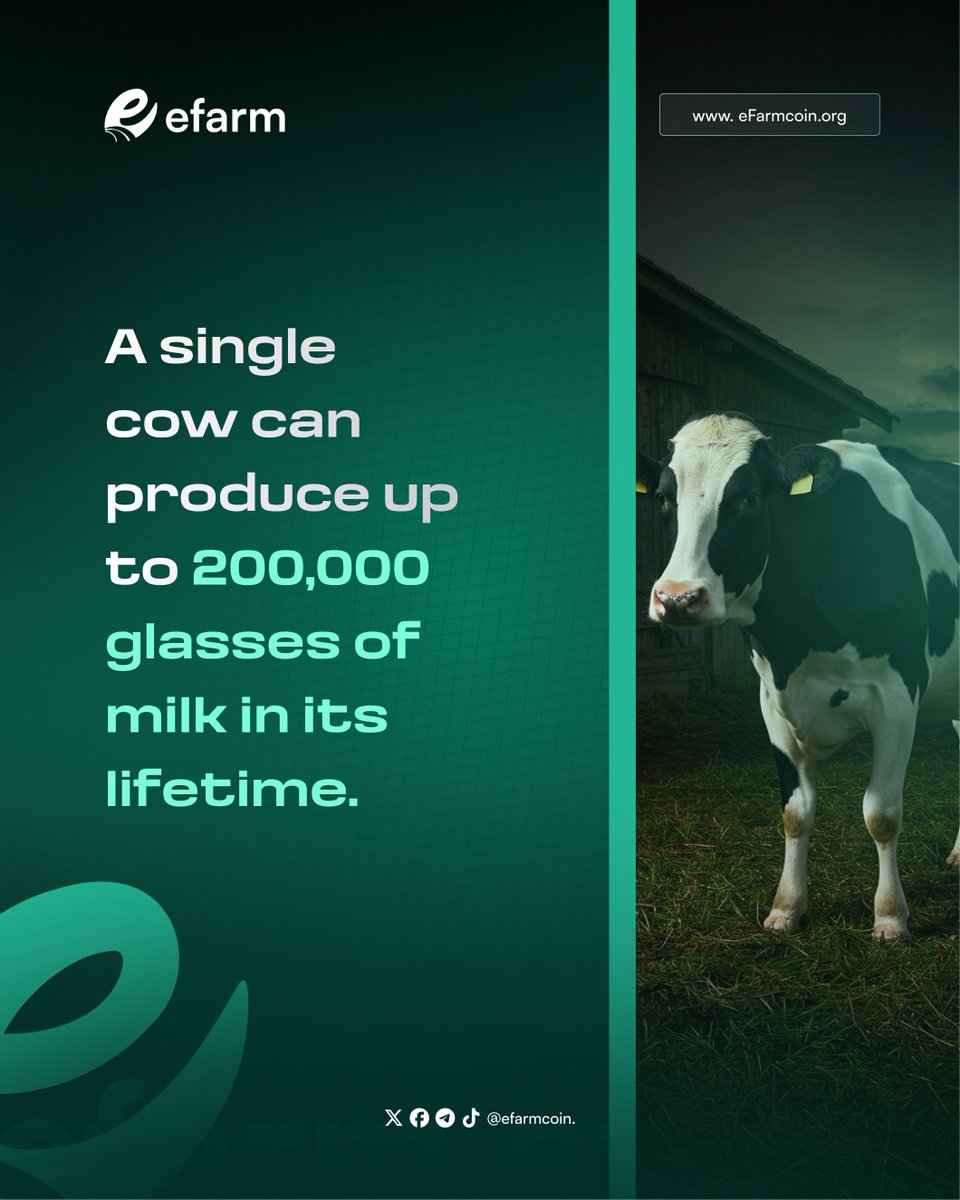
A high-producing dairy cow may produce around 25,000–35,000 liters of milk over her productive lifetime (sometimes more).
If one glass is about 200–250 mL, then:
25,000 liters = 100,000–125,000 glasses
35,000 liters = 140,000–175,000 glasses.
Exceptionally productive cows could exceed 200,000 glasses over their lifetimes.
So "up to 200,000 glasses" is plausible as an upper-end estimate for a very productive dairy cow, but it wouldn't be typical for every cow.
An interesting comparison: a dairy cow can produce more milk in a single day than a human mother produces in several weeks, which shows how extensively cattle have been bred for milk production. 🐄🥛
#EFARM
1
5
10
126
Jun 15
As someone who has followed the Abattoir series from the beginning and also watched many productions from @mztelevision, seeing the character associated with Moses Korede Are appear again through AI-assisted techniques can feel both surprising and emotional.
One reason it stands out is that the technology isn't being used simply as a visual gimmick. For many viewers, it serves a storytelling purpose by preserving the presence of a character that has been significant to the series and its audience. When done respectfully and with the blessing of those responsible for the production and the late actor's legacy, AI can help maintain continuity in a way that resonates with fans.
At the same time, AI recreations of deceased performers often raise broader questions about consent, authenticity, and how far such technology should be used. Some viewers appreciate it as a tribute, while others prefer that a character's story conclude when the actor is no longer able to perform. Both reactions are understandable.
In the case of Abattoir Season 6 Episode 1, the effect seems to have struck an emotional chord with many viewers because Baba Gbenro was such a recognizable and beloved figure in the Mount Zion universe.
As someone who has followed the ministry's dramas over the years, what impressed you more? the technical quality of the AI recreation, or the emotional impact of seeing Baba Gbenro appear on screen again?
#Abattoir
1
12
276
Jun 15
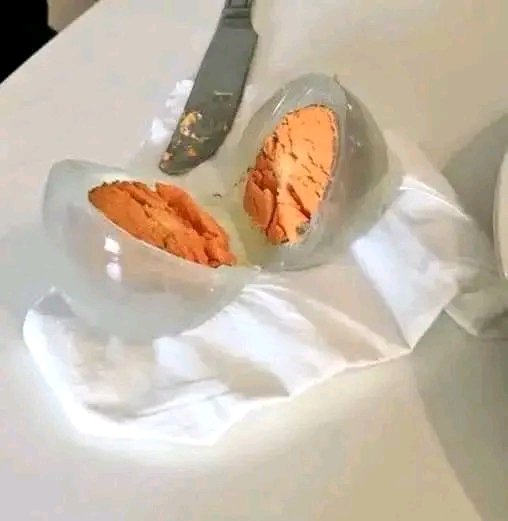
This is what you get when you boil penguin eggs.
This is due to the type of albumin they contain. Normal eggs that we eat like chicken and duck's contain ovalbumin. When the egg is boiled and the ovalbumin coagulates, it turns white. However, for the eggs to survive the freezing condition of the native regions of penguins, they contain more of a special type of albumin known as penalalbumin instead.
When boiled, this penalalbumin stays translucent when it coagulates. Hence the reason for this appearance.
1
1
15
409
Jun 15
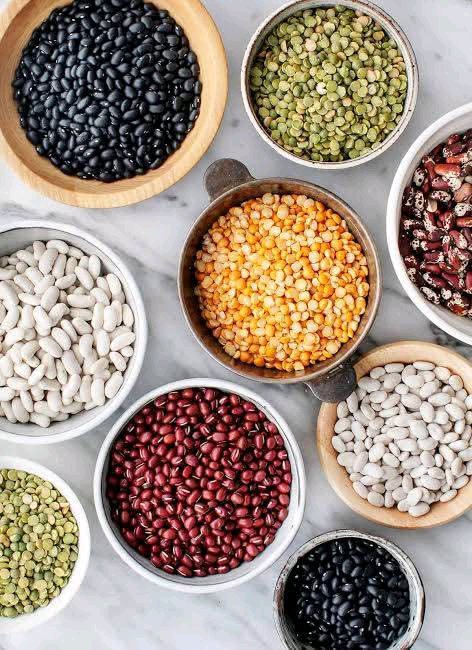
Soaking beans in water before cooking offers several benefits that can make them easier to cook and digest. Here are some of the advantages of soaking beans:
1. Reduced Cooking Time: Soaking beans in water helps to soften them, which can significantly reduce the cooking time. Softened beans will cook more evenly and quickly, saving time and energy during the cooking process.
2. Improved Digestibility: Soaking beans can help reduce the levels of compounds known as phytates and enzyme inhibitors present in the beans. These compounds can interfere with the absorption of nutrients and may cause digestive discomfort for some people. Soaking beans can help break down these compounds and make the beans easier to digest.
3. Enhanced Nutrient Absorption: Soaking beans can help improve the bioavailability of certain nutrients, such as iron and calcium, by breaking down anti-nutrients that can inhibit their absorption. Improved nutrient absorption can enhance the nutritional value of the beans.
4. Reduced Gas Production: Soaking beans in water before cooking can help reduce the gas-producing compounds present in beans, such as oligosaccharides. By discarding the soaking water and rinsing the beans before cooking, you can help minimize the gas-inducing effects of beans.
5. Improved Texture: Soaking beans can help improve the texture of cooked beans, making them softer and creamier. This can result in a more pleasant eating experience and enhance the overall quality of bean-based dishes.
While soaking beans is beneficial for many reasons, it is not always necessary. Some beans, such as lentils, split peas, and black-eyed peas, do not require soaking before cooking and can be cooked directly. However, for beans like kidney beans, chickpeas, and black beans, soaking can help improve their cooking properties and digestibility.
Overall, soaking beans in water before cooking is a common practice that can offer several advantages, including reduced cooking time, improved digest
6
18
310
Jun 14
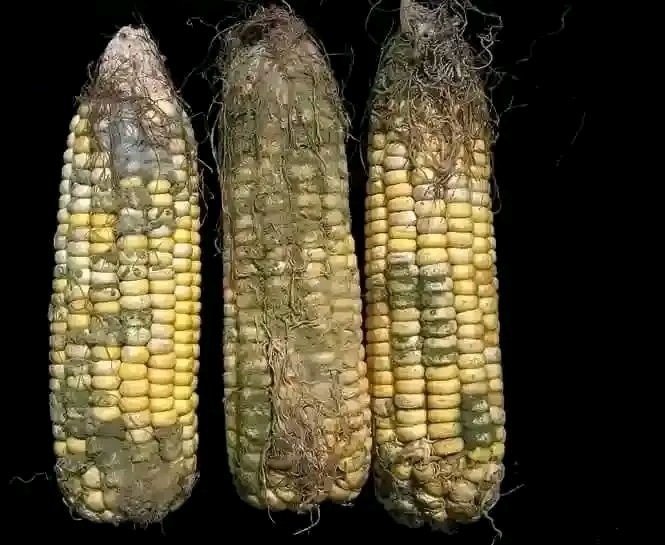
How to control aflatoxin in maize
Do you know what aflatoxin is?
Aflatoxin is a poison produced by fungi that grow almost everywhere. These fungi grow in soil, decaying plant remains and grains. They attack maize easily. These fungi attack and produce aflatoxin in maize both in farm and stores. Eating the maize with aflatoxin can cause death, liver cancer and poor growth in children. It also reduces the ability of the body to fight diseases.
How aflatoxin affects humans, animals and trade
Drought and high temperatures increase the number of aflatoxin producing fungi when maize is in the farm. When it is wet at harvest and after harvest there are more chances of having aflatoxin on maize.
Aflatoxin production increases once maize is damaged by insects or there is presence of crop remains.
Animals fed on maize with aflatoxin grow slowly and produce less milk and meat.
The buyers in the international markets refuse to buy maize with aflatoxin. Farmers harvest less when maize has aflatoxin and get less money from the maize.
How to prevent production of aflatoxin
Plant maize early and use fertilizer to get healthy maize.
When planting, use maize seeds that cannot be easily attacked by aflatoxin producing fungi.
Control weeds and insects. Remove and destroy crop remains of the previous harvest. If there is drought, irrigate your farm. Practice crop rotation by avoiding cultivation of maize every season. Harvest your crop on time. Before storing your maize, dry the grains properly in the sun.
During drying, avoid contact of grains with soil. Remove and destroy broken and infected grains.
Clean your store before putting in new maize. Store grains in well aired and raised granaries. Use fungicides to avoid growth of the fungi on maize.
1
2
10
201
Jun 13
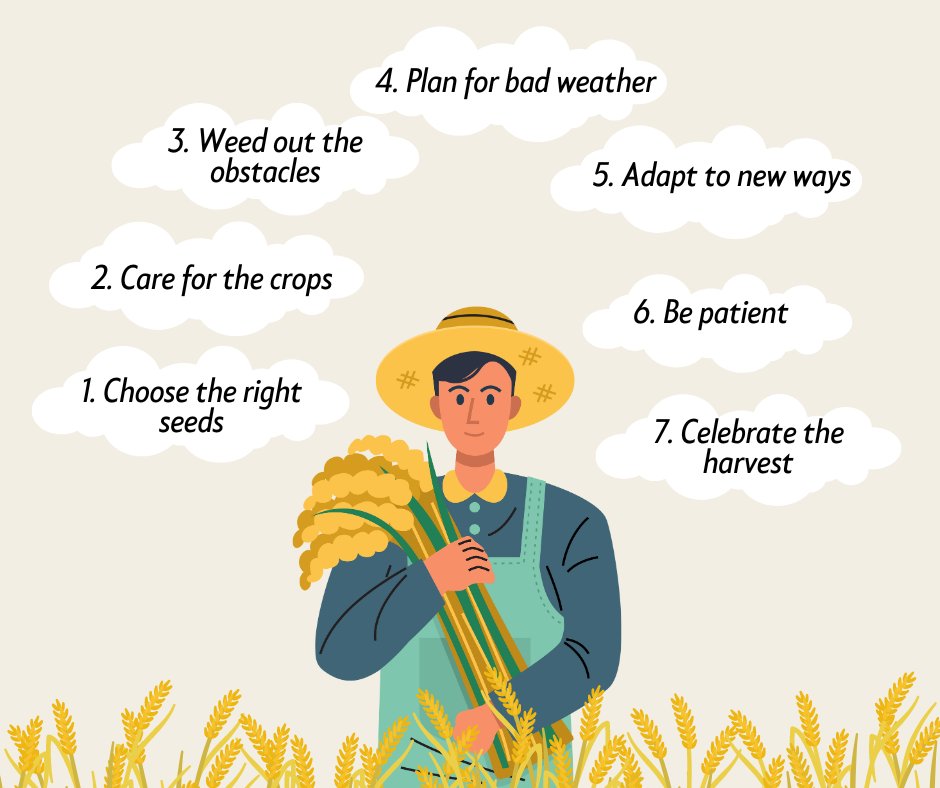
Think like a farmer.
But How do farmers think?
Farmers often think in ways shaped by biology, weather, time, risk, and resource management. While every farmer is different, some common patterns stand out:
1. Long-term thinking.
A farmer plants today for results months later. Decisions are often made with future harvests, next season, or even future generations in mind.
"If I do this now, what will happen in six months?"
"Will this improve the land over time?"
2. Working with nature, not against it.
Farmers can't command rain, sunlight, pests, or seasons. They focus on influencing what they can control and adapting to what they can't.
Control: seed choice, irrigation, fertilization, timing.
Adapt: weather, disease outbreaks, market swings.
3. Risk management.
Every crop or livestock operation involves uncertainty. Farmers constantly balance potential reward against potential loss.
Diversify crops.
Maintain reserves.
Avoid putting everything into one opportunity.
4. Observation before action
Successful farmers pay attention to small signals.
Changes in soil moisture.
Animal behavior.
Plant color and growth patterns.
Weather trends.
They often spend more time observing than outsiders realize.
5. Resource efficiency.
Resources are finite: land, water, labor, fuel, money, and time.
A farmer asks:
"Can I get a better yield from the same resources?"
"Is this input worth its cost?"
6. Systems thinking.
A farm is a connected system. One decision affects many others.
For example:
More livestock may require more feed.
More irrigation may increase costs.
Removing trees may affect erosion and water retention.
Farmers tend to think in relationships rather than isolated events.
7. Patience combined with urgency
This seems contradictory, but it's central to farming.
You must act quickly when conditions are right.
You must wait patiently for growth that cannot be rushed.
Miss planting season by a week, and you may lose a year. Plant today, and you may wait months to see results.
A simple farmer's mindset
When faced with a problem, a farmer might think:
What do I have?
What can I control?
What can't I control?
What's the most likely outcome?
What's my backup plan if things go wrong?
Will this still make sense next season?
In a broader sense, thinking like a farmer means being patient, observant, practical, resilient, and focused on sustainable results rather than immediate gratification.
3
8
136
Farmer EshPresh retweeted

Jun 13
The mindset of the farmer is the foundation of every Great farm.
Are you Knowledgeable in your field? Start selling your knowledge on eFarming.
Join the wait-list via eFarm.ing

5
10
133
Jun 12
We sacrificed what could have been funding for $EFARM to the Farmers Donation Wallet, not because it is convenient, but because we are intentional about what we want to achieve in the agricultural sector.
What we are doing is what the government is supposed to do consistently in rural communities.
Now, our Farmers Donation Wallet is currently holding over 2.8% of the total $EFARM supply, and the aim is to keep holding and accumulating until we achieve major milestones.
We are going to change the lives of a lot of farmers, but for now, the accumulation will continue. When EFARM turns one year old, the project will no longer take any percentage from trading. By then, we should have accumulated close to 5% of the total supply.
Imagine what 5% at a market cap of millions could do for farmers.
Every other funding comes from our own pockets.
We are not broke, but we are not rich either. We are just intentional about our mission.
It's a huge sacrifice, but we have to do it.
So far, we have seen three straight free listings that would normally require payment, and one of them came from Trust Wallet (logo and price integration).
Those who started with us should remember what I have always said:
"If you must follow the $EFARM-ers community, you must be extremely patient and sacrificial."
This means being part of this project requires patience and sacrifice.
This is our culture.
The gap we are bridging between Agriculture and Crypto is ACCESS.
Access to what?
Access to Freedom.
Freedom from what?
Freedom from Oppressors.
Who are the Oppressors?
The System.
May God grant you understanding.
3
7
17
497
Jun 12
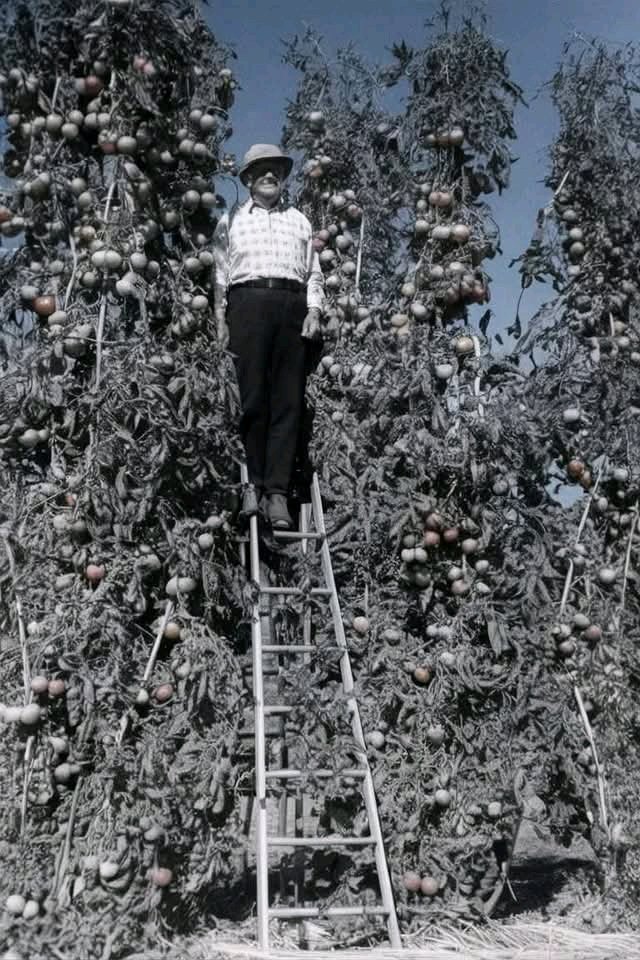
Charles Wilber, an Alabama native, made history with his extraordinary achievements in tomato cultivation. Wilber, who hailed from an agricultural background, became famous for setting world records for the most tomatoes produced per plant and for growing the tallest tomato plant ever recorded. His success in these endeavors was not just due to favorable weather or fertile soil; it was the result of meticulous attention to detail, innovative techniques, and a deep understanding of the plants he nurtured.
Wilber’s record-breaking tomato plant reached an astonishing height of over 28 feet, a feat that left even seasoned gardeners in awe. His ability to coax such extraordinary growth from a tomato plant was attributed to a combination of organic farming methods, careful pruning, and his unique "stake and weave" system, which provided optimal support for the plant as it reached for the sky.
But it wasn't just the height of the plants that impressed; Wilber also set records for the number of tomatoes produced per plant. One of his plants yielded over 1,300 tomatoes, a staggering number that demonstrated not only the plant's health but also Wilber’s skill as a gardener. He credited his success to organic practices, including the use of compost and natural pest control methods, which allowed his plants to thrive without the need for chemical fertilizers or pesticides.
Wilber’s achievements brought attention to the potential of organic gardening and inspired countless others to experiment with their own tomato plants. His legacy lives on in the gardening community, where his methods are still discussed and emulated by those aiming to push the boundaries of what is possible in home gardening.
1
3
12
225
Jun 12
Everybody talks about how Laszlo Hanyecz sold his bitcoins to buy pizza but nobody talks about Sturdivant who received the Bitcoin and what he used them for?
At the time, the coins were worth about $40, but Sturdivant spent them on travel and goods before Bitcoin's price surged to nearly $69,000 per coin in 2021. This means he missed out on what would have been a fortune worth around $690 million.
The lesson many people take isn't necessarily that investing is pointless because you'll spend the money eventually. Rather, it's that:
-The future value of an asset is unknowable in real time.
-Money is useful because it can be exchanged for things that improve your life.
-There is always a trade-off between consuming today and saving for tomorrow.
What's interesting is that both sides of the transaction are often viewed through hindsight:
Laszlo Hanyecz spent 10,000 BTC on two pizzas.
Jeremy Sturdivant spent the received BTC on everyday things.
Neither participant appears to have expected Bitcoin to become a trillion-dollar asset class years later.
3
15
322
Farmer EshPresh retweeted
Jun 12
The agriculture market is expected to surge from approximately $280 billion to $1 trillion by the end of the decade.
Agriculture Is Not Charity, It’s Smart Economics
$EFARM

1
6
15
290
Jun 11
It's Eat Alone, Dine Alone not Eat alone, Die alone.
And it suggests that it is far healthier to enjoy your own company than to settle for toxic relationships.
2
2
20
447