
EV & Auto insights and analysis from an engineer who’s seen both sides 🚗⚡ | 9 yrs (5 combustion, 4 eMobility) | Creator of eTechvolution
Joined August 2025
- Tweets 1,620
- Following 134
- Followers 300
- Likes 1,406
329 Photos and videos





Pinned Tweet

15 Aug 2025
I’ve spent 10 years inside the automotive industry, 6 in combustion engines, 4 in eMobility. 🚗⚡
From factories to charging sites, I’ve seen the shift up close.
This account is where I break it all down.
🧵 What you’ll find here:
1
5
2,988
OMG - it happened. Tears of joy today 😅
eTechvolution crossed 1,000 subscribers on YouTube
A milestone I wanted to reach in the 1st year. It took nearly 4.
Let’s see where this journey goes.
Maybe in 2030 I will post:
“Finally reached 2,000 subscribers.” 😂
1
3
34
Jun 11
What the world’s largest electric truck charging site looks like. 🇨🇳
100 MW, 700 trucks/day, 300,000 kWh/day at peak ☠️
I visited this site in Beichuan, Sichuan, around 200 km north of Chengdu.
Stage 1: (installed)
126 charging spots
108x 600 kW charging plugs
18x 1.44 MW chargers
Stage 2: (planned)
33x 1.44 MW chargers
And honestly, the numbers are not even the most interesting part.
The real story is the operating model:
Predictable regional truck routes.
Middle mile logistics.
Infrastructure built around how the trucks actually work.
That is where electric truck charging starts to make sense.
Full walkaround video is now live: 👇
1
2
3
139
Jun 11
2nd teaser of the upcoming video on electric truck charging from China.
Also a short warning - you have to plan 26 mins for it. 😄
1
1
70
Jun 11
If you are wondering, what is this about
x.com/etechvolution/status/2…
Jun 10

This is what the world’s largest electric truck charging site looks like. 🇨🇳
100 MW! 🤯🚛
I am not going to spoil the details today. 😅
But I will say this:
seeing this site and ambition in person was something else.
Full video tomorrow.
59
Jun 10
This is what the world’s largest electric truck charging site looks like. 🇨🇳
100 MW! 🤯🚛
I am not going to spoil the details today. 😅
But I will say this:
seeing this site and ambition in person was something else.
Full video tomorrow.
1
203
Jun 10
BYD approved the first ADAS - City NOA crash liability claim in 48 hours. But, the driver says she will probably never use City NOA again.
Here is why that matters more than the payout.
The accident happened on Denza Z9GT, one day after the liability pledge announcement, while God's Eye B was active and already upgraded to SW 5.0.
The passenger braked manually after the collision, which triggered the override. BYD reviewed it, confirmed coverage, paid.
Her quote: "The whole process was smooth. No arguing."
Perfect PR. Except she is a new driver and says she cannot anticipate risk or intervene fast enough in city traffic. Her partner, 15 years of experience, may still use ADAS but only on highways. Not City NOA.
This is the real ADAS trust problem. Liability covers repair. It does not cover fear, stress, or the feeling that the car decided something you were not ready to manage.
BYD paid. The customer may still quit the feature.
If BYD had refused, who knows, a customer might have quit the brand.
Liability convinces people to try ADAS once. Trust decides whether they ever turn it on again.
Interested in the details how BYS City NOA Claim works - read the article below 👇
118
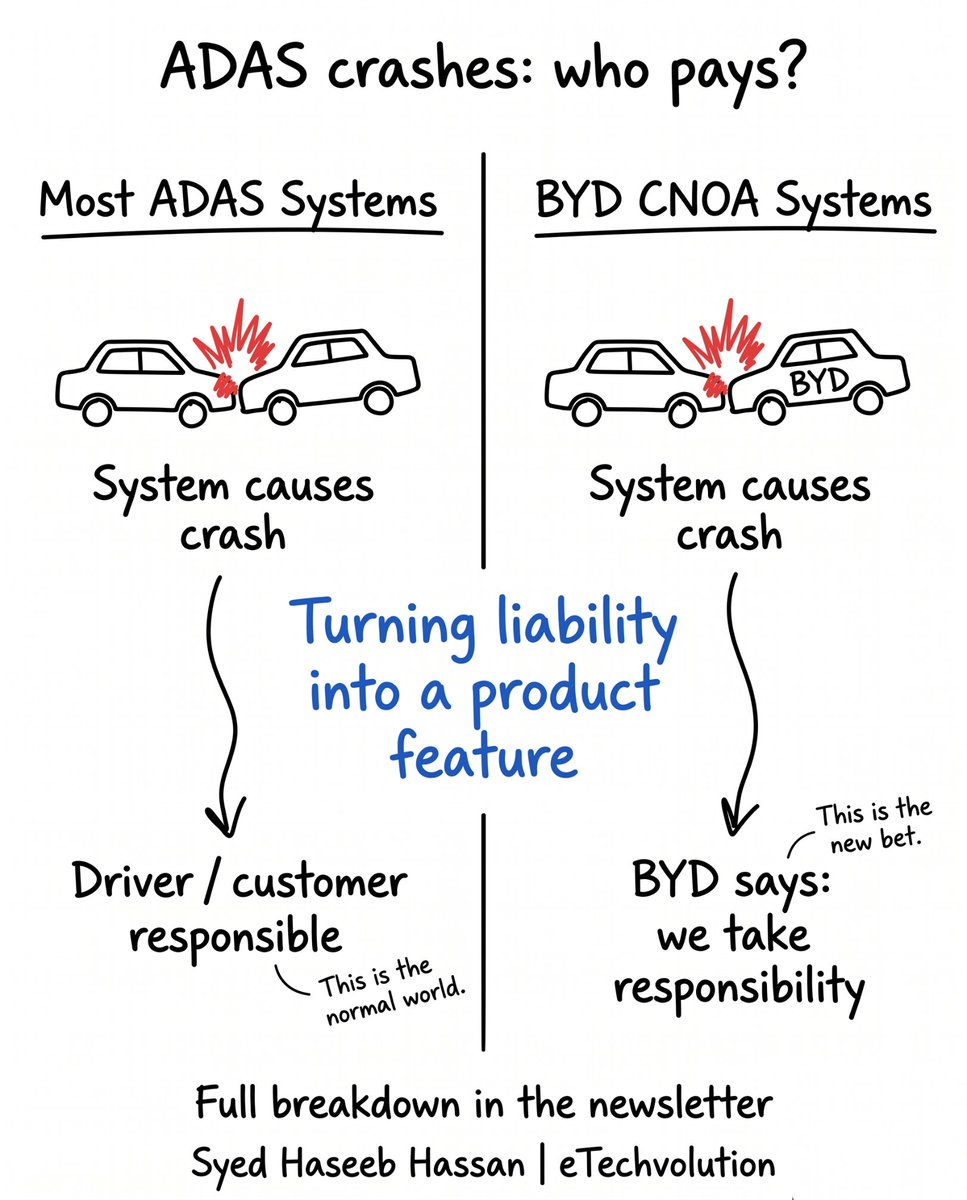
BYD just turned liability into a product feature.
Most ADAS announcements talk about sensors, chips, lidar and computing power. BYD is answering a more uncomfortable question: if the system causes a crash, who pays?
Last week, BYD announced a one-year liability pledge for City NOA on God’s Eye A and B. If the system causes a crash and BYD’s review confirms it, BYD says it will cover the loss in full: repair, third-party damage and injury. No upper limit.
For a system still legally Level 2, that is bold.
Of course, it is not airtight. The high-volume base C tier is excluded, it is China only, the driver still has to monitor the road and after an accident, BYD runs its own technical review. That is where the grey area begins.
But strategically, this still matters. Most customers do not think in L2, L3 or L4. They think in one question: if the system gets it wrong, who pays?
BYD just gave the market an answer.
The feature is not autonomy. The feature is confidence.
Would you trust an ADAS system more if the maker paid when it failed, or would the grey areas still hold you back?
1
1
115
Read the detailed newsletter here.
If you like it, considering subscribing. Currently 2,650 industry professionals read it.
etechvolution.com/p/byd-adas…
1
52
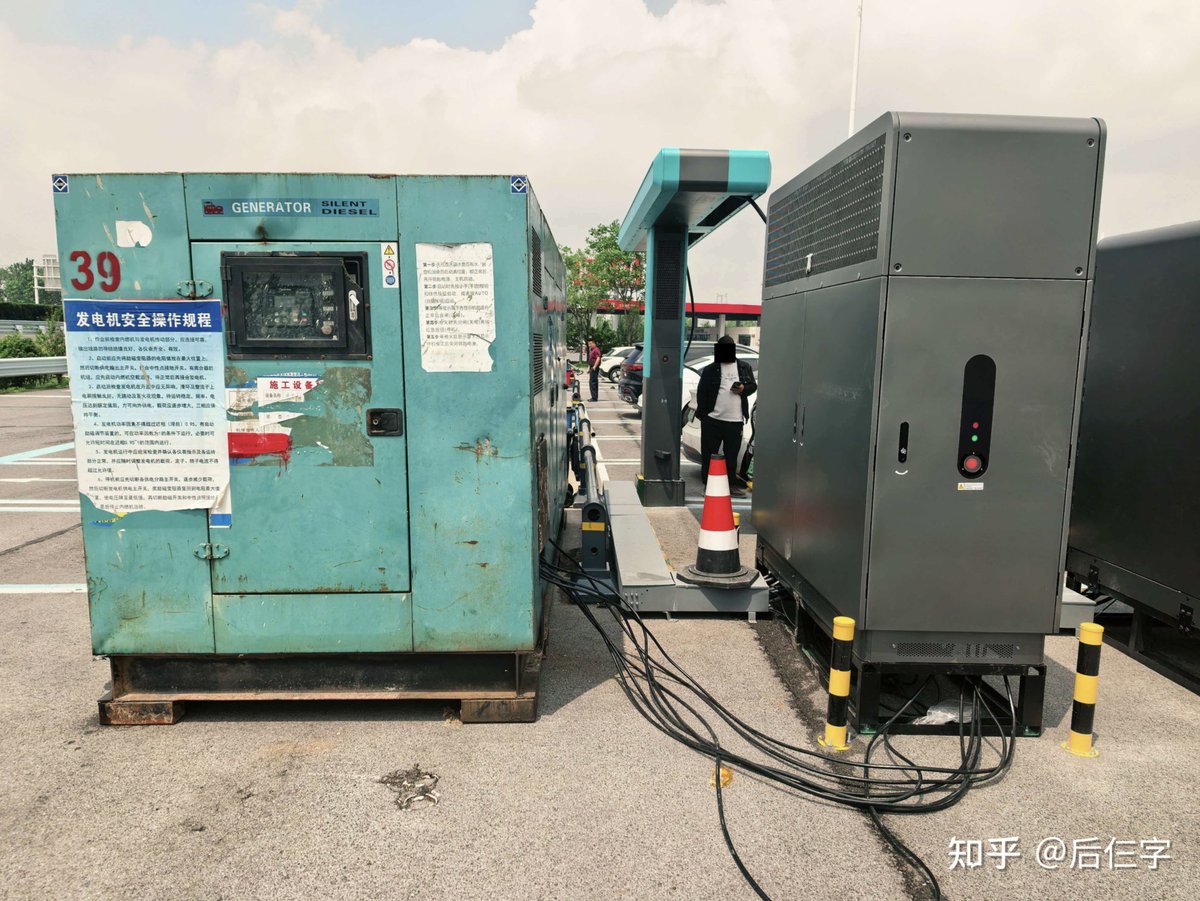
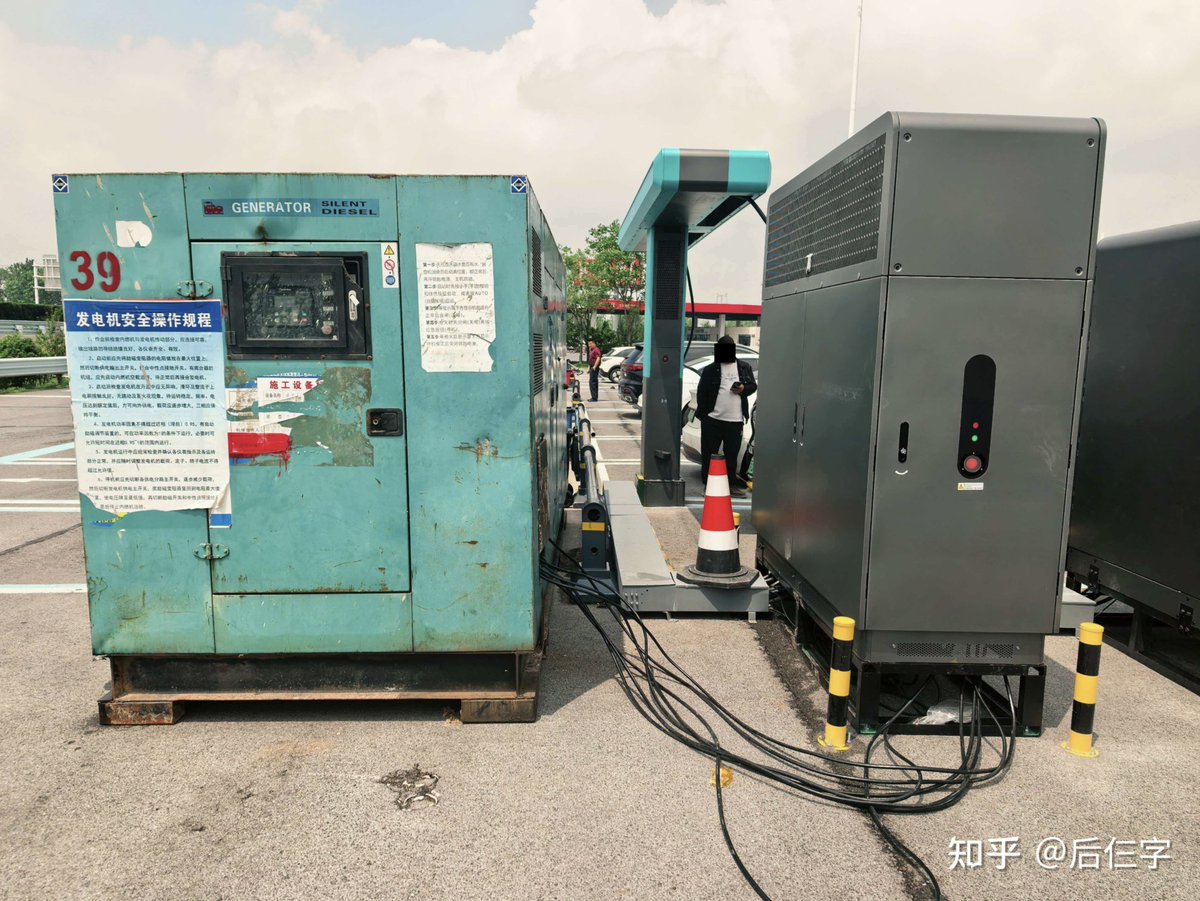
A BYD Megawatt Flash Charging site, temporarily powered by a diesel generator, sounds ironic.
But I think the more interesting message is the deployment behavior.
I came across this example from China, reportedly from a BYD flash charging station on the Beijing-Shanghai highway.
My assumption is that the grid connection or cabling was still pending.
Is it ironic? Yes.
Is it also very Chinese execution speed? Absolutely yes.
Because the important part is this:
The energy was delivered.
The charging screenshot showed:
→ Start SOC: 22%
→ End SOC: 30%
→ Charging time: 13 minutes
→ Energy delivered: 8.56 kWh
→ Added range: 87 km
→ Average power: ~39.5 kW
→ Paid by user: ¥0.00 (perhaps due to 1 year free charging credits)
Of course, this is not the 1,000 kW headline people associate with BYD flash charging.
But that is exactly why it is interesting.
China’s EV infrastructure rollout often seems to follow a different sequence:
Deploy first.
Use temporary workarounds.
Get real usage.
Improve later.
West usually waits for cleaner execution and more site maturity before rollout.
Neither model is automatically right.
But they produce very different speeds.
Peak kW gets attention.
Deployment behavior is the real signal.

2
2
7
1,140
I write about EV charging infrastructure, automotive strategy, and China/EU market signals here:
Newsletter (2,650 subscribers) e-Mobility consulting
etechvolution.com/
164
BYD says it will pay if its City NOA (Navigate on Autopilot) system causes a crash in China.
When I first read that last week, I thought, this can't be true. There has to be a catch.
There is, actually a few.
But the catch is not the most interesting part. The interesting part is what BYD is really testing here:
Can responsibility become an ADAS feature? Not the features or performance, but responsibility.
If the system gets it wrong, who pays?
I broke down the BYD pledge, the fine print, the small asterisks* and why this could become a much bigger signal for the global ADAS race.
Full newsletter below. Subscribe to join the 2,550 industry professional reading my newsletter 👇
etechvolution.com/p/byd-adas…
165
May 31
Tomorrow I'm giving a guest lecture at KIT Karlsruhe, one of Germany's top technical universities, to a room of industry experts.
Topic: Where Germany's EV and charging market actually stands, and where it goes by 2030.
Time: 14:30 - 16:00.
The starting point is simple.
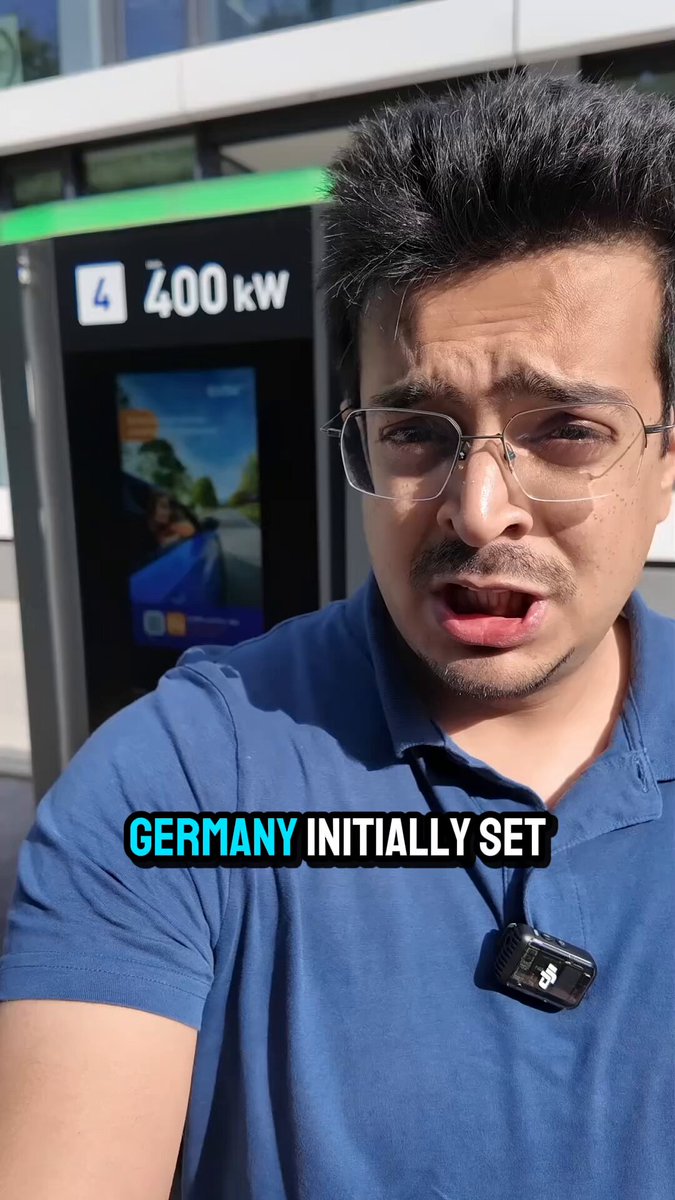
Germany originally targeted 15 million electric vehicles and 1 million public charge points by 2030. But we are now in 2026, and the reality is roughly: 2.1 million electric vehicles
and 200,000 public charge points.
So yes, Germany is behind and the numbers have been revised. But for me, the bigger question is not whether the target was realistic.
The bigger question is: Why did the market move at this pace? That is what I will discuss tomorrow. I will cover:
- how Germany’s automotive and EV market developed
what role subsidies played
- why company cars matter so much
- why public charging prices are so chaotic
- which charging use cases are already well established
- what I expect for EVs and charging infrastructure by 2030
The session will be in German and also available online.
If you want to join, let me know and I will share the webinar link. Also, if you are interested in an English version, let me know as well.
Looking forward to meeting you tomorrow or exchanging online after the session. Thank you!
2
2
150
May 30
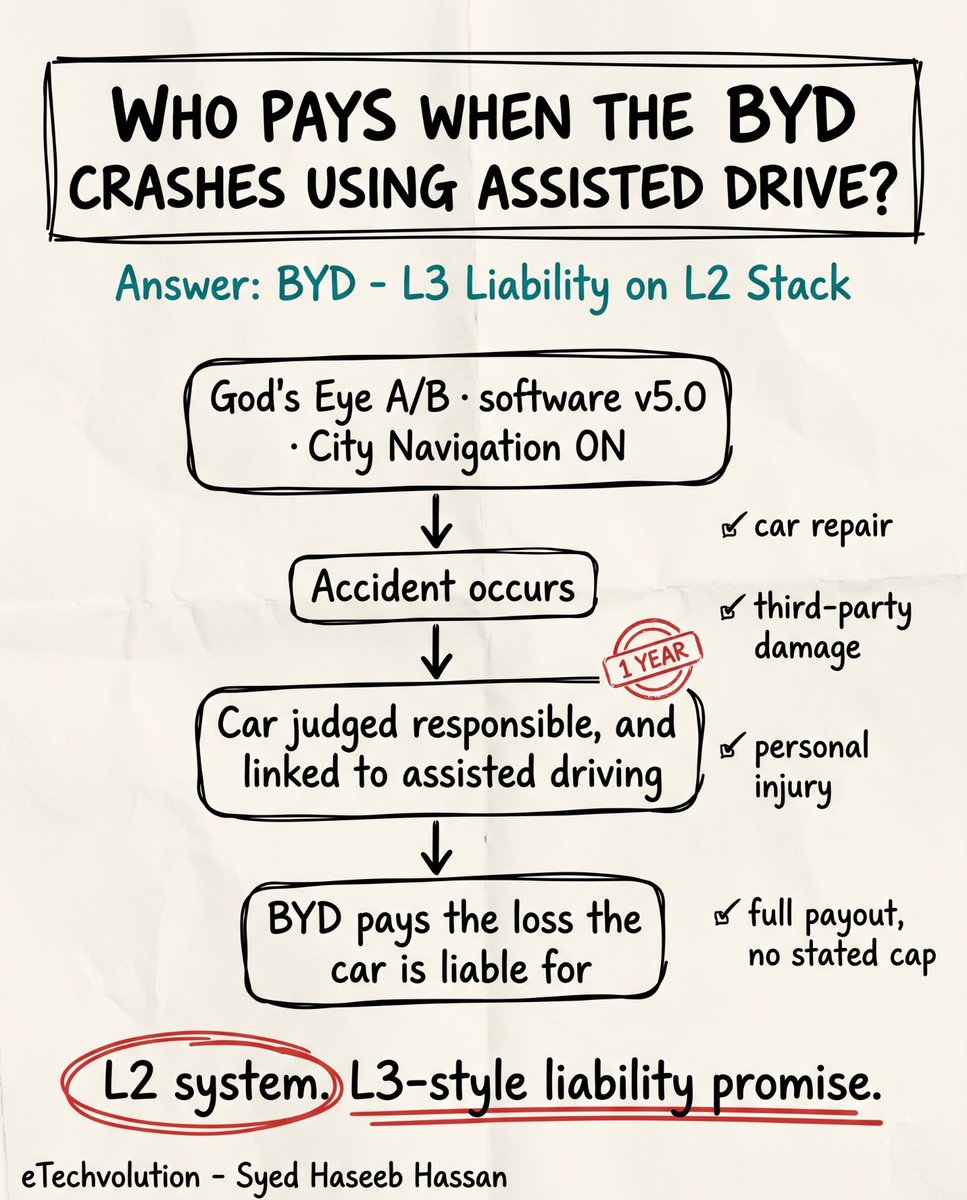
BYD will pay for the crash its assisted driving causes. Not the driver.
In Level 2 systems, the legal burden stays with you. Remain present, concious, eyes on and ready to take control and if it fails, it is your problem.
BYD says it is testing the opposite.
God's Eye is BYD's driver assist system. A and B are its LiDAR-equipped tiers
that handle city driving.
For these users in China, BYD says: if the car is judged responsible and the crash is linked to its assisted driving, it will cover the direct economic loss for 1 year. Which means vehicle damage, third-party damage, personal injury. Full payout, no stated cap and this was the thing, that was the hardest for me to believe. I had to find multiple sources, to confirm this. 😅
This is not an insurance product. It is a manufacturer putting its balance sheet
behind its own software and this speaks extreme level of confidence in its technology.
While researching for it, I realized that BYD has done this before. It backed automated parking the same way in 2025, and as per reports, the parking feature use jumped from 21% to 93%.
Furthermore, there are already 3 million assisted driving BYD cars already on the road. They have plenty of data to develop their future technologies.
As a summary - on paper this is still Level 2 but commercially, BYD is taking L3-style responsibility.
I think the debate will change. Currently people ask how good these systems work and their questions are valid. I posted last year a footage of Xiaomi SU7 falling in a pond while being put in auto parking. (read the post as I explain the fallacy of composition and why it wasn't a failure really) 👇
x.com/etechvolution/status/2…
But now if you consider the chinese customer preferences and China Speed along with this BYD liability promise, the future looks really bright for BYD.
This will force local competition to match and at the end, it is only going to benefit the end consumers and enable autonomous driving leadership for Chinese OEMs at an even faster pace.
While the rest of world debates who is responsible, BYD turned it into a sales feature.
Would this make you trust assisted driving more, or ask harder questions?
___
Hi, I am Haseeb
Automotive & E-mobility Consultant - Services 👇
etechvolution.com/consulting
I write a newsletter about what I see on the ground in EV, charging and automotive, for 2,550 readers. 👇
etechvolution.com/
17 Dec 2025
One car in a pond doesn’t mean the industry is sinking. (But imagine if this was a European car...)
We need to talk about this video without falling into a trap.
There is a concept explained by economist Thomas Sowell called the Fallacy of Composition. It’s the error of assuming that what is true for a part must be true for the whole.
We make this mistake constantly in the Automotive & EV debate.
We see a brilliant Chinese car review and assume the entire industry is flawless. Or, we see a video like this, a car trying to park itself into a pond, and assume the tech is just dangerous hype.
Both views miss the real story.
I’ve written before that China’s competitive edge isn’t just investment or engineers. It is the consumer's mindset.
The failure you see in this video? In China, that is often the calculated cost of speed. And the consumers accept it.
The "Innovation Loop" Difference:
1. China: Incremental & Agile Chinese consumers are unique. They are:
✅ Tolerant of novelty and early mistakes
✅ Passionate about change
✅ Willing to pay for "beta" tech
✅ Far more open to autonomous driving (61% Robo Taxi acceptance vs 24% in Germany)
This creates a powerful loop:
Companies launch bold products faster → Consumers adopt and provide data → Companies iterate immediately. They don't wait for perfection; they improve incrementally on the road.
2. Europe: Disruptive & Cautious In Europe, we often get stuck in the "R&D Trap."
We wait for disruptive innovation, technology that is 100% proven and perfect, before we let it near a public road. We start with ultra-luxury models (S-Class, 7 Series) because the massive R&D costs make the tech too expensive for a €35k car. We wait years for it to trickle down. By the time it does, the opportunity for mass data collection is lost.
The Takeaway
Yes, Chinese EVs are absolutely price competitive and leading on tech. There is zero doubt. They will learn from this failure and improve tenfold, leveraging development cycles they’ve already shrunk from the industry standard of 4-5 years down to just ~2 years.
But if a European car manufacturer did this... the brand would be crucified. We demand perfection.
Let’s stop blindly bashing our own industry based on viral clips, but let’s also stop ignoring why we are slower. We are playing a game of "Perfect & Proven" in a world that is rewarding "Fast & Iterative."
EU OEMs don't need to lower our safety standards, but they absolutely need to speed up their development and test cycles.
The real question for EU Consumers / Policy Makers:
- Are we willing to adapt the Chinese Consumer Mindset?
- Could deregulating (or shifting our own mindset) have a similar impact for the automotive industry in Europe?
- Or are we too culturally risk averse to catch up?
1
81
May 30
Pony AI - Autonomous Truck breakdown. 9 LIDARs, 13 Cameras and Swappable Battery 👇
May 29
We all talk about self-driving cars. Almost nobody talks about self-driving trucks.
I just spent time next to one in China (Autoshow Beijing)
Days earlier I rode a Pony AI robotaxi in Beijing. No driver, no safety operator. Impressive. But the robotruck is the bigger business story.
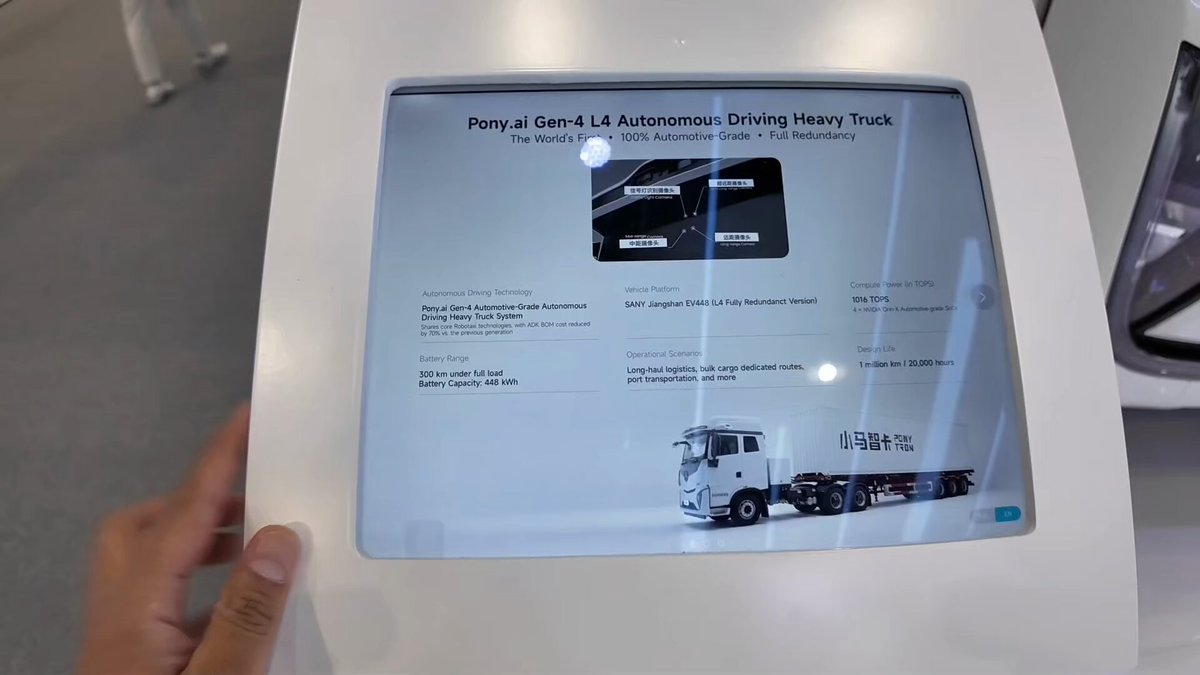
It's a Sany Jiangshan EV448 (L4): 9 LIDARs, 13 cameras, 3 radars, front vision out to 650 meters. Serious hardware.
But the hardware isn't the interesting part. The use case is.
Pony AI is targeting mining routes in northwest China. 20 to 30 km from mine to plant. Low traffic. Thin infrastructure. The same route, every time.
That is where autonomous trucks don't need to be perfect yet.
The energy model surprised me too. Either swap the battery or charge with up to two cables.
So China isn't trying to crack public highway autonomy first. It picked the place where the problem is already solvable: mines with repeatable routes.
That may be where freight autonomy actually pays off first.
Full walkaround in this video 👇
#PonyAI #AutonomousTrucks #ChinaEV #SelfDriving
1
120
May 29
We all talk about self-driving cars. Almost nobody talks about self-driving trucks.
I just spent time next to one in China (Autoshow Beijing)
Days earlier I rode a Pony AI robotaxi in Beijing. No driver, no safety operator. Impressive. But the robotruck is the bigger business story.
It's a Sany Jiangshan EV448 (L4): 9 LIDARs, 13 cameras, 3 radars, front vision out to 650 meters. Serious hardware.
But the hardware isn't the interesting part. The use case is.
Pony AI is targeting mining routes in northwest China. 20 to 30 km from mine to plant. Low traffic. Thin infrastructure. The same route, every time.
That is where autonomous trucks don't need to be perfect yet.
The energy model surprised me too. Either swap the battery or charge with up to two cables.
So China isn't trying to crack public highway autonomy first. It picked the place where the problem is already solvable: mines with repeatable routes.
That may be where freight autonomy actually pays off first.
Full walkaround in this video 👇
#PonyAI #AutonomousTrucks #ChinaEV #SelfDriving
1
1
2
233
May 28
The next Chinese auto story in Pakistan may be trucks. Not cars.
In April, I spotted a Dongfeng tanker at a Byco gas station in Karachi.
That caught my attention because it was the first Chinese heavy truck I had personally seen in Pakistan.
So I checked PAMA's 8-month cumulative heavy truck data:
Jul 2024-Feb 2025 vs Jul 2025-Feb 2026
→ JAC: 281%
→ Master: 140%
→ Isuzu: 65%
→ Hino: 30%
Japanese brands still hold 63.9% combined share among these listed brands.
So no, they are not losing the Pakistani truck market on volume yet.
Not yet.
But the growth curve is tilting Chinese.
Dongfeng is not even in PAMA's table yet. That is why this small Karachi road signal stood out.
Really curious what this table looks like next year.
Source: PAMA, Production & Sale Data of Vehicles, February 2026.
1
80
May 26
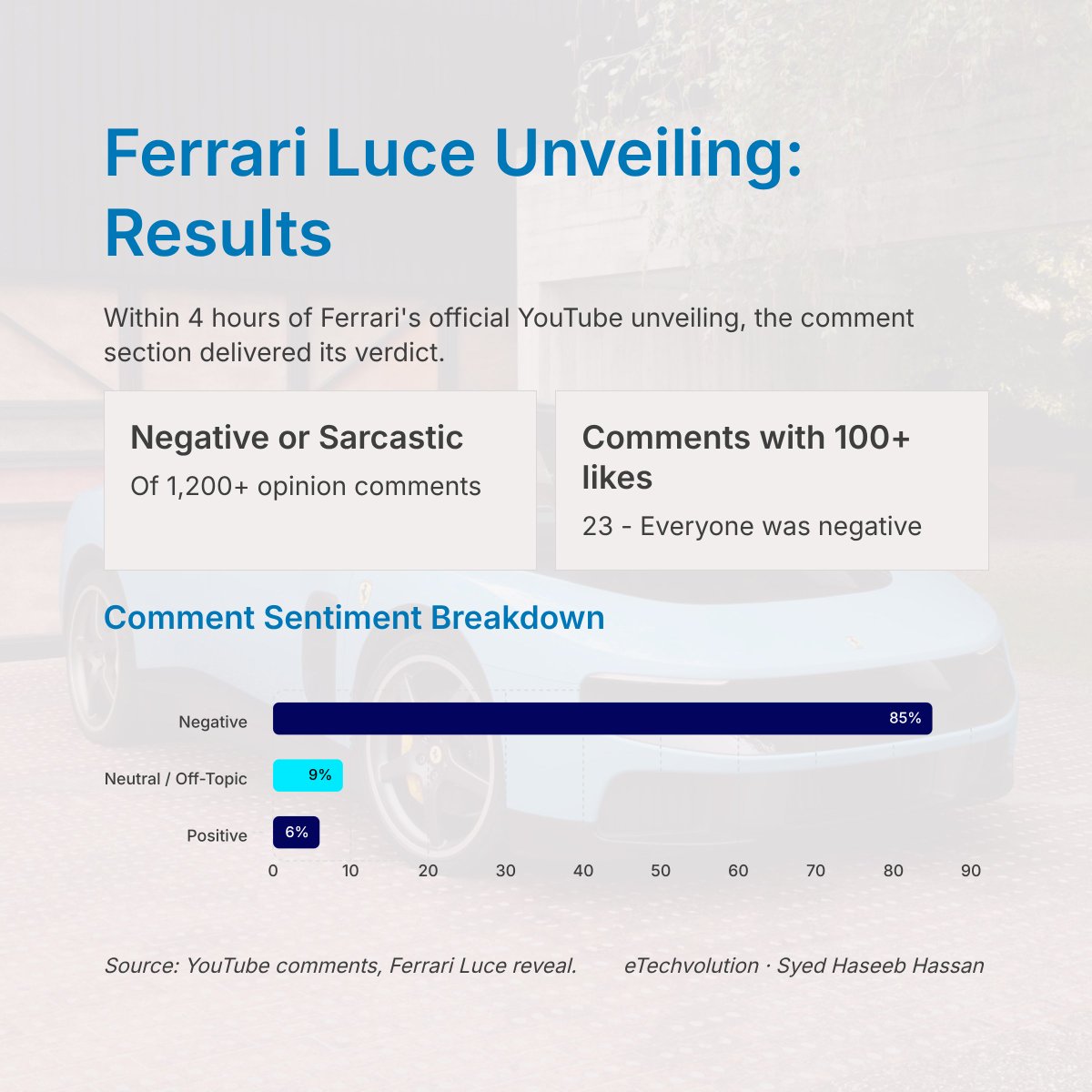
Within 4 hours: 85% of 1,400 comments were negative. Ferrari just stirred up some serious emotions. 👀
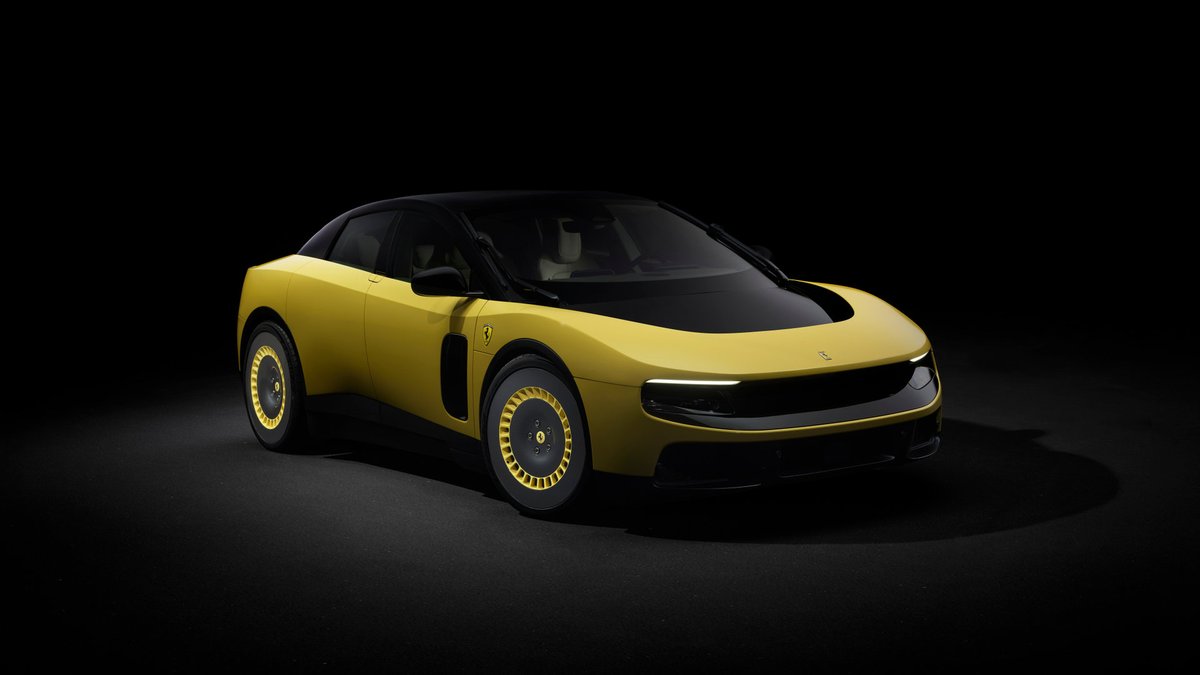
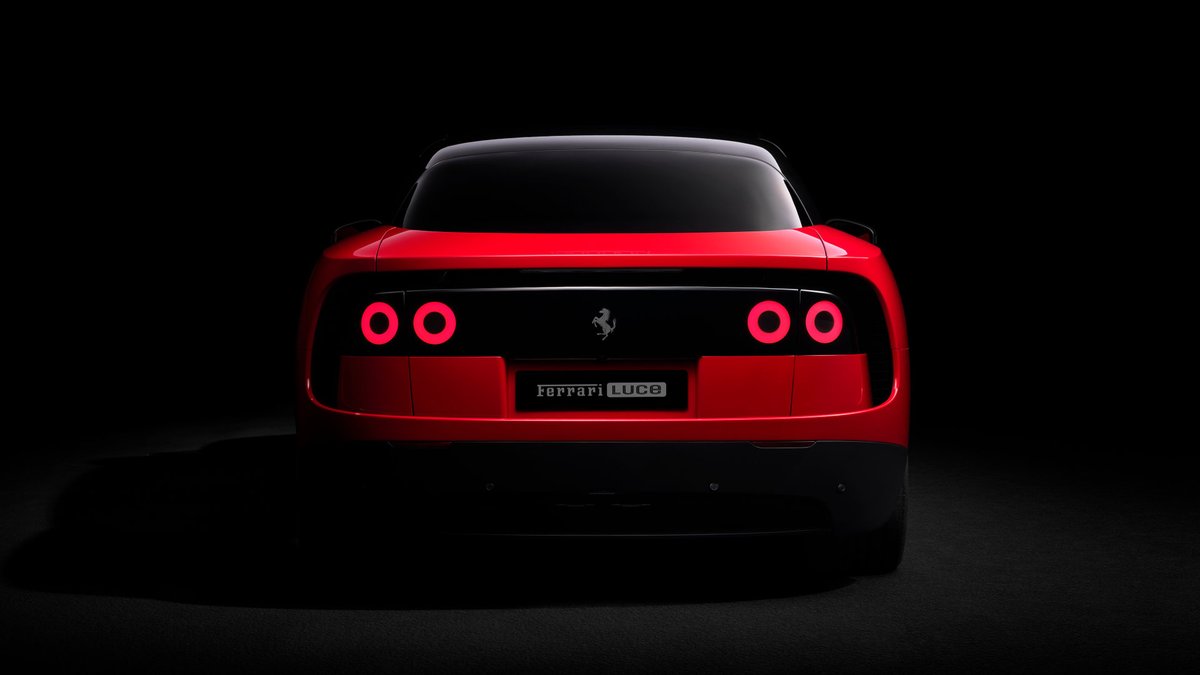
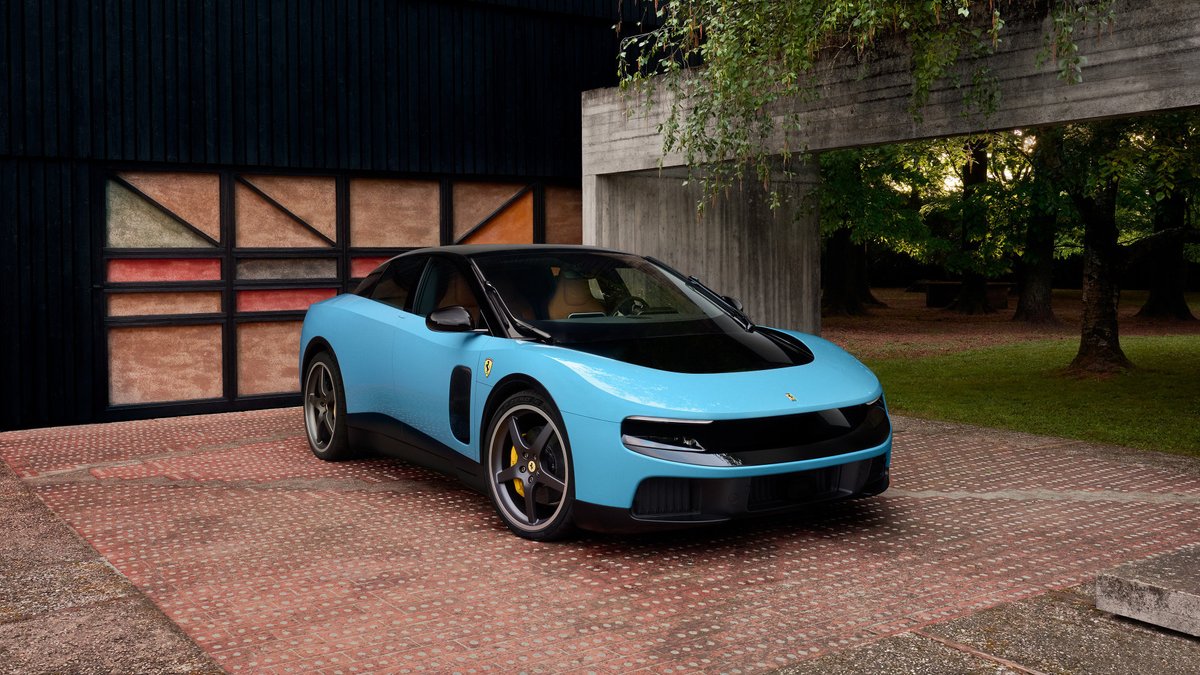
Ferrari's first EV. A four door Ferrari. Expected price: around $640,000.
I am not going to discuss the interior or the technical specs. I am still stuck on how to process this exterior design.
So I went to Ferrari's own unveiling video and analyzed the comments.
Staggering 85% were negative or sarcastic. Only 6% were genuinely positive and 7% were off-topic or unclear.
This reaction is emotionally driven. We all grew up watching Ferraris, dreaming of owning one, playing with toy cars as kids.
Over the next two weeks, we will probably see all of it: passionate rants, design debates, memes, podcast clips, endless hot takes. 😅
Maybe that is exactly the reaction Ferrari wanted from their first EV. If it is, I am not sure that is the right strategy.
To be fair, they had real constraints. Battery placement alone changes the proportions you can work with on a car like this.
Where do you stand on this design? 😄
1
1
93
May 26
Here is the video: Check out and don't worry, if you only hear the audio in left ear 😅
youtube.com/watch?v=Gf2TI6tf…
48