
Joined July 2017
- Tweets 4,758
- Following 1,638
- Followers 1,069
- Likes 4,295
532 Photos and videos
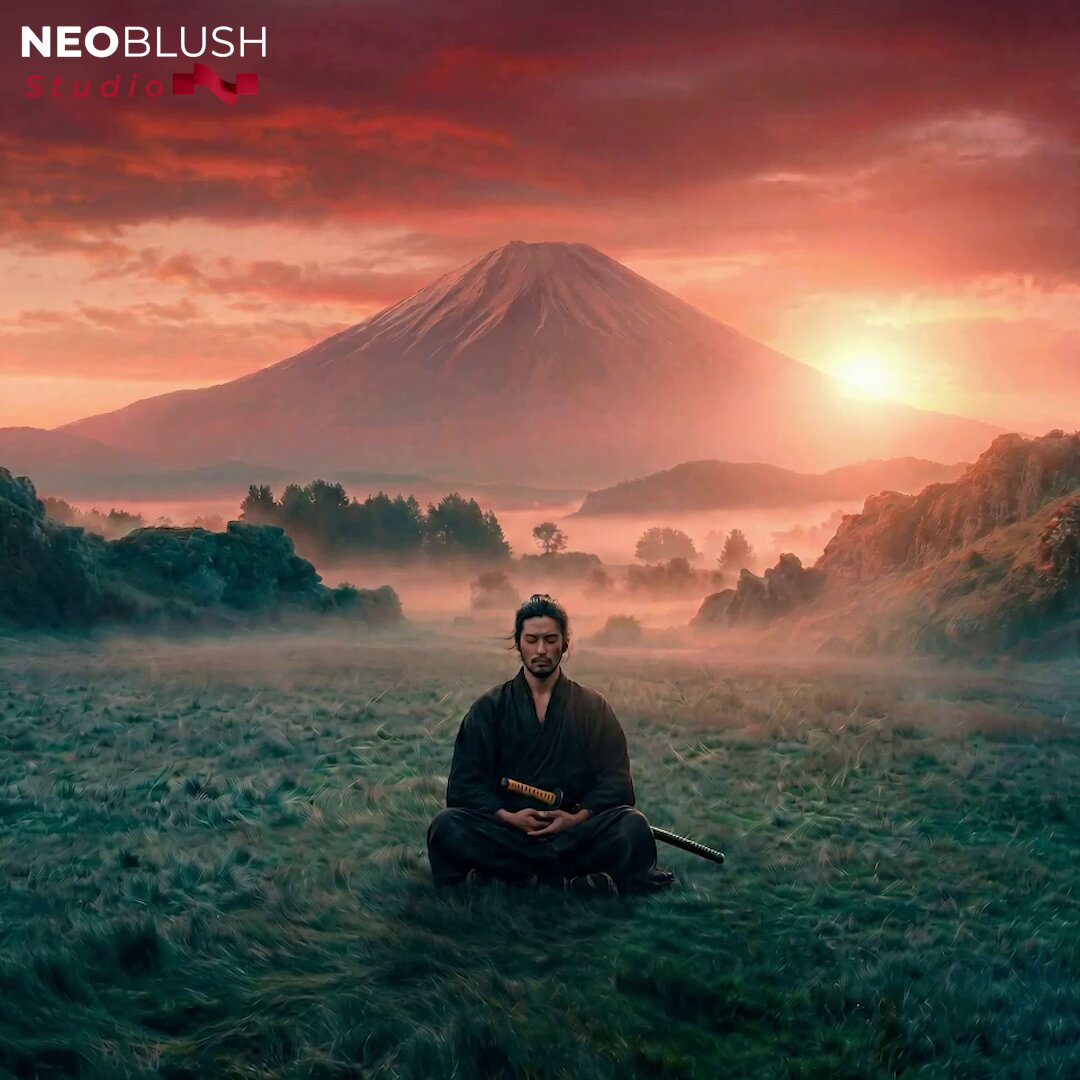

Pinned Tweet

Mar 6
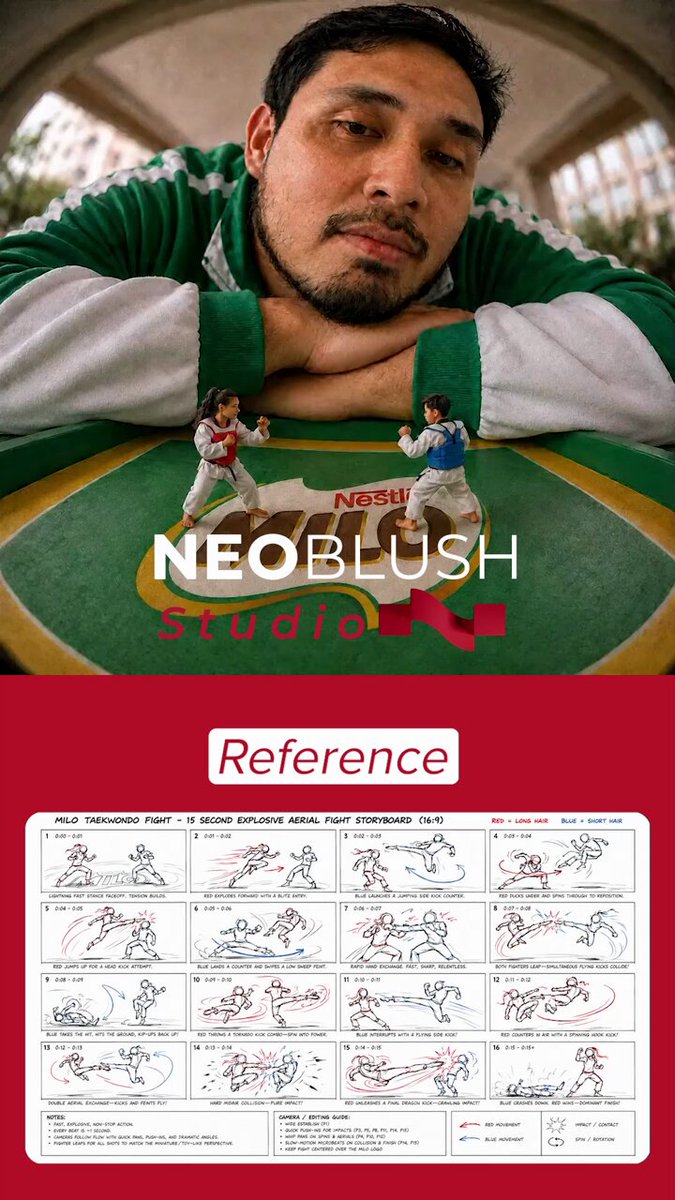
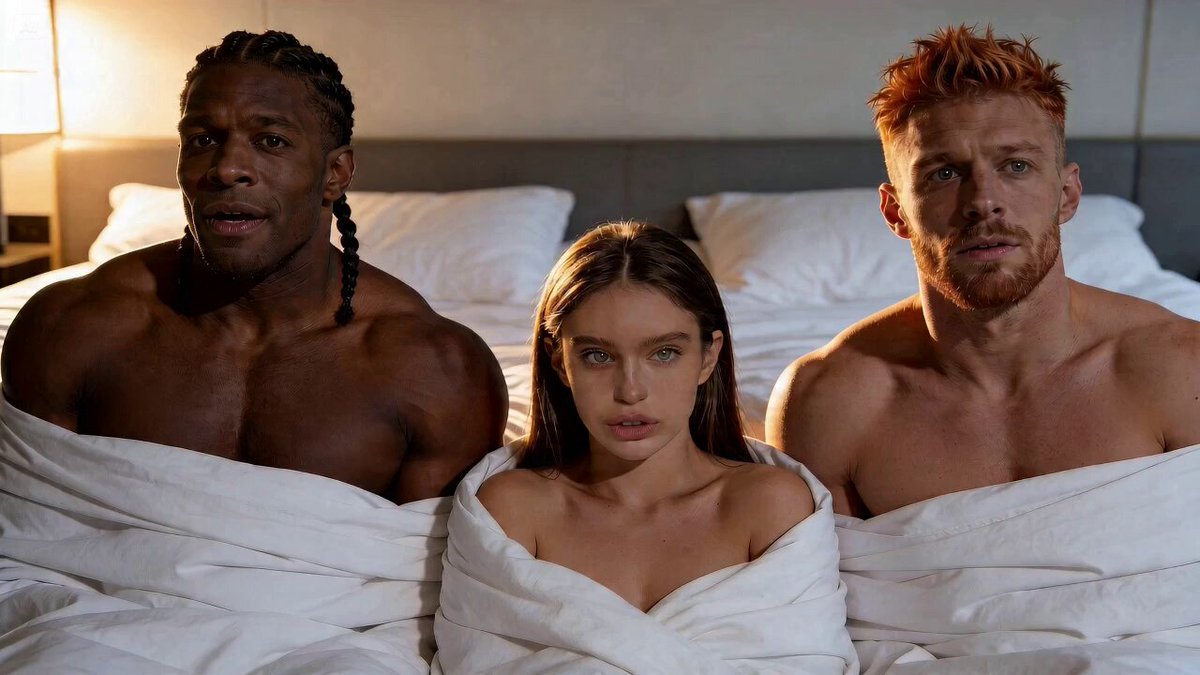
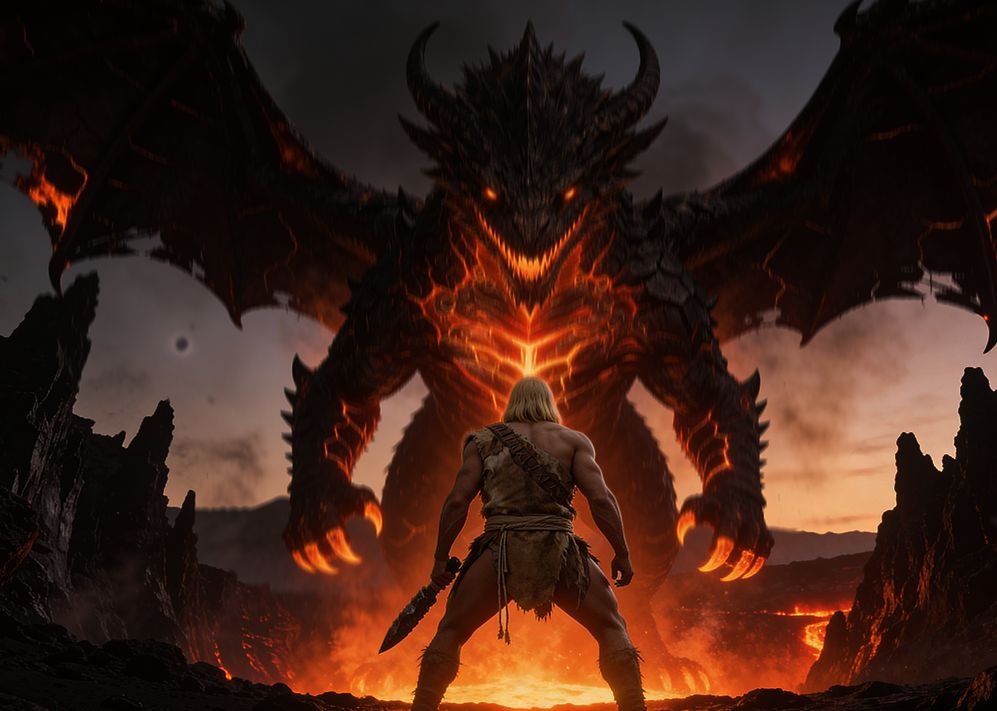
Them: You call that 💩 an ad?
Me: Wait till the end 😏
Them: *watches video* 🤯🔥
@firstwefeast
@seanseaevans
8
280
Jun 14
Omni-Reference on Seedance is so much fun.
It doesn’t follow the reference 100%, but it gives you enough control to pull off stunts that text prompts alone usually can’t.
Powered by @dreamina
#DreaminaCPP
29
Jun 14
Imagine losing to your grandpa in fitness.
Spec ad for FLIP 7, made with Seedance 2.0 on @dreamina_ai.
#DreaminaCPP
27
May 16
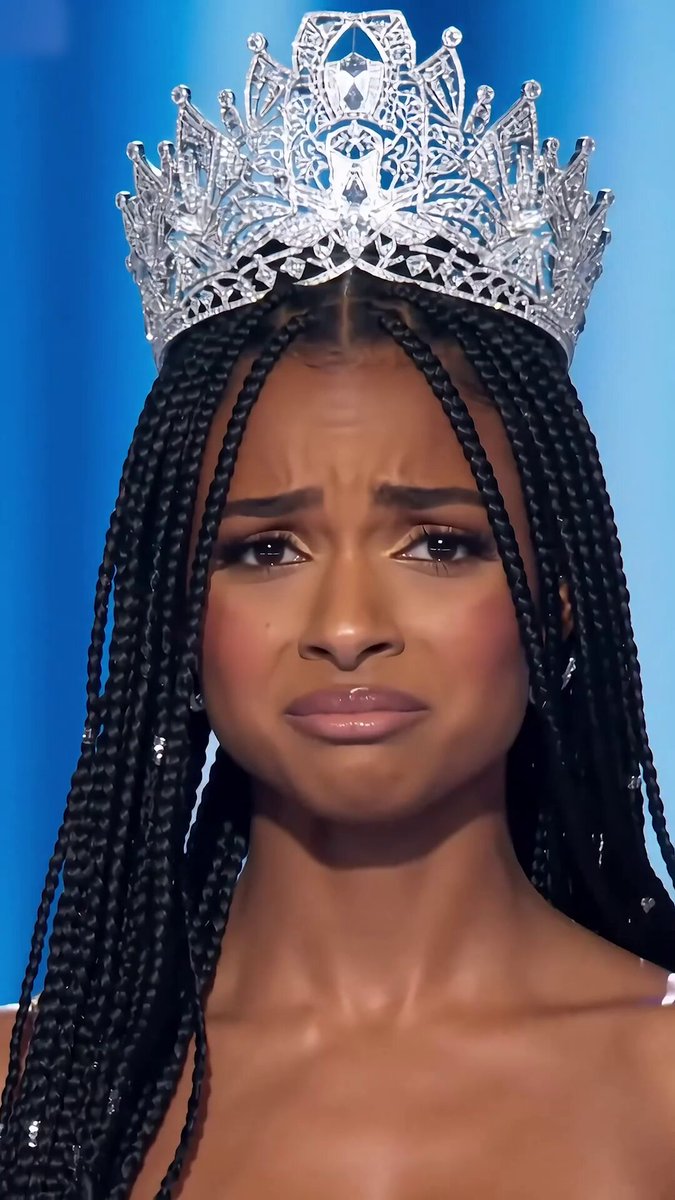
True Sea Moss spent $1M to showcase its product in the Queen of the World Pageant.
For that kind of investment, you’d probably ask: “What’s the ROI?”
I'd say probably a lot.
Because True Sea Moss didn’t actually spend $1M.
This is not a real pageant.
The venue. The crowd. The actors. They're not real.
It’s all AI.
And it’s getting dangerously real.
Be honest: would you have known if I didn’t tell you?
What interests me is that with the right thumbnail and caption, an ad like this can perform like viral organic content and make the product stick out in people's minds. Without the costs of traditional advertising.
@thetrueseamoss
Made with Seedance 2.0 on @dreamina_ai #DreaminaCPP
51
May 16
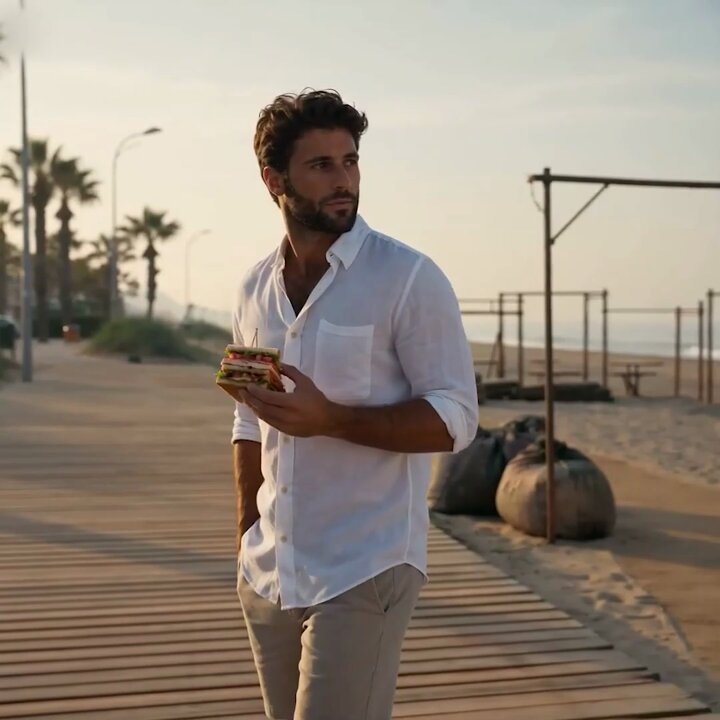
It took 3 minutes to “make” this Reel ad for @Karvivawellness
Sounds easy, right?
But the real work happened before that:
- 1 day to develop concept & script.
- half day to design the character, environment, and references.
The final shot was built from those inputs.
Only the prompt took 3 minutes because we have templates for that.
For me, the goal isn’t just making an AI video look good, but serving a business outcome. In this case, we’re aiming to bring more page visits to Karviva’s landing page.
Anyone can prompt. But the value comes from the idea behind the prompt.
Made with Seedance 2 on @dreamina_ai
#DreaminaCPP
37
May 4
Would you buy @Gillette razors if their ads looked like this?
AI made production stupidly easy. So now we get:
more videos
more ads
more noise
The real gap is the idea.
A razor ad can show a man shaving.
Or a samurai splitting a volcano in half to prove sharpness and control.
Unfortunately, this idea looked more interesting in my head than in reality.
This one is too boring. And I wasted credits.
Well, this is life. We live and we learn. Fck.
77
Apr 24
I made a Zara spec commercial despite knowing almost nothing about women’s fashion.
This is way outside my comfort zone.
I basically just picked the sleekest pieces I could find from Zara’s catalog based on my probably incompatible male taste 🤣
Women will probably laugh at some of my choices, but I’ve had some success lately with female-targeted products, so I figured, why not?
Made with Seedance 2.0
@dreamina_ai
#DreaminaCPP
170
Apr 20
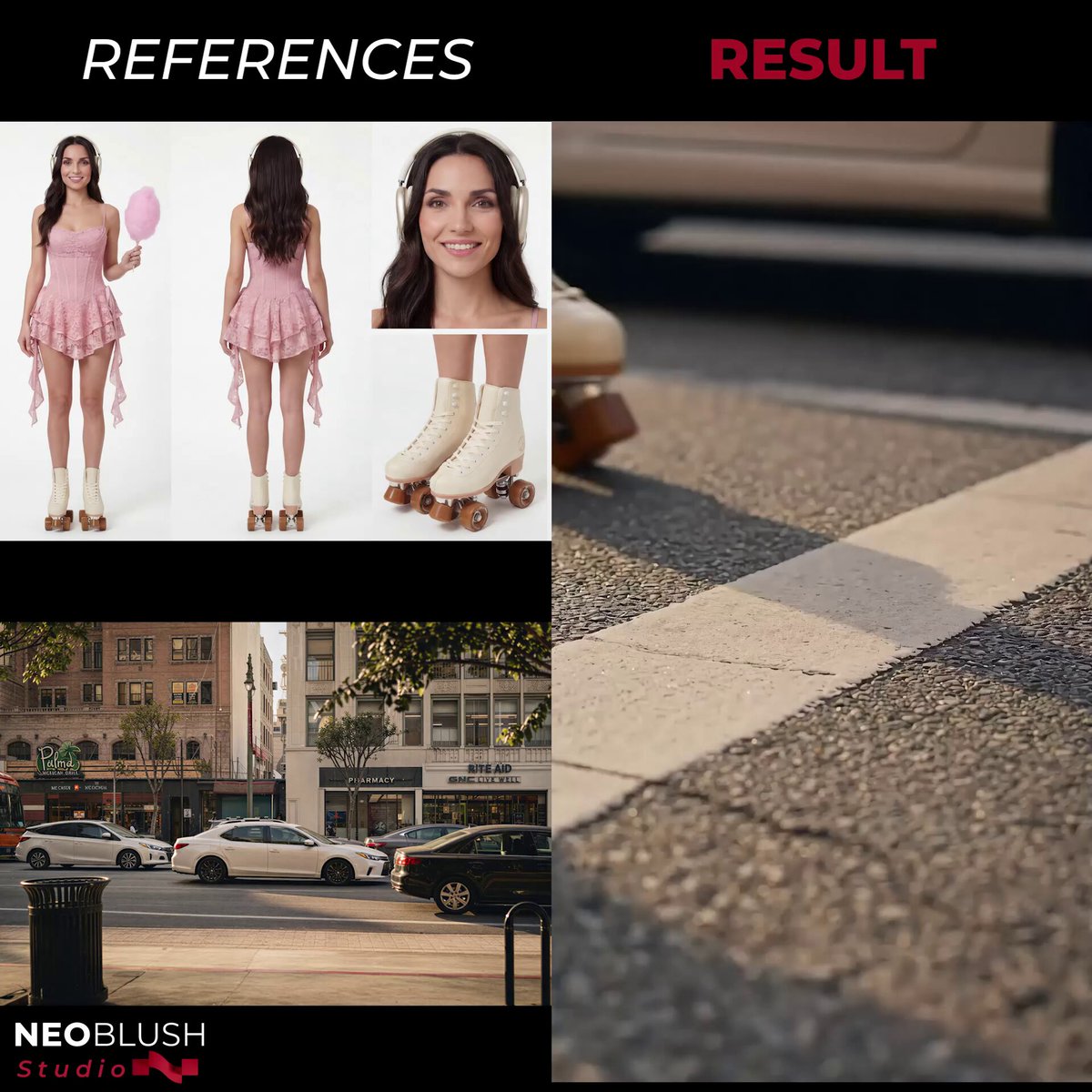
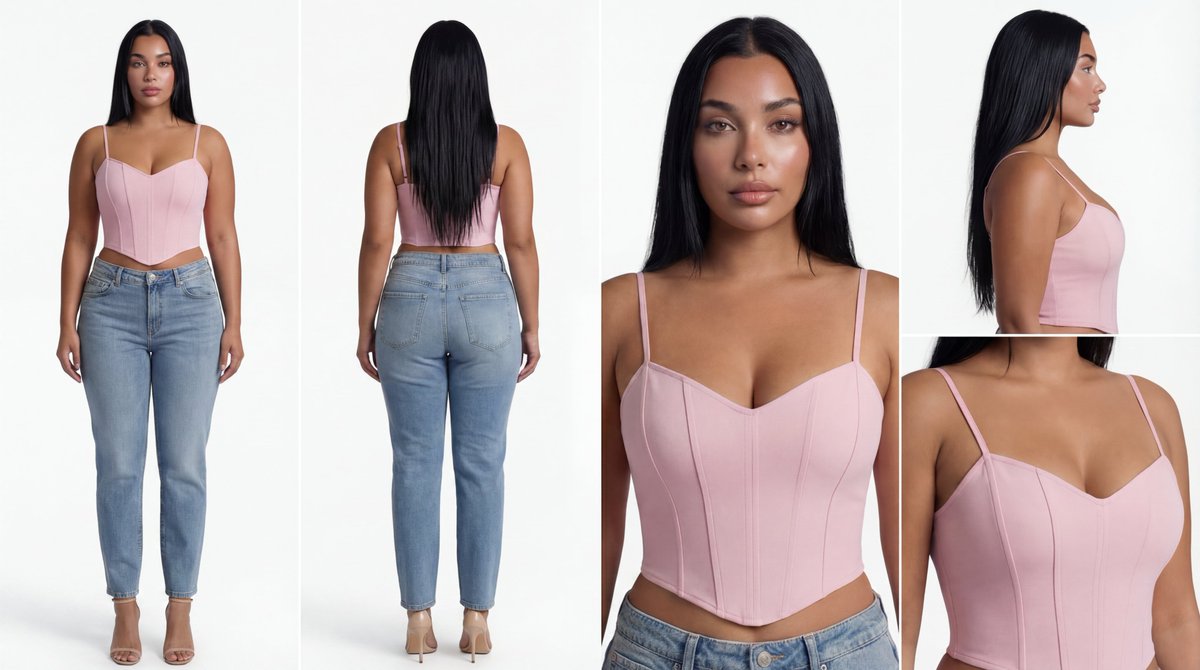
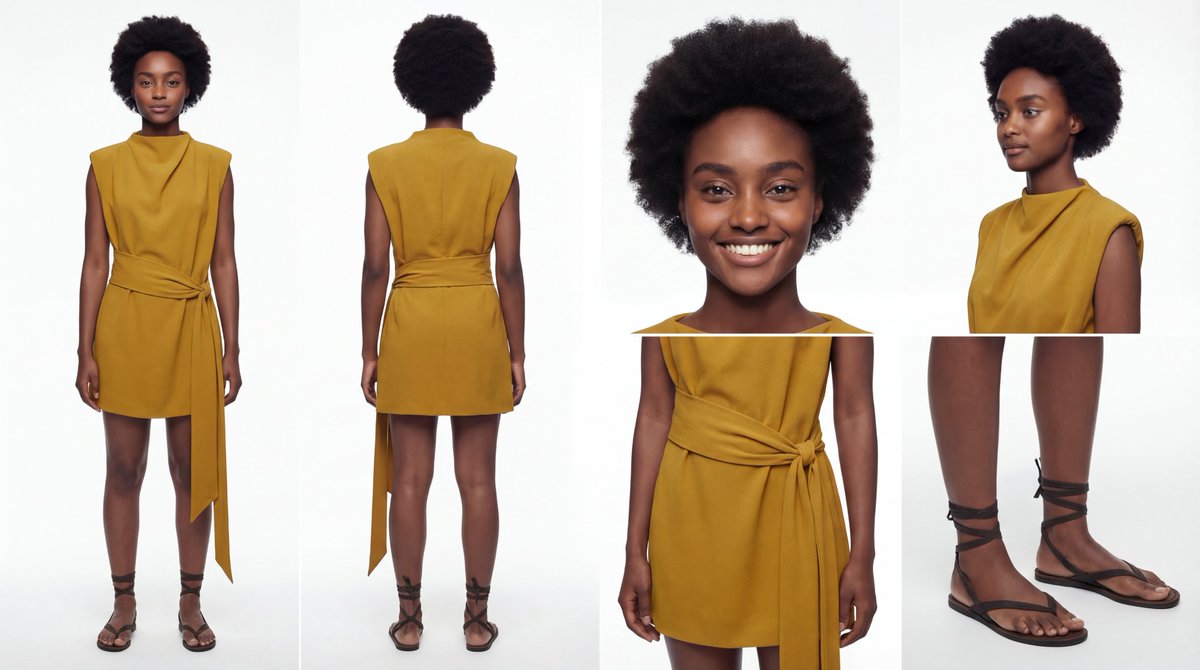
How I Maintain Near-Perfect Consistency (Multiple Outfits Accessories)
Not just the face.
Multiple outfits.
All accessories.
From ALL ANGLES.
STEPS👇
1) Collect images of your character every clothing piece, outfit variation, and accessory (shoes, hats, bags, etc.)
2) Upload to ChatGPT
3) Ask for a white background character design sheet prompt with: full body (front back), headshot, 3/4 torso, waist, feet
4) Use those images in Seedance Omni-Reference
This keeps every outfit and accessory consistent, even with multiple characters.
Works at least 3x better than using just one shot.
@dreamina_ai
#DreaminaCPP

63
Apr 19
This AI ad had no business dominating Meta like this.
So here's what happened.
We created 3 ad concepts for Karviva and tested them against each other.
This one crushed the other two by a factor of 4-to-1.
The goal:
Expand reach and drive website traffic.
And here's what this ad delivered:
- Nearly 1 in 5 viewers clicked through to the site
- Traffic came in at just $0.13 per landing page visit (not CTR)
That was strong enough for the client to keep scaling budget behind the winner.
I find it funny how this was the last concept of the three that I expected to win.
It was the most abstract. The other two were more grounded. Their messages were clearer, they sold the pain points, and showed how the product is used in daily life. On paper, they looked like the safer bet.
But things took an unexpected turn.
The audience responded better to the feeling of using the product, which the winning ad was all about.
My lesson: The strongest creative is not always the one that explains the product the most clearly.
Sometimes it’s the one that creates the strongest emotion and grabs attention fast.
That’s why testing matters. You never know what actually hits without trying multiple angles.
Let the audience vote with their behavior.
Then put more budget behind what clearly works.
56
Apr 4
I shouldn’t be saying this, but ads are dying.
Yes, I make ads for a living.
But it's the truth.
So what comes next?
Story-first content that sells to you before your brain even registers it as marketing.
This is a rough experiment.
The format is the real story.
Watch it.
If you realize it’s an ad before it gets you, I’ll eat my shoe.
This was made with Seedance 2 at @dreamina_ai #DreaminaCPP
2
66
Mar 26
I have access.
Mar 25

Introducing CapCut Video Studio, a timeline-free way to create videos on CapCut Web, supporting Dreamina Seedance 2.0!
Video Studio is your canvas-based AI production workspace, built for creators at every level to bring great stories to life.
This is where ideas become finished videos for every stage of your creative process, from ideation, character building, storyboarding, scene generation, detail polishing, editing and exporting. It happens on one unlimited canvas:
→ AI agent to help you ideate, write and structure your story
→ Built-in storyboard feature to help you shape the plot
→ Industry-leading image & video generation models with omni reference
→ Full editing toolkit to refine every frame
Short films, drama series, animations, explainer videos, ads... this is where it all comes together.
Head to CapCut Web and you'll get some free credits to kickstart!
Note: Dreamina Seedance 2.0 is currently available to users in SEA, MENA, LATAM and Africa, with more regions coming soon.
95
Mar 24
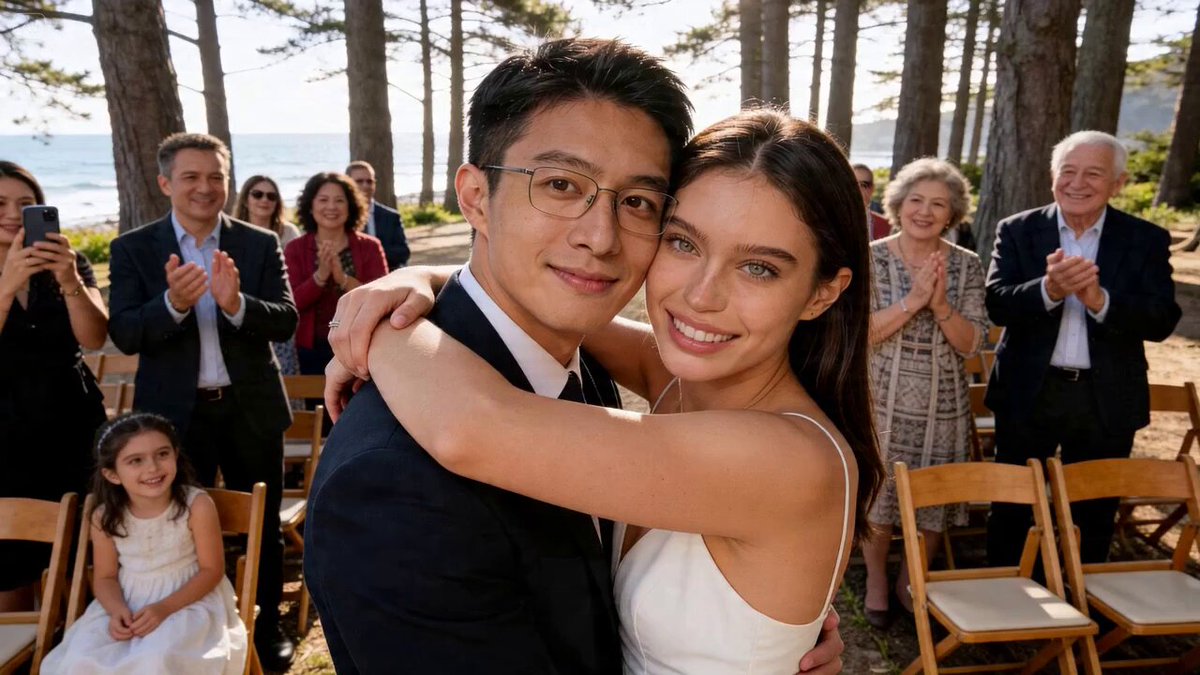
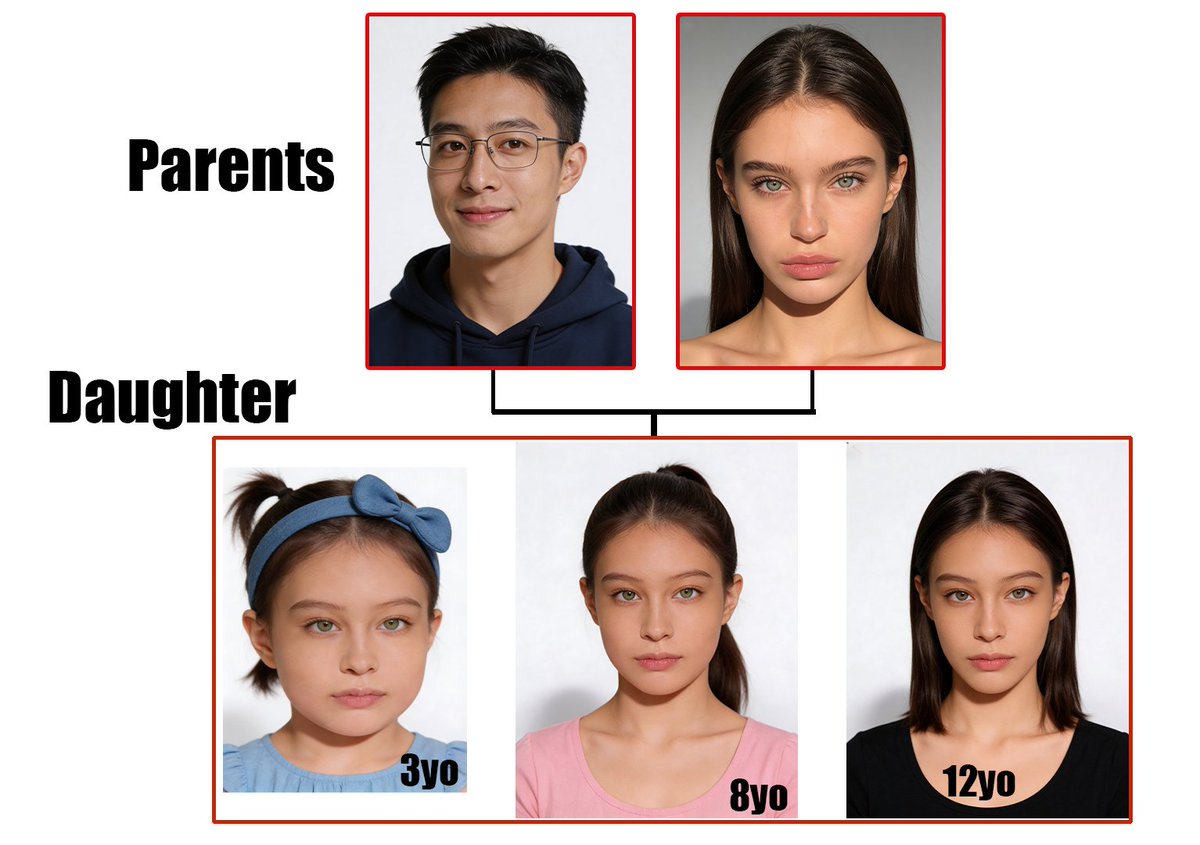
THIS IS NOT A REAL FAMILY!
I generated a daughter from two AI parents.
Not only does she resemble them, but I kept her recognizable across multiple ages in the same project.
Yes, this workflow isn’t ground-breaking.
BUT...
It's still impressive to see it in a real project because family resemblance is something live-action casting misses all the time.
Just look at Stranger Things. A lot of the kids barely look related to their parents, or even to each other within the same family.
Do you think this is one of those areas where AI may actually outperform pure live-action?
75
Mar 19
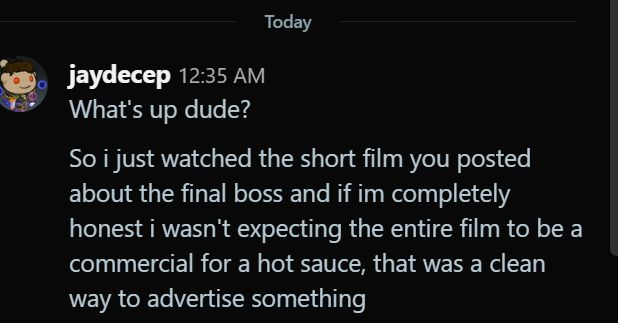
They're not supposed to know it's a commercial!
That's my advertising philosophy.
In today’s noisy world, you have to earn attention before you can ask for a sale.
It’s a simple concept, yet hard to execute.
I recommend brands to avoid placing products front and center immediately. Focus on grabbing attention, making a good impression, and ensuring they remember you.
Do this, and you might be surprised how far your CAC plummets.
57
Mar 18
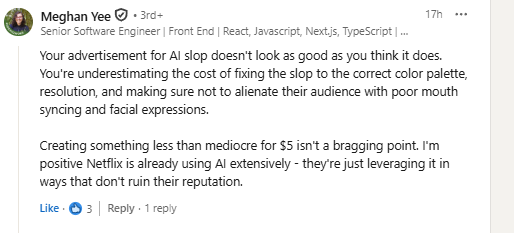
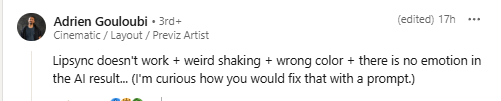
This video really triggered the anti-AI crowd on LinkedIn
Good!
We need real conversations about AI's role in film.
First, I don’t subscribe to the “Hollywood is dead” narrative.
Second, I’m not claiming Gen AI replaces traditional VFX pipelines.
If you’re working on a high-budget production with full control, proper compositing, and actor direction, that will still produce better results today.
BUT...
What happens when you don’t have Netflix's budget?
Or need to move fast?
Or when experimenting early in the pipeline?
A lot of people pointed out issues in my demo:
-lip sync
-color mismatch
-expression quality
And they're right.
But the goal wasn’t to ship a final shot.
It was to test whether Gen AI gets us part of the way there at a fraction of the cost.
And the answer is clearly yes. Not perfectly. But enough to start changing how we approach production.
So the question isn’t whether to use it, but "where it actually makes sense?"
Gen AI isn’t about cutting corners. It’s about expanding what’s possible with the resources you have.
For large studios like Netflix, the risk is reputation.
For smaller studios, the risk is falling behind.
You don’t need to overhaul everything overnight. Start small.
Test it in specific stages. Build from there.
The future is not fully AI. It’s hybrid workflows.
At the end of the day, the audience will care less about how it was made.
They care if it feels real.
Mar 17

I used AI to fix Netflix's $200K problem for $5.
In Netflix’s live-action One Piece, Crocus (played by an 70yo actor) has around 2 minutes of flashback scenes where he’s supposed to be 21.
Problem: It would have cost up to $200K to use CGI to de-age him for 2 minutes. So Netflix went "fck it" and just dyed the old actor's hair black to make him look younger. Well, did he look 21 to you?
My Solution: I used Seedream 5.0 to generate an image of young Crocus and Kling Motion to reanimate the original scenes.
The result came out surprisingly strong.
It’s still not perfect. The mouth movement and facial expressions need work.
But that’s the point: if AI had been part of the pipeline from the start, this would’ve come out much better.
Moral of the story:
Studios that refuse to adapt are taking a bigger risk than the ones experimenting with AI.
AI backlash is temporary.
Getting left behind can be permanent (Hello Blockbuster).
96
Mar 15
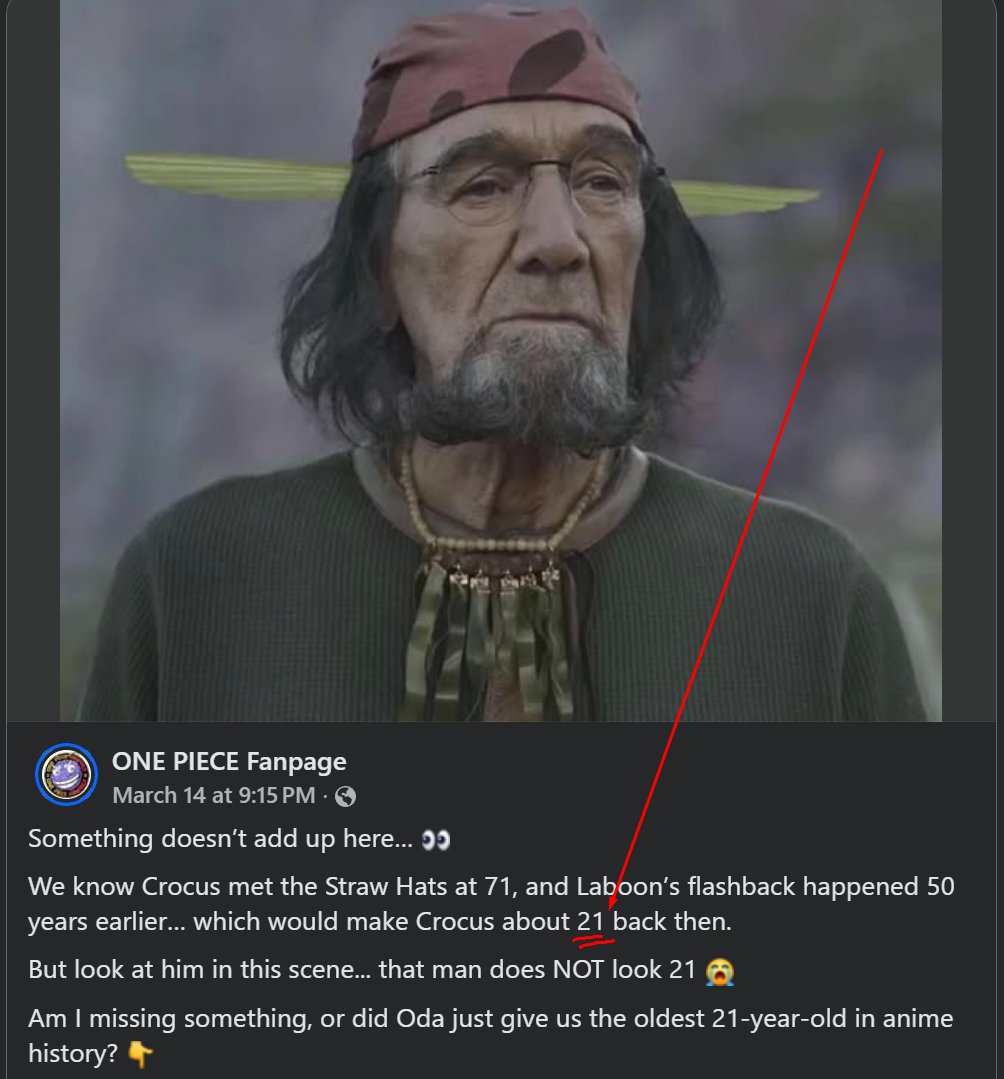
One Piece should have used AI
They could have used AI to make Crocus look age-appropriate. And it would look spectacular, and cost less than $5 in credits.
1
55
Mar 17
Mar 17
I used AI to fix Netflix's $200K problem for $5.
In Netflix’s live-action One Piece, Crocus (played by an 70yo actor) has around 2 minutes of flashback scenes where he’s supposed to be 21.
Problem: It would have cost up to $200K to use CGI to de-age him for 2 minutes. So Netflix went "fck it" and just dyed the old actor's hair black to make him look younger. Well, did he look 21 to you?
My Solution: I used Seedream 5.0 to generate an image of young Crocus and Kling Motion to reanimate the original scenes.
The result came out surprisingly strong.
It’s still not perfect. The mouth movement and facial expressions need work.
But that’s the point: if AI had been part of the pipeline from the start, this would’ve come out much better.
Moral of the story:
Studios that refuse to adapt are taking a bigger risk than the ones experimenting with AI.
AI backlash is temporary.
Getting left behind can be permanent (Hello Blockbuster).
40
Mar 17
I used AI to fix Netflix's $200K problem for $5.
In Netflix’s live-action One Piece, Crocus (played by an 70yo actor) has around 2 minutes of flashback scenes where he’s supposed to be 21.
Problem: It would have cost up to $200K to use CGI to de-age him for 2 minutes. So Netflix went "fck it" and just dyed the old actor's hair black to make him look younger. Well, did he look 21 to you?
My Solution: I used Seedream 5.0 to generate an image of young Crocus and Kling Motion to reanimate the original scenes.
The result came out surprisingly strong.
It’s still not perfect. The mouth movement and facial expressions need work.
But that’s the point: if AI had been part of the pipeline from the start, this would’ve come out much better.
Moral of the story:
Studios that refuse to adapt are taking a bigger risk than the ones experimenting with AI.
AI backlash is temporary.
Getting left behind can be permanent (Hello Blockbuster).
1
257