Joined July 2016
- Tweets 3,114
- Following 449
- Followers 919
- Likes 7,970
1,379 Photos and videos
Pinned Tweet
Notice to our followers: Please note that this X account is no longer actively monitored.
To stay up to date with the latest news, updates, events and opportunities from the Explorers Education Programme, we invite you to follow us on:
🔗 LinkedIn
📸 Instagram
👍 Facebook
🌐 Explorers.ie
We look forward to continuing the conversation with you on our other social channels.
Thank you for your continued interest and support. 🌊
64
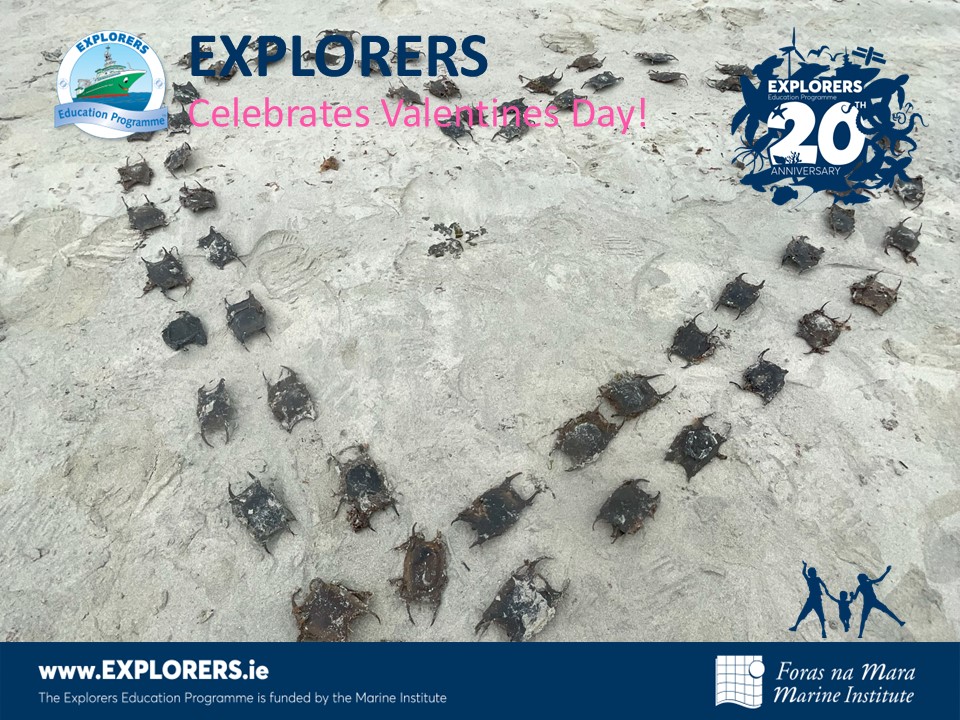
Happy Valentine's Day from your friends at the Marine Institute - Foras na Mara's Explorers Education Programme! 💗💌
#KeepExploring
24
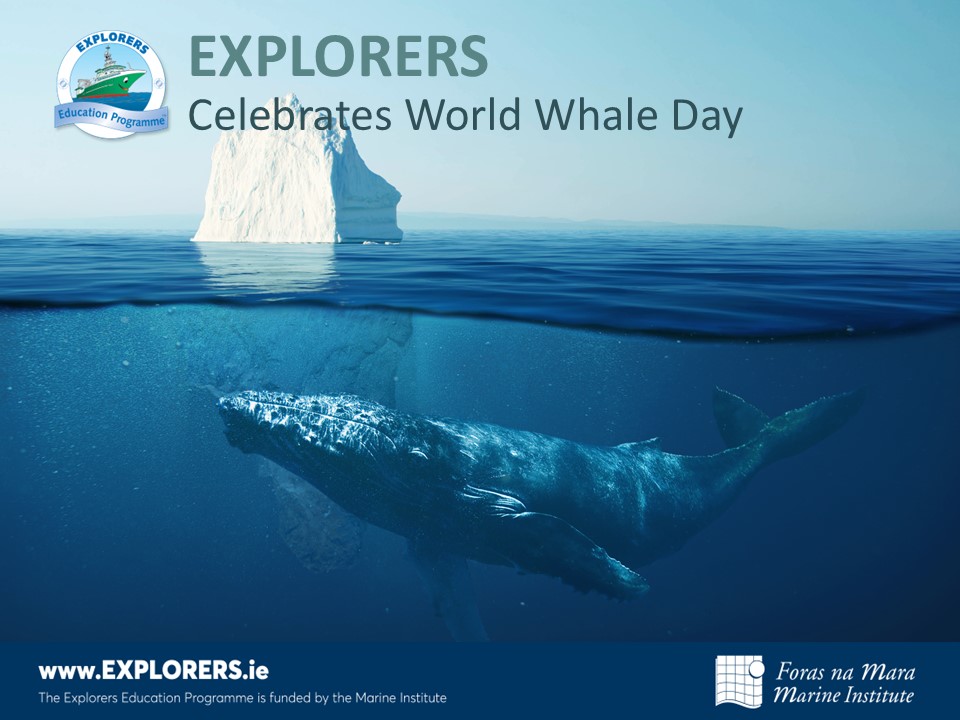
Happy World Whale Day! 🐋
We at the @MarineInst Explorers Education Programme are HUGE whale enthusiasts, as we expect most people are. What's not to love about these massive, intelligent, fascinating marine mammals, we ask you?! They can sing, they can dance, they can travel the entire world, AND they can play an important roll in reducing carbon! Did you know that?
WELL! It just so happens that we have a SUPER awesome Climate Change module entitled A Whale's Tale, as who better to take us on a tour around the world to investigate climate change than a humpback whale? After all, it's on his migration path anyway, so no one has to go out of their way! 💁♀️
Have a look at our wealth of free resources on the subject of climate change (including the roll of whales) and why not schedule your visit with one of our eduction officers to guide you on a deeper dive!
bit.ly/3E2L94B
#KeepExploring
18
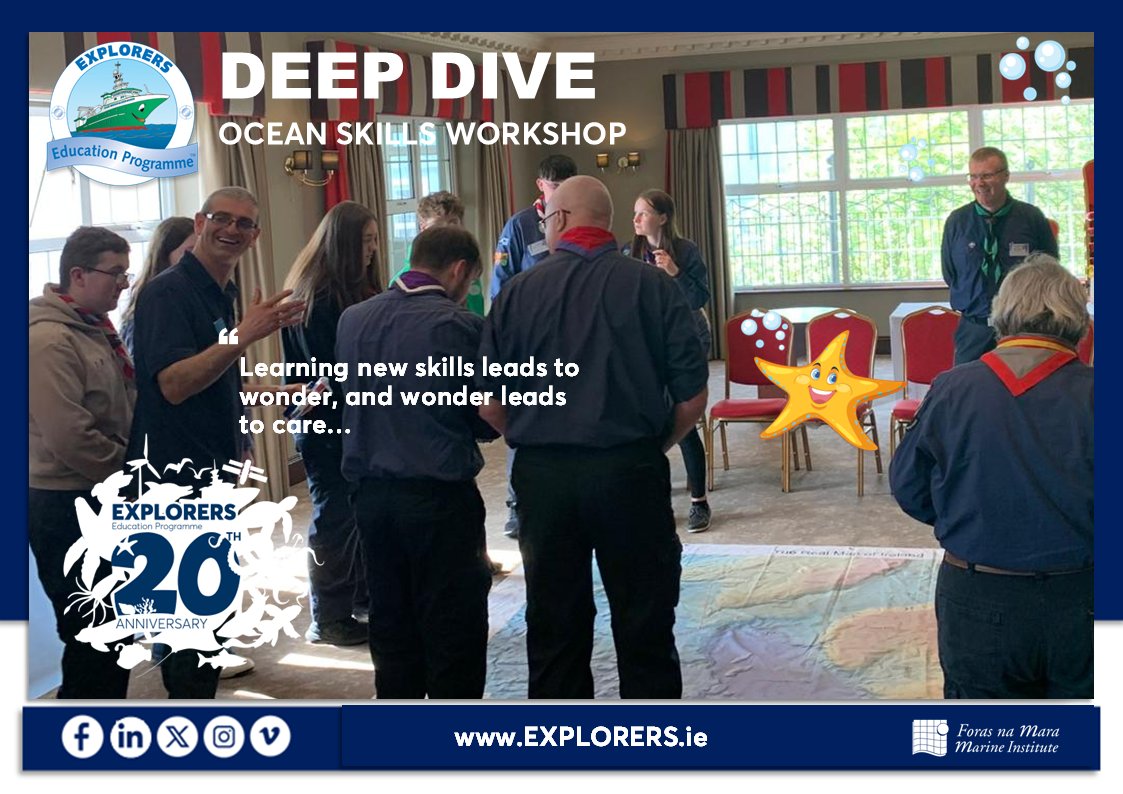
The @MarineInst Explorers team will be at the @ScoutingIreland On the Water Conference event this Saturday, where we will be providing an information stand on the Explorers Education Programme and two skills workshops during which we will show participants the range of materials the programme has and how sea scout groups around Ireland can access and use the Online Content!
#BePrepared
#KeepExploring
20
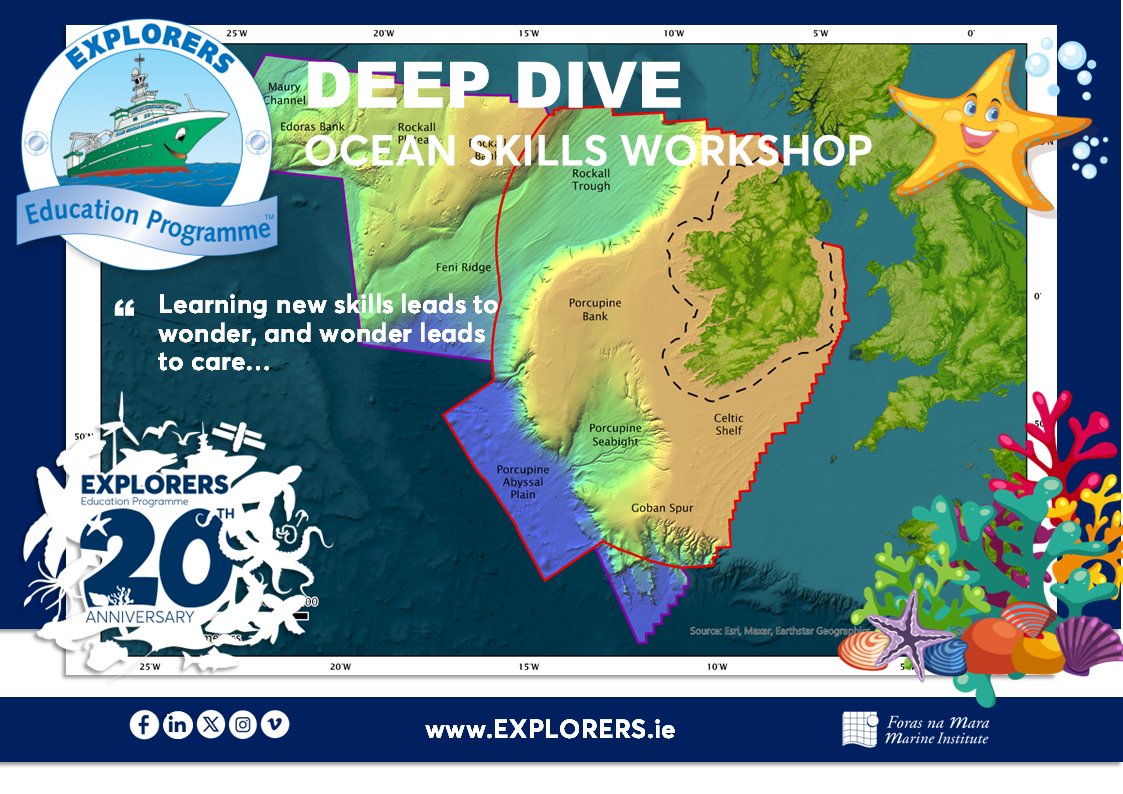
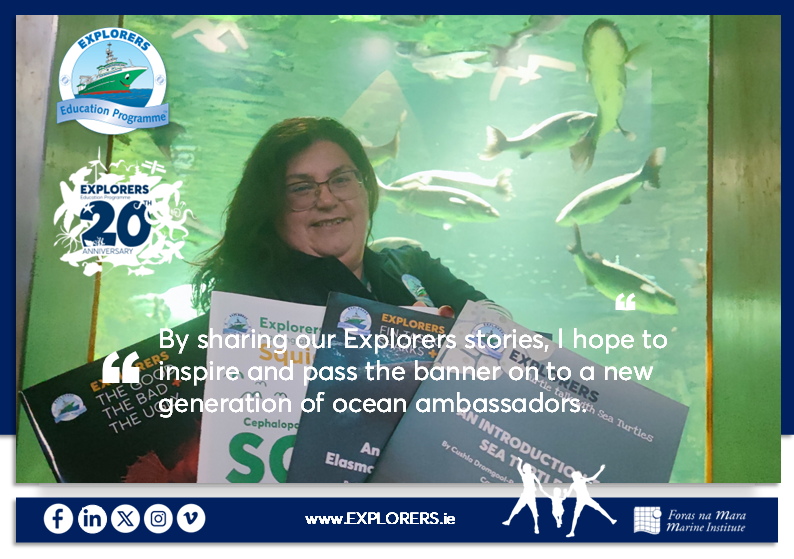
🎉Celebrate 20 YEARS of the @MarineInst's Explorers Education Programme and take a DEEP DIVE to become an ocean ambassador with your school!
Book exclusive modules for inland schools in counties Cavan, Carlow, Kilkenny, Kildare, Laois, Longford, Monaghan, Offaly, Roscommon, Tipperary, and also Westmeath - making Ireland truly "Blue"!
Visit us at explorers.ie or contact Noirin at noirin@nationalaquarium.ie.
#KeepExploring
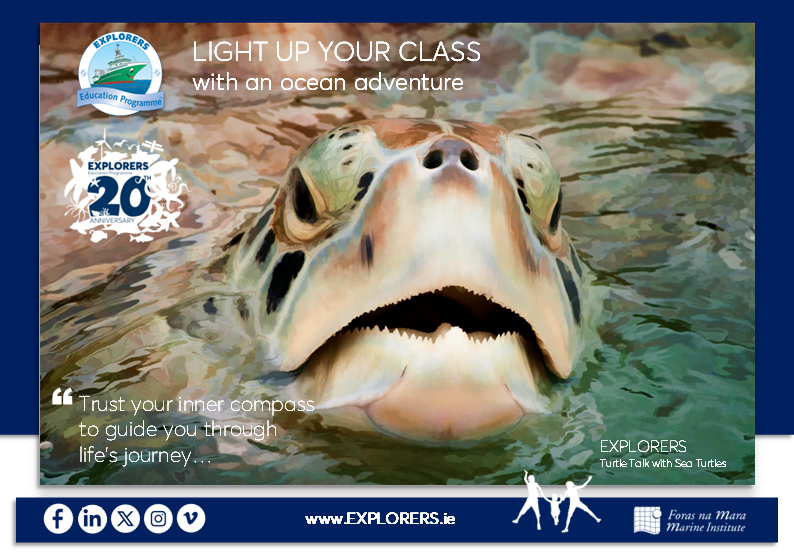
And don't forget to take a look at all of our free resources, while you're at it, including Turtle Talk!
marine.ie/.../explorers-turt…
96
🎉Celebrate 20 YEARS of the @MarineInst 's Explorers Education Programme and become an ocean ambassador with your school!
Book exclusive modules for inland schools in counties Cavan, Carlow, Kilkenny, Kildare, Laois, Longford, Monaghan, Offaly, Roscommon, Tipperary, and also Westmeath - making Ireland truly "Blue"!
Visit us at explorers.ie or contact Noirin at noirin@nationalaquarium.ie.
#KeepExploring
1
95
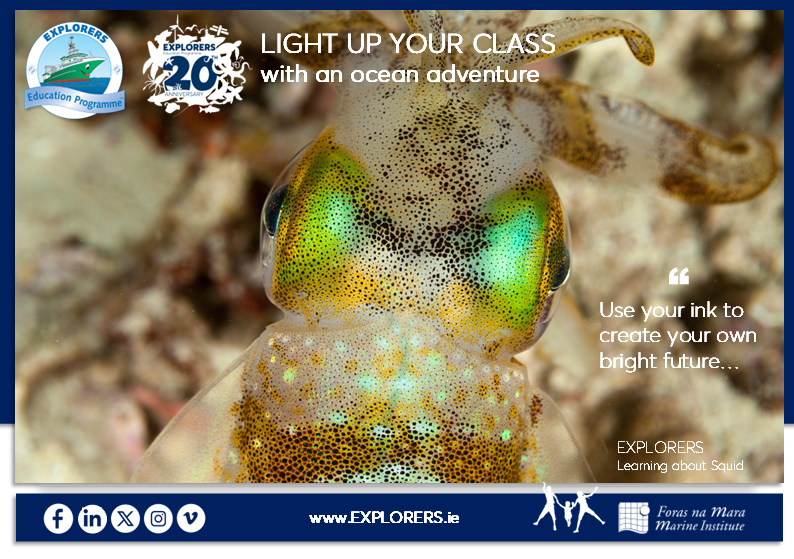
Have a "ink" about joining our ex-squid-site family!
Celebrate 20 YEARS of the @MarineInst 's Explorers Education Programme and take a DEEP DIVE to become an ocean ambassador with your school!
Book exclusive modules for inland schools in counties Cavan, Carlow, Kilkenny, Kildare, Laois, Longford, Monaghan, Offaly, Roscommon, Tipperary, and also Westmeath - making Ireland truly "Blue"!
Visit us at explorers.ie or contact Noirin at noirin@nationalaquarium.ie.
#keepexploring
marine.ie/.../explorers-lear…
45
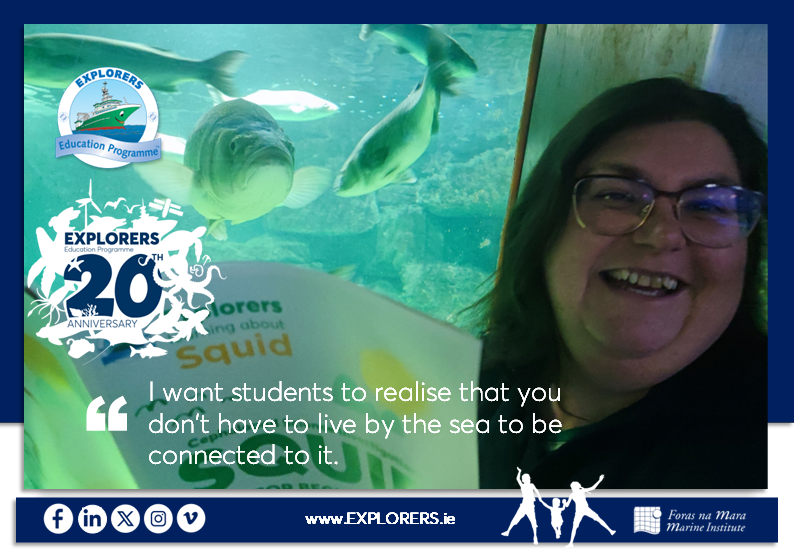
"You don't have to live by the sea to be connected to it!"
Celebrate 20 YEARS of the @MarineInst's Explorers Education Programme and take a DEEP DIVE to become an ocean ambassador!
Book exclusive modules for inland schools in counties Cavan, Carlow, Kilkenny, Kildare, Laois, Longford, Monaghan, Offaly, Roscommon, Tipperary, and also Westmeath - making Ireland truly "Blue"!
Visit us at explorers.ie or contact Noirin at noirin@nationalaquarium.ie.
#KeepExploring
1
45
The @MarineInst Explorers team will be at the @ScoutingIreland On the Water Conference event this Saturday, where we will be providing an information stand on the Explorers Education Programme and two skills workshops during which we will show participants the range of materials the programme has and how sea scout groups around Ireland can access and use the Online Content!
#BePrepared
#KeepExploring
20
Celebrate 20 YEARS of the @MarineInst 's Explorers Education Programme and take a DEEP DIVE to become an ocean ambassador!
Book exclusive modules for inland schools in counties Cavan, Carlow, Kilkenny, Kildare, Laois, Longford, Monaghan, Offaly, Roscommon, Tipperary, and also Westmeath - making Ireland truly "Blue"!
Visit us at explorers.ie or contact Noirin at noirin@nationalaquarium.ie.
#keepexploring
bit.ly/4mNho8G
99
Celebrate 20 YEARS of the @MarineInst 's Explorers Education Programme and become an ocean ambassador!
Book exclusive modules for inland schools in counties Cavan, Carlow, Kilkenny, Kildare, Laois, Longford, Monaghan, Offaly, Roscommon, Tipperary, and also Westmeath - making Ireland truly "Blue"!
Visit us at explorers.ie or contact Noirin at noirin@nationalaquarium.ie.
#KeepExploring
1
1
177
What better way to celebrate the @MarineInst Explorers Education Programme's 20th anniversary than by expanding to include schools in Ireland's non-coastal counties! We are very excited and cannot wait to work with you! Please do reach out to apply!
bit.ly/4sVgknf
#KeepExploring
1
5
7
309

10 Dec 2025
The @MarineInst Explorers Education Programme is an amazing resource for Ocean Literacy learning and activities AS WELL AS doubling as a Christmas cracker for all of your holiday buildup excitement! Need jokes? We've got you. Need some amazing ocean-related STEAM activities to carry you through the winter? Well why didn't you say so?! We are here for you!
bit.ly/3JKznyC
#KeepExploring
1
3
65
10 Dec 2025
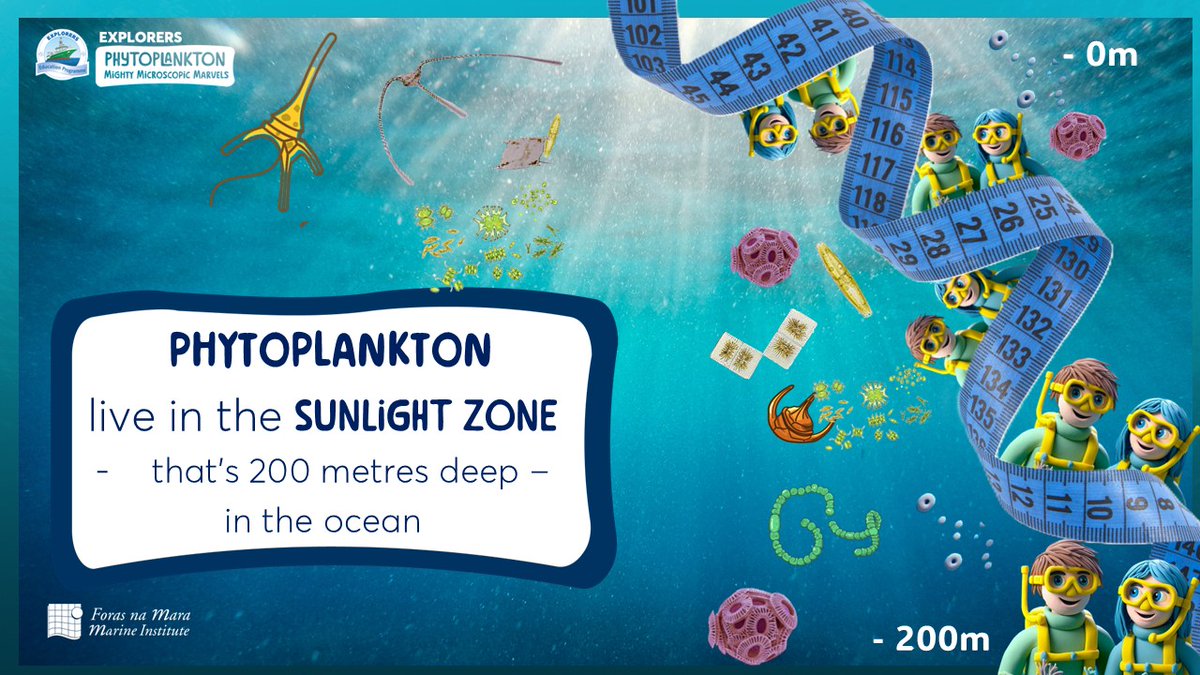
So, where do these incredible microscopic phytoplankton live?... AND how do they move around the ocean?
Imagine that the ocean is like a giant house with lots of different levels. 🏘️The roof on it is about the same height as the Cliffs of Moher in County Clare. At its tallest point it is about 200m high – that’s equivalent to 133 twelve year-olds with an average height (1.5m) – standing on each others shoulders.
The ocean is divided into layers, like this big house. Starting with the ☀️Sunlight Zone☀️ at the very top, this is the only part of the ocean where sunlight shines through, like a skylight in the ocean's roof. Below this, the ocean quickly gets dark. Most of the ocean is a place where no sunlight ever reaches! Imagine 💭
Below this is the Twilight Zone (200-1,000 metres deep) and then the completely dark Midnight Zone (1,000-4,000 metres deep).
Further down are the deepest parts of the ocean: the Abyssal Zone (4,000-6,000 metres deep) and the deepest of all, the Hadal Zone (6,000 – 11,000 metres to the seafloor), found in deep ocean trenches.
Phytoplankton need the sunlight!
Since they need sunlight to survive, phytoplankton live in the sunlight zone. Phytoplankton come in all shapes and sizes, and they have clever ways of living in the sunlight zone. We can think of them in two groups: "floaters" and "stickers.“ Thousands of marine animals from these deeper, darker zones make the largest animal migration on Earth every single night, traveling up to the Sunlight Zone to feast on the abundant plankton.
Learn more about our ocean's microscopic marvels! 🔬Check out our amazing free to download resources from the explorers.ie!
bit.ly/48aZpVs
#KeepExploring
2
43
5 Dec 2025
Phytoplankton can be as small as 0.0005 millimetres (or 0.5 micrometres, which is a common unit for microscopic things).
To get an idea of their size, over 80,000 of these tiny phytoplankton cells could fit side-by-side across an average human face!
Now for the truly mind-blowing Phyto Fact… 🤯
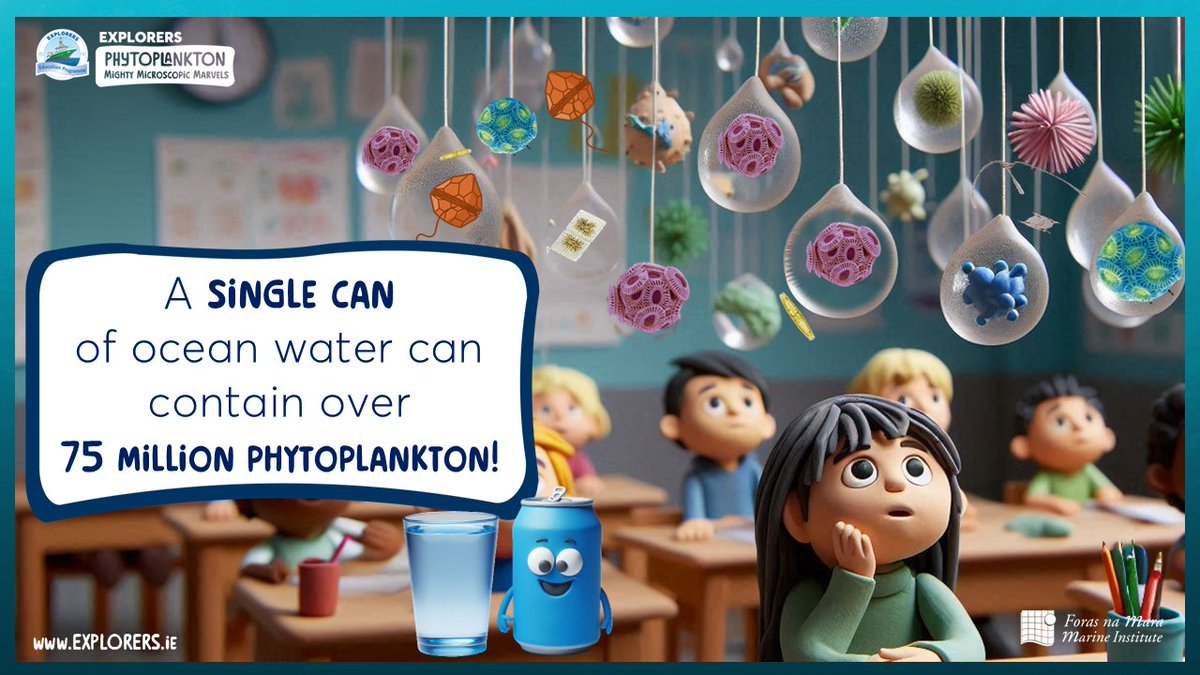
If you filled up a glass of water the same size as a soft drink-can (approx. 350ml) with seawater from an area with a lot of phytoplankton, that single soda-can could contain up to 100 million phytoplankton. It is a huge, bustling world, and you can't even see it! 🥤
Learn more about our ocean's microscopic marvels! 🔬Check out our amazing free to download resources from the explorers.ie!
bit.ly/48aZpVs
#KeepExploring
Marine Institute - Foras na Mara
1
30
5 Dec 2025
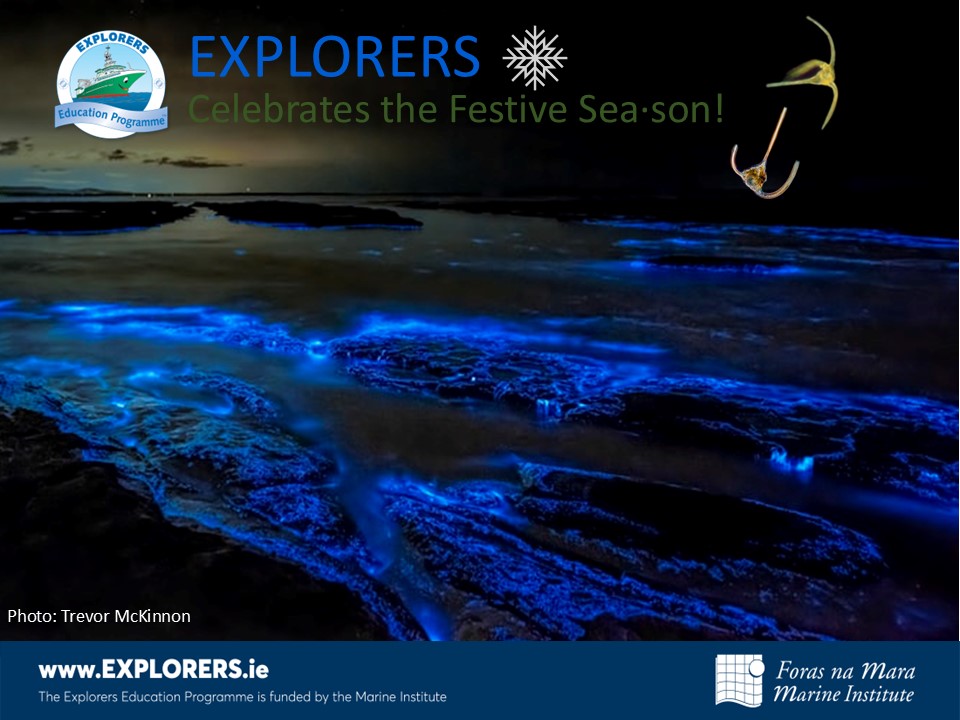
What better way to come into the festive season than with the mesmerising, silent fireworks show given by the incredible phytoplankton in our beautiful ocean.
Have you had a chance to look at our Phytoplankton module yet? Definitely something to add to the list during the holiday down-time and for an extra special, sparkly New Year!
bit.ly/48aZpVs
#KeepExploring
@MarineInst
32
5 Dec 2025
The season of coziness, cuddles and joy is upon us! Let's share our love and goodwill with our beutiful ocean! The @MarineInst Explorers Education Programme is here to help with that!!
Have a look at our wealth of free resources at
bit.ly/3JKznyC
#KeepExploring
36
2 Dec 2025
Imagine the ocean, vast and blue, stretching as far as the eye can see.
Now, imagine it suddenly turning a chalky, milky blue or turquoise.
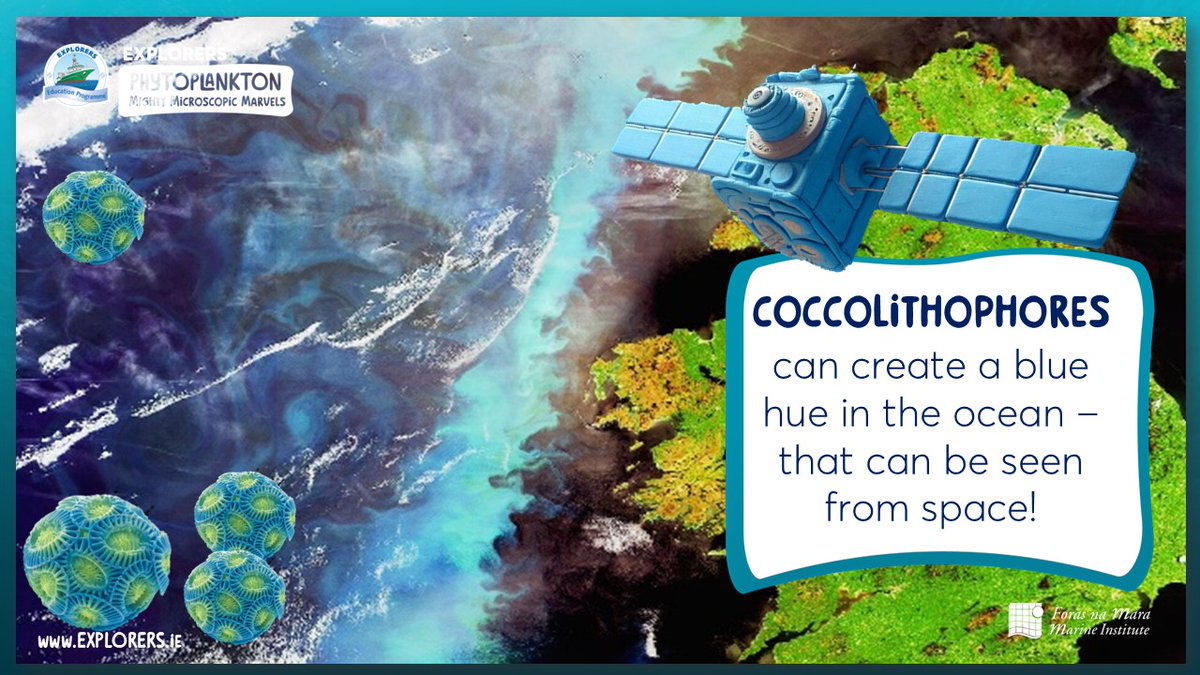
That is the incredible sight of a coccolithophore bloom.
When there are high concentrations of the species, with a cloudless sky and low light pollution, a spectacle so massive can be seen from space! 🛰️
Each microscopic cell is so small they are invisible to the naked eye. However, when the ocean conditions are perfect – warm calm surface waters, lots of nutrients, and sunlight – coccolithophores go wild! They experience huge population explosions, multiplying at an astonishing rate.
During these blooms, the coccolithophores tiny chalky white plates, made of calcium carbonate, are shed into the water.
As they reflect sunlight, they make the water look opaque and milky - It looks like a giant container of milk has spilled into the ocean!
This milky appearance is then influenced by the natural blue of the ocean water, creating a brilliant milky blue or turquoise shimmering hue of the ocean.
Learn more about our ocean's microscopic marvels! 🔬Check out our amazing free to download resources from the explorers.ie!
bit.ly/48aZpVs
#KeepExploring
@MarineInst
2
106
2 Dec 2025
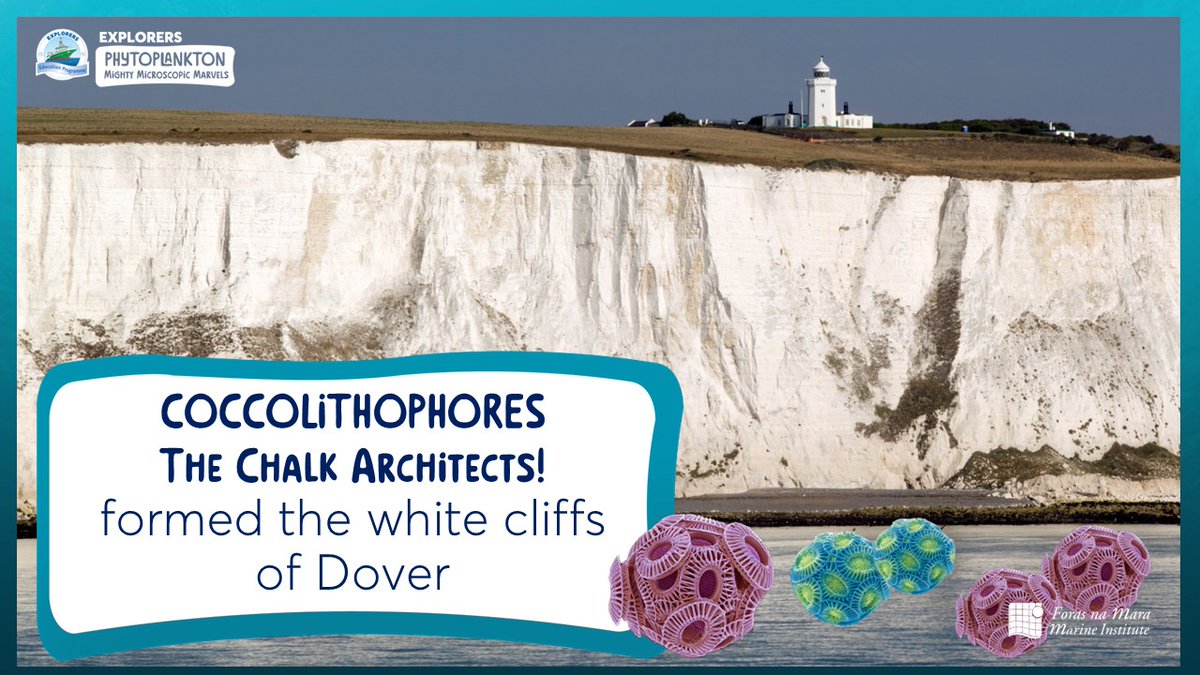
Say hello to the coccolithophores, the ‘Chalk Architects’. These tiny creatures wear chalky armour! These amazing phytoplankton are covered in tiny plates, called coccoliths, made of calcium carbonate – the same stuff that makes chalk. 👩🏫
Imagine a tiny builder, smaller than a speck of dust, but with the power to build mountains! That is the amazing story of coccolithophores, tiny phytoplankton with shells made of chalk.
When coccolithophores reach the end of their lives, their delicate chalky shells drift down, down, down to the ocean floor, like a gentle, never-ending snowfall of microscopic plates. Picture it: trillions upon trillions of these tiny shells, slowly piling up, layer after layer, over millions and millions of years. These tiny creatures, each one smaller than a grain of sand, are the master builders of massive geological formations!
The famous White Cliffs of Dover in England are a perfect example of their handiwork. These stunning cliffs, gleaming white and visible for miles, are made almost entirely of the accumulated shells of coccolithophores. It is like a giant monument built by trillions of tiny coccolithophores.
Learn more about our ocean's microscopic marvels! 🔬Check out our amazing free to download resources from the explorers.ie!
bit.ly/48aZpVs
#KeepExploring
@MarineInst
1
37