
Professor for Computational Chemistry of Nanomaterials @uni_kassel. Married, two children & has a dog.
Joined June 2011
- Tweets 110
- Following 625
- Followers 975
- Likes 165
21 Photos and videos


4 Jul 2025
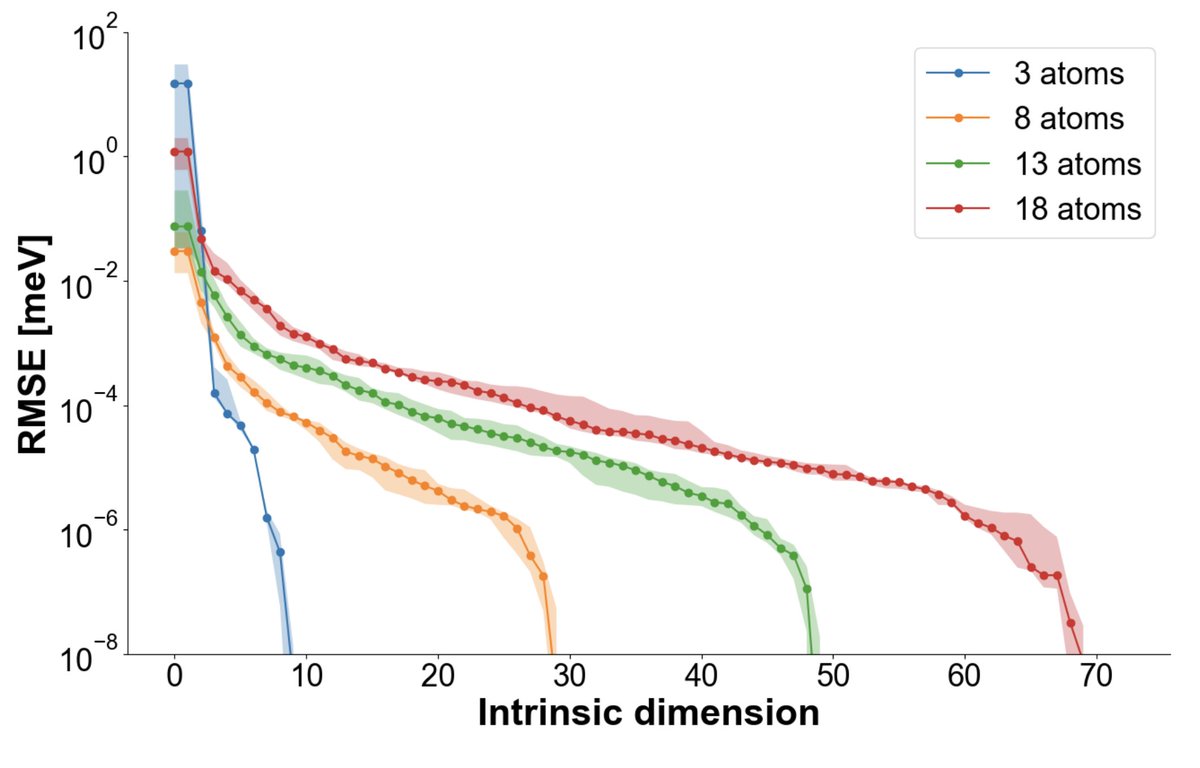
~4N coordinates describe a molecule. Can we make it work with fewer?
Symmetries allow to reduce this - but some properties are harder than others.
@Alibanjafar uses quantum alchemy to quantify the property-dependent limit.
➡️ doi.org/10.48550/arXiv.2507.…
ALT Intrinsic dimension and the corresponding approximation error for the HOMO-LUMO gap.
1
2
2
146
4 Jul 2025
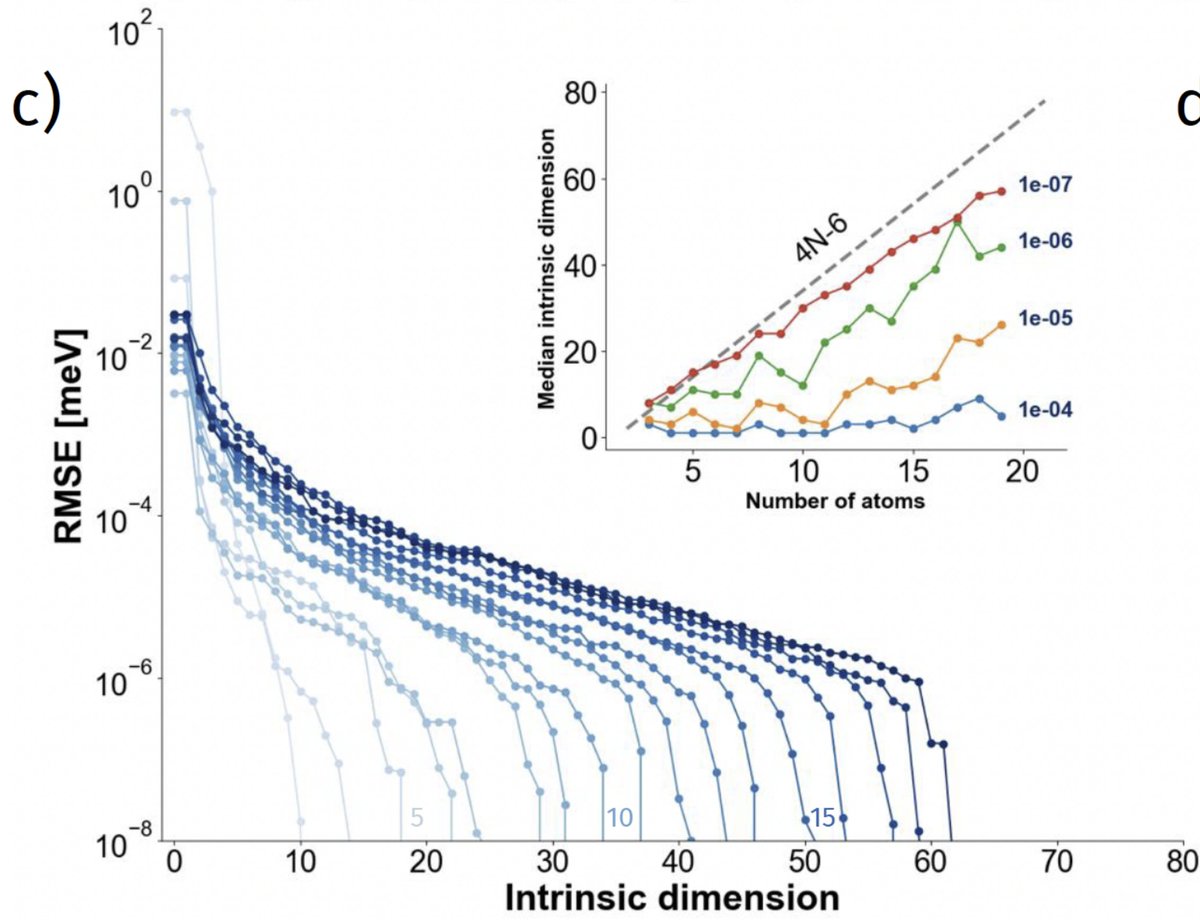
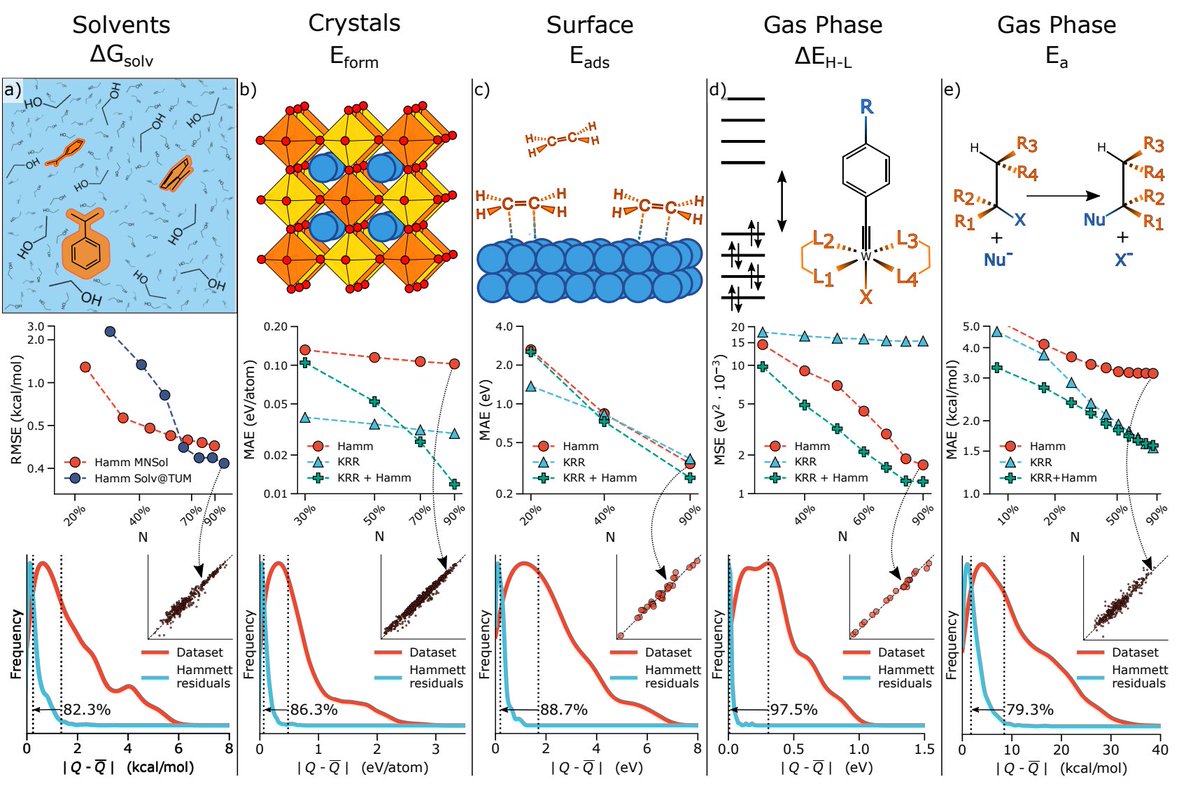
Turns out the dimensionality/accuracy tradeoff depends on the property and the number of atoms - but only very little on the actual molecule (see the low variance in this plot).
ALT Variability of the relationship between number of intrinsic dimensions and the resulting accuracy over several molecules of the same number of atoms.
58
19 Jun 2024
Do you want to become a PhD student in computational chemistry? Are you curious how to consider many systems at once rather than one-by-one? Have you heard about machine learning or perturbation theory? Do you know any programming language? Apply here: stellen.uni-kassel.de/jobpos…
1
32
60
6,468
6 Jun 2024
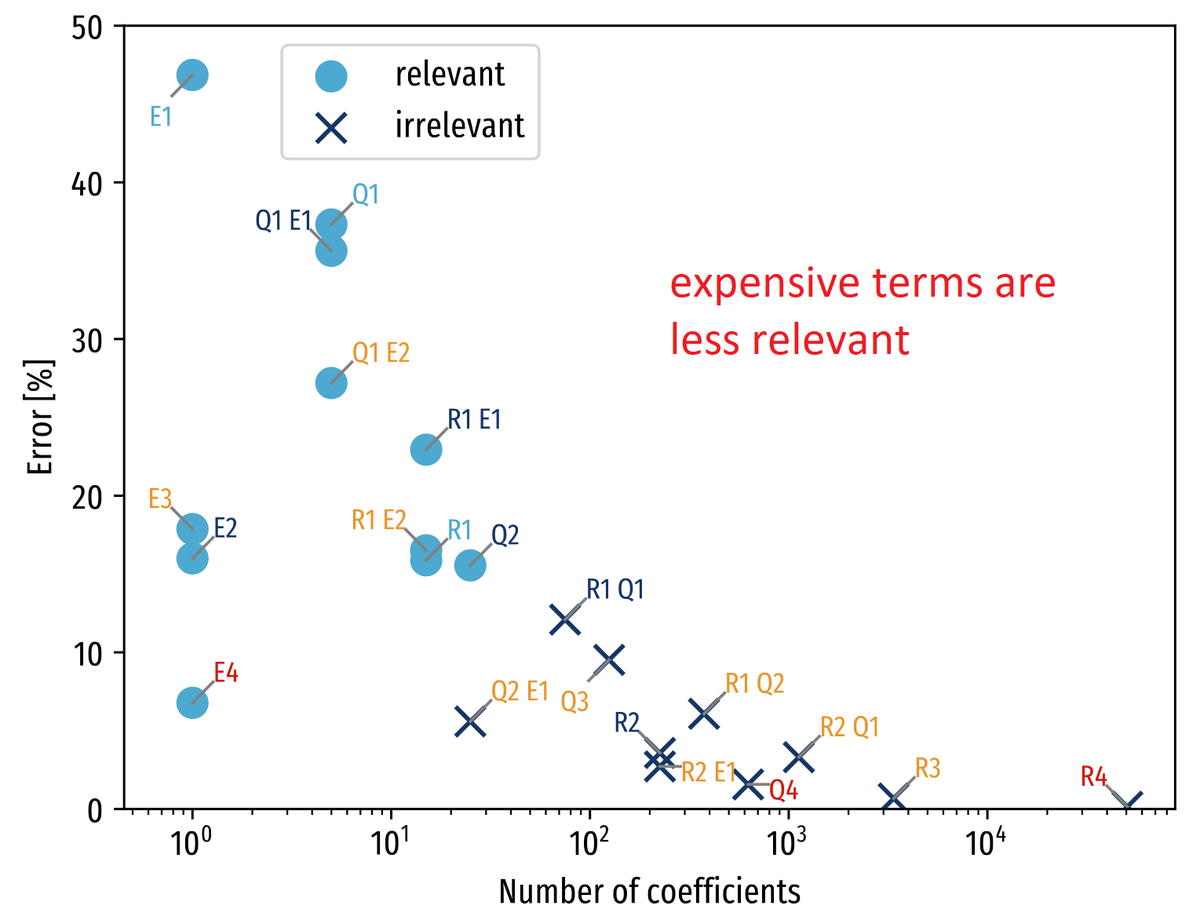
New work on increasing photoelectron circular dichroism strength with Quantum Alchemy.
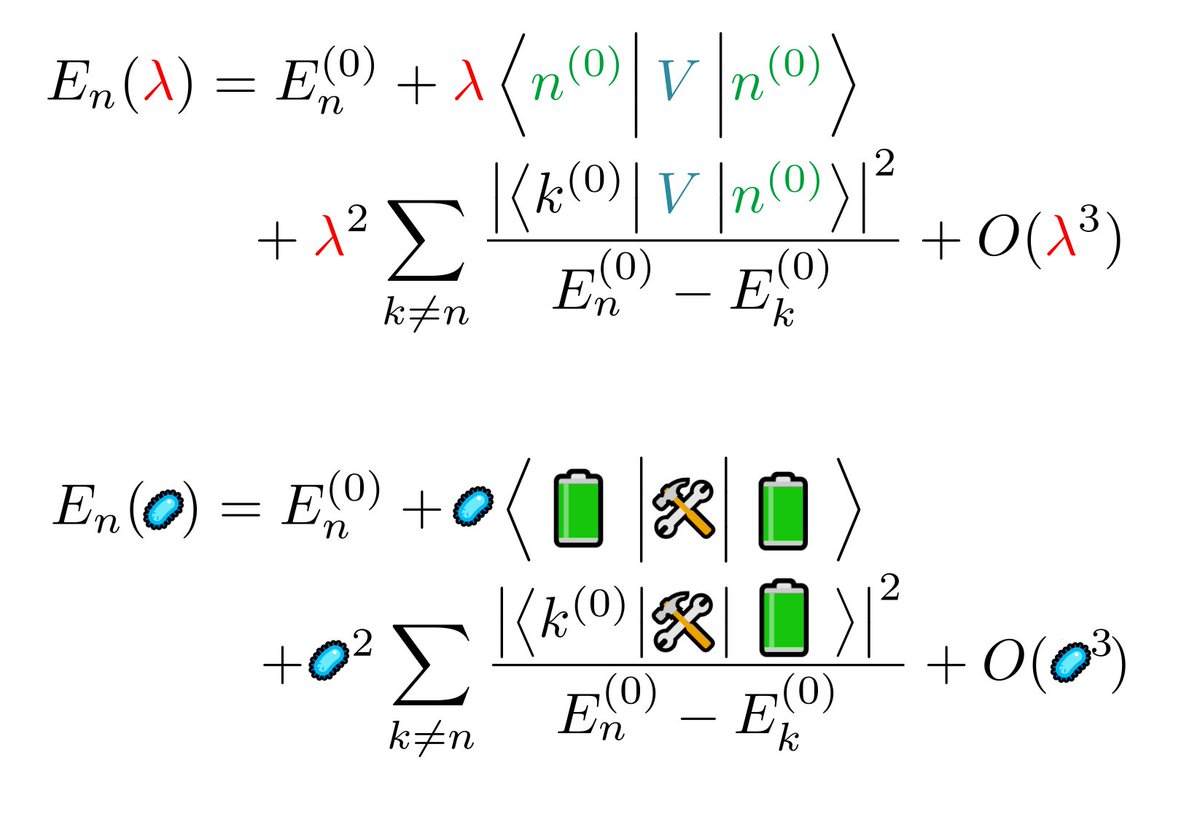
Perturbations work despite strong coupling of degrees of freedom and identifies key driving forces.
doi.org/10.1063/5.0209161 work with Anton Artemyev, Boris Lagutin, Philipp Demekhin and me.
1
1
9
691
6 Jun 2024
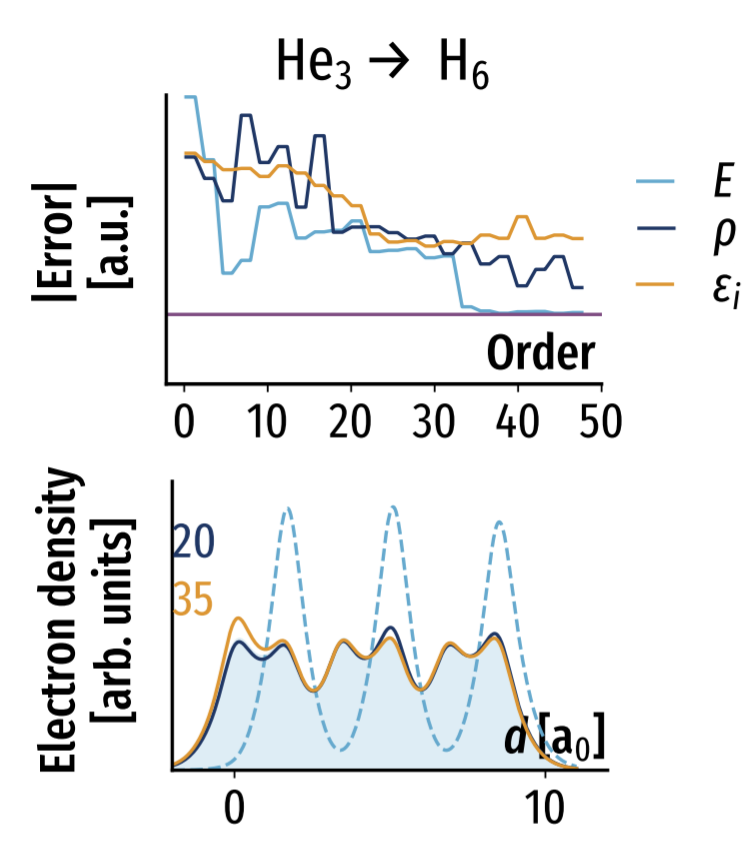
Picture: this is what you want in a perturbative treatment: in this case, the more expensive a term the less relevant on average! A happy little coincidence :)
120
3 Jun 2024
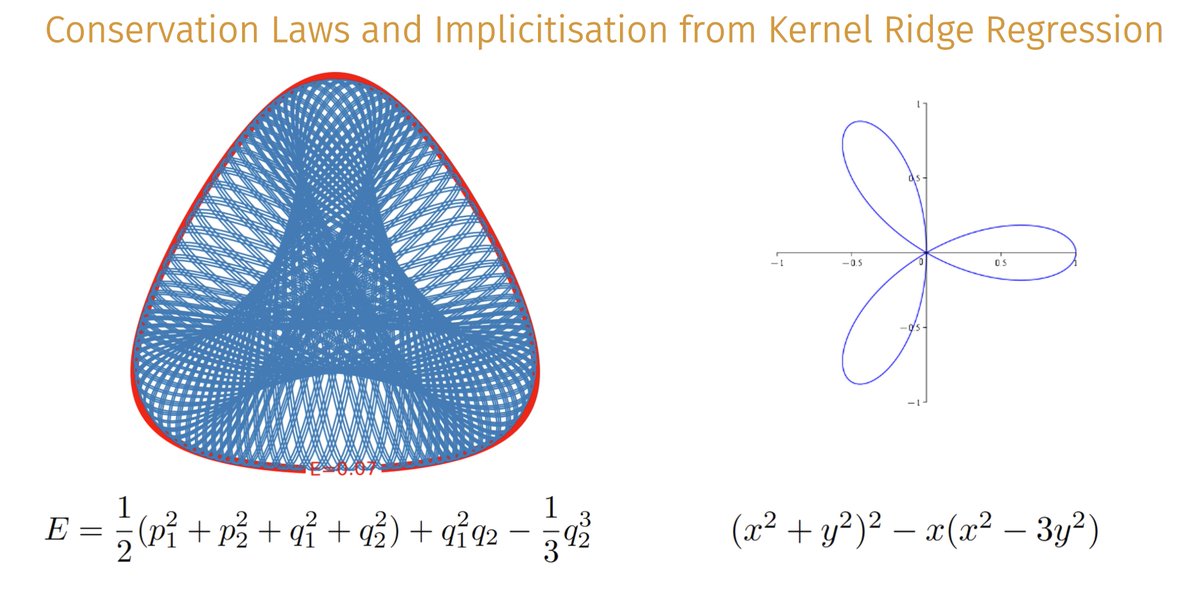
Finding conservation laws and analytical expressions for them with Kernel Ridge Regression - but with unknown labels ;)
Wonderful work from Meskerem Mebratie in collaboration with Rüdiger Nather, Werner Seiler and me, all @uni_kassel
1
3
249
12 Feb 2024
We are #hiring a #postdoc to work on differentiable #compchem with Quantum Alchemy: stellen.uni-kassel.de/jobpos…
Topics revolve around using response functions and (alchemical) derivatives to model and predict electronic structure properties.
8
18
3,909
18 Oct 2023
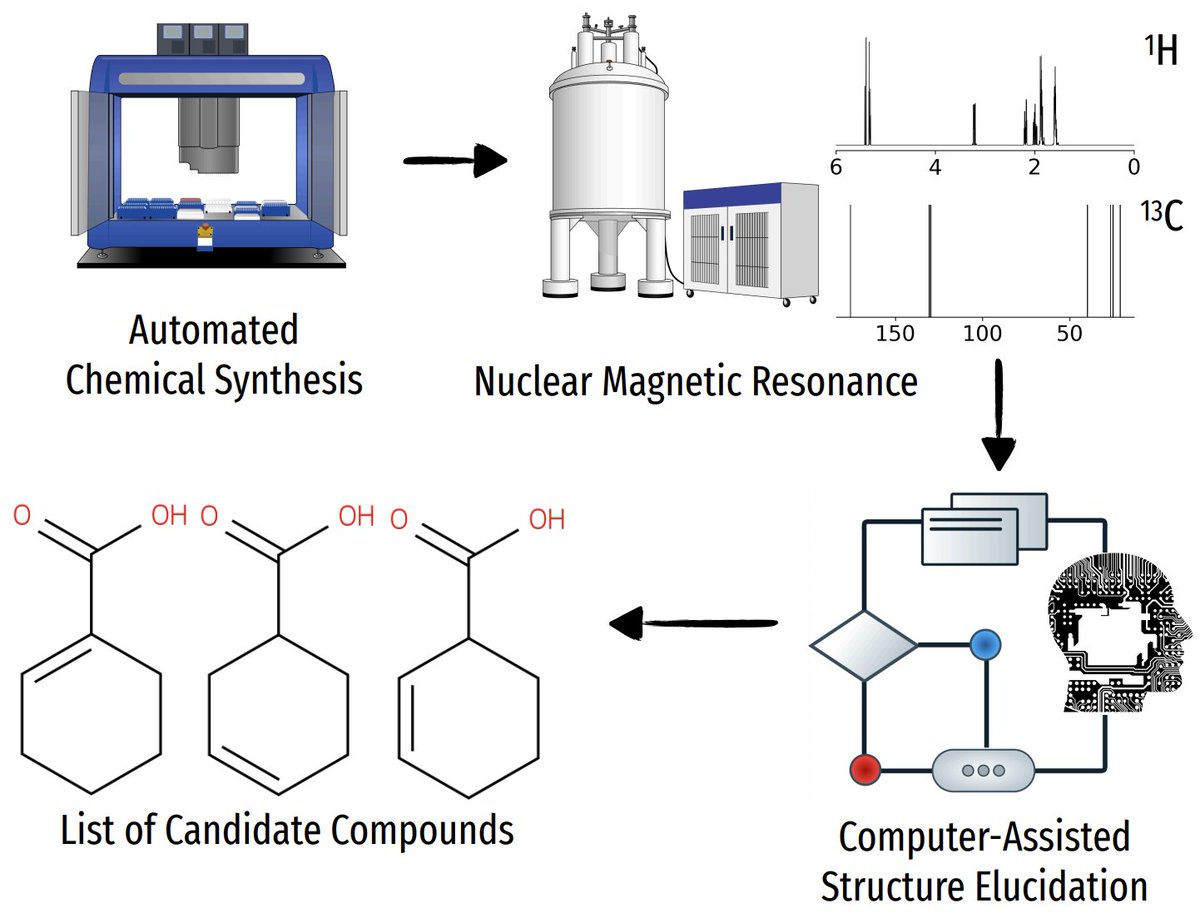
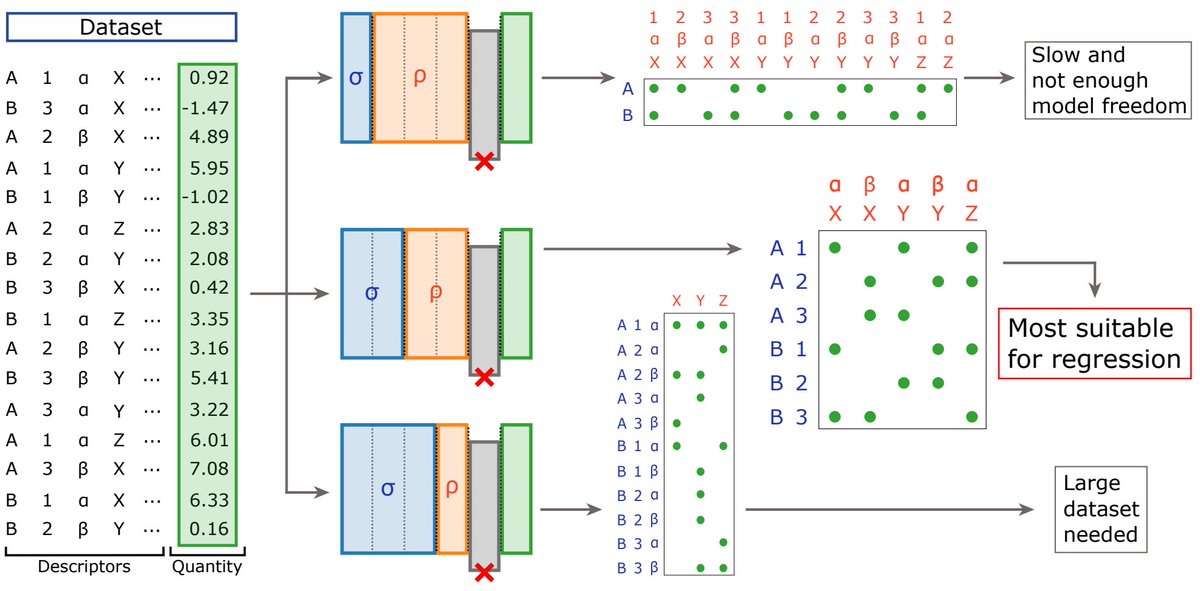
Using 13C and 1H NMR shifts together for structure identification requires two orders of magnitude fewer training data than sticking to 13C alone, since the permissible error of the machine learning prediction increases.
Exciting work with @Dom1Lemm and @ProfvLilienfeld.
17 Oct 2023

Pumped about our first #ML paper in @digital_rsc on label noise in #ChemicalSpace: "Impact of noise on inverse design: The case of NMR spectra matching" pubs.rsc.org/en/content/arti…
With @ferchault and @Dom1Lemm Elucidation success depends on noise level and training set size!
1
2
15
2,673
18 Oct 2023
Related previous work: doi.org/10.1021/acs.est.1c00… where predicting UV-VIS spectra faced the same issue: the search space is so densely populated, that many molecules yield almost identical spectra. Predicting multiple properties is probably more efficient.
2
177
Guido von Rudorff retweeted

10 Oct 2023
Check out this CECAM workshop about machine learning enhanced sampling nuclear quantum effects! I am looking forward to learn something new!
9 Oct 2023

Few weeks for application to this exciting CECAM workshop in Lausanne 29/11-01/12 2023.
As all cecam workshop there are no registration fees and we have a great "parterre" of invited speakers!
@cecamEvents @KarenPalacioR
cecam.org/workshop-details/1…
4
15
2,769
Guido von Rudorff retweeted

19 Sep 2023
1/n Excited to share our preprint (@ferchault , Konstantin @KKarandashev): "Understanding Representations by Exploring Galaxies in Chemical Space"! 🌌 A Monte Carlo approach to probe chemical feature spaces without exhaustive enumeration or ML training.🚀
arxiv.org/abs/2309.09194
1
4
11
807
23 Aug 2023
We're hiring again! Funded PhD position at @uni_kassel 🇩🇪🇪🇺 on derivatives in chemical space and language models. The group uses differentiable chemistry and quantum alchemy for design of materials and molecules. Come and join us! #compchem #chemtwitter
stellen.uni-kassel.de/jobpos…
13
12
2,644
Guido von Rudorff retweeted

12 Jul 2023
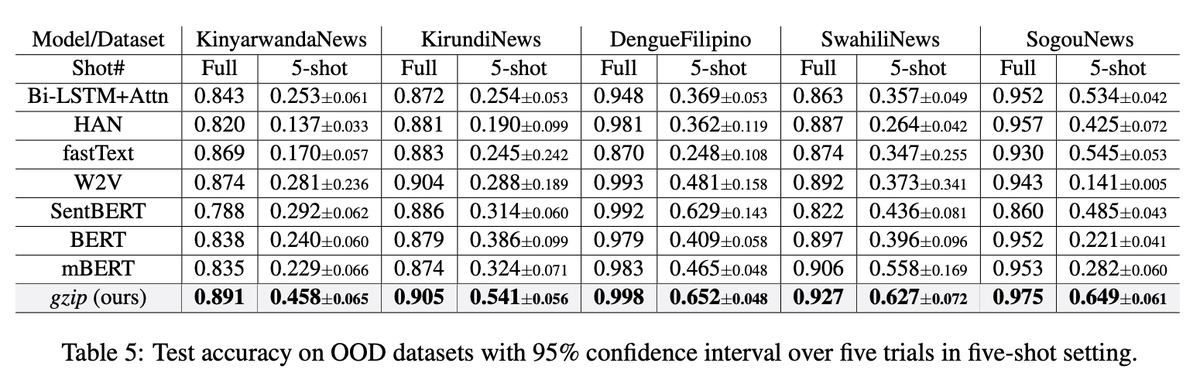
this paper's nuts. for sentence classification on out-of-domain datasets, all neural (Transformer or not) approaches lose to good old kNN on representations generated by.... gzip aclanthology.org/2023.findin…
120
812
4,656
3,384,046
14 Jul 2023
It was good fun to write that review with @hbdft2008 and @ProfvLilienfeld!
➡️ML is data-limited, and DFT likely is the way out
➡️Data is too scarce, e.g. for excited states, non-equilibrium geometries, charged systems and more elements
There's Plenty of Room at the Bottom😉
13 Jul 2023

Nice review by Bing Huang, @ferchault, and @ProfvLilienfeld on just how important DFT is to the future of AI for molecules.
Still so many open questions (especially in biophysics) but quantum chemistry is definitely a fundamental part of the equation!
science.org/doi/10.1126/scie…
1
6
28
2,338
Guido von Rudorff retweeted

5 Jul 2023
Retweets are welcome and of course applications, especially from female students! :)
If you know someone looking for a PhD to develop #ML methods for chemical applications, preferably photochemistry, spread the word! tinyurl.com/2p935dfv
31
42
9,776
Guido von Rudorff retweeted
5 Jul 2023
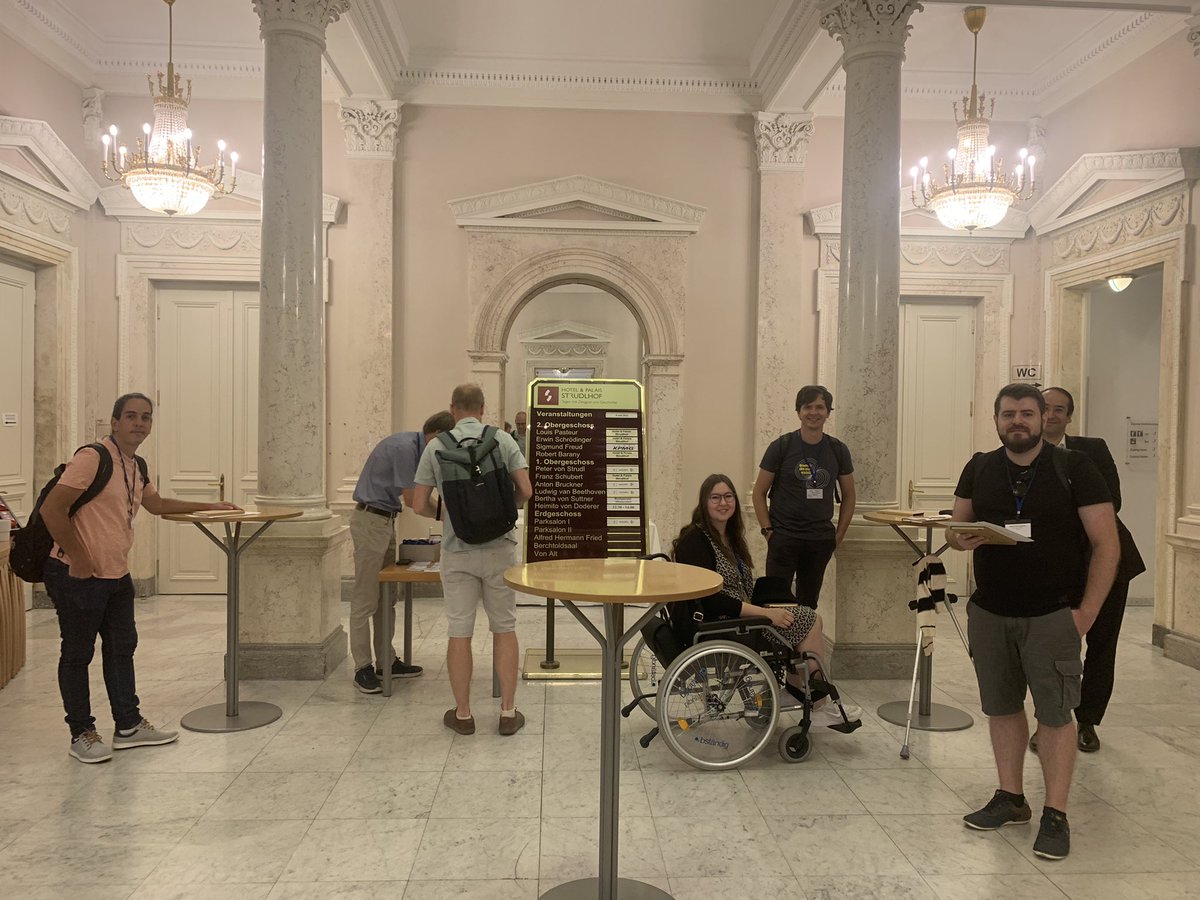
I couldn't be happier to attend our cecam workshop on #ML in beautiful Vienna, co-hosted by @mms_boku
cecam.org/workshop-details/1…
Good to see so many amazing people again & having 2 students from @UniLeipzig here @ferchault @BettinaLier @PePoliak @max_jr @Brigitta_B_ @BarrettRhyan
1
5
38
4,887
Guido von Rudorff retweeted

23 May 2023
Nature's recent editorial, “For Chemists, the AI Revolution has yet to Happen,” argues that “Machine-learning systems in chemistry need accurate & accessible training data. Until they get it, they won’t achieve their potential.” See if you agree.
nature.com/articles/d41586-0…
11
28
2,502
20 May 2023
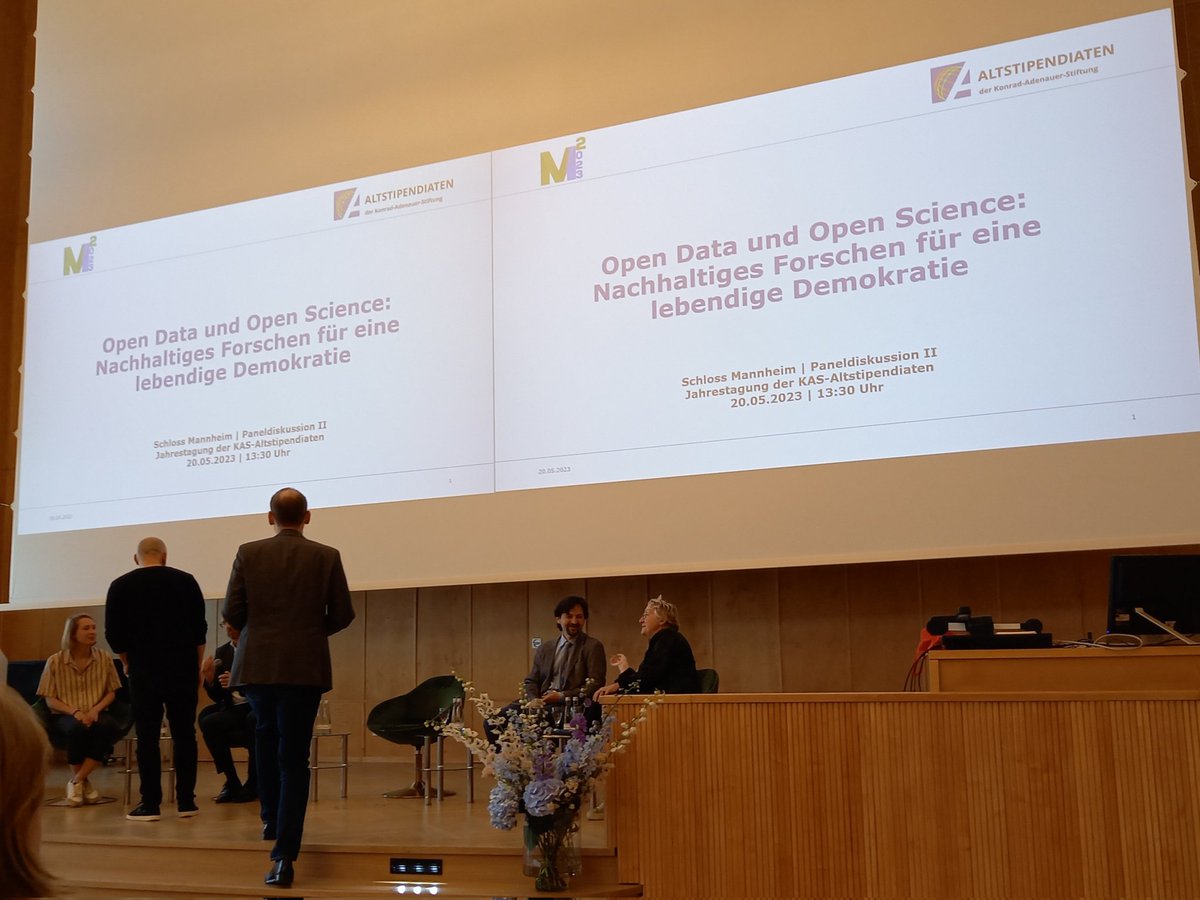
Main hypothesis at an open data panel discussion: Germany may be lagging behind in Europe because it struggles to convince bureaucrats and citizens alike to see the benefits of digitalization. Scientists are called to fix it. Sounded a lot like Digital First, Bedenken Second ;)
1
3
373
20 May 2023
I especially liked the idea of University of Mannheim to include Data Literacy in many curricula.
147