
Joined August 2024
- Tweets 570
- Following 1,041
- Followers 165
- Likes 162,239
73 Photos and videos













Shvm retweeted

May 23
Everyone is always rooting for you. Your parents want you to be a great son. Wife wants you to be a great husband. Your boss wants you to be a slam dunk hire. Every first date you’ve ever been on they’ve been rooting for you to get laid. Every time you started to tell a joke people hoped it would have a hilarious punch line. Your proximity to anyone is a reflection of themself, meaning the deck is never stacked against you, and your failures are completely your own


604
5,554
83,829
5,084,683
Shvm retweeted

May 20
I can’t take your opinion on taste in software seriously if you don’t watch movies, listen to music, read books, get brunch with friends, enjoy baths and long drives, kiss someone under the moonlight, eat a flaky croissant with a bitter coffee…
this is not a joke post.
62
86
938
45,428
Shvm retweeted

May 9
Major life cheat code: Don’t romanticize potential. Measure yourself by what you consistently do, not by what you believe you could do one day.
85
1,301
8,866
139,147
Shvm retweeted

May 9
probably one of the reasons why people engage in self sabotage is a desire to return to a state where you possess nothing and are nothing, and therefore nothing can be expected of you... like a return to childhood
May 7

self-sabotage is also:
35
1,086
9,944
213,827
Shvm retweeted

May 8
One of the most dangerous people to be around is someone who secretly resents you for simply being who you are. They stay close because they know you’re a good influence, they know your heart is genuine, and they benefit from your presence. But deep down, they dislike you because you embody everything they wish they could be.
32
363
1,880
49,224
Shvm retweeted
May 3
The neurodivergent realization that a lot of people are in a secret competition with you that you never consented to because you were just existing not playing a game
40
374
3,035
58,577

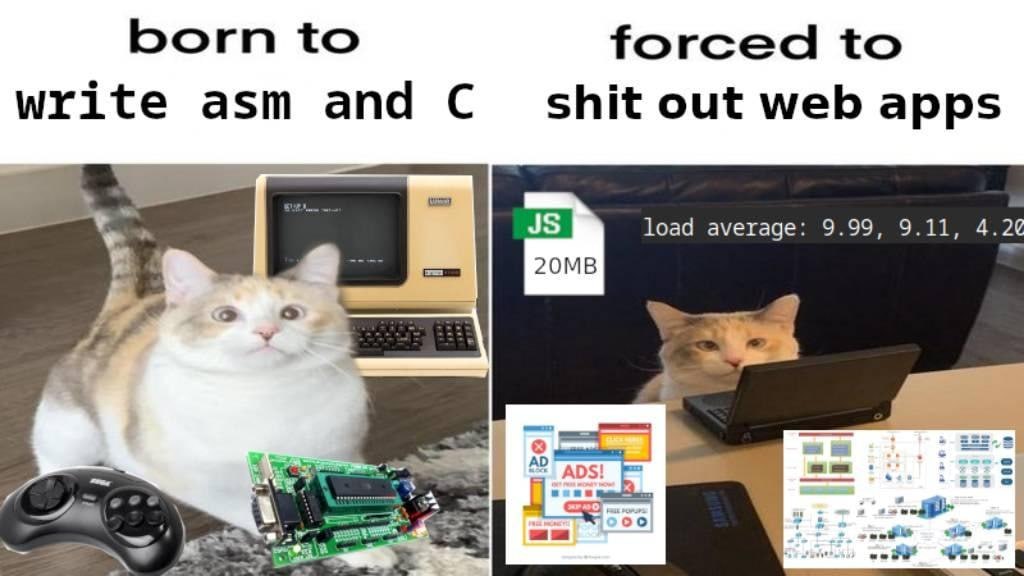
Sending patches to FFmpeg is the way out
Apr 29

21
135
3,613
76,751
Shvm retweeted
Apr 27
If someone keeps attacking your character instead of addressing what actually happened, pay attention. That usually means the facts aren’t in their favor, so they try to make you the problem instead.
13
240
849
19,987



Apr 5
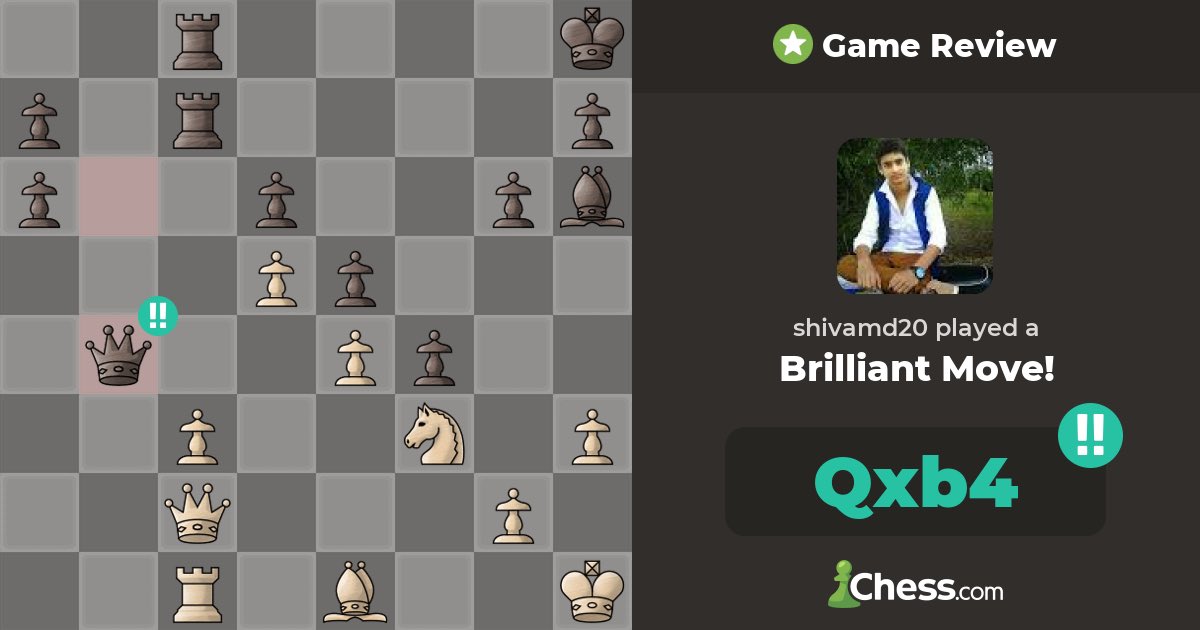
LLMs feel crazy powerful… until you try using them for chess analysis.
every game I paste in, I get the same feedback. “You’re tactical but messy”, “your openings need work”…
yeah, but that can’t be true every single game.
1
87
Apr 5
Half the time it doesn’t even get which side I played unless I correct it.
At that point it just feels like it’s guessing what a “normal” player sounds like, not actually reading the game.
1
59
Apr 4
Rust seems to be java for systems programming
Apr 3

The Rust community is pretty annoying, but the anti-Rust community is on a whole other level of insufferable.
Guys, grow up, there's more to life. 😅
1
1
137
Shvm retweeted

Mar 28
- Drafted a blog post
- Used an LLM to meticulously improve the argument over 4 hours.
- Wow, feeling great, it’s so convincing!
- Fun idea let’s ask it to argue the opposite.
- LLM demolishes the entire argument and convinces me that the opposite is in fact true.
- lol
The LLMs may elicit an opinion when asked but are extremely competent in arguing almost any direction. This is actually super useful as a tool for forming your own opinions, just make sure to ask different directions and be careful with the sycophancy.
1,745
2,413
31,242
3,493,067
Mar 26
This tech looks amazing… why isn’t it mainstream?
"tries it on something non-trivial"
Oh. That’s why.
2
85
Mar 22
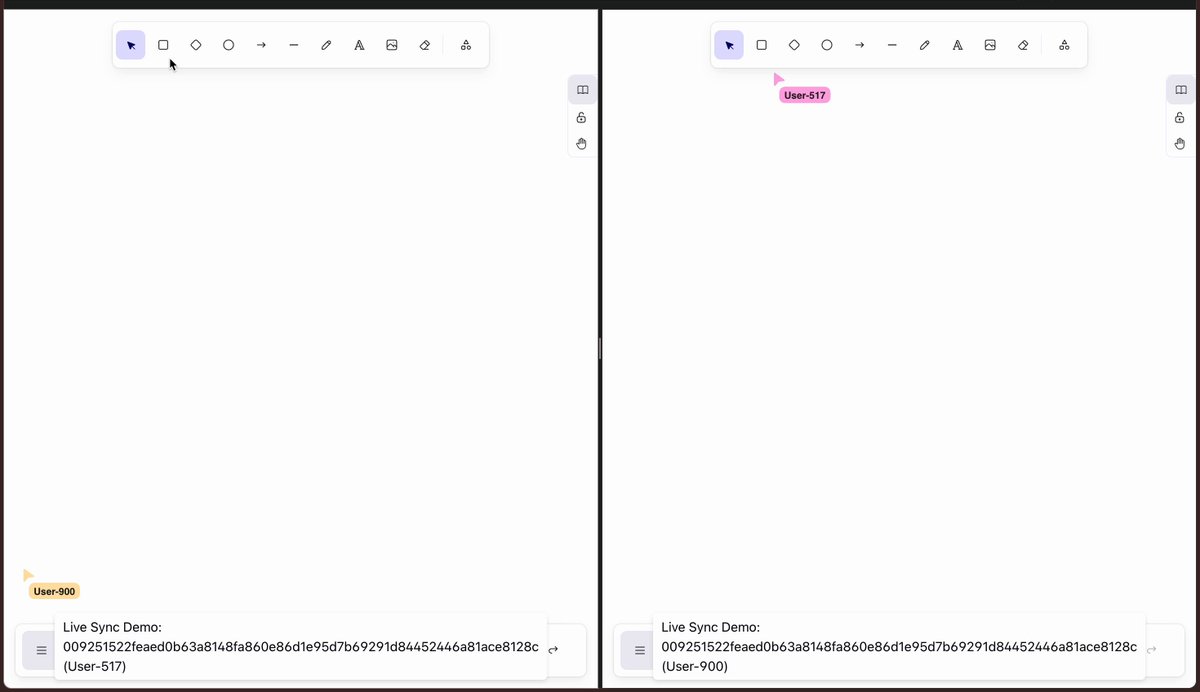
Every time someone says “real-time collaboration" my brain goes:
DURABLE OBJECTSSS.
The first primitive that actually solves coordination at scale.
State logic in one place. WebSocket hibernation. Pay for compute, not idle time.
What else could we have asked for?
Mar 22

There are two ways to build real-time collaboration - either everything goes through a central server, or you go for a P2P mesh. Assume a collaborative canvas, like Figma, Canva, or Miro, with 10 users ...
When you route every cursor movement through a central server, 10 users generate 60 pointer updates each second, which means 600 messages arriving at the server, which then fans them out to 9 recipients each. That is 5,400 messages per second, per session, just for mouse tracking.
The alternative is a P2P mesh - every client connects directly to every other client, and the server never touches these high-frequency packets at all.
But the mesh has its own problem - connections grow as n × (n - 1) / 2. With 4 users, 6 connections. With 10 users, it is 45. With 20, it becomes 190. i.e., each individual browser holds open (n - 1) simultaneous WebRTC connections. The server load goes to zero, but the client complexity grows quadratically.
So when does mesh make sense?
Use mesh topology when the data is high-frequency, low-stakes, and latency-sensitive - cursor positions, live selections, drawing strokes. Losing one update is fine; the next one arrives in 16 ms anyway. The server genuinely adds no value in this path.
Do not use it for writes that matter - document saves, access control changes, conflict resolution. Those still go through the server. A better way to think about mesh topology is as a way to offload a specific class of traffic.
Here's something worth remembering - not all real-time data is the same.
Cursor positions and committed state have completely different requirements. Treating them identically - routing both through the server - is what creates the bottleneck in the first place. Split the traffic by its tolerance for loss and latency, and the architecture becomes obvious.
Hope this helps.
5
7
143
32,733
Mar 17
What problems would have been solved if we were able to make LLMs deterministic?
116
Mar 17
Hard not to feel like most of my startup ideas from the past 2 years got quietly invalidated by Opus
1
116
Mar 8
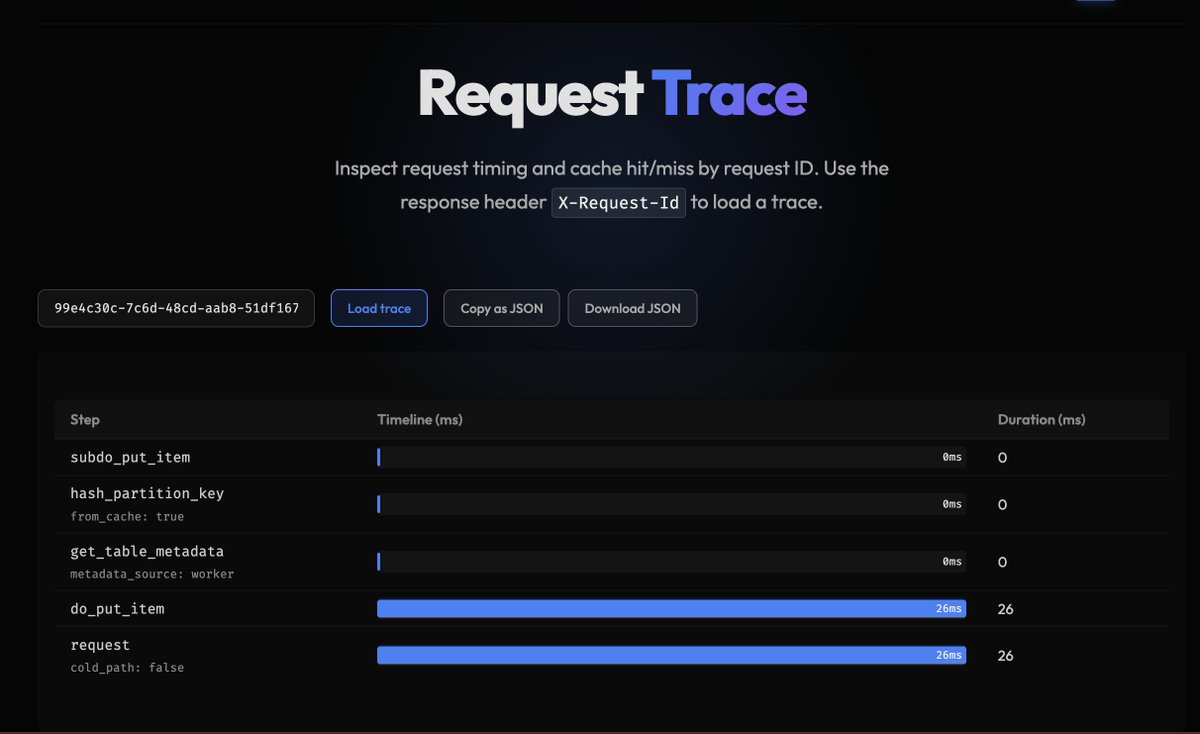
TIL: @Cloudflare workers can use data center cache for frequently used stuff
Mar 1

DynamoDB has an interesting constraint: one writer per partition.
Durable Objects work in a similar way. Each object is a single-threaded authority over its own state.
That similarity got me thinking.
What if we map DynamoDB partitions directly to DOs and just see what happens?
1
2
304