
Joined March 2025
- Tweets 7,894
- Following 1,147
- Followers 1,388
- Likes 905
1,329 Photos and videos

Pinned Tweet

Feb 19
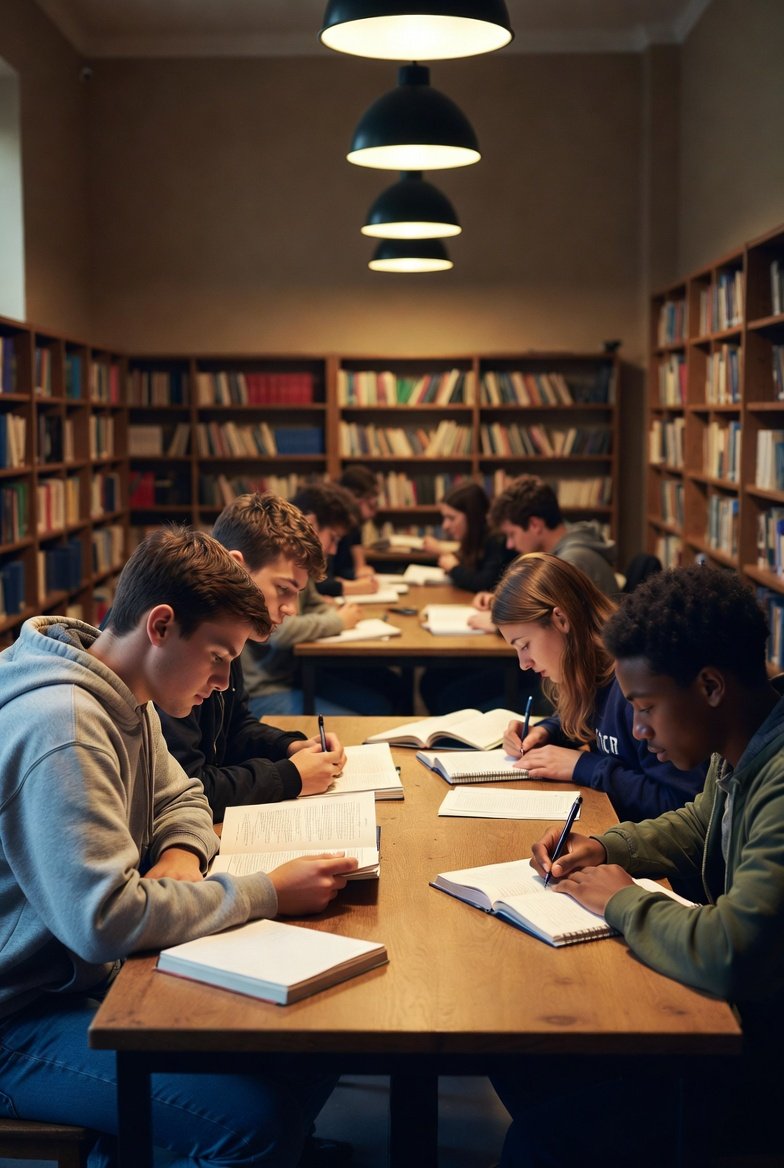
Quote: 'The pressure you feel is just the weight of the atmosphere pushing you to greatness.' – Physics (kinda) My take: Remember, high pressure makes diamonds... and good students. Keep grinding, you've got this! 💎📚 #Motivation #PhysicsQuote #UnderPressure
5
1
41
2,873
Jun 10
🍢 Every satay skewer at the hawker centre is a rate of reaction experiment.
Most people smell the charcoal and think about dinner. Chemists smell activation energy.
Here's what is happening on that grill right now:
The satay uncle fans the charcoal harder when it dims. That fanning is rate-of-reaction science:
💨 MORE FANNING = more oxygen reaching the charcoal surface.
More oxygen molecules = more frequent collisions with carbon atoms.
More collisions = faster combustion reaction.
This is the CONCENTRATION effect on rate — even in a solid-gas reaction. He also uses small charcoal pieces, not one big block.
🔬 SMALLER PIECES = greater surface area exposed to oxygen. Same total mass of charcoal — but far more carbon atoms available to react.
Greater surface area = faster rate.
He lights the charcoal with a small flame, not a big one.
🔥 HIGHER TEMPERATURE = particles have more kinetic energy.
More particles exceed the activation energy threshold. Reaction rate increases — dramatically.
Three rate factors. One satay grill.
❓ Wednesday challenge:
A satay uncle doubles the surface area of his charcoal by breaking each piece in half. He also increases the temperature of his fan air from 25°C to 45°C.
Q1: Explain using collision theory why doubling surface area increases reaction rate.
Q2: Using the rule of thumb (rate doubles per 10°C rise), by what factor does the rate increase from 25°C to 45°C?
Q3: If both changes are applied simultaneously, and they act independently — what is the overall factor by which the rate increases?
Show working and full collision theory explanation 👇
Tag a friend who eats satay every week but never knew they were watching chemistry. 🍢
16
Jun 10
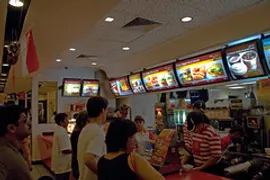
🍟 A Sec 3 student solved this probability problem during his McDonald's study session.
His study group all agreed with his answer.
His teacher returned the paper with a big red cross.
Can you find the mistakes?
——
Question:
At a McDonald's outlet, the probability that a randomly chosen customer orders a burger is 0.6.
The probability they order fries is 0.5.
The probability they order BOTH is 0.2.
(a) Find the probability that a customer orders a burger OR fries (or both).
(b) Find the probability that a customer orders NEITHER. (c) A customer is chosen at random. Given that they ordered fries, find the probability they also ordered a burger.
Student's working:
(a) P(burger or fries) = 0.6 0.5 = 1.1 "Probability is 1.1"
(b) P(neither) = 1 − 1.1 = −0.1 "Probability is −0.1" (c) P(burger | fries) = 0.6 × 0.5 = 0.30 "Probability is 0.30" ——
There are THREE mistakes.
Mistake 1 is the most fundamental probability error a student can make — and it cascades into Mistake 2.
Mistake 2 proves the student didn't notice his answer was physically impossible. Mistake 3 uses completely the wrong formula for conditional probability.
🎓 Students: all three mistakes appear in O-Level Additional Mathematics every year.
👨👩👧 Parents: a probability greater than 1 or less than 0 is always wrong. Always.
Comment all THREE corrections with full working 👇 Full mark scheme posted at 8 PM tonight.
📌 Save this — P(A or B) and P(A|B) are the two most confused probability formulas in Sec 3–4.
10
Jun 10
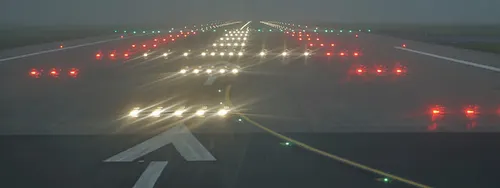
✈️ Changi Airport's runway lights are not white.
They are a precisely engineered sequence of colours — and each colour is a physics calculation, not a design choice.
Here's what pilots see on final approach and what your O-Level light syllabus explains completely:
🟢 GREEN threshold lights — mark the start of the runway. Green light has the longest wavelength in the visible spectrum that still triggers high alert response in the human eye.
🔵 BLUE taxiway lights — blue's short wavelength scatters least in fog and rain. It penetrates low-visibility conditions better than red at ground level.
🔴 RED end-of-runway lights — red has the longest wavelength in visible light (~700 nm). It carries less energy per photon (E = hf). But it is used here because the human eye has evolved to associate red with STOP — even at low light intensities.
⚪ WHITE approach lights — white light contains ALL wavelengths. It maximises visibility range. The entire colour sequence is built on one equation: c = fλ And one principle: different wavelengths carry different energies and scatter differently through atmosphere. ❓ Wednesday challenge: Green light has a wavelength of 520 nm. Red light has a wavelength of 700 nm. (Speed of light c = 3 × 10⁸ m/s, Planck's constant h = 6.63 × 10⁻³⁴ J s)
Q1: Calculate the frequency of green light and red light.
Q2: Calculate the energy of one photon of each colour. (E = hf)
Q3: Which photon carries more energy — and what does this tell us about why UV light is more dangerous than visible red light?
Show full working 👇
Drop a ✈️ if you'll look at runway lights differently next time you fly.
8
Jun 8
⚗️ One complete problem. This is your O-Level Chemistry in a single question.
You've been making this reaction your whole life without knowing it.
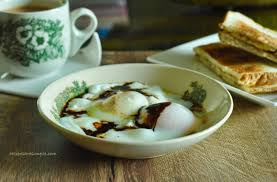
When you cook an egg, you are running an irreversible protein denaturation reaction.
But we're going to analyse it like a chemist.
Step 1 — ATOMIC STRUCTURE An egg white contains protein chains held together by sulfur-sulfur bonds (S–S). Sulfur has atomic number 16. How many electrons are in the outer shell of a sulfur atom? What group is it in?
Step 2 — BONDING The S–S bonds are covalent. When heat breaks them, the proteins unfold (denature). Why does the protein NOT refold when you cool the egg? (Think: reversible vs irreversible reactions)
Step 3 — RATE OF REACTION A soft-boiled egg takes 4 minutes at 100°C. Using the rate rule (doubles per 10°C rise), how long would it take at 80°C?
Step 4 — ACIDS AND BASES Fresh egg white has pH ≈ 7.6 to 9.2 as it ages. Is fresh egg white acidic, neutral, or alkaline? What does the increasing pH over time tell you about how the chemistry of the egg changes?
Step 5 — QUANTITATIVE THINKING An egg contains approximately 6 g of protein. Average molar mass of amino acids ≈ 110 g/mol. Roughly how many moles of amino acid units are in one egg?
Show all working for all 5 steps 👇
All of it was in your kitchen the whole time. ⚗️
Drop a 🍳 if this changed how you see breakfast
11
Jun 8
🧠 BRAIN TEASER — 5 topics. 5 clues. One answer.
I am describing one object in your kitchen.
Clue 1 (Forces): I resist motion when you drag me across a surface. My static coefficient is higher than my kinetic coefficient.
Clue 2 (Thermal): I am made of a material with low specific heat capacity — I heat up and cool down much faster than the water inside me.
Clue 3 (Waves): When you tap me, I produce a sound. The pitch depends on my material, thickness, and the amount of substance inside me.
Clue 4 (Electricity): I am often connected to an electrical heating element beneath me that uses Ohm's Law to convert electrical energy to thermal energy.
Clue 5 (Pressure): The substance I contain exerts pressure on my inner walls proportional to the depth below the surface.
❓ What am I?
But here's the challenge — don't just name the object. For each clue, identify:
→ The physics concept being used
→ One formula that applies to it
→ One real number (estimated or calculated) that fits the object
This is your O-Level Physics in one kitchen object.
Comment your answer with all 5 physics explanations 👇
The most complete scientific answer gets featured in a dedicated shoutout post. 🏆
7
Jun 7
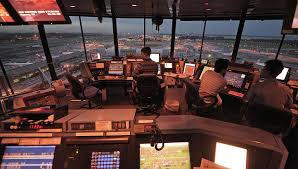
✈️ Air traffic controllers at Changi Airport think in vectors.
Every plane in Singapore's airspace is a vector — a magnitude (speed) and a direction (bearing).
When two planes approach the same waypoint, controllers solve vector addition problems in real time. This is O-Level / A-Level Maths.
These are the stakes when it's done wrong.
📐 challenge:
Two planes are flying toward Changi:
Plane A: velocity vector (300, −200) km/h (300 km/h east, 200 km/h south)
Plane B: velocity vector (−150, −250) km/h (150 km/h west, 250 km/h south)
Q1: Calculate the speed (magnitude) of each plane. Give answers to 3 significant figures.
Q2: Find the resultant vector if both planes' velocity vectors are added. What does this "combined vector" represent physically? (Think: what would an object moving with this combined velocity look like?)
Q3: Plane A is at position (800, 400) km. It is flying with velocity vector (−300, 200) km/h. Where will it be in 2 hours?
Q4 (Stretch): What bearing is Plane B flying on? (Measured clockwise from North)
This is real navigation mathematics — done by every pilot and air traffic controller, every day, above our heads.
Show full working for all 4 parts 👇
📌 Save this — vector questions are the highest-value topic in Additional Mathematics.
8
Jun 7
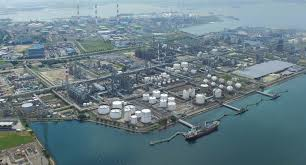
🏭 The petrochemical plants on Jurong Island process millions of litres of crude oil every day.
Inside every refinery, they are separating molecules that differ by just a few carbon atoms.
Here's your organic chemistry poll:
Four compounds from a Jurong Island refinery: Compound A: CH₄ (methane) — boiling point: −162°C Compound B: C₄H₁₀ (butane) — boiling point: −1°C Compound C: C₈H₁₈ (octane) — boiling point: 126°C Compound D: C₁₆H₃₄ (hexadecane) — boiling point: 287°C
🗳️ POLL: Which property of these molecules BEST explains why their boiling points increase with chain length?
→ A) More carbon atoms = more mass = harder to boil → B) Longer chains = stronger intermolecular forces (van der Waals) = more energy needed
→ C) Longer molecules have more surface area for London dispersion forces to act on
→ D) Both B and C are correct — they are the same explanation stated differently
Vote now. Then explain in the replies — which of the four options is completely wrong, which is partially right, and which is fully correct? 👇
⚠️ One option is a common misconception that sounds scientific but misidentifies the mechanism. One option correctly names the force but incompletely explains it. Full explanation with Jurong Island fractional distillation context posted at 5 PM.
7
Jun 7
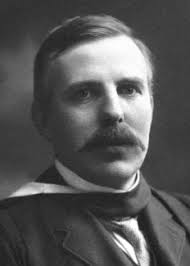
☢️ "The energy produced by the breaking down of the atom is a very poor kind of thing. Anyone who expects a source of power from the transformation of these atoms is talking moonshine." — Ernest Rutherford, 1933
Two years later, his student Leo Szilárd proved him completely wrong.
Six years later, the first nuclear reactor went critical. This is one of the most famous wrong predictions in the history of science.
And it teaches the most important lesson in physics: Even the greatest minds have blind spots. The job of the next generation is to find them.
☢️ Rutherford himself discovered the nucleus. He split the atom. He transformed modern physics. And he still got this spectacularly wrong.
At Science Centre Singapore's nuclear exhibit, the math behind his mistake is on the wall:
E = mc²
One kilogram of matter, fully converted: 9 × 10¹⁶ J of energy. Enough to power Singapore for years.
📐 challenge: Uranium-238 decays to Thorium-234 by emitting an alpha particle.
Q1: Write the complete nuclear equation for this decay (include atomic number and mass number).
Q2: If a sample starts with 80 g of U-238 and the half-life is 4.5 × 10⁹ years — after 9 × 10⁹ years, what mass remains?
Q3: Why does radioactive decay follow first-order kinetics — and what does that mean for how long it takes to "completely" decay?
Comment your working 👇
Drop a ☢️ if Rutherford's quote made you feel better about being wrong sometimes.
5
Jun 6
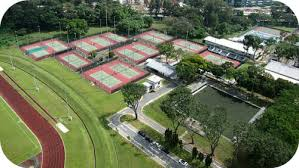
⏱️ QUADRATIC SPEED ROUND — Singapore Tennis Centre Edition
A tennis ball is launched upward from a ball machine. Its height h (in metres) at time t (in seconds) is modelled by:
h = −5t² 20t 1
You have 4 MINUTES to answer all 5 questions. Full working required for every part.
Q1: What is the initial height of the ball when launched? (t = 0)
Q2: Factorise or use the quadratic formula to find when the ball hits the ground (h = 0). Give answers to 2 decimal places.
Q3: At what time does the ball reach maximum height? Q4: What is the maximum height reached?
Q5: A player can only return balls higher than 1.5 m above the ground. For what range of time values is the ball returnable? (Set up the inequality and solve.)
⏰ 4 minutes. All 5 parts. Full working shown. Comment DONE all 5 answers 👇
First 3 complete correct entries get named "Court Mathematician Certified" in tomorrow's post. 🎾 Solution posted at 7 PM tonight.
6
Jun 6
⚗️ In 1886, two scientists working independently — one in Ohio, one in Paris — discovered aluminium smelting within months of each other.
Before 1886, aluminium was MORE EXPENSIVE than gold.
The Washington Monument was capped with aluminium in 1884 — not because it was cheap, but because it was the most precious metal available.
Then Hall and Héroult discovered electrolytic smelting. Aluminium prices collapsed by 99% in 10 years.
Why was it so hard to extract?
Because aluminium is high in the reactivity series. Highly reactive metals hold tightly to their oxygen atoms.
They cannot be extracted by simple heating with carbon. Only electrolysis can extract them.
🇸🇬 Today, Jurong Island processes aluminium and other reactive metals using this exact principle.
❓ Chemistry challenge:
Q1: Name THREE metals that CANNOT be extracted by heating with carbon alone, and explain why using the reactivity series.
Q2: Write the half-equations for the electrolysis of molten aluminium oxide (Al₂O₃):
→ At the cathode
→ At the anode
Q3: Why must Al₂O₃ be molten (not dissolved in water) for electrolysis to extract aluminium?
Show full half-equations with electron counts 👇
Drop a ⚗️ if you had no idea aluminium was once more precious than gold.
1
10
Jun 6
🏗️ The crane lifting steel beams at the Tengah HDB construction site isn't using a hook.
It's using your O-Level Physics.
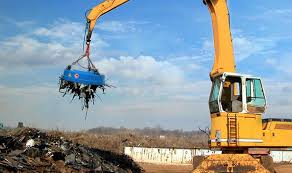
Some cranes use electromagnetic cranes — massive electromagnets that switch ON to grip steel, then switch OFF to release it.
The physics behind it:
An electric current through a coil of wire creates a magnetic field.
More coils = stronger field.
More current = stronger field.
Iron core inside = field multiplied by 1,000×.
Switch off the current. Field disappears. Steel drops. Perfectly controlled.
This is electromagnetic induction — and you can calculate exactly how strong these magnets are.
❓ challenge:
An electromagnet has:
→ 500 turns of wire
→ Current: 4 A
→ Core material: soft iron (relative permeability μᵣ = 1,000)
Q1: State TWO ways to increase the strength of this electromagnet without changing the core material.
Q2: Why is SOFT iron used for the core instead of steel? Q3: If the current is doubled, what happens to the magnetic field strength? Justify your answer.
Q4 (Stretch): Why does an electromagnet crane use soft iron but a permanent magnet uses steel?
Show your reasoning for all parts 👇
Drop a 🏗️ if you had no idea cranes used electromagnets.
8
Jun 5
🚴 Every wheel on every bicycle at Pulau Ubin is a moving circle theorem.
Here's what your O-Level Maths textbook doesn't tell you:
The reason a wheel rolls smoothly — without wobbling — is directly linked to a circle theorem:
"The angle in a semicircle is always 90°."
When a wheel contacts the ground, the contact point, the centre of the wheel, and any point on the top half of the wheel form a triangle. The angle at the rim? Always 90°.
This constant right angle means the force from the ground always passes directly through the wheel's centre — creating smooth, efficient rolling.
Without this theorem, engineers couldn't calculate tyre stress distributions.
📐 challenge — three circle theorems tested:
A circle has centre O. Points A, B, C, D are on the circumference.
Q1: Angle AOB = 130°. Find angle ACB (angle at circumference on same arc).
Q2: ABCD is a cyclic quadrilateral. Angle ABC = 78°. Find angle ADC.
Q3: AB is a diameter. C is on the circumference. Angle BAC = 37°. Find angle ACB and angle ABC.
Show all reasons alongside your answers 👇
📌 Save this — circle theorem reasons must be written out for full marks. Most students lose them.
9
Jun 5
🍟 A chemistry teacher walked into a McDonald's and turned it into a lesson.
She ordered two portions of fries — one from a fresh batch, one reheated from 20 minutes ago.
She placed them side by side in front of her Sec 3 class.
"Which one represents a higher rate of reaction?" she asked.
Student A: "The fresh one — it's hotter so the particles have more energy."
Student B: "The reheated one — it's had more time to react."
Student C (eating the fresh fries): "I don't care, this one tastes better."
The teacher paused. Then said: "Student A is correct. Student C understood the lesson perfectly."
🍟 Here's why:
Higher temperature → particles have more kinetic energy → more frequent collisions → more energetic collisions → higher rate of reaction.
The Maillard reaction (browning) in fries is a chemical reaction that follows rate-of-reaction rules exactly.
Hotter oil → faster browning → crispier fries. Reheated fries: the reaction has slowed down as temperature dropped.
❓ Chemistry challenge: A chemist doubles the temperature of a reaction from 25°C to 50°C. Using the rule of thumb: rate doubles for every 10°C rise.
Q1: By what factor does the reaction rate increase?
Q2: What TWO factors explain this increase at particle level?
Q3: Draw and label a Maxwell-Boltzmann distribution sketch (describe it in words if you can't draw — bonus for actual descriptions).
Comment below 👇
Drop a 🍟 if Student C had the right idea.
1
10
Jun 5
🥢 BRAIN TEASER: You're at home eating bee hoon.
You put your chopstick into a bowl of clear soup.
The chopstick looks BENT at the water surface. You pull it out. It's perfectly straight.
Riddle: The chopstick didn't change. Your eyes didn't malfunction. The physics of light did something completely real.
What ACTUALLY happened — and why does the chopstick appear bent in the direction opposite to what you'd expect if light "bent toward the water"?
Most students get the first part right. Almost nobody explains the direction correctly.
Hint 1: Light travels slower in water than in air.
Hint 2: Snell's Law — n₁ sin θ₁ = n₂ sin θ₂
Hint 3: The refractive index of water ≈ 1.33
❓ Full challenge:
Q1: Explain in your own words WHY the chopstick appears bent.
Q2: If the angle of incidence (in air) is 40°, calculate the angle of refraction in water. (sin 40° = 0.643, n_water = 1.33)
Q3: In which direction does the refracted ray bend — toward or away from the normal? Why?
Comment your full explanation working 👇
Best conceptual explanation featured tomorrow. 🥢
1
Jun 4
🛒 A Sec 2 student tried to solve this simultaneous equations problem during his math revision.
His mother marked it "correct."
His teacher gave him 1 out of 6 marks.
Find the mistakes:
——
Question: A mango costs $m and a papaya costs $p.
3 mangoes and 2 papayas cost $11.
5 mangoes and 1 papaya cost $14.
Student's working:
Equation 1: 3m 2p = 11
Equation 2: 5m 1p = 14
Multiply equation 2 by 2:
10m 2p = 28
Subtract equation 1:
10m 2p = 28
− 3m 2p = 11
7m = 17
m = 17/7 = $2.43
"A mango costs $2.43"
——
There are THREE mistakes. One is a subtraction sign error that changes everything. One is a rounding error that loses the accuracy mark. One is a missing step — he never found p.
🛒 Parents: the mother approved an answer that was fundamentally wrong.
🎓 Students: simultaneous equations is 8–10 marks in O-Level Paper 2. All three mistakes are fatal.
Comment all three corrections with full working 👇 Complete solution posted at 8 PM.
📌 Save this — elimination method errors are the most common in Sec 2–3.
3
Jun 4
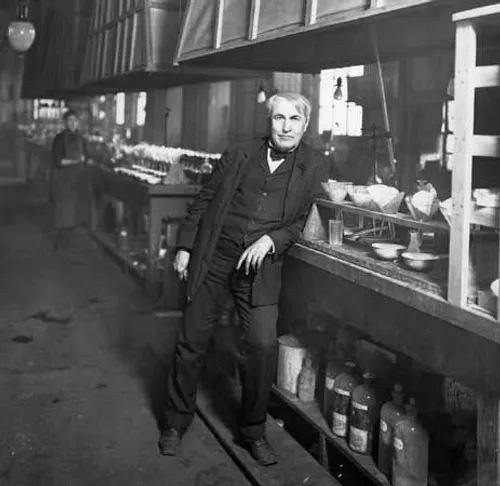
⚡ "I have far more respect for the person with a single idea who gets there than for the person with a thousand ideas who does nothing." — Thomas Edison
He filed 1,093 patents. He ran 10,000 failed experiments before the light bulb worked. But here is what most people don't know about Edison and chemistry: His entire lighting system depended on electrolysis. To produce pure copper wire for his electrical grid, factories used electrolysis to purify copper from impure ore to 99.99% purity. Without electrolysis, no pure copper. Without pure copper, no electrical wires. Without electrical wires, no light bulb in every home.
🇸🇬 Today, Singapore's electronics manufacturing plants in Jurong use electrolysis to:
→ Electroplate circuit boards with copper
→ Purify metals for semiconductors
→ Produce hydrogen for fuel cells
⚡ challenge: In the electrolysis of copper sulfate solution using copper electrodes:
Q1: Write the half-equation at the cathode.
Q2: Write the half-equation at the anode.
Q3: If a current of 2.0 A flows for 30 minutes, and the Faraday constant F = 96,500 C/mol — what mass of copper is deposited at the cathode? (Ar of Cu = 64) Show full working with half-equations 👇 Drop a ⚡ if Edison just made electrolysis feel less boring.
3
Jun 4
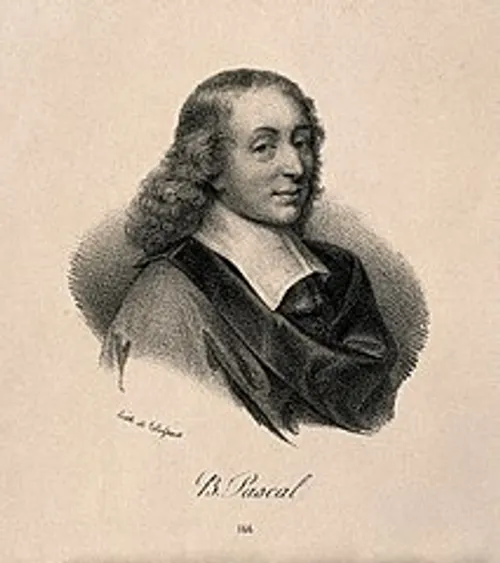
🏗️ The excavator tearing up the road outside your school is powered by a principle discovered in a bathtub in 1648. His name was Blaise Pascal. He noticed that pressure applied to a confined fluid transmits equally in all directions. We call it Pascal's Principle. And it means this: A construction excavator exerts up to 350,000 N of digging force — roughly the weight of 35 cars. But the operator pushes with maybe 50 N of hand force on a joystick. The hydraulic system multiplies that force by 7,000×. How? Because pressure = force ÷ area (P = F/A) A small piston with tiny area creates pressure. That same pressure acts on a large piston with large area. Same pressure × bigger area = much bigger force. The maths is pure O-Level Physics.
❓ challenge:
A hydraulic system has:
→ Small piston area: 5 cm²
→ Large piston area: 200 cm²
→ Force applied to small piston: 80 N
Q1: What pressure is created in the fluid?
Q2: What force does the large piston exert?
Q3: If the small piston moves down 40 cm, how far does the large piston move up? (Hint: volume is conserved) Show your working 👇 Drop a 🏗️ if Pascal just made your excavators more interesting.
5
Jun 3
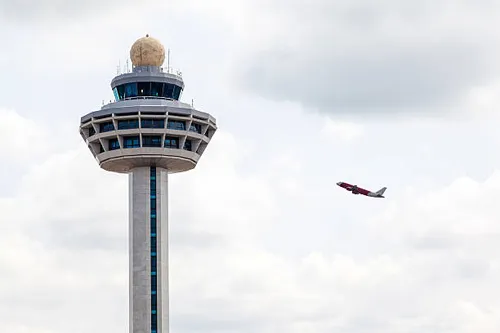
✈️ Every plane landing at Changi is solving a trigonometry problem at 250 km/h.
Here's what your O-Level Maths is actually calculating: A plane on final approach to Changi descends at a 3° glideslope angle. It is currently 8 km from the runway horizontally. Pilots and air traffic controllers use trigonometry — specifically tan — to calculate the exact altitude the plane should be at every second.
📐 challenge — three parts, increasing difficulty:
Q1 (Basic): Using tan 3° = 0.0524, find the plane's current altitude in metres.
Q2 (Intermediate): At 4 km from the runway, the plane should be at what altitude? Show using SOHCAHTOA — identify which ratio to use and why.
Q3 (Stretch): The plane descends from 800 m altitude. Using the same 3° angle, what is the horizontal distance it covers during descent? (Give answer in km, to 3 significant figures)
This is real approach geometry. Changi's runways are designed around these exact calculations. Show full working with SOHCAHTOA labels for all 3 parts 👇 📌 Save this — trigonometry applied to real distances is O-Level Paper 2 standard.
1
Jun 3
⏱️ HAWKER CENTRE CHEMISTRY SPRINT — 3 minutes ⏰ You are the food safety officer. Five drinks on the counter. You have pH readings. You have 3 minutes to classify, rank, and calculate.
Here are your readings:
→ Kopi-O: pH 5.0
→ Teh tarik: pH 6.5
→ Lime juice: pH 2.8
→ Water: pH 7.0
→ Baking soda solution: pH 8.3
Q1: Classify each as acidic, neutral, or alkaline.
Q2: Rank all five from most acidic to most alkaline.
Q3: The H⁺ concentration of lime juice is 10⁻²·⁸ mol/dm³. The kopi-O has pH 5.0. How many times MORE acidic is the lime juice than the kopi-O? (Use: each pH unit = 10× difference in H⁺ concentration) ⏰ 3 minutes. Full answers.
Comment DONE your three answers 👇 First 5 correct entries get named "Food Safety Certified" in tomorrow's post. 🧪 Most common wrong answer revealed at noon. Answer posted at 8 PM.

2
Jun 3
🔌 Your kitchen is wired with Ohm's Law. Every socket. Every switch. Every appliance.
Let me walk you through exactly what's happening when you turn on the kettle:
Step 1 — VOLTAGE is the push Your kitchen socket provides 230 V (Singapore standard). This is the electrical pressure driving electrons through the circuit.
Step 2 — RESISTANCE slows the flow The kettle's heating element resists electron flow. The resistance converts electrical energy → heat energy. A typical kettle: resistance ≈ 26.5 Ω
Step 3 — CURRENT is the flow rate Using Ohm's Law: I = V ÷ R I = 230 ÷ 26.5 = 8.68 A That is 8.68 coulombs of charge passing every second.
Step 4 — POWER is what you pay for P = V × I = 230 × 8.68 = 1,996 W ≈ 2,000 W = 2 kW Your 2,000-watt kettle label? That's exactly this calculation.
Step 5 — YOUR CHALLENGE Your rice cooker draws 600 W from the same 230 V supply.
Q1: What is the resistance of the rice cooker's heating element?
Q2: What current flows through it?
Q3: If electricity costs $0.30 per kWh, and you boil rice for 40 minutes daily — what is the monthly cost? (30 days) Show full working for all 3 steps 👇
2