
Developers of the FLOW-3D family of CFD simulation software for free surface flows, metal casting, additive manufacturing, laser welding & water resources.
Joined March 2012
- Tweets 844
- Following 59
- Followers 765
- Likes 58
751 Photos and videos
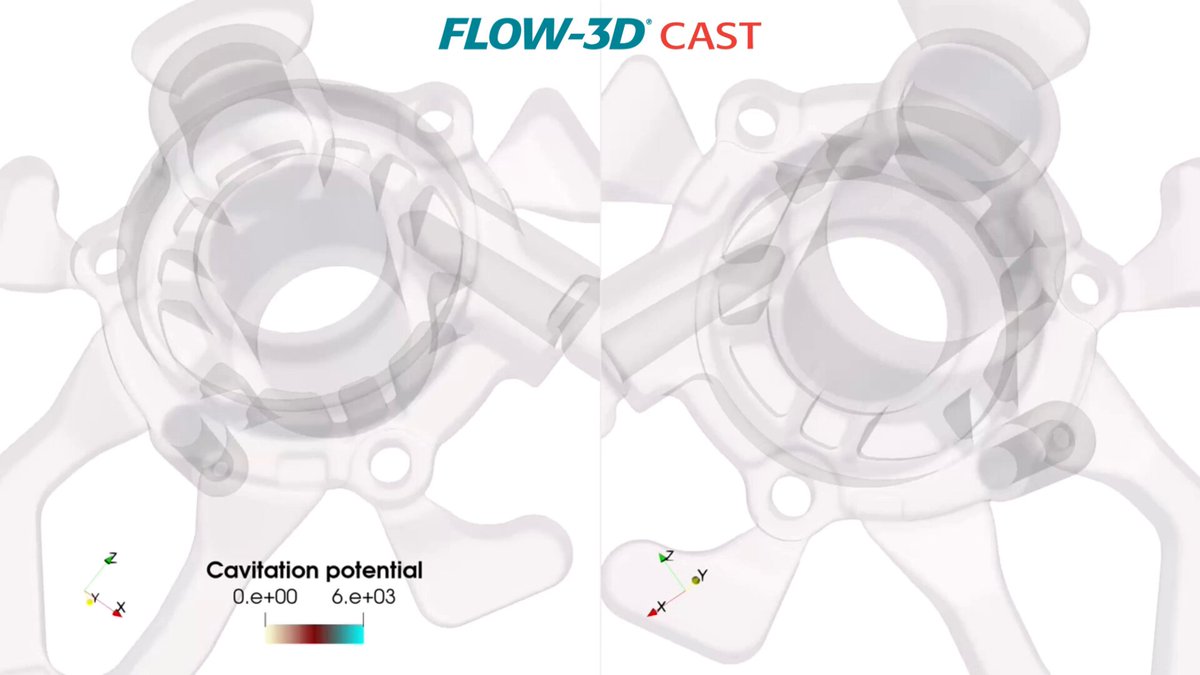


Cavitation bubbles collapsing on a die surface cause pitting, surface defects, and dramatically shortened die life. The cavitation potential model identifies areas on the die where cavitation is likely to occur by tracking the conditions that cause it.
In this FLOW-3D CAST simulation of a high-pressure die casting fill, cyan regions indicate where local pressure drops below the vapor pressure threshold. The output variable accumulates over time wherever that condition persists, and the visualization surfaces only regions that exceed a set risk level, giving engineers a clear picture of where to focus design changes.
Learn more about cavitation modeling in FLOW-3D: flow3d.com/modeling-capabili…
#flow3d #cfd #hpdc
1
28
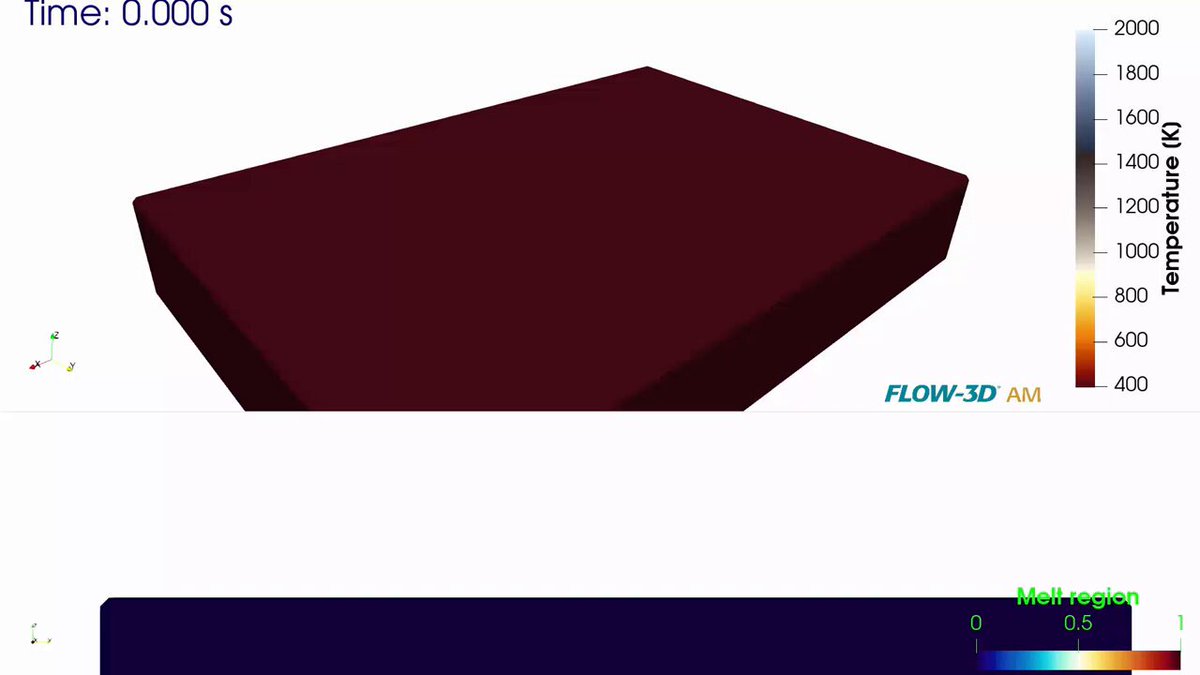
How does thermal buildup in layer 3 differ from layer 1 in powder DED? FLOW-3D AM simulations reveal how heat evolves across layers to affect fusion quality and help optimize deposition parameters.
This FLOW-3D AM simulation demonstrates three-layer powder DED of stainless steel 316, capturing fusion behavior and thermal buildup across successive deposition layers. CFD modeling helps engineers predict how thermal conditions evolve during multilayer builds and optimize process parameters for consistent deposition quality.
Explore how FLOW-3D AM captures multilayer thermal dynamics and helps optimize your DED process. flow3d.com/products/flow3d-a…
#flow3dam #cfd #additivemanufacturing
22
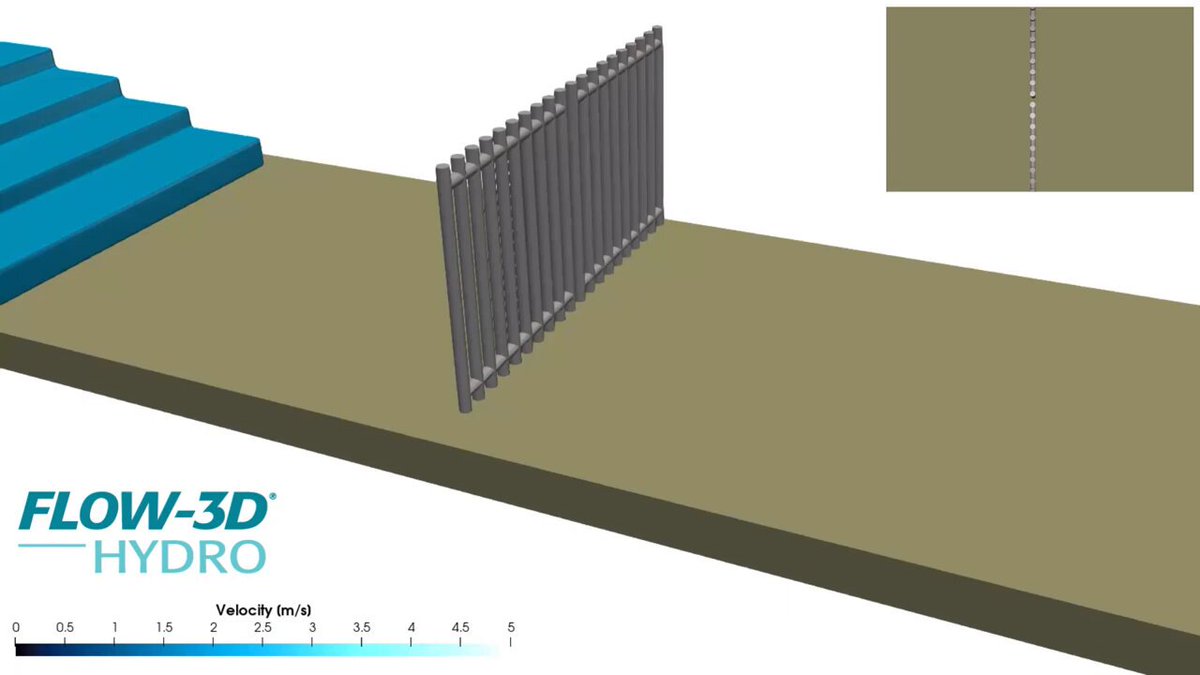
How do you simulate a gate that responds dynamically to flow conditions? FLOW-3D HYDRO's moving objects model captures the interaction between structures and flow with realistic behavior.
This example shows a gate connected to a spring mechanism that keeps it closed under normal flow. As hydraulic conditions change, the simulation captures the gate pushing back against the flow, driven by the specified spring force. Engineers can model rotating gates, sliding structures, or any moving component that interacts with flow, enabling accurate analysis of dynamic responses before construction.
Learn more about the moving objects model: flow3d.com/modeling-capabili…
#flow3dhydro #cfd #generalmovingobjects
74
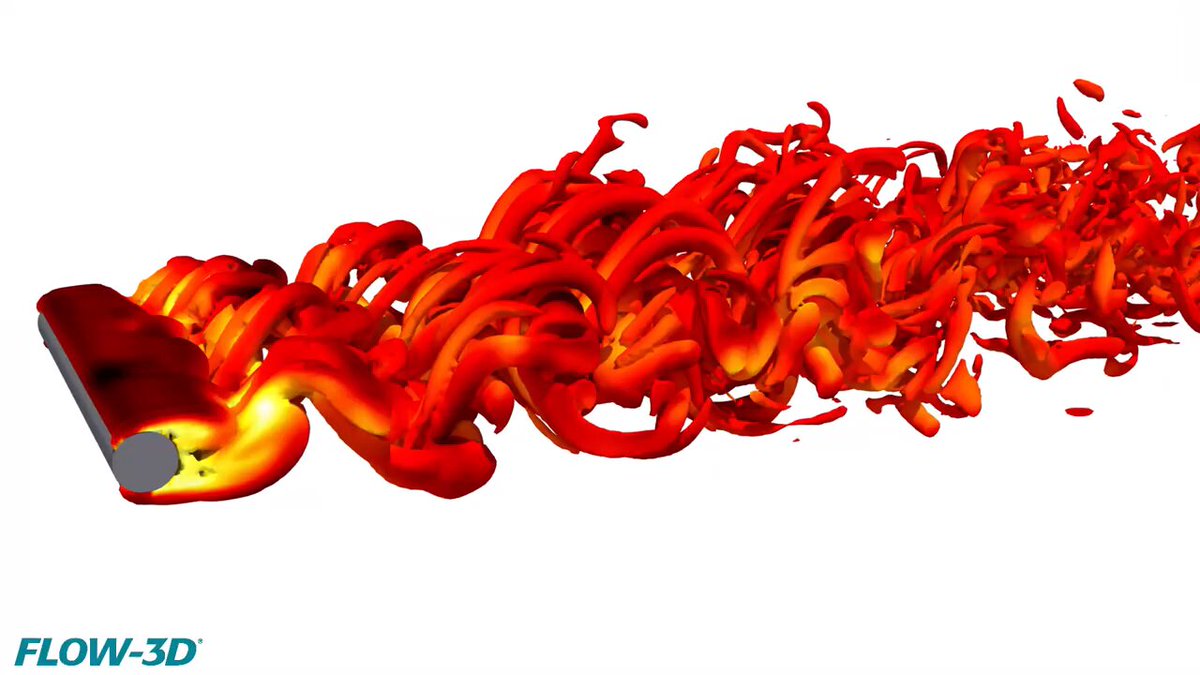
Turbulence isn't chaos — it has structure. This LES simulation of a von Kármán vortex street behind a cylindrical body reveals exactly how that structure forms, evolves, and breaks down.
Large Eddy Simulation resolves the large-scale turbulent structures directly rather than approximating them, making it well suited for flows where wake behavior matters. The iso-surfaces, colored by velocity magnitude, show vortices shedding, stretching, and dissipating downstream in a way that coarser models simply won't capture.
Learn more about turbulence modeling options in FLOW-3D: flow3d.com/modeling-capabili…
#flow3d #cfd #turbulence
1
2
108
Downskin surfaces in LPBF don't behave like bulk layers. They're printed onto loose powder, not solid substrate, which creates surface roughness challenges. FLOW-3D AM helps predict and optimize these conditions.
This simulation shows the full multilayer printing sequence for IN718 at a 45-degree overhang angle, capturing how process conditions evolve across layers to affect downskin surface roughness.
Want to understand how FLOW-3D AM can help improve surface finish on overhangs? Book a demo to discuss downskin quality optimization for your geometries.
#flow3dam #cfd #lpbf
112
Zinc-coated steel is everywhere in automotive manufacturing, but laser welding it creates a problem: zinc vaporizes before steel melts, causing spatter and porosity that compromise weld quality.
This FLOW-3D WELD simulation demonstrates laser lap welding of galvanized steel, capturing how zinc vapor pressure builds up at the interface and causes explosive spatter as vapor pockets escape. By modeling zinc vaporization dynamics, engineers can test different process parameters to find conditions that minimize spatter and porosity in automotive body assembly and other galvanized steel applications.
Dealing with zinc-coated steel welding challenges? Schedule a demo to see how FLOW-3D WELD can help you optimize your process parameters.
#flow3dweld #laser #cfd
2
95
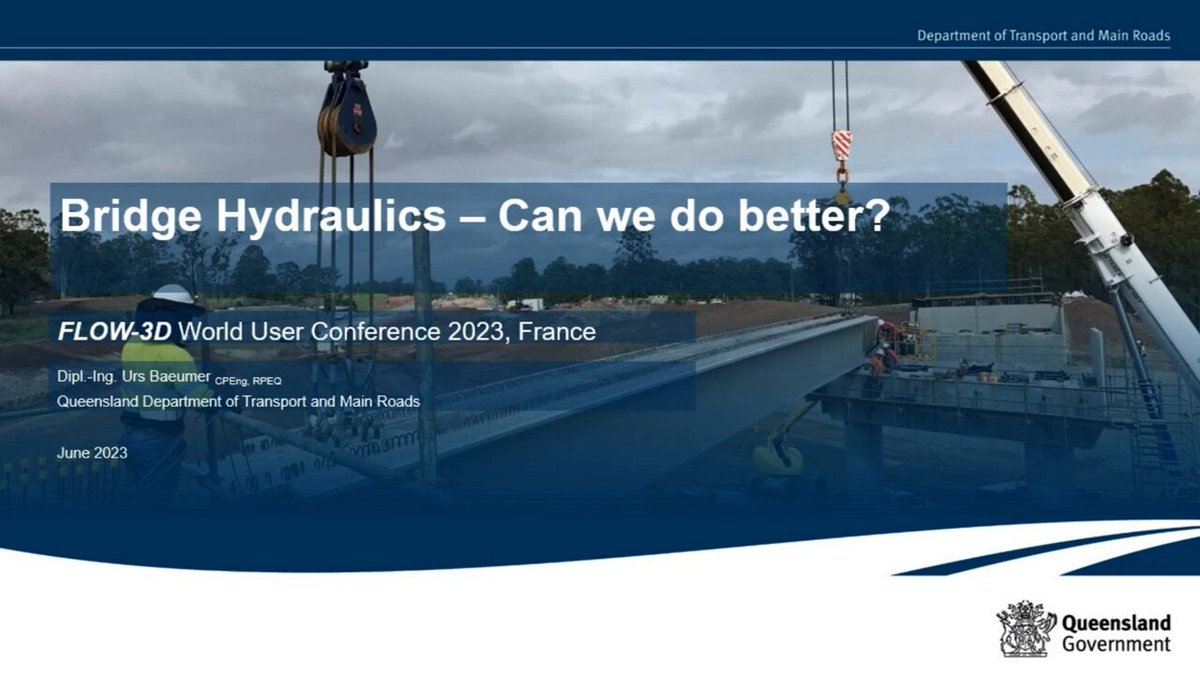
How do you validate bridge hydraulic assessments when the stakes are flood safety? Queensland's Department of Transport and Main Roads presented their approach to improving accuracy in bridge design through FLOW-3D HYDRO modeling.
At our 2023 World Users Conference in France, DTMR presented two case studies: first, comparing simulation results against observed flood levels to develop improved form loss coefficients for large-scale flood modeling. Second, optimizing bridge substructure layout to minimize hydraulic losses in a new design. Both examples demonstrate how detailed CFD analysis supports better engineering decisions when standard approaches fall short.
You can find DTMR's full presentation slides on the FLOW-3D Conference Proceedings site: flow3d.com/conference-procee…
#flow3dhydro #cfd #bridgedesign
1
74
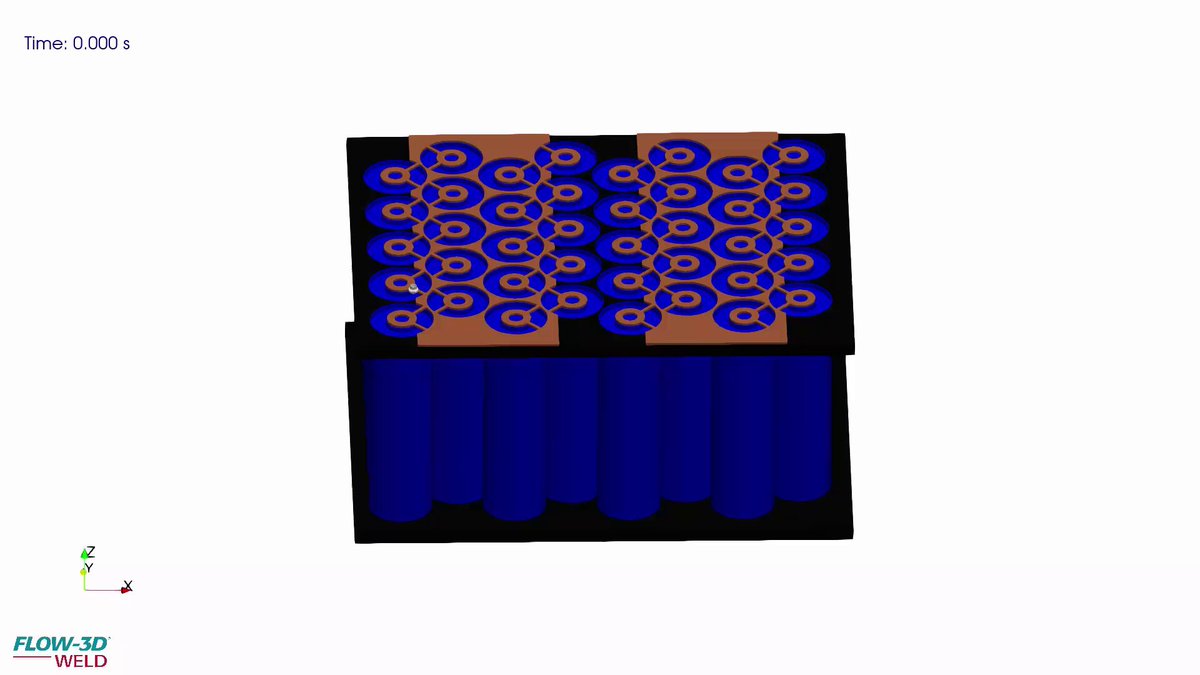
Joining dissimilar materials in battery manufacturing is challenging due to varying thermal properties. In busbar welding, aluminum and copper need to fuse without creating brittle intermetallics or excess porosity, all while meeting tight dimensional tolerances.
This FLOW-3D WELD simulation captures how aluminum and copper mix in the melt pool, how heat distributes through both materials, and how the joint solidifies. This visibility helps engineers avoid intermetallic compounds at the joint interface, spatter from uncontrolled melt pool dynamics, and porosity that degrades both electrical and mechanical performance.
Simulation lets you test parameter combinations (laser power, travel speed, scan path, spot size) before running physical trials, mapping out viable process windows and identifying problem areas early. This significantly reduces iteration cycles when dialing in new processes or scaling from development to production.
Want to learn more about the physics behind busbar welding and see what the industry is doing?
🔅Research paper on laser welding for battery busbars: sciencedirect.com/science/ar…
🔅IPG Photonics on battery module busbar welding solutions: ipgphotonics.com/en-us/solut…
#flow3dweld #cfd #batterymanufacturing
88
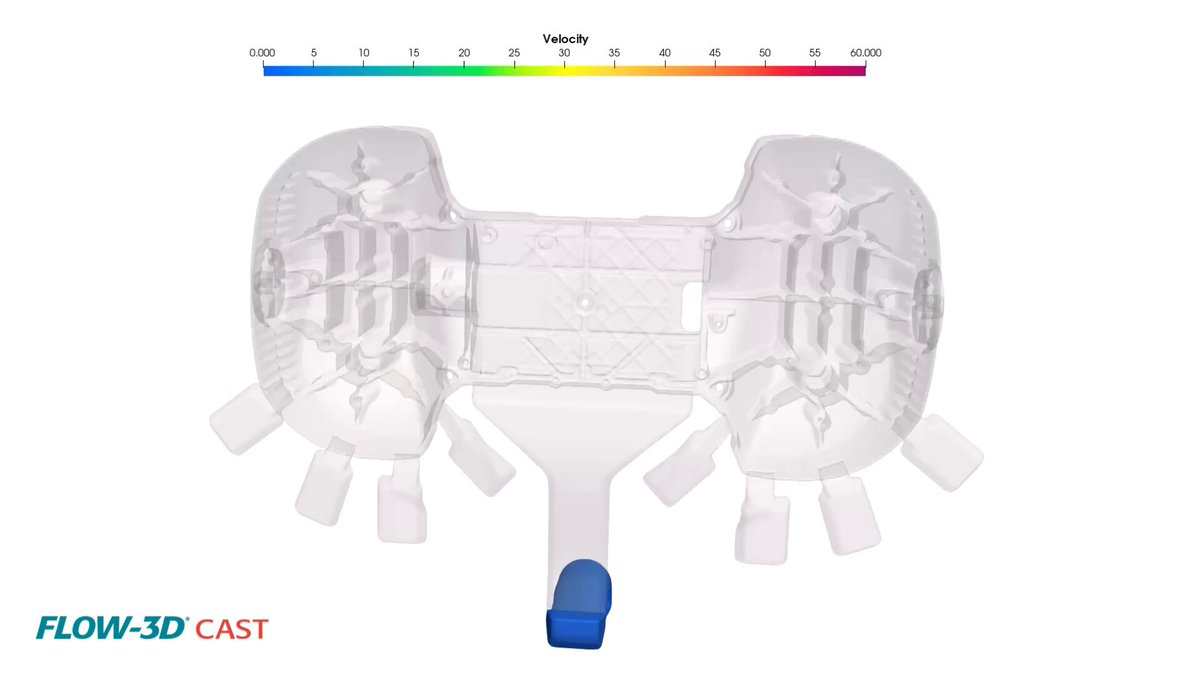
When you're investing in tooling and production setup, simulation accuracy isn't negotiable. Where you place overflows depends entirely on how accurately your simulation predicts metal flow behavior.
This high pressure die casting simulation shows a back-to-front filling pattern. This flow behavior has direct implications for overflow placement. When metal jets across the cavity and fills backward toward the gate, overflows may need to be positioned near the gate itself rather than at the far side of the casting. Accurate prediction of this jetting behavior is critical for effective overflow design.
Detailed velocity visualization throughout the filling sequence helps engineers place overflows where metal will actually be during filling. This level of flow prediction accuracy supports confident tooling decisions before committing to production.
#flow3dcast #cfd #hpdc
69
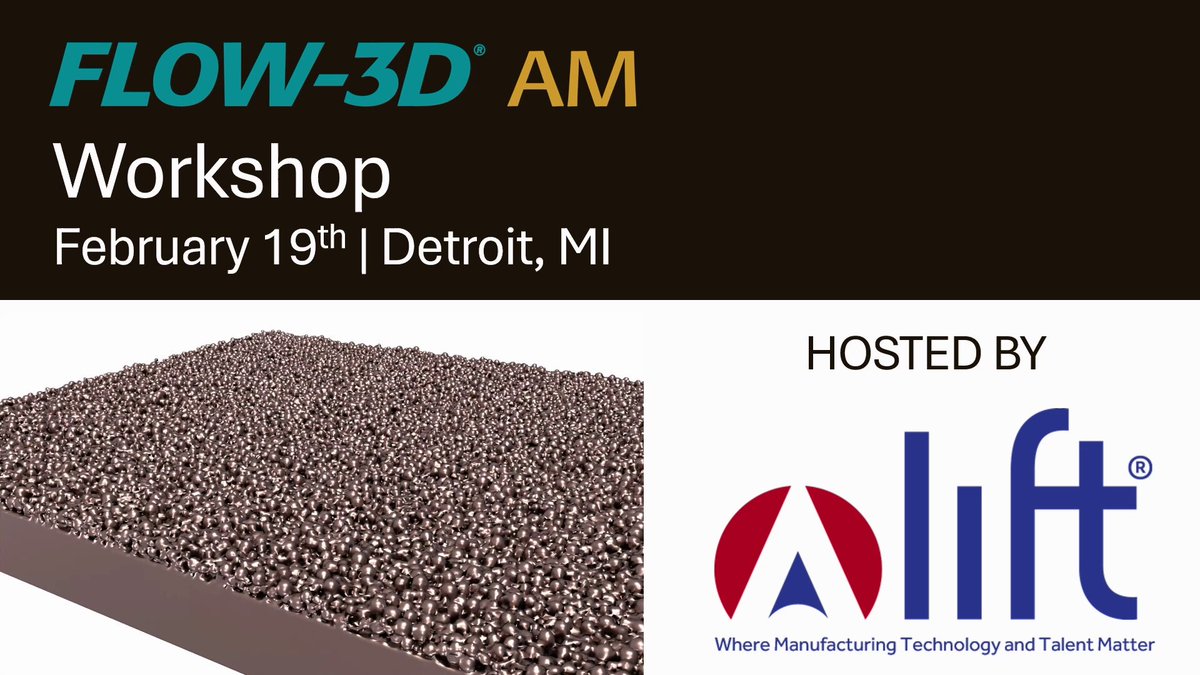
Understanding how material and process parameters influence melt pools and outcomes is essential in metal AM development. The FLOW-3D AM workshop at LIFT guides participants through CFD exercises that give practical experience connecting simulation results to process windows, defect formation, and parameter sensitivity.
This one-day workshop, taking place on February 19th in Detroit, emphasizes applied learning, peer discussion, and direct interaction with FLOW-3D AM experts. Space is limited to ensure a focused, hands-on environment.
Here’s a link to the LIFT event: lift.technology/icme-in-acti…
And the link to register for the FLOW-3D AM workshop: flow3d.com/flow-3d-am-worksh…
79
When CFD modeling is validated against physical data, it becomes a tool for evaluating multiple design scenarios and operational conditions without the expense of building additional physical models.
This case study of the Garrison Dam’s spillway and outlet works validated FLOW-3D HYDRO models against experimental data from the US Army Corps of Engineers Omaha District. The comparison shows strong agreement between numerical and physical model results across discharge, water surface elevation, and pressure in both gated and ungated conditions.
Schedule a demo or register for an upcoming workshop to learn more about how you can use FLOW-3D HYDRO to make reliable design decisions.
#flow3dhydro #cfd #damdesign
94
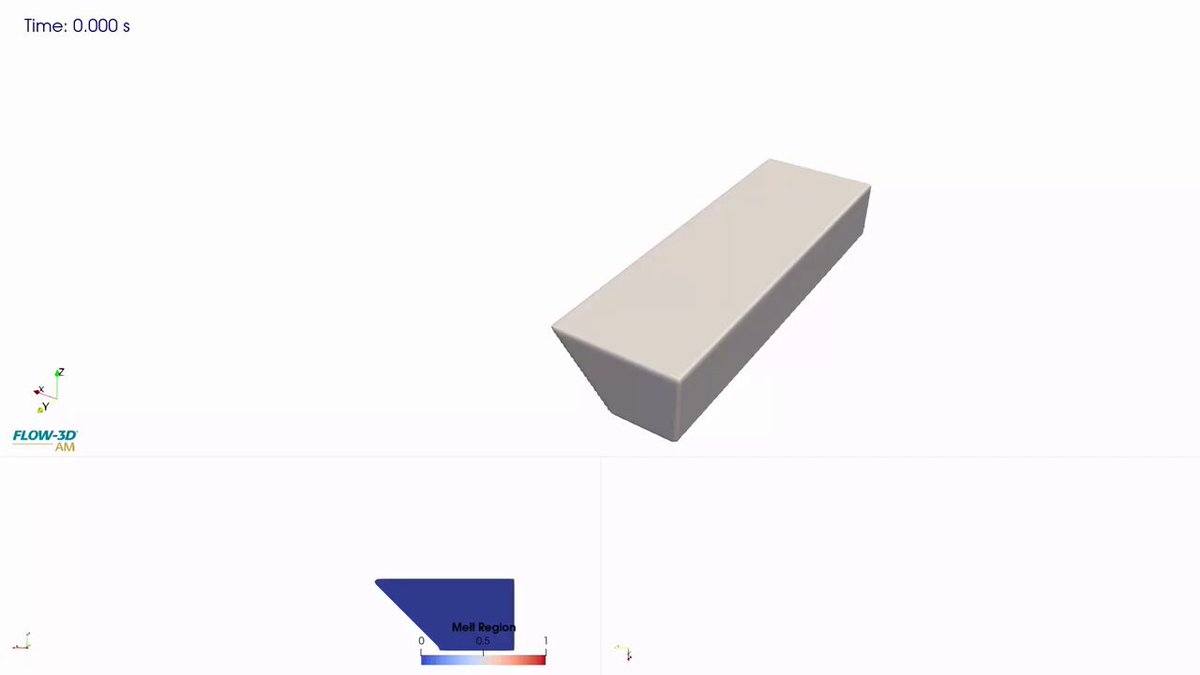
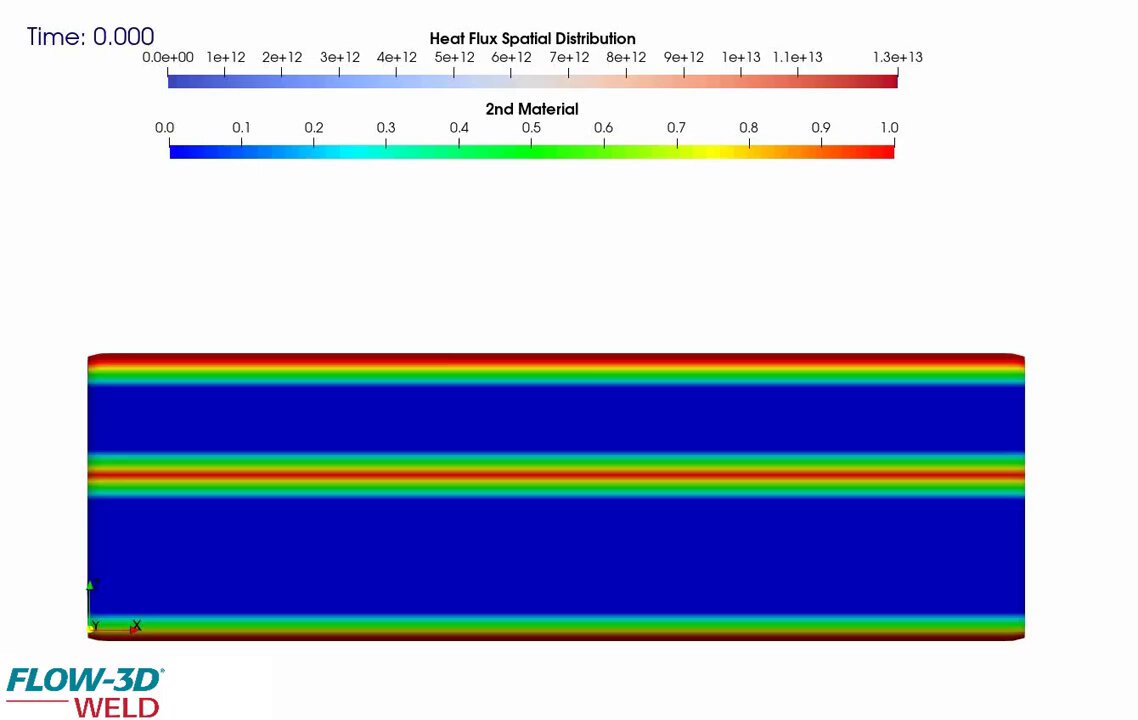
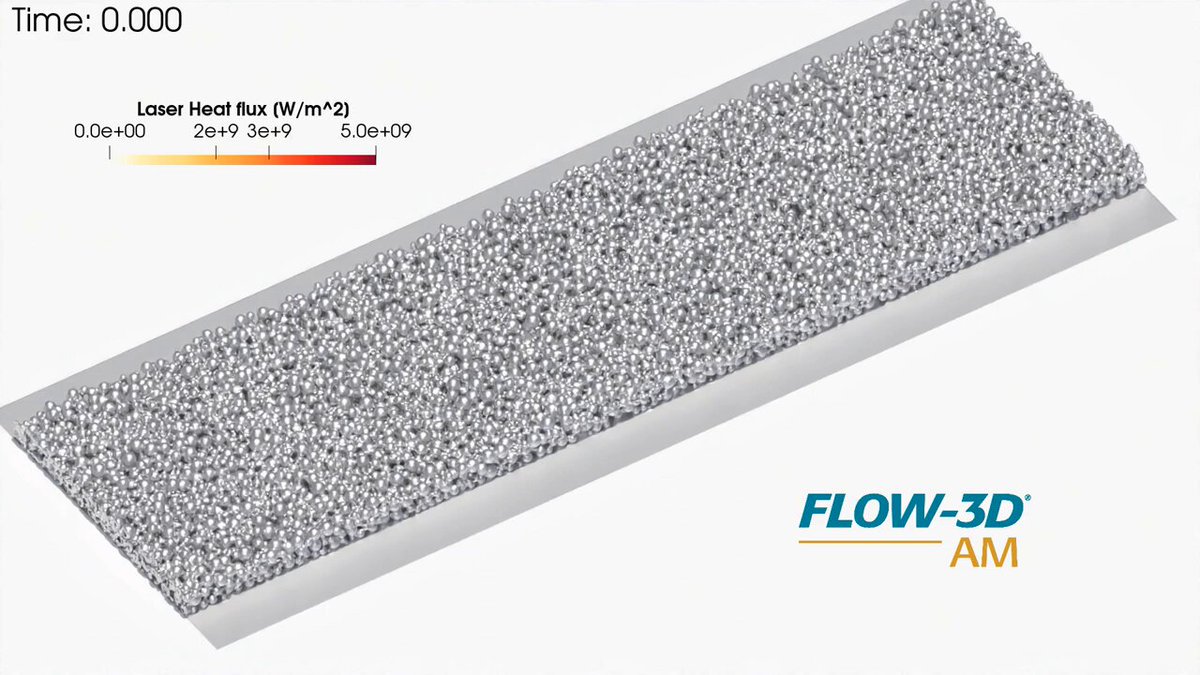
This FLOW-3D AM simulation illustrates a laser beam with a ring-shaped heat flux distribution moving along a track during a laser powder bed fusion (LPBF) process. Metallic powder particles are melted as the beam advances, providing a detailed view of melt pool dynamics.
What makes this visualization distinct is the use of FLOW-3D POST’s ray tracing capabilities, which capture metallic light refraction to more realistically represent material behavior.
👉 What role do you see advanced visualization playing in improving additive manufacturing process understanding?
#flow3dam #lpbf #cfd
1
139
We are pleased to announce that the FLOW‑3D European Users Conference 2026 will take place on the 16th – 17th of June in Düsseldorf, bringing together the user community of engineers and researchers employing the FLOW‑3D product family across Europe and beyond.
Registration is open, so mark the dates and join us for two days of technical engagement and community building.
flow3d.com/flow-3d-european-…
#euc2026 #flow3d #cfd
79
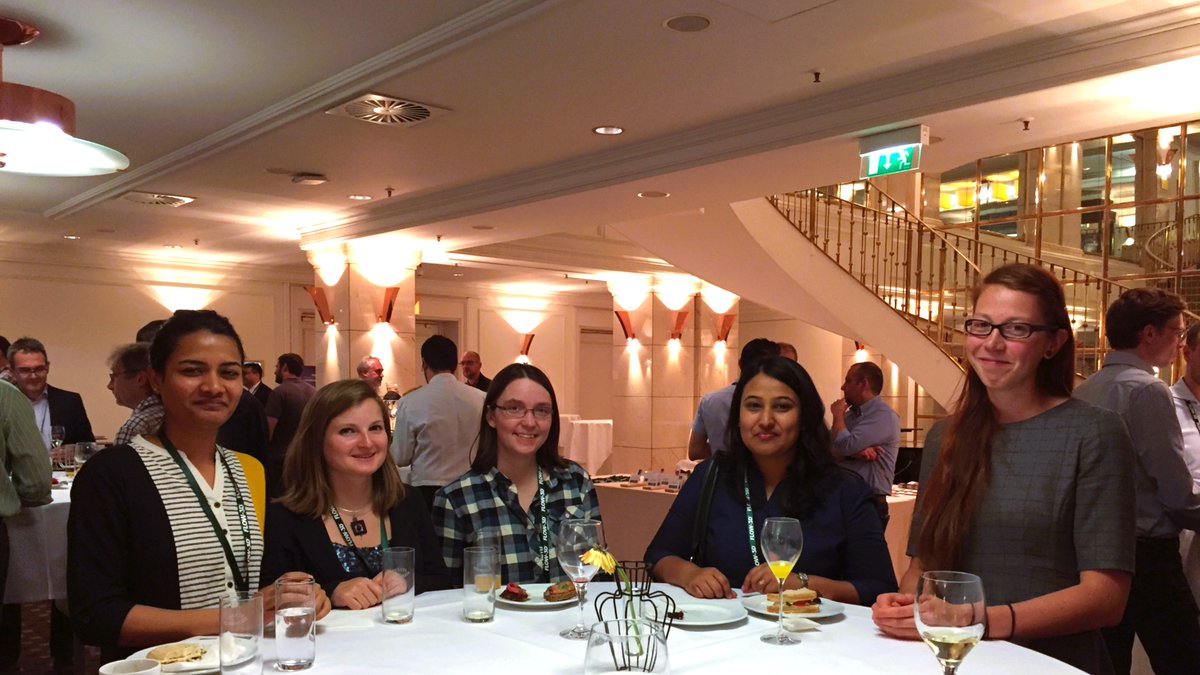
Throwback Thursday to Stuttgart 2018!
Here's a moment from the FLOW-3D European Users Conference opening reception at the beautiful Le Méridien hotel. It was a wonderful evening of conversations and connections among the FLOW-3D community.
We can’t wait to create more memories this year! Join us in Lisbon at the FLOW-3D European Users Conference 2025 for a rooftop reception, engaging technical presentations, and plenty of opportunities for discussion and learning.
🚨 Registration is open through May 16. flow3d.com/flow-3d-european-…
#ThrowbackThursday #euc2025 #flow3d #cfd
1
206
How can simulation improve melt pool control in metal AM?
A recent article from 3D Printing Industry features a study presented at AMUG 2025, in which researchers used FLOW-3D AM to model the effects of ring-shaped laser beam profiles on titanium alloy builds. The results closely aligned with experimental data, showcasing the power of simulation in capturing complex melt pool behavior.
Read the full article here: 3dprintingindustry.com/news/…
172
How can simulation accelerate material development in aerospace manufacturing?
Join Garrett Clyma at AeroMat 2025 as he presents how FLOW-3D AM is being used to reduce trial runs, save on capital costs, and speed up the path to qualification for new materials.
🕣 Wednesday, May 7th | 8:30 AM
📍 Room 14, Vancouver Convention Centre
If you’re attending Aeromat and would like to learn how FLOW-3D AM can support your additive manufacturing goals, schedule a meeting with Garrett during the conference.
🔗flow3d.com/aeromat-2025-pres…
#aeromat2025 #flow3dam #cfd
154
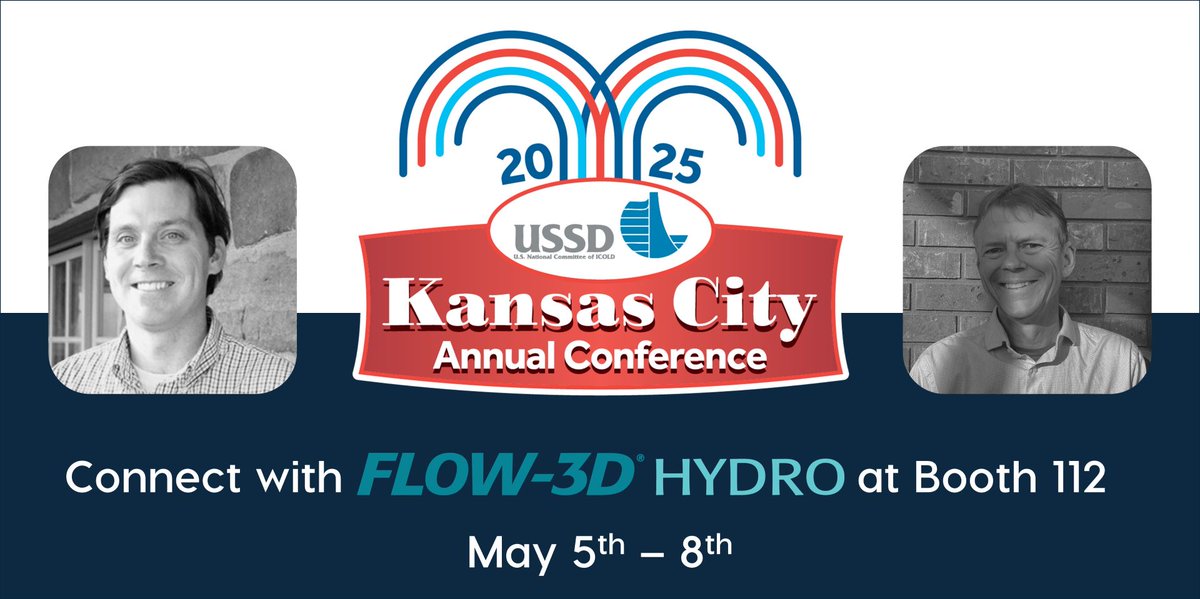
Planning to attend the 2025 USSD Annual Conference in Kansas City? Stop by booth 112 and meet our FLOW-3D HYDRO team. You’ll have the opportunity to speak directly with two of our leading experts in hydraulic modeling:
🔹 Dr. Dan Gessler, Global Water Infrastructure Lead
Dan brings decades of experience and a passion for helping engineers maximize the value of CFD in their work. His vision is to equip engineers with the tools and skills to tackle complex water infrastructure challenges with confidence.
🔹 Brian Fox, Senior Applications Engineer
With over 15 years of experience in water and environmental modeling, Brian supports engineers across sectors with advanced hydraulic modeling, including fish passage, sediment transport, and analysis of hydraulic structures.
Interested in a one-on-one conversation? Schedule a meeting with our team and explore how FLOW-3D HYDRO can support your hydraulic modeling goals: flow3d.com/ussd-2025/
#USSD2025 #flow3dhydro #cfd
128
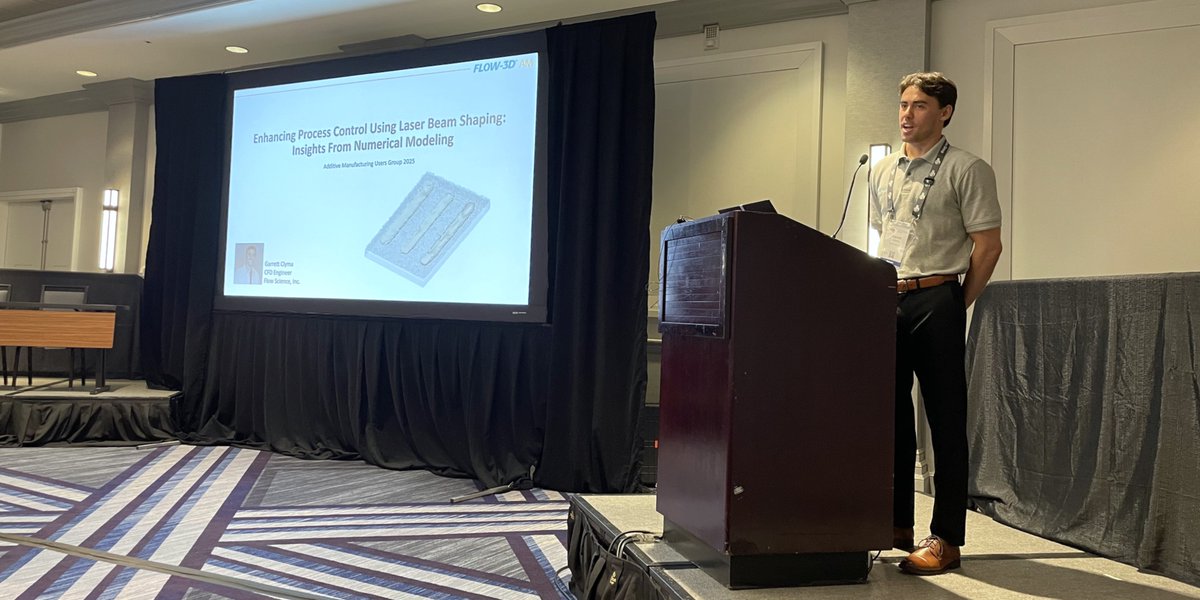
Thanks to everyone who attended Garrett Clyma’s presentation at AMUG 2025, where he spoke about the role of laser beam shaping and CFD modeling in improving process control for additive manufacturing.
Want to see where we’re headed next? Garrett will be presenting again at AeroMat 2025—check out our events page for more details and other upcoming events.
flow3d.com/events/
#flow3dam #cfd #AMUG2025 #AeroMat2025
118
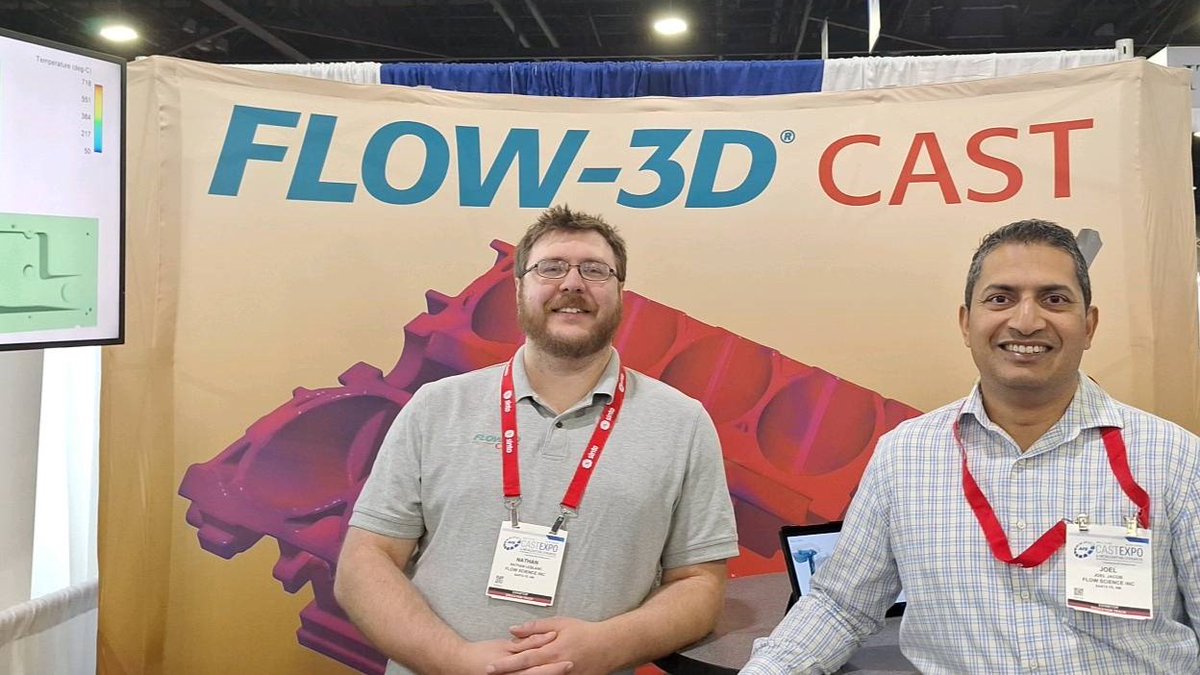
One day left at CastExpo 2025! If you haven’t stopped by yet, Joel Jacob and Nathan LeBlanc are at booth 2637—come by and talk casting simulation with us.
#flow3dcast #cfd #foundry
136
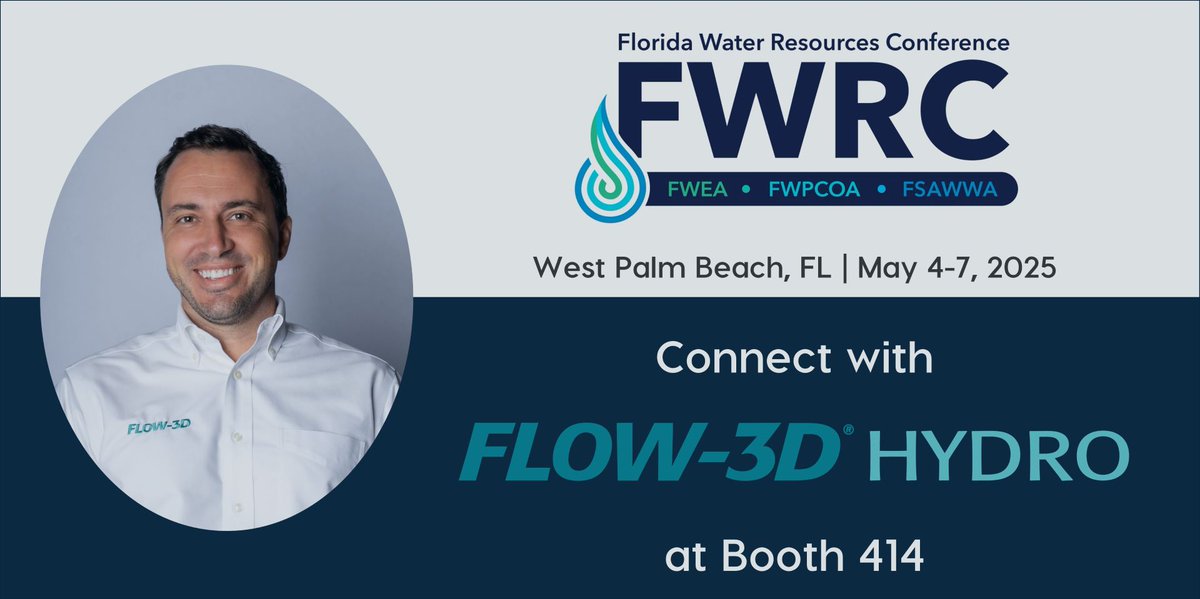
Planning to attend the Florida Water Resources Conference? Stop by Booth 414 and meet Jon Bouchard, a senior CFD engineer and Florida resident.
With experience in 3D modeling for civil and environmental engineering, Jon specializes in applying CFD to solve complex water management challenges. Whether you're optimizing stormwater systems, enhancing wastewater treatment processes, or improving distribution and collection networks, Jon can show you how FLOW-3D HYDRO supports more effective decision-making and operational performance.
📅 Book a meeting and connect with Jon at the show: flow3d.com/fwrc-2025/
#flow3dhydro #fwrc2025 #cfd
123