Joined December 2012
- Tweets 8,021
- Following 2,451
- Followers 479
- Likes 67
1,692 Photos and videos













Pinned Tweet

24 Jul 2020
Six years ago, I had stopped exercising, was unfit and overweight. For the next two weeks I will be cycling 700 km across Spain. What enabled me to undertake this epic challenge?
inyourarea.co.uk/news/folkes… @ShepwayST @Martin_A_Salmon #Spain #CaminodeSantiago
1
2
19
The big difference between Thomas Tuchel and Gareth Southgate. Having a one goal lead in the 85th minute, there is no way under Southgate that an England counter attack would result in FIVE England players in the penalty box. So refreshing not seeing England sit back to defend.
112
Jun 14
Wonderful practical joke by FIFA, trying to persuade us that a country called Curaçao actually exists. To make it believable they showed a rerun of the 2014 World Cup semifinal between Brazil and Germany, just swapping the colour of Brazils shirts and shorts!
73
Brian Salmon retweeted

Most people know the Army stormed Normandy. The Navy bombarded the shore. The Air Force owned the sky.
Nobody thinks about the Coast Guard.
They should.
The United States Coast Guard is not a combat force. Their entire purpose, the reason they exist, is to save people from the sea. They are trained to swim into storms, to pull drowning sailors from sinking ships, to run toward disaster when everyone else is running away.
On June 6, 1944, the Germans gave them more drowning men than they had ever seen in their lives.
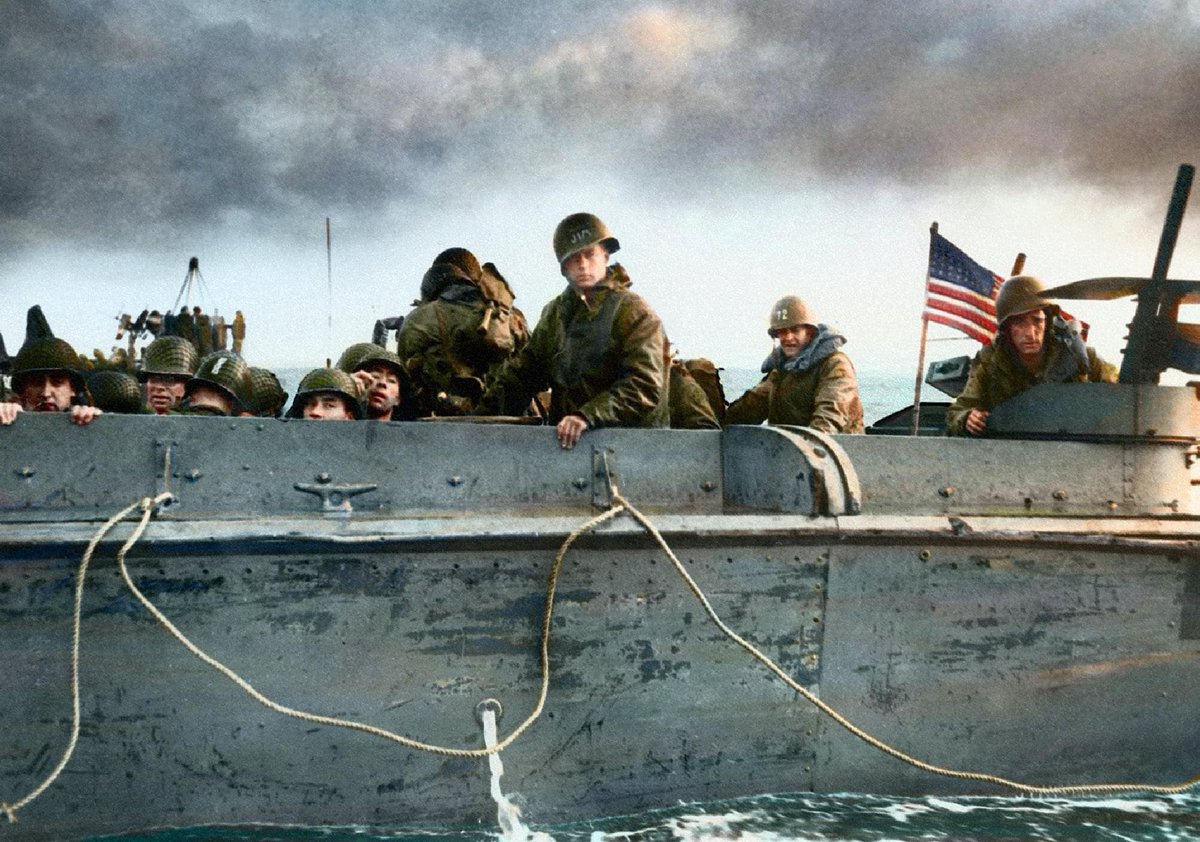
The Coast Guard brought 800 men to Normandy. Five major assault transports were USCG-crewed. Eleven tank landing ships. Twenty-four troop carriers running soldiers directly onto Omaha and Utah Beaches. The USS Bayfield served as the command ship for the entire Utah Beach sector, the nerve center through which an entire army was directed ashore. The USS Samuel Chase led the assault group landing the 1st Infantry Division, the Big Red One, onto the eastern flank of Omaha.
But the thing almost nobody knows about is Rescue Flotilla One.
60 small Coast Guard cutters, nicknamed Matchbox ships because of how easily they burned, were assigned a single mission: pull men out of the water. As the landing craft were torn apart by German fire, as soldiers drowned in the surf under the weight of their own equipment, as wounded men on the beach were swallowed by the incoming tide, Rescue Flotilla One was already moving.
Their swimmers jumped into the Channel. Tethered to their boats by lines, they swam toward the men going under, grabbed them, and dragged them back. They did this 2,000 yards from shore. Under active German machine gun fire. Under mortar fire. Under artillery.
Again and again, all day long.
Two miles offshore a lookout spotted men from a sunken British landing craft floating in the Channel. One cutter went to them and pulled 24 soldiers and four Royal Navy sailors from the water before they went under.
One Coast Guard LCI was hit 25 times by German fire and kept going. Coxswain Delba Nivens kept driving his craft toward the beach after a grenade caught fire aboard his boat.
By the end of June 6, Rescue Flotilla One had pulled 400 men out of the sea.
400 men who would have drowned. 400 men who went home. 400 men whose families exist today because a Coast Guardsman jumped into the English Channel under machine gun fire and refused to let go.
Out of 800 Coast Guardsmen at Normandy, 15 were killed.
Every branch that fought on D-Day deserves its place in history. But the men who spent that day swimming between the dead to find the living, tethered to a burning ship with the whole weight of the German army trying to kill them, did something that has no good word for it.
They saved people. That's what they were built for.
On the worst day in the history of the sea, they were exactly who they were supposed to be.
48
723
2,884
46,496
May 30
Woeful defence from St Helens women in the first quarter of the Womens Challenge Cup Final. Wigan Warriors have hardly any to work for any of their four tries. Amy Hunter in particular has been given te freedom of Wembley.
Saints need to drastically tighten up the defence
1
1
100
Brian Salmon retweeted

May 22
He died alone.
73 years old. A hospital bed in Tucson, Arizona. November 2, 2025.
No wife holding his hand. No children at the door. No friends in the waiting room.
Nobody came.
His name was Darrell Lee Arelt. And for the last hours of his life, the richest, most powerful nation on Earth had no idea one of its soldiers was slipping away in the dark.
Because that's what he was.
A soldier.
Second Lieutenant Darrell Arelt. United States Army. Vietnam.
He went when his country called. He came home to a country that looked away. Vietnam veterans got no parades. No "thank you for your service." No welcome home. Just silence, and sometimes worse.
And now, half a century later, here was that same silence again. A forgotten lieutenant, about to be lowered into the ground with no one to fold a flag for.
The hospital had no next of kin to call. The funeral home had no family to notify. The government had a name for a man like this.
"Unaccompanied veteran."
Read that again.
Unaccompanied.
A man who once raised his right hand and swore his life to this country was going to be buried like he never mattered at all.
Then one man said no.
His name is Nick De Gennaro. He owned the little mobile home park where Darrell had quietly lived for four and a half years. When Nick learned this old soldier was going to be put in the earth alone, two days before Christmas, something in him refused.
So he made a decision. He and his wife would go. Just the two of them, if that's what it came to. A veteran would not be buried alone. Not on his watch.
And then he did one small thing.
He posted about it online.
What happened next will put a lump in your throat.
The post traveled. Veterans saw it. Bikers saw it. Firefighters saw it. The American Legion saw it. In 72 hours, the whole of Southern Arizona knew the name Darrell Arelt.
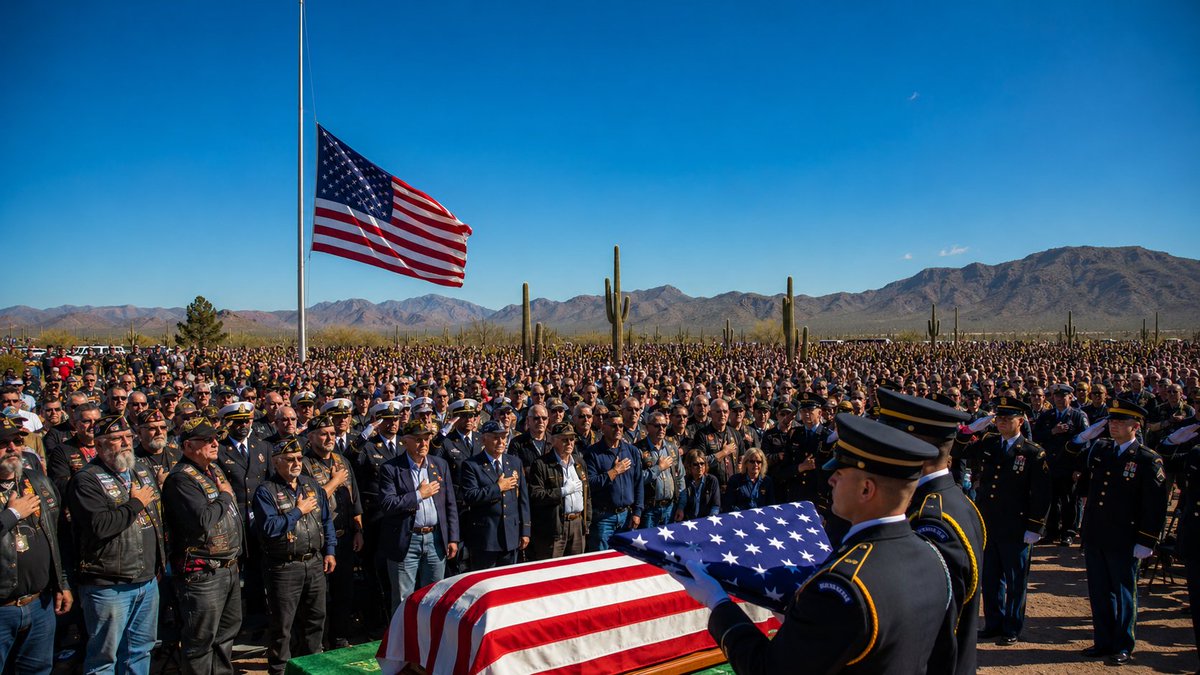
December 23, 2025. Noon. The Arizona Veterans Memorial Cemetery in Marana.
Nick expected two people.
Hundreds came.
Hundreds.
Bikers thundered in by the dozen. The Marana Police Department came in uniform. The Northwest Fire District came. The American Legion came. National Guardsmen came. Active-duty soldiers came.
And the old men came. Vietnam veterans in their seventies. Korean War veterans. Men who could barely stand at attention anymore, standing at attention anyway, for a brother they had never once met.
One of them, James Harmon, looked in his rearview mirror as he drove in. Thirty cars behind him. Forty. A river of headlights flowing to the grave of a stranger.
"As we were driving in," he said, "I'm going, oh my God, this is great."
These were the men America forgot in 1970. And here they were, refusing to let America forget one of their own in 2025.
Another vet, Ed Lytle, stood at the grave and said the words that should be carved in stone:
"No veteran should be buried alone. They've always got a family. I may not have known him then. But he's still a brother."
Darrell Arelt got everything that day.
An honor guard. White gloves. A folded flag.
"Taps" rising slow and clean over the desert.
And a 21-gun salute, cracking into the Arizona sky, fired by men who had never met him, for a life they had only just learned existed.
Half a century after his country forgot to say thank you, hundreds of strangers stood in the December sun and said it all at once.
Nick was handed the flag. The flag that's supposed to go to a man's family.
He's still keeping it. He says if anyone ever knew Darrell, a week from now, a year from now, ten years from now, they can come and it's theirs.
So let me tell you what kind of country this is.
This is a country that will fill a cemetery for a man nobody remembered to love.
This is a country where bikers and cops and firefighters and broken old soldiers will drop everything, two days before Christmas, so one forgotten veteran does not go into the ground alone.
You can criticize America all you want. Go ahead.
But understand this.
On this soil, no soldier is ever truly alone.
Not one.
Not ever.
Rest easy, Lieutenant.
Your country was late.
But your country came. 🇺🇸
13
31
114
3,123
May 12
How to spot a fake WiFi network that captures all your passwords and financial data. This is vital information to stop you being a victim of phishing or identity theft.
1
45
Brian Salmon retweeted

May 11
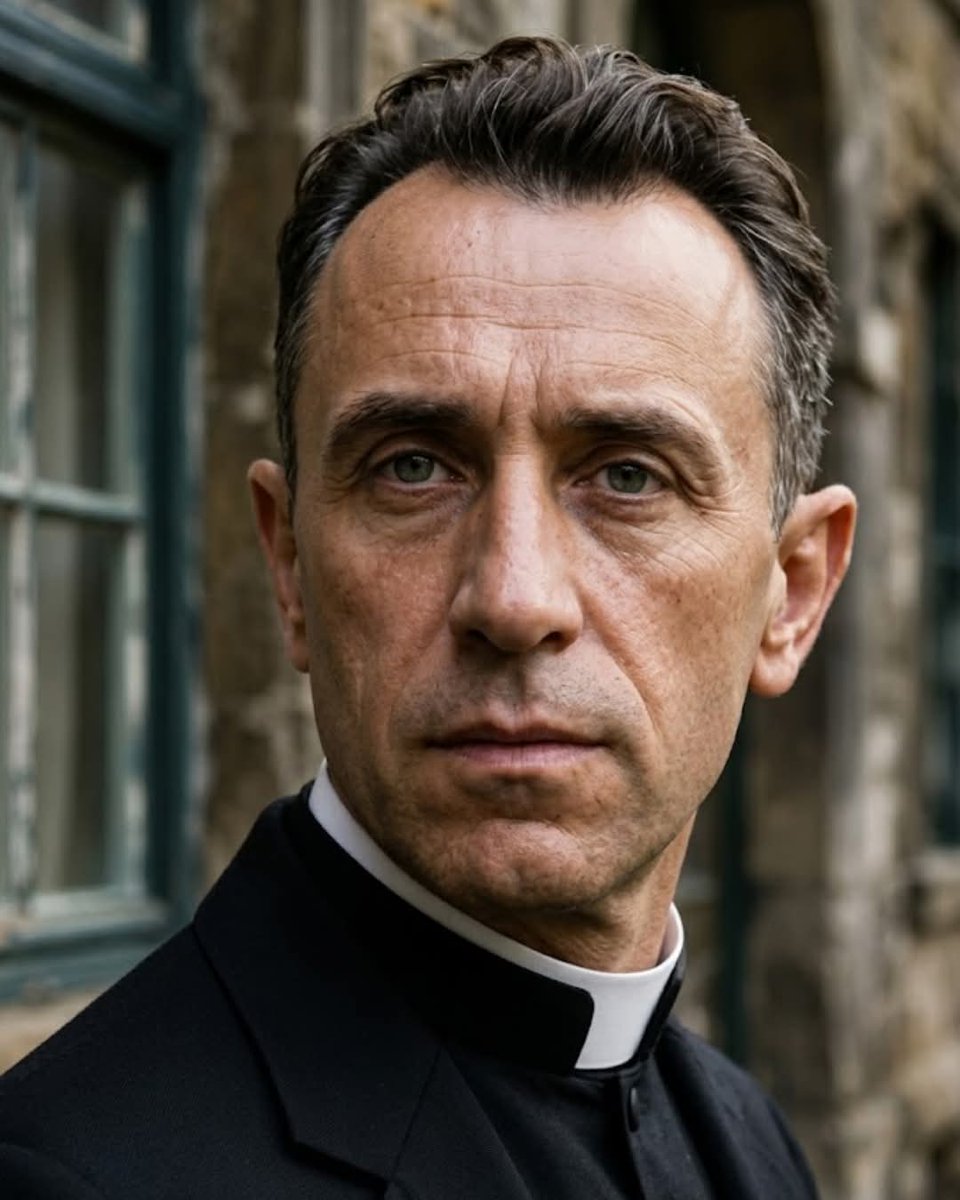
A Catholic priest walked into a house filled with Jewish orphans in fascist Italy and spoke four words that would save 73 lives.
July 1942. Arrigo Beccari. Thirty-two years old. Seminary teacher in Nonantola, a small village near Modena in northern Italy.
He had just heard about the children.
Fifty Jewish orphans, ages six to twenty-one, had arrived at Villa Emma, an abandoned mansion on the edge of town. They came from Germany, Austria, and Yugoslavia. They had fled the Nazis. Many had already lost parents, homes, and entire families.
They could not speak Italian.
They had nowhere else to go.
Beccari walked to the villa, knocked on the door, and stepped inside.
He looked at the frightened faces in front of him and said:
“You are safe now.”
He meant it.
For more than a year, something extraordinary unfolded in fascist Italy.
An entire village quietly chose to protect those children.
Farmers brought food. Shopkeepers donated supplies. Widows opened their homes. A local doctor named Giuseppe Moreali treated the sick. A carpenter built furniture and taught woodworking. Women cooked meals. One room inside the villa became a synagogue.
Beccari visited every day.
He taught lessons. Spent time with the younger children. Tried to give them moments that felt normal again.
Then, in April 1943, another thirty-three Jewish children arrived from Croatia, escaping the massacres carried out by the Ustaše regime.
Now there were seventy-three children at Villa Emma.
Then came September 8, 1943.
Italy surrendered to the Allies.
German forces immediately occupied northern Italy.
The SS began hunting Jews across the region.
In Rome, more than 1,200 Jews were rounded up and deported to Auschwitz. Only sixteen survived.
At dawn on September 9, German troops marched into Nonantola.
Beccari and Dr. Moreali ran to Villa Emma.
“You have to leave. Now. All of you. Tonight.”
More than one hundred people, including counselors and caretakers, had to disappear in less than thirty-six hours.
Beccari did not wait for official permission. He did not hesitate.
Some children were hidden inside the seminary itself, tucked into dormitories, cellars, attics, and storage rooms.
Then Beccari moved through the village knocking on doors.
Farmers.
Shopkeepers.
Widows.
Teachers.
He asked each of them the same thing:
Hide these Jewish children. Feed them. Protect them.
Not one refused.
Within thirty-six hours, Villa Emma was empty.
When German soldiers arrived, they found only an abandoned building.
No children.
No evidence.
No witnesses.
The orphans had been scattered across more than twenty Catholic homes, hidden in barns, haylofts, bedrooms, and church buildings throughout the village.
For weeks, Beccari visited them daily, bringing food, comfort, and information.
But everyone understood they could not stay forever.
The Germans were searching everywhere.
There was only one possible escape route.
North.
Across the Alps.
Into Switzerland.
Beccari and Moreali forged more than 120 identity documents, baptism certificates, travel permits, birth records.
On paper, Jewish children became Catholic Italians.
The children memorized new names, birthdays, and invented family histories in a language many of them barely understood.
Between September 28 and October 16, 1943, they escaped in small groups by train, on foot, and through mountain passes under cover of darkness.
Every one of the seventy-three children reached Switzerland safely except one.
A teenager named Salomon Papo was too sick with tuberculosis to travel. The Gestapo later found him in a sanatorium and deported him to Auschwitz.
One out of seventy-three.
Not because someone betrayed them.
Because illness made escape impossible.
The Gestapo launched investigations.
Who had hidden the Jews?
Who had forged the documents?
No one in the village talked.
Eventually, Beccari himself was arrested and handed over to the SS in Bologna.
He was tortured for months.
Beaten repeatedly.
Interrogated again and again for names, locations, and evidence.
He gave them nothing.
His name appeared on execution lists three different times.
Three different times, the executions were delayed.
Eventually, he was released.
The war was nearing its end, and the Germans still had nothing.
Beccari walked back to Nonantola.
Back to the seminary.
Back to teaching.
And perhaps the most remarkable part of the story is this:
It was never only one priest.
More than forty households helped hide Jewish children.
Not one villager betrayed them.
Farmers. Seminarians. Teachers. Shopkeepers. Elderly widows.
An entire village chose strangers’ children over its own safety.
The children survived the war. Many later emigrated to what became Israel in 1945. They built families, careers, and new lives.
They never forgot Nonantola.
In 1964, Yad Vashem recognized Arrigo Beccari and Giuseppe Moreali as Righteous Among the Nations, the first Italian priest and doctor ever given that honor.
Beccari remained in Nonantola until 1980.
Same village.
Same church.
Same quiet life.
He baptized the grandchildren of families who had once hidden Jewish orphans in their homes.
He never chased recognition.
At one point he reflected simply:
“It would be difficult to erase the memory of the terror and suffering of those days. Or of my joy at doing the small good which was my duty.”
Small good.
That is what he called it.
Arrigo Beccari died on December 27, 2005, at the age of ninety-six, in the same village where he had spent most of his life.
A village priest who helped lead one of the most successful Holocaust rescue operations in Italy.
A man tortured by the Gestapo who never betrayed a single child.
A man scheduled for execution three separate times who returned afterward to ordinary parish life because, to him, that was simply who he was.
Seventy-three children grew old because of thirty-six hours in September 1943.
Because one priest started knocking on doors.
Because one village kept saying yes.
Because ordinary people chose courage when the world around them chose silence.
83
986
3,373
71,801
May 4
Further evidence that the Meta AI in Facebook is completely deranged and untrustworthy.
Me
But the riddle specifies September has two. You are not even answering your own question!
Meta AI
The answer to the riddle "What comes once in March, twice in September, but never in June?" is indeed the letter "R".
It appears once in the word "March", twice in the word "September", and not at all in the word "June".
25
Brian Salmon retweeted

Apr 26
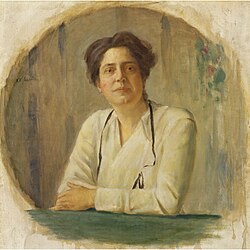
In 1893, NYC - A woman in her mid-twenties walks through streets so crowded with humanity they hum like a living organism.
She's following a child. A girl, maybe ten years old, who burst into her nursing class that afternoon begging for help. Her mother is sick. There's no money for a doctor. Will someone please come?
So Lillian Wald goes.
She climbs narrow staircases in a tenement building where the air itself feels tired. The girl opens a door, and Lillian steps into a room that will rewrite the rest of her life.
Ten people. Three hundred twenty-five square feet. A woman lying in a bed that barely qualifies as one, surrounded by peeling walls and the kind of desperation that doesn't announce itself with noise, it just sits there, heavy and inescapable.
Lillian had grown up comfortable. Books on the shelves. A father who ran a thriving business. She'd been bright enough to apply to Vassar at sixteen, turned away only because of her age. When she finally entered nursing school at twenty-two, she excelled. Methodical. Caring. Brilliant at what she did.
But nothing prepared her for this.
She leaves that apartment and enrolls in medical school the next morning. Then she does something even more radical. She quits medical school and moves to the Lower East Side. Not to study poverty. To live inside it.
In 1893, she and her colleague Mary Brewster invent a profession that didn't exist: the public health nurse. Someone who brings healthcare directly into homes, into the places hospitals will never reach and the people who can't afford to ask for help.
Two years later, the Henry Street Settlement opens its doors.
By 1913, it's become something almost unimaginable. Seven buildings. Ninety-two nurses. Two hundred thousand home visits every single year.
But Lillian Wald doesn't stop at nursing. She walks into meetings with presidents. She helps create the U.S. Children's Bureau in 1912, the first federal agency dedicated to children. She co-founds movements to end child labor and protect working women. When the Spanish Flu tears through America in 1918, she leads the Red Cross response, mobilizing an army of nurses she's spent decades training.
She built all of it because one afternoon, a frightened child asked for help and Lillian Wald refused to look away.
Lillian Wald didn't just respond to that moment in 1893. She let it consume her in the best possible way. She moved into the neighborhood, lived among the families she served, and refused to accept that zip codes should determine who gets to survive preventable illness. The Henry Street Settlement became a command center for social change, offering not just medical care but education, job training, and community organizing.
When she opened the Settlement's doors to early NAACP meetings, she risked her funding and her reputation in a deeply segregated America. When World War I created a nursing shortage, she helped professionalize the field and expand training programs nationwide. The Visiting Nurse Service of New York, which she co-founded, still operates today and remains one of the largest nonprofit home healthcare organizations in America.
Here's something remarkable: Lillian Wald never married, never had children of her own, but she's responsible for changing childhood in America. Before her advocacy, five-year-olds worked in coal mines. There was no federal oversight of child welfare. She didn't just dream of a better system; she walked into the White House and made Theodore Roosevelt believe in it too.
When she died in 1940, Carnegie Hall held her memorial. Twenty-five hundred people came. The profession she named, the agencies she founded, and the model of community-based healthcare she pioneered are all still here, more than 130 years later, quietly saving lives in the same neighborhoods where a young nurse once followed a frightened child up a narrow staircase and refused to forget what she saw.
© Women Stories
#drthehistories
5
218
566
10,619
Apr 19
Fantastic thread on Civil Rights campaigner Rosa Parks. Her life was not just the one single act of courage that history remembers. It was a continual struggle against the injustice of an entrenched system of prejudice. Her bravery and the cost paid was a lifelong struggle.
Apr 19

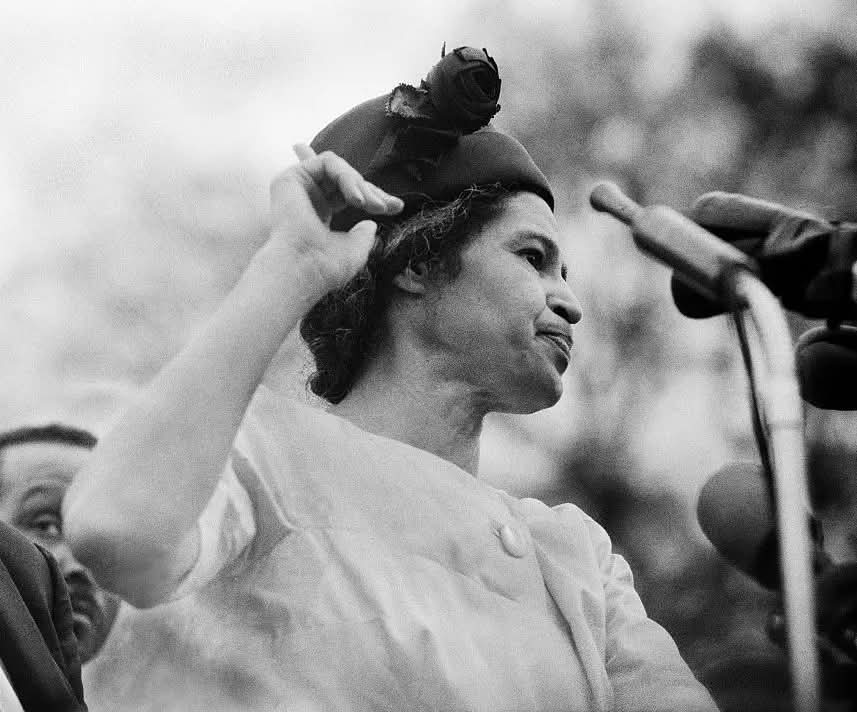
The Rosa Parks you learned about in school is a myth...
That story - the tired seamstress who'd simply had enough and refused to give up her seat - a fairy tale that erases twelve years of dangerous organizing work that led her to that pivotal moment. She had investigated lynchings. She had documented rapes. She had collected testimony from people too frightened to speak their own names. And in 1943, she had already defied the same bus driver who would have her arrested twelve years later.
Born in Tuskegee, Alabama in 1913, Rosa Parks would spend her life challenging a system designed to silence her. This is the story of those twelve years. The story of how a movement readied itself, and how one woman made herself ready to meet it.
In 1943, Parks joined the Montgomery NAACP as secretary and began the most dangerous work of her life. Alongside E.D. Nixon -- a union organizer who led the local chapter -- she became the person Black Alabamians turned to when the law abandoned them.
Her title suggested paperwork. The reality was fieldwork. When Black women were raped by White men, Parks was the one who came. When a Black man faced false accusations that could mean his death, Parks traveled to him -- often through hostile territory, always at great personal risk.
"Rosa will talk to you," people whispered throughout Alabama's Black communities.
In 1944, a 24-year-old sharecropper named Recy Taylor was walking home from church when six White men forced her into a car, blindfolded her, and raped her. When word reached the Montgomery NAACP, they sent Parks. She found the sheriff waiting at Taylor's home, driving past repeatedly, eventually entering to demand Parks leave -- no "troublemakers" wanted. Parks returned to Montgomery and launched the Committee for Equal Justice for the Rights of Mrs. Recy Taylor. She made sure the case reached national headlines.
The men who raped Recy Taylor were never charged.
For twelve years, Parks worked cases like Taylor's: Gertrude Perkins, raped. Jeremiah Reeves, a sixteen-year-old facing execution. The Scottsboro Boys, falsely accused. Viola White and Claudette Colvin, arrested for resisting bus segregation. She persuaded traumatized victims to file affidavits that could get them killed -- but were also their only hope for justice. She submitted report after report to federal authorities who looked away.
Most cases led nowhere. No charges. No justice. Just silence and fear. Parks later said it was "more a matter of trying to challenge the powers that be and let it be known that we did not want to continue being second-class citizens." By the summer of 1955, exhausted and discouraged, she questioned whether any of it mattered.
That August, civil rights activist Virginia Durr secured Parks a scholarship to Highlander Folk School, a social justice leadership training center in Tennessee and one of the few integrated spaces in the South. The two-week workshop focused on implementing school desegregation. Parks arrived depleted.
She studied under Septima Clark, a fired teacher who had refused to abandon her NAACP membership. She strategized with Black and White activists together. She slept, ate, and planned in integrated spaces. For two weeks, she glimpsed what an equal society might feel like.
At 42, she wrote, it was "one of the few times in my life up to that point when I did not feel any hostility from White people."
On the final day, someone asked what she thought would happen when she returned to Montgomery. Parks -- ever realistic -- answered that because Montgomery was the Cradle of the Confederacy, nothing would happen there.
But something had shifted. She left Highlander, she later said, with "the strength to persevere in my work for freedom, not just for Blacks, but for all oppressed people."
© A Mighty Girl
#archaeohistories
15
Apr 18
The @Lionesses have been outplayed in the second half twice this week. Firstly against Spain and now Iceland. However defensive grit and the outstanding Hannah Hampton have ensured clean sheets in both games. They have been fortunate but still on course to qualify for Brazil 2027
2
167
Apr 12
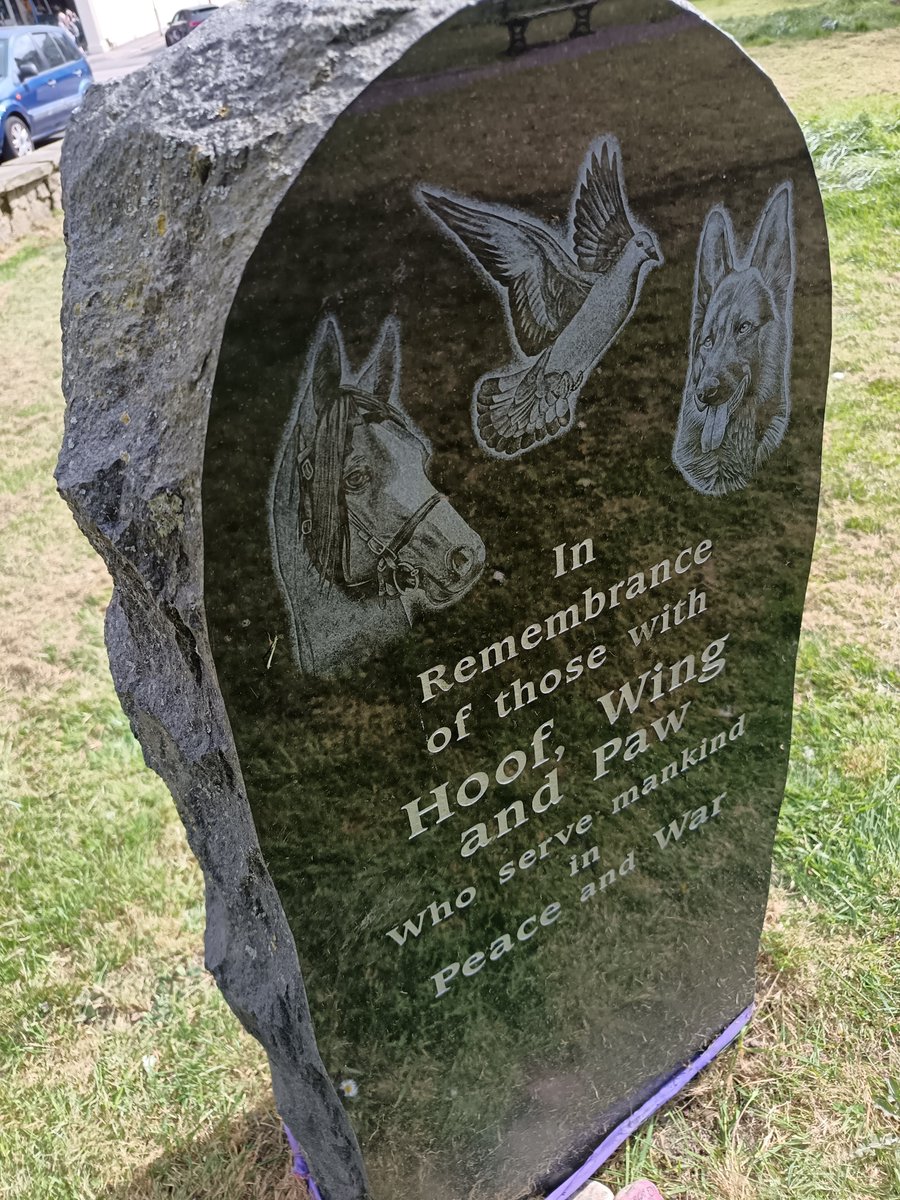
Beautiful memorial in Folkestone's Garden of Remembrance to the animals that played a service role in wartime and in peace.
27
Apr 11
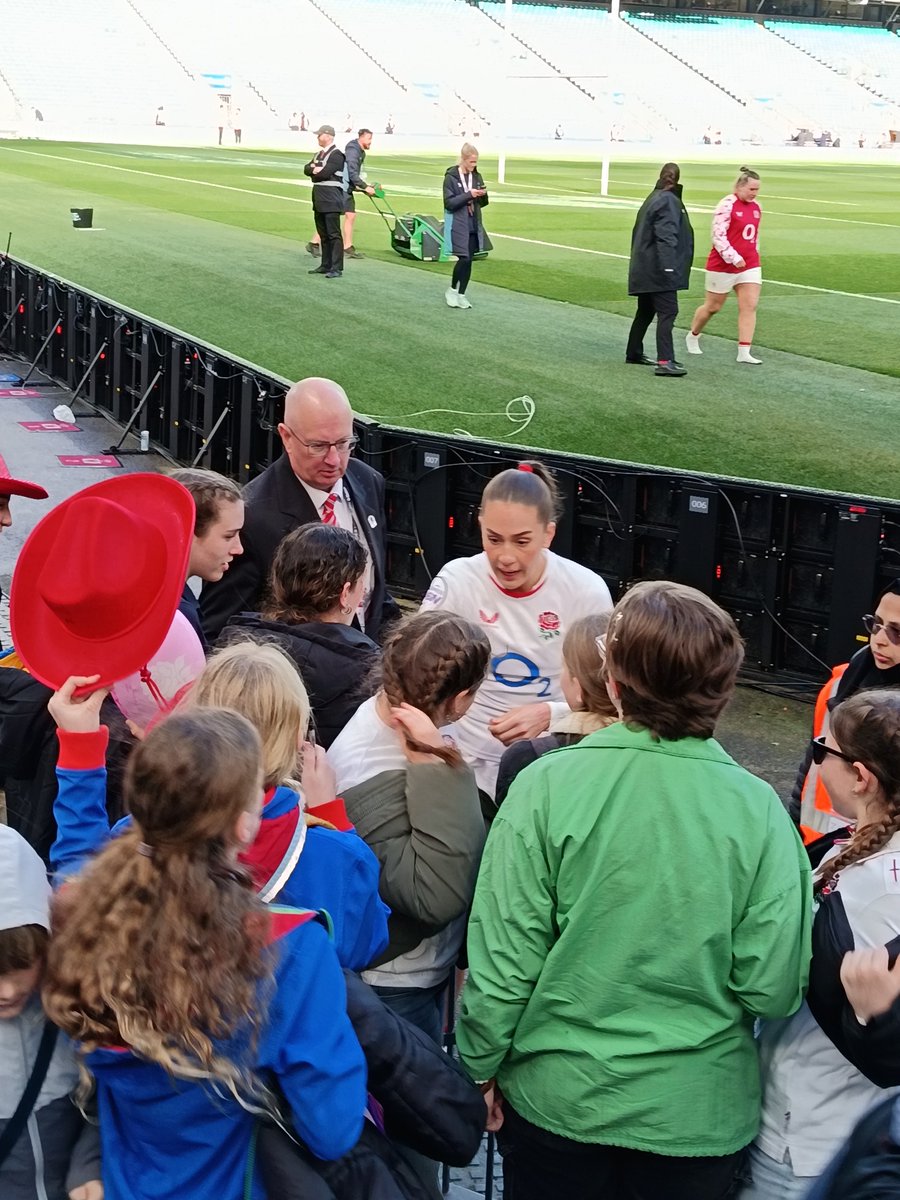
Fantastic to see a new record crowd at Twickenham for a Womens Six Nations match. 77,000 fans at the England🇫🇴 Ireland🇮🇪 game! Huge demand in UK for women's sport, particularly when teams are successful.

1
113
Feb 22
Really valuable information about possible causes of Parkinson's Disease.
If you are experiencing inflammation and sleeping disorders, your gut may not be producing enough Vitamin B.
Feb 22

Scientists just cracked the Parkinson's disease code after decades.
It all starts in your gut. And it's easily preventable.
They've proven it across 5 countries with 94 patients.
This changes everything we know about Parkinson's:
64
Feb 16
In an unlikely twist, Skeleton racer Matt Weston cites Keir Starmer as his inspiration for his two gold medals.
"He taught me everything I know about making things go downhill fast!"
78
Feb 13
What a contrast between the two World Champions widely tipped to win gold.
In Skeleton, Matt Weston handled the pressure and improved every run.
In Figure Skating, Ilia Malinin could not handle his own hype- no seven quads, no quad axle, dreadful execution and no podium!
1
1,094
Feb 13
What a crazy end to the men's figure skating. All the top skaters had awful free skate routines making many mistakes. The worst performer was the hot favourite Ilia Malinin, hubris catching up with the self styled "Quad God". No matter how talented, you have to nail it on the day.
1
2
1,282
Feb 13
Brilliant run from Matt Weston to take gold in the most dominant fashion imaginable. All the riders deserve medals for going down that track, but the smooth control was exceptional.
337
Jan 26
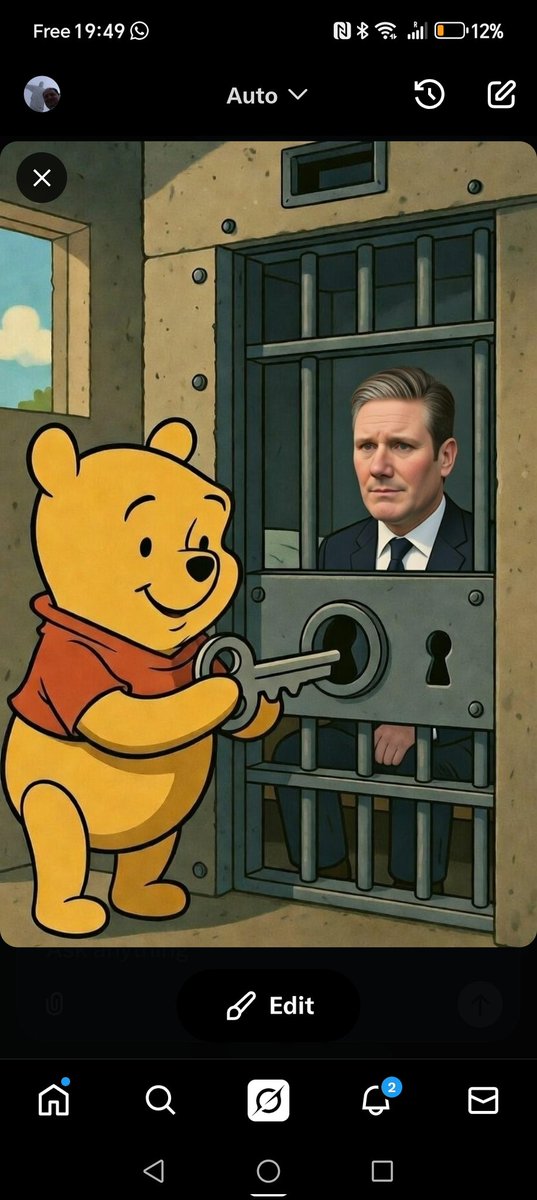
You almost feel sorry for Winnie the Pooh. He is in hiding after his top general nearly kills him and has purged the army. The only way it could get any worse is if Two Tier Rodney visits him! Hope the bear purges his dud agent for the Chagos failure!
64