
A new Op-Ed platform for founders. One essay every Sunday.
Joined October 2020
- Tweets 285
- Following 4
- Followers 18,814
- Likes 6,075
73 Photos and videos

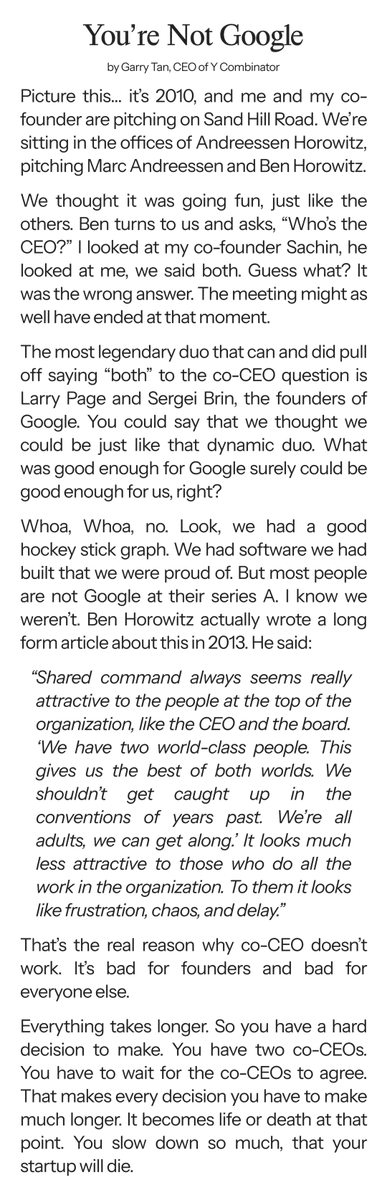
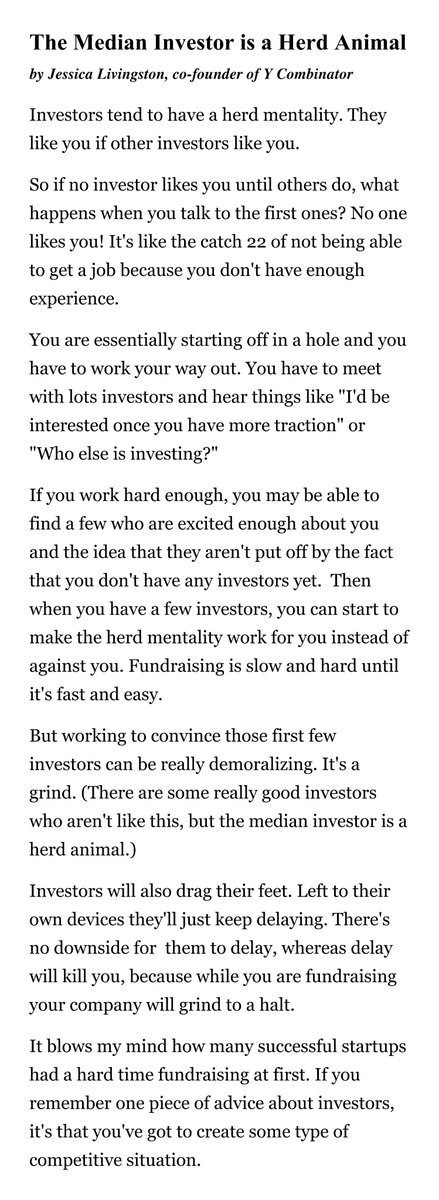
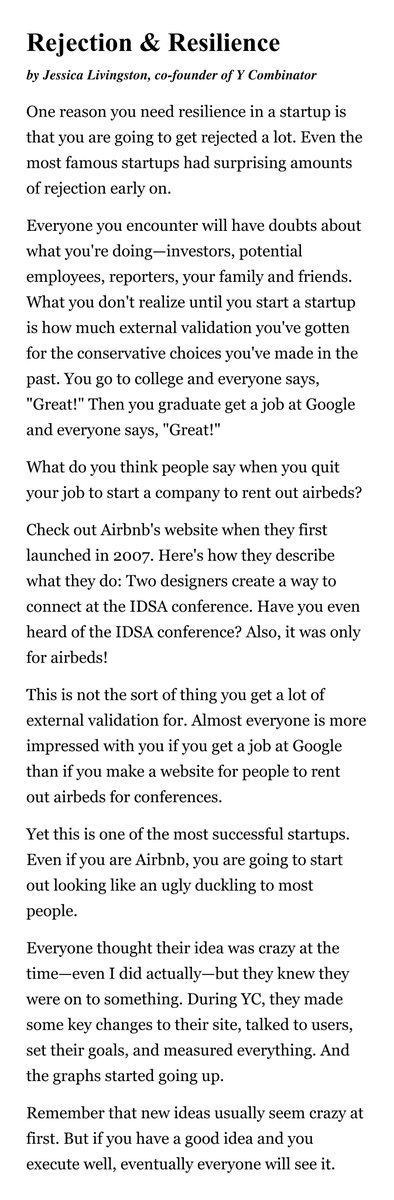
Pinned Tweet

16 Feb 2025
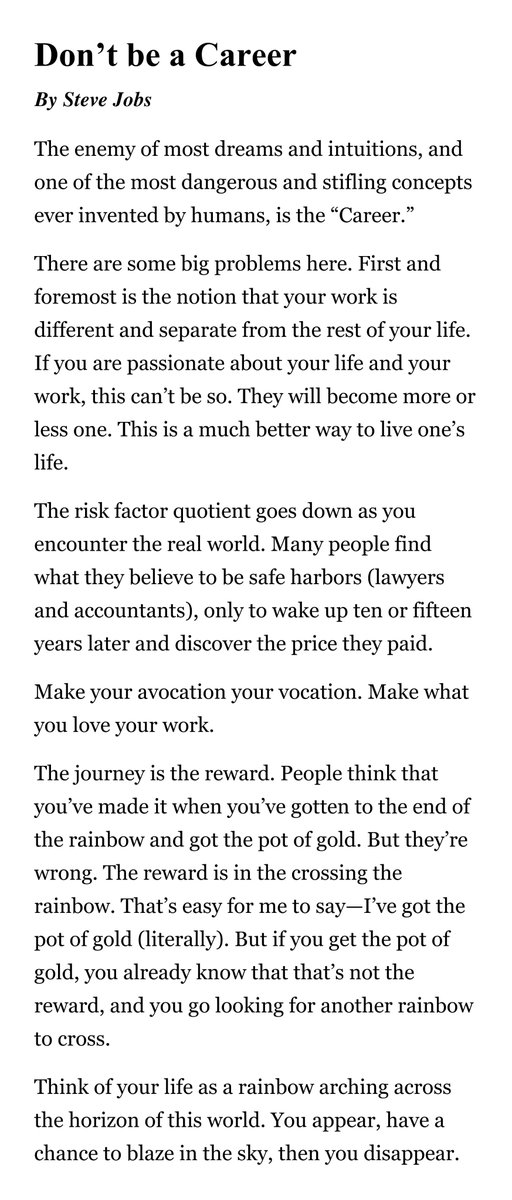
"Don't be a Career" by Steve Jobs
54
1,031
8,324
896,779
The Founders' Tribune retweeted

Feb 5
Ray Kurzweil has the best explanation I’ve heard for why we’ve had tremendous progress in the world of bits and slower progress in the world of atoms (ie Peter Thiel’s “We wanted flying cars, instead we got 140 characters”).
He argues that you only get exponential progress when the technologies create feedback loops that accelerate innovation, which happens a lot with information technologies.
The printing press made books cheap enough that education could become accessible to the next generation of inventors. Modern computers help chip designers create the next generation of faster CPUs. AI models are used to build even better models.
Contrast this to transportation technology where there are no feedback loops. Jet engines aren’t used in the building of better jet engines.
One of the key implications of this observation is that as AI gains applicability to more and more fields, the exponential trends that are now familiar in computing will start to become visible in areas like medicine, where progress was previously very slow and expensive.
This will radically transform areas we do not normally consider to be information technologies, such as food, clothing, housing, and even land use.
39
83
682
50,233
The Founders' Tribune retweeted
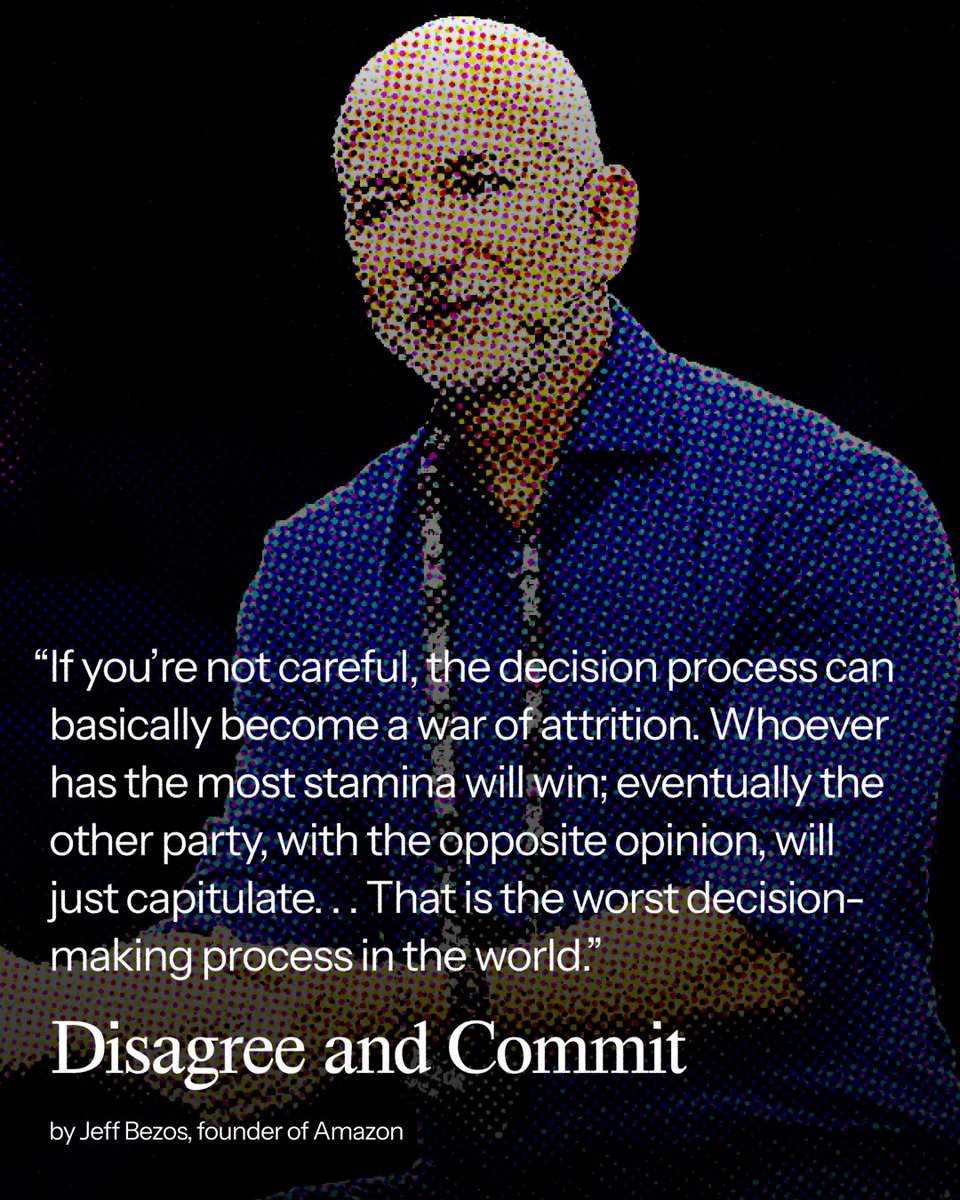
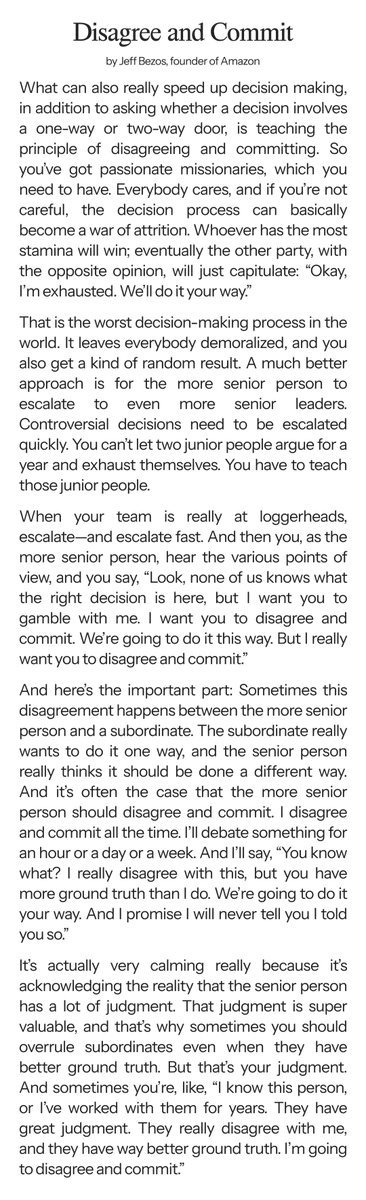
“If you’re not careful, the decision process can basically become a war of attrition. Whoever has the most stamina will win; eventually the other party, with the opposite opinion, will just capitulate. . . That is the worst decision-making process in the world.”
- Jeff Bezos

2
8
95
11,207
This is an excerpt from Jeff Bezos's interview at the 2019 Reagan National Defense Initiative conference.
Read the full essay here: founderstribune.org/p/decisi…
8
1,046
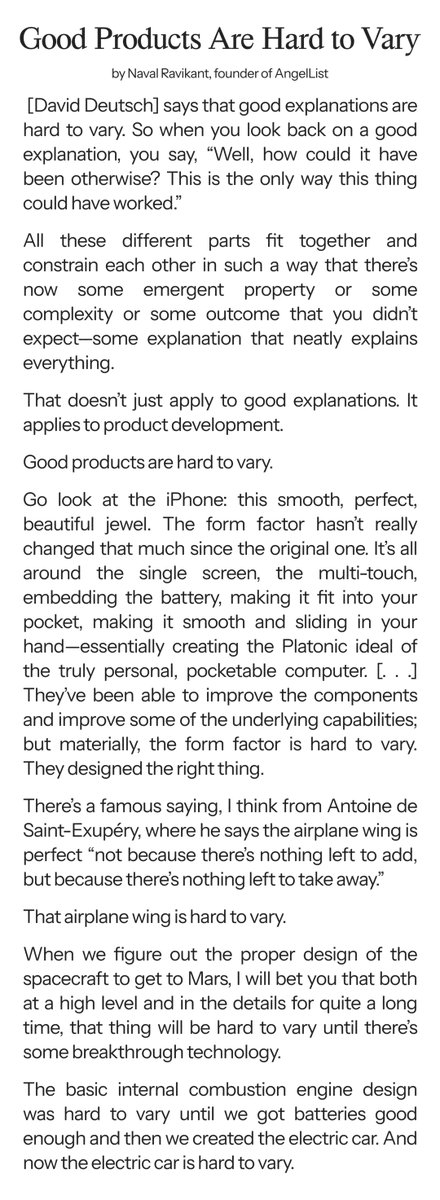
"Good Products Are Hard to Vary" by Naval Ravikant
2
11
103
21,726
Full post on @naval's blog here nav.al/good-products
2
883
The Founders' Tribune retweeted

Jan 25
Naval Ravikant on product development:
"Good products are hard to vary. Go look at the iPhone: [...] the Platonic ideal of the truly personal, pocketable computer. [...] They’ve been able to improve the components and improve some of the underlying capabilities; but materially, the form factor is hard to vary. They designed the right thing."
11
11
93
12,306
The Founders' Tribune retweeted
Jan 18
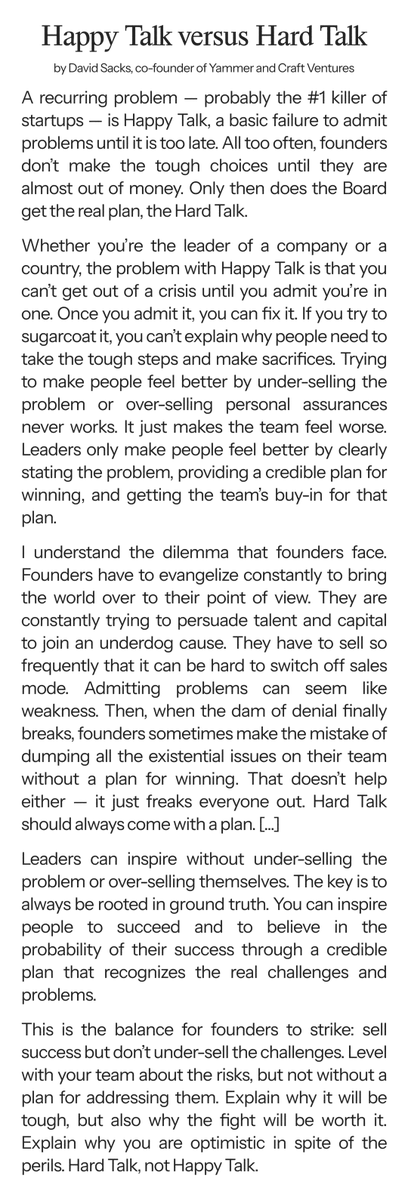
"A recurring problem — probably the #1 killer of startups — is Happy Talk, a basic failure to admit problems until it is too late...
The problem with Happy Talk is that you can’t get out of a crisis until you admit you’re in one. Once you admit it, you can fix it. If you try to sugarcoat it, you can’t explain why people need to take the tough steps and make sacrifices. Trying to make people feel better by under-selling the problem or over-selling personal assurances never works. It just makes the team feel worse. Leaders only make people feel better by clearly stating the problem, providing a credible plan for winning, and getting the team’s buy-in for that plan."
- David Sacks, co-founder of Yammer & Craft Ventures
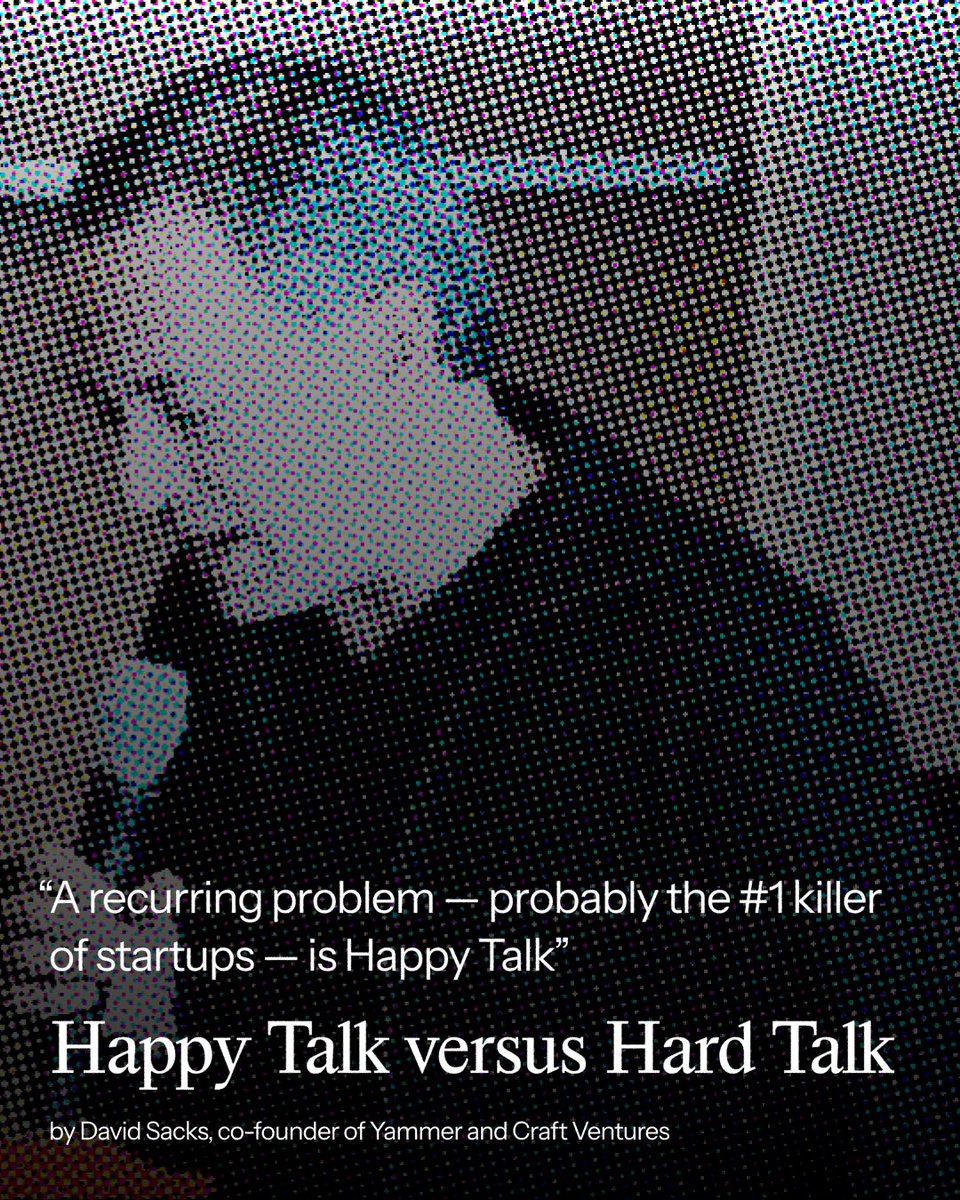
“A recurring problem — probably the #1 killer of startups — is Happy Talk”
- David Sacks, co-founder of Yammer and Craft Ventures
4
27
174
19,545
“A recurring problem — probably the #1 killer of startups — is Happy Talk”
- David Sacks, co-founder of Yammer and Craft Ventures
5
38
403
49,604
The Founders' Tribune retweeted
Jan 11
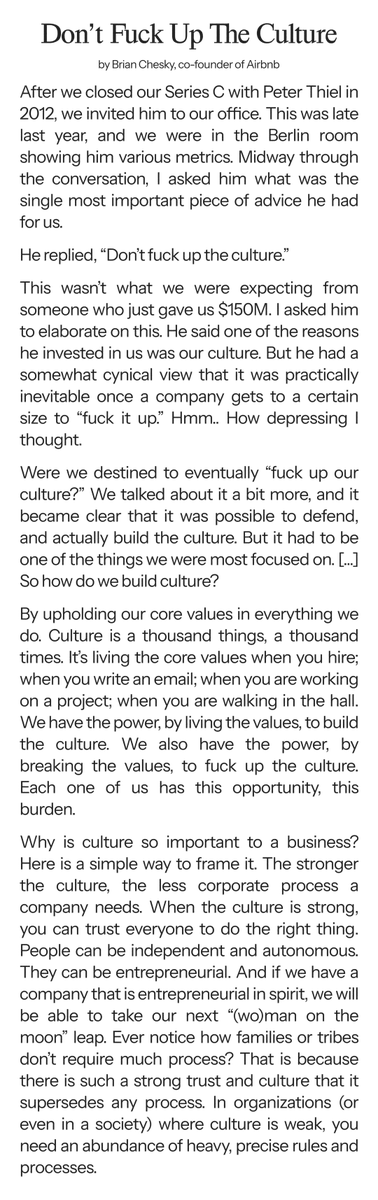
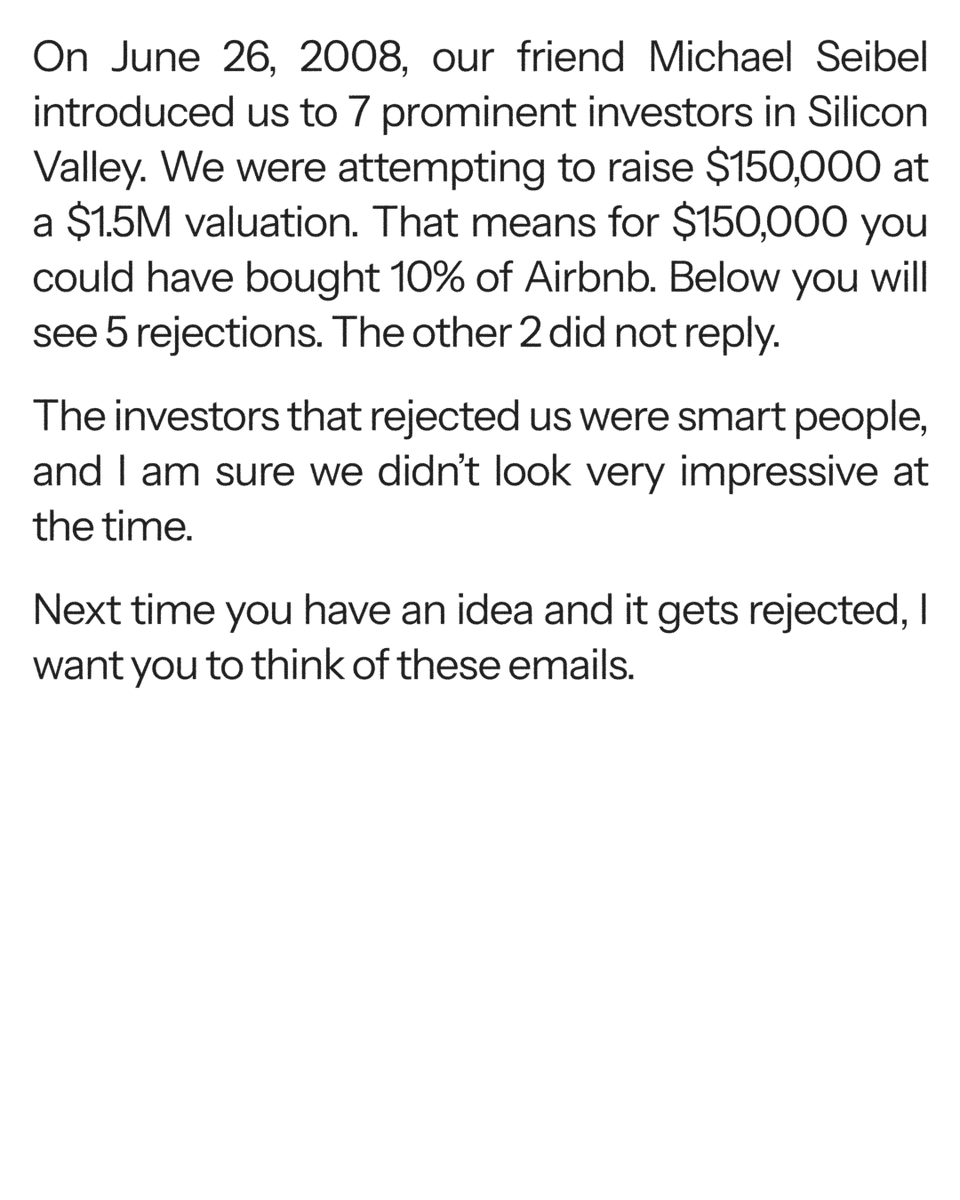
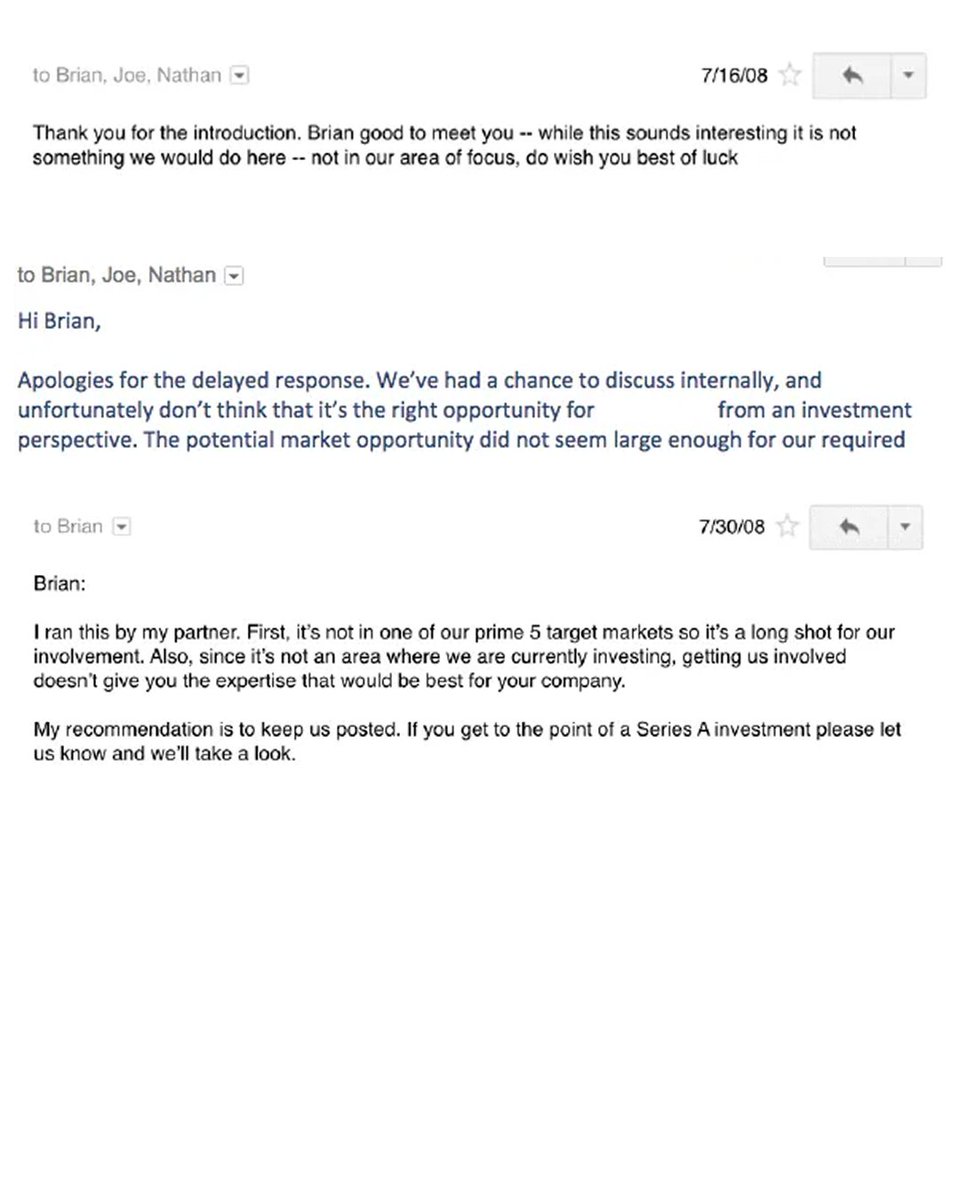
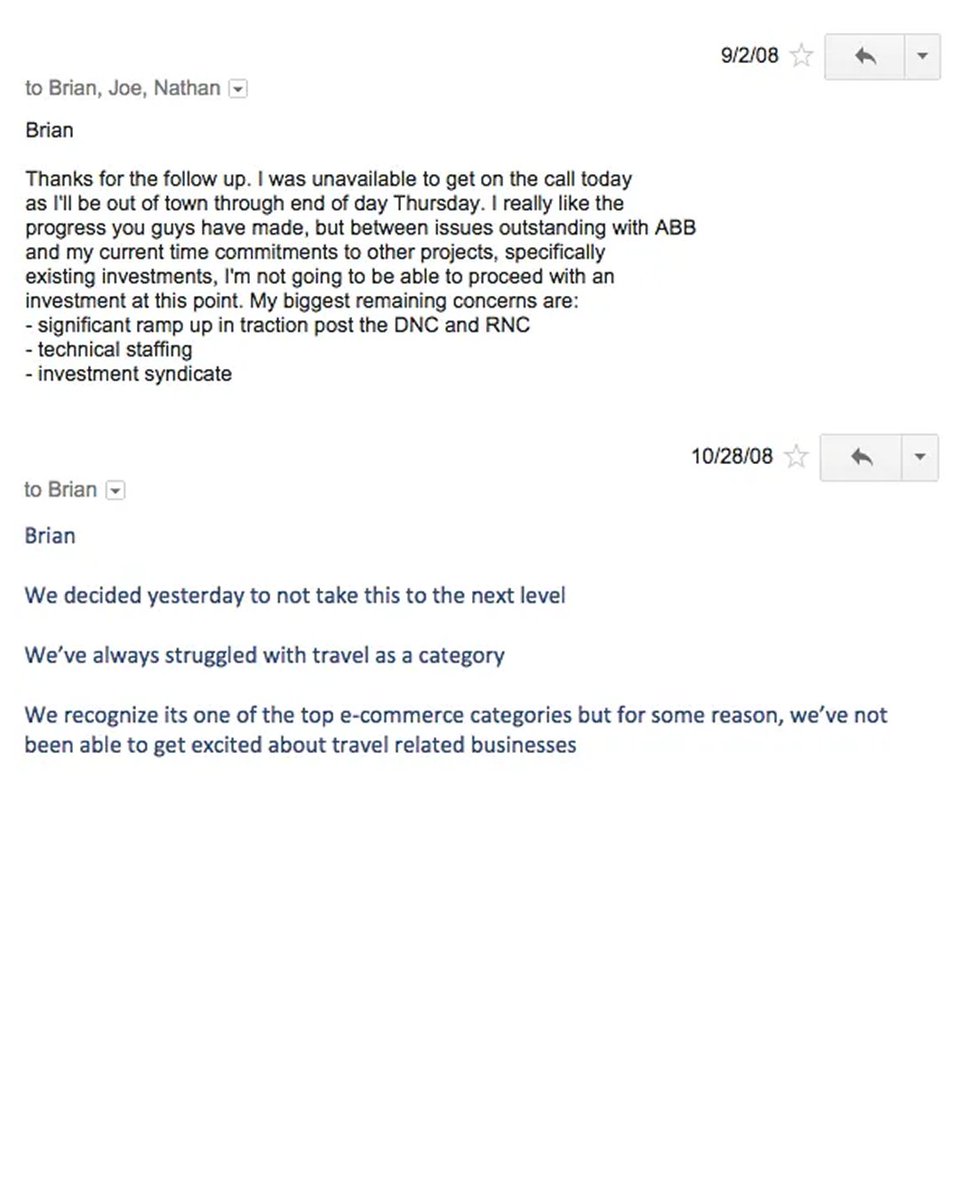
Rejection email Brian Chesky received attempting to raise $150k for 10% of Airbnb:
"Brian good to meet you -- while this sounds interesting it is not something we would do here -- not in our area of focus, do wish you best of luck"
10% of Airbnb today is worth $8 billion
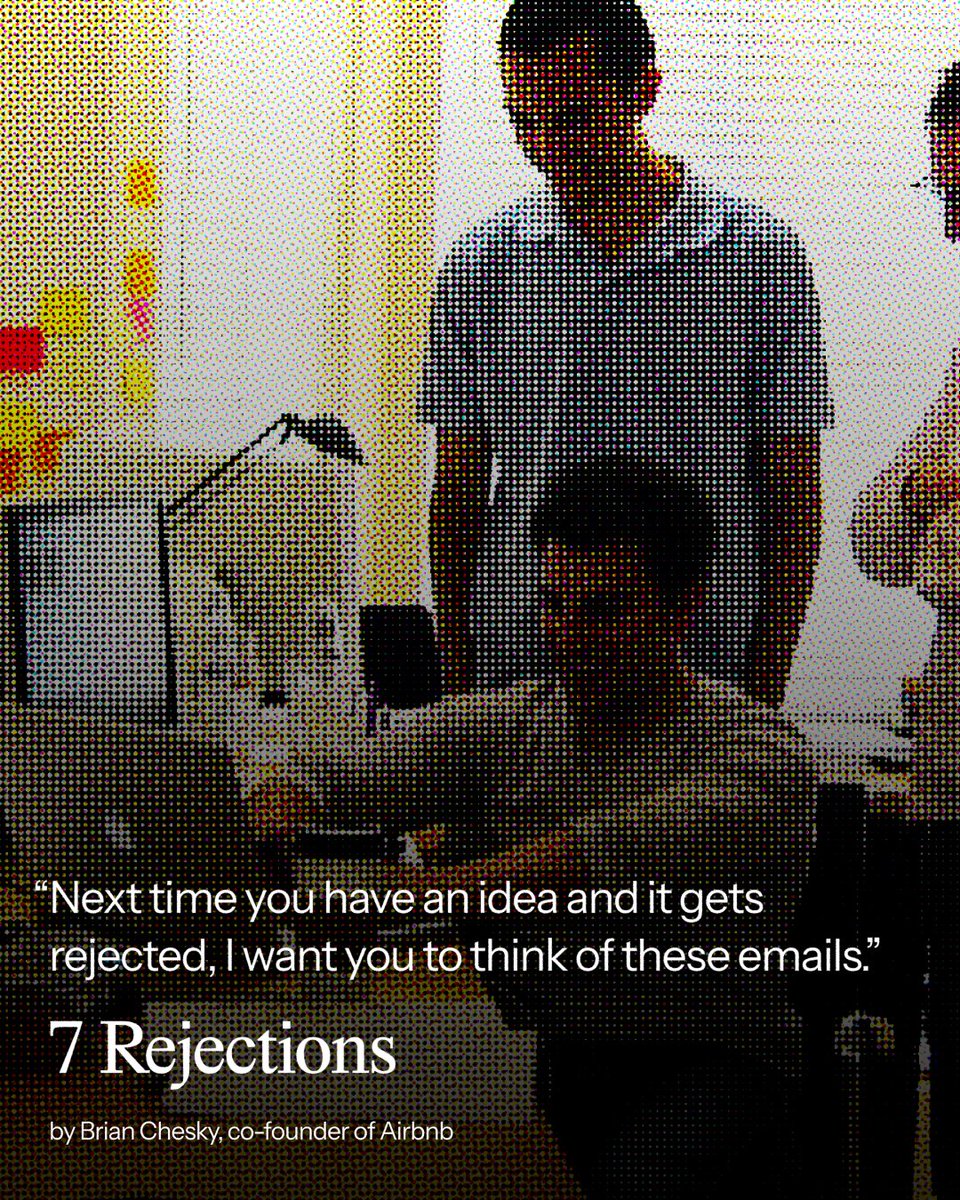
"Next time you have an idea and it gets rejected, I want you to think of these emails."
- Brian Chesky, co-founder of Airbnb
3
13
110
10,626
"Next time you have an idea and it gets rejected, I want you to think of these emails."
- Brian Chesky, co-founder of Airbnb
47
662
5,176
256,311
The Founders' Tribune retweeted
31 Aug 2025
New essay: Viral Loops
From the inception of PayPal, Peter Thiel focused on viral distribution for both practical and philosophical reasons. Practically, he knew his small startup could never acquire millions of users through conventional marketing channels. Philosophically, he drew on René Girard’s theory of mimetic desire and believed that people mostly borrow their desires from others. Girard developed the theory to explain how imitation can escalate into rivalry, contagion, and even collective violence. Thiel saw in it a framework for technology adoption: if you could get a small group to want something and spread it, others would follow in a predictable cascade.
PayPal’s breakthrough came when the team realized money could be sent to anyone with an email address. That made the product inherently viral: every transaction pulled new people into the network because recipients had to create an account to get their money. Then they amplified it with a referral bonus that paid $10 to both inviter and invitee. At first $20 per user might seem like a lot, but in the middle of the dot-com boom when companies were spending hundreds of dollars to acquire a single customer, it was relatively efficient.
In November 1999, PayPal’s 24 employees seeded the network by emailing their friends with the subject line “PayPal User Beamed You Money.” Growth took off immediately. In five months, they went from a thousand users to a million, compounding at 7-10% a day. As the loop strengthened and network effects kicked in, they reduced the bonus to $5, then phased it out entirely. Two years later, PayPal went public and was acquired by eBay for $1.5 billion.
Ex-PayPal employees would go on to build their next companies around virality. The YouTube founders used an embedding strategy to spread their videos to millions of people on MySpace. Reid Hoffman devoted roughly 80% of LinkedIn’s early resources to viral growth. And it wasn’t just PayPal alumni. Facebook, Dropbox, Twitter, and almost all of the fastest-growing Web 2.0 companies relied on similar dynamics. In fact, the user bases for these products grew so large, so fast, that no traditional marketing channel could have created them.
Marc Andreessen eventually gave this distribution strategy a name: the viral expansion loop. Any strategy to grow virally begins and ends with a loop: someone tries your product, tells others, and some of those people become users too. Then the cycle repeats. The exponential growth these loops produce make it possible for founders in the internet era to build billion-dollar companies simply by designing their products the right way. No sales team or marketing budget needed.
In practice, viral loops take several forms:
- Word of mouth. The purest kind. The product is so remarkable that people tell others about it. Facebook’s earliest growth on college campuses was mostly word of mouth before they started building more explicit viral hooks (e.g. email invites, adding your friends via address books, etc.). Word of mouth drives the growth of many movies, books, diets, and TV shows.
- Inherent virality. The product only works if others use it. WhatsApp, Slack, and Zoom fall into this category. Facebook even manufactured it by refusing to launch on a campus until half the student body joined a waitlist.
- Collaboration. The product is useful alone, but better with others. Google Docs and Dropbox folder-sharing are good examples. This loop can take longer to spread if your customers don’t immediately need to collaborate, but once they do, strong network effects kick in and it’s extremely sticky.
- Communications. Every use advertises the product. Hotmail’s ”Get a free email account with Hotmail” default signature is the most famous example. Every email a customer sent spread the word about the product.
- Content. The product spreads through the media it helps people create. TikTok and Instagram grew because people saw watermarked videos and photos with cool filters on their Facebook and Twitter Feeds.
- Referrals. Direct incentives to spread the word like PayPal’s $10, Dropbox’s free storage, and Amazon’s Affiliate program. At one point, half of Uber’s new users came from referrals.
- Embeddings. Features designed to spread your product across the web. PayPal built software that let eBay sellers to automatically add a “Pay with PayPal” button to all of their listings. YouTube built a code snippet that let users embed a video on any website. Airbnb built a tool that let hosts cross-post their listings to the much-larger Craigslist.
The strongest products stack multiple loops on top of one another. Take PayPal for example. The payment product was inherently viral because sending money forced recipients to sign up, but the team amplified this with referral bonuses and embedded payment buttons.
To know if a loop is working, you have to measure two things: the viral coefficient and the cycle time. The coefficient (K) is how many new users each user brings in. If every customer invites ten friends and 20% convert, K = 2. Any value above 1 produces exponential growth. Cycle time is how long it takes the loop to spin. The shorter the cycle time, the more frequently the loop compounds. YouTube’s was minutes, which is why it grew so explosively: watch a video, share it, friend joins.
Small improvements in either lever bend the curve disproportionately. A modest increase in conversion or a slightly faster cycle time compounds into enormous outcomes when repeated thousands of times. That’s why great teams obsess over friction. Every second shaved from the path to value increases conversion and accelerates the loop.
However, it’s important to keep in mind that virality and retention are inextricably linked. Bringing new users in through the front door doesn’t help you grow if they immediately turn around and leave. Instead, you should think of retention as prerequisite for viral growth and a multiplier. A product people use every day has thirty opportunities a month to generate new invitations; a product they use once has only one. The math of the viral coefficient still applies, but you have to think of it across many sessions. This is why the highest retention products are almost always the most viral.
Viral loops aren’t magic. They are mechanisms, and like all mechanisms they either work or they don’t. Properly designed, they are the most powerful form of distribution available to startups. But they only endure when anchored in real product value and strong retention. Without those foundations, even the most spectacular loop collapses into nothing more than a temporary spike.
7
31
195
46,463
The Founders' Tribune retweeted
28 Jul 2025
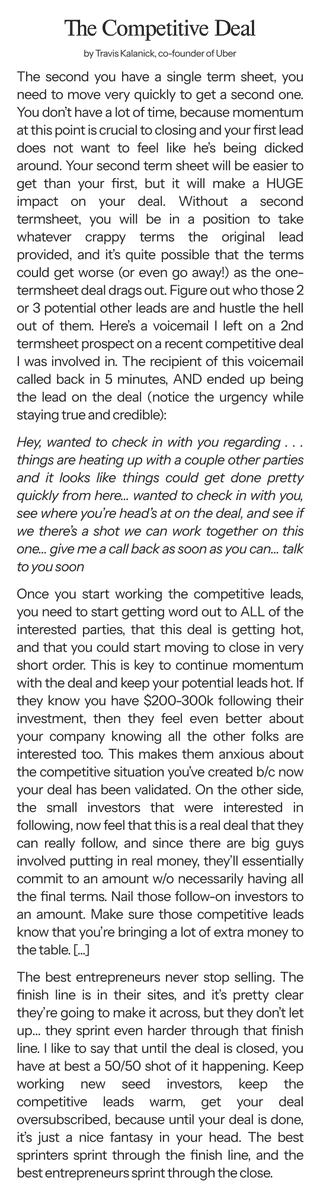
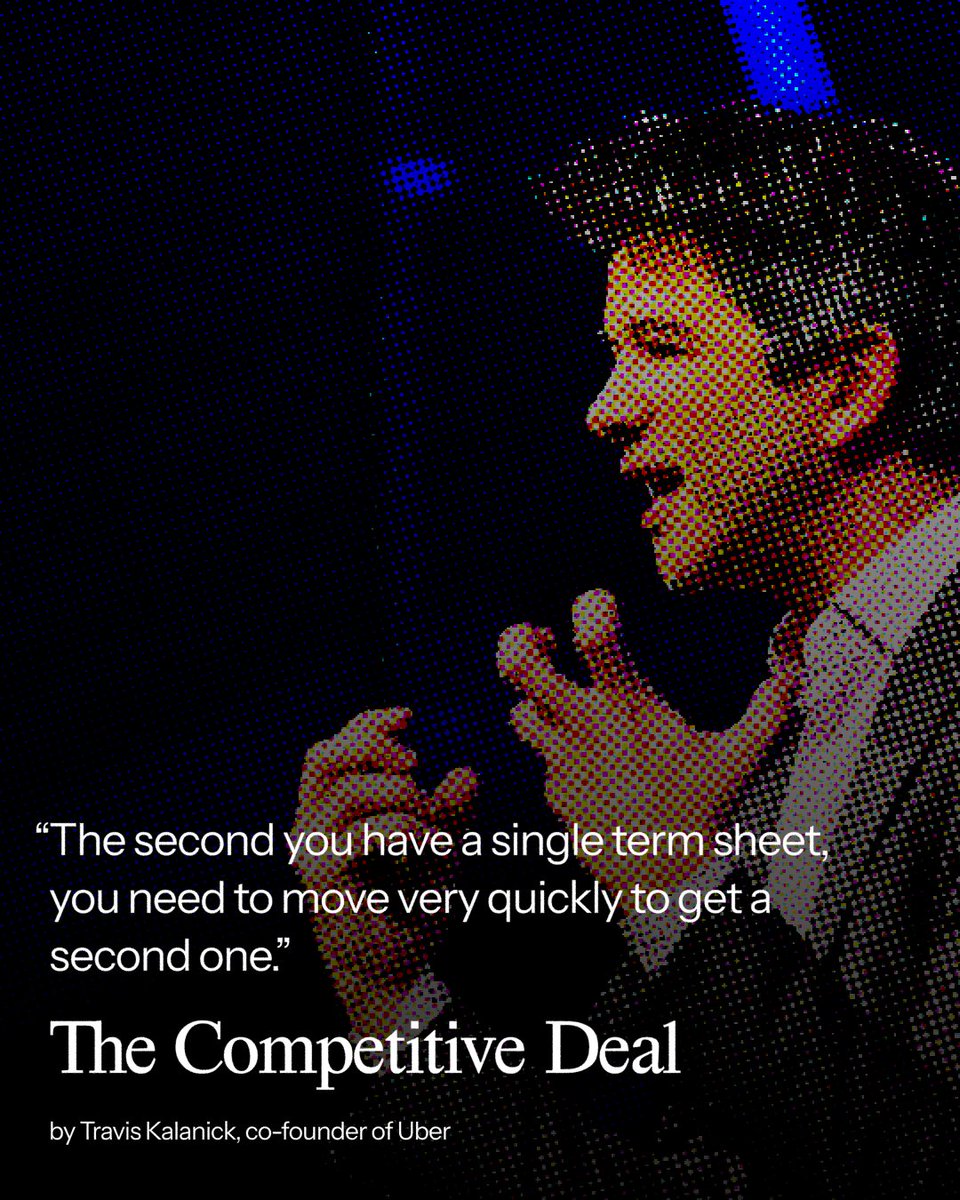
Travis Kalanick's advice to founders raising their seed round:
"Until the deal is closed, you have at best a 50/50 shot of it happening. Keep working new seed investors, keep the competitive leads warm, get your deal oversubscribed, because until your deal is done, it’s just a nice fantasy in your head. The best sprinters sprint through the finish line, and the best entrepreneurs sprint through the close."
3
11
97
14,198
28 Jul 2025
"The Competitive Deal" by Travis Kalanick
1
8
58
20,710
28 Jul 2025
Travis Kalanick is the co-founder of Uber. This is an excerpt from a blog post he wrote in 2009 titled "Startup Seed Raising Skilzzz"
Read the full essay here: founderstribune.org/p/startu…
10
1,442
The Founders' Tribune retweeted
27 Jul 2025
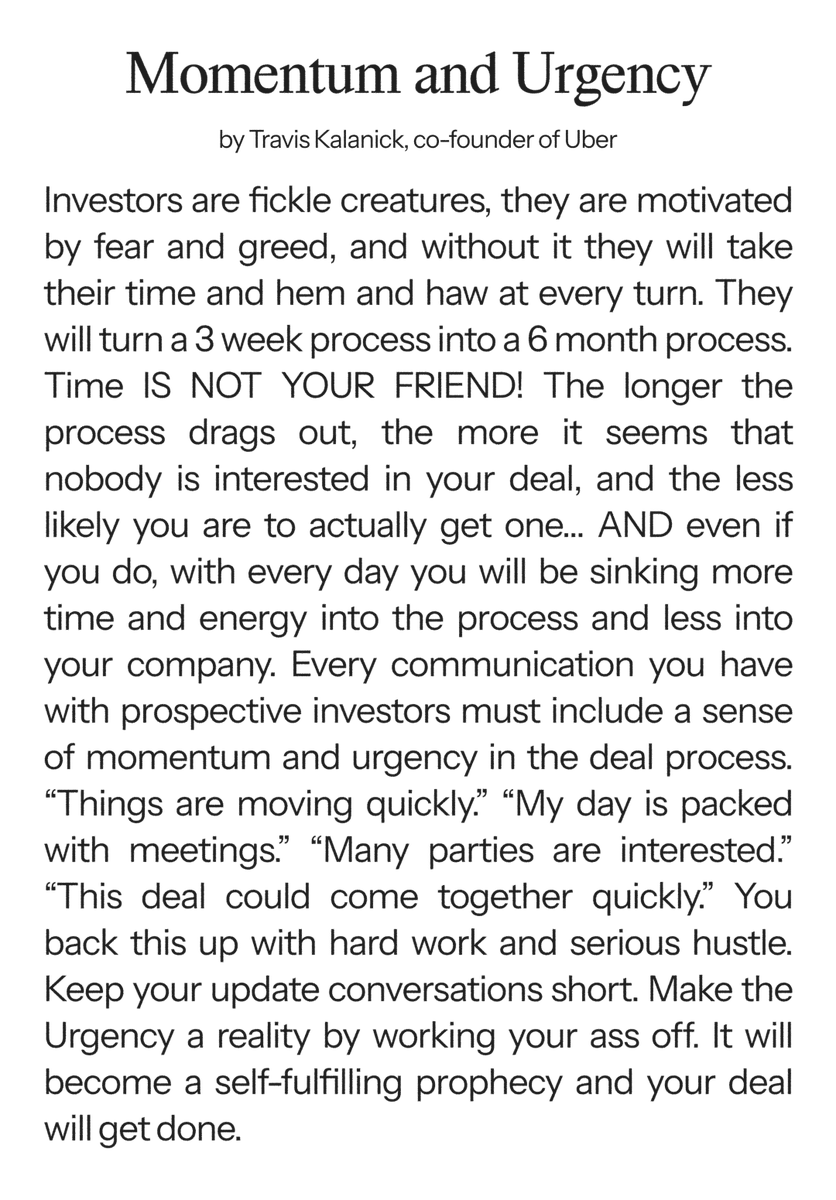
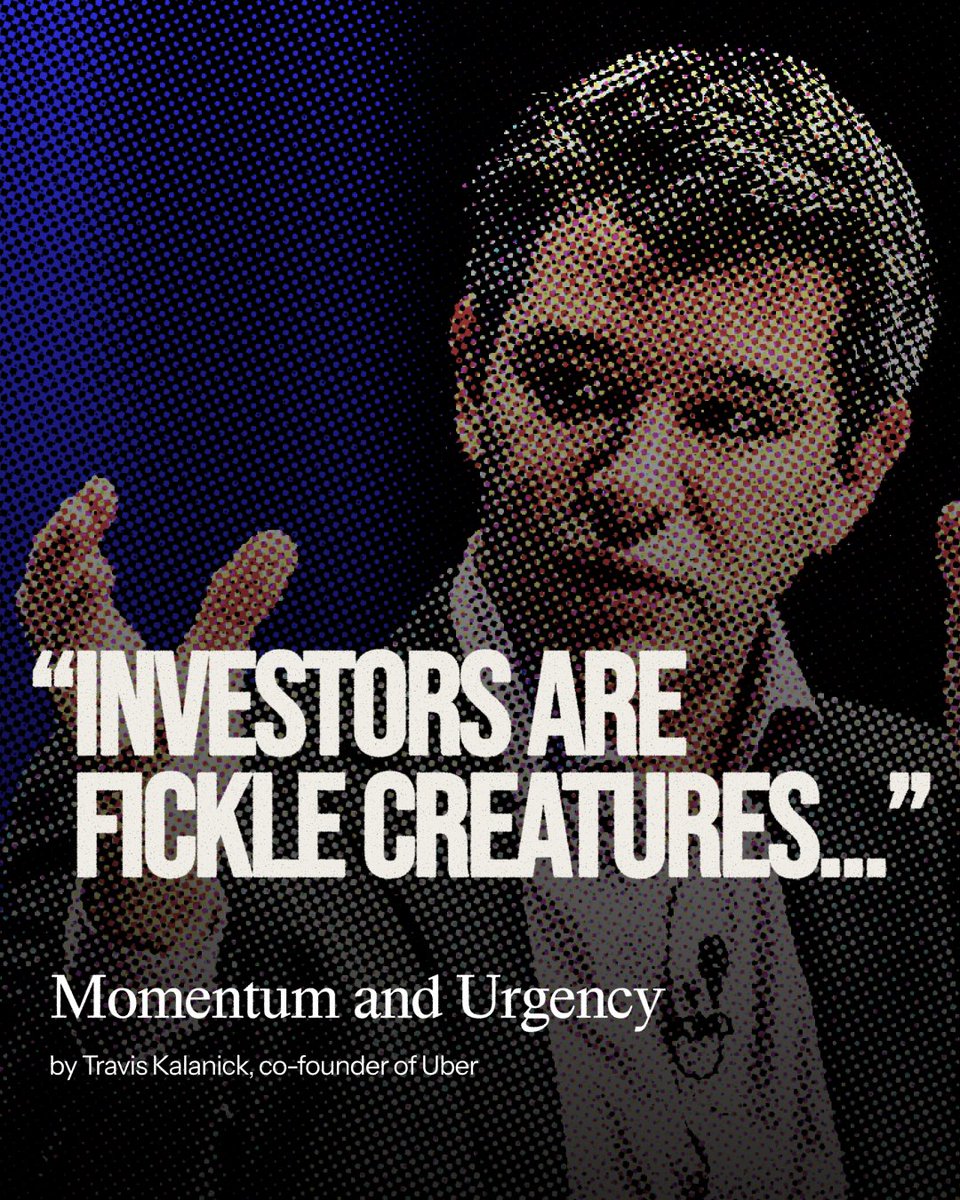
Travis Kalanick on the importance of momentum & urgency when raising your seed round:
"Investors are fickle creatures, they are motivated by fear and greed, and without it they will take their time and hem and haw at every turn. They will turn a 3 week process into a 6 month process. Time IS NOT YOUR FRIEND! The longer the process drags out, the more it seems that nobody is interested in your deal, and the less likely you are to actually get one... AND even if you do, with every day you will be sinking more time and energy into the process and less into your company."
1
15
144
19,192
27 Jul 2025
"Momentum and Urgency" by Travis Kalanick
1
55
642
82,891
27 Jul 2025
Travis Kalanick is the co-founder of Uber. This is an excerpt from a blog post he wrote in 2009 titled "Startup Seed Raising Skilzzz"
Read the full essay here: founderstribune.org/p/startu…
1
4
21
2,375
The Founders' Tribune retweeted
20 Jul 2025
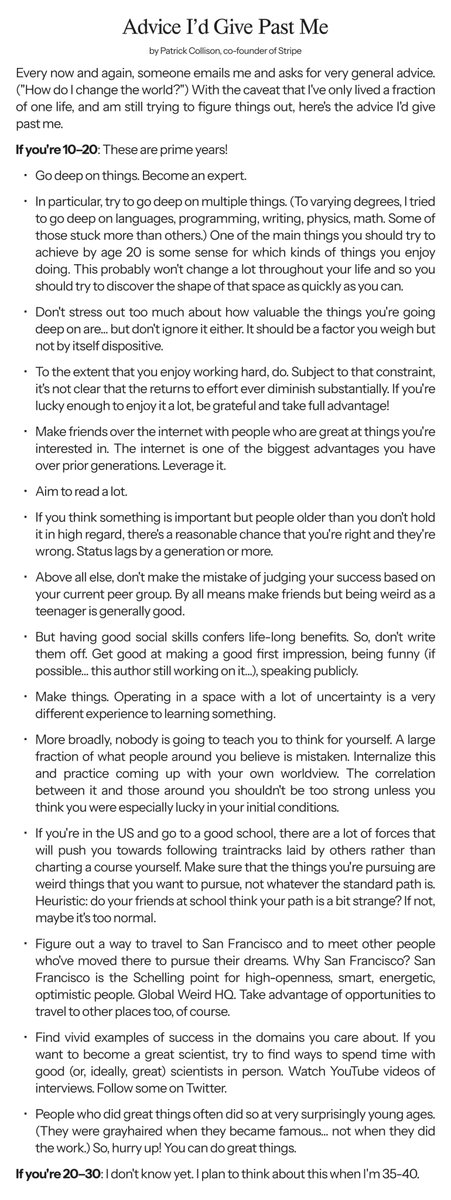
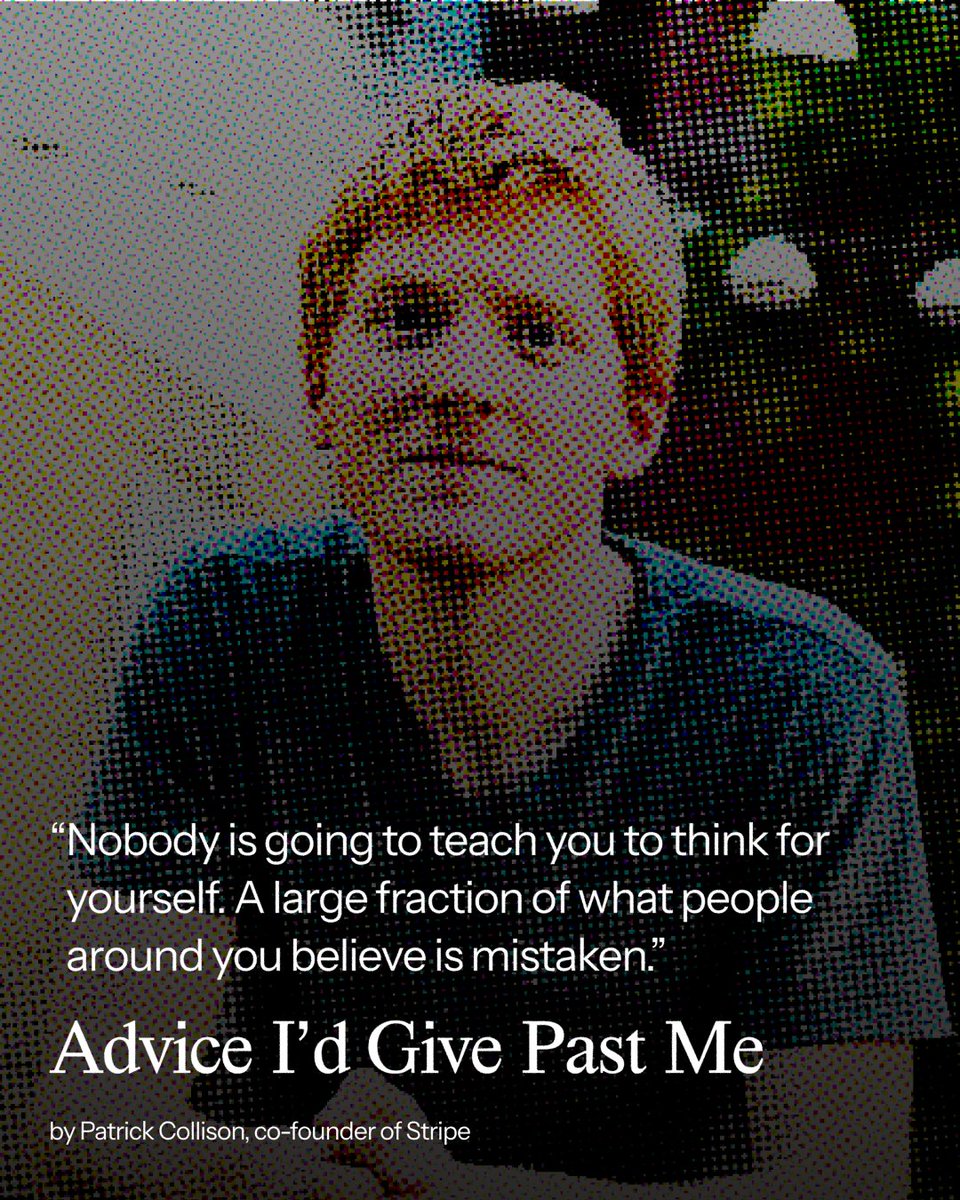
Patrick Collison on thinking for yourself:
"Nobody is going to teach you to think for yourself. A large fraction of what people around you believe is mistaken. Internalize this and practice coming up with your own worldview. The correlation between it and those around you shouldn't be too strong unless you think you were especially lucky in your initial conditions."
8
24
201
21,086