
Replace expensive SaaS with the tools you own
Joined January 2026
- Tweets 138
- Following 10
- Followers 40
- Likes 244
54 Photos and videos





Jun 11
Not all Operators are built the same.
We mapped out 8 archetypes based on how founders actually use AI to build and grow, and yours might not be what you expect.
Take the 60-second quiz and find out where you land.
Take the quiz now: founding.dev/quiz/ai-archety…
#aitools #buildinpublic #AiArchetypes #businessgrowth #solopreneur
1
1
2
88
Jun 10
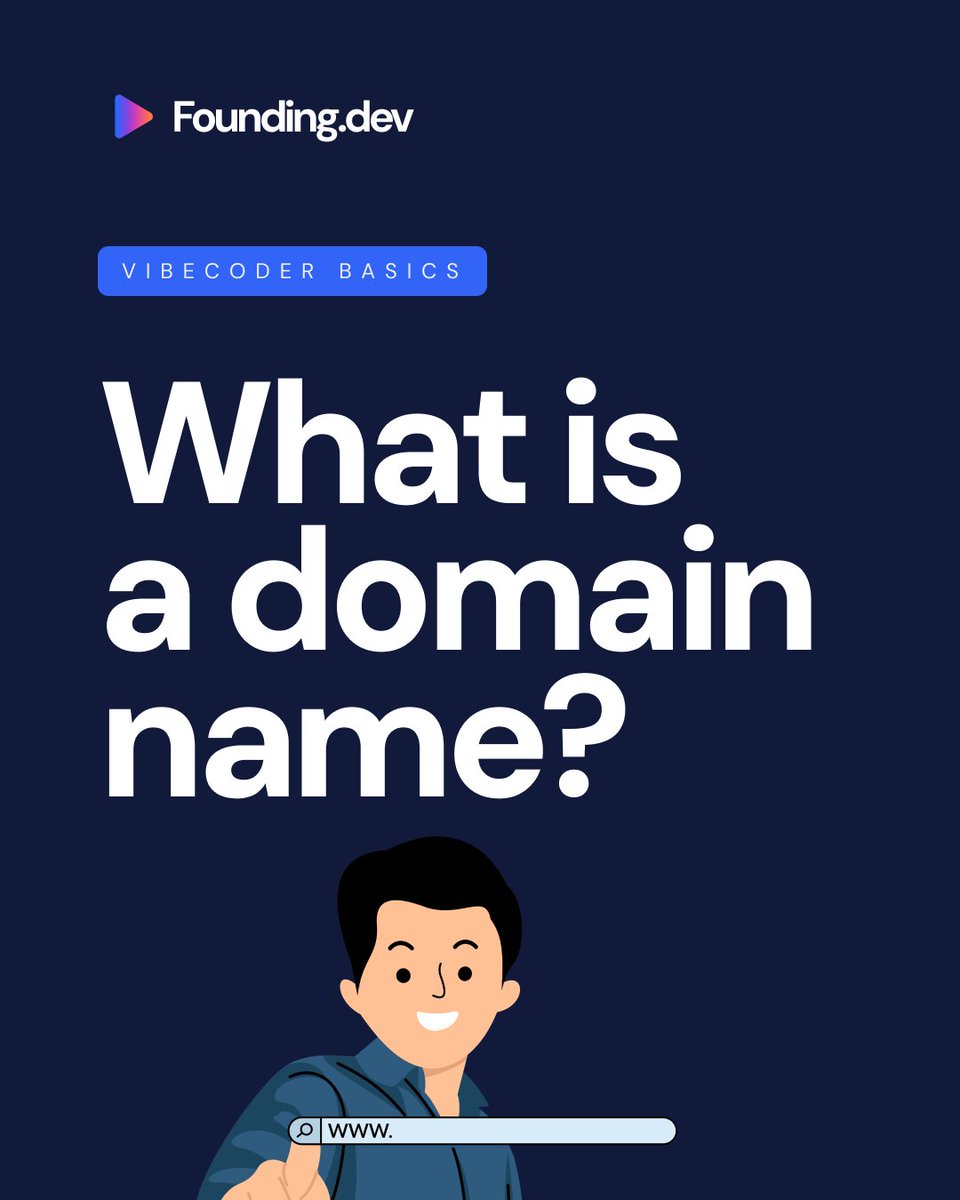
When you "buy a domain," what do you actually own? It's not what most vibecoders think.
A URL (example.com/pricing?ref=twit…) is four parts:
1. https://: Protocol (how it talks)
2. example.com: Domain (what it's called)
3. /pricing: Path (which page)
4. ?ref=twitter: query (extra info)
When you "buy a domain," you're paying a registrar (like Namecheap, Cloudflare, GoDaddy) for the right to use a name for one year at a time. Behind the scenes, that name points to an IP address. The actual address of a server somewhere.
Here are three services people always confuse:
1. REGISTRAR: Sells you the name
2. DNS: Directs traffic from the name to the right server (often included free)
3. HOSTING: Where your actual site or app runs (Vercel, Netlify, etc.)
Found this helpful, follow @foundingdev for more.
4
Jun 8
A DAY IN THE LIFE OF A FOUNDER PT 2.
She should be asleep. Instead, she’s staring at a spreadsheet that used to feel like a definitive plan, but now just looks like formatted guesswork. Her savings are down. Not dramatically yet—just enough that she notices it every time she opens her banking app, a habit she now does compulsively, like checking the weather, hoping something has magically changed.
Her last real paycheck was four months ago. She doesn't regret the decision to leap, but she wishes someone had warned her that the hardest part of entrepreneurship isn't the actual work. It’s the crushing silence. It’s the long days with no feedback, no external signals, and no idea if any of this is actually landing.
She closes the laptop, hesitates in the dark, and opens it right back up again. Somewhere in the heavy gap between fear and commitment, she finds the nerve to keep going.
Follow Founding Dev for PT 3 of this series.
#Founders #Buildinpublic #Lifeofafounder
1
14
Jun 5
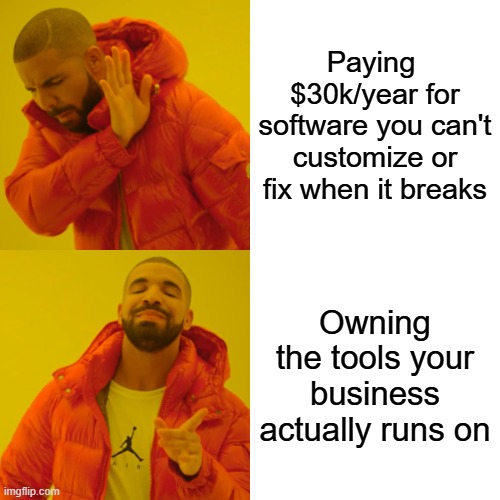
There are two ways to run software in your business, and most founders spend years in the expensive one before they discover the other.
The default path: You rent access, you pay monthly, get a login, and hope the vendor's priorities stay aligned with yours. When the price goes up, and it always goes up, you either absorb it, negotiate awkwardly, or spend weeks migrating to something else.
The alternative: You own it! You build the tool once on Founding.Dev, customize it exactly how your business works, and run it indefinitely. When something breaks, you fix it. When you want a new feature, you add it.
The difference in cost over 3–5 years isn't marginal, it's the kind of number that makes you stare at your bank statements and do math you really don't want to do.
The founders who figure this out early don't go back.
Get started on @foundingdev today.
1
11
Jun 3
If you've started using AI coding tools, you've probably seen them mention a .env file. Here's what one actually looks like.
Example:
OPENAI_API_KEY=sk-abc123…
DATABASE_URL=postgres://…
NODE_ENV=development
Here are five rules to writing a.env file:
· comments start with #
· KEY=value (no quotes needed)
· UPPER_SNAKE_CASE for names
· no spaces around the equals sign
· one variable per line
Your code reads them at runtime via process.env.KEY_NAME (Node/JavaScript) or os.environ['KEY_NAME'] (Python). Every modern framework reads it automatically.
.env files live at the root of your project and goes in .gitignore so it never gets pushed.
Save this. Follow @foundingdev for more.
1
37
Jun 1
A DAY IN THE LIFE OF A FOUNDER PT 1
She is heading home at 9:00 PM with nothing but a heavy silence. There were no closed deals today, not even a callback—just an afternoon spent rewriting a single pitch email until the words blurred, leaving her wondering if the flaw was in her business, or simply in herself.
That doubt makes the crowded station feel incredibly isolating. She watches the commuters around her effortlessly clocking out for the night, deeply envying a freedom she no longer remembers. For her, going home doesn't mean resting; it just means moving to the kitchen table, where her laptop waits to be opened again.
So when people ask how the "business thing" is going, she smiles and replies, "Really well!" because exposing the grueling reality takes more energy than she has left.
The train arrives, the doors slide open, and she steps inside. Tomorrow, she’ll try again.
Follow @foundingdev for PT 2 of the series.
#Founders #Buildinpublic #lifeofafounder
1
2
30
May 29
There's a specific moment some founders describe as the turning point, and it almost always involves a renewal email
You get the notification: your annual subscription is renewing in 7 days. You open the invoice. You look at the total, and for the first time, instead of just clicking confirm, you actually do the math.
$X per month × 12 months. Then you multiply across all your subscriptions. The number is uncomfortable.
That's when you ask the question that changes everything: "How long would it actually take to build this myself?" You look it up. Someone built the same thing on @foundingdev in a few hours.
You don't renew.
That's the turning point. And once it happens with one tool, it tends to cascade. You start looking at every subscription the same way.
Not "is this affordable?"
but "is this something I should own instead?"
The math almost always answers the question for you.
Get started on @foundingdev
#Founders #StartupStrategy #saasmarketing #foundingdev
1
9
May 27
A single leaked API key has cost solo developers thousands of dollars overnight.
Here's why: an API key is your house key for a service. Anyone holding it can use your account — OpenAI, Stripe, AWS, Google Maps. Lose one, and someone else runs up your bill.
Losing one is shockingly easy. Bots scan public GitHub repos 24/7. The moment a key hits a public repo, automated scrapers find it within seconds. AI coding tools might even make this worse. They generate code with example keys filled in, and sometimes, vibecoders push it before reviewing.
Where keys should live:
In a .env file at the root of your project, like:
OPENAI_API_KEY=sk-abc123…
STRIPE_SECRET=sk_live_xyz…
Then add .env to your .gitignore (so Git skips it). Your code reads them at runtime. They never enter your repo.
Already pushed something? Audit with: GitHub Secret Scanning (auto-enabled on public repos), Trufflehog (open-source scanner), or Git-secrets (blocks them at commit time). If a key was exposed, rotate it as deleting the commit isn't enough.
Follow @foundingdev for more.
#vbecoderbasics
1
1
2
85
May 25
A vendor bug locked one of our teammates out of his own account.
We filed a support ticket.
Then, we waited.
Weeks went by. Follow-ups were sent; automated replies were received. The problem just sat there, blocking us, because the fix lived inside someone else's system and we couldn't touch it.
That's the part nobody talks about when they sign up for SaaS.
It's not just the cost—it's the helplessness. It's the moment something breaks and your only move is to ask nicely and wait.
The fix is simple: own the tools your business depends on.
When the code is yours, you don't file a ticket; you open the file. When something breaks, you fix it today, not three weeks from now. When your workflow changes, the software changes with it.
Ownership doesn't mean building everything from scratch. It means the tools running your business shouldn't live entirely inside someone else's support queue.
Stop renting software. Start owning it.
Use founding.dev/?utm_source=twi…
1
12
May 22
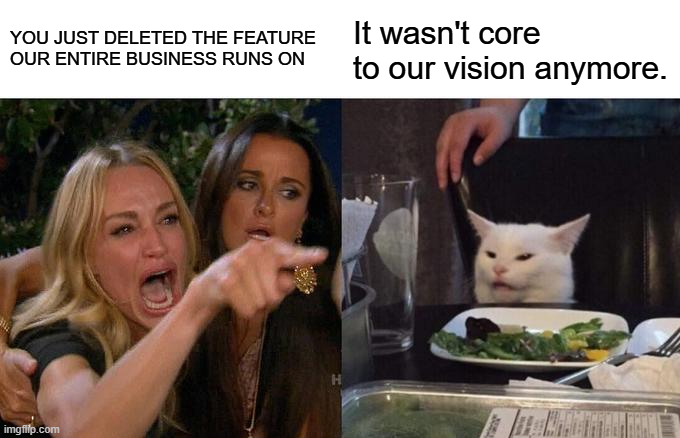
Most founders don't realize they've handed over control of their business until it's too late.
When you build your operations on software you don't own, every product decision that vendor makes is a decision about your business — and you have zero input.
A feature you depend on gets quietly removed.
A workflow your team built around disappears.
An integration that drives 30% of your revenue gets deprecated in a changelog most people never read.
This isn't rare. It happens constantly. The worst part is that there's no warning, no appeal process, and no compensation — because somewhere in the Terms of Service you clicked through, they reserved the right to do exactly this.
The fix is simpler than most founders think. Building and owning your tools on Founding.dev means your operations run on software where you hold every decision. Nobody else's roadmap affects yours.
#Founders #SaaS #BuildVsBuy #Startups #FoundingDev
1
1
19
May 20
There is a hidden security guard inside almost every project folder that most casual builders completely ignore. It's a file called ".gitignore"
It’s just a simple list of instructions, but it has a massive job: telling the system exactly which files to hide from the public and which ones to leave behind.
Without it, everything you create gets bundled up and posted online by default. That means you risk accidentally exposing your private passwords, clogging your project with massive folders, or uploading random digital junk from your computer.
Here are the 5 files every single project needs to hide to stay safe, clean, and professional:
.env — Your Secret Keys. The private passwords that connect your app to the internet. Never share this file.
node_modules/ — The Heavy Storage. Massive folders of background code that can easily be re-downloaded later. No need to clog up your project with them.
.DS_Store — Computer Clutter. Hidden system files your computer creates automatically (like macOS background junk).
dist/— The Final Product. The finished folder that gets automatically rebuilt every time you launch your app.
.log — Activity Logs. Local history files that just create unnecessary noise.
Save this checklist for the next time you start a project so you know exactly what to look for!
Follow @foundingdev for the rest of the series.
#VibecoderBasics #TechTips #CodingLife #BuildInPublic #FoundingDev
1
15
May 14
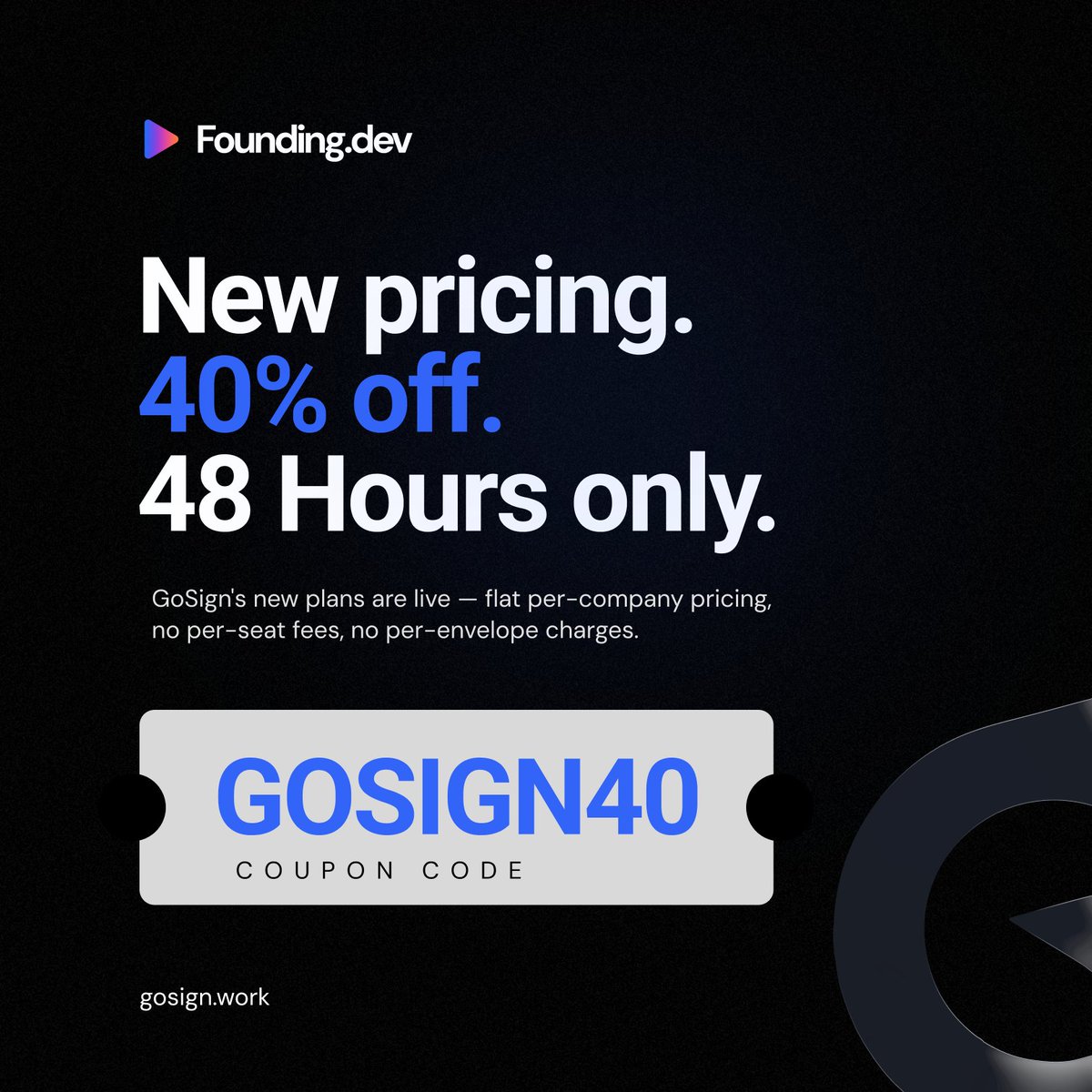
GoSign's New pricing is live — and for the next 48 hours, it's 40% off.
Use code GOSIGN40 at checkout on any annual plan. Closes midnight May 16 (PST). No exceptions, no extensions.
Get started now: gosign.work
1
23
May 13
Git ≠ GitHub.
Two names. Two completely different things.
Git is software you install on your computer. It tracks every change you make to a project — locally, on your machine. You can use Git all day without an internet connection.
GitHub is a website (owned by Microsoft) that hosts your Git projects online so others can see them, collaborate, and download. It has competitors: GitLab, Bitbucket, Codeberg.
How they work together: you edit code on your computer (Git tracks it), you "push" to GitHub (uploads your history), others "pull" the latest changes back to their own machine.
You can use Git without GitHub. You can't use GitHub without Git.
Vibecoder Basics #02. Follow @foundingdev for the rest of the series.
1
3
56
May 11
GoSign's price is changing. Here's what to know. :bell:
On May 14, GoSign our DocuSign replacer moves to a new model — 4 flat tiers, zero per-seat fees, zero per-envelope charges.
Free · Unlock · Unleash · Deploy
Plus: a 48-hour launch offer of 40% off annual plans for existing users.
Full details here: gosign.work/blog/new-pricing…
#GoSign #Pricing #eSignature #SaaS #ProductUpdate
3
40
May 8
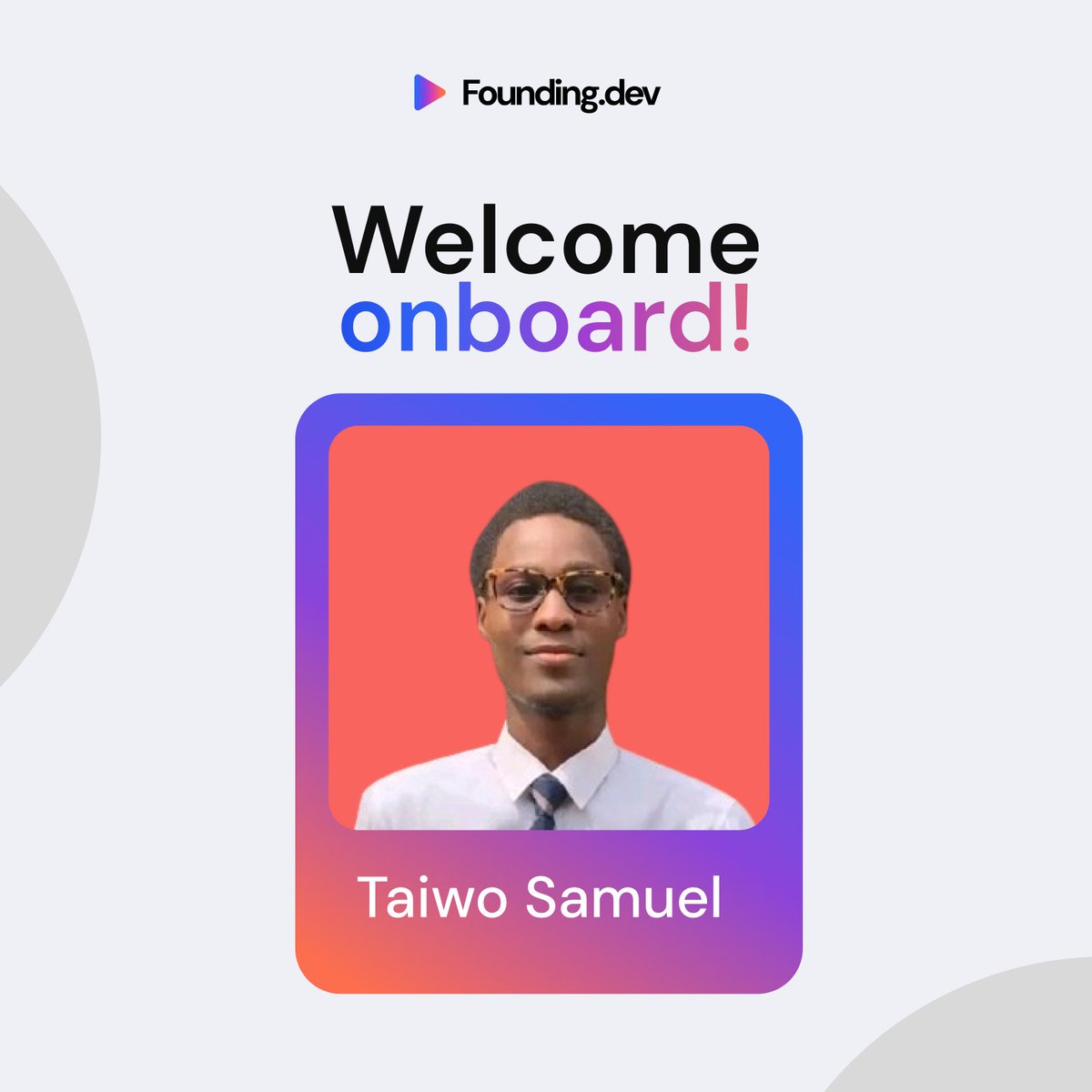
We're excited to welcome @taiwoosamuel to the Founding Dev team!
Taiwo Samuel joins us as a designer — bringing his experience to help business owners cut down the cost of expensive software and own the tools their business runs on.
When he's not designing, you'll find him making beautiful illustrations.
Welcome aboard, Taiwo. We're glad to have you join us!
1
2
53
May 6
Most tutorials assume you already know what Git is. Nobody actually teaches it.
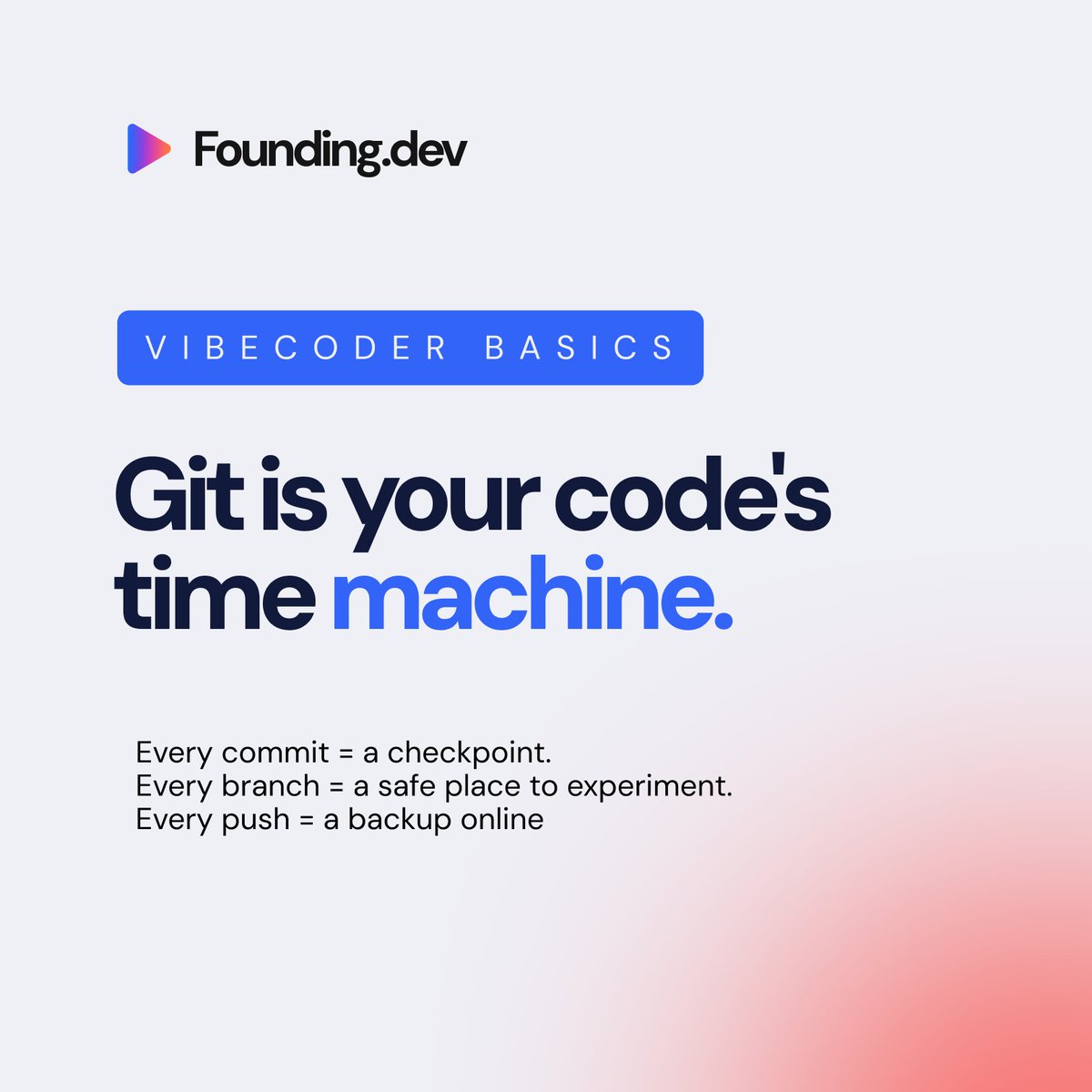
So here's the deal: Git is your code's time machine.
Every time you "commit," you save a checkpoint. You can rewind to any point, try a wild idea on a "branch," and never lose your work.
If you're vibecoding with Cursor, Claude Code, Copilot, or anything else — Git is the safety net underneath all of it.
Learn three commands and you're 90% of the way there:
→ git add . → git commit -m "what you changed" → git push
That's it. That's the post.
Save this for later. Follow for more Vibecoder Basics — no jargon, no gatekeeping.
#vibecoding #learntocode #git #github #codingforbeginners #buildinpublic #indiehackers #aitools #cursor #claudecode
1
1
31
May 4
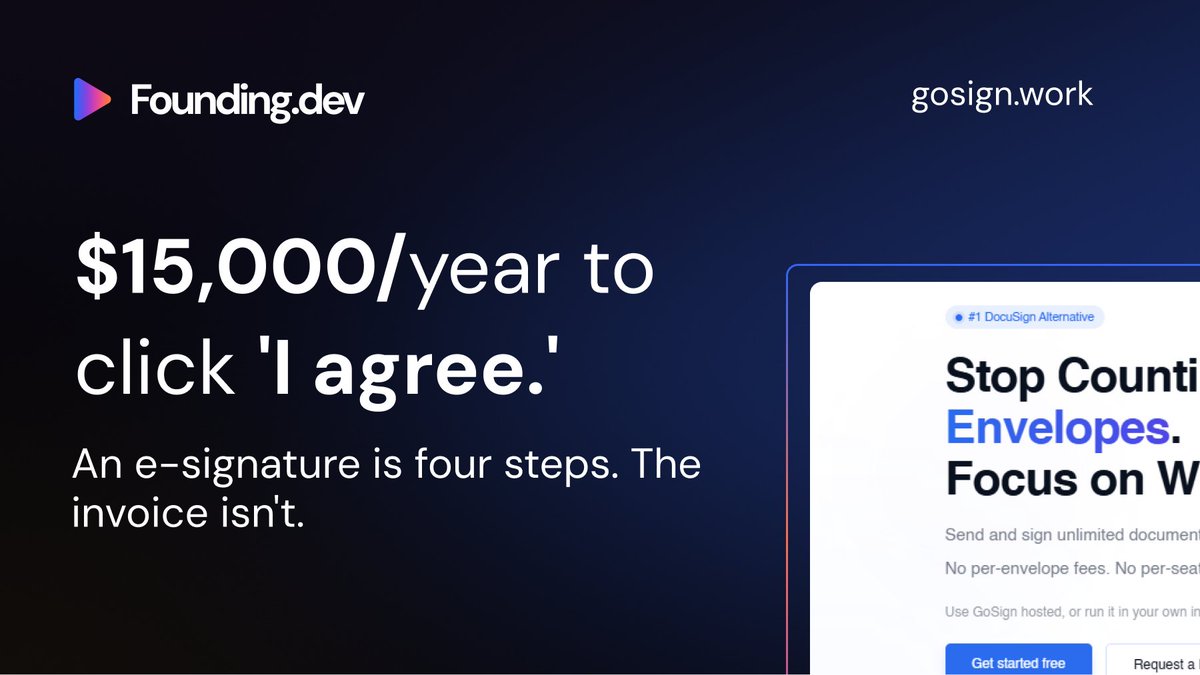
Have you gotten your $1,250/month bill for 4-step e-signing?
1️⃣ Upload PDF
2️⃣ Drag a box
3️⃣ Click send
4️⃣ Someone clicks "I agree"
Try GoSign — self-host for full compliance, own your workflow, and stop looking over your shoulder.
#eSignature #DocuSignAlternative #SaaS #OpenSource #SelfHosted
42
May 1
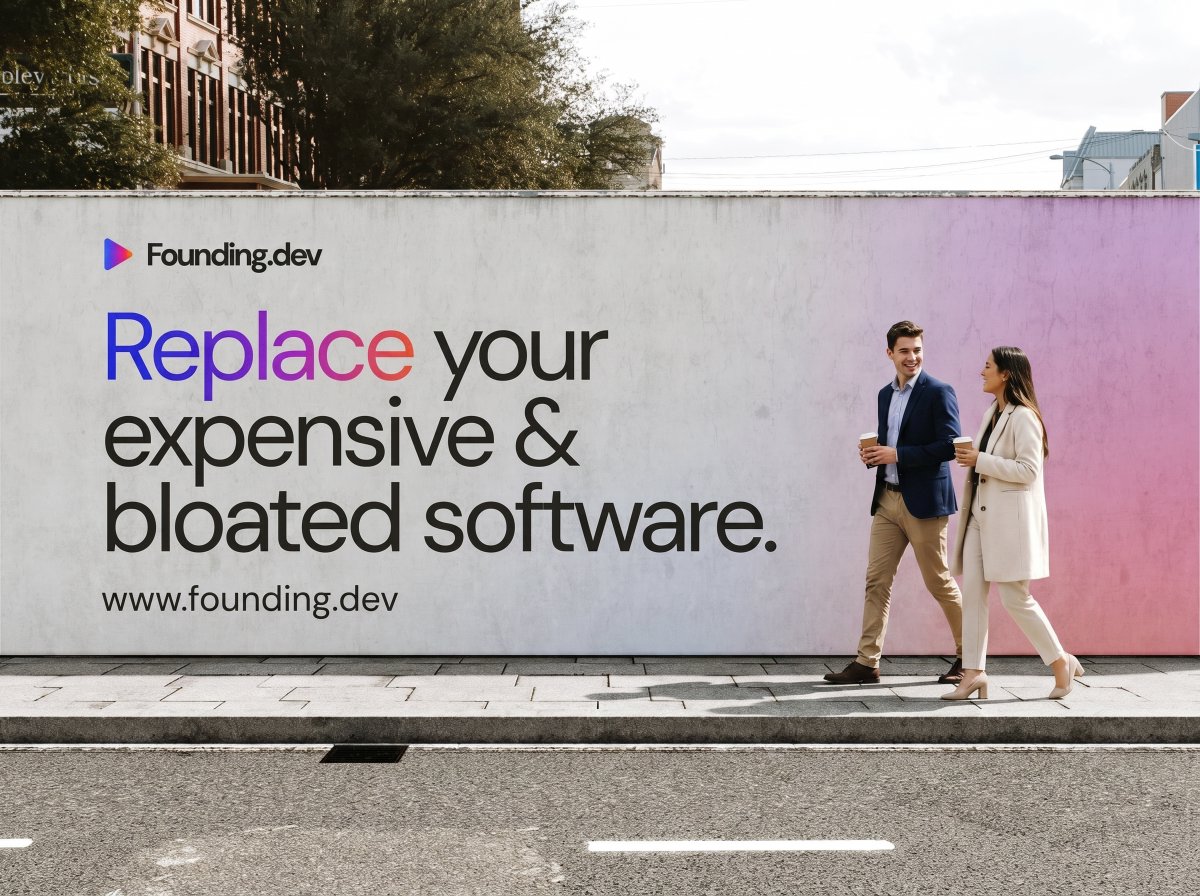
Aren't you tired of stitching 3 tools to get the job done?
You call it automation, but really it's just a clunky way to force software to work with your workflow.
Besides, how much is all that software costing you monthly? Thousands? Yeah right! We guessed as much.
Want to ditch expensive, bloated, stitched, clunky SaaS?
Visit founding.dev and shhhh don't spill the beans with your competitors. You'd get one fully built software adapted exactly to how you work. The icing on the cake is that you get to save 70% on your software spend.
#PoofSaaS
3
25
Apr 30
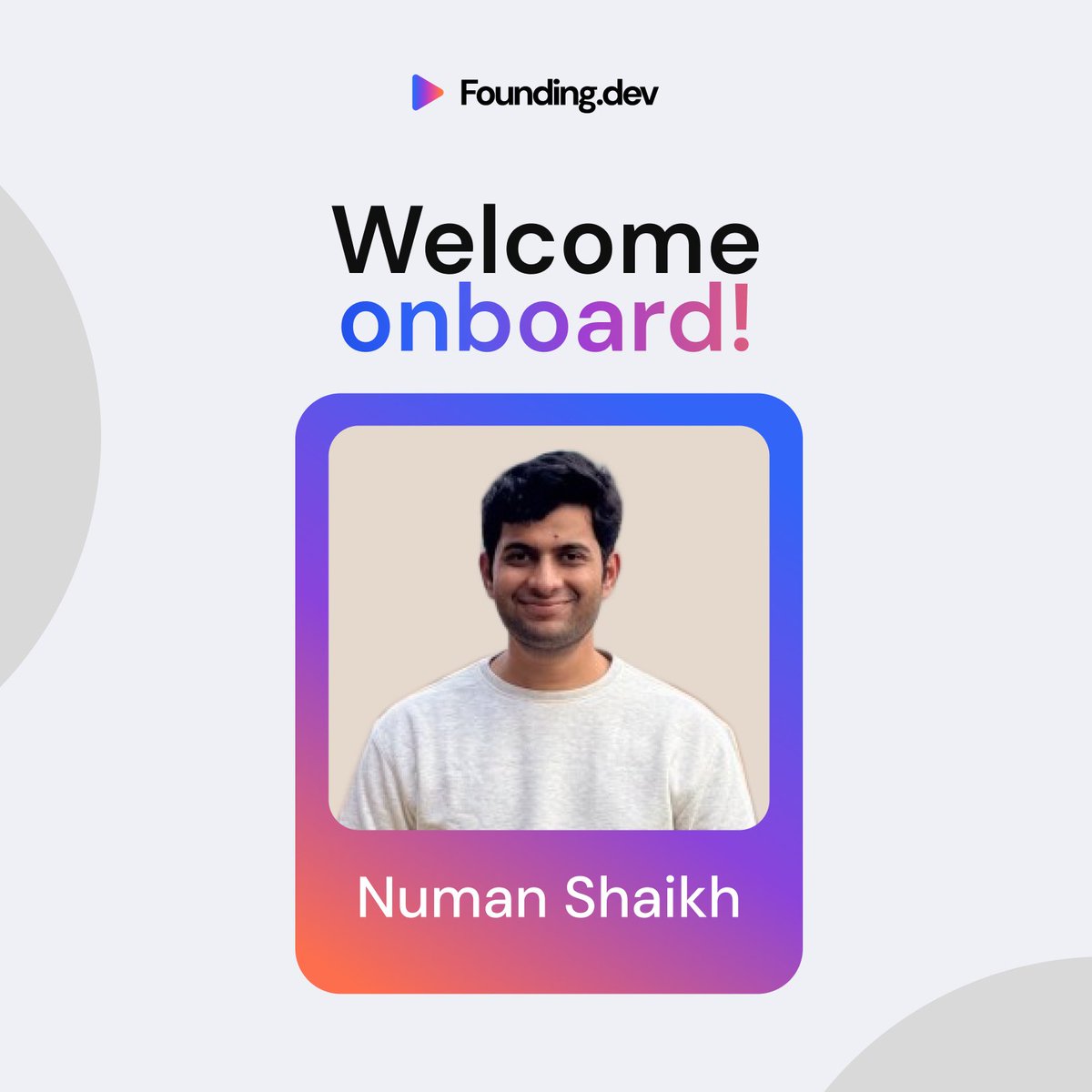
We're excited to welcome Numan Shaikh to the @foundingDev team!
Numan Shaikh joins us as an engineer — bringing his experience to help business owners cut down the cost of expensive software and own the tools their business runs on.
When he's not building, you'll find him enjoying his favorite food — Biryani. 🍽️
Welcome aboard, Numan. We're glad to have you join us!
1
24
Apr 27
SaaS = renting software from someone who can reprice, restrict, or shut it down.
There's another model: own it, host it, customise it.
Same features. One of them costs $36K/year. The other doesn't.
#SaaSAlternatives #OpenSource #SelfHosted #DigitalTransformation
1
34