The Ancient “Factory” Hidden in the Mountains: Before Electricity, Before Engines… Rome Built This
Deep in the hills of what is now Barbegal Aqueduct and Mill, the remains of an incredible ancient machine still stand — a place many historians describe as one of the most advanced industrial complexes of the Roman world.
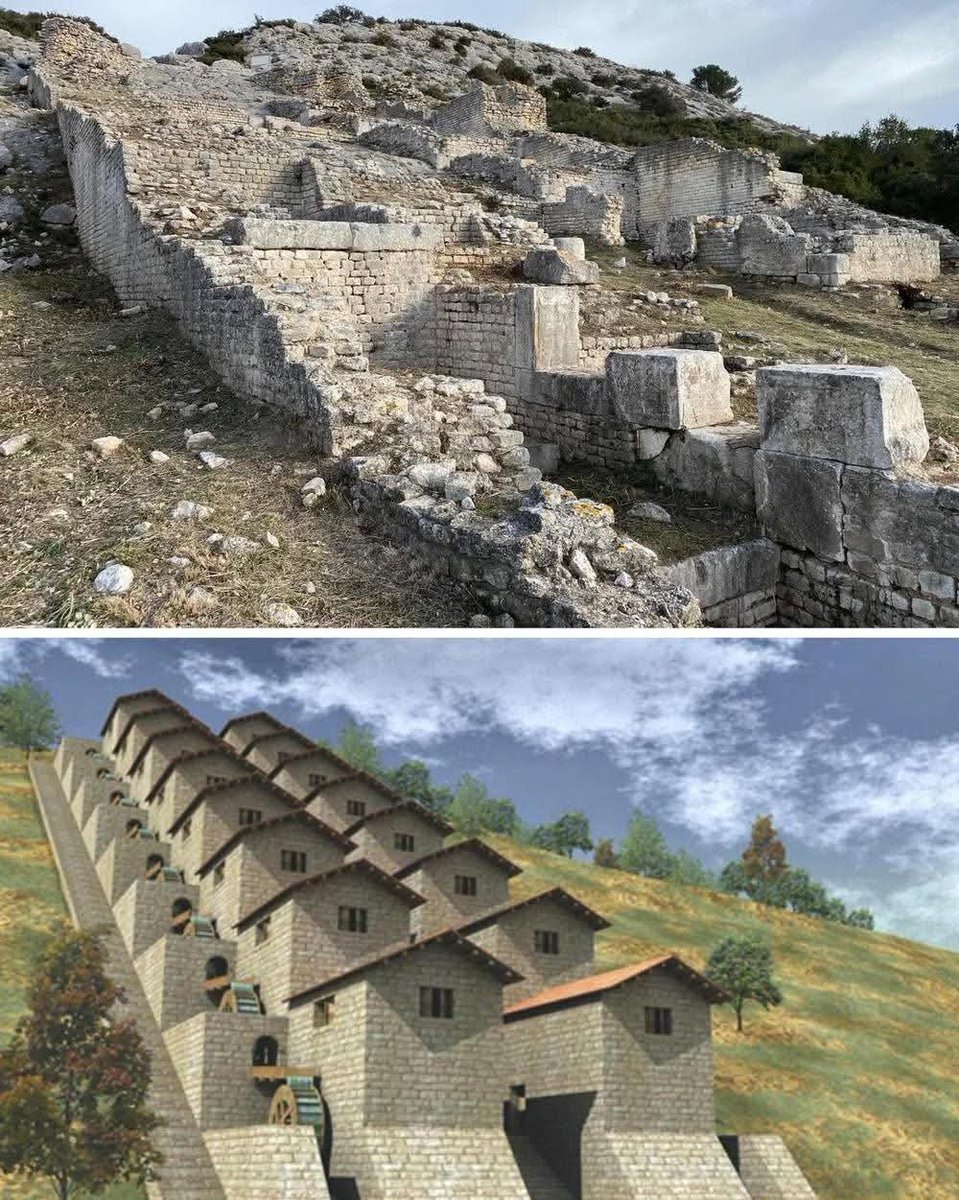
At first glance, it looks like nothing more than broken stone walls. But hidden among these ruins was once a massive system of 16 water wheels arranged in a staircase-like formation down a hillside. Flowing water powered these wheels one after another, creating a chain of mechanical energy more than 1,800 years ago.
The purpose of this mysterious structure was not a temple or a palace — it was an ancient factory. The powerful water system was used to grind grain and produce huge amounts of flour, likely feeding the growing population of the nearby Roman city of Arelate.
What makes this discovery so fascinating is the scale. The Romans were not only building roads, bridges, and aqueducts — they were designing complex machines that worked with nature itself. They transformed a hillside into an automated production system long before modern factories existed.
Today, only the silent ruins remain. The water has stopped flowing, the wheels have disappeared, and the voices of the workers who once operated this ancient marvel are lost to time.
But the stones still tell a story: thousands of years ago, on this very hillside, the Romans built a machine that turned flowing water into power — a forgotten invention that reveals just how advanced the ancient world truly was.
ALT The Ancient “Factory” Hidden in the Mountains: A Roman Machine That Shouldn’t Exist?
Deep in the hills of what is now Barbegal Aqueduct and Mill, the remains of an incredible ancient machine still stand — a place many historians describe as one of the most advanced industrial complexes of the Roman world.
At first glance, it looks like nothing more than broken stone walls. But hidden among these ruins was once a massive system of 16 water wheels arranged in a staircase-like formation down a hillside. Flowing water powered these wheels one after another, creating a chain of mechanical energy more than 1,800 years ago.
The purpose of this mysterious structure was not a temple or a palace — it was an ancient factory. The powerful water system was used to grind grain and produce huge amounts of flour, likely feeding the growing population of the nearby Roman city of Arelate.
What makes this discovery so fascinating is the scale.