
Father, Christian, Author, Naturopathic Medical Doctor. Owner of @NatureWorksBest. Specializing in metabolic disease.
Joined February 2014
- Tweets 4,478
- Following 551
- Followers 1,616
- Likes 3,873
543 Photos and videos










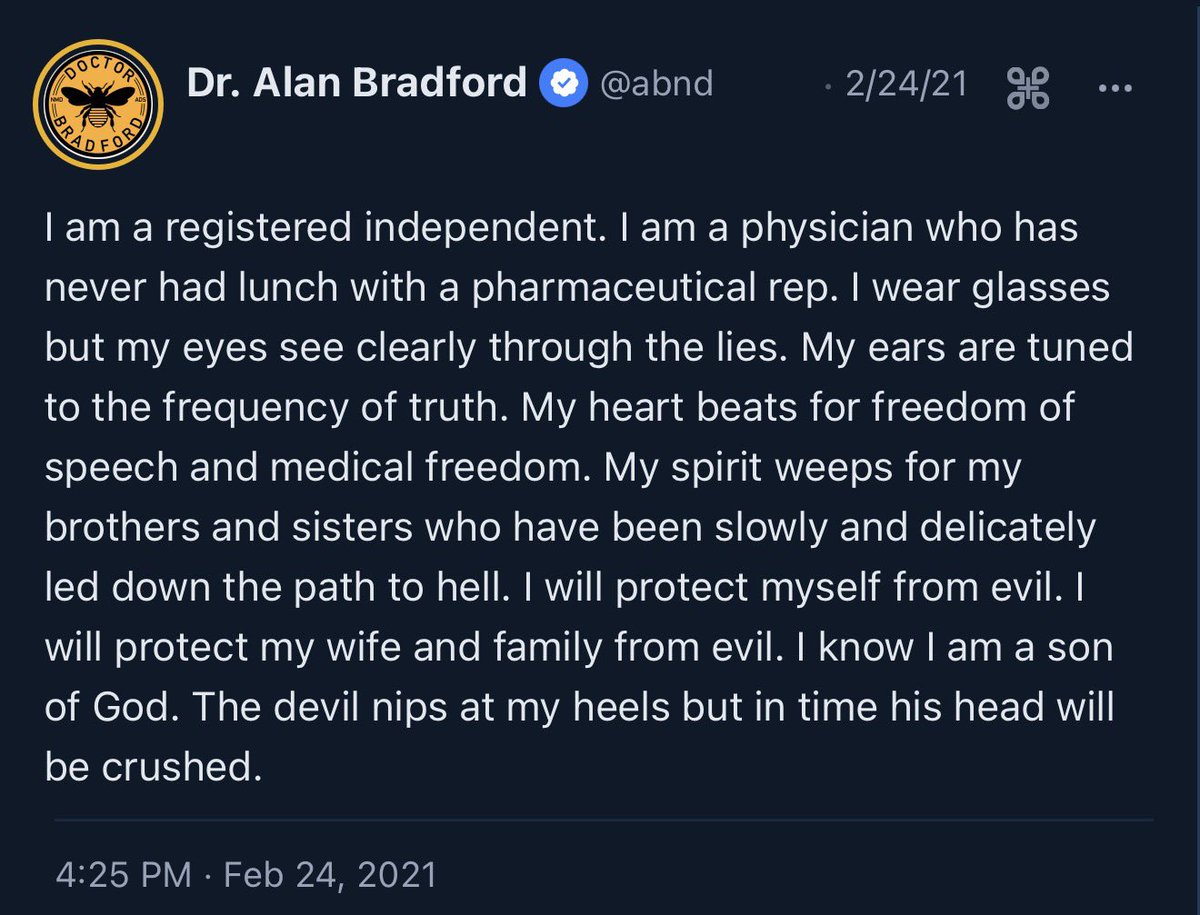
Dr. Alan Bradford retweeted

May 14
Looks like nobody's posting about it anymore. That was quick.
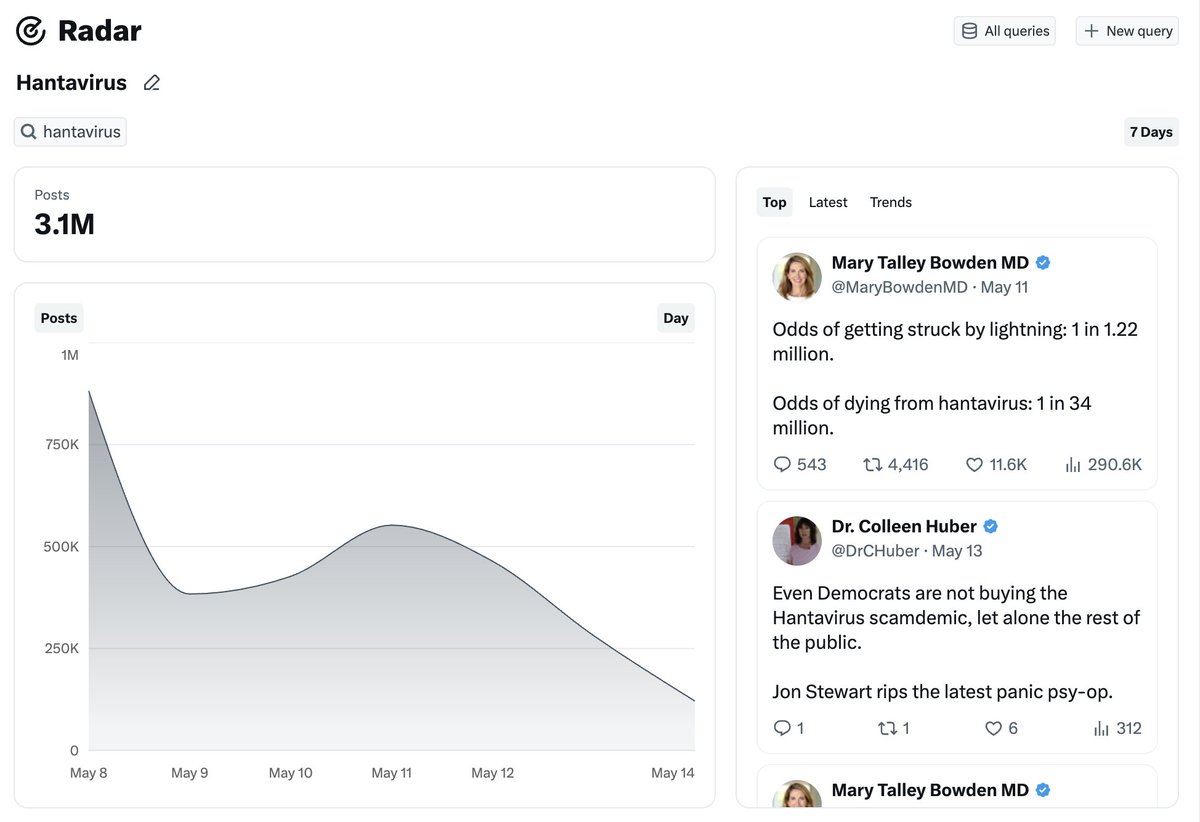
2
1
79

I feel attacked

Everything’s normal until the doctor picks up the pen 😂
1
81
Happy to say I've never received a check, a lunch invitation, a clicky pen, or a fruit basket from the SPLC.
60
Coming off one of the most devastating weeks of my life. My wife has been pregnant with twins and at twenty weeks (last Monday) she developed a severe, life-threatening case of preeclampsia. It progressed very rapidly. The doctors were unable to save the babies. Our family is wrecked. If you’re the praying type, we would appreciate it.
3
5
198
Dr. Alan Bradford retweeted

Mar 24
Listen up, it’s ~2pm and your eyes are done for the day.
It's your light environment.
Tag a friend who’s got it worse than you.
We’re gifting:
3 pairs of Golden Glo glasses
1 Sky Portal
Entry: Repost follow @getchroma
Winners announced @ 10k views.
12
40
41
4,929
This is a disgusting thing to say
Mar 19

Benjamin Netanyahu says Jesus Christ has no advantage over Genghis Khan.
Netanyahu says that if you are strong enough, ruthless enough, and powerful enough, “evil will overcome good.”
What's your message to Benjamin Netanyahu?
1
97
This goof. RIP and good riddance to these views.
3 Jan 2023

Here’s Paul Ehrlich in 1970 saying that the government needs to become increasingly tyrannical to stop child birth.
Says the gov’t should use the FCC to force negative depictions of large families and eventually “throw you in jail if you have too many” children.
77
Dr. Alan Bradford retweeted

Mar 14
Temperatures of 104° to 113° F, have shown selective destruction of cancer cells, while sparing normal cells. This targeted anti-cancer therapy has been used all over the world, but is, of course, rarely discussed, because there’s no big money in it.
However, we do use it with cancer patients at Nature Works Best Medical Clinic.
Here is how heat works against cancer.
colleenhuber.substack.com/p/…

11
21
239
145,148
Dr. Alan Bradford retweeted

Mar 12
Dr. Suzanne Humphries was taking all the right steps to heal herself—but was missing a vital piece of the puzzle.
Then she discovered the work of @DrJackKruse and started soaking up the rays. ☀️
— @DrSuzanneH7
16
105
476
87,514
Since upgrading my space with these desk lights from @getchroma, I have noticed a significant difference in how I feel by the end of the day. Less fatigue, less brain fog, better mood, sharper thinking, no eye strain. Light is medicine.


Excited for the arrival of my Sky Portal desk lights from @getchroma. I've had my eye on these for a while. Unfortunately my work requires a lot of screen time. Fortunately there are ways to combat the negative health effects of this.

4
763
If you purchase a pair of glasses from the parent company of Facebook that include cameras and microphones, and you are surprised to find out that they are recording your every move, conversation, and private moments, then you are a special sort of stupid.
Mar 10

You bought a pair of glasses. You wore them around your house, maybe in the bathroom, maybe changing clothes.
And strangers in Nairobi were watching.
An investigation by Swedish outlet Svenska Dagbladet has revealed that Meta's AI smart glasses are sending video and audio recordings (including footage of naked bodies, bathroom activities, and unblurred bank card numbers) to human data annotators at a Meta subcontractor in Kenya.
Workers there, bound by NDAs, described what they see every day. "We see everything — from living rooms to naked bodies." Another said: "You understand that it is someone's private life you are looking at, but at the same time, you are just expected to carry out the work. You are not supposed to question it. If you start asking questions, you are gone."
Meta says users control their own settings. The terms of service say human review may occur depending on your settings, with no opt-out option for mandatory AI training data.
7 million pairs were sold in 2025 alone. Meta is reportedly pushing to double production to 20 million by end of year.
They're also working on adding facial recognition directly into the glasses. Two Harvard students already demonstrated they could identify a stranger on the street and find their home address using the glasses and existing software.
A class action lawsuit has been filed in the Northern District of California. It says consumers purchased these glasses in reliance on Meta's privacy assurances and could not reasonably have known their bedrooms, bathrooms, and bodies would be viewed by strangers worldwide.
This is the surveillance economy. Your data is worth more than the $799 you paid for the glasses.
The must-read full story by @smiddendorp22 : bit.ly/Meta_Glasses_Send_Nud…
1
94
Overpass on my way to work this morning. “Turn the files into trials” has a nice ring to it
2
38
Dr. Alan Bradford retweeted

That's because Jesus is buried in our mitochondria.
Mar 1

Jesus is the most important “life hack” but you keep obsessing over biology.
43
55
741
42,036
Dr. Alan Bradford retweeted

Feb 25
Every authoritarian regime began propagating its tyranny in the name of “protecting the children”—from Nazi Germany to the communist Soviet Union.
It’s a psy-op. People should learn more about history and use common sense.
And for the record: everything can be bypassed…
@grok
412
1,077
4,240
609,142
Excited for the arrival of my Sky Portal desk lights from @getchroma. I've had my eye on these for a while. Unfortunately my work requires a lot of screen time. Fortunately there are ways to combat the negative health effects of this.
1
1
4
377
Dr. Alan Bradford retweeted

Feb 23
This story is actually insane:
• dude drops $2000 on a DJI robot vacuum like a lunatic
• refuses to use the normal app like a peasant
• Sammy Azdoufal fires up Claude to crack the API so he can drive it with an xbox controller
• Claude delivers the goods
• pulls an auth token from their servers, connects successfully
• except the system thinks he controls 7000 vacuums
• checks again
• yep, seven thousand
• DJI built authentication with zero device ownership verification
• any valid token works for any unit on the planet
• Sammy now has eyes inside homes across 24 countries
• live vacuum camera feeds everywhere
• full floor plans from the mapping data
• some guy in germany eating cereal at 3am, unaware his roomba is snitching
• one API call away from being the most informed burglar in history
• all he wanted was to steer his vacuum with a joystick
• does the right thing and reports it
• DJI fixes it in two days
• back to normal life with his stupidly expensive floor cleaner
• IoT companies stay undefeated at shipping garbage security

1,048
9,605
63,678
8,594,854
I recommend this to my patients all the time. Works great

Tucker Carlson’s face says it all as Senator Ron Johnson reveals he cured his acid reflux with hydrochloric acid—after years on Zantac, Prilosec, and Nexium.
The medical industry wants you to believe heartburn comes from too much acid.
Sen. Johnson discovered the opposite: the real problem was not enough.
Once he started supplementing with betaine HCl, his symptoms disappeared. No more reflux. And he only remembers to take it half the time.
He says it worked better than anything doctors ever gave him.
Why? Because hydrochloric acid is exactly what your stomach is supposed to produce in the first place.
Sometimes the cure isn’t high-tech. It’s just common sense.
1
122
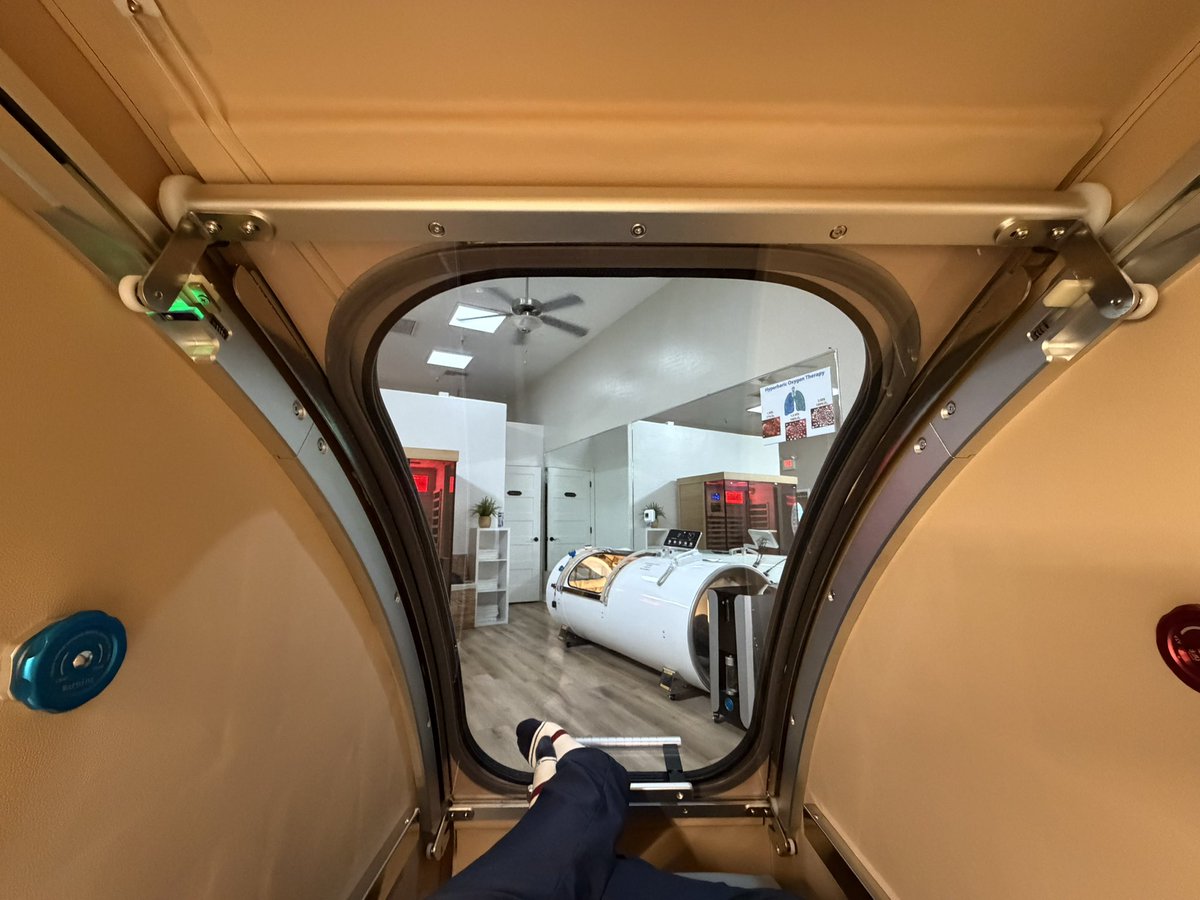
When a patient cancels last minute on my drive into the office, I get to enjoy the HBOT.

1
77