Assistant Professor Columbia University - Political Economy, Crime, Migration, Environmental
Joined September 2017
- Tweets 556
- Following 1,658
- Followers 2,759
- Likes 2,691
28 Photos and videos
Gemma Dipoppa retweeted

🚨The deadline for submissions to NPEC (held at Brown University on October 2) has been extended to June 30! See below for details.🚨

@briangknight and I are excited to announce the 3rd Northeast Political Economy Conference (NPEC), Oct 2, 2026 @BrownUniversity.
Interdisciplinary (Econ Poli Sci), 8 presentations, with keynotes by @RDancygier and Jesse Shapiro.
Please submit by June 5 forms.gle/8awQHipn9PdSPxUf6
3
3
929
@briangknight and I are excited to announce the 3rd Northeast Political Economy Conference (NPEC), Oct 2, 2026 @BrownUniversity.
Interdisciplinary (Econ Poli Sci), 8 presentations, with keynotes by @RDancygier and Jesse Shapiro.
Please submit by June 5 forms.gle/8awQHipn9PdSPxUf6
1
30
85
17,057
The conference is generously funded by
@BrownUniversity through the Orlando Bravo Center for Economic Research and the @PPE_Center.
1
1
1,160
We look forward to reading your work and to welcoming many of you to Providence this fall!
2
967
The conference is generously funded by @BrownUniversity through the Orlando Bravo Center for Economic Research and the @PPE_Center.
1
1
434
We look forward to reading your work and to welcoming many of you to Providence this fall!
1
332

Mar 17
📢📢 Hiring: Research Assistant in Applied Political Economy
I am looking for an RA to support ongoing research in applied political economy on topics of state surveillance and political violence.
4
90
443
49,538
Mar 17
Ideal candidate: strong quantitative skills, experience with Stata, R, or Python, and familiarity with causal inference. The position can be remote.
1
1
18
4,872
Mar 17
To apply, please complete this Google Form forms.gle/dcJ1Ta82hoZGLsut7 and upload: your CV, one-paragraph explaining your interest and availability, a coding sample
Applications will be reviewed on a rolling basis, so please apply as soon as possible.
1
1
30
4,214
Gemma Dipoppa retweeted

Mar 12
Deadline extended to March 20th! One more week to submit your PE work to our Pre-APSA Conference!
Feb 26

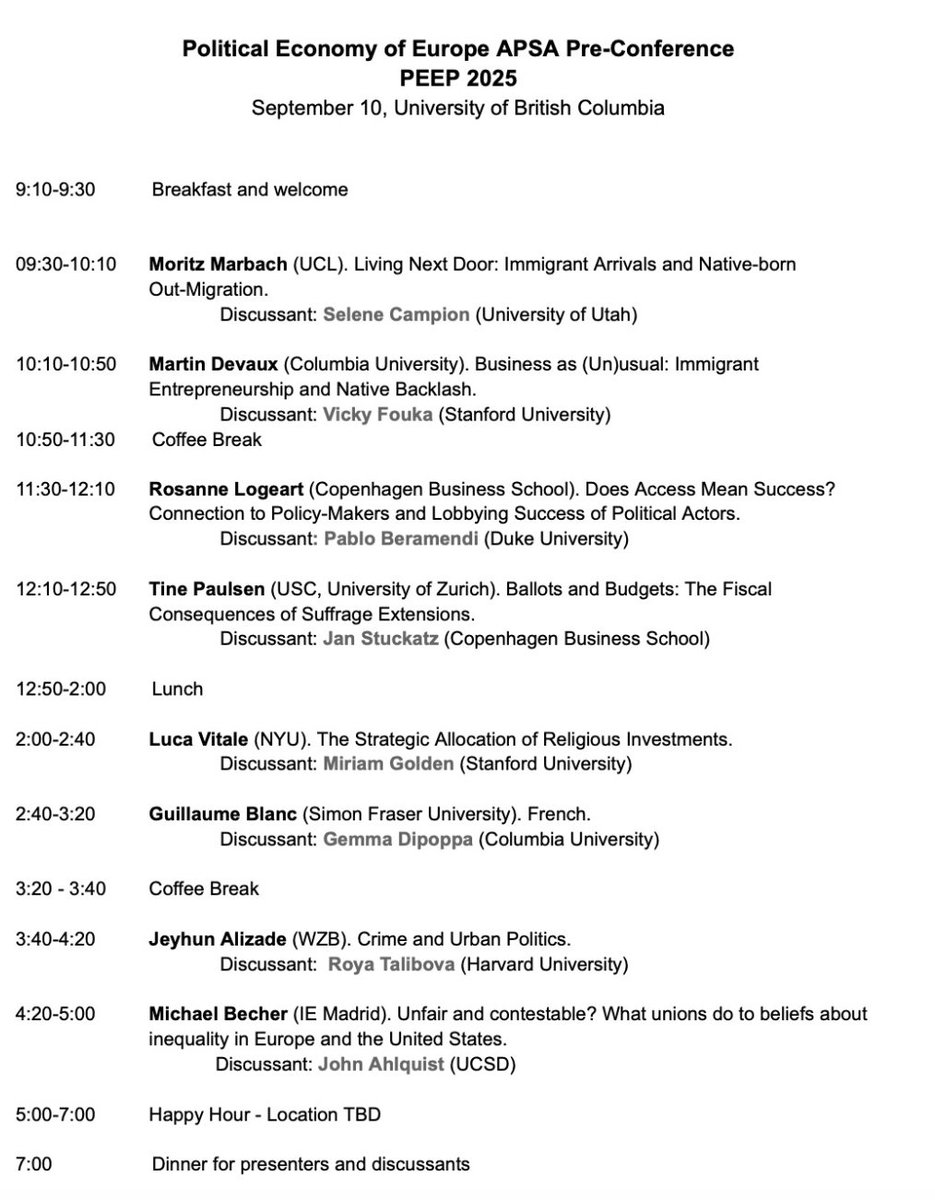
🚨Last few days to submit to PEEP - the 4th Political Economy of Europe APSA Pre-Conference. We (@gemmadipoppa @abwiedemann, Miguel Pereira and I) look forward to reading your submissions and to see you at Harvard on Sep 2nd! Submit at the link below
2
8
2,976

📣 Call for Papers📣
Political Economy of Europe Pre-Conference (PEEP)
📍 Harvard University | Sept 2 (day before #APSA)
🗓 Deadline: March 1
📩 lnkd.in/e8DRkFWZ
co-organized with @abwiedemann (Princeton), @mariacarreri (Bocconi), and Miguel Pereira (LSE)
1
12
32
5,202
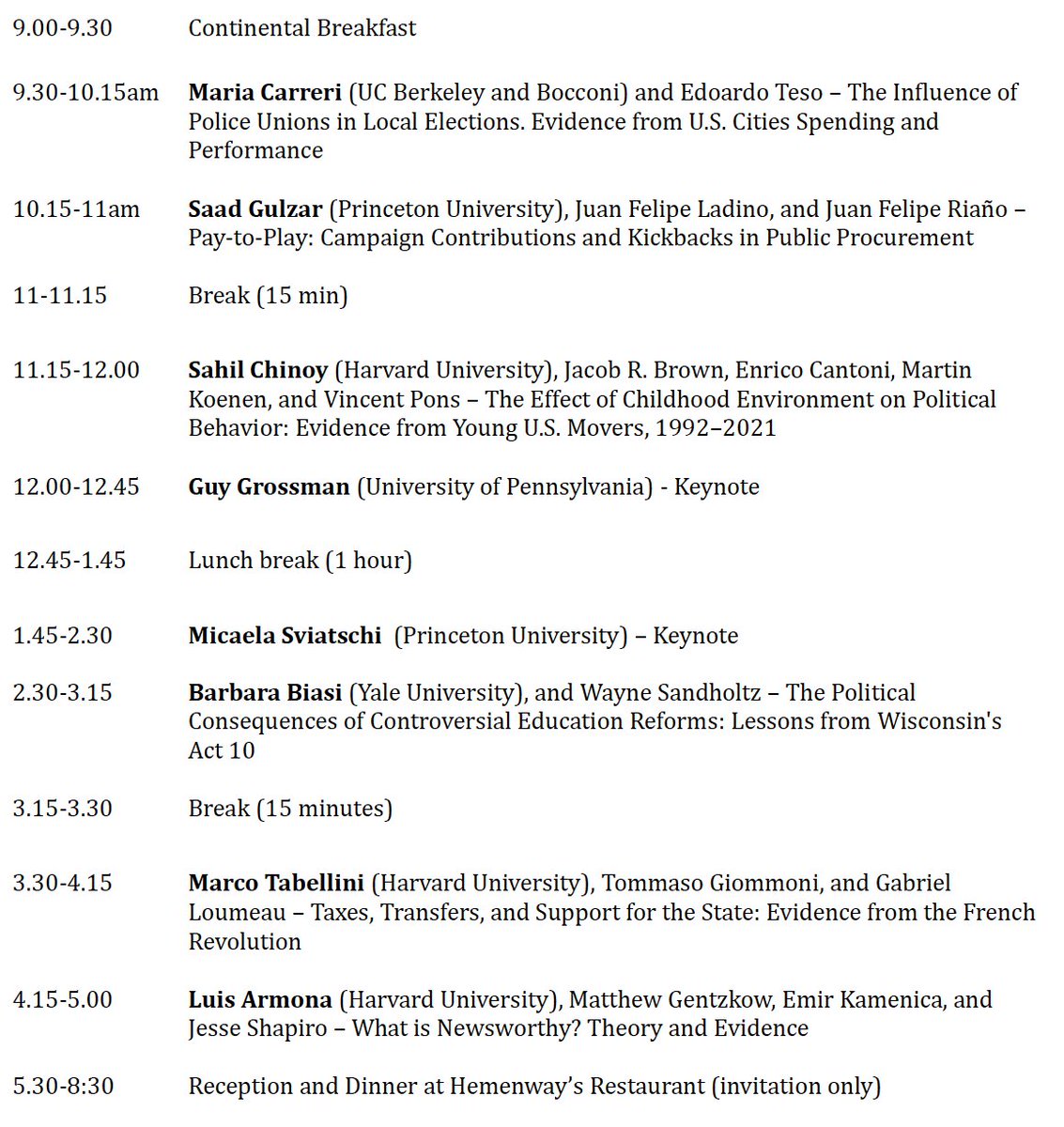
This is the 4th iteration of the conference - program from last year below.
We welcome observational, experimental and formal theory work on Europe.
Looking forward to reading your submissions!
1
3
1,038
Gemma Dipoppa retweeted

Feb 2
Very happy to share our paper “Voting Rules, Turnout, and Economic Policies,” published in the Annual Review of Economics!
Full paper here: annualreviews.org/content/jo…
Short🧵on main take-aways below.
w/ E. Cantoni and J. Schafer
#EconTwitter #PoliSciTwitter @AnnualReviews (1/n).
1
6
33
2,467
Gemma Dipoppa retweeted
Jan 13
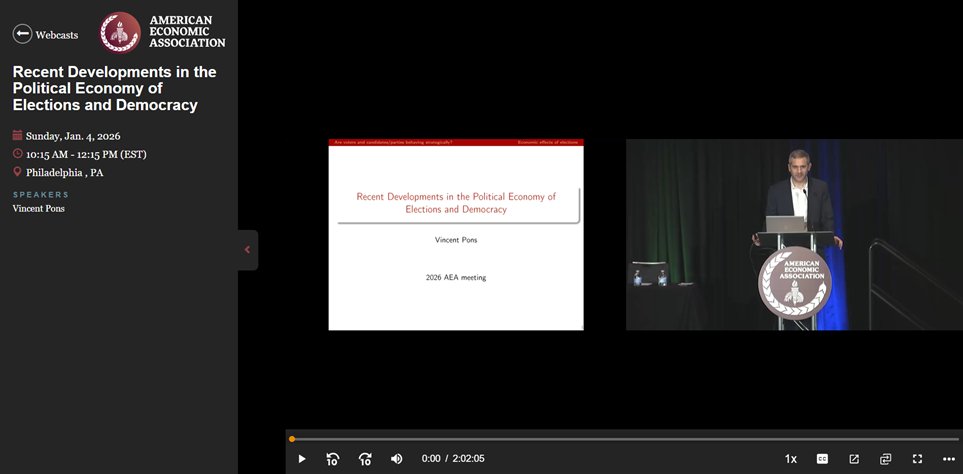
A week ago, I gave the “Recent Developments in the Political Economy of Elections and Democracy” lecture at the 2026 AEA @ASSAMeeting !
Video: aeaweb.org/webcasts/2026/dev…
Slides: vincentpons.org/recent-devel…
Thread with the TL;DR of my talk below.
1
17
65
5,418
Gemma Dipoppa retweeted
5 Dec 2025
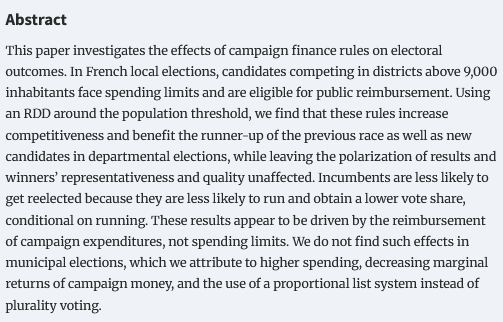
Thrilled to see our paper on “Spending Limits, Public Funding, and Election Outcomes” published in the @JEEA_News! 👇👇
We investigate the effects of far-reaching campaign finance rules, with @Nikolaj_Broberg and @ClemenceTricaud.
Short thread on what we do and find (1/n).
4 Dec 2025

Forthcoming article "Spending Limits, Public Funding, and Election Outcomes" by @Nikolaj_Broberg @VinPons and @ClemenceTricaud
@EEANews @OUPAcademic
doi.org/10.1093/jeea/jvaf043
1
7
29
5,194
Gemma Dipoppa retweeted

4 Dec 2025
Forthcoming article "Spending Limits, Public Funding, and Election Outcomes" by @Nikolaj_Broberg @VinPons and @ClemenceTricaud
@EEANews @OUPAcademic
doi.org/10.1093/jeea/jvaf043
1
4
10
6,495
24 Nov 2025
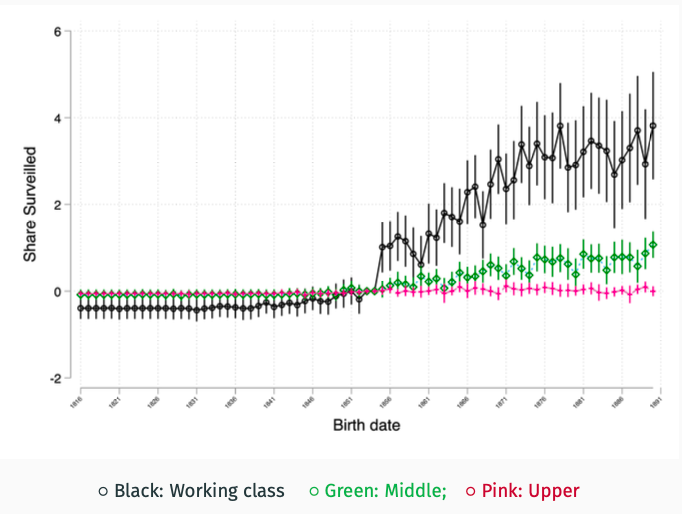
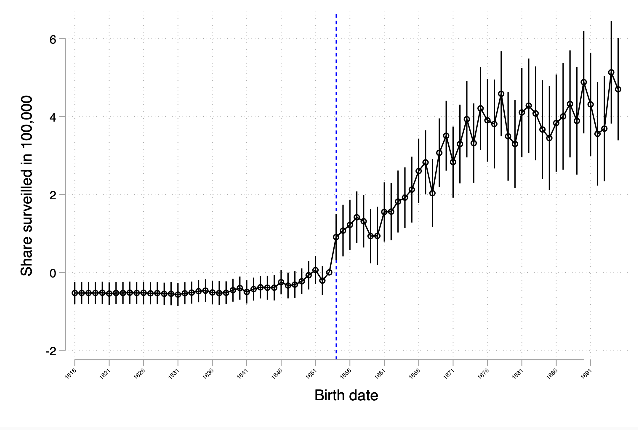
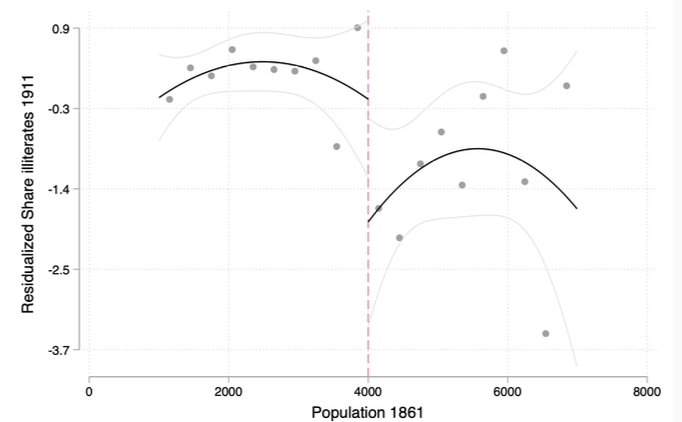
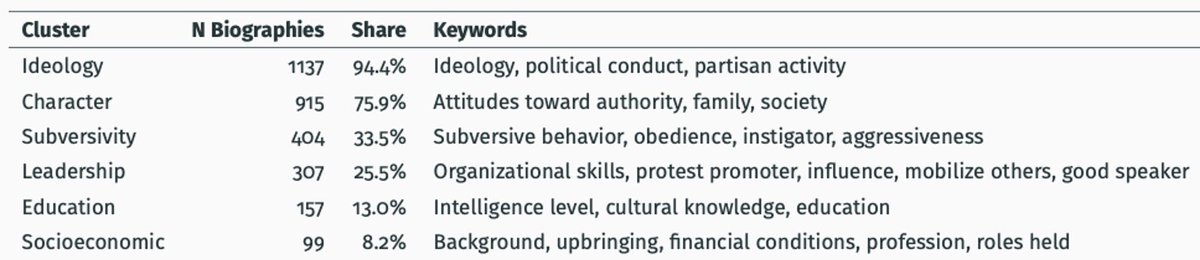
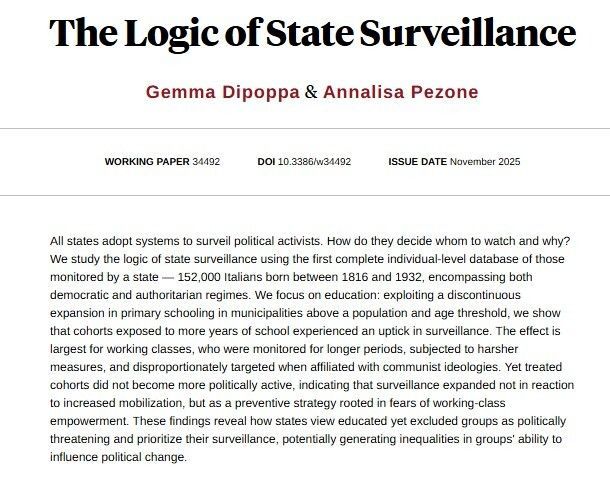
1/ All states monitor the political activity of their citizens. But who do they choose to surveil, and why?
We study this question with the universe of Italian political surveillance files: 152,000 individuals born 1816–1932, across democracy and autocracy.
🧵

Studying the logic of state surveillance based on the universe of Italian files finds that states target educated and subaltern groups, with mobilization and radical change potential, from @gemmadipoppa and Annalisa Pezone nber.org/papers/w34492
1
11
33
3,961
24 Nov 2025
11/
🎯 Takeaway:
States use surveillance as a preventive tool against the empowerment of educated but excluded groups.
👉 As excluded groups gain political empowerment, surveillance may recreate inequalities by silencing them just as they gain political voice.
1
5
433
24 Nov 2025
Feedbacks are most welcome! Working paper 👉 nber.org/papers/w34492
Coauthor: Annalisa Pezone 🙌sites.google.com/nyu.edu/ann…
3
453