
Joined June 2022
- Tweets 2,588
- Following 242
- Followers 156
- Likes 2,516
99 Photos and videos




Pinned Tweet

31 Aug 2022
👋Hello! Welcome to Genesis Block.
Dive in to the threads we've written for you, and follow us for in-depth analysis of crypto protocols and themes. Enjoy!
👇🧵
1
4
10
genesis block retweeted

May 19
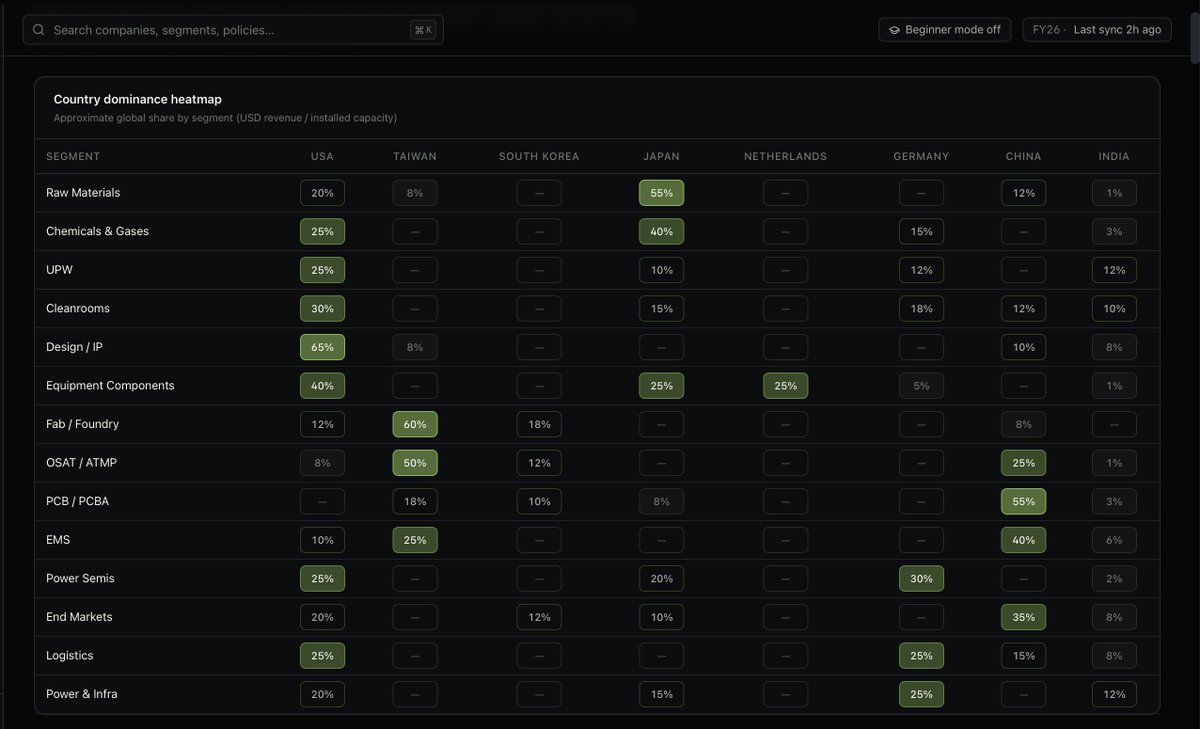
The global semiconductor supply chain is far more interconnected than you realize
Comment 'me' to get access to this entire research dashboard on the global semiconductor industry
4
3
5
370
genesis block retweeted

Apr 1
Smart Wallet of the day:
• $1m PnL
• $173m Volume
• 60% win rate
• Exclusively trades crypto 5m and 15m markets
Copy Trade this wallet in <10s (Link in comments)
10
6
15
1,546
genesis block retweeted
Mar 31
America is in for a Macro Trap in 2026
The US economy in 2026 is starting to look less like a soft landing and more like a macro trap:
1. Inflation risk is back
Oil has exploded higher, with Brent around $111–$113 after a historic March surge tied to the Hormuz shock. That sharply raises the odds that inflation re-accelerates from the softer February print
2. The Fed is stuck
Prediction markets imply the Fed is very likely to hold in April, while the 2026 path still does not price an aggressive easing cycle. That is not a clean backdrop for risk assets or growth
3. Growth is slowing underneath
Even before the full oil shock feeds through, the underlying economy already looks softer. Q1 growth tracking has slipped into the low single digits, well below what a true 'no landing' story would imply
4. Recession pricing may still be too low
This is where the tension is strongest: markets are trying to price higher oil, stickier inflation, slower growth, and a still-cautious Fed without fully pricing a recession. That mix can persist for a while, but usually not painlessly
My thoughts:
The cleanest inefficiency may be that inflation markets have repriced faster than recession markets.
If oil stays elevated, recession odds likely still need to move higher. If oil rolls over quickly, then inflation fears are probably overstated
Base case:
2026 is increasingly shaping up as slower growth, sticky inflation, delayed cuts, and rising recession risk rather than either a clean soft landing or an outright immediate crash
4
5
10
702
genesis block retweeted
Mar 31
Smart Wallet of the day:
• $2.4 PnL
• $33m VOlume
• $304k PnL in the last 7 days
• 52% win rate
• Exclusively trades NBA markets
Copy Trade him in 2 clicks (Link in comments)
8
5
12
1,224
genesis block retweeted
Mar 30
Season 2 of the Tournament has officially ended!
Winners have been paid out $10k in total prize money!
Stay tuned for Season 3 -> Bigger Prize Pool, Higher Payouts

3
5
10
1,673
genesis block retweeted
Mar 30
Live-streaming for E-Sports on Polymarket is lit
Should we add live-streams to @tradefoxai? Lmk in the comments
3
6
21
1,690
genesis block retweeted
Mar 30
Smart Wallet of the day:
• $694k PnL
• $45m Volume
• 68% win rate
• Exclusively Trades Crypto Price Prediction Markets (Across 15m, 1h, 4h, daily timeframes)
Copy Trade him in < 10s (Link in comments)
6
6
13
927
genesis block retweeted

Mar 30
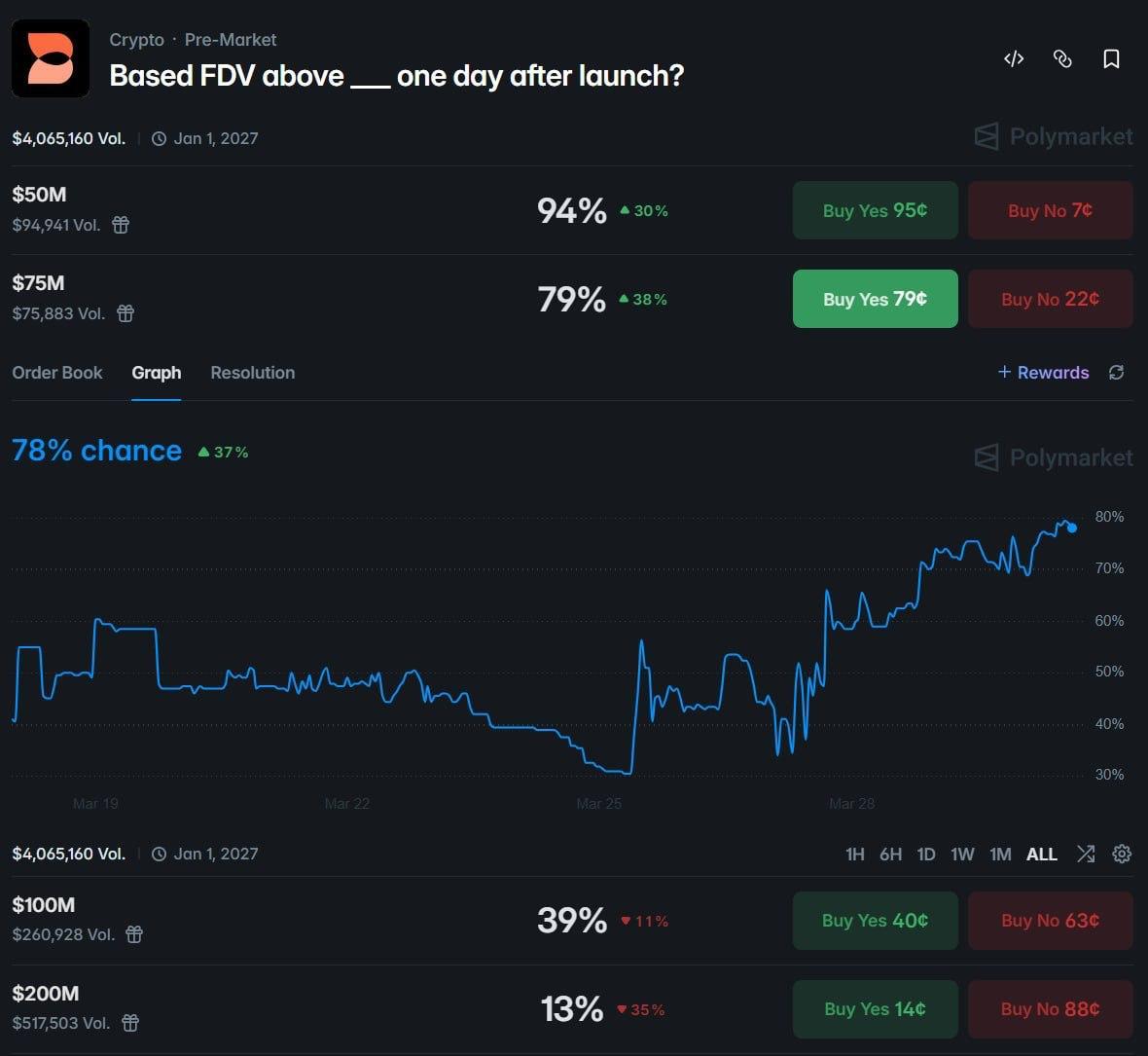
2 新账户投入 $13.5k Based 首日 FDV 大于 $75M
在预测市场 Polymarket 上,两个新账户共投入 $13.5k 在「Based 上线首日 FDV 是否大于 $75M」中买入「是」,目前该事件「是」概率为 79%。
Based 是一个面向普通用户的 Web3 金融 SuperApp,Based 原生代币为 BASED,由 Based Foundation 发行,TGE 时间为 3 月 30 日,总供应量 10 亿,TGE 当天解锁数量为 2.4 亿。如果按 $75M FDV 计算,对应的 BASED 价格需达到 $0.075。目前的盘前价格为 $0.11 左右。
账户:
0x39a98b55cc1b8323e0c05191878149f597234c83
0x491bcdc3fb699aa061038c46df57532f361dc804
总投入:$13.5k
@tradefoxai 上能够明显看到市场强度, 目前还是 YSE 一方占据主力。
6
4
8
1,722
genesis block retweeted
Mar 27
Sneak peek of @tradefoxai's proprietary Automated, No-code Crypto trading bots
DM me for access
2
6
21
3,031
genesis block retweeted
Mar 27
Smart Wallet of the day:
• $31k PnL
• $191k Volume
• 62% win rate
• Exclusively trades AI and tech markets
Copy Trade him < 10s (Link in comments)
2
7
10
1,073
genesis block retweeted
Mar 26
What does the market think a SpaceX IPO is worth?
Right now, markets are pricing a blockbuster listing, but not a clean path to a $2T close
On Polymarket:
- >$1T: 93%
- >$1.2T: 91%
- >$1.4T: 88%
- >$1.6T: 75%
- >$1.8T: 60%
- >$2T: 44%
- >$2.2T: 31%
- >$2.4T: 25%
- >$3T: 14%
That curve matters
The market is basically saying:
- A trillion-dollar close looks highly likely
- $1.5T-$1.8T is the real battleground
- $2T is possible, but far from guaranteed
Why is the market this bullish?
Because SpaceX is no longer being valued like a pure rocket company.
It is being valued like a monopoly-like launch business a hyperscale satellite internet platform an Elon Musk scarcity asset
The core fundamentals are strong:
- Reuters reported SpaceX generated about $15B-$16B of revenue last year
- EBITDA was about $8B
- Starlink was the main driver, contributing roughly 50%-80% of revenue
- Reuters also reported SpaceX could seek a valuation above $75B for the IPO raise alone, after prior private-market marks around $800B and later IPO scenarios around $1.5T-$1.75T :contentReference[oaicite:0]{index=0}
That helps explain why prediction markets are comfortable with >$1.4T and still give >$1.8T a 60% chance
But there are also reasons the market stops short of pricing $2T as the base case.
At $1.8T-$2T, investors are no longer just paying for launch dominance and Starlink scale
They are also paying upfront for:
- continued Starlink hypergrowth
- successful direct-to-device rollout
- Starship execution
- tighter integration of AI / xAI ambitions into the broader story
- sustained Musk premium into public markets :contentReference[oaicite:2]{index=2}
That is where the real debate is.
Bull case:
- Starlink keeps compounding fast
- public investors treat SpaceX as the highest-quality pureplay on space infrastructure
- scarcity retail demand Musk optionality push the close toward the upper end of the range
Base case:
- the IPO is enormous
- demand is very strong
- but valuation settles somewhere around the $1.5T-$1.8T zone the market is already centered on
Bear case:
- investors push back on how much future perfection is already priced in
- the deal still works, but closes below the most aggressive expectations
My read:
Markets are not asking whether SpaceX is a great company.
They are asking how much of the next decade gets pulled forward into day 1 pricing.
Right now, the answer looks like:
- yes to $1T
- probably yes to $1.6T
- maybe to $2T
- definitely not a consensus on $3T
Not financial advice. DYOR
(Link to market in comments)
2
9
10
1,828
genesis block retweeted
Mar 26
Smart Wallet of the day:
• $85k PnL
• $6.2m Volume
• A whopping 72% win rate
• Exclusively Trades whether markets
• $38k PnL in last 7 days
Copy Trade him in 2 clicks (Link in comments)
1
5
7
793
genesis block retweeted
Mar 25
Where is Oil Price Heading? A Detailed Analysis
Right now, oil is trading like a market with falling headline risk, but still meaningful structural supply risk
Spot says one thing:
- WTI: ~$87
- Brent: ~$99
- Both are down ~5% on the day
- But Brent is still up ~40% over the last month
Prediction markets say another:
- Oil >$100 by end of March: 40%
- >$110: 16%
- >$120: 8%
By end of June, the market gets much more aggressive:
- >$100: 75%
- >$110: 68%
- >$120: 45%
- >$130: 41%
- >$150: 24%
- >$200: 14%
That curve matters.
It suggests the market is not pricing a straight-line spike right now
It is pricing near-term volatility, but also a real chance that supply stress lasts long enough to push oil materially higher over the next few months
Why?
Because the physical market is still tight.
The IEA has described this as the biggest oil supply disruption in market history:
- Hormuz flows collapsed from ~20 mb/d to a trickle
- Global supply projected to fall by ~8 mb/d in March
- Brent briefly touched ~$120
- Strategic reserve releases are only a temporary buffer
So oil is now balancing 2 opposing forces:
1. De-escalation
- Peace headlines and ceasefire hopes are pulling crude lower
- If tensions cool, oil can retrace further
2. Persistent disruption
- If Hormuz stays impaired, the market likely has to reprice higher
- That is where the June probabilities start to matter much more than the March ones
This is also no longer just a crude story
If disruption persists, the shock moves into:
- gasoline, diesel, jet fuel
- LPG and petrochemicals
- fertilizer and freight
- then inflation, margins, and global growth
My read:
- Base case: oil stays highly volatile, likely chopping between the high-$80s and low-$100s
- Bull case: if disruption persists into April/May, $110 becomes much more realistic
- Tail case: if shipping and refining dislocations worsen, the upside tail is far fatter than spot suggests
Spot is reacting to diplomacy.
Prediction markets are pricing duration
The physical market is still pricing fragility
(Link to market in the comments)
3
8
18
2,657
genesis block retweeted
Mar 25
Smart Wallet of the day:
• $14k PnL
• $209k Volume
• 72% win rate
• Exclusively trades Mention markets and Geopolitics
Copy Trade him in 10s or less (Link in comments)
7
5
9
900
genesis block retweeted

Mar 25
Looking to fund up to 10 PM traders
$10k referral if your candidate is selected
DMs open
3
5
22
2,352
genesis block retweeted
Mar 24
What do markets think happens next in the US-Iran war?
Right now, they’re pricing a conflict that stays hot, keeps energy markets stressed, and leaves a meaningful tail risk of much higher oil
On Polymarket:
- Ceasefire by Mar 31: just 12%
- Ceasefire by Apr 15: 31%
- Ceasefire by Apr 30: 44%
- US forces entering Iran by Mar 31: 22%
- US forces entering Iran by Apr 30: 57%
- US forces entering Iran by Dec 31: 67%
And on crude:
- Oil >$100 by end of March: 40%
- >$110: 16%
- >$120: 8%
- By end of June, markets are much more aggressive:
- Oil >$100: 75%
- >$110: 68%
- >$120: 45%
- >$130: 41%
- >$150: 24%
- >$200: 14%
That curve tells you the market is not pricing a quick normalization. It’s pricing duration
The key variable is Hormuz
Roughly 20% of global oil and LNG flows through the Strait of Hormuz. Reuters reported that tanker traffic through the strait had collapsed by about 95% from pre-war levels at one point
Even partial disruption matters because commodities are priced at the margin, not the average
That means the first-order effect is obvious:
- Higher crude
- Higher diesel, jet fuel, gasoline, LPG, naphtha
But the second-order effects are where this gets bigger:
- Higher fertilizer prices via ammonia/urea feedstock stress
- Higher plastics / petrochemical input costs
- Higher freight and shipping costs
- Higher power prices in LNG-dependent economies
- More imported inflation across Asia and other energy-importing regions
This is why the market reaction has been so violent. Brent had already hit $119.5 earlier this month, then fell more than 13% yesterday after Trump delayed strikes on Iranian energy infrastructure, only to rebound today after Iran denied any talks with the US.
In other words: headlines can move oil $10-15 in either direction, but the structural risk premium is still there
If this de-escalates quickly, oil probably retraces
If Hormuz stays impaired, prediction markets still look too complacent on the right tail of energy and inflation
The market is telling you this is no longer just a geopolitical story
It is now an oil, LNG, fertilizer, plastics, freight, inflation, and growth story
(Links to markets in comments)
2
8
10
1,851
genesis block retweeted
Mar 24
Smart Wallet of the day:
• $248k PnL
• $10.3m Volume
• 60% win rate
• $95k PnL in the last week
• Exclusively trades Price Prediction Markets for US stocks
Copy Trade him in 10s or less - thetradefox.com/portfolio/0x…
6
5
11
757
genesis block retweeted
Mar 23
WILL THE FED HIKE RATES IN 2026?
Markets think it’s possible, but still not the base case:
- Polymarket is pricing roughly a 30% chance of a Fed rate hike in 2026
- That’s notable because just weeks ago, another hike looked far less likely
Why are odds rising?
- The biggest driver is the Iran war / Strait of Hormuz risk
- Oil has spiked as markets price in supply disruption and a broader energy shock
- Higher energy prices can feed through into headline inflation, shipping costs, and consumer expectations
If the Fed does hike, the downstream effects could be significant:
- Inflation: could cool over time, but only after an energy shock has already hit households
- Unemployment: higher rates would likely weaken demand and raise recession risk
- Stock market: generally negative for equities, especially growth stocks, as discount rates rise and margins get squeezed
This is the kind of setup the Fed hates most: inflation pressure weaker growth = stagflation risk
TRADEFOX ALPHA: Market Strength is at 66% of this market meaning 66% of all positions from sharp traders actually believe the Fed WILL increase rates this year
thetradefox.com/market/polym…
1
6
8
1,882
genesis block retweeted
Mar 23
Smart Wallet of the day:
• $2.3m PnL
• $195m Volume
• Focused exclusively on Crypto up and down markets
• $22k PnL in last 6 hours
Copy this wallet in 10 seconds or less -thetradefox.com/portfolio/0x…
3
6
11
1,339
genesis block retweeted
Mar 20
What markets are telling us about March 2026
Biggest markets this month, categorized by
1. Geopolitics
2. Commodities
3. AI
4. Big Tech
1. Geopolitics
- Netanyahu out: 2% ($50m)
- Iran x Israel/US conflict ends: 5% ($2.18m)
- Government shutdown 14d : 4% ($612.2k)
- Government shutdown 30d : 2% ($562.1k)
2. Commodities
- Crude Oil $200: 1% ($7.58m)
- Crude Oil $150: 17% ($2.50m)
- Gold $10k: 0% ($283.7k)
- Silver $200: 0% ($147.1k)
3. AI Model Competition
- Moonshot best AI model: 0% ($1.27m)
- Z .ai best AI model: 0% ($1.25m)
- Meituan best AI model: 0% ($1.19m)
- Baidu best AI model: 0% ($1.49m)
4. Big Tech Market Cap Race
- Tesla largest company 0%: ($2.90m)
- Microsoft largest company 0%: ($2.12m)
- Amazon largest company 0%: ($3.65m)
- Saudi Aramco largest company 0%: ($1.21m)
Takeaways
1. Wars don’t end. Leaders don’t change. Chaos persists.
2. Oil can move, but only within reason. Metals will stay as is.
3. The incumbents and AI labs are so dominant they don’t even need to be listed.
4. Nothing ever happens.
2
7
16
2,353