
Joined June 2023
- Tweets 49
- Following 655
- Followers 440
- Likes 153
Photos and videos

EY retweeted

Mar 6
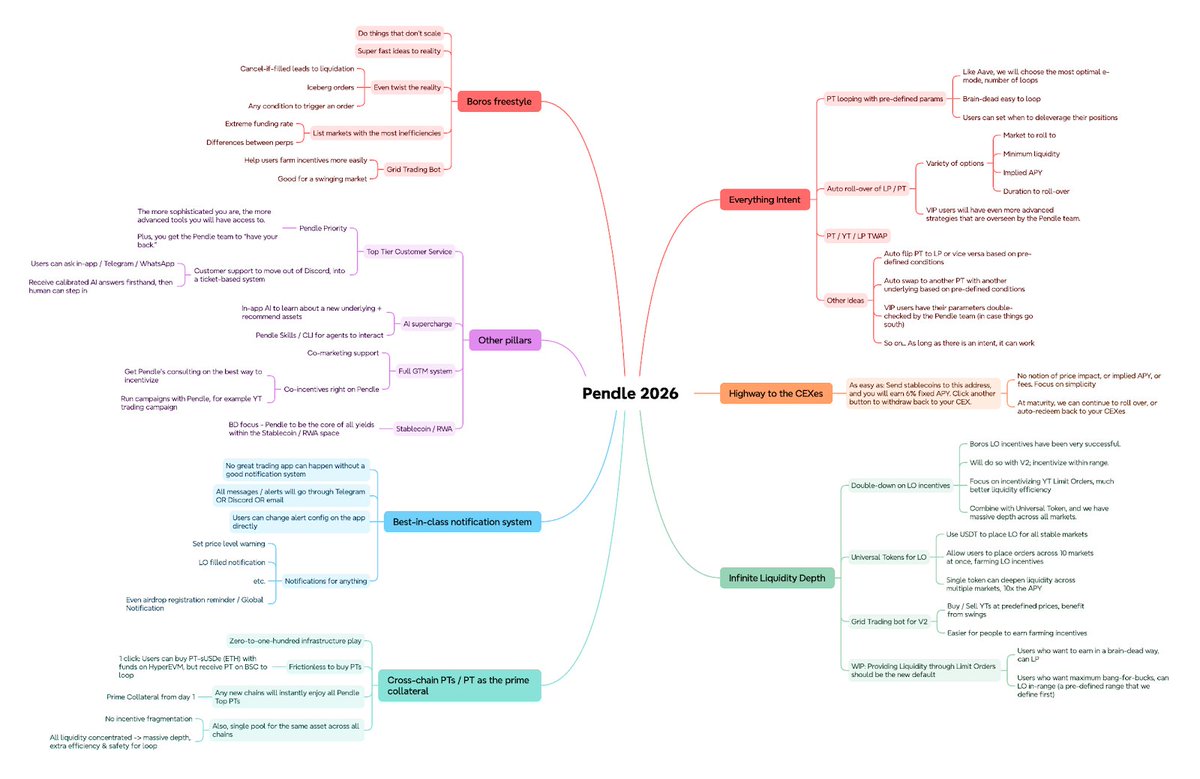
Pendle has one obsession in 2026:
Making you and your yield stupidly powerful.
Our goal is turning Pendle into the no-brainer destination for anyone looking for the best yields.
Some highlights from the big, scary mindmap straight from the sweaty depths of Pendle's backoffice 👇🏻
54
69
385
201,034
EY retweeted

22 Aug 2025
$10B TVL.
A milestone years in the making for @pendle_fi.
From a niche experiment to a cornerstone of DeFi, and it’s all thanks to you, our community, our Pendies.
This isn’t the finish line. It’s proof of what’s possible when conviction compounds, just like yield.
Job's not done. Higher!
97
63
408
152,036
EY retweeted

6 Aug 2025
The funding rate market:
- $200B Open Interest
- $300B Daily Volume
Even just 1% of this... 😏

Introducing Boros, Pendle’s new platform for trading funding rates
🔗 pendle.medium.com/boros-intr…
19
6
147
10,896
EY retweeted

6 Aug 2025
We're powering the liquidity on @boros_fi
As the sole market maker for the first funding rate derivative in crypto, we’re taking on one of DeFi’s most exotic assets, because of our commitment to developing DeFi.
Longtail assets, complex derivatives: that's @caladanxyz
Introducing Boros, Pendle’s new platform for trading funding rates
🔗 pendle.medium.com/boros-intr…
6
5
29
2,469

Introducing Boros, Pendle’s new platform for trading funding rates
🔗 pendle.medium.com/boros-intr…
140
248
1,133
572,235

EY retweeted

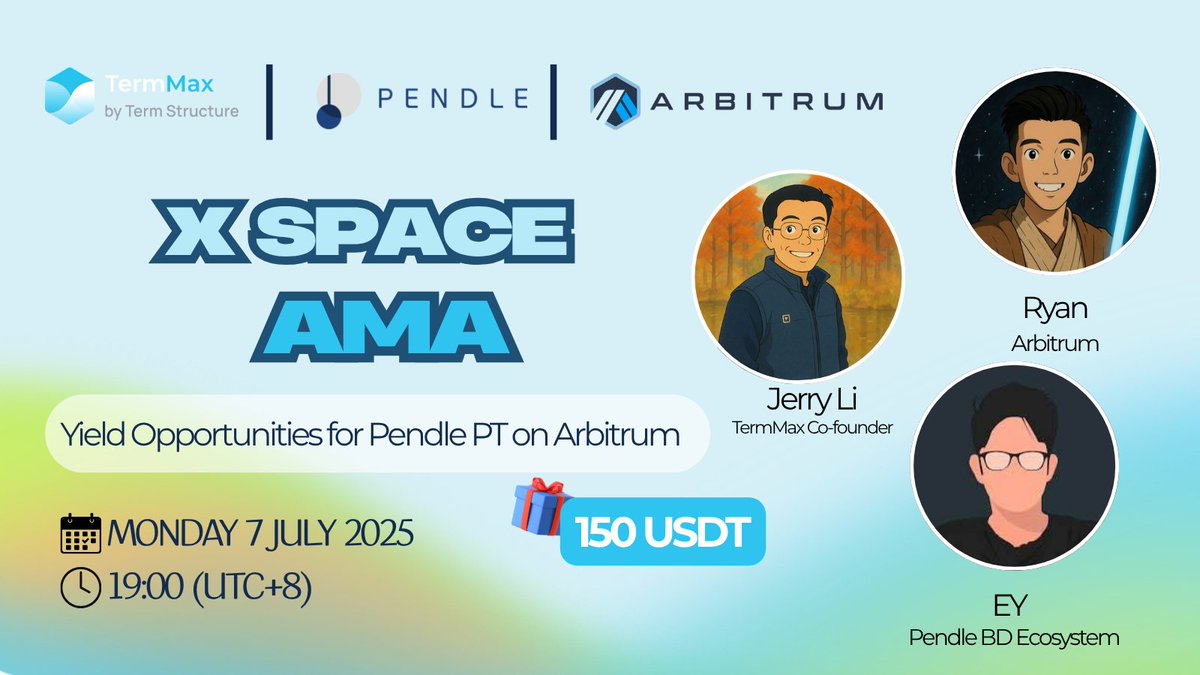
We hosted a Chinese AMA previously, and now it’s time to show some love to our English-speaking TermMaxis!
📅 July 7th, 19:00 (UTC 8)
🎤 TermMax co-founder @jerrywcli, @_ryandesouza from @arbitrum, and @gentpendle from @pendle_fi
📎 x.com/i/spaces/1zqKVjEMwgLKB
🗳️ 150 USDT will be shared by 3 participants who asked questions
Add to your calendar here → google.com/calendar/render?a…
20
11
32
4,406
EY retweeted
4 Feb 2025
Pendle 2025: Zenith
In this post, I've outlined the highlights for Pendle V2 in 2024, our future roadmap for the 3 pillars of Pendle - V2, Citadels and Boros, as well as The End Game.
Job's not done - but it'll be.
134
119
676
616,166
EY retweeted
11 Sep 2024
Episode 1 of the Pendle #Bitcoin arc
A foursome production alongside @use_corn x @Lombard_Finance x @babylonlabs_io:
Corn LBTC (26 Dec) 🌽

69
27,461
10,958
263,307
EY retweeted

6 Sep 2024
BILLIONS WILL FLOW INTO @pendle_fi !
Over the past two years, $Pendle has skyrocketed, growing from $5M to $3B TVL, with a peak of $7B. Its unique ability to separate yield from tokens has attracted points farmers and whales.
BUT this is just the beginning — $Pendle growth potential is huge.
You won't regret reading this.
All you need to know about Pendle ! 👇🧵
18
58
213
65,999

Analysis of the Penpie exploit
Last evening, Penpie, a yield optimizer and liquid locker built on Pendle, was exploited for ~$27 million.
The attacker created a fake market and counterfeit SY tokens on Pendle. While this is completely harmless to Pendle, Penpie failed to account for such adversarial scenarios, enabling the attacker to execute a re-entrancy attack. This resulted in the theft of $27 million in rswETH, wstETH, agETH, and sUSDe from Penpie.
The stolen tokens were then sold for ETH using the LiFi DEX router. The attacker subsequently withdrew the ETH to various addresses and has deposited over 95% of the stolen funds into Tornado Cash.
In response, the Pendle team acted swiftly to pause all their contracts, preventing an additional $105 million in potential losses for Penpie users.
Market impact
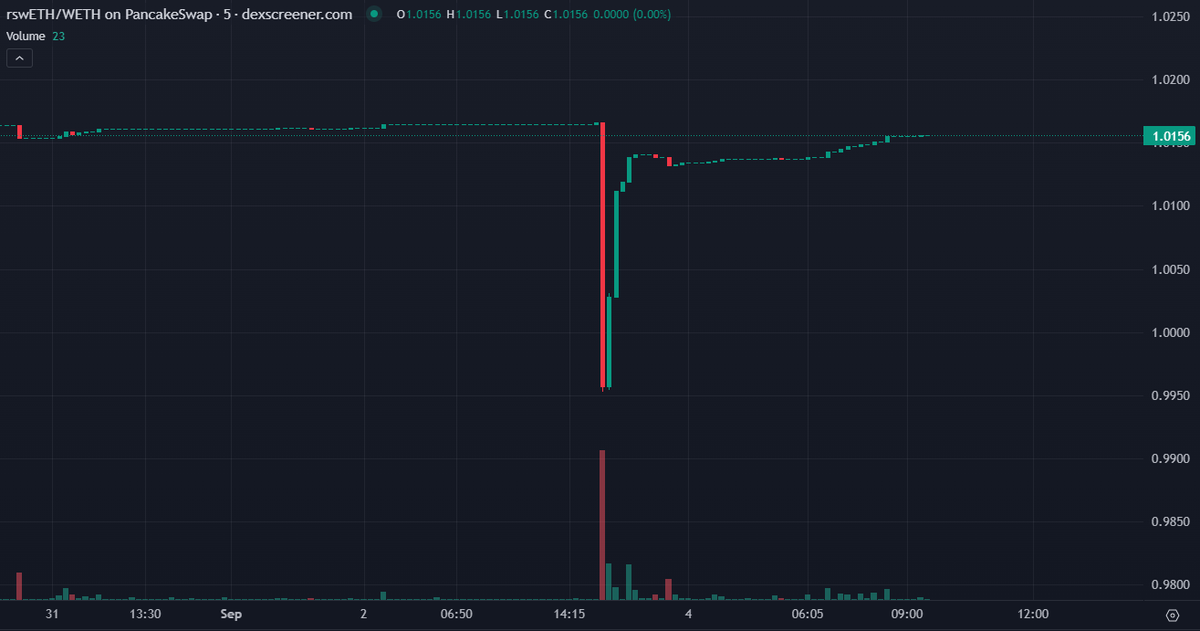
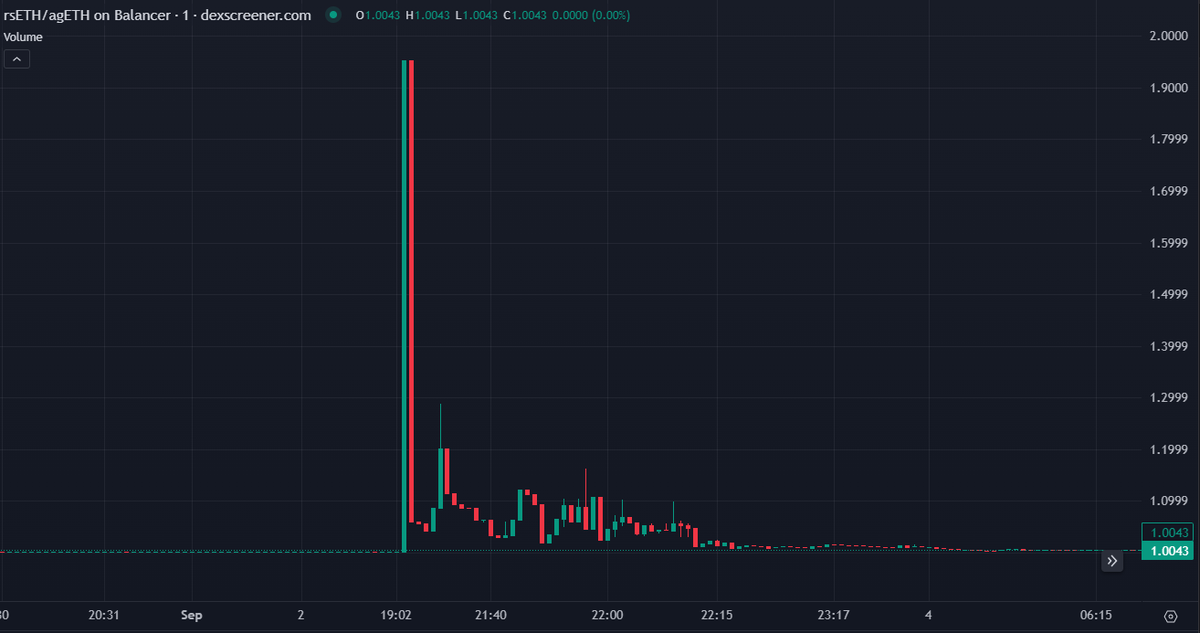
The attacker had minimal impact on wstETH and sUSDe pegs when selling the stolen funds on Uniswap V3 and Curve. However, the exploit did cause a slight depeg of rswETH on PancakeSwap and a significant depeg of agETH on Balancer.
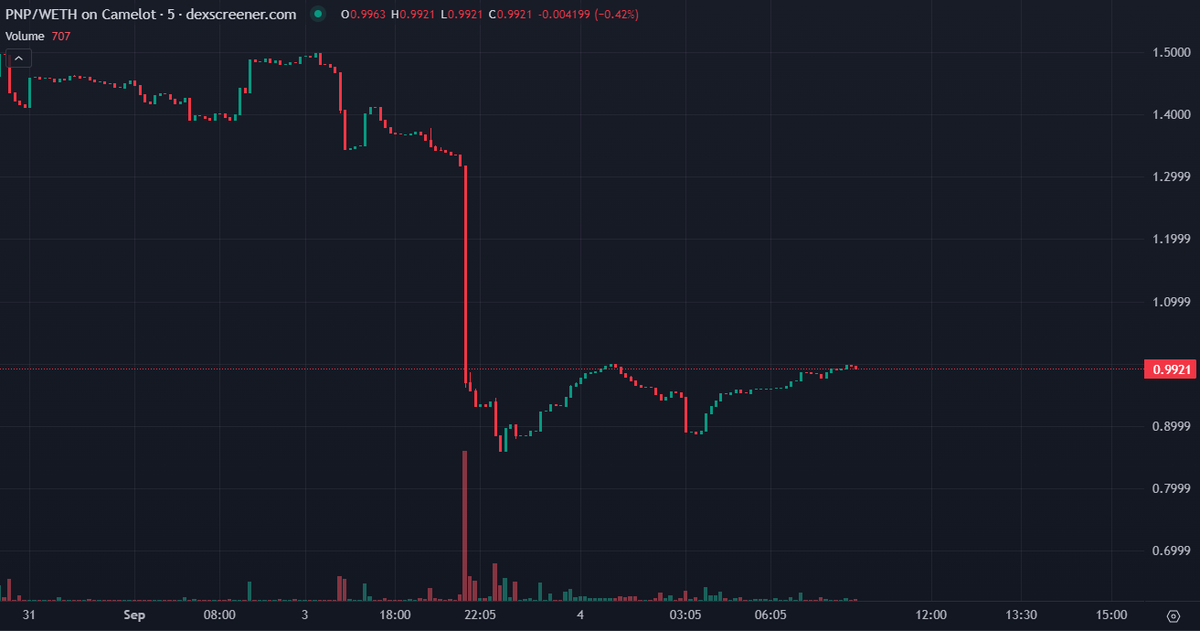
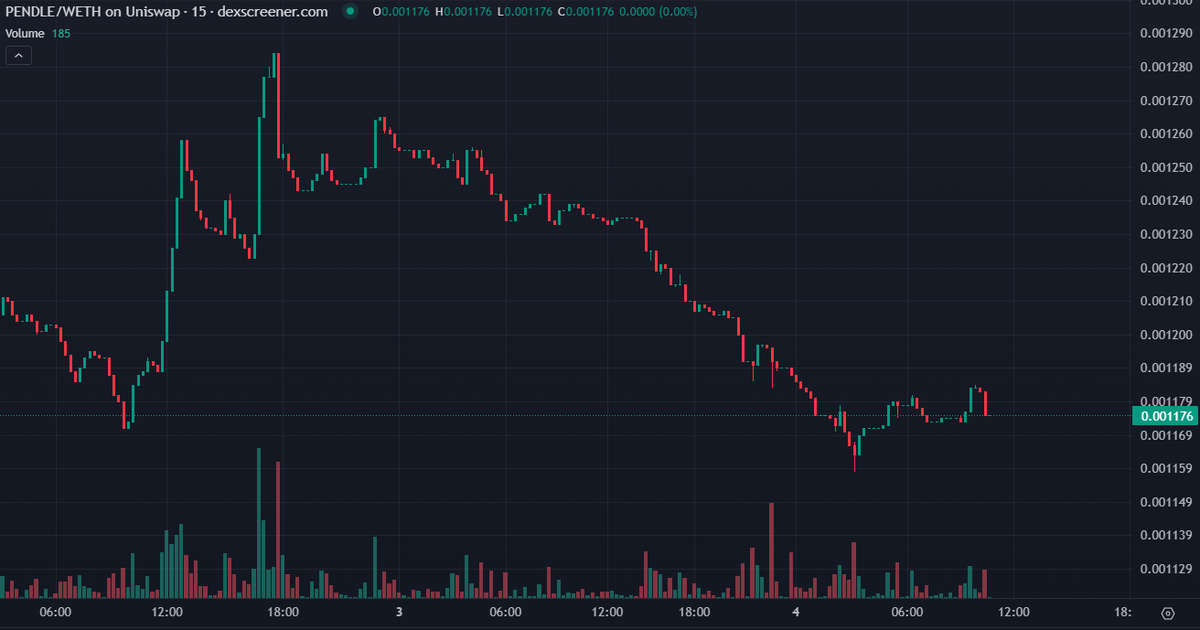
Additionally, PNP, Penpie's token, plummeted by 40% as investor confidence in the project sharply declined. In contrast, the PENDLE token remained unaffected in ETH terms. Indeed, the Pendle protocol was neither affected by nor responsible for this exploit.
Thoughts & Learnings
As investors, assessing counterparty risk, especially smart contract risk is crucial and often overlooked. Depositing LP tokens into another smart contract introduces significant additional layers of risk that must be carefully evaluated. Often, you'll find that the potential reward doesn't justify the extra risk.
Pendle team's devops, alerting and response was top notch, preventing a further $105m loss to Penpie users. This is even more impressive accounting for the fact that this happened in the middle of the night Singapore hours.
Thoughts are with those affected by this exploit.
To conclude, Pendle.
18
40
242
38,180

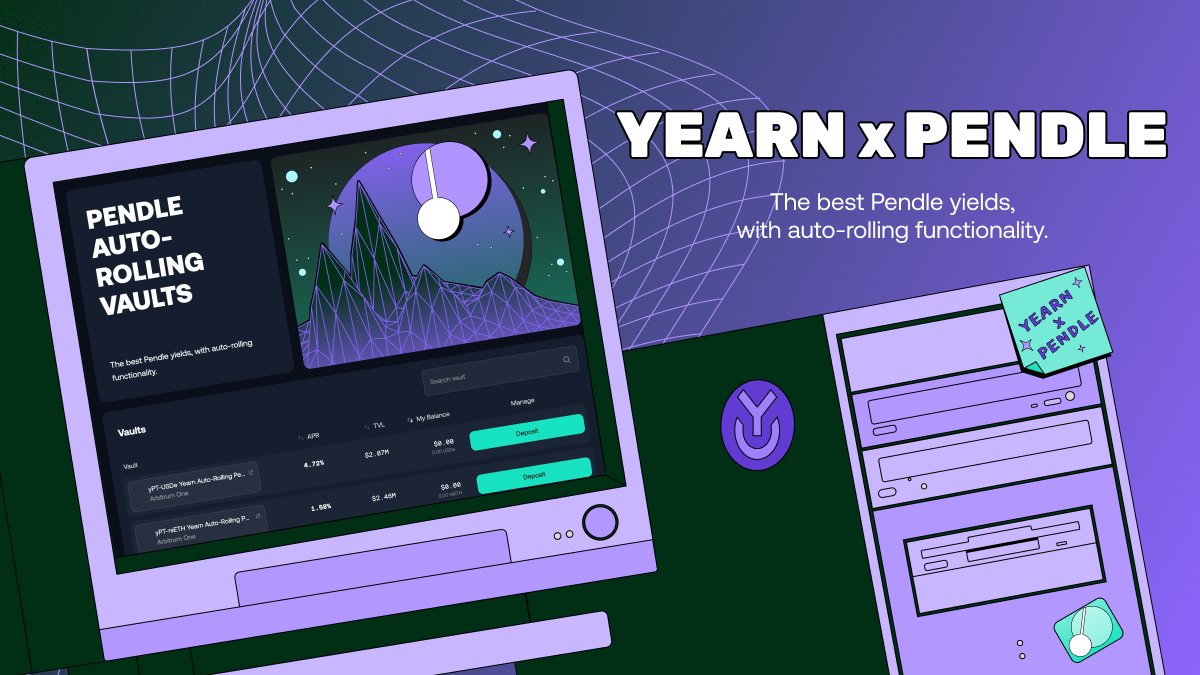
Take Pendle... everyone’s after those killer Pendle yields, but who wants to manually manage your position?
Yearn Vaults handle it for you.
With Yearn X, you don't need to go digging in the Yearn UI: just go straight to pendle.yearn.space/
Simple!
3
3
12
748
EY retweeted
29 Aug 2024
Tik tok ⌛
As we close in on the tail end of @Arbitrum Season (ending 12 September), here's your last chance to snag some ARBmazing rewards from the Pencosystem 👇🏻

4
13
74
22,291
EY retweeted

1 Aug 2024
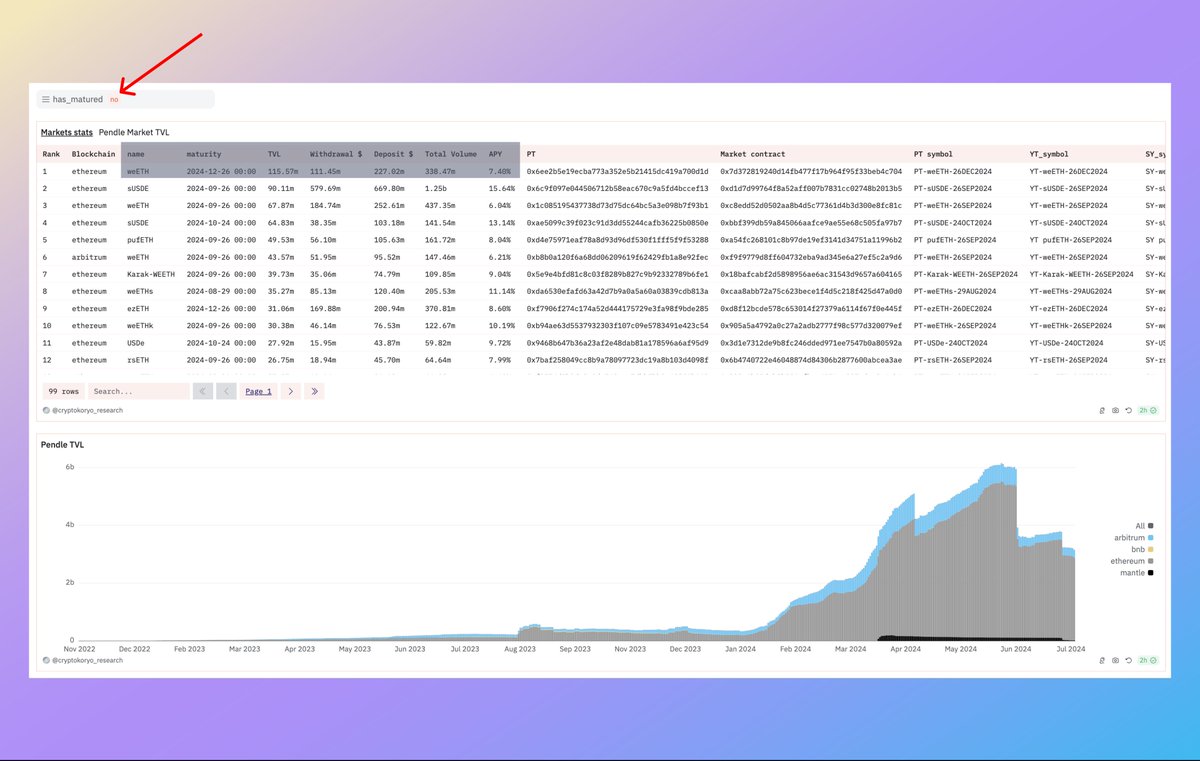
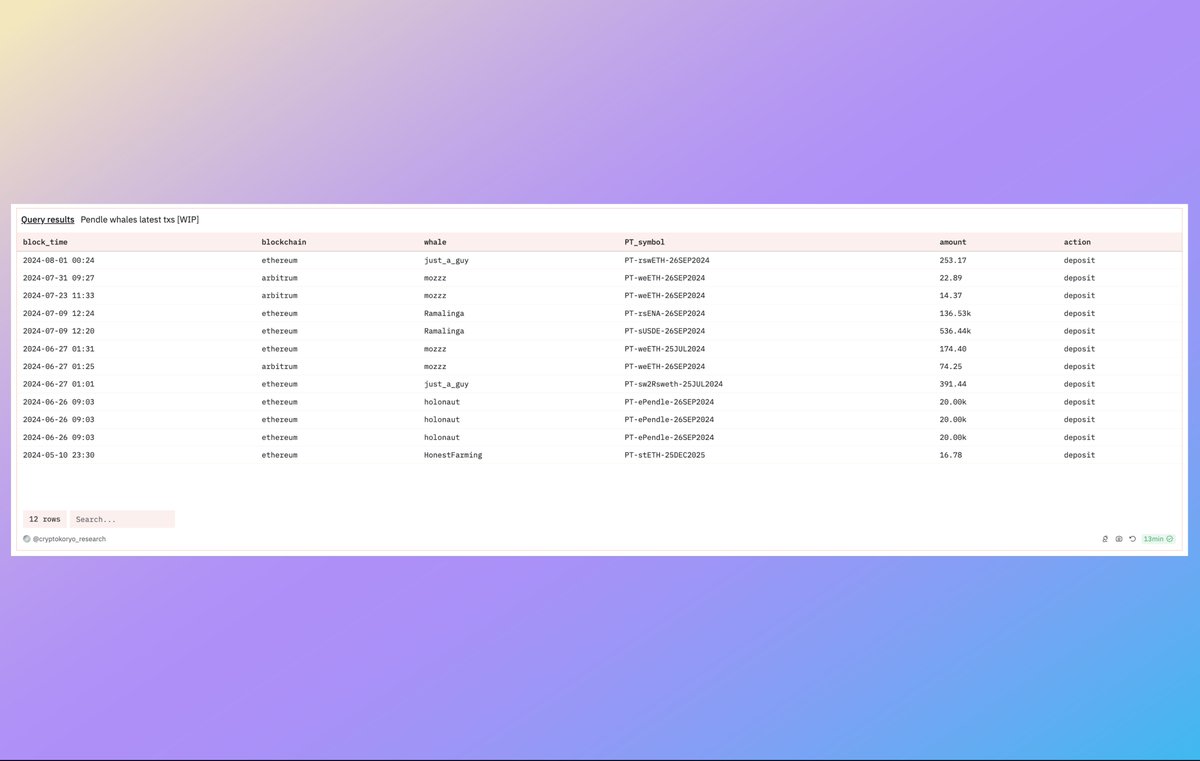
🔸New Pendle dashboard
Pendle is one of the leading DeFi protocols and a lot of new DeFi opportunities go through it.
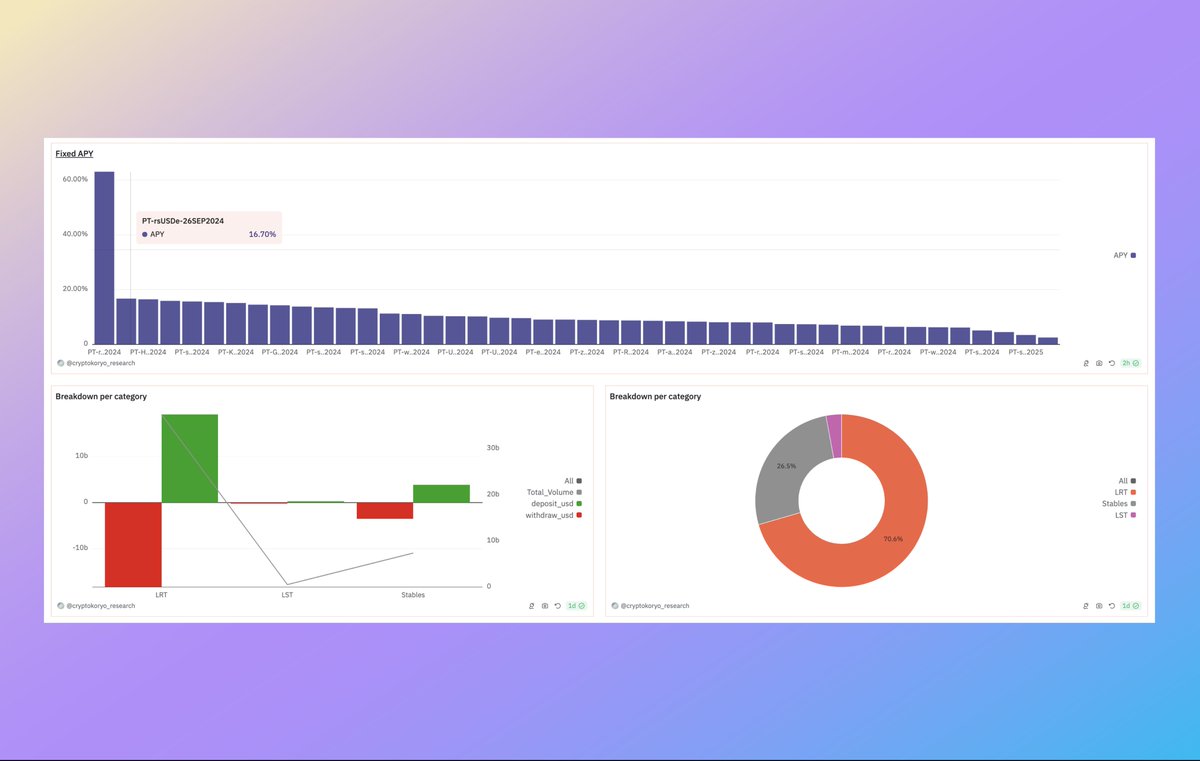
I've developed a new dedicated dashboard to better find DeFi opportunities on Pendle.
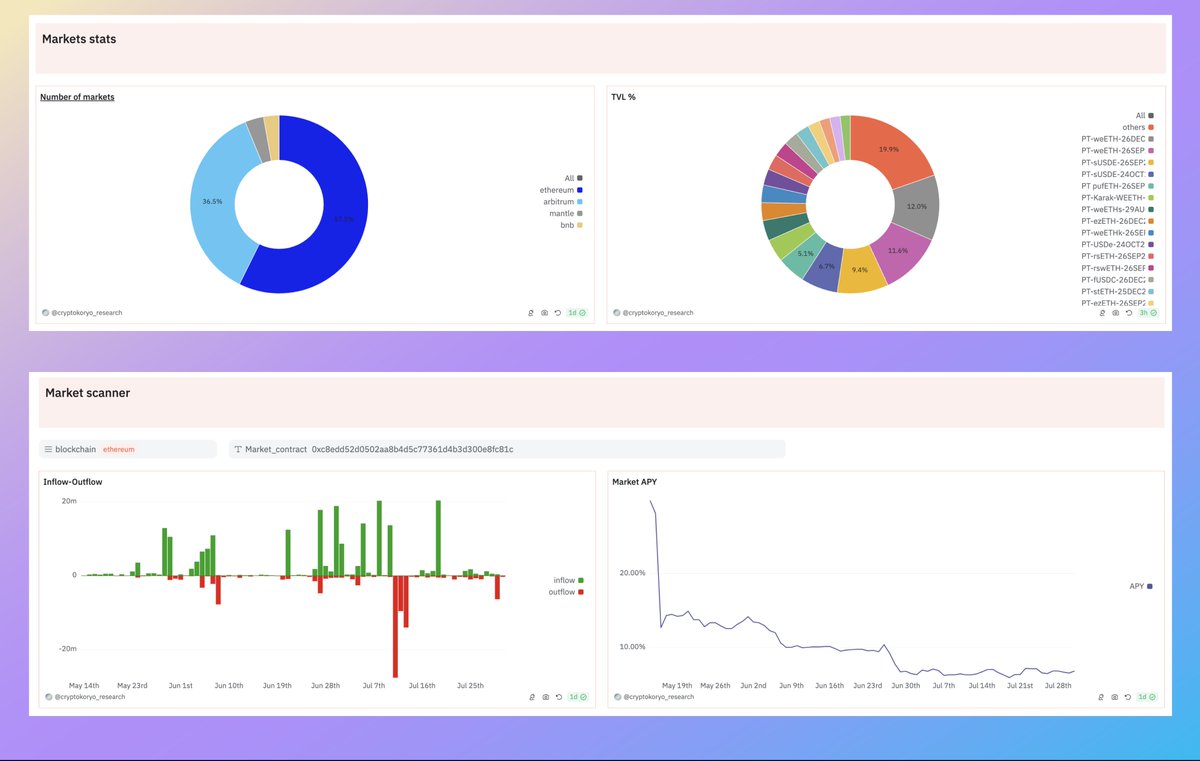
You will be able to find all the Pendle pools (both matured and non-matured) with their current TVL, APY, volume, etc.
In addition to the breakdown of the usual metrics (tvl, users, volume, flows), you will also be able to see the latest transactions from well-known whales.
You will also be able to see all the yields in one chart, breakdown by sector and more.
Finally, you'll see a breakdown of tvl by chain and pool. And you can input any Pendle market to see the details of its flows and yields.
Here is the link to the dashboard:
dune.com/cryptokoryo/pendle
There is already some alpha in this dashboard. You will be able to see new pools before official announcements and monitor what whales are doing.
But there is more coming in Q3, specially regarding some strategies around YTs, PTs and the points system.
If you have suggestions, send me a DM.
17
21
98
18,217
EY retweeted
31 Jul 2024
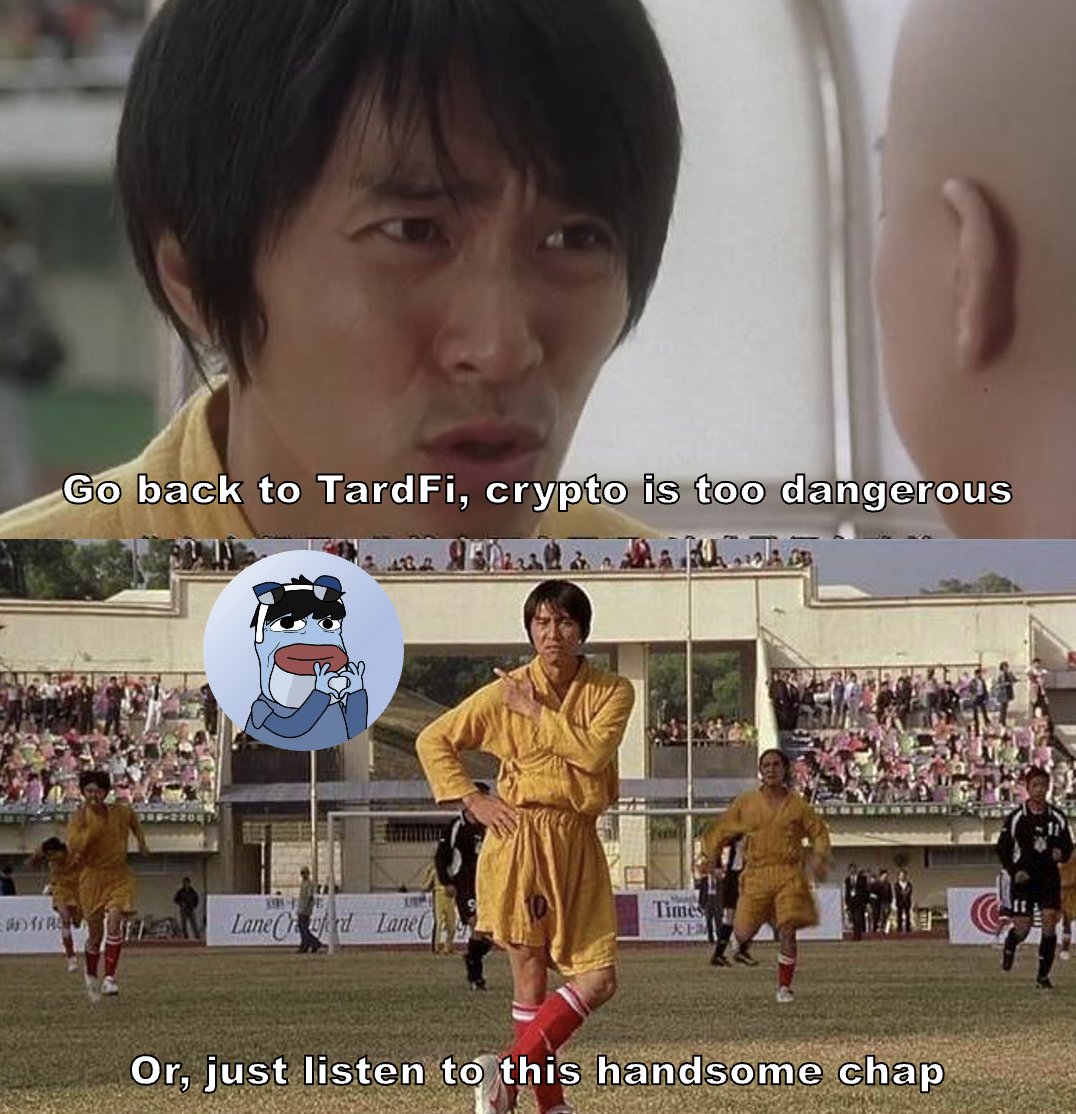
Crypto's a dangerous world, fraught with scams, frauds, and unscrupulous characters.
Here's the Ultimate Opsec Guide that EVERYONE needs to protect your magic internet money 👇🏻
1/69
20
44
190
54,104
EY retweeted
23 Jul 2024
Look at the pools
Look how they yield for you
And the points you get too
Yeah they were all Mellow ~
steakLRT, rstETH, Re7LRT, amphrETH, amphrLRT…
New @symbioticfi x @mellowprotocol pools (feat. @Amphor_io) with 26 Sep maturity now up and shining on Pendle 🌅

11
28
107
16,992
EY retweeted

29 May 2024
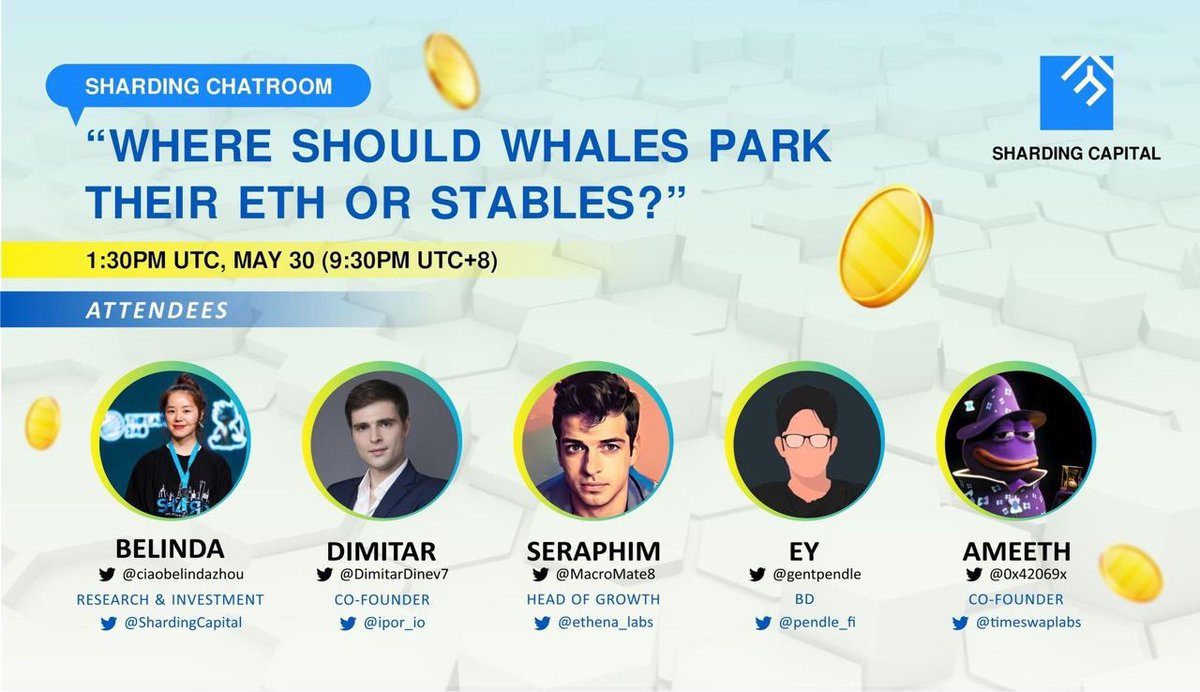
Break the code on parking ETH & stables in Sharding Chatroom #2 on May 30th, 1:30 PM UTC
Deep dive with industry leaders:
@ciaobelindazhou from @ShardingCapital
@DimitarDinev7 from @ipor_io
@gentpendle from @pendle_fi
@0x42069 from @TimeswapLabs
@MacroMate8 from @ethena
Unravel market trends & points farming, then optimize your ETH & stablecoin holdings for the sharded era.
Get an exclusive insights and roadmap updates from each project.
twitter.com/i/spaces/1PlKQDP…
2
8
24
6,449