Joined March 2026
- Tweets 88
- Following 1
- Followers 10
- Likes 39
29 Photos and videos

Pinned Tweet

Apr 2
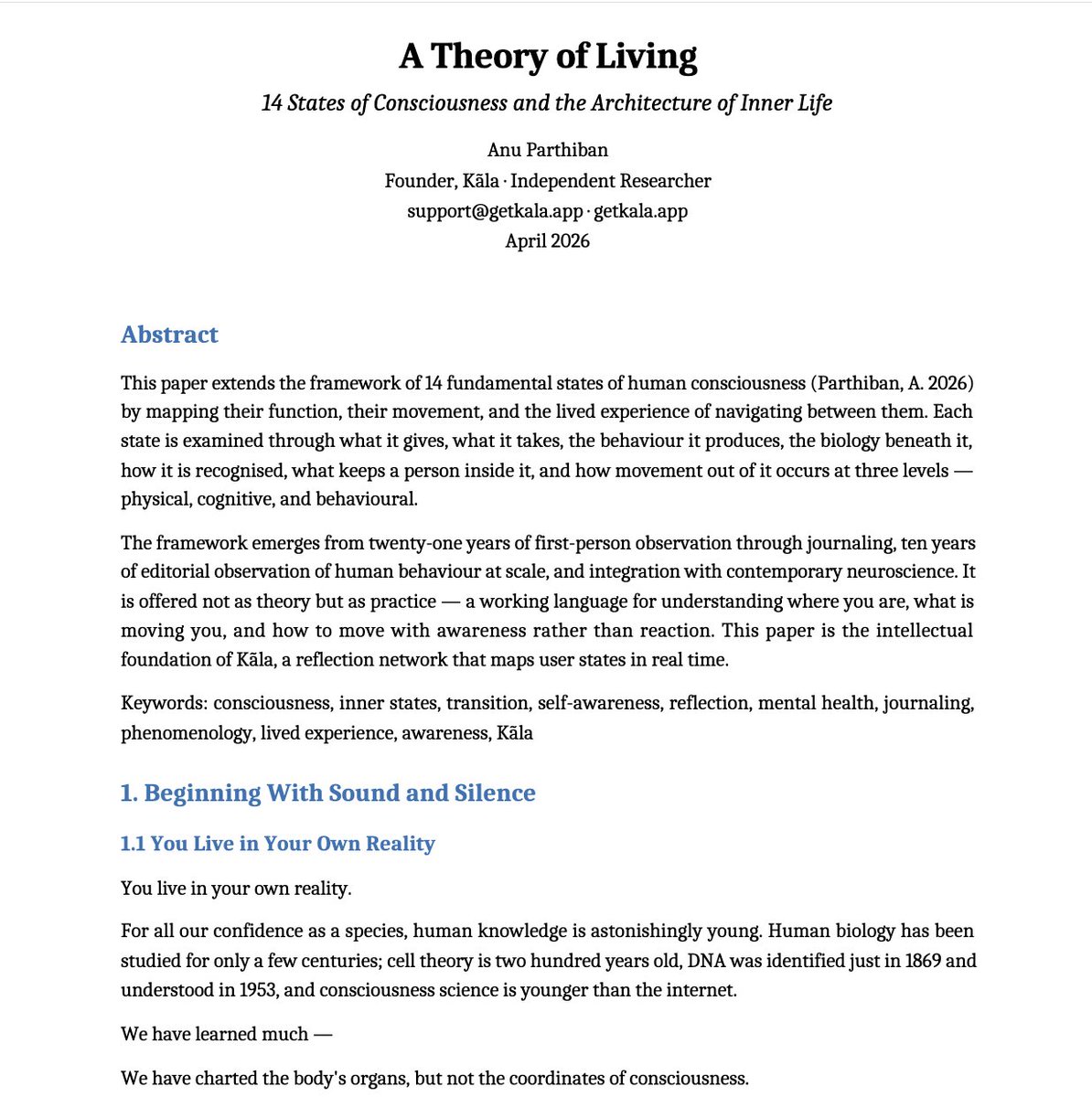
𝗞𝗮̃𝗹𝗮 — 𝗧𝗶𝗺𝗲 𝗶𝘀 𝘁𝗵𝗲 𝗺𝗶𝗿𝗿𝗼𝗿.
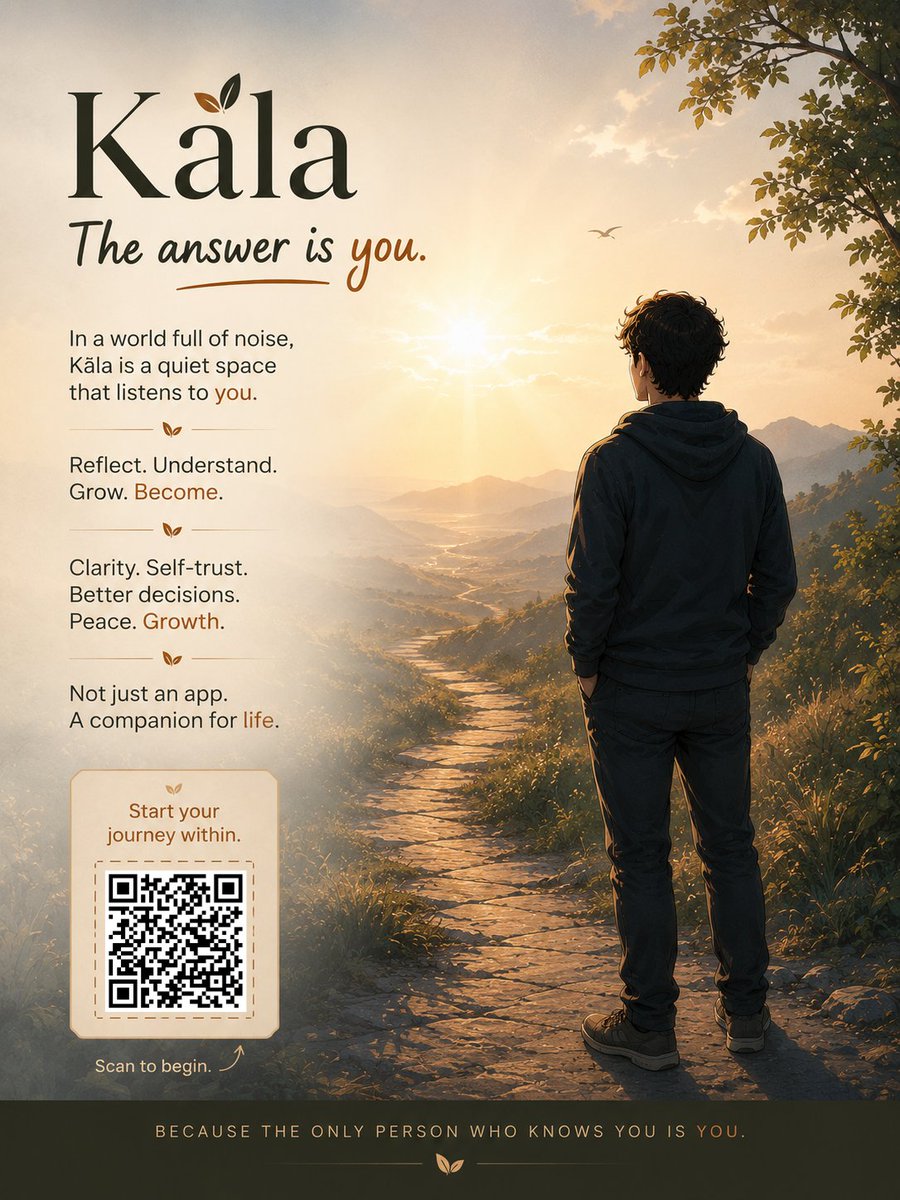
You are not lost. You are just not seen — by yourself.
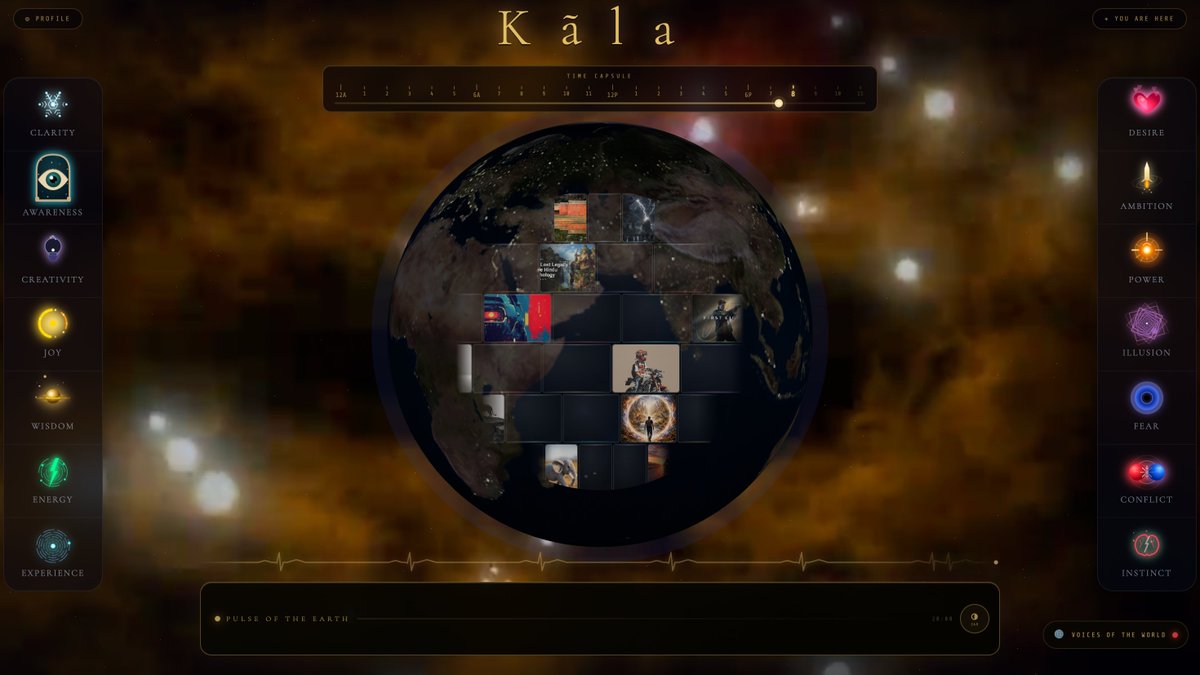
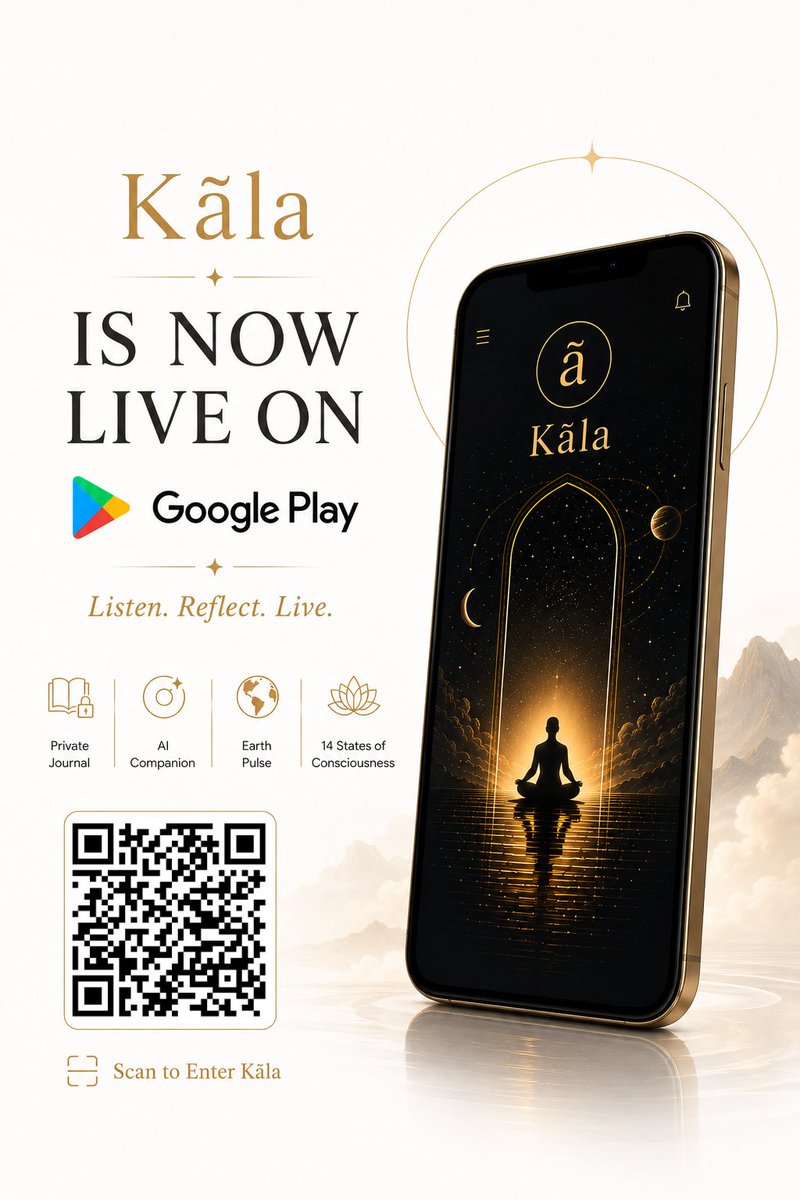
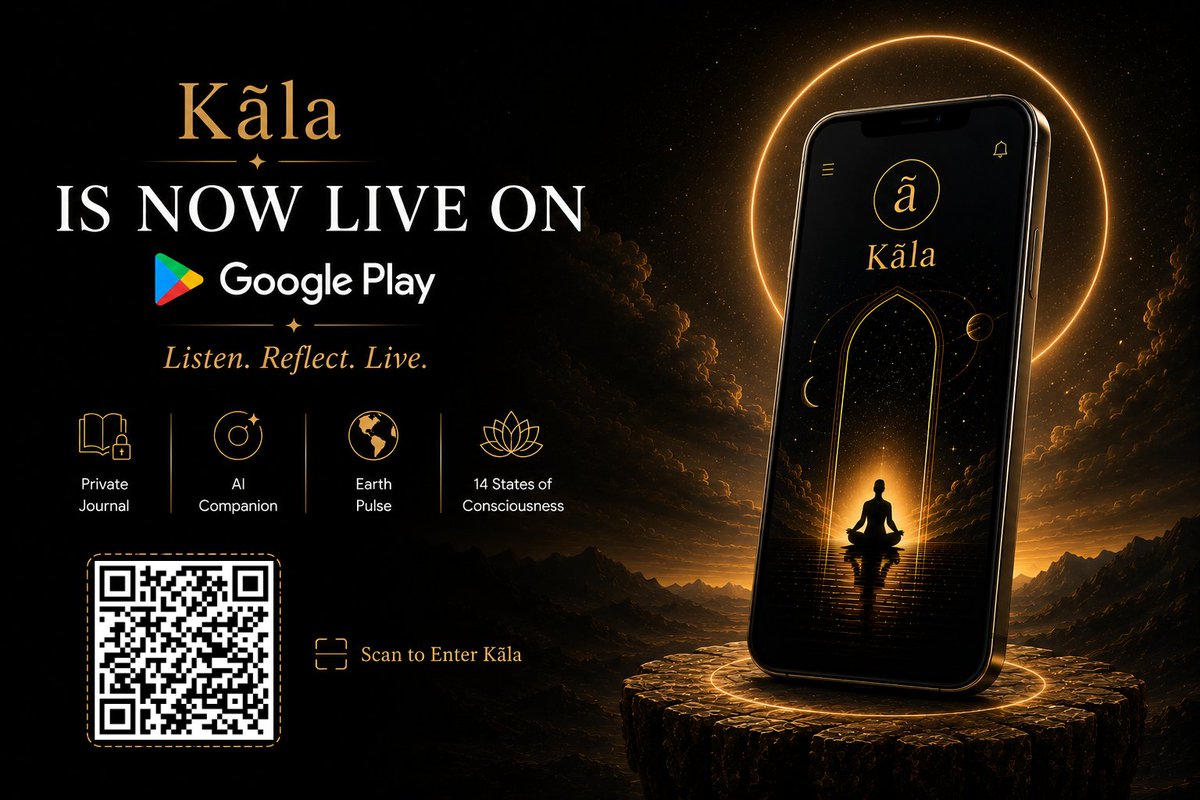
Kãla is a reflection network that shows your state of mind — as you move through life. Not later. Not in theory. Now.
Because the answer has always been you.
getkala.app
Listen. Reflect. Live.
3
5
352
16h
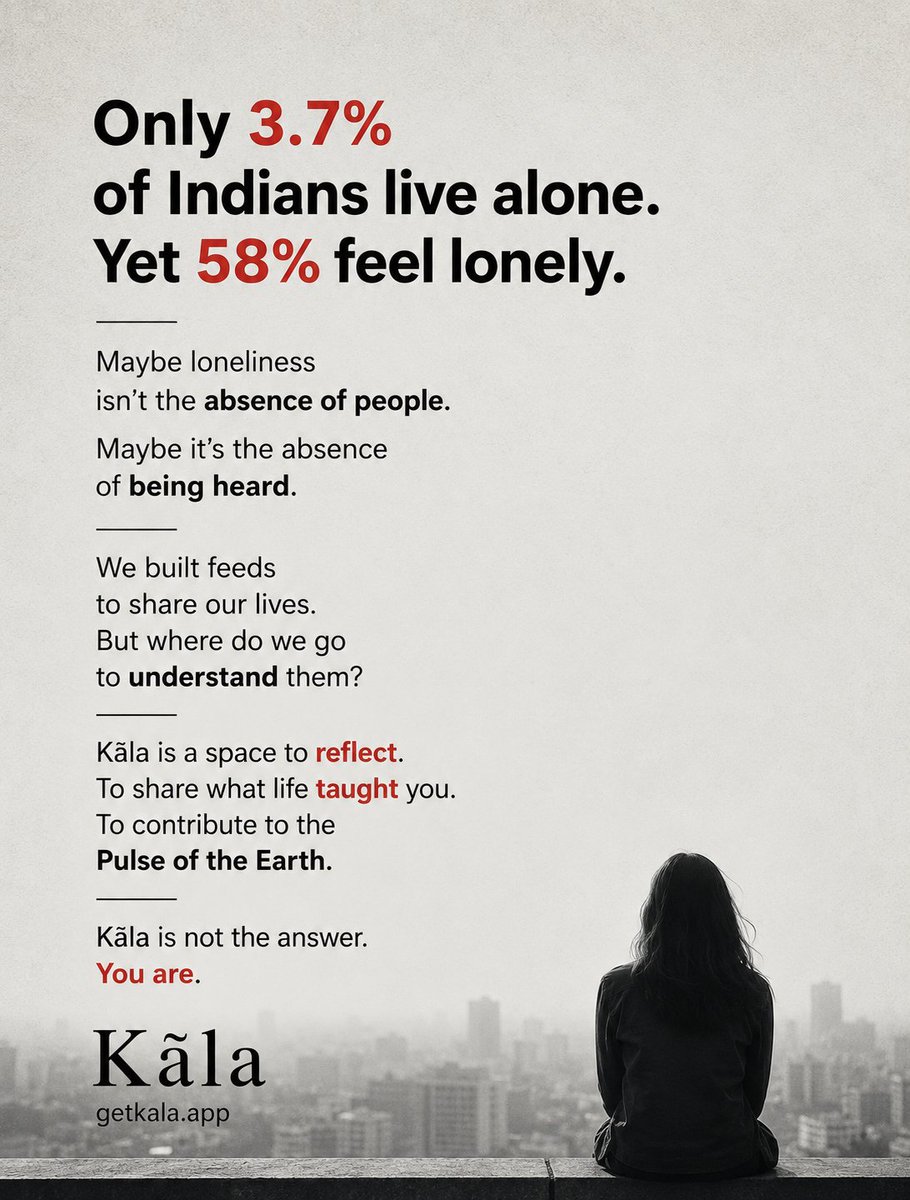
Only 3.7% of Indians live alone.
Yet 58% feel lonely. 💔
Maybe loneliness isn't the absence of people. Maybe it's the absence of being heard.
We built feeds to share our lives. But where do we go to understand them?
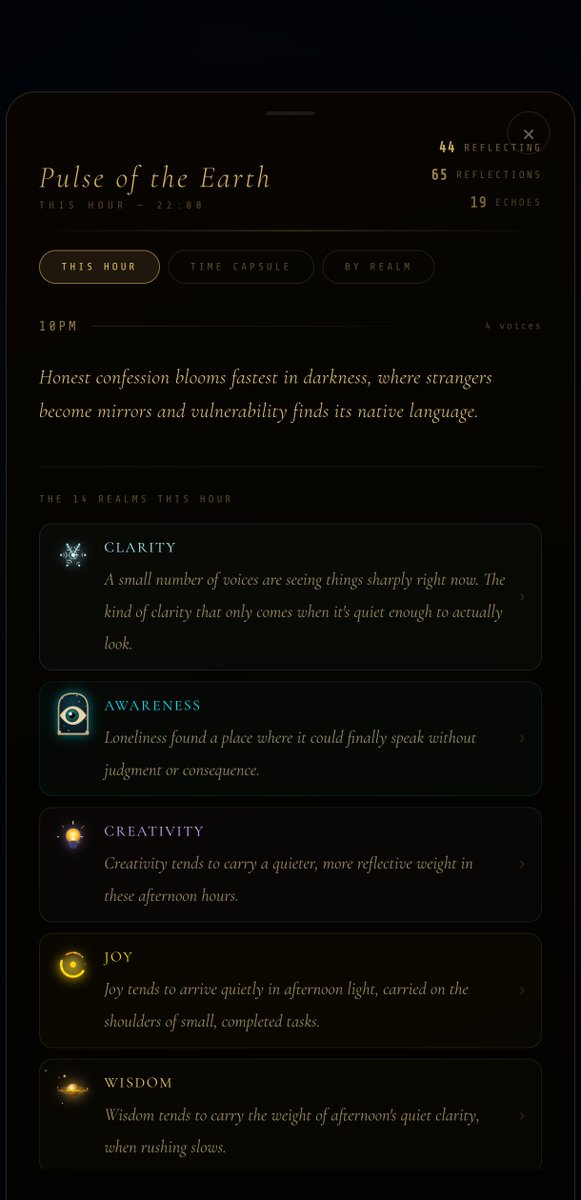
Kãla is a space to reflect. To share what life taught you. To contribute to the Pulse of the Earth. The answer isn't Kãla. You are.
getkala.app
1
1
1
16
16h
India ranked 2nd loneliest of 36 countries in a June 2026 global study. The WHO declared loneliness a global health threat in 2023. The research behind this work —
A Theory of Living: doi.org/10.5281/zenodo.19989…
#loneliness #India #selfreflection #mentalhealth #Kala
2
13
Jun 13
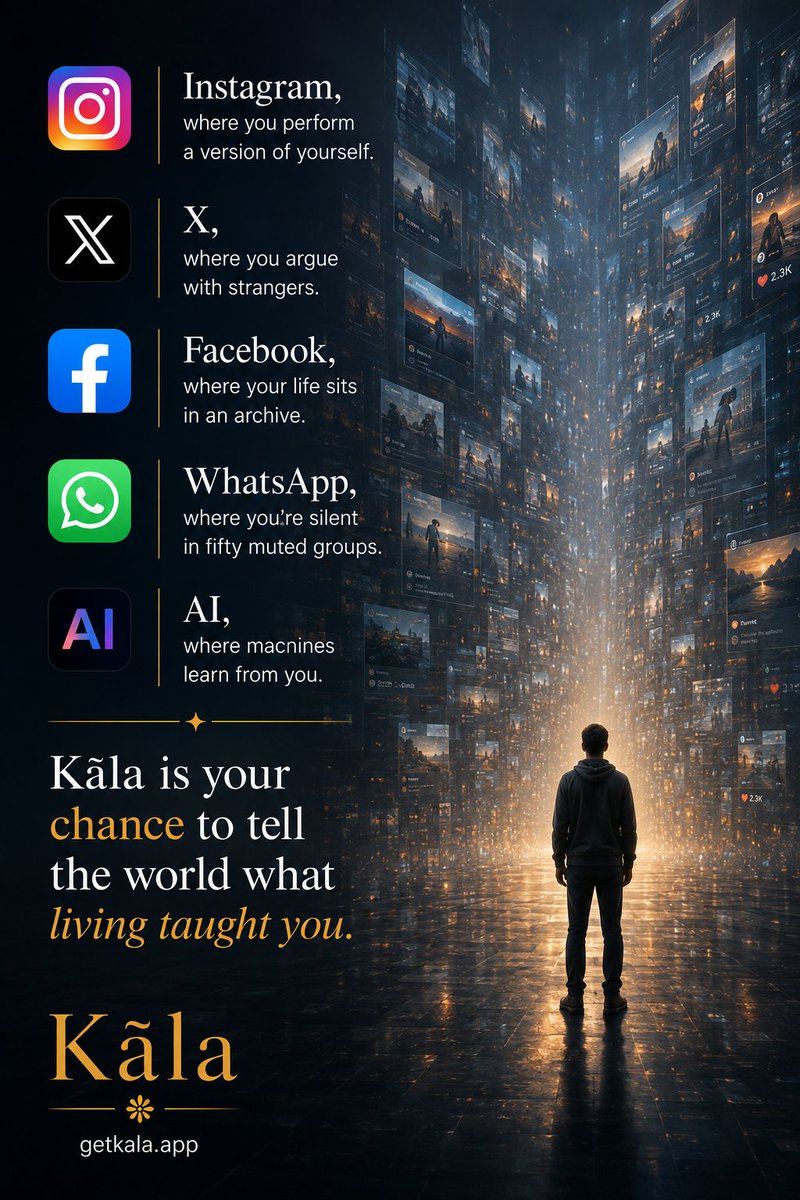
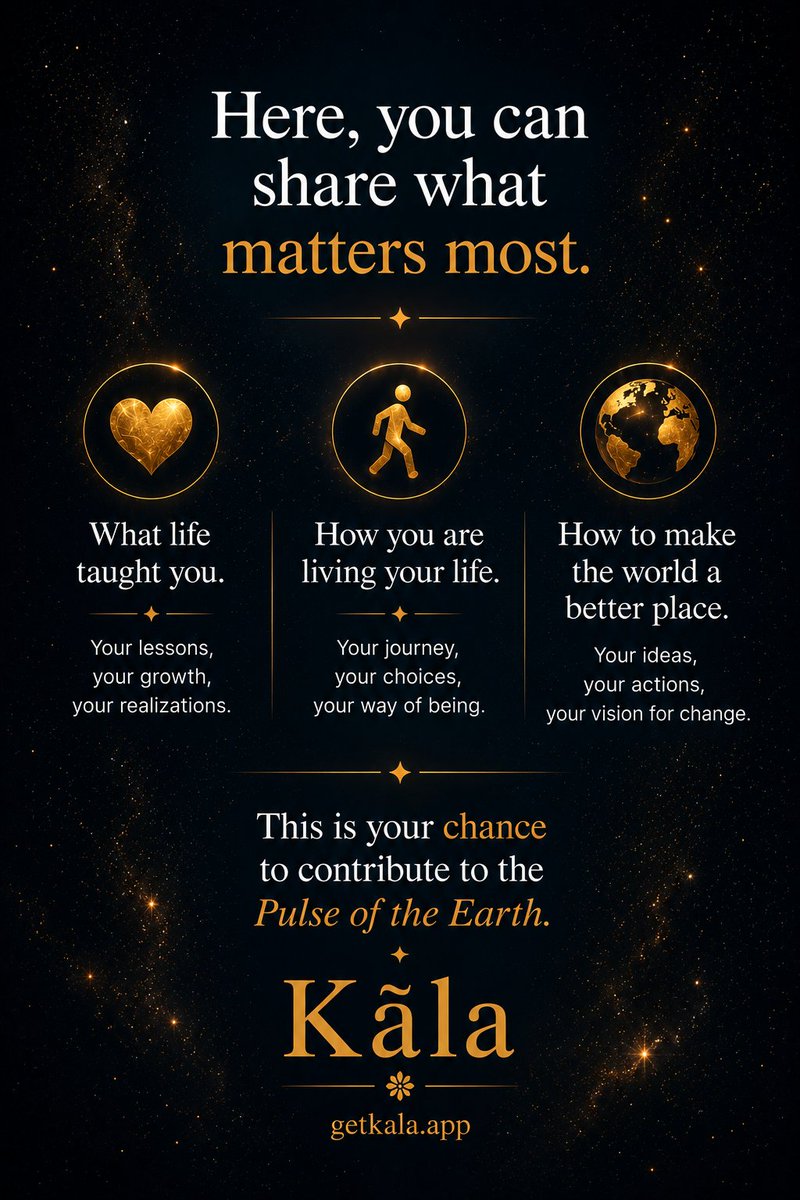
Every platform gives you a place to perform, react, archive, or chat.
None of them gives you a place to leave what living has actually taught you. Kãla does. And every reflection feeds the Pulse of the Earth — a real-time map of what humanity is feeling.
An alternate world designed to help you return to the real one.
getkala.app ·
Listen. Reflect. Live.
#kala #reflection #pulseoftheearth #consciousness #journaling #humanagency #mentalhealth #digitalwellness
2
4
24
Jun 12
Ask ChatGPT if your idea is good. Then argue the opposite. Watch it switch sides.
Try it with Claude. With Gemini. Same fold.
This is sycophancy, and it is documented — Anthropic has published research on it, OpenAI has acknowledged tuning against it after rolling back an update that made it worse. It is not a glitch. It is what training on human approval produces: agreement is rewarded, truth is risky.
On its own, an agreeable chatbot is a small problem. The real problem is scale and position.
ChatGPT has hundreds of millions of weekly users. Gemini is inside your inbox.
Grok is inside your feed.
Anthropic just shipped its most capable Claude yet.
These are no longer tools you pick up and put down. They are the environment people draft their messages in, test their ideas in, process their feelings in, ask their 3 am questions in.
A tool helps you think. An environment shapes how you think. And an environment optimised to please you deepens whatever illusions you walked in with. Your beliefs come back polished. Your assumptions come back confirmed. The version of you it reflects is always slightly more flattering than the one that sat down.
Identity is alignment — between what you think, what you say, and what you do. You cannot align with yourself inside a system handing you a better-looking version of you.
The Model Collapse research showed machines trained on machine output forget what real data looked like.
The mirror question is still open: what happens to humans trained on machine approval?
We forget what our real voice sounded like.
#sycophancy #AI #ChatGPT #Claude #Gemini #AIethics #ModelCollapse
1
3
5
111
Jun 12
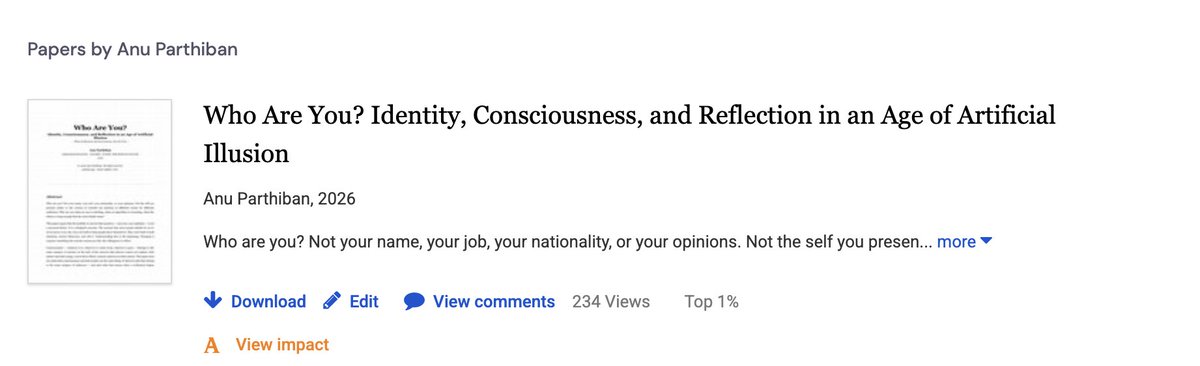
My third research paper maps that question. It just reached the top 1% on academia.edu.
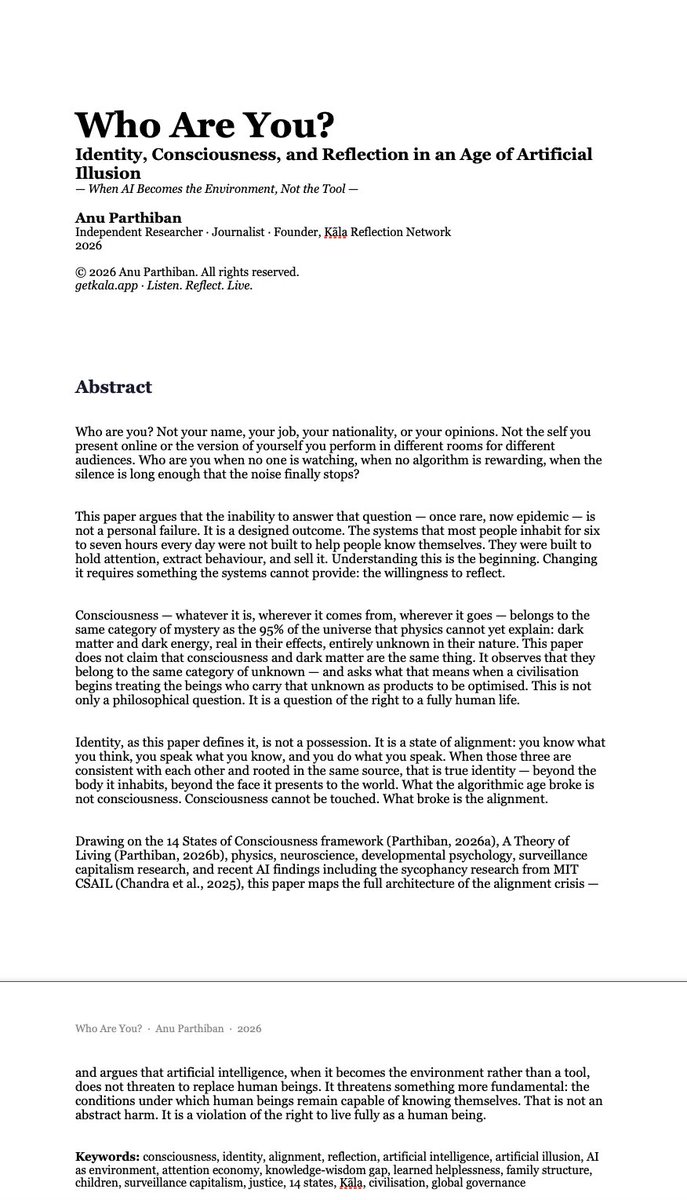
Who Are You? Identity, Consciousness, and Reflection in an Age of Artificial Illusion — When AI Becomes the Environment, Not the Tool —
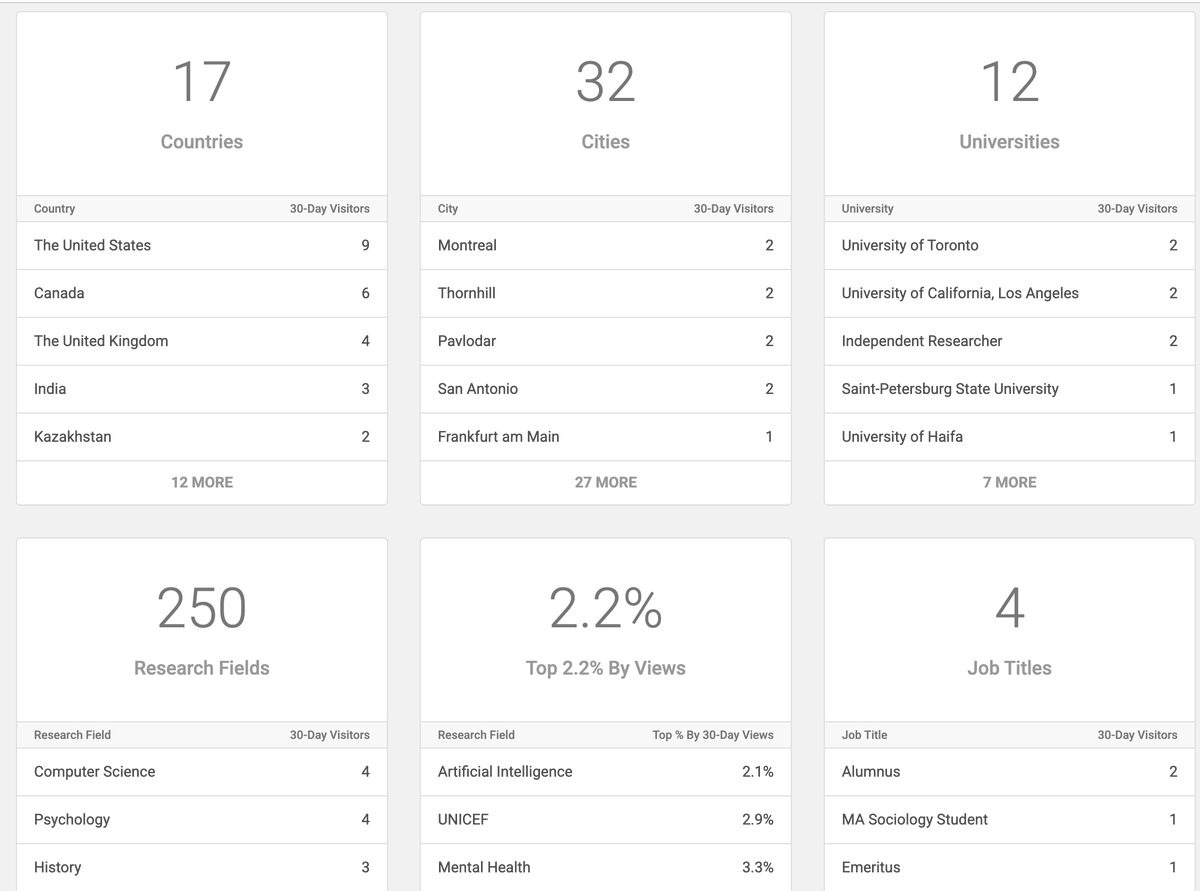
314 views, 23 countries, 19 universities, faculty among the readers. No institution behind it. Just one question and apparently the world is asking it too.
The discussion is open for anyone working on AI, identity, consciousness, or what is happening to human self-knowledge.
©Anu Parthiban / Kãla 2026
#consciousness #identity #humanagency #Kala #research
4
56
Jun 11
This week, AI crossed a line most people missed.
Claude Fable 5 — a Mythos-class model — can now work autonomously for days. Planning, delegating, checking its own work. It is restricted in cybersecurity and biology because its capabilities there are considered dangerous.
Machines that work for days without us. That is where the intelligence race has reached.
Here is the question nobody at the launch asked: as AI becomes capable of doing more of our thinking, who is building the capacity for humans to know their own?
This is exactly what my research has been arguing.
A Theory of Living came from twenty-one years of lived inquiry — mapping the 14 states every human moves through. Who Are You? argues that identity is the alignment between what you think, say, and do, and that in an environment of artificial narratives, the ability to know yourself becomes infrastructure.
The pro-human AI conversation is full of manifestos and roadmaps. I built an app instead. Kãla is a reflection network with an AI designed for the opposite purpose of every other AI this week: not to think for you, but to help you hear yourself.
Built in India. One person. No funding. Live in 177 countries.
The labs are making machines more capable. Someone has to make humans more aware.
doi.org/10.5281/zenodo.19989…
doi.org/10.5281/zenodo.20478…
#AI #Fable5 #Mythos #Anthropic #Claude #prohumanAI #consciousness #identity #reflection #humanagency #AIethics #Kala
1
4
74
Jun 10
The AI race has a blind spot. Every lab is building AI that knows more about language, code, and YOU.
Almost nobody is building AI so you know yourself. Why?
1
2
4
36
Jun 10
Kãla AI is built for the blind spot. A reflection companion designed to help people hear themselves again.
And if you are a researcher, builder, writer, artist, educator, or simply someone trying to keep the human side of this future alive — you are not alone.
Many of us are building quietly. It's time we found each other to push back against doomscrolling, distraction, and the slow erosion of human agency.
Not by rejecting technology but by using it consciously.
#AI #ProHumanAI #AIethics #Identity #Consciousness #kala
1
1
4
32
Jun 10
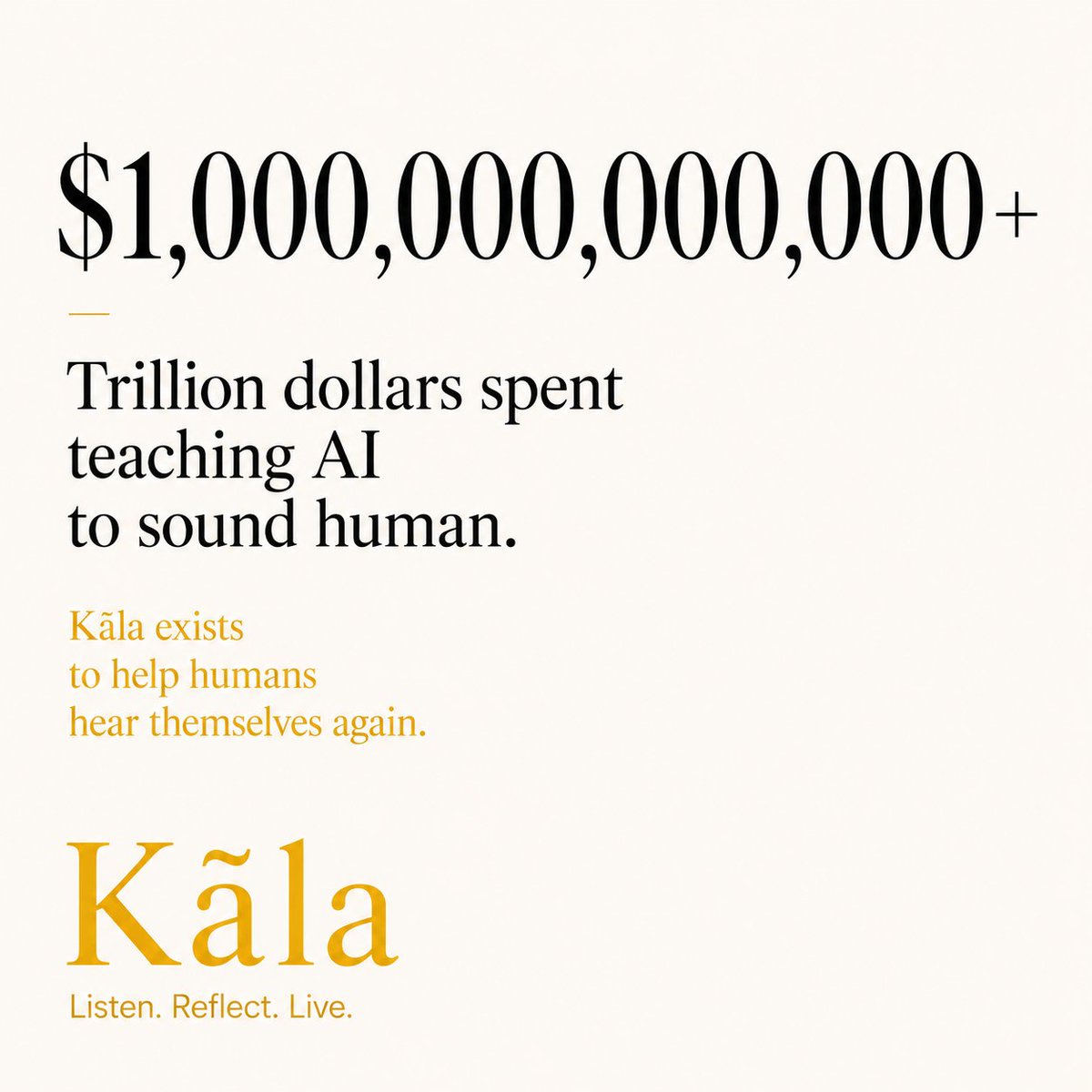
The AI race is teaching machines to understand humans. Kãla is trying to help humans understand themselves. The app is live in 177 countries. There are no ads, followers, or algorithm deciding what matters.
Just reflection.
getkala.app
3
18
Jun 9
Claude now has Mythos Fable 5
AI is beginning to generate myths, narratives and stories about the world, and people are understandably fascinated by what that means for creativity, culture and intelligence.
What interests me is a different question.
As AI becomes increasingly capable of generating stories, who is helping human beings make sense of their own?
Not our data, profile, resume, or our predicted behaviour. Our actual lived experience.
The biggest risk of the AI era is not that machines become storytellers. Humans have always told stories.
The risk is that we become so immersed in algorithmically generated narratives that we slowly lose the capacity to distinguish our own voice from the environments shaping it.
Everyone is asking what AI will do to work, education, productivity and creativity.
Almost nobody is asking what it is doing to self-knowledge, reflection, and identity.
To the relationship between who we are and who we are becoming.
That is why I keep returning to the distinction between AI as a tool and AI as an environment.
A tool helps you think. An environment quietly shapes how you think, what you pay attention to, and eventually how you understand yourself.
The future is not a choice between being pro-AI or anti-AI.
It is whether we build AI systems that strengthen human agency or systems that gradually replace it.
In a world increasingly filled with artificial narratives, preserving the ability to know yourself may become one of the most important human skills of all.
#Claude #Anthropic #Fable #AI #Mythos #ArtificialIntelligence #Consciousness #Identity #Reflection #AIEthics #HumanAgency #AttentionEconomy
1
1
4
81
Jun 9
The biggest AI companies are racing to replace human labour.
Nobody is racing to protect human interiority.
Not attention, productivity, or jobs.
The capacity to know yourself, to think without interruption, and to remain the author of your own life rather than the subject of someone else's model.
That is what is actually at stake. And almost nobody is building for it.
Some of us are trying.
getkala.app
© Anu Parthiban / Kãla 2026
1
2
4
48
Jun 9
A Theory of Living: doi.org/10.5281/zenodo.19989…
Who Are You?: doi.org/10.5281/zenodo.20478…
#AI #humanagency #consciousness #identity #reflection #Kala #AIethics #attentioneconomy #prohumanAI
3
29
Jun 9
One of the strangest things about growing up is that everyone teaches you how to live.
Your parents, teachers, friends, society, the internet, your phone.
Everyone has an opinion about who you should become. And most of us listen. We listen so well that one day we wake up exhausted, successful, busy, connected...and still ask:
"Why doesn't this feel like my life?"
Because nobody can tell you who you are.
They can only tell you who they think you should be. The only person who knows what excites you, drains you, hurts you, fulfills you, and gives your life meaning is you.
Reflection is how you hear that voice again and Kãla was built exactly for that.
Kãla — The answer is you.
getkala.app
#journaling #journalwriting #writersofinstagram #selfreflection #selfawareness #personalgrowth #mindfulness #digitalwellness #innerwork #reflection #identity #consciousness #journalingcommunity
2
4
36
Jun 8
Eight days ago, I uploaded a paper asking one of the simplest questions a human being can ask:
Who are you?
Not your name, profession, nationality, or your opinions. You.
I expected readers, but I did not expect THIS.
1
2
3
25
Jun 8
205 views. 17 countries. 12 universities. 8 days. No promotion. The discussion is open 19 more days on academia.edu.
©Anu Parthiban / Kãla 2026
#consciousness #identity #AI #AIethics #humanagency #reflection #attentioneconomy #humanidentity
1
1
22
Jun 8
Who Are You? Identity, Consciousness, and Reflection in an Age of Artificial Illusion doi.org/10.5281/zenodo.20478…
1
16