
lambi hai gham ki shaam magar shaam hi to hai
Joined June 2025
- Tweets 5,144
- Following 46
- Followers 762
- Likes 9,883
582 Photos and videos










na samjhoge to mit jāoge aye hindostān vaalo
tumhārī dāstān tak bhī na hogī dāstānon mein
— Allama Iqbal (r)

COAL MINISTER G KISHAN REDDY FLAGS REPORTED DISAPPEARANCE OF 40 LAKH TONNES OF COAL, SEEKS URGENT PROBE INTO SCCL
1
1
17
318
If true, then the most charitable interpretation I can offer is that his family pressured him into it to avoid social stigma. That's about as much husn al-zann as I'm willing to extend to him.

उत्तर प्रदेश –
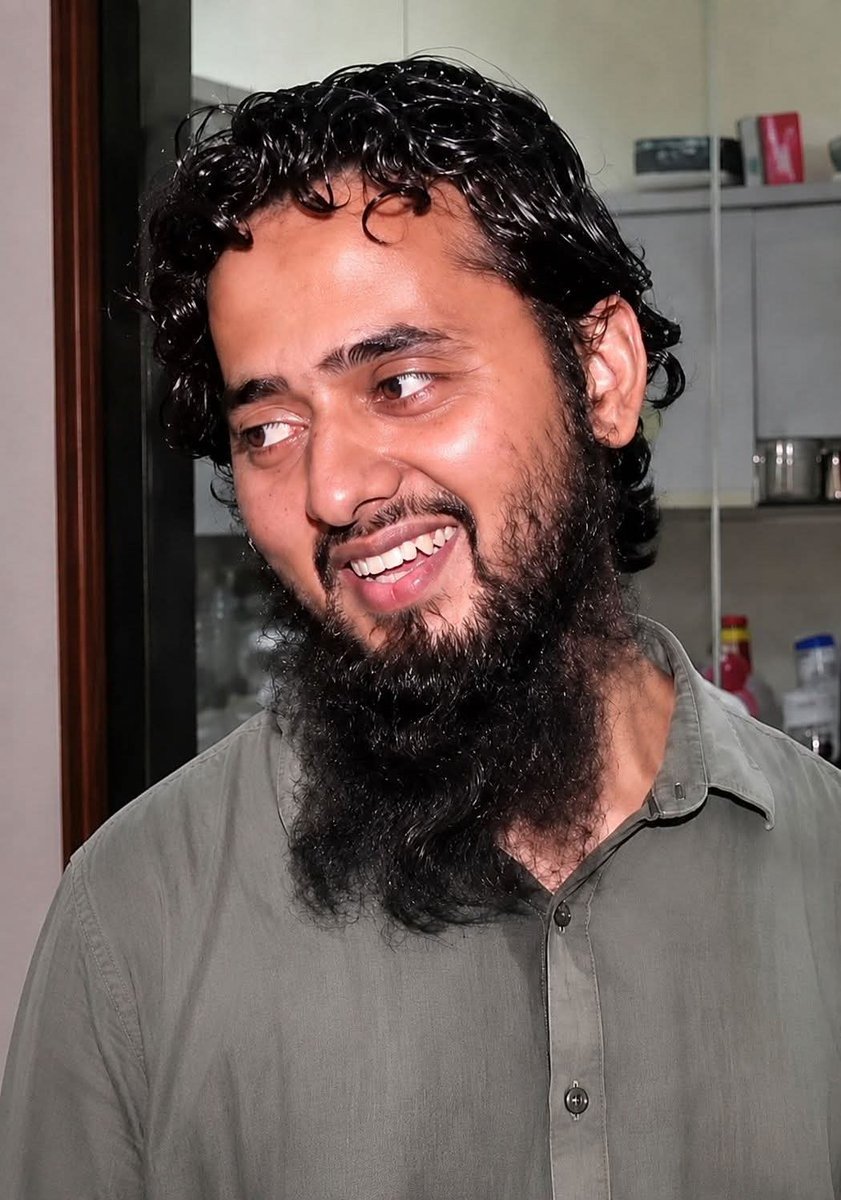
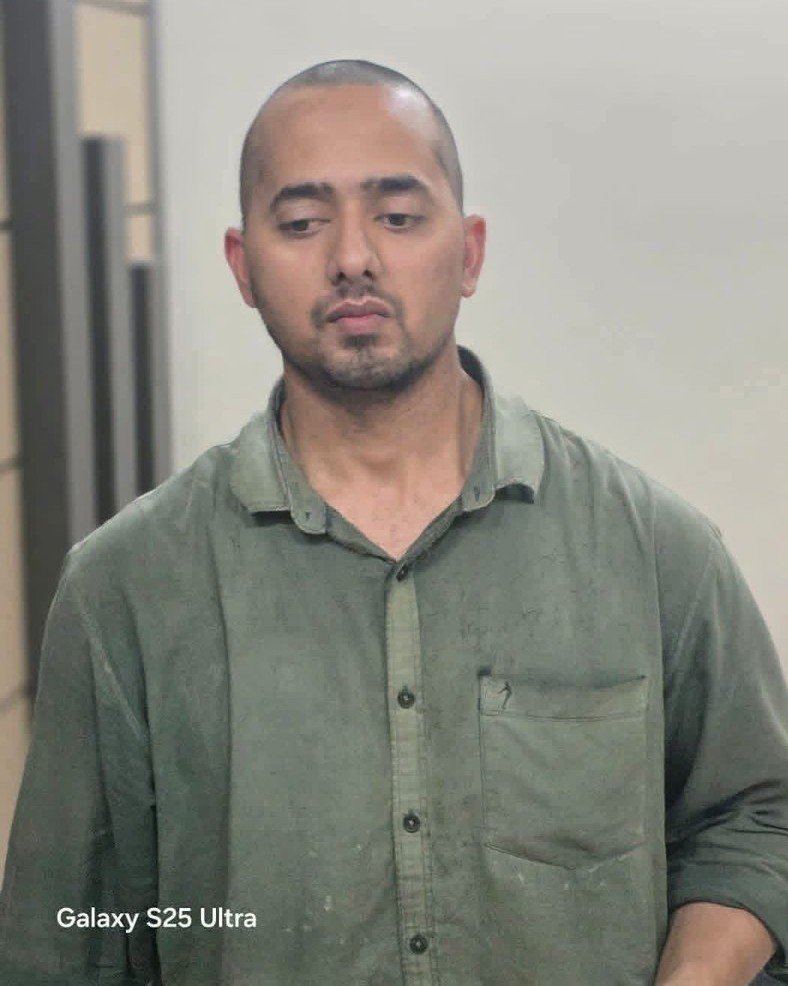
जिला शामली में मुस्लिम लड़की से निकाह करने के बाद पांचों वक्त का नमाजी बनने वाले आयुष मलिक का नया लुक सामने आया है। इसमें उसके दाढ़ी/बाल कट गए हैं। हालांकि अभी यह स्पष्ट नहीं है कि आयुष ने ऐसा अपनी मर्जी से किया है या फिर किसी के दबाव में किया है।
फिलहाल शामली पुलिस ने इस केस में एक और आरोपी सपा नेता तौसीफ कुरैशी को गिरफ्तार किया है, जो जिम ट्रेनर चांदनी कुरैशी का भाई है। इसी चांदनी से आयुष ने निकाह किया था।
4
2
31
2,311
I owned this borderline kafir so badly yesterday that he had to buy likes just to soothe his bruised ego. 🤣🤣
409 likes and 3 comments lmao! 😭😭

2
1
33
736
I believe the middle class will eventually disappear. There will only be two groups left, the rich and the poor. What we do today will determine which side our future generations end up on.


3
3
22
648
"maulvi hargiz nā shud maulā-ii-Rūm
tā ghulām-ii-Shams Tabrizi nā shud"
— Mevlana Jalāl al-Dīn Muḥammad Rūmī (رحمة الله عليه)
1
11
163
gimo 🔻 retweeted

22h
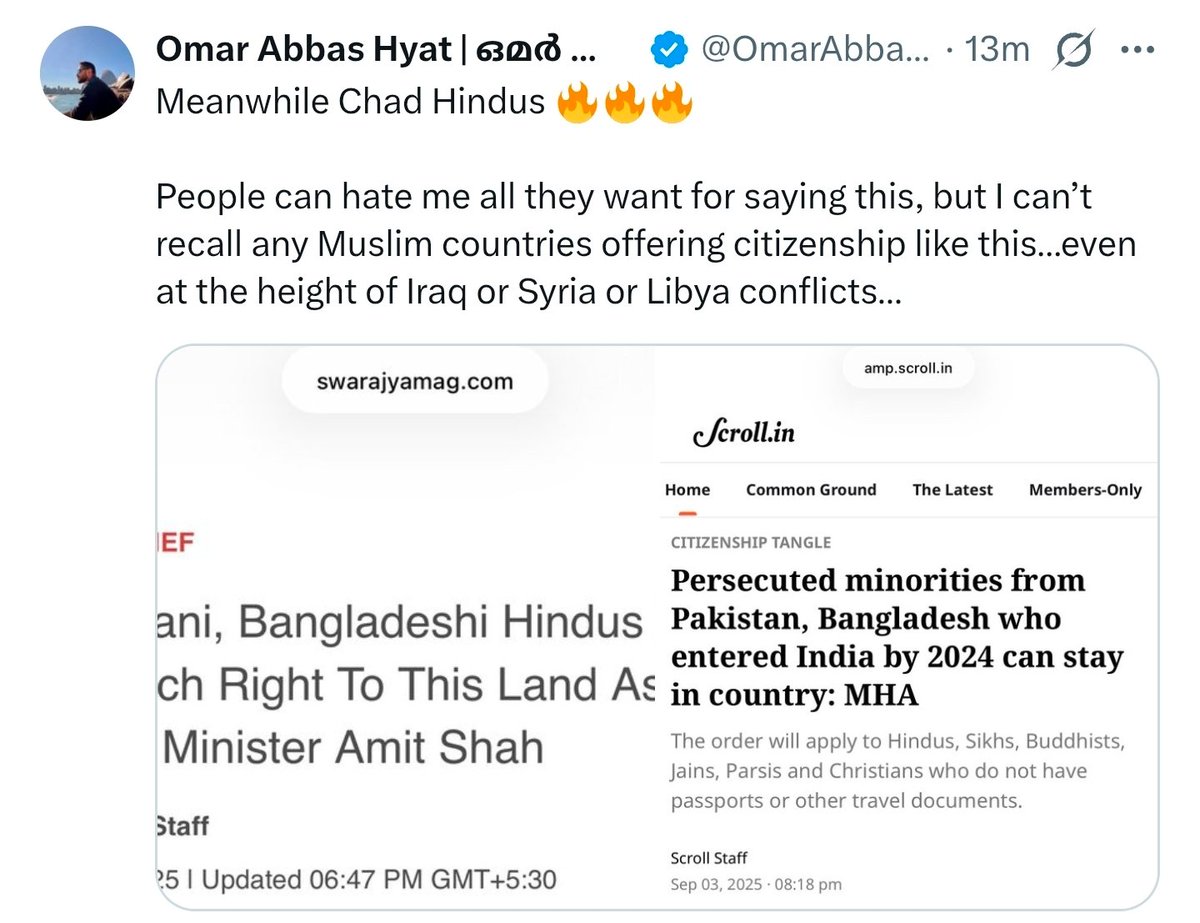
I'm sure Omar would definitely marry his daughter to a chad Hindu. 🔥🔥
17
27
207
19,435
ham amn chāhte hain magar zulm ke khilāf
gar jang lāzmī hai to phir jang hī sahī
1
1
17
288
gimo 🔻 retweeted
Jun 12
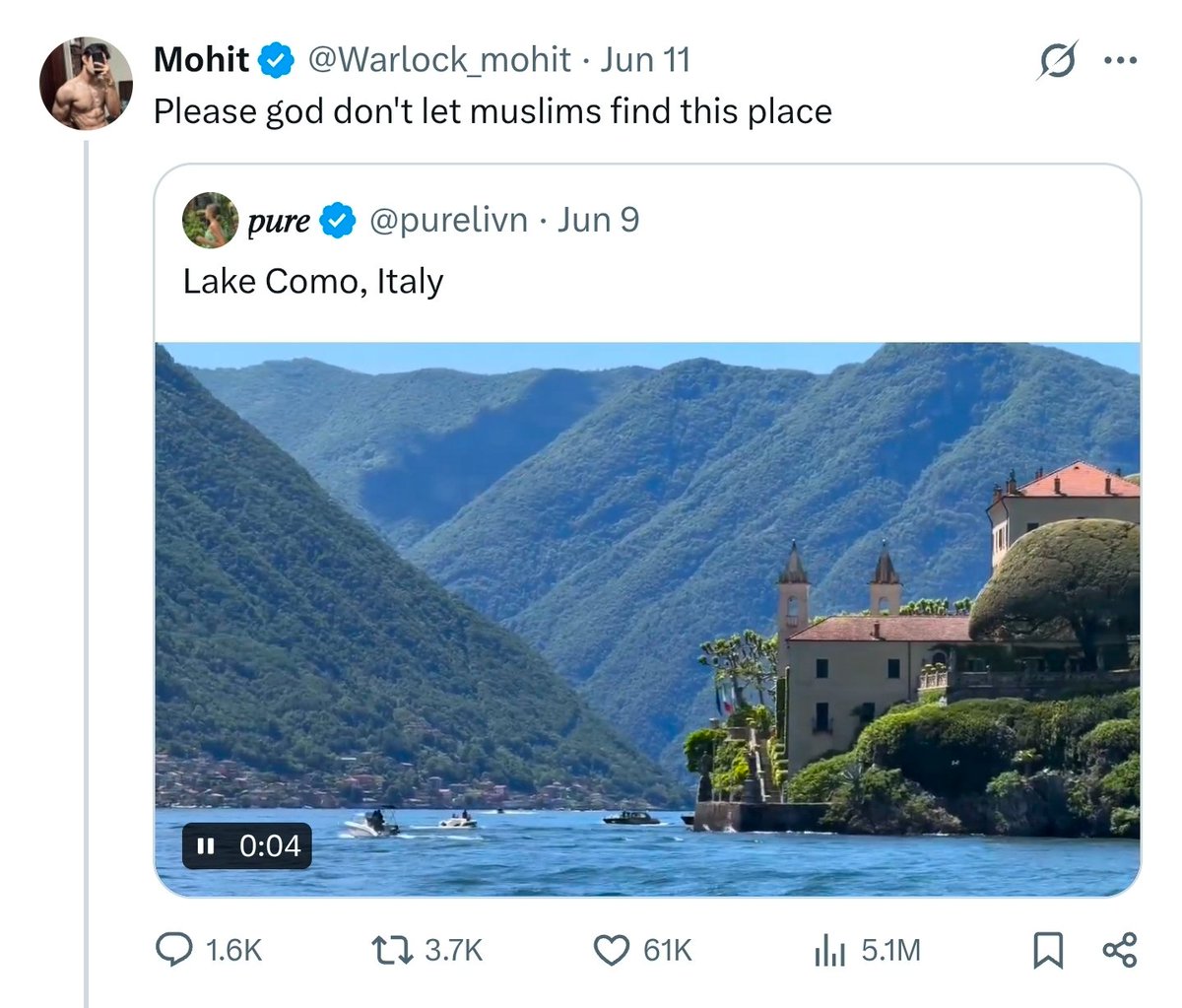
Please god don't let hindus find this place 😭😭😭


18
128
2,208
27,939
gimo 🔻 retweeted
23h
Ironically, the world's only two Hindu-majority countries are ranked among the worst performers in the 2024 Environmental Performance Index (EPI), placing 176th and 165th out of 180 countries. Meanwhile, most Muslim-majority countries rank within the top 80.
8
38
309
4,121
gimo 🔻 retweeted
17h
I have read this speech by Rahul Gandhi and I must admit that his ability to articulate his thoughts has improved significantly over the years. Despite years of relentless ridicule and character assassination, he overcame those attacks and went on to become the Leader of the Opposition. Credit where credit is due.
That said, while the speech identifies several problems, it falls short of explaining how they can realistically be overcome.
The central argument of the speech is that the BJP has compromised major state institutions, including the media, bureaucracy, legal system and electoral framework. If that is true, then Rahul Gandhi's solution appears inadequate. Resistance, speeches, yatras and vote consolidation all assume that the democratic framework remains capable of producing change. If the system itself has been compromised, then the speech identifies the problem but never explains how it is realistically supposed to be overcome.
The next issue I observed is that the INDIA alliance appears to be united primarily by opposition to the BJP but opposition alone cannot sustain a political movement. Being anti-BJP is not an ideology, nor is opposition to the RSS. One of the BJP's greatest strengths has been its ability to offer supporters a coherent ideological narrative, whereas Congress appears to define itself through what it opposes rather than through a clearly articulated vision of its own.
The speech also leaves little room for introspection regarding the declination of Congress. The party became disconnected from large sections of society, struggled to adapt to changing political conditions and allowed damaging perceptions to take place. Rahul Gandhi's image and the perception of dynastic politics were both significant factors, although the former has improved considerably in recent years but they need to work on the other.
There is also the issue of political messaging. Congress gradually acquired a reputation, rightly or wrongly, for being focused on Muslim appeasement. The political gains from this approach have been limited, both for Congress and for Muslims. Muslims are already among the most anti-BJP voting blocs and are likely to support whichever opposition force appears most capable of defeating the BJP. The real challenge for Congress lies in understanding why large sections of Hindu voters lost confidence in the party and addressing those concerns credibly because no party can realistically govern India without broad Hindu support.
Another issue that doesn't get enough attention in the speech is organization. The BJP's dominance isn't just the result of ideology or leadership but decades of grassroots work, cadre building, local leadership development and organizational discipline. Congress is clearly weaker on this front and no amount of rhetoric or coalition building can make up for the absence of a strong presence on the ground.
Perhaps the most important weakness of the speech is that it treats the BJP primarily as a political opponent when it is actually part of a much broader social and ideological phenomenon. The BJP's strength is not at all confined to just electoral politics but it's rooted in a form of hyper-nationalism, religious majoritarianism and ideological radicalization that has penetrated large sections of Hindu society. If Rahul Gandhi is serious about challenging the BJP, he must understand that he is not merely confronting a political party but a much broader ideological and social ecosystem that sustains it.
For that reason, I found the speech far stronger as a diagnosis than as a roadmap for change. It identifies many of the problems but the solutions remain vague and disproportionate to the scale of the challenge described. If institutions are compromised, if the opposition lacks ideological clarity and if the BJP's strength is rooted in society as much as in politics, then resistance alone cannot be enough.
More importantly, the nature of that resistance matters, because routine protests, yatras and electoral mobilization are unlikely to be sufficient against the kind of structural and societal challenge that the speech itself describes.
2
5
17
1,007
gimo 🔻 retweeted
Jun 13
The Bosnian Mujahideen discussing about Palestine in 1994.
This is one of a million proofs that we Muslims are one nation and that we shall rise above all division, nationalism and artificial borders imposed upon the Muslim world to unite under the banner of Islam.
All those who reject the idea of Muslims as one nation are either hypocrites or kuffar.
3
15
79
1,401
16h
Omar Abbas Hyat was caught by NSW Police and deported from Australia after attempting to collect a shipment of pseudoephedrine. He is currently in India and is using a VPN to conceal his location. People like him are all in the same boat, they're among the biggest losers. 😭
12
28
241
7,794
gimo 🔻 retweeted
Jun 12
He is referring to historical footage from the 1990s Bosnian War, where a Bosniak soldier uses a captured radio to broadcast a wartime chant to enemies and says, "Jihad is our destiny."
AllahuAkbar! ☝️




2
8
101
3,430
gimo 🔻 retweeted
Jun 13
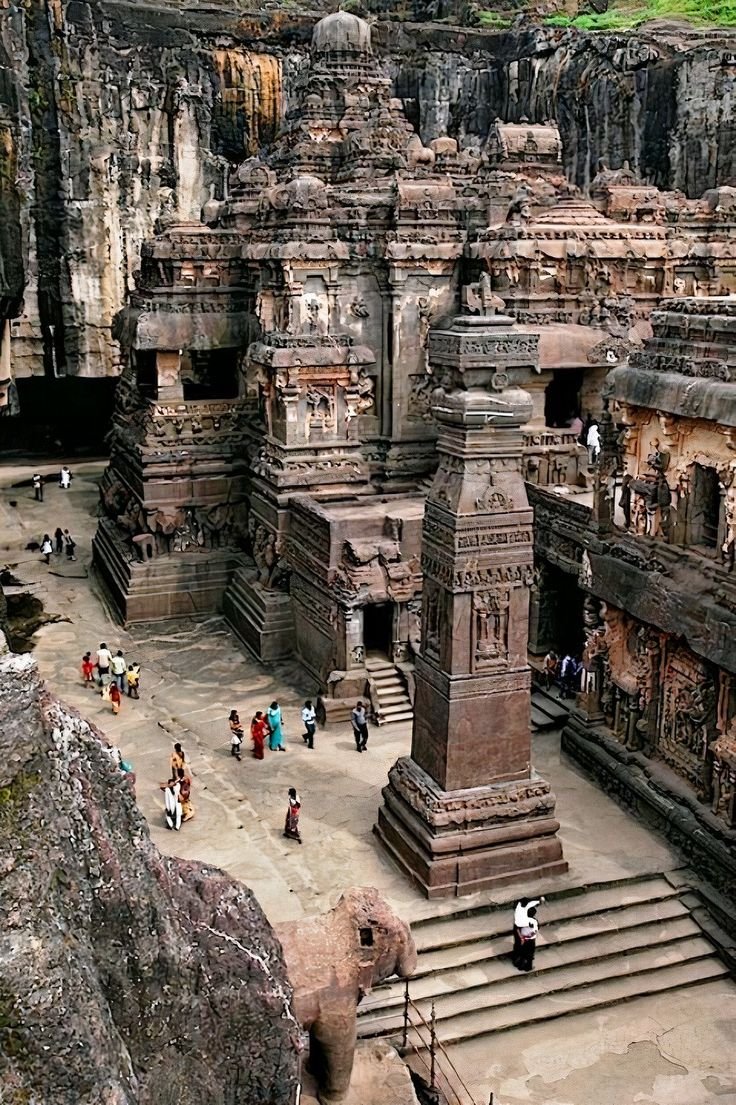
Islam is older than Hinduism

149
29
802
47,798
22h
What a dumb idiot one has to be to completely miss why those examples were used.
They were cited precisely to demonstrate that Muslims still care about other Muslims across borders, languages, ethnicities and nationalities. Even if we use the examples you want, the point remains exactly the same. Arabs care about Palestine, Turks care about Syrians, Indonesians care about the Rohingya.
The problem isn't ethnicity or race but the political leadership. People may hate governments and rulers, but that doesn't mean they stop caring about fellow Muslims. In fact, your own examples prove the very point you're trying to refute. 😭😂

Not even commenting on the pathetic wordcelling, but why did he deliberately pair Indonesia with Palestine (not the Rohingya), Turks with Kmir (not Syrians) & Arabs with the Rohingya (not Palestinians)? Because he himself knows the reality, right? 😂
4
2
36
2,979