
Joined June 2023
- Tweets 4,440
- Following 79
- Followers 230
- Likes 5,402
56 Photos and videos
Pinned Tweet

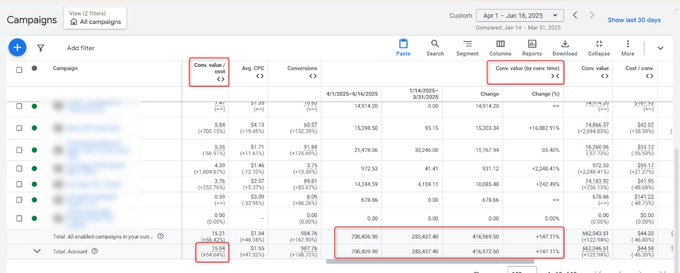
I added $417K in revenue to this ecom brand in 75 days
15x ROAS, 80% cold traffic
the brand now does $500K /mo and generates an additional $200K/mo from high-ticket leads I built inside the same Google Ads account
here's the full story
i took over this account when the brand was doing $50K/mo
first 3 months were foundation work
no dramatic results, no viral screenshots, just fixing everything that was broken underneath
80% of budget was going to their lowest ticket products
the high AOV products that actually made the business money were getting almost zero spend
google was optimising for easy conversions not valuable ones
nobody had ever told it which products actually mattered
so that's where i started
i restructured the entire budget around high margin high AOV products using custom labels and margin-based ROAS targets
then i looked at the ICP and realised something important
this buyer doesn't impulse buy
they research, compare, read, and come back multiple times before committing
sending cold traffic straight to a product page was killing conversion rate before it had a chance
i built advertorials - content that spoke directly to the problems this buyer was experiencing and positioned the product as the logical solution
cold traffic landed on education first, product page second
by the time they hit checkout they were already sold
then i launched youtube prospecting with long form in-stream ads
not shorts, not 6 second bumpers
the ICP needs time to understand why this product is different from everything else they've seen
most people won't do this because month 1 youtube prospecting looks expensive and the returns aren't immediate
i did it anyway because i knew what the funnel would produce once it warmed up
then i added lead forms for the highest ticket products
this created a second revenue channel inside the same google ads account
warm inbound inquiries from serious buyers who wanted to talk before committing to a large purchase
those leads get called, qualified, and closed
that channel now generates $200K /mo in high ticket revenue completely separate from ecom sales
after 3 months of foundation work the account was ready to scale
next 75 days
$417K in new revenue added
15x ROAS on cold traffic
brand now doing $500K /mo
$200K /mo additional from converted leads
same brand, same products, same website
different budget allocation, different campaign structure, different path to purchase
google ads is the most underused growth channel for serious ecom brands
most people give up before the foundation is ready to scale
2
16
2,095
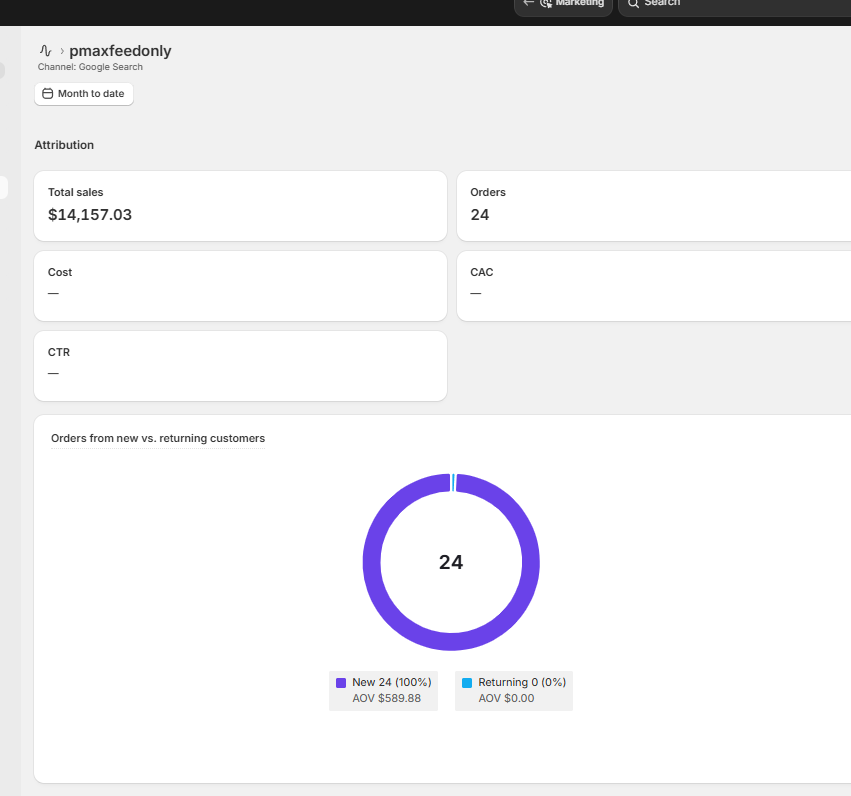
the pmax haters said it only gets returning customers - 100% new customers in the first 15 days of this month, 3x more than the same period last month, and not a single returning order in the mix.
24 orders. $14,157 in sales. $589 AOV. zero returning customers.
first 15 days of last month - 8 new customers from google.
first 15 days of this month - 24. all new. all cold. all from a pmax feed only campaign.
same 15 day window. 3x the new customers. and the month isn't even halfway done.
pmax by default will hunt down your existing customers, claim credit for organic sales, attribute email revenue to itself, and report a CPA that has nothing to do with reality. that version of pmax is a remarketing channel dressed up as prospecting.
but that's a setup problem. not a platform problem.
when the feed is built to attract cold buyers - right titles, right attributes, right product groups structured around search intent - google knows exactly which auctions to enter and which buyers to go after.
when the conversion action is new customers only, pmax stops recycling and starts finding genuinely new people.
when the tROAS is set low enough to give google permission to go after cold traffic, the new customer rate follows.
we're only halfway through the month.
at this point it's just dumb to not be on google if you're an ecom brand.
the buyers are there. the intent is there. the platform can find new customers at scale.
you just need someone who actually knows how to build it.
2
2
112
Facts. Dead giveaway for a cookie cutter google ads approach
Jun 13

the reason your agency charges hourly is because they suck. nobody should work with an agency based on hourly billable for google ads
1
4
538
you've been increasing your google budget every month fighting over the same tiny pool of bottom funnel buyers as every competitor in your category.
most google ads accounts are fighting over the bottom 5% of their market and calling it a scaling strategy.
when you point every campaign at a standard purchase event with no new customer constraints, no conversion action specificity, no funnel separation - you're only reaching buyers who are already aware, already decided, and already at the bottom.
people who already know your brand. people who've already researched the category. people who were going to buy from someone in the next 48 hours regardless of what you did.
that's a tiny pool.
and every competitor in your category is fighting over the exact same tiny pool with the exact same campaign structure pointed at the exact same bottom funnel buyers.
so you increase the budget. CPCs go up because everyone else increased their budget too. ROAS drops. you pull back. they pull back. nothing changes.
this is why you've been stuck at the same revenue for six months while spending more and more to stay there.
the brands actually scaling on google are not winning because they found a smarter bid strategy or a better campaign structure for the bottom 5%.
they're winning because they built a structure that intercepts buyers at every stage of awareness.
the buyer searching "what causes lower back pain" is not the same buyer as "best lumbar support cushion for office chair."
the buyer searching "running shoes" is not the same buyer as "hoka bondi 8 vs new balance 1080 wide."
each of these is a different person at a different stage with a different message that converts them.
most accounts treat all of them the same. same campaign. same landing page. same conversion event. same bid strategy.
and then conclude that google doesn't scale past a certain point.
google scales. the structure just needs to be built for more than the 5% who were already going to buy.
1
66
your competitor with a worse product is beating you in the shopping auction because their title answers a question yours never asks.
most google ads specialists treat a shopping title like a filing system.
category. colour. size. brand. done.
the brands winning in shopping treat it like the opening line of a sales conversation.
here's the difference.
a luxury hat brand was running standard shopping ads. the titles were basic. the feed was functional. the campaigns were running. nothing was working particularly well.
then someone asked a different question before touching a single campaign setting.
what's the actual story of this product. where does it come from. who wears it. what does owning it mean to the buyer.
handmade since the 1700s. crafted with techniques from the 1400s. worn by oprah. featured in vogue.
none of that was in the shopping feed. none of it was on the landing page. none of it was in the ad.
the buyer was seeing "hat - brown - one size" while the actual story of the product was sitting unused in the background.
when the story got told - in the feed titles, in the descriptions, in the landing page - revenue went up 226% in 8 days.
same products. same google account. same budget.
different message.
this is the thing most google ads specialists never think about once. the shopping title is not a metadata field. it is the first thing a buyer reads before deciding whether to click or scroll past.
and the buyer is a human being with emotions making a decision about whether this product is for someone like them.
the brand that answers that question in the title wins the click even at a higher CPC than the competitor next to them.
your shopping feed is full of product specs dressed up as titles.
your competitor with a worse product and a better story is beating you in the auction right now.
and no bid strategy is going to fix that.
2
3
88
you've been told your google ads problem is a bidding problem when every agency that said that was just showing you the easiest thing to change in the account.
no bidding strategy is going to cure a bad business model.
i've said this for years but it still doesn't land the way it should because every agency report leads with bidding strategy.
tROAS. smart bidding. portfolio bidding. max conversions. target CPA.
all of it is the last 10%.
the 90% is everything that comes before it.
the feed. is google matching your products to the right search terms or is it guessing because your titles are built like a filing system.
the conversion tracking. is the number google is optimising toward the real CPA or is it a blended fiction of warm traffic, returning customers, and organic sales that were going to happen anyway.
the offer. does the margin on your product actually support the CPC in your category or are you structurally losing money on every click regardless of how smart the bidding is.
the landing page. does the page match what the buyer was thinking when they typed the search term or did you send a high awareness buyer to a page that assumes they've never heard of the category.
the campaign structure. are your campaigns built around how buyers actually search or around your internal product categories.
when all of these are wrong, the bid strategy is irrelevant.
google's algorithm is extraordinarily powerful when it has clean data, the right conversion action, and a product that makes economic sense at the CPC.
when any of those three are broken, the algorithm optimises harder toward the wrong outcome.
i've walked into accounts where the agency had the bidding dialled perfectly and the account was still losing money because the feed was broken from day one and every smart bidding decision had been built on top of that broken foundation for months.
the founders in those accounts weren't stuck because of the bid strategy.
they were stuck because nobody had ever fixed the thing underneath it.
if your ROAS has been stuck for six months and you've changed the bid strategy three times - the bid strategy was never the problem.
2
5
124
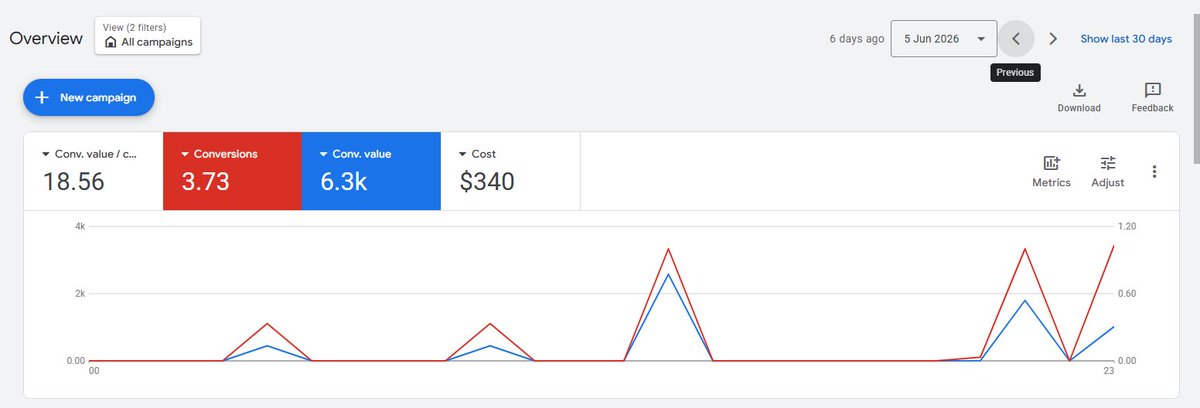
this brand lost money on google for a year with multiple specialists working on it - now hitting $4,000 to $5,000 days consistently at 5x ROAS.
$340 in spend. $6,300 in revenue. 18.56x ROAS on this day.
same account. same products. same market.
different foundation.
a year of specialists came through this account. every one of them went straight to the campaigns. bid strategies, ad copy, audience signals, budget adjustments. the usual playbook.
none of them fixed what was actually wrong.
the feed was broken. the conversion tracking was measuring the wrong thing. the campaign structure was built around internal product categories instead of how buyers actually search.
so every campaign they launched was optimising on bad data, showing the wrong products to the wrong people, and reporting numbers that had no relationship to what shopify was showing.
the account looked like it didn't work because nobody had ever built it to work.
walked in. fixed the feed. rebuilt the conversion tracking. restructured around buyer intent. added proper custom labels for margin segmentation.
then launched campaigns on top of a foundation that was actually worth launching on.
profitable from day one. consistent ever since.
$4,000 to $5,000 days on $425 daily budget. day after day. no surprises. no resets. just the algorithm doing its job because it finally has clean data to work from.
a year of specialists couldn't do it.
one person who fixed the foundation before touching a campaign could.
if your google ads account has had multiple people work on it and nothing has changed - the foundation has never been fixed.
dm me.
2
5
161
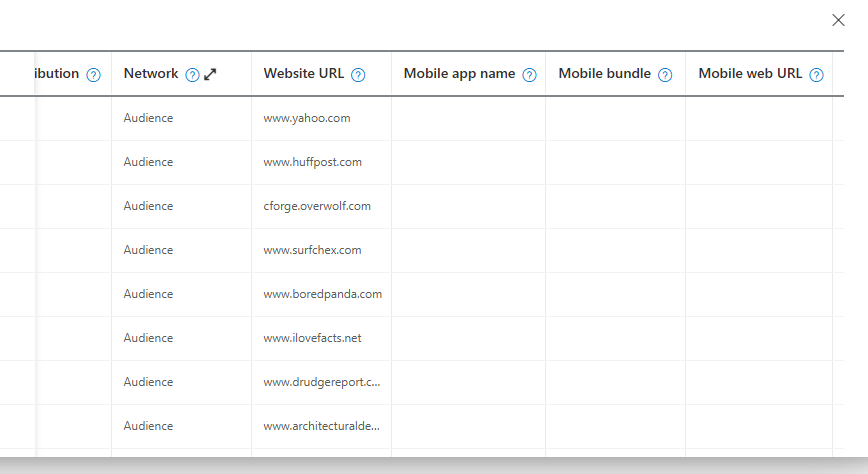
found $40,000 in wasted spend in a bing ads account in five minutes - it was all going to audience network placements the client never knew existed.
most brands running microsoft ads are bleeding budget on the audience network and have no idea it's happening.
bing is sneaky about this. your campaigns are opted into the audience network by default and the placements they're serving on look nothing like what you signed up for.
yahoo.com. huffpost.com. boredpanda.com. ilovefacts.net. drudgereport.com.
these are the sites eating your budget right now while you're checking your search ROAS and wondering why conversions are low.
the fix takes five minutes.
go to reports. pull your website url report. look at where your ads are actually showing. identify every irrelevant site that has nothing to do with a buyer actively searching for your product.
then go to tools → content suitability → website control lists. build an exclusion list. add it to your campaigns.
done. tens of thousands of dollars in wasted spend stopped immediately.
the audience network on bing is not the same as google display. the quality is significantly lower and the intent of the person seeing your ad has nothing to do with what you're selling.
search traffic on bing is legitimate. the audience network is where budgets go to disappear quietly.
this is the first thing i check in every microsoft ads account before touching a single campaign.
most agencies never check this report once.
4
5
155
Rudra | Google Ads for Ecom retweeted
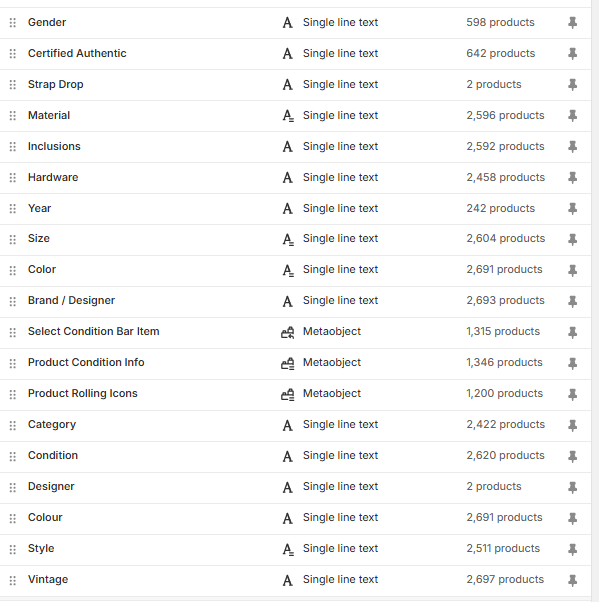
most brands upload the minimum required fields in their shopping feed and then wonder why their ads don't convert - this is the gap they're missing.
google uses every attribute you give it to understand what your product is, who should see it, and when to show it. the more signals you feed it, the better it can match your product to the exact search term from the exact buyer at the exact moment they're ready to buy.
gender. material. color. size. condition. style. vintage. certified authentic. hardware. year. brand etc
every single one of these is a signal that helps google put your product in front of the right buyer instead of guessing.
and in high ticket categories - luxury, automotive, jewellery, apparel - these attributes are the difference between showing up for "handbag" and showing up for "vintage chanel caviar leather classic flap medium black."
one of those searches is a browser. the other one is a buyer with a credit card ready.
map every shopify metafield to a valid identifier in your merchant center feed.
your competitors are not doing this. most agencies don't know how to do this. the ones who do are holding positions in the shopping auction that nobody else can touch because the signal quality is so much higher than everything around them.
this is not a campaign setting. this is not a bidding strategy.
this is feed work. the thing that gets done before any campaign goes live.
and it's the single biggest lever most shopping accounts have never pulled.
2
1
5
216
Rudra | Google Ads for Ecom retweeted
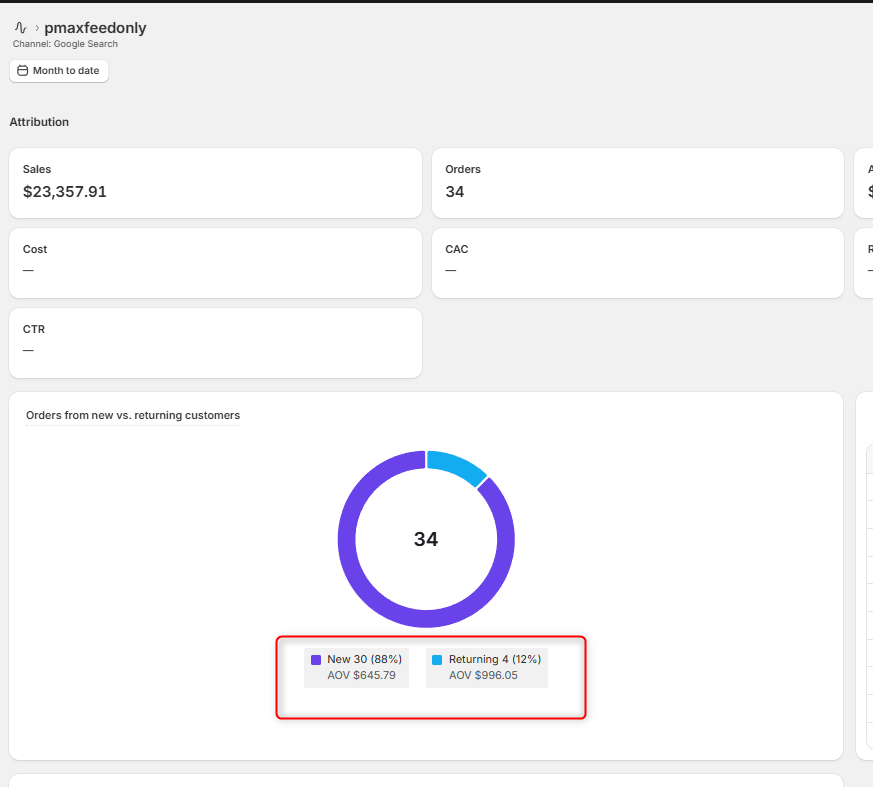
everyone saying pmax only gets returning customers hasn't figured out how to build the feed - here's what 88% new customer rate actually looks like.
88% new customers from a pmax feed only campaign this month.
$23,357 in sales. 34 orders. 30 of them new customers at $645 AOV.
and this is just one campaign. there are many running like this.
the people saying pmax only recycles warm traffic and existing customers are not wrong because the platform doesn't work. they're wrong because they never figured out how to make it work.
pmax will absolutely hunt down your existing customers if you let it. that's what it does by default when the conversion action is pointed at standard purchases and the feed isn't built to attract new buyers.
but that's a setup problem. not a platform problem.
when the feed is built properly - right titles, right attributes, right product groupings, right custom labels separating high margin from low - google knows exactly which searches to enter and which buyers to go after.
the key is being able to roll cold traffic search terms into the feed from day one and then use that data to get the exact search terms you want showing up consistently.
don't even need to exclude search terms because the feed work means perfect match quality from the start.
outsiders look at this and think it's easy. it's not. this is the result of years of compounding work across dozens of accounts - understanding what works, what doesn't, and how it's different for every business.
when the conversion action is set to new customers only, pmax stops recycling and starts prospecting. when the product groups are structured around buyer intent rather than internal categories, the new customer rate follows.
this is not lucky. this is not a one-off.
the pmax haters have been saying the same thing for three years. the platform has changed. the capabilities have changed. the results are showing something different.
anyone still telling you google ads is only a warm traffic channel is just exposing how long it's been since they actually understood what they were managing.
2
1
4
179
Rudra | Google Ads for Ecom retweeted
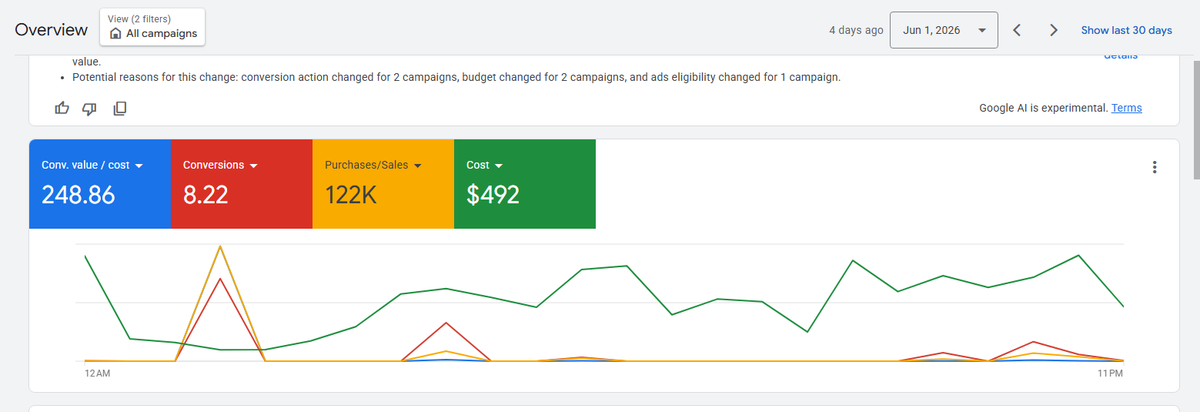
$122K in a single day at 248x ROAS - two weeks in, $492 spent, and the feed work across multiple countries is what made it happen.
luxury high ticket brand. the account had never seen a day like this from google before.
walked in and spent 8 hours on the feed before launching anything.
titles aligned properly. descriptions built around how buyers in each market actually search. meta tags fixed. product data structured so google understood exactly what each product was, who it was for, and which market it belonged to.
then fixed the country-specific feed and campaigns separately for each market.
this is where most accounts leave the biggest money on the table.
everyone targets the same one or two markets because that's where the brand started. nobody asks the question - what if there's a country with 5x the search volume and massive demand for exactly what you sell.
the buyers are already there. they're already searching. they just need the right feed structure and localised campaigns to capture them.
get that right and a market that was completely invisible starts printing revenue from day one.
multi-country isn't complexity for complexity's sake. it's finding the markets where demand already exists and showing up properly instead of fighting over the same saturated market as every competitor.
then launched youtube feed only beta campaigns alongside the search and shopping structure.
two weeks later. first $122K day in the brand's history from google.
why fight for scraps in one market when five others are waiting.
the right market with the right feed is worth more than the perfect campaign in the wrong one.
if you're a high ticket brand only running in 1-2 markets dm me.
4
1
7
226
Google is best for high ticket products($500 ). Running multiple campaigns for my clients with ROAS of 100x on cold terms.

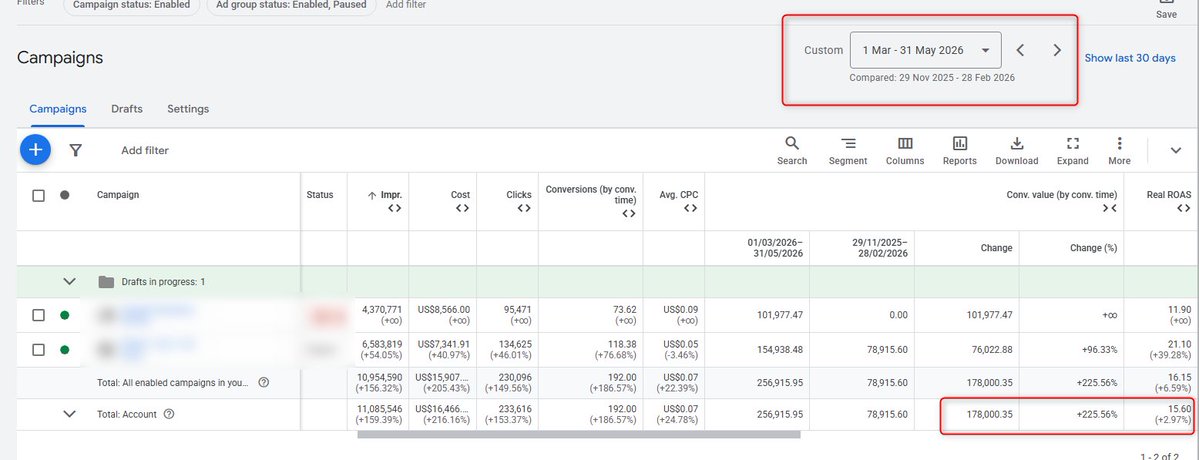
$178,000 added in 3 months at 15.6x ROAS while scaling spend 216% without losing efficiency - this is what high ticket on google looks like when it's done right.
when i took over this account the brand was stuck at $50K a month. struggling to scale. didn't want to spend more on ads because nothing they'd tried had given them confidence that more spend meant more revenue.
that fear made sense. when the structure is wrong, more spend just means more waste. and they'd already experienced that.
so the first job wasn't scaling. it was building something worth scaling.
rebuilt the foundation. feed, structure, conversion tracking, campaign architecture built specifically for high ticket. not the same setup you'd run for a $30 product. a completely different approach built around how a buyer making a $1200 plus decision actually searches and converts.
then started increasing spend slowly. watched the ROAS hold. increased again. watched it hold again.
three months later.
$178,000 in added revenue. 15.6x ROAS. spend up 216%. efficiency unchanged.
$50K a month became $100K a month. highly profitable the entire way.
now the target is $250K a month and the structure to get there is already in place.
this is the brand that didn't want to spend more on ads three months ago.
high ticket ecom is the best category on google ads. the buyer has intent, has budget, and is ready to decide. google puts your product in front of them at the exact moment that decision is happening.
most brands running high ticket on google are wasting that moment with broken infrastructure and people who don't understand the difference between a $30 product and a $600 one.
solo operator. one account. $178K added in 3 months.
$250K a month is next.
3
6
426
$178,000 added in 3 months at 15.6x ROAS while scaling spend 216% without losing efficiency - this is what high ticket on google looks like when it's done right.
when i took over this account the brand was stuck at $50K a month. struggling to scale. didn't want to spend more on ads because nothing they'd tried had given them confidence that more spend meant more revenue.
that fear made sense. when the structure is wrong, more spend just means more waste. and they'd already experienced that.
so the first job wasn't scaling. it was building something worth scaling.
rebuilt the foundation. feed, structure, conversion tracking, campaign architecture built specifically for high ticket. not the same setup you'd run for a $30 product. a completely different approach built around how a buyer making a $1200 plus decision actually searches and converts.
then started increasing spend slowly. watched the ROAS hold. increased again. watched it hold again.
three months later.
$178,000 in added revenue. 15.6x ROAS. spend up 216%. efficiency unchanged.
$50K a month became $100K a month. highly profitable the entire way.
now the target is $250K a month and the structure to get there is already in place.
this is the brand that didn't want to spend more on ads three months ago.
high ticket ecom is the best category on google ads. the buyer has intent, has budget, and is ready to decide. google puts your product in front of them at the exact moment that decision is happening.
most brands running high ticket on google are wasting that moment with broken infrastructure and people who don't understand the difference between a $30 product and a $600 one.
solo operator. one account. $178K added in 3 months.
$250K a month is next.
2
4
553
Pmax is not a warm traffic tool and helping multiple stores scale this quarter.
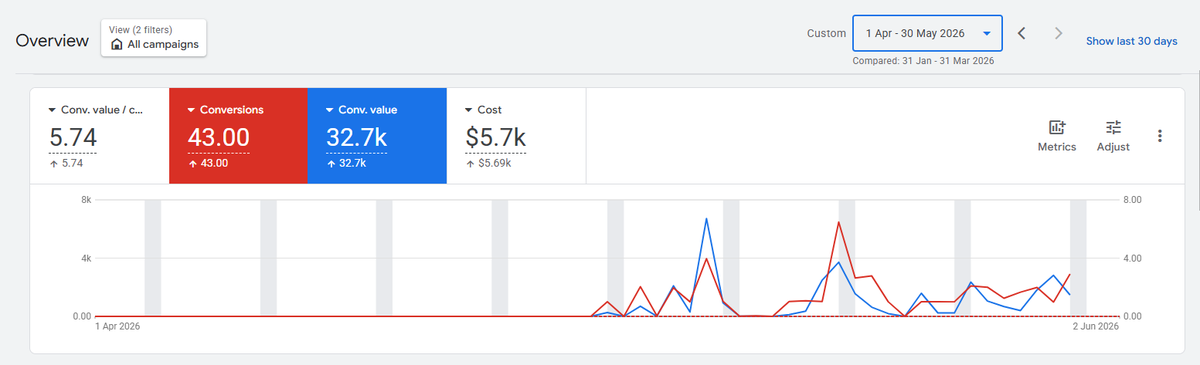
multiple specialists spent a year on this account and couldn't make it work - $32,700 at 5.74x ROAS in 30 days and we're just getting started.
this is a luxury automotive parts brand. high AOV. high intent buyers. genuinely one of the best categories google ads was built for.
and it was bleeding money every single month.
walked in and didn't touch a single campaign for the first 12 hours.
spent those 12 hours on the feed.
wrong titles. missing attributes. no structured data telling google what these products actually were or who should be seeing them. google was trying to match luxury high-ticket automotive parts to search terms using data that was incomplete, inaccurate, and built by someone who had never thought about buyer intent once.
the campaigns weren't the problem. the feed was the problem.
and every specialist before me had launched campaigns without fixing it first.
so before anything else - proper titles built around how buyers actually search for these parts. missing attributes filled in. custom labels added to separate high margin products from everything else. feed rebuilt to give google exactly the signal it needed to match the right product to the right search at the right moment.
then conversion tracking rebuilt from scratch. then the structure. then the bidding.
profitable from day one.
30 days later. $32,700 in revenue. 5.74x ROAS. 43 conversions. double what the client expected.
the account that specialists had written off for a year is now one of the most efficient accounts i'm running.
you cannot optimise your way out of a broken foundation. every bid adjustment, every budget change, every new campaign structure built on top of a broken feed is just expensive noise.
fix the foundation first. the campaigns are the last thing you touch.
if your google ads account has had multiple people working on it and nothing has changed - the foundation has never been fixed.
scaling this to $100K a month from google only. will update when we get there.
dm me if you want the same done on your account.
1
1
136
multiple specialists spent a year on this account and couldn't make it work - $32,700 at 5.74x ROAS in 30 days and we're just getting started.
this is a luxury automotive parts brand. high AOV. high intent buyers. genuinely one of the best categories google ads was built for.
and it was bleeding money every single month.
walked in and didn't touch a single campaign for the first 12 hours.
spent those 12 hours on the feed.
wrong titles. missing attributes. no structured data telling google what these products actually were or who should be seeing them. google was trying to match luxury high-ticket automotive parts to search terms using data that was incomplete, inaccurate, and built by someone who had never thought about buyer intent once.
the campaigns weren't the problem. the feed was the problem.
and every specialist before me had launched campaigns without fixing it first.
so before anything else - proper titles built around how buyers actually search for these parts. missing attributes filled in. custom labels added to separate high margin products from everything else. feed rebuilt to give google exactly the signal it needed to match the right product to the right search at the right moment.
then conversion tracking rebuilt from scratch. then the structure. then the bidding.
profitable from day one.
30 days later. $32,700 in revenue. 5.74x ROAS. 43 conversions. double what the client expected.
the account that specialists had written off for a year is now one of the most efficient accounts i'm running.
you cannot optimise your way out of a broken foundation. every bid adjustment, every budget change, every new campaign structure built on top of a broken feed is just expensive noise.
fix the foundation first. the campaigns are the last thing you touch.
if your google ads account has had multiple people working on it and nothing has changed - the foundation has never been fixed.
scaling this to $100K a month from google only. will update when we get there.
dm me if you want the same done on your account.
2
5
302
there's a sequencing mistake almost every ecom brand makes with google ads that burns budget and makes the channel look like it doesn't work - and it has nothing to do with the campaigns themselves.
google can create demand now. the placements exist. demand gen, youtube, discovery - all of it is real and it works.
but timing is everything. and most smaller ecom brands are getting the timing completely wrong.
here's what's actually happening.
a brand doing $50K a month hears that the big guys are running full funnel google strategies. demand gen for awareness, youtube for cold prospecting, search and shopping for capture. they copy the structure. they launch demand gen. they run youtube in-stream. nothing converts and they blame google.
but the brands doing this profitably didn't start there.
they started at the bottom.
high intent search. optimised shopping feed. clean attribution. real CPA from shopify not from google's dashboard. they captured every buyer already actively searching for their product or category. they made that profitable first.
then - and only then - did they move upstream into demand creation.
because demand creation only works when the capture infrastructure underneath it is solid. you can drive all the awareness in the world but if your bottom of funnel is broken, leaking attribution, sending traffic to the wrong landing page, running on a feed full of errors - none of that awareness converts into revenue.
the sequence matters more than the channels.
bottom of funnel first. capture what's already there. make it profitable. build real margin.
then move upstream into demand gen and youtube prospecting when you have the foundation to convert what you create.
jumping straight to prospecting before you've maxed out what google is actually best at is how brands burn budget and conclude google doesn't work.
google works. the timing was just wrong.
2
88
Rudra | Google Ads for Ecom retweeted
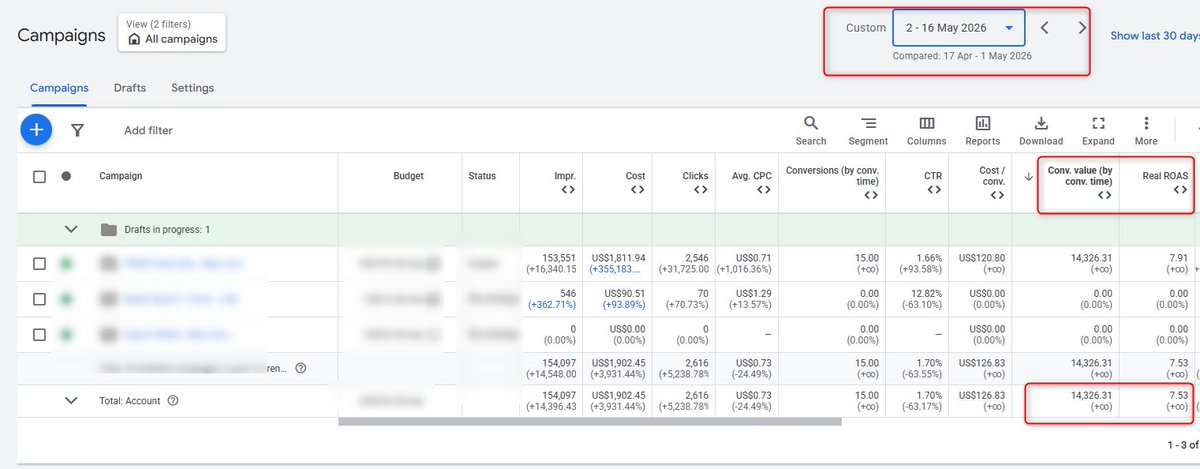
every specialist who tried this account before me launched campaigns first - i spent 12 hours fixing the feed first and generated $14,326 at 7.53x ROAS in two weeks
$14,326 at 7.53x ROAS in two weeks on an account that had been losing money for a year.
multiple specialists had tried their hand on this account before me. a year of failed attempts, wasted budget, and the founder getting told google ads just doesn't work for luxury automotive parts.
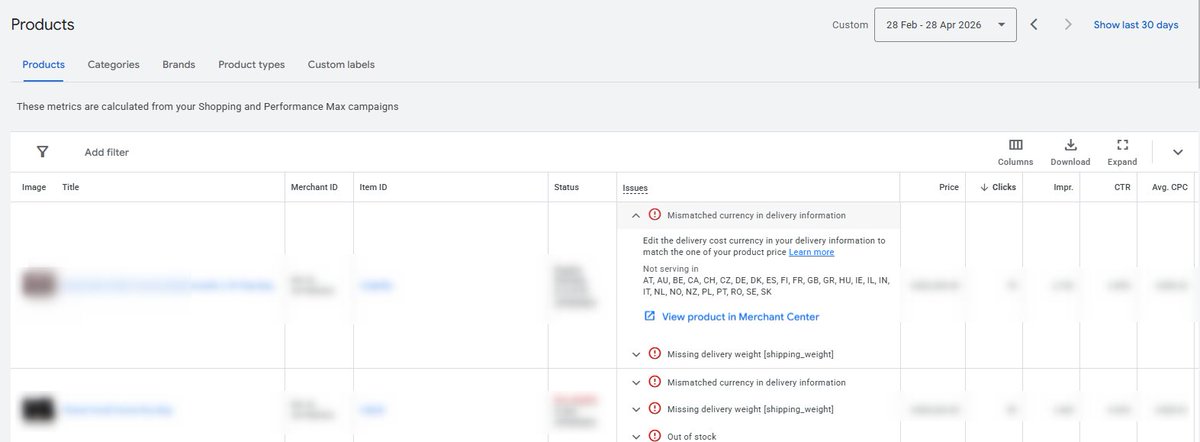
it does work. the feed was just completely broken.
walked in and the first thing i did was spend 12 hours on the product feed.
wrong titles. missing attributes. no structured data telling google what these products actually were or who should be seeing them. google was trying to match luxury high-ticket automotive parts to search terms using data that was incomplete, inaccurate, and built by someone who had never thought about buyer intent once.
the campaigns were irrelevant because the feed was irrelevant. no bid strategy, no campaign structure, no amount of budget reallocation was going to fix that.
so before touching a single campaign, 12 hours went into the feed.
proper titles built around how buyers actually search for these parts. missing attributes filled in. custom labels added to separate high margin products from everything else. feed optimised to give google exactly the signal it needed to match the right product to the right search at the right moment.
then rebuilt the conversion tracking from scratch. then the campaign structure. then the bidding.
profitable from day one.
this is a luxury automotive parts brand. high AOV. high intent buyers. genuinely one of the best categories google ads was built for.
a year of specialists couldn't make it work because none of them spent 12 hours understanding what the feed actually needed before they launched their first campaign.
two weeks in. new campaigns added this week to scale the structure.
$100K a month is the next stop.
1
4
133