
Papa; husband; Jew; co-founder @MSFTResearch Plural Tech. Collab., @RadxChange, @PluralityInst; Faith, Family, Tech; co-author Radical Markets & @PluralityBook
Joined February 2012
- Tweets 22,247
- Following 356
- Followers 26,838
- Likes 1,482
126 Photos and videos



(((E. Glen Weyl/衛谷倫))) ⿻ 🇺🇸/🇩🇪/🇹🇼 retweeted

Jun 12
“The greatest risk for the AI industry today is not rules but uncertainty,” writes @glenweyl in a guest essay. “The stabilising and consistently influential force of ancient traditions offers technology the roots it needs to grow” economist.com/by-invitation/…
6
13
30
19,649
(((E. Glen Weyl/衛谷倫))) ⿻ 🇺🇸/🇩🇪/🇹🇼 retweeted

Jun 12
@glenweyl makes some good points here, on @Pontifex 's encyclical. If AI is to be regulated by anything, it should be established moral wisdoms and not political whim. economist.com/by-invitation/…
2
2
543
(((E. Glen Weyl/衛谷倫))) ⿻ 🇺🇸/🇩🇪/🇹🇼 retweeted

Jun 12
Plenty to ponder in @glenweyl’s piece “Silicon Valley needs to get God.”🪷
Gratitude to my good friend & co-creator Glen for the shout-out.🙏
Empathy & humanism are the cornerstones of our #TaiwanModel🇹🇼-inspired #CivicAI & 6⃣Pack of Care.
▶️civic.ai/
#LLAP🖖
Jun 11

Tech must reorient towards moral purpose for it—and humankind—to flourish, argues Glen Weyl economist.com/by-invitation/…
1
10
58
6,897

An honor to appear in my favorite magazine, and making the case for something deeply important to me. Thank you @TheEconomist!
Jun 11
Tech must reorient towards moral purpose for it—and humankind—to flourish, argues Glen Weyl economist.com/by-invitation/…
3
29
3,296
(((E. Glen Weyl/衛谷倫))) ⿻ 🇺🇸/🇩🇪/🇹🇼 retweeted
The smartphone has done more damage to family and culture in just a few short years than leftism achieved in its multi-decade march through the institutions. Its danger is not in corrupting the youth through sophistry (though there’s plenty of that), but in changing the very ecology of human interaction, dulling the mind, and diminishing our capacity for love, marriage, and family life.
Jun 8

New study: Did the introduction of the iPhone causally reduce fertility?
Yes, by more than 1/3.
New study: nber.org/papers/w35310?utm_c…
3
6
668
Cool opportunity to collaborate with @OpenAI: openai.com/form/economic-res…
5
9
1,182
(((E. Glen Weyl/衛谷倫))) ⿻ 🇺🇸/🇩🇪/🇹🇼 retweeted

Jun 4
With AI, the fact collector and checker tune the models and editors train the models. @CJP_2029 can become India's editor and critic with digital public problem finding and collaborative solving.
Follow @audreyt, @g0vtw, @PluralityInst, @glenweyl, @VitalikButerin, @RadxChange.
1
2
2
670
Que honor!
Jun 1

📑 La encíclica del Papa y el futuro de la IA.
Escucha a @pabloaruzs, CEO @XelevaGroup y Glen Weyl, economista y escritor, en ¡Qué tal Fernanda! con @qtf.
2
761
This is some of the most competent and admirable people I know doing something incredibly important and ambitious with a clear ethical framework. I can't wait to see what they achieve!
May 28

We’re excited to introduce Inherent, a lab designed from scratch to build AI agents that discover new knowledge.
The coming era of machine-driven scientific inquiry demands a new kind of research institution and a new kind of AI.
To achieve our mission, we live within the experiment, recursively self-improving the entire research organisation. We investigate questions including:
- What does ‘AI taste’ look like in the sciences, and how can we build an institution that embraces this new aesthetic of discovery?
- What new kinds of human-machine teaming will make the most of AI that can truly innovate?
- How can we build recursive self-improvement at the collective level that continually increases human agency over outcomes?
We have just closed a $50m seed round led by @IndexVentures and @radicalvcfund, with participation from other outstanding investors including NVentures (@nvidia's venture capital arm), @buildexante, Metaplanet, Macroscopic, @MythosVentures, Charlie Songhurst, @chalfs, @jluan, @dwarkesh_sp, @Thom_Wolf, @j_foerst and @maxjaderberg. We are advised by @matthewclifford.
Inherent is a Public Benefit Corporation headquartered in London.
1
10
1,715
Go @divyasiddarth go!

AI is likely to reshape the economy in profound ways, creating both challenges to navigate and opportunities to improve people’s lives.
Today, the OpenAI Foundation is announcing an initial $250M commitment to building secure and abundant economic futures in the age of AI.
We’ll focus on measurement and forecasting, supporting communities navigating transition, and long-term economic security, including new approaches to ensuring AI’s value is shared broadly.
openaifoundation.org/news/ec…
1
10
3,135
Read @Pontifex’s encyclical, the most important document for a broad audience on AI thus far. There is much more it could have done and it misses on several things but I thank God for giving us this gift.
1
1
8
1,286
(((E. Glen Weyl/衛谷倫))) ⿻ 🇺🇸/🇩🇪/🇹🇼 retweeted

May 25
156
557
2,939
272,704
(((E. Glen Weyl/衛谷倫))) ⿻ 🇺🇸/🇩🇪/🇹🇼 retweeted

May 25
I am not Catholic — I’m an evangelical — but I am grateful to @Pontifex Pope Leo XIV for Magnifica Humanitas. It is a Catholic document, but its questions about truth, work, human dignity and war belong to us all. There are aspects I see very differently, and others where I find much to admire. We are in the middle of history, not at its end, and this is the start of a conversation — one the Pope of the Catholic Church meaningfully moved along today. I especially commend my friends at @AnthropicAI for showing up in person, and Chris Olah in particular, for welcoming the perspectives of communities of faith, including evangelicals, with open arms and an open mind. I am more optimistic than most. I believe we are going to build a profoundly beautiful, amazing future for the world. It is, however, a choice. We must build it.
May 25

Humanity, created by God in all its grandeur, is today facing a pivotal choice: either to construct a new Tower of Babel or to build the city in which God and humanity dwell together. In Jesus Christ, this humanity in its grandeur becomes the Way, the Truth and the Life, opening the path for each of us to grow toward fullness. #MagnificaHumanitas
vatican.va/content/leo-xiv/e…
12
20
265
22,072
Another wonderful contribution to the discussion of AI's future by the Faith Family and Technology Network, especially led by the brilliant Waleed Kadous, on the "missing middle" in @AnthropicAI Institute's analysis of social impacts of AI: faithfamilytech.org/fftn-blo…
1
500
(((E. Glen Weyl/衛谷倫))) ⿻ 🇺🇸/🇩🇪/🇹🇼 retweeted

May 21
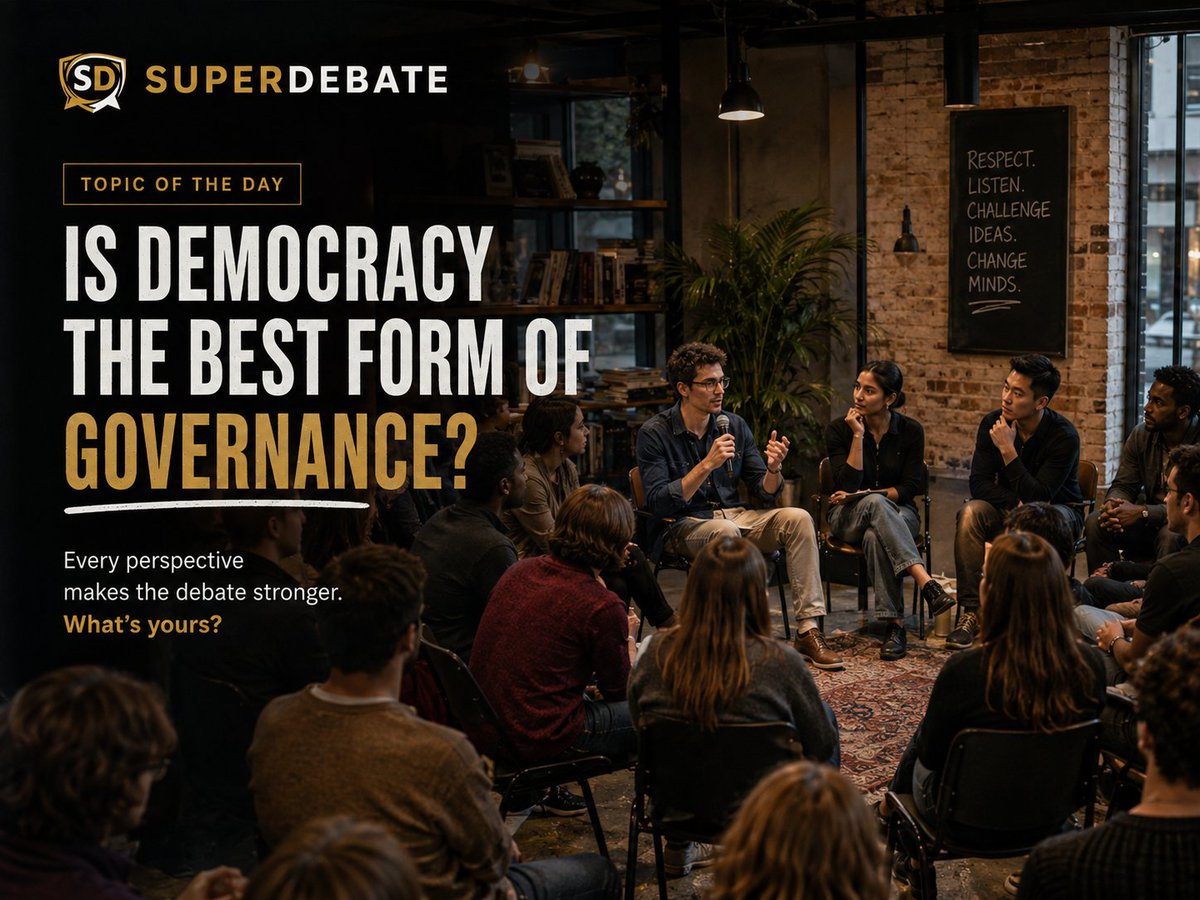
Is democracy the best form of governance?
Or is it just the best system we have learned to defend?
Questions worth debating:
Does majority rule create legitimacy?
Are voters informed enough?
Do media and algorithms distort consent?
Could better systems outperform democracy in some cases?
What’s your take?
Defend it, challenge it, or propose something better.
@curtis_yarvin @glenweyl
1
2
2
563
(((E. Glen Weyl/衛谷倫))) ⿻ 🇺🇸/🇩🇪/🇹🇼 retweeted

May 18
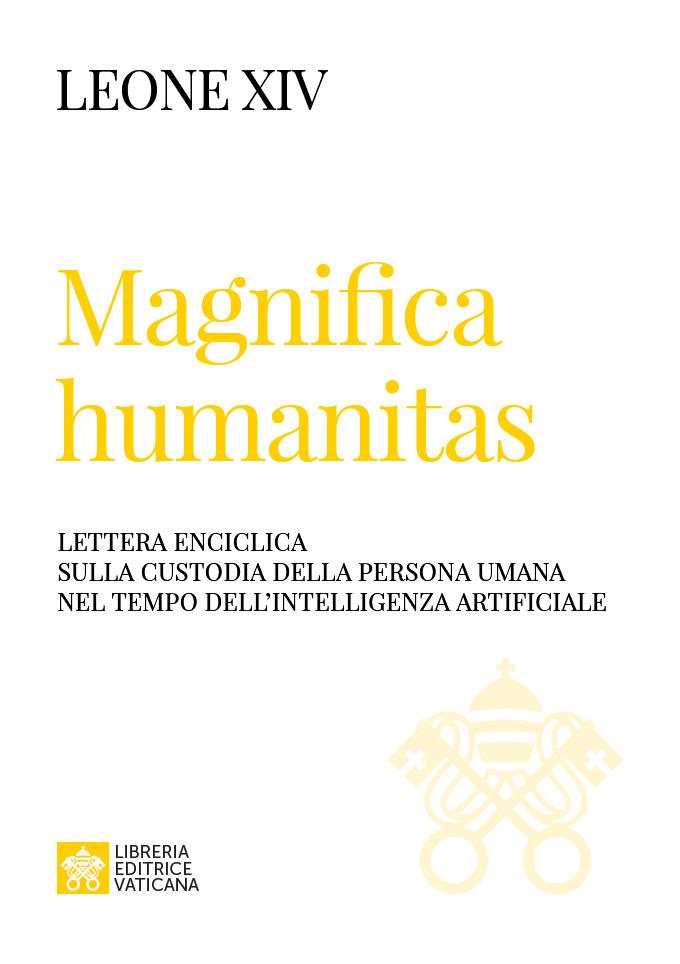
Some preliminary thoughts on "Magnifica humanitas," the Pope's upcoming encyclical on the care of the human person in the age of artificial intelligence, to be released at the Vatican on May 25.
First, AI has been a concern of the Holy Father since at least the beginning of his pontificate, mentioned several times early on in his papacy. Just a few days ago, he established a new papal commission, bridging several dicasteries, to address this topic; and he also mentioned the topic in his recent address for the World Day of Communications. So the topic is not a surprise. The question will be: what other topics will be included: workers rights? labor unions? capitalism more broadly?
Second, as someone who studied mathematics, Pope Leo XIV has perhaps a firmer grasp on this issue than some might imagine of a pope.
Third, that the Holy Father will personally present the document on May 25 in the Paul VI Aula (where the Synod convened) is highly unusual. To me (and I have no inside information on this, nor have I read the document) it may indicate the Holy Father's deep personal interest in the topic, and a desire to ensure that the media "get it." Pope Leo is an expert communicator.
Fourth, the Vatican has been providing guidance on this topic, in both formal and informal ways, to those who work in this field for some years, and has a surprising number of respected experts (theological and technical) in their orbit. Not long ago, at a meeting of the Dicastery for Communication, we heard from one and I was stunned by the breadth of his knowledge (at least to this neophyte).
Fifth, the encyclical was signed (and therefore will be formally dated) on the 135th anniversary of "Rerum Novarum," Pope Leo XIII's groundbreaking encyclical on labor, workers' rights, unions and many other social issues, which set the stage for the modern movement of social justice in the church. Pope Leo XII is seen as the father of the modern tradition of Catholic social teaching. There were many who believed that Cardinal Robert Francis Prevost took the name "Leo" at his election as pope (his first decision after saying "yes" to his election) as a nod to this champion of social justice and workers' rights.
Finally, like "Laudato Si," which recast the issue of climate change as not simply a scientific and social one, but a spiritual one, "Magnifica humanitas" may do the same for AI, helping the church and the world see this pressing topic from a spiritual vantage point and also, as "Laudato Si" did, in a systematic way.
And, as an important aside, an encyclical is one of the very highest levels of church teaching.
All in all, by any measure, an exciting new encyclical to read, study and pray over!
22
181
715
40,198
(((E. Glen Weyl/衛谷倫))) ⿻ 🇺🇸/🇩🇪/🇹🇼 retweeted
May 15
The principles of ⿻Plurality are the rich garden soil of our #CivicAI & 6⃣Pack of Care.
This #TaiwanModel🇹🇼-inspired approach to AI governance can help revitalise democracy, too!
Learn about @takahiroanno’s🔽 work & let’s #FreeTheFuture🖖 — together.
economist.com/asia/2026/05/1…
61
155
970
194,718
(((E. Glen Weyl/衛谷倫))) ⿻ 🇺🇸/🇩🇪/🇹🇼 retweeted

May 14
Mandatory pre-deployment AI safety testing is a overwhelmingly popular with Americans across the political spectrum. But especially Trump/MAGA voters! From @TheElizMitchell and my colleagues at @FamStudies: 90% of Trump voters support pre-deployment vetting of AI models 👇

NEW: Most Americans in both parties would support President Trump taking action to vet new AI models for safety, per an @FamStudies poll.
Trump is expected to sign an AI safety EO after he gets back from Beijing, sources tell @DailySignal.
While the NYT reported that the draft order would require pre-deployment vetting for all frontier AI models, sources told the Signal that vetting would apply to AI companies seeking gov't contracts.
However, a move to making vetting optional for potential contractors is also under consideration, sources say.
The May 7 poll found that 90% of Trump voters and 79% of Harris voters support pre-deployment vetting.
dailysignal.com/2026/05/14/v…
2
6
30
4,117
I love this project, really bringing major democratic innovation to mainstream politics.
May 7

Make voting less painful with Openballot.app - now live for San Francisco & Oakland! Just in time for the June 2026 special elections. Please share with your communities - we’d love everyone to experience how easy voting should be!
1
7
1,818
(((E. Glen Weyl/衛谷倫))) ⿻ 🇺🇸/🇩🇪/🇹🇼 retweeted

May 9
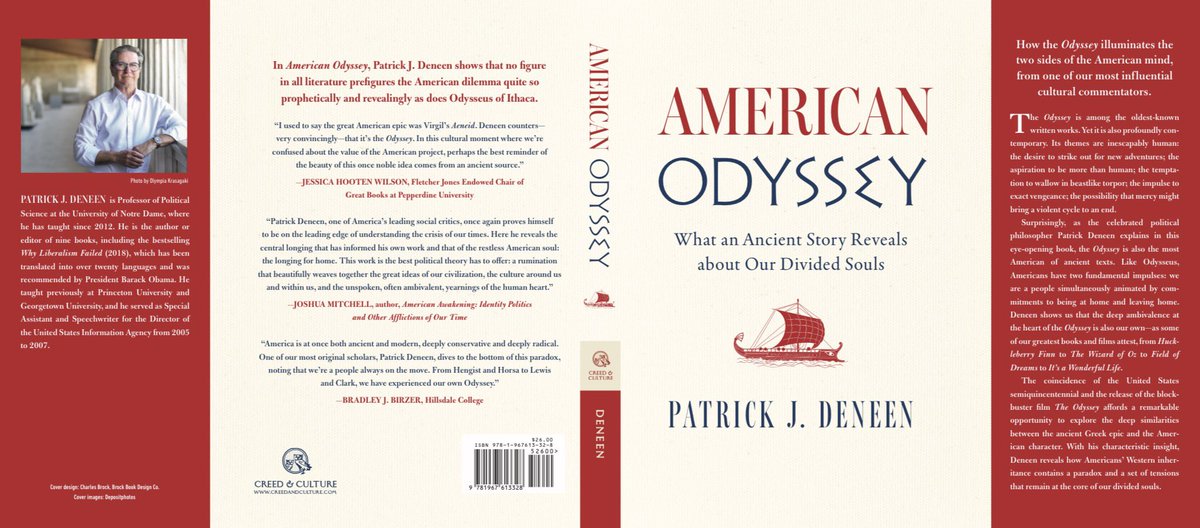
A big day for me. The final copy of my forthcoming book,“American Odyssey,” was transmitted to the printer this morning. I began writing this book on December 13. Not even six months later, we squeaked under the deadline for its scheduled publication date on July 21.
The cover is below, along with a link to the book @C_and_C_Books. Add the code AMODYSSEY20 for a 20% discount.
The jacket photo was taken just two weeks ago in the Agora of Athens. Altogether an amazing several weeks, and a very fruitful several months.
creedandculture.com/books/am…
12
27
241
33,249